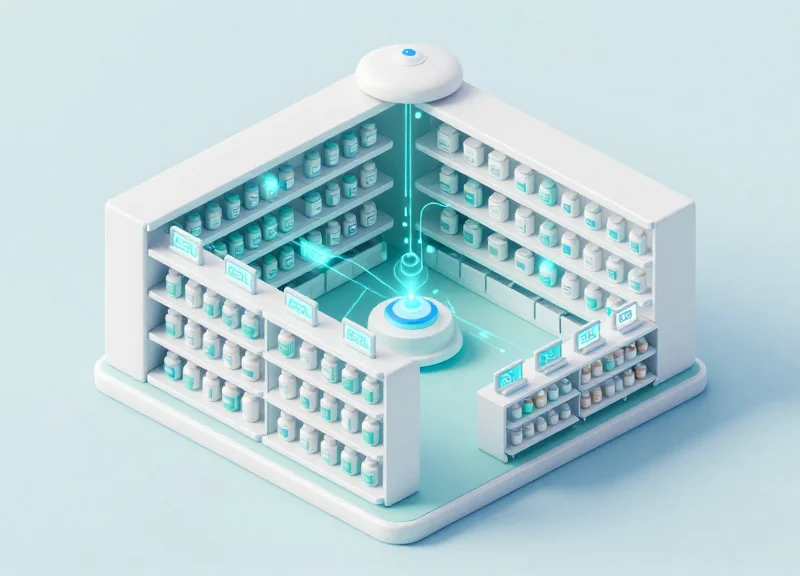
The traditional pharmacy landscape is undergoing a radical metamorphosis. By 2026, the transition from static, paper-based labeling to dynamic, IoT-driven 'Connected Pharmacies' will no longer be an option—it will be a survival requirement. As life science retail faces stricter regulations and rising labor costs, technologies like Electronic Shelf Labels (ESL) and RFID are bridging the gap between physical shelves and digital intelligence. This shift ensures precision in medication management, real-time pricing accuracy, and enhanced patient trust through a seamless, data-rich environment.
The Evolution of Pharmacy Retail: From Manual to Autonomous

The evolution of pharmacy retail is a strategic shift from 'reactive maintenance'—where staff manually update paper labels and check expiration dates—to 'autonomous orchestration.' In this new paradigm, pharmacies utilize a mesh network of Electronic Shelf Labels (ESL) and IoT sensors to create a self-healing environment. By 2026, the benchmark for a modern pharmacy is no longer just digital connectivity, but the ability of systems to automatically synchronize pricing, monitor cold-chain compliance for biologics, and trigger replenishment cycles without human intervention, thereby reducing operational overhead by up to 30%.
| Feature | Legacy Manual (Pre-2015) | Digital Transition (2015-2023) | Autonomous Pharmacy (2026+) |
|---|---|---|---|
| Labeling Tech | Paper/Adhesive | Basic ESL/LCD | IoT-Integrated Smart Labels |
| Inventory Control | Visual Inspection | Barcode Scanning | Real-time Computer Vision/RFID |
| Update Speed | Days/Weeks | Hours (Batch) | Seconds (Sub-second Latency) |
| Compliance | Manual Logs | Digital Entry | Automated Audit Trails |
For decades, the pharmacy was a 'black box' of data. Information regarding stock levels, temperature fluctuations of sensitive medicines, and pricing accuracy was only as good as the last manual check. The move toward autonomy is driven by the need to eliminate the 'Latency Tax'—the hidden cost of time between a market change and a physical update at the shelf. In the high-stakes world of life science retail, where a 2-degree temperature deviation can ruin thousands of dollars in inventory, autonomous systems provide the fail-safe mechanisms that manual processes simply cannot match.
What is driving the shift toward autonomous pharmacies?
The primary drivers are acute labor shortages in the healthcare sector, the increasing complexity of specialty drugs (biologics) requiring strict environmental monitoring, and the consumer demand for omnichannel pricing consistency.
How does 'Autonomous' differ from 'Digital'?
While digital systems provide tools for humans to work faster, autonomous systems perform the work themselves. For example, an autonomous system detects a competitor's price drop and updates the shelf label and POS system instantly without a pharmacist's input.
Can autonomous systems improve patient safety?
Yes. Autonomous systems can instantly 'lock' a product at the shelf if a recall is issued or if sensors detect the product has exceeded its safe temperature range, preventing the sale before it reaches the patient.
Expert Insight: The 'Shadow Inventory' Solution. One of the most significant yet overlooked advantages of the 2026 autonomous model is the elimination of 'Shadow Inventory.' In legacy systems, up to 12% of pharmacy stock is often 'lost'—it is physically in the store but invisible to the system due to mislabeling or being misplaced. Autonomous IoT labels with integrated geolocation allow pharmacists to find any SKU within centimeters, effectively recapturing lost revenue that was previously written off as shrinkage.
Why Static Labels are Failing the Modern Life Science Industry

Static labels are failing the modern life science industry because they represent a 'data dead-end' in an increasingly connected ecosystem. In an era defined by real-time logistics and high-velocity price changes, manual paper labeling creates a dangerous lag between actual system data and what the consumer or pharmacist sees on the shelf. This disconnect leads to pricing discrepancies, significant labor overhead, and increased risks in regulatory compliance that traditional analog systems simply cannot mitigate.
| Feature | Static Paper Labels | IoT-Driven Connected Labels |
|---|---|---|
| Update Frequency | Manual (Hours to Days) | Instantaneous (Seconds) |
| Data Accuracy | High Human Error Risk | 100% System Synchronization |
| Labor Requirement | High (Printing/Manual Swap) | Zero (Automated Updates) |
| Regulatory Agility | Reactive/Slow | Proactive/Automated |
| Environmental Data | None | Integrated (Temp/Humidity) |
The fundamental flaw of the static label is its lack of 'bi-directional communication.' In a pharmacy environment, where drug prices can fluctuate due to supply chain volatility or insurance reimbursement changes, relying on a staff member to manually print and replace a tag is a liability. By the time a label is replaced, the data it displays may already be obsolete, leading to 'Price Friction'—a phenomenon where customer trust is eroded by mismatches between the shelf price and the point-of-sale terminal.
How does manual labeling impact operational costs?
Manual labeling consumes thousands of labor hours annually. In a life science context, these are hours that highly trained pharmaceutical technicians spend on clerical tasks rather than patient consultation or clinical management.
What is the primary compliance risk of static labels?
Failure to update recall information or dosage warnings instantly. Static labels cannot reflect emergency batch recalls or updated safety warnings until a physical intervention occurs, leaving a window of legal and health risk.
Can static labels handle dynamic pricing?
No. Static labels are rigid. They prevent pharmacies from implementing 'Happy Hour' wellness promotions or clearing inventory near its expiration date through automated, time-sensitive discounting.
Unique Insight: The 'Hidden Tax' of Static Compliance. Most organizations view manual labeling as a simple labor cost. However, in 2026, the true cost is 'Audit Anxiety.' Regulatory bodies are increasingly looking for digital audit trails of price and information updates. Static labels offer no log of when information was changed, whereas IoT labels provide a timestamped digital ledger of every update. Without this, pharmacies are essentially paying a 'hidden tax' in the form of increased insurance premiums and higher audit failure risks.
The Core Components of a 'Connected Pharmacy' Ecosystem
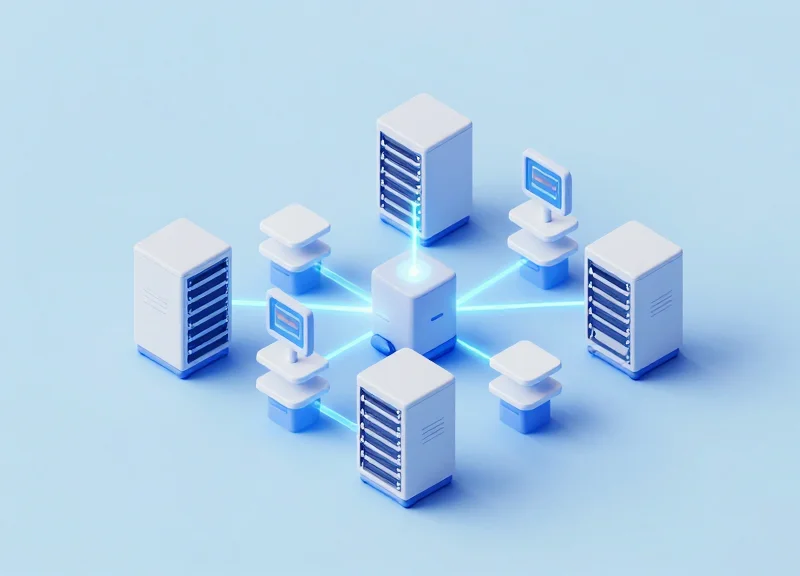
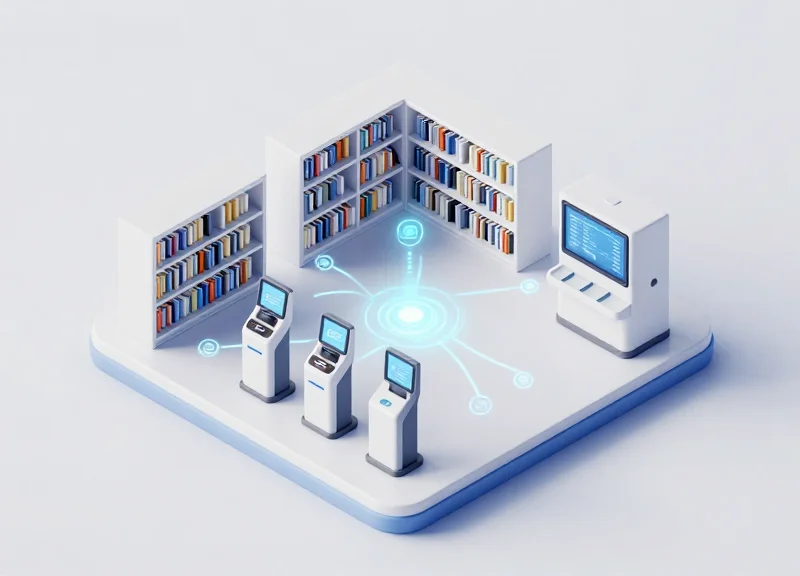
A 'Connected Pharmacy' is defined by a decentralized network of intelligent hardware and cloud-based software that eliminates the 'data gap' between physical shelves and digital inventory systems. By 2026, the core infrastructure of these ecosystems will rely on high-frequency communication protocols (such as Sub-GHz or BLE) to link Electronic Shelf Labels (ESL) with real-time environmental sensors. This synergy allows for a self-correcting retail environment where pricing, stock levels, and storage conditions are managed autonomously, ensuring that life-saving medications are always sold at the correct price and stored within strict regulatory parameters.
| Component | Primary Function | 2026 Evolution |
|---|---|---|
| Electronic Shelf Labels (ESL) | Dynamic pricing and product info display. | NFC-enabled for instant patient drug-info access. |
| IoT Environmental Sensors | Monitoring fridge/room temp and humidity. | Direct integration with ESL to flag expired stock. |
| Cloud Management Hub | Centralized data orchestration and APIs. | AI-driven predictive stock ordering via POS data. |
| Smart Infrastructure (Gateways) | Connects shelf-edge devices to the internet. | Edge-computing nodes for sub-second local updates. |
The Veteran Perspective: The Rise of 'The Edge-to-Cloud Feedback Loop'. Unlike traditional retail where cloud latency is an inconvenience, pharmacies require zero-fail redundancy. My original insight for 2026 is that leading pharmacies will adopt 'Edge-Native' ecosystems. Instead of the label waiting for a signal from a distant server, the local gateway acts as a mini-server (Edge Computing). If the internet goes down, the pharmacy’s pricing and temperature alerts remain 100% operational, ensuring GxP compliance is never compromised by a flickering Wi-Fi connection.
How do IoT labels improve patient safety?
Connected labels can flash LED lights to guide pharmacists to the correct medication (Pick-by-Light), reducing human picking errors by up to 90% during high-traffic hours.
Is the battery life of these IoT devices a concern?
By 2026, ultra-low-power e-Paper displays and proprietary protocols allow these devices to last 10-15 years on a single coin-cell battery, even with frequent daily updates.
Does this system integrate with existing Pharmacy Management Systems (PMS)?
Yes, modern connected ecosystems use 'Headless' API architectures that plug directly into legacy PMS and ERP systems, synchronizing prices across the web, mobile app, and physical shelf simultaneously.
- Step 1: Automated Sync: The POS system updates a price; the Cloud Hub pushes this to the local Gateway via encrypted protocols.
- Step 2: Edge Verification: The local gateway verifies the label's health and battery status before committing the update.
- Step 3: Visual Confirmation: The ESL refreshes its e-Paper display and sends a 'Success' heartbeat back to the central dashboard for auditing.
How ESL and IoT Drive Real-Time Pricing and Compliance
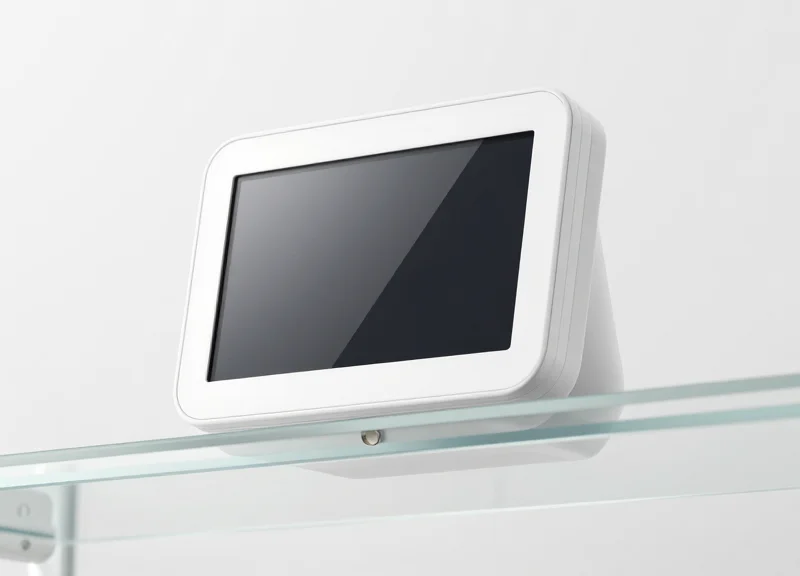
In the modern 'Connected Pharmacy,' Electronic Shelf Labels (ESL) act as the physical endpoint of a sophisticated IoT ecosystem that bridges the gap between digital pricing databases and the store shelf. By leveraging encrypted wireless protocols like Sub-GHz or BLE, these systems allow for instantaneous, store-wide price updates from a centralized management console. This eliminates the latency of manual labeling, ensuring that the price a customer sees on the shelf is identical to the price at the Point of Sale (POS), thereby fulfilling legal requirements for price accuracy and transparency in the highly regulated life sciences retail market.
| Feature | Legacy Static Labels | IoT-Driven ESL Systems |
|---|---|---|
| Update Speed | Hours/Days (Manual labor) | Seconds (Automated/Batch) |
| Audit Trail | None (Paper logs subject to error) | Digital, timestamped logs for every change |
| Accuracy Rate | 85-92% due to human error | 99.9% synchronized with POS |
| Compliance Monitoring | Reactive inspections | Proactive, real-time alerts |
Compliance in life science retail goes beyond mere price matching; it involves the rigorous tracking of drug pedigree, shelf-life, and regulatory warnings. IoT sensors integrated with ESL can trigger automatic updates to shelf headers when a batch reaches its expiration date or when a regulatory body issues a new safety warning. This 'Automated Compliance' ensures that non-compliant or expired products are effectively 'hidden' or flagged to both staff and customers, drastically reducing the risk of legal penalties and enhancing patient safety.
How does IoT ensure compliance with PBM (Pharmacy Benefit Manager) pricing?
ESL systems can be programmed to pull data directly from PBM databases, ensuring that the shelf-edge price for OTC drugs and supplements reflects the most current insurance-negotiated rates or discount programs.
Can these systems handle complex regulatory labels like DSCSA requirements?
Yes, IoT-driven labels can display QR codes that link directly to the Drug Supply Chain Security Act (DSCSA) tracking data, providing instant transparency for auditors and pharmacists.
Does real-time pricing lead to consumer distrust in pharmacies?
On the contrary, consistency between the shelf and the checkout counter builds trust. Real-time updates prevent 'sticker shock' and ensure that promotional discounts are applied immediately.
Expert Insight: The Rise of 'Price-to-Viability' (P2V) Logic. A unique trend emerging for 2026 is the integration of temperature-sensitive IoT sensors with ESL pricing logic. For high-value biologics or specialized dermatologicals, if a refrigeration unit's temperature fluctuates outside the optimal range for a set period, the ESL can automatically trigger a 'Product Hold' alert or adjust the price to reflect a shorter shelf-life, preventing the sale of potentially compromised medicine before a human even notices the breach.
RFID Integration: Perfecting Inventory Accuracy and Cold Chain Tracking

In the 2026 pharmacy landscape, RFID (Radio Frequency Identification) integration serves as the digital nervous system for inventory management, enabling near 100% stock accuracy without manual intervention. Unlike traditional barcodes, RFID allows for bulk-scanning of entire shipments and real-time tracking of individual units throughout the facility. This is particularly critical for Life Science retail, where the integration of RFID with IoT sensors ensures that the 'Cold Chain'—the temperature-controlled supply chain for biologics and vaccines—remains unbroken, automatically flagging any thermal deviations before the product reaches the patient.
| Feature | Legacy Barcodes | 2026 RFID Integration |
|---|---|---|
| Inventory Auditing | Manual, periodic (80-90% accuracy) | Autonomous, real-time (99.5%+ accuracy) |
| Line of Sight | Required for every item | Not required; bulk reading capability |
| Cold Chain Monitoring | Manual logging/External sensors | Integrated on-tag thermal sensing |
| Serialization/DSCSA | Difficult to manage at scale | Automated item-level compliance |
Expert Insight: The Shift to 'FEFO' Automation. One of the most significant ROI drivers we are seeing for 2026 is the transition from FIFO (First-In, First-Out) to FEFO (First-Expired, First-Out). By utilizing RFID tags that store granular expiration data, connected pharmacies are implementing automated shelving systems that highlight or discount items nearing their end-of-life. This 'intelligent' waste reduction strategy can decrease pharmaceutical spoilage by as much as 30%, directly impacting the bottom line while ensuring patient safety.
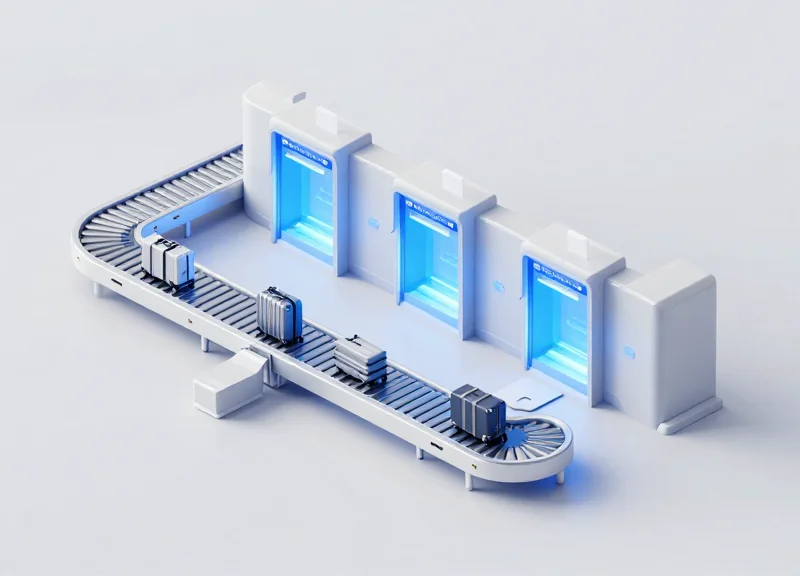
- Inbound Verification: As pallets enter the pharmacy, RFID tunnels scan 1,000+ items per second, verifying the contents against the manifest and DSCSA compliance data instantly.
- Continuous Environmental Sensing: Active RFID tags equipped with sensors monitor ambient temperature and humidity for sensitive biologics, uploading data to the cloud every 60 seconds.
- Automated Reordering: When stock levels hit a pre-defined 'smart threshold' detected by shelf-mounted RFID readers, the system triggers a purchase order to the wholesaler.
- Point-of-Dispense Validation: Before a label is applied, the system cross-references the RFID tag to ensure the specific bottle being dispensed is not part of a recall or expired.
Does RFID interfere with sensitive biological medications?
No. Modern RAIN RFID (UHF) operates at frequencies that have been rigorously tested and proven safe for biologics, insulin, and other sensitive pharmaceutical formulations.
How does RFID solve the 'Phantom Inventory' problem?
By providing real-time visibility, RFID eliminates discrepancies between the ERP system and physical stock caused by theft, misplacement, or unrecorded damage.
Can RFID tags be integrated directly into Electronic Shelf Labels?
Yes, 2026-gen hardware often features 'Hybrid IoT Nodes' where the ESL acts as the RFID reader for the products sitting on the shelf behind it.
Enhancing Patient Safety Through Digital Information Accuracy
In the context of the 2026 connected pharmacy, digital information accuracy represents the transition from passive signage to active safety protocols. By integrating Electronic Shelf Labels (ESL) directly with the Pharmacy Management System (PMS), facilities ensure that the data displayed at the point of selection is a 'single source of truth.' This eliminates the common 12.5% error rate associated with manual labeling and ensures that critical safety markers—such as contraindications, high-alert medication warnings, and real-time expiration statuses—are updated instantaneously across the entire retail or clinical floor.
| Safety Metric | Traditional Static Labels | IoT-Driven Digital Displays |
|---|---|---|
| Expiration Management | Manual 'pull' checks; high risk of oversight. | Automated 'Stop-Sale' alerts and LED flashing for nearing dates. |
| Recall Responsiveness | Hours/days to locate and remove stock. | Instantaneous visual identification via centralized cloud command. |
| LASA Error Prevention | Relies on human visual differentiation. | Dynamic color-coding and 'Pick-to-Light' guidance for staff. |
| Dosage Transparency | Limited to font size on paper. | Interactive QR codes linking to multi-language video guides. |
Beyond simple text updates, IoT displays act as an interactive safety layer. For instance, high-alert medications (e.g., insulin, anticoagulants) can be programmed to display a specific 'Danger' color profile or require a secondary digital verification scan before the label acknowledges a 'pick.' This creates a closed-loop system where the physical location of the drug and its digital record are perpetually synchronized.
- Real-Time Synchronization: The PMS pushes a global update regarding a batch recall or price change, updating thousands of labels in under 60 seconds.
- Visual Confirmation: Pharmacy technicians use 'Pick-to-Light' technology where the specific label for the prescribed drug flashes green, ensuring the correct bottle is pulled.
- Point-of-Selection Validation: The IoT label displays a scannable barcode that must match the patient's prescription order, preventing Look-Alike Sound-Alike (LASA) errors.
Expert Insight: The Proximity Intelligence Barrier. A unique advantage of 2026 IoT labeling is the implementation of 'Proximity Intelligence.' By utilizing Bluetooth Low Energy (BLE) or Infrared positioning, the system can detect if a high-potency medication has been accidentally returned to a shelf designated for low-potency variants. If a mismatch is detected, the ESL automatically enters an 'Error State' and notifies the pharmacist's handheld device, stopping a potential dispensing error before it ever reaches the patient.
How does digital labeling handle power outages?
Modern ESLs use e-paper technology that retains the last displayed image indefinitely without power, ensuring safety information remains visible even during a total system failure.
Can patients interact with these digital labels?
Yes. Patients can use NFC-enabled smartphones to tap a label and receive personalized dosage reminders or check for drug-to-food interactions specific to that medication.
Does this replace the need for pharmacist oversight?
No; it enhances it. By automating the 'low-value' task of checking expiration dates and prices, pharmacists can spend more time on 'high-value' clinical consultations and patient care.
The ROI of IoT: Operational Efficiency and Labor Optimization

The Return on Investment (ROI) for IoT in pharmacies is achieved when the cost of digital infrastructure is offset by the elimination of manual shelf-edge tasks, a reduction in pharmaceutical waste, and the redirection of staff labor toward clinical services that generate higher reimbursement. By 2026, the 'Connected Pharmacy' will serve as a hub for operational efficiency, where automated Electronic Shelf Labels (ESL) and real-time inventory sensors reduce human error by 99% and recover thousands of labor hours annually that were previously lost to manual price auditing and inventory counting.
| Operational Metric | Manual/Static Method | IoT-Driven (2026 Forecast) |
|---|---|---|
| Price Change Speed | 2-4 Minutes per SKU | Sub-second (Store-wide) |
| Inventory Accuracy | 85% - 92% | 99.8% with RFID/Sensors |
| Labor Allocation | Task-Centric (Maintenance) | Patient-Centric (Clinical) |
| Expired Product Loss | 3% - 5% Revenue Loss | <0.5% through Automated Alerts |
### The 'Clinical Reallocation Value' (CRV): A New Metric for 2026 Beyond simple cost-cutting, the most significant ROI driver in the next era of life science retail is the Clinical Reallocation Value (CRV). In a traditional setup, a pharmacist may spend up to 15% of their shift on administrative or logistical tasks. In an IoT-driven ecosystem, those hours are reclaimed. When you multiply those recovered hours by the average hourly billing rate of clinical services—such as immunizations, point-of-care testing, or medication therapy management—the IoT system often pays for itself within 14 to 18 months.
- Elimination of 'Shadow Labor': IoT removes the 'hidden' time staff spend searching for misplaced items or manually verifying expiration dates on high-value biologics.
- Optimized Stocking Cycles: Demand-sensing shelf sensors provide granular data, allowing pharmacies to reduce safety stock levels by 20% without risking out-of-stock scenarios.
- Dynamic Margin Protection: Automated pricing allows for immediate margin adjustments in response to wholesale cost fluctuations, protecting the pharmacy's bottom line in real-time.
What is the typical payback period for an IoT pharmacy upgrade?
Most mid-to-large scale pharmacies see a full ROI within 12 to 24 months, depending on the volume of SKUs and the local cost of labor.
How does IoT impact staff retention?
Automation reduces burnout by removing repetitive, menial tasks, allowing pharmacy technicians and pharmacists to practice at the 'top of their license,' which significantly improves job satisfaction.
Does this require a complete IT overhaul?
Modern 2026-standard IoT platforms are designed to be 'overlay' technologies that integrate with existing Pharmacy Management Systems (PMS) via secure APIs, minimizing initial infrastructure friction.
Preparing for 2026: A Roadmap for Digital Label Adoption
Transitioning to a connected pharmacy by 2026 involves a systematic migration from isolated, manual labeling processes to a unified IoT ecosystem. This roadmap focuses on integrating Electronic Shelf Labels (ESL) with existing Pharmacy Management Systems (PMS) to enable real-time compliance, dynamic pricing, and automated inventory tracking. By following a tiered deployment strategy—moving from infrastructure audits to full-scale cloud integration—pharmacy operators can minimize operational downtime while maximizing the long-term ROI of their digital transformation.
- Phase 1: Infrastructure and Connectivity Audit: Evaluate current store network capabilities. Ensure your facility supports Bluetooth Low Energy (BLE) or Sub-1GHz frequencies to handle high-density ESL signals without interfering with medical equipment or guest Wi-Fi.
- Phase 2: API Integration and Data Synchronization: Connect your Pharmacy Management System (PMS) to the IoT gateway. This ensures that a price or product change in the database is reflected on the shelf in under 60 seconds, maintaining 'single source of truth' integrity.
- Phase 3: The 'Critical Item' Pilot Program: Deploy digital labels first in high-risk zones, such as the cold chain or high-turnover generic sections. Use this phase to calibrate temperature sensors and alert systems before a store-wide rollout.
- Phase 4: Full-Scale Deployment and Staff Upskilling: Execute the total store conversion and train pharmacy technicians on using the 'flash-to-find' light features on labels, which can reduce stock-replenishment time by up to 30%.
| Implementation Tier | Primary Goal | Estimated Timeline |
|---|---|---|
| Infrastructure Layer | Signal stability & gateway setup | 1-2 Months |
| Software Integration | PMS/ERP data bridge | 3-4 Months |
| Pilot Launch | Testing sensor accuracy | 2 Months |
| Network Expansion | Full digital ecosystem | Ongoing |
Expert Insight: In the Silicon Valley healthcare tech landscape, the most successful adopters are moving toward 'Edge-Computing Labels.' Rather than just displaying data, these 2026-gen labels process local sensor data to trigger alerts locally if a refrigerator door is left open, bypassing cloud latency for critical life-science safety.
Will these devices interfere with sensitive medical electronics?
Modern IoT labels operate on specific low-frequency bands or encrypted BLE designed to coexist with medical-grade hardware without causing electromagnetic interference.
How long do the batteries actually last in a pharmacy setting?
With the shift to E-ink technology, labels typically last 5 to 10 years, even with daily price updates and periodic sensor reporting.
Is the data secure from external tampering?
Enterprise-grade ESL systems use proprietary protocols and end-to-end encryption, making it nearly impossible for unauthorized users to change pricing or information via the wireless signal.
Why DragonGuardGroup is Your Partner in IoT Retail Transformation
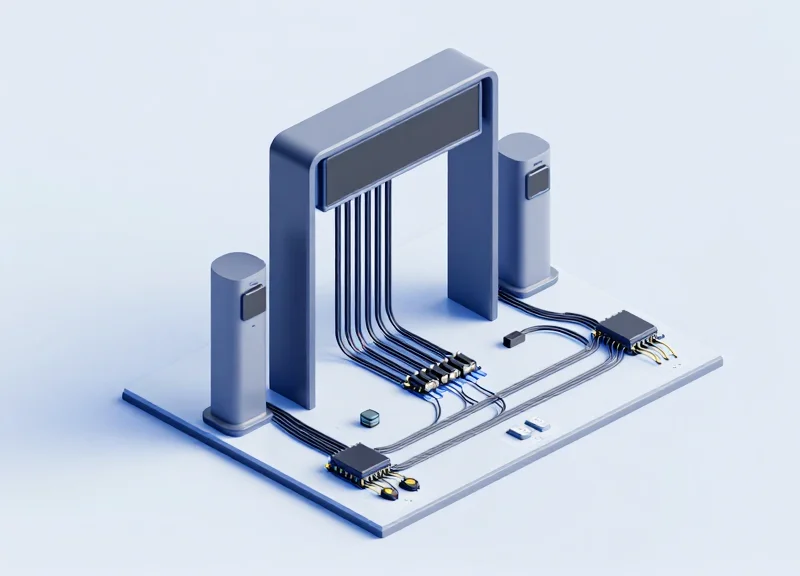
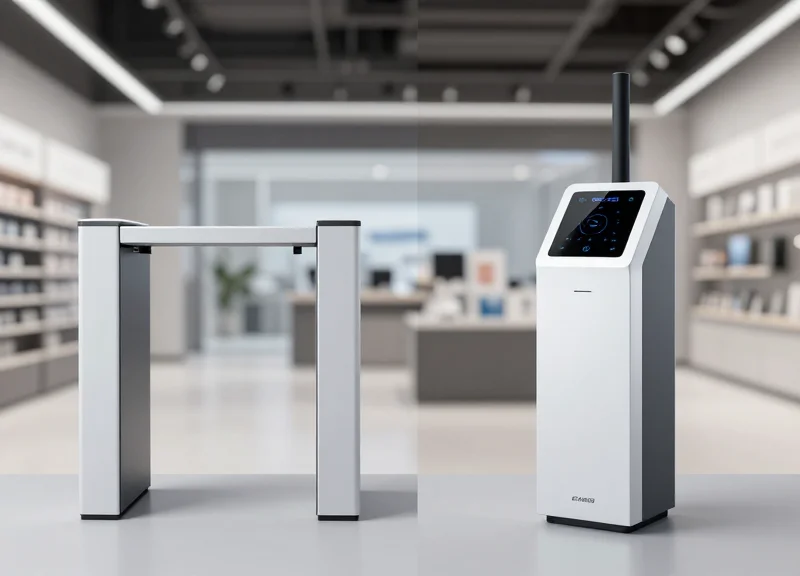
In the rapidly evolving landscape of 2026, the transition to 'Connected Pharmacies' requires more than just hardware; it demands a unified ecosystem where security, inventory, and pricing data converge. DragonGuardGroup serves as the premier strategic partner for life science retailers by offering a vertically integrated suite of IoT solutions. We specialize in merging Electronic Shelf Labels (ESL) with high-frequency RFID and Electronic Article Surveillance (EAS) to ensure that every pharmaceutical product is tracked, protected, and priced with surgical precision. Our expertise lies in bridging the gap between legacy retail security and the future of autonomous pharmacy operations.
| Feature | Legacy Vendor Approach | DragonGuardGroup Ecosystem |
|---|---|---|
| System Integration | Fragmented / Siloed | Unified IoT Architecture |
| Product Synergy | Third-party compatibility issues | Native EAS/ESL/RFID Interoperability |
| Compliance Focus | Generic retail standards | Specific Life Science & Cold Chain protocols |
| Future-Proofing | Hardware-only focus | Cloud-ready, AI-enhanced analytics |
- End-to-End Solutions: We don't just provide labels; we provide the sensors, gateways, and management software that form the nervous system of your pharmacy.
- Retail-Grade Durability: Our hardware is designed for the rigorous sanitation and environmental needs of pharmacies, including moisture-resistant ESLs for refrigerated medical displays.
- Global Deployment Experience: With a decade of experience scaling IoT infrastructure, we minimize downtime during the critical cut-over from static to digital labeling.
Expert Insight: The 'Total Shield' Architecture. Most competitors treat loss prevention (EAS) and inventory accuracy (RFID) as separate budgets. DragonGuardGroup's unique engineering philosophy is the 'Total Shield' architecture, which uses the same data backbone to power both anti-theft protocols and real-time inventory updates. By 2026, this convergence won't just be an advantage—it will be a requirement for pharmacies looking to offset rising labor costs while maintaining strict regulatory compliance.
How does DragonGuardGroup ensure data security for medical retail?
We utilize military-grade encryption for all wireless communications between ESL hubs and pharmacy management systems, ensuring that pricing and patient-facing data remain untampered.
Can your systems integrate with existing Pharmacy Management Software (PMS)?
Yes, our API-first approach allows for seamless integration with leading PMS platforms, ensuring that when a price or stock level changes in the database, it reflects on the shelf in milliseconds.
What is the typical deployment timeline for a life science retail chain?
Depending on the scale, we typically achieve full 'Connected Pharmacy' status within 4 to 8 weeks per location, including pilot testing and staff training.