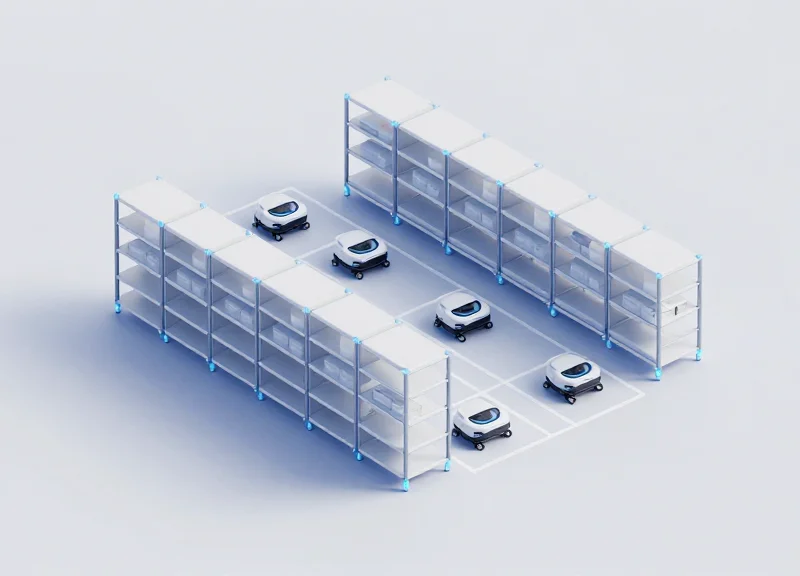
The logistics landscape is undergoing a seismic shift. As urban delivery windows shrink to mere minutes and customer expectations for precision soar, traditional static racking has become a bottleneck for growth. By 2026, the industry is projected to pivot decisively toward agile micro-fulfillment centers (MFCs). This evolution is powered by next-gen dynamic positioning technologies—such as advanced RFID and Electronic Shelf Labels (ESL)—which transform rigid storage into flexible, high-velocity assets. This article explores how these innovations are redefining the modern warehouse to meet the demands of tomorrow.
The Obsolescence of Static Racking in a Fast-Paced Market

Static racking represents a legacy architectural model where inventory remains tethered to fixed coordinates, a strategy that is fundamentally incompatible with the 2026 push for sub-hour fulfillment cycles. As e-commerce shifts toward hyper-local micro-fulfillment centers (MFCs), the physical rigidity of traditional steel shelving creates significant bottlenecks in both throughput and spatial efficiency. In short, static systems were designed for long-term storage, whereas modern markets demand systems designed for extreme velocity.
The primary catalyst for this obsolescence is the 'Rigidity Tax.' In a world where SKU profiles can change overnight due to social commerce trends or seasonal shifts, having a warehouse layout that takes weeks to reconfigure is a competitive liability. By 2026, the advantage belongs to facilities that utilize Next-Gen Dynamic Positioning, allowing the warehouse to reshape its internal logic in real-time based on predictive analytics and live demand signals.
| Feature | Static Racking | Agile Micro-Fulfillment |
|---|---|---|
| Space Utilization | Fixed; high percentage of empty air | Dynamic; optimized for maximum SKU density |
| Throughput Speed | Limited by manual picking/travel time | Accelerated by AI-driven positioning |
| Scalability | Requires structural construction | Modular and software-defined |
| Adaptability | Low; fixed bin sizes | High; adapts to varying product dimensions |
Unique Expert Insight: In 2026, we are moving away from traditional 'Storage Density' toward 'Active Volume Density' (AVD). This metric measures how much of your facility's total volume is actively contributing to order fulfillment at any given second. Static racking often maintains an AVD of less than 30% due to fixed aisles and empty shelf space, whereas agile systems with dynamic positioning are pushing toward 85% by eliminating permanent walkways and utilizing every cubic centimeter for active inventory.
Why is static racking failing in urban centers?
Urban real estate is too expensive to permit the wasted aisle space required by traditional forklifts; micro-fulfillment requires every cubic inch to be productive to justify the cost per square foot.
What is the biggest operational risk of keeping static racks?
Labor inefficiency is the primary risk. Walking or driving to fixed locations accounts for up to 60% of picking costs, a figure that is unsustainable as warehouse wages rise and consumer delivery windows shrink to under 30 minutes.
Can static racking be integrated with new tech?
While some 'cobot' solutions assist, they are often hamstrung by the physical layout. True agility requires a hardware-software stack where the racking itself is modular and can be dynamically repositioned by automation.
Defining Agile Micro-Fulfillment for 2026

In 2026, Agile Micro-Fulfillment (AMF) transcends the traditional definition of a small warehouse. It is a decentralized, technology-dense logistics node—typically between 5,000 and 15,000 square feet—placed within high-density urban zones to slash last-mile delivery times to under 60 minutes. The 'Agile' component signifies a departure from fixed racking, instead utilizing Next-Gen Dynamic Positioning where AI algorithms anticipate local demand shifts in real-time, autonomously rearranging high-velocity SKUs to the most accessible 'edge' locations of the facility before an order is even finalized.
| Feature | Traditional Micro-Fulfillment (2023) | Agile Micro-Fulfillment (2026) |
|---|---|---|
| Location Strategy | Back-of-store or nearby warehouse | Hyper-local 'Dark Stores' & converted retail |
| Inventory Logic | Fixed slotting based on historical data | Dynamic positioning based on real-time demand |
| Automation Level | Basic conveyor & shuttle systems | Swarm robotics & predictive AI orchestration |
| Delivery Window | 2 to 4 hours | Sub-60 minutes (Ultra-Fast) |
- Hyper-Locality: Utilizing existing urban infrastructure like parking garages or empty retail basements to place inventory within a 3-mile radius of the end consumer.
- Autonomous Swarm Robotics: Replacing heavy, fixed conveyors with nimble robotic fleets that can move vertically and horizontally, adapting to non-standard building shapes.
- Demand-Sensing Orchestration: Software layers that ingest social media trends, local weather, and traffic data to adjust stock levels and placement hourly.
Expert Tip: The breakthrough in 2026 is the 'Kinetic Inventory Buffer.' Unlike older systems where items sat idle, Agile MFCs use low-traffic periods (like 3:00 AM) to shuffle stock. By analyzing 'Predictive Cart Signage'—items customers have added to carts but not yet bought—the system moves those specific units to the front of the fulfillment queue, reducing the pick-to-pack cycle from minutes to seconds.
How does Agile Micro-Fulfillment reduce costs?
By shortening the last-mile distance, which typically accounts for 53% of total shipping costs, and maximizing storage density through AI-managed vertical space.
Is AMF suitable for all product types?
While ideal for high-frequency goods like groceries, electronics, and apparel, 2026 systems are now accommodating cold-chain and fragile items through modular climate zones.
What role does 5G/6G play in 2026 AMF?
Ultra-low latency connectivity allows the central AI to manage thousands of swarm robots simultaneously without the risk of collisions or 'dead zones' in the facility.
The Anatomy of Next-Gen Dynamic Positioning
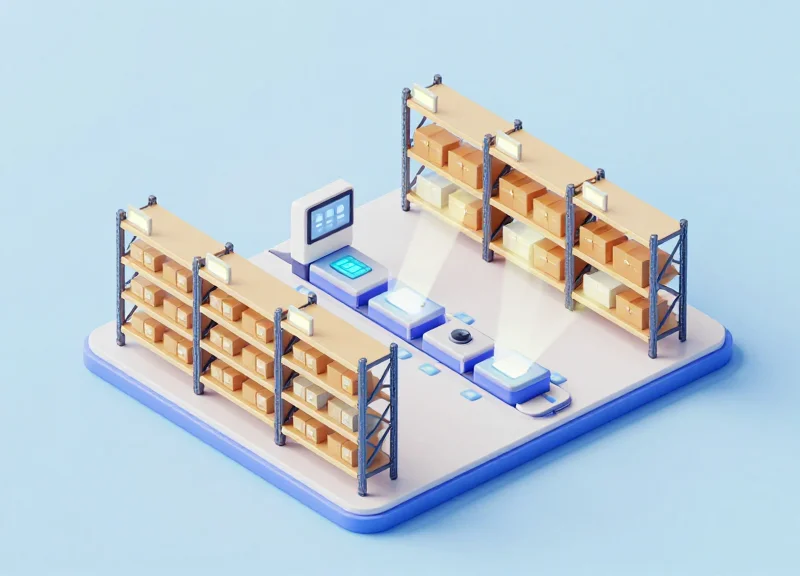
Next-gen dynamic positioning is the technological framework that treats warehouse space as a liquid asset rather than a rigid grid. Unlike traditional slotting, which assigns a permanent 'home' to every SKU, dynamic positioning utilizes a Software-Defined Storage (SDS) layer to assign inventory to the most efficient available coordinate based on real-time velocity, size, and order affinity. By decoupling the SKU from a specific physical location, micro-fulfillment centers (MFCs) can achieve up to 40% higher density and 30% faster retrieval times by ensuring high-velocity items are always at the optimal ergonomic or robotic pick-point.
| Feature | Legacy Static Racking | Next-Gen Dynamic Positioning |
|---|---|---|
| Location Logic | Fixed/Permanent SKU Address | Fluid/Real-time Spatial Assignment |
| Space Utilization | Low (empty slots reserved for SKUs) | Maximum (any SKU fits any vacant volume) |
| Logic Driver | Manual Slotting Reviews | AI-driven Predictive Velocity |
| Re-Slotting Speed | Days/Weeks | Millisecond (On-the-fly) |
A core differentiator in the 2026 landscape is 'Quantum Slotting.' This original concept refers to the system's ability to treat inventory as being in a state of constant motion; the system doesn't just store an item, it predicts its exit. Expert Tip: In a high-density micro-fulfillment environment, the 'golden zone' is no longer a static shelf level but a fluctuating zone that shifts throughout the day based on intraday demand spikes (e.g., lunch rush vs. evening restock).
- Spatial Volumetric Mapping: IoT-enabled sensors and computer vision map the exact dimensions of every available cubic inch in the facility.
- Predictive Velocity Modeling: The AI analyzes historical and real-time data to determine which SKUs will be needed within the next 2-4 hours.
- Algorithmic Placement: The system directs robotic shuttles or human pickers to place items in 'short-stay' zones near dispatch or 'long-stay' zones deep in the rack.
- Continuous Re-balancing: During low-activity periods, the system automatically 'shuffles' inventory to optimize for the next predicted demand peak.
Does dynamic positioning increase the risk of lost inventory?
No. Because every movement is tracked via a digital twin and real-time telemetry, the system maintains 99.9% accuracy, far exceeding manual tracking in static systems.
What hardware is required for this to work?
It requires high-speed robotic shuttles (AS/RS) or AMRs integrated with a WES (Warehouse Execution System) that supports real-time data streaming.
Is it applicable to grocery micro-fulfillment?
Absolutely. It is critical for perishables, where the system must balance 'First-Expiry, First-Out' (FEFO) logic with physical proximity to the packing station.
RFID: The Heartbeat of Real-Time Inventory Flow

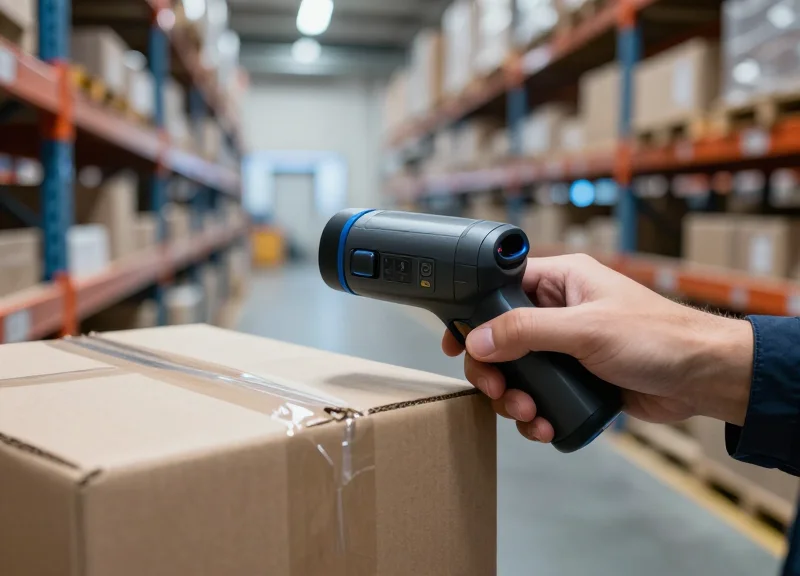
RFID (Radio Frequency Identification) in 2026 has evolved from a simple tagging mechanism into the digital nervous system of the agile micro-fulfillment center. Unlike traditional barcode systems that require line-of-sight and manual intervention, modern RFID deployments utilize ultra-high-frequency (UHF) passive tags and overhead 'smart' readers to maintain a continuous, 99.9% accurate inventory map. This 'heartbeat' of data allows systems to track items in flux, supporting dynamic positioning where goods are moved and restacked autonomously based on real-time demand signals rather than remaining tethered to a fixed shelf address.
| Feature | Traditional Barcoding | 2026 Next-Gen RFID | |||
|---|---|---|---|---|---|
| Scan Requirement | Manual Line-of-Sight | Autonomous Bulk Sensing | |||
| Data Latency | High (Batch Processed) | Near-Zero (Real-Time) | Accuracy Level | 80-92% (Human Error) | 99.9% (Automated) |
| Inventory Mobility | Static/Fixed | Fluid/Dynamic | |||
| Labor Intensity | High (Manual Scans) | Low (Sensor-Driven) |
The true power of RFID in a dynamic environment lies in its ability to facilitate 'frictionless flow.' In a micro-fulfillment center where space is at a premium, items often move through various states—from receiving to buffer storage to picking stations—within minutes. RFID eliminates the 'black holes' of inventory visibility, ensuring that the Warehouse Execution System (WES) knows exactly where every SKU is, even if it is currently on a moving autonomous mobile robot (AMR) or tucked inside a high-density temporary bin.
- Tagging at Source: Every item receives a low-cost, high-sensitivity UHF tag during manufacturing or initial intake, embedding unique digital identity into the physical product.
- Zone-Based Excitation: Overhead antennas create 'smart zones' that detect tag movement between sections of the micro-fulfillment center, updating the digital twin instantly.
- Dynamic Re-routing: As the WES identifies shifts in demand, it directs AMRs to relocate stock; RFID confirms the move without a human needing to scan a single label.
Expert Insight: By 2026, we are seeing the rise of 'Phase-Based Location Analytics.' Instead of just knowing a tag is 'in the building,' advanced RFID readers now analyze the phase angle of the reflected radio signal to triangulate an item's position within three centimeters. This allows for 'Pick-by-Light' accuracy without the expensive light hardware, as the system can verify the picker's hand is reaching for the exact correct tag in real-time.
Does RFID work with metal or liquid products in 2026?
Yes, modern 'on-metal' tags and spacer-optimized labels have largely neutralized the interference issues once associated with liquids and metallic packaging.
Is RFID cost-effective for low-margin groceries?
With tag prices dropping below $0.03 and the labor savings from eliminating manual cycle counts, the ROI for high-velocity micro-fulfillment is now overwhelmingly positive.
How does RFID integrate with Dynamic Positioning?
RFID provides the ground-truth data that feeds the AI algorithms; without real-time tracking, the AI cannot safely 'float' inventory to new locations based on predictive demand.
ESL and Smart Labels: The Digital Interface of Flexible Racking
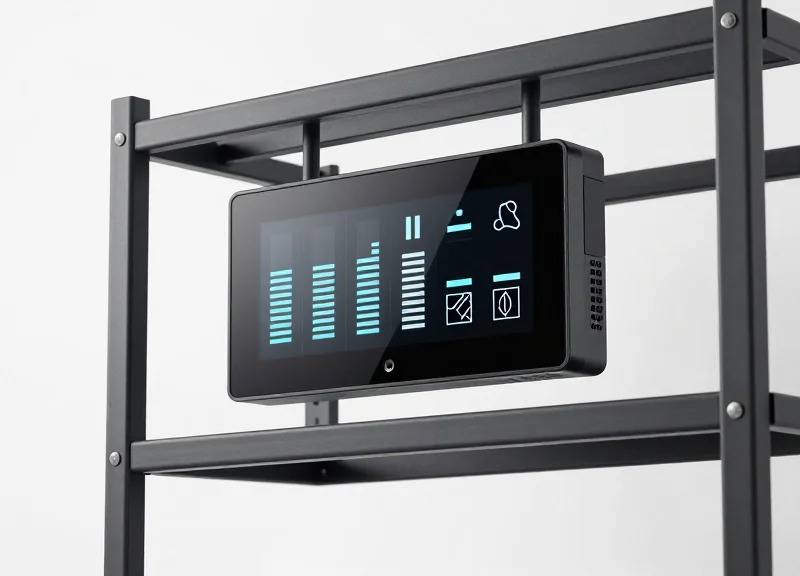
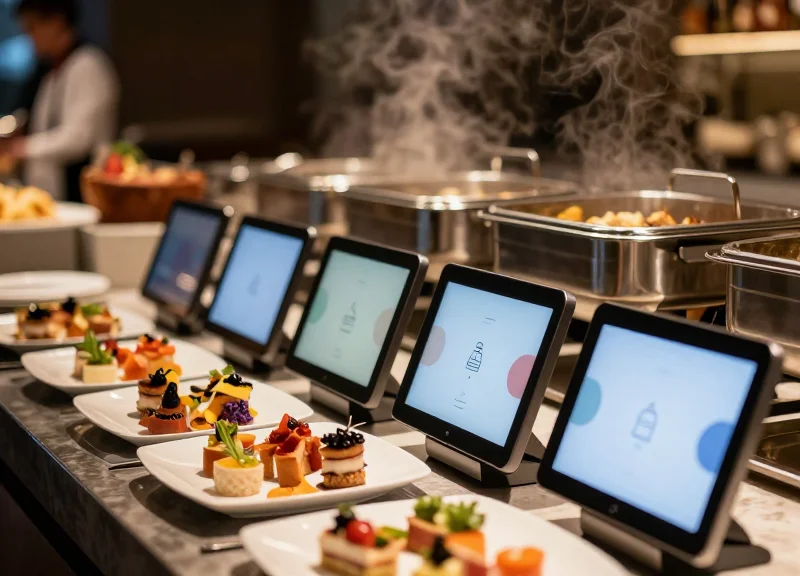
In the 2026 micro-fulfillment landscape, Electronic Shelf Labels (ESL) have evolved from simple price displays into the critical digital interface of the warehouse. As dynamic positioning shifts inventory based on hourly demand fluctuations, ESLs provide the immediate visual confirmation necessary for human pickers to navigate fluid racking layouts. These smart labels eliminate the lag time of manual labeling, serving as the physical manifestation of the digital twin by updating coordinates, SKU data, and picking priorities in milliseconds.
| Feature | Traditional Static Labels | Next-Gen Smart ESLs (2026) |
|---|---|---|
| Update Speed | Manual (Hours/Days) | Instantaneous (Milliseconds) |
| Picker Guidance | None (Paper-based) | Multi-color LED Pick-to-Light |
| Data Capacity | Single SKU Name | Dynamic QR Codes, Stock Levels, Expiry |
| System Integration | Isolated | Fully Bidirectional with WMS/ERP |
The true power of ESL in an agile micro-fulfillment center lies in its facilitation of rapid re-slotting. When a high-velocity item needs to move to a 'golden zone' for faster access, the WMS reassigns the location, and the ESL automatically updates to reflect the new inventory. This agility is powered by Sub-GHz wireless protocols that ensure 100% update reliability even in dense, metal-heavy environments where standard Wi-Fi often fails. Expert Tip: By 2026, the most efficient operations will utilize 'Adaptive Visual Zoning,' where ESL LEDs change colors to represent different delivery windows (e.g., Red for 15-minute express, Blue for standard), allowing pickers to prioritize tasks without checking a handheld device.
How do ESLs improve picking accuracy in micro-fulfillment?
ESLs utilize high-intensity multicolor LEDs (Pick-to-Light functionality) that flash when a picker is in the correct aisle, reducing search time by up to 40% and virtually eliminating mis-picks.
Can ESLs withstand the harsh conditions of grocery micro-fulfillment?
Yes, 2026-spec smart labels are designed with IP67 ratings and specialized battery chemistry to operate in sub-zero freezer environments and high-humidity produce zones without performance degradation.
What is the role of NFC in these smart labels?
NFC enables 'Tap-to-Action' capabilities where warehouse staff can tap a mobile device against the label to trigger a restock request, report a damaged item, or view deep-link product analytics instantly.
Reducing Operational Costs through Automated Dynamic Slotting
Automated dynamic slotting is a sophisticated inventory management technique that uses AI algorithms to continuously re-evaluate and re-position items within a micro-fulfillment center (MFC) based on real-time demand signals. By eliminating the 'dead zones' inherent in fixed-rack configurations, dynamic slotting reduces travel time by up to 40% and allows retailers to achieve a 25% increase in throughput without expanding their physical footprint. In the high-stakes environment of 2026 e-commerce, this shift represents a transition from viewing the warehouse as a static cost center to a high-velocity, fluid asset.
| Cost Driver | Static Racking (Traditional) | Dynamic Slotting (2026 Trend) |
|---|---|---|
| Pick-Path Efficiency | Predetermined and rigid; high travel time | AI-optimized fluid paths; minimal travel |
| Real Estate Yield | 60-70% utilization due to fixed slot sizes | 90-95% utilization via '3D Tetris' positioning |
| Labor Overhead | High manual sorting and replenishing | Autonomous re-slotting during low-activity hours |
| Scalability | Requires physical layout redesign | Software-defined; scales instantly with SKU growth |
The economic impact of dynamic positioning is most visible in urban micro-fulfillment centers, where the cost per square foot is at a premium. Traditional static racking forces operators to pay for 'air'—empty space in slots designed for peak inventory levels that sit underutilized most of the year. My 'Unique Industry Insight' for 2026 is the elimination of the 'Shadow Cost of Static Safety Stock.' In traditional systems, you lose roughly 18% of your capacity to buffer zones between categories. Next-gen dynamic systems treat the entire warehouse as a fluid 3D grid, allowing disparate product types to coexist in the same vertical plane, effectively generating a 'Space Dividend' that pays for the technology investment within 14 months.
Does dynamic slotting increase mechanical wear on automation?
Actually, it decreases it. While inventory moves more often, AI pathfinding eliminates the 'dead miles' and erratic stop-start movements found in manual or poorly optimized systems, resulting in a more consistent and predictable mechanical load.
How does this impact labor training costs?
It significantly lowers them. Because the system directs the picker (or robot) to the exact fluid location via ESL and AR interfaces, the need for 'aisle familiarity' is removed. New hires reach peak productivity in hours rather than weeks.
Can dynamic slotting handle sudden viral demand spikes?
Yes, that is its primary strength. The system identifies a 'trending' SKU in real-time and migrates it to the 'Golden Zone' (the most accessible picking height and location) automatically, preventing bottlenecks before they occur.
- Integrate Velocity Data: Connect your OMS (Order Management System) to the dynamic positioning engine to feed real-time sales velocity into the slotting algorithm.
- Automate the 'Quiet Hours': Configure AMRs (Autonomous Mobile Robots) or shuttles to execute re-slotting tasks during low-order periods to ensure the floor is optimized for the morning rush.
- Audit the 'Space Dividend': Regularly measure the increase in SKU density to justify the reduction in secondary off-site storage costs.
Overcoming the Urban Logistics Challenge
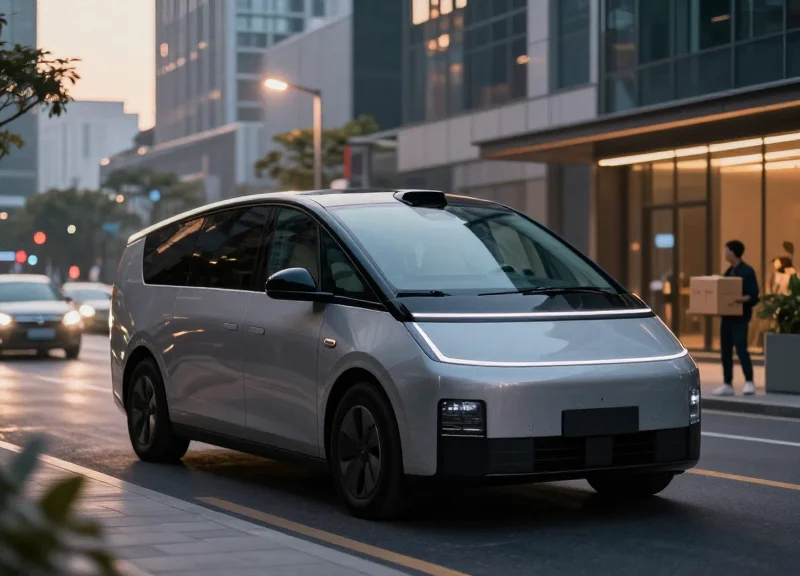
In 2026, overcoming the urban logistics challenge means solving the 'Space-Speed Paradox': the need to store thousands of SKUs in hyper-dense city centers where square footage is prohibitively expensive. Traditional static racking fails here because it requires wide aisles and fixed slots that waste up to 50% of a room's volume. Next-gen dynamic positioning resolves this by treating the urban warehouse as a fluid, high-density matrix where inventory is not 'stored' in a permanent home, but 'positioned' based on real-time predictive demand, allowing operators to achieve a 4x increase in throughput within the same footprint.
| Metric | Legacy Urban Storage | Agile Dynamic MFC |
|---|---|---|
| Space Utilization | 35-45% (Aisle-heavy) | 85-95% (Aisle-less/Fluid) |
| Pick-to-Ship Time | 25-40 Minutes | Under 8 Minutes |
| Real Estate Type | Light Industrial Only | Converted Retail/Basements |
| Inventory Velocity | Static Batching | Predictive Flow |
The breakthrough lies in what we call 'Volumetric Intelligence.' By using dynamic positioning sensors and AI, urban micro-fulfillment centers (MFCs) can now utilize vertical space that was previously inaccessible. Instead of rigid shelves, modular units can be reshuffled or stacked tightly, with automated systems retrieving items from the 'cube' rather than a picker walking a row. This shift reduces the cost-per-order significantly by amortizing high urban rents across a much higher volume of transactions.
How do we bypass strict urban zoning laws for these hubs?
Modern agile MFCs are designed as 'Retail-Adjacent' modules. Because they use silent, low-vibration dynamic positioning tech and maintain a small physical footprint, they often qualify for commercial or mixed-use zoning rather than industrial, allowing brands to sit directly next to their customers.
Can dynamic positioning handle the 'Ugly' logistics of oddly shaped urban buildings?
Yes. Unlike static systems that require rectangular floor plans, dynamic positioning software maps the unique geometry of irregular urban spaces—like basements with low ceilings or L-shaped backrooms—optimizing the pathing and storage density for every unique nook.
What is the 'Curb-to-Cube' metric?
This is a 2026 industry standard measuring the time it takes for an item to move from a delivery truck at the curb into its optimal dynamic position within the facility. Expert tip: Leading hubs now target a 'Curb-to-Cube' time of under 12 minutes to maintain high liquidity in inventory.
A unique advantage of the 2026 model is the 'Shadow Store' concept. By integrating dynamic positioning into the back-of-house of existing retail locations, businesses can fulfill e-commerce orders and restock physical shelves from the same intelligent inventory pool. This dual-purpose utility eliminates the need for separate warehouses, turning every city-center store into a high-performance distribution node.
Integration Best Practices: Moving from Legacy to Agile
Transitioning to an agile micro-fulfillment model involves evolving from a 'warehouse of record' to a 'warehouse of intent.' This shift requires replacing rigid, pre-determined slotting with a dynamic positioning framework where inventory locations are fluid and updated in real-time based on actual SKU velocity and consumer demand patterns. The goal is to move beyond the constraints of static racking by integrating IoT-enabled sensors, ESL interfaces, and intelligent WMS (Warehouse Management System) logic that allows for infinite flexibility in high-density urban environments.
- Inventory Audit and Data Normalization: Before deployment, clean your SKU data. Legacy systems often have 'dirty' data regarding physical dimensions and weight. For dynamic positioning to work, every item must have precise volumetric data to allow the system to calculate optimal spatial placement automatically.
- Deploying the Digital Twin Middleware: Rather than a full 'rip-and-replace,' implement a middleware layer that sits between your legacy ERP and the new dynamic hardware. This layer creates a digital twin of your facility, allowing you to simulate dynamic slotting changes before they are physically executed.
- Phased Zone Conversion: Avoid site-wide downtime by converting the warehouse in 'cells.' Start with high-velocity SKU zones where the ROI of dynamic positioning is highest, then gradually expand to slower-moving sections as the workforce adapts.
- Hardware Synchronization: Install the ESL (Electronic Shelf Label) rails and RFID gateways in the pilot zone. Ensure the handshake between the RFID reader and the label update is sub-second to prevent picker confusion during high-volume windows.
| Feature | Legacy Static Model | Agile Micro-Fulfillment |
|---|---|---|
| Slotting Logic | Fixed/Manual Updates | Algorithmic/Real-Time |
| Space Utilization | 60-70% (fixed gaps) | 85-95% (nested positioning) |
| Labor Efficiency | High travel time | Minimal travel (Gold-Zone density) |
| Scalability | Requires physical rebuild | Modular software reconfiguration |
A unique expert insight for 2026 is the adoption of 'Shadow Slotting.' This involves running a dynamic positioning algorithm in the background of your current operation without changing the physical layout. By comparing the 'shadow' results to your actual performance for 30 days, you can identify precisely which 20% of your rack space is causing 80% of your bottlenecks, providing a data-backed roadmap for physical conversion that guarantees immediate productivity gains.
Can I use my existing racking for micro-fulfillment?
Yes. Most legacy racking can be retrofitted with smart rails and modular dividers to support dynamic positioning, though vertical height often needs optimization with mezzanine levels.
What is the biggest integration risk?
Latency in data transmission. If your WMS takes more than 5 seconds to update a dynamic label after a product is moved, your picking accuracy will plummet. Low-latency edge computing is a prerequisite.
How does this impact the warehouse staff?
It significantly lowers the learning curve. In a dynamic setup, workers follow visual cues (lights/labels) rather than memorizing locations, reducing onboarding time from weeks to hours.
The 2026 Outlook: Why Early Adoption is Critical

By 2026, the window for competitive entry into the micro-fulfillment space will narrow significantly as 'hyper-local compression' dictates the market. Early adoption is critical because the shift from static racking to next-gen dynamic positioning is not merely a hardware upgrade; it is a fundamental reconfiguration of the supply chain that allows brands to meet the sub-30-minute delivery benchmark. Organizations that delay this transition risk being locked out of prime urban logistics hubs and facing a 40% higher operational cost-per-order compared to agile competitors who have already optimized their automated workflows.
| Metric | Static Racking (Laggards) | Agile Micro-Fulfillment (Early Adopters) |
|---|---|---|
| Average Order Cycle Time | 4 - 8 Hours | 12 - 25 Minutes |
| Real Estate Efficiency | 1.0x (Baseline) | 3.5x - 5.0x (High Density) |
| Labor Dependency | High (Manual Picking) | Low (AI-Driven Slotting) |
| Market Flexibility | Rigid / Seasonal Lag | Real-time Pivot Capabilities |
A unique insight for the 2026 landscape is the 'Real Estate Moat' effect. In dense metropolitan areas, the most viable micro-fulfillment locations—from repurposed parking garages to basement levels—are finite. Early adopters are currently securing long-term leases on these strategic 'nodes' and equipping them with dynamic positioning tech. By the time late-movers realize the necessity of the shift, the physical infrastructure of the city will have already been 'claimed' by the agile network, forcing laggards to operate from more distant, less efficient outskirts.
What is the primary risk of delaying the shift to 2027 or beyond?
The primary risk is 'Infrastructure Debt.' Retrofitting a static warehouse with dynamic positioning while trying to maintain operations is twice as expensive and three times as disruptive as building the capability today.
Will consumer expectations continue to accelerate?
Yes. By 2026, predictive shipping—where items move to micro-fulfillment centers before a customer even clicks 'buy'—will be the standard for top-tier retailers, a feat only possible with agile positioning.
How does early adoption affect labor retention?
Agile systems utilize 'Co-botting' and augmented reality interfaces, which reduce the physical strain on workers. Early adopters will attract top-tier talent by offering a tech-forward, less grueling work environment.
The conclusion is clear: the 2026 outlook favors the bold. The transition to next-gen dynamic positioning is the price of admission for the next decade of retail. Companies that treat this as a 'future project' rather than a 'current imperative' will find themselves structurally incapable of competing in an era where speed is the only currency that matters.