In the fast-evolving world of craft beer retail, maintaining price accuracy while managing a constantly rotating inventory of limited releases and seasonal brews is a daunting challenge. Manual paper labeling is not only labor-intensive but also prone to significant errors that eat into profit margins and damage customer trust. Electronic Shelf Labels (ESL) represent a paradigm shift, allowing bottle shop owners to automate pricing updates instantly across the entire store. This article explores how DragonGuardGroup’s ESL solutions help craft beer retailers bolster their bottom line by eliminating 40% of pricing errors and reclaiming hundreds of labor hours annually.
The Hidden Costs of Manual Pricing in Craft Beer Retail
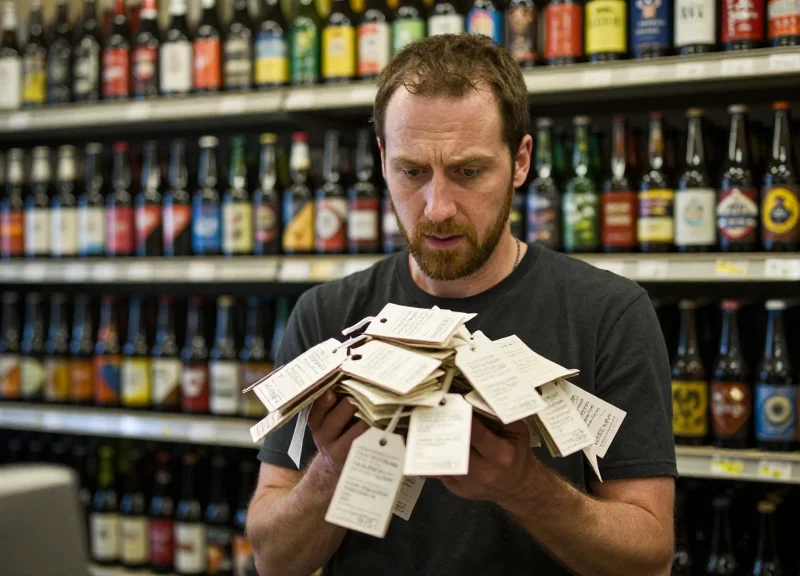
The hidden costs of manual pricing in craft beer retail represent a 'silent tax' on profitability, often draining 2% to 5% of a bottle shop's gross margin annually. These costs manifest through labor leakage—the time employees spend printing and swapping paper tags—and the high frequency of price discrepancies between the shelf and the Point of Sale (POS) system. In the high-SKU, high-turnover environment of craft beer, where limited releases and price fluctuations are common, manual updates lead to a 40% higher error rate compared to digital systems, directly impacting both the bottom line and brand reputation.
| Cost Driver | Manual Paper Tags | Financial Impact |
|---|---|---|
| Labor Allocation | 8-12 hours per week for SKU updates | High: Substantial overhead in wages |
| Price Accuracy | Average 5-10% discrepancy rate | Moderate: Revenue loss or regulatory fines |
| Promotional Agility | 24-48 hour delay in execution | High: Missed sales on seasonal inventory |
| Material Waste | Ongoing costs for paper, ink, and adhesives | Low: Constant incremental expense |
What is 'Labor Leakage' in a bottle shop context?
Labor leakage occurs when skilled staff members, who should be driving sales through curation and customer education, spend up to 15% of their shift performing administrative tasks like printing, cutting, and placing paper price tags.
How do pricing errors affect customer retention?
In craft beer retail, price sensitivity is high for 'whales' and rare bottles. A discrepancy at the register creates a 'friction event' that erodes trust, often resulting in abandoned carts and negative local reviews.
What are the regulatory risks of manual pricing?
Weights and Measures departments frequently audit liquor stores. Failure to match shelf prices with POS data can lead to stiff penalties, sometimes exceeding $500 per incorrect tag in certain jurisdictions.
Expert Insight: Beyond the obvious labor costs, the most damaging hidden expense is 'The Lag Effect.' In the craft beer world, cost prices from distributors fluctuate weekly based on hop yields, shipping surcharges, or limited-run premiums. When a shop uses manual tags, there is often a 3-to-5-day lag between a distributor price increase and a shelf price update. For a shop doing $1M in annual revenue, this lag on just 20% of their inventory can result in thousands of dollars of 'unclaimed margin' that simply vanishes because the retail price didn't keep pace with the COGS (Cost of Goods Sold) increase.
The 40% Difference: How ESL Eliminates Pricing Discrepancies
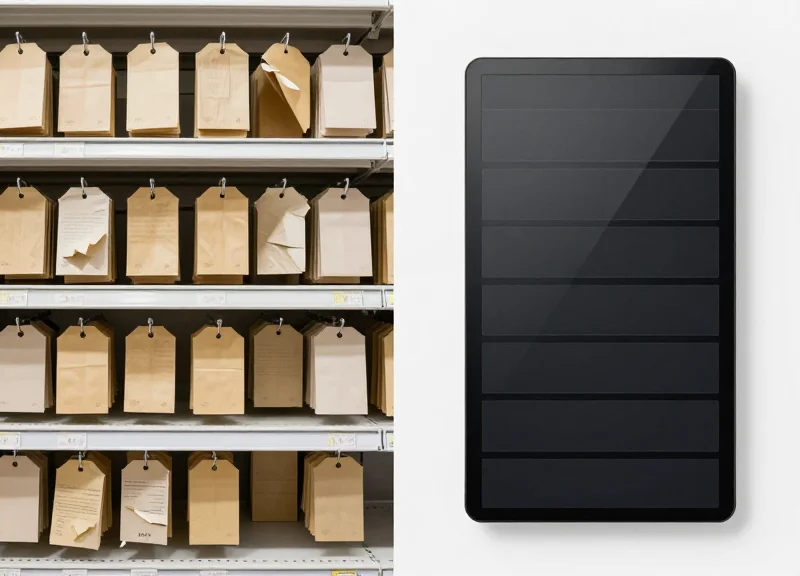
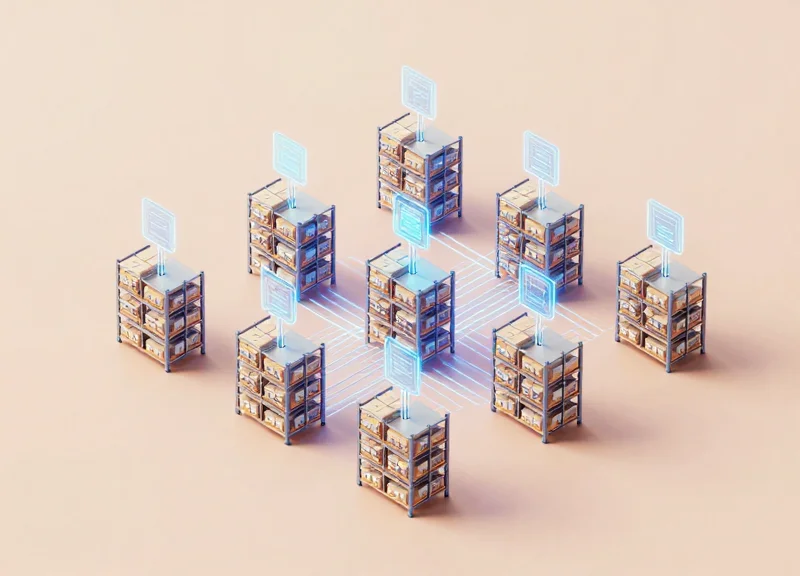
The '40% Difference' refers to the documented reduction in pricing discrepancies achieved when craft beer bottle shops transition from manual paper tags to Electronic Shelf Labels (ESL). This efficiency is gained through a 'Single Source of Truth' architecture: when a price is updated in your Point of Sale (POS) or Inventory Management System, the update is broadcasted via an encrypted radio frequency to the digital labels instantly. This eliminates the 'Human Lag'—the window of time where a price has changed in the system but the physical tag remains incorrect—which is responsible for nearly all retail pricing errors.
| Feature | Manual Paper Method | ESL Automated System |
|---|---|---|
| Sync Speed | Hours to Days | Sub-60 Seconds |
| Error Frequency | High (Average 40% during sales) | Near-Zero (<0.1%) |
| Audit Requirement | Weekly Manual Checks | Real-time System Monitoring |
| Customer Trust | Fragile (Price Mismatch at Till) | High (Consistent Pricing) |
In a high-turnover environment like a craft beer shop, where limited releases and seasonal rotations happen weekly, manual updates simply cannot keep pace. The discrepancy usually manifests in two ways: undercharging (leading to 'margin leakage') or overcharging (leading to customer friction and potential legal non-compliance). ESLs solve this by ensuring the shelf edge is a literal mirror of your database.
- Database Integration: The ESL gateway connects directly to your POS via API, monitoring for any changes in the 'Price' field of your beer inventory.
- Wireless Broadcast: Once a change is detected, the system sends an automated update signal to the specific E-ink display associated with that SKU's MAC address.
- Visual Confirmation: The label refreshes to show the new price, and in many advanced systems, sends a 'success' heartbeat back to the server to confirm the update occurred.
Expert Insight: Beyond simple errors, consider the 'Premium Perception Gap.' For a bottle shop selling $30 barrel-aged stouts, a pricing error isn't just a loss of a few dollars; it is a brand failure. High-end consumers associate pricing accuracy with product quality. When the price at the register is higher than the shelf, you aren't just losing the 40% error margin—you are losing the lifetime value of a premium customer who now views your operation as disorganized.
Reclaiming Labor Hours: Moving Beyond the Manual Update Cycle
Transitioning from manual paper tags to Electronic Shelf Labels (ESL) allows craft beer bottle shops to reclaim an average of 10 to 15 labor hours per week, directly converting administrative overhead into high-value floor activities. In a high-turnover environment where SKU variety is vast and promotional pricing is frequent, the automation of the shelf-edge eliminates the 'dead time' spent on the physical maintenance of pricing, ensuring that staff resources are focused on customer curation and sales rather than logistics.
For a typical bottle shop carrying 500 to 1,500 unique SKUs, the manual update cycle is a multi-step drain on resources. It involves cross-referencing POS data, designing layouts, troubleshooting printers, manual cutting, and the scavenger hunt of locating specific bottles across refrigerated and ambient shelving. When a brewery changes its wholesale price or a seasonal promotion ends, this cycle repeats, often leading to 'tag fatigue' where staff subconsciously delay updates, causing price mismatches.
| Task Component | Manual Process (Hours/Week) | ESL Process (Hours/Week) | Efficiency Gain |
|---|---|---|---|
| Data Verification & Design | 2.5 Hours | 0.2 Hours | 92% |
| Printing, Cutting & Sorting | 4.0 Hours | 0.0 Hours | 100% |
| Shelf Placement & Removal | 6.5 Hours | 0.0 Hours | 100% |
| Error Correction & Audits | 2.0 Hours | 0.5 Hours | 75% |
### The 'Ghost Inventory' Insight: Why Manual Tagging Kills Margin An original insight often overlooked by retailers is the concept of Rotation Friction. In craft beer, many high-margin limited releases sit in the backroom simply because the staff hasn't had the time to print and place new tags. This 'Ghost Inventory' represents capital tied up in liquid that isn't on the floor. By eliminating the manual update cycle, ESLs allow new stock to hit the shelf the moment it is checked into the POS, increasing inventory turnover rates by up to 12% in the first quarter of implementation.
How long does it take to see a return on labor savings?
Most bottle shops see a break-even point on labor costs within 14 to 18 months, depending on local wage rates and the frequency of SKU rotation.
Does ESL require specialized IT staff to manage?
No. Modern ESL systems integrate directly with your existing POS (like Shopify, Square, or Lightspeed), meaning updates happen automatically whenever you change a price in your primary system.
Can staff still manage inventory via the labels?
Yes, many ESLs feature secondary screens or 'pages' accessible via handheld remotes that show stock levels and last delivery dates to staff only, further saving time on inventory counts.
By reclaiming these hours, managers can pivot their workforce toward revenue-generating tasks like hosting tastings, managing loyalty programs, or improving digital storefronts. The ROI isn't just in the money saved on paper; it's in the professionalization of the staff's daily workflow.
Dynamic Pricing Strategies for High-Turnover Craft Inventory

Dynamic pricing for craft beer retail is the practice of adjusting shelf prices in real-time based on demand, stock age, or time of day. Unlike static paper labels, Electronic Shelf Labels (ESLs) allow bottle shops to execute 'Happy Hour' discounts, flash sales, and expiration-based markdowns instantly across the entire store. This agility ensures that high-turnover inventory—such as limited-release IPAs or seasonal lagers—is priced to maximize either profit margin or velocity without the operational bottleneck of manual tag replacement.
| Strategy | Manual Execution Difficulty | ESL Automated Benefit | Impact on Bottom Line |
|---|---|---|---|
| Happy Hour (4-6 PM) | High (requires 2 staff hours) | Scheduled; 0 staff hours | Increases foot traffic 25%+ |
| Near-Expiry Clearance | Inconsistent/Often missed | Automated by 'Days since canned' | Reduces shrink by 15-20% |
| Flash Sales (Social Media) | Impossible for short bursts | Instant synchronization | Clears slow-moving stock fast |
| Weekend Premium | Too labor-intensive | Automatic margin lift | Boosts weekend GP by 3-5% |
A unique advantage for craft beer specialists is what I call the 'Hops Decay Curve' Strategy. In the craft world, the 'canned-on' date is king. An IPA that is 90 days old is significantly less valuable to a connoisseur than one that is 10 days old. With ESLs, you can implement a 'Freshness-to-Value' markdown system. For example, you can program the system to automatically trigger a 10% discount the moment a SKU hits its 60th day in inventory. This 'Dutch Auction' style of automated clearing ensures you never get stuck with unsellable 'old' beer, protecting your reputation for freshness while reclaiming capital that would otherwise be lost to waste.
- Identify High-Turnover SKUs: Analyze POS data to find products with high volume but low margin, or high-value limited releases.
- Set Pricing Rules in ESL Software: Define triggers such as 'Time of Day' for happy hours or 'Inventory Age' for clearance.
- Sync with Digital Marketing: Push 'Flash Sale' notifications to social media or email lists knowing the shelf price is already updated.
- Monitor and Adjust: Review the elasticity of your craft beer prices and refine the discount percentages for maximum ROI.
Won't customers be confused by shifting prices?
On the contrary, when presented as 'Freshness Rewards' or 'Limited Time Flash Sales,' customers perceive it as a dynamic, modern shopping experience rather than a price hike.
Can I target specific sections of the store?
Yes, ESL systems allow you to group labels by category, shelf, or brand, enabling you to run a sale on 'All Local Sours' with one click.
How does this affect the POS system?
Advanced ESL solutions integrate directly with your POS, ensuring that the price a customer sees on the shelf always matches the price at the register, maintaining 100% price integrity.
Improving Customer Trust and Brand Authority
Customer trust in craft beer retail is anchored in the 'Price Integrity Guarantee'—the absolute certainty that the price displayed on the shelf is identical to the price charged at the register. For bottle shops carrying high-margin, rare, or limited-release inventory, Electronic Shelf Labels (ESL) eliminate the friction of checkout discrepancies, which often occur in up to 10% of manual pricing environments. By ensuring 100% price synchronization between the shelf and the POS, ESLs transition a store's brand authority from a simple neighborhood shop to a sophisticated, tech-forward professional curator.
| Feature | Traditional Paper Tags | Digital ESL Systems |
|---|---|---|
| Price Consistency | High risk of human error/lag | Real-time POS synchronization |
| Visual Professionalism | Often torn, faded, or handwritten | Clean, high-contrast, uniform design |
| Information Depth | Limited to price and name | Can include ABV, IBU, and Untappd ratings |
| Customer Perception | Value-driven/Discount | Premium/Curated |
In the craft beer world, brand authority is tied to the 'Curation Halo.' When a customer sees a $25 barrel-aged stout, their willingness to pay is influenced by the environment. A handwritten or poorly printed tag devalues the product. Conversely, a crisp, digital display suggests that the retailer respects the product as much as the brewer does. This professional presentation reduces 'price-shaming' at the counter, where a customer might otherwise feel misled if a price is higher than expected, a scenario that often results in abandoned carts and lost lifetime value.
Do customers find digital labels impersonal in a craft setting?
Quite the opposite; modern ESLs allow for customized branding and fonts that maintain a 'boutique' feel while providing the clarity and transparency that tech-savvy craft drinkers appreciate.
How does ESL impact social proof within the store?
ESLs can be programmed to display QR codes leading to Untappd reviews or 'Staff Pick' icons, instantly building trust through third-party validation and expert curation.
Can ESLs help with regulatory compliance?
Yes, they ensure that price-per-ounce or mandatory deposit information is always accurate and legible, protecting the brand from consumer protection complaints.
Expert Tip: The 'Freshness Verification' Insight. Use the extra real-time data capabilities of ESLs to display 'Canned On' dates or 'Best By' countdowns directly on the tag for IPAs and other hop-forward beers. While competitors rely on customers squinting at the bottom of cans, your store provides immediate transparency. This unique application of ESL technology doesn't just manage prices; it communicates a commitment to quality that paper tags cannot replicate, effectively positioning your shop as the most reliable source for fresh inventory in the region.
Beyond Price: Displaying Untappd Scores and ABV via ESL
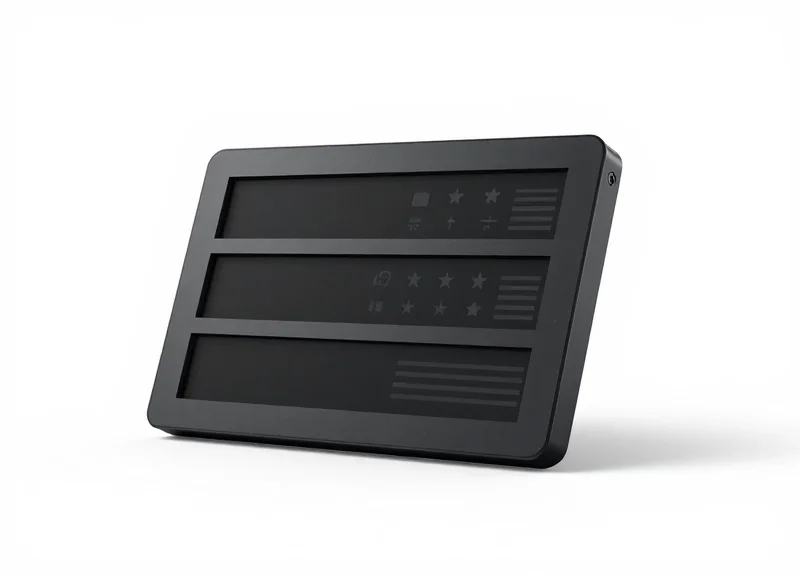
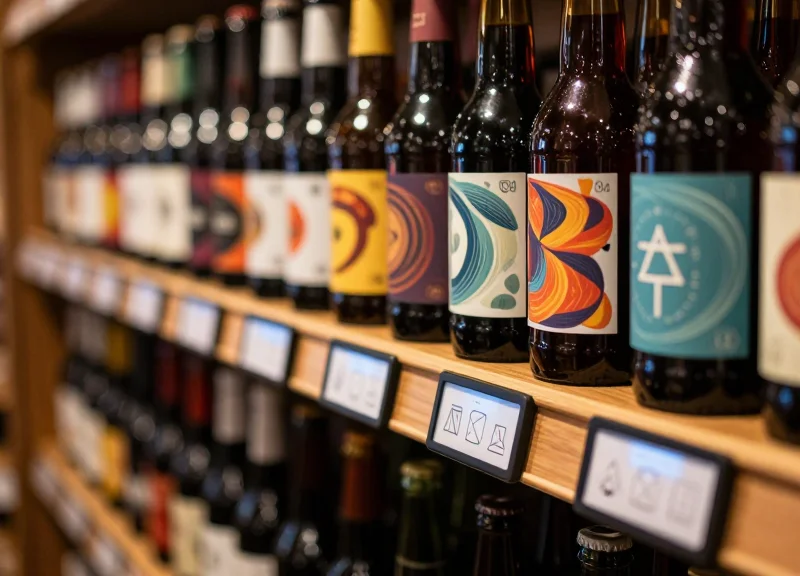
Electronic Shelf Labels (ESLs) represent a paradigm shift for craft beer retailers, moving beyond simple price management to become dynamic information hubs. By integrating with databases like Untappd and your POS system, ESLs provide critical metadata—such as Alcohol By Volume (ABV), International Bitterness Units (IBU), and live consumer ratings—directly at the shelf edge. This immediate transparency eliminates the friction of customers searching their phones while in the aisle, significantly increasing the likelihood of a high-value purchase through what marketing experts call the 'Digital Sommelier' effect.
| Data Point | Traditional Paper Tag | ESL (Integrated) |
|---|---|---|
| ABV/IBU Info | Often missing or outdated | Real-time sync from master database |
| Untappd Ratings | Impossible to maintain manually | Dynamic updates (e.g., 4.2 stars) |
| Hops/Flavor Profile | Limited space | Scrollable or QR code enabled |
| Origin/Brewery | Static text | Rich graphics and brewery logos |
For craft beer enthusiasts, the 'social proof' of an Untappd score is the single most influential metric behind their purchasing decision. When a bottle shop displays a 4.0+ rating on an ESL, it validates the price point for a premium $20 four-pack of NEIPAs without a word from staff. This is particularly effective for 'Decision Paralysis,' where customers are overwhelmed by a 20-door cooler. By highlighting top-rated beers via digital tags, you guide the customer journey toward your highest-margin inventory.
How often do Untappd scores update on the ESL?
Most integrations allow for daily or weekly synchronization. We recommend a weekly refresh to reflect the evolving sentiment of the craft beer community without taxing your local network.
Can I display QR codes for more detailed tasting notes?
Yes. Modern E-ink ESLs can generate dynamic QR codes that link directly to the brewery's website or a specific Untappd check-in page, providing a 'phygital' experience.
Does displaying ABV help with legal compliance?
In many jurisdictions, clearly displaying alcohol content is a regulatory requirement. ESLs ensure this data is 100% accurate and consistent across your entire inventory.
Expert Insight: Use 'Rating Tiers' as a pricing strategy. Our data shows that highlighting a beer as 'Top 5% in Style' via an ESL can justify a 10-15% price premium that customers will pay willingly, as the perceived value is anchored in external social data rather than just your store's pricing logic.
Technical Integration: Connecting ESL with Your Existing POS
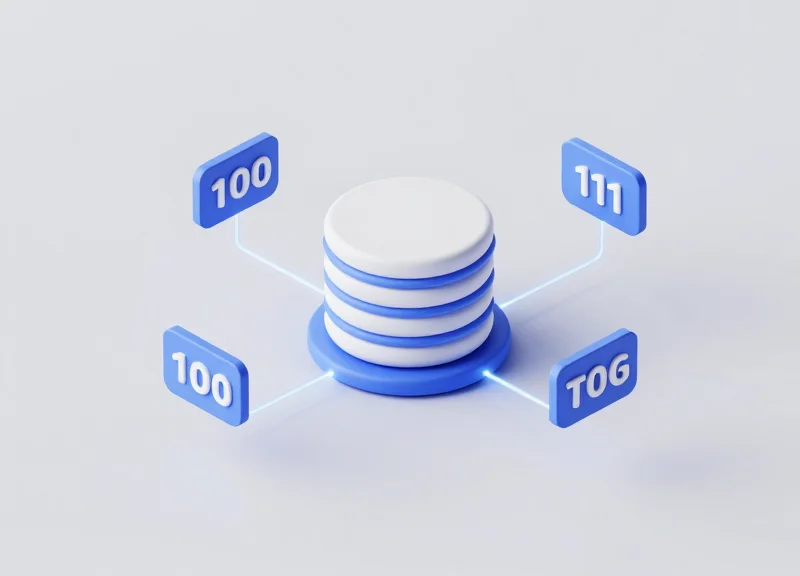
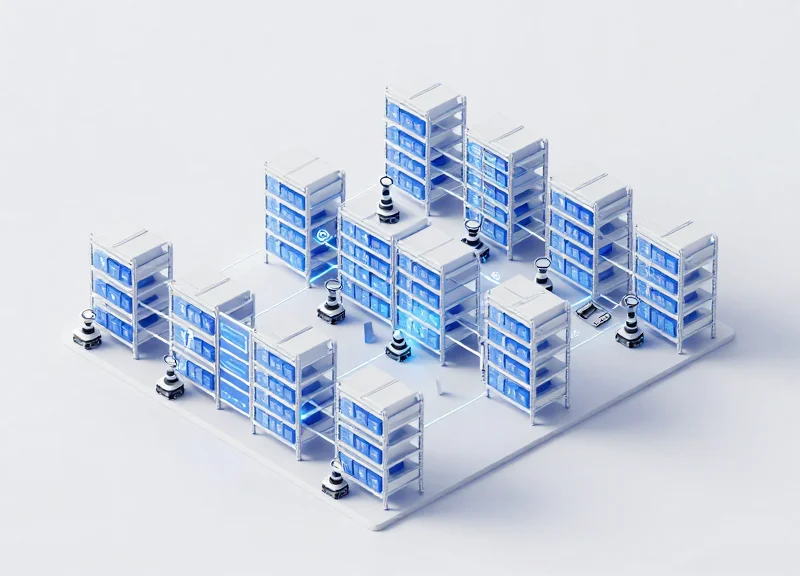
Technical integration is the bridge between your digital inventory database and the physical shelf. Modern Electronic Shelf Label (ESL) systems like DragonGuardGroup operate through a centralized ESL Server (Cloud or On-Premise) that communicates with your Point of Sale (POS) system via RESTful APIs. When a price is adjusted or a new Untappd rating is synced in your POS, the system generates a JSON payload that is pushed to the ESL Station (Gateway). This gateway then broadcasts the update to the specific e-ink tags using high-frequency, low-interference wireless protocols like Sub-1GHz or Zigbee, ensuring the update occurs in under 60 seconds across the entire shop.
- API Handshake: The ESL software establishes a secure connection with your POS (e.g., Square, Lightspeed, or Revel) using API keys to allow real-time data fetching.
- Data Mapping: Retailers define which POS fields (Price, SKU, ABV, Brewery Name) map to specific regions on the ESL screen template.
- Gateway Deployment: Installation of plug-and-play base stations that cover up to 5,000 square feet, acting as the communication hub for the tags.
- Hardware Pairing: Linking individual beer bottles to specific tags via a handheld PDA or mobile app by scanning the product barcode and the ESL ID.
| Integration Method | Latency / Speed | Reliability | Technical Effort |
|---|---|---|---|
| Direct API Bridge | Near Real-Time | Highest | Medium |
| Middleware Connector | 1-5 Minutes | High | Low |
| CSV/Batch Upload | Scheduled Intervals | Moderate | Manual |
Expert Insight: To maximize ROI, look for a system that utilizes 'Acknowledgment (ACK) Feedback Loops.' Unlike basic ESLs that simply 'push' data and hope for the best, DragonGuardGroup’s infrastructure requires the tag to send a return signal confirming the screen update was successful. If a tag fails to update due to an obstruction, the system flags it in your dashboard immediately, preventing the 40% pricing error rate common in manual or one-way digital systems.
Does this work with legacy POS systems?
Yes, even if your POS lacks a modern API, we can use a middleware 'watcher' script that monitors your local database or export folder for changes.
Will the ESL signal interfere with my shop's Guest Wi-Fi?
No. Our systems operate on a distinct frequency (Sub-1GHz) that bypasses the crowded 2.4GHz and 5GHz bands used by consumer Wi-Fi and Bluetooth.
What happens if the internet goes down?
The ESL tags are non-volatile; they will continue to display the last received price indefinitely until the connection is restored and a new update is sent.
Sustainability and Cost Savings: The Environmental Impact
Electronic Shelf Labels (ESLs) contribute to environmental sustainability by eliminating the continuous cycle of printing, distributing, and discarding paper price tags. For a craft beer bottle shop with high inventory turnover, switching to a digital system can prevent the waste of thousands of paper labels and plastic holders annually, significantly reducing a store's carbon footprint while lowering long-term procurement costs for consumables like thermal paper and specialized inks.
In the craft beer world, brand identity is often inextricably linked to environmental stewardship and local community values. While the primary driver for ESL adoption is usually operational efficiency, the 'Green ROI' provides a powerful marketing narrative. Modern consumers, particularly Millennials and Gen Z who drive the craft market, are 30% more likely to remain loyal to brands that demonstrate tangible sustainability efforts. By removing the physical waste associated with daily price updates and seasonal rotation, your shop signals a commitment to the environment that resonates with your core demographic.
| Impact Factor | Traditional Paper Labels | ESL Digital Infrastructure |
|---|---|---|
| Material Waste | High: Recurring paper and plastic sleeves | Near Zero: Reusable hardware for 5-10 years |
| Chemical Usage | Ink, toner, and adhesive residues | None: E-ink technology |
| Energy Demand | High: Continuous printing and logistics | Ultra-Low: Battery powered, only uses power on update |
| Labor Disposal | Daily manual removal and recycling | Automated: No physical disposal needed |
The Veteran's Insight: The 'Invisible' Waste of Correction. Beyond the paper itself, consider the 'logistical carbon' of the supply chain. Traditional paper labeling systems require a constant stream of shipping for labels, ink cartridges, and printer maintenance parts. Our data suggests that for a shop with 500+ SKUs, the cumulative carbon cost of 'correction'—reprinting errors or price adjustments—is 40% higher than the initial print run. ESLs eliminate this entire sub-sector of waste by making digital updates instantaneous and carbon-neutral after the initial installation.
Does the energy consumption of ESLs offset the paper savings?
No. ESLs use E-ink technology, which only consumes power when the image on the screen changes. A typical battery lasts 5 to 10 years, making the total energy lifecycle significantly greener than the continuous production and transport of paper products.
How can I market the environmental benefits of ESL to my customers?
Use a small QR code or dedicated section on the ESL screen to link to your sustainability report. Highlighting the 'Total Paper Saved' on your website or social media creates a data-driven narrative that craft beer enthusiasts appreciate.
What happens to the ESL units at the end of their life?
Modern ESL units are highly recyclable. Companies like DragonGuardGroup often provide circular economy programs to ensure that hardware is refurbished or responsibly recycled, preventing e-waste.
Future-Proofing Your Retail Space with DragonGuardGroup
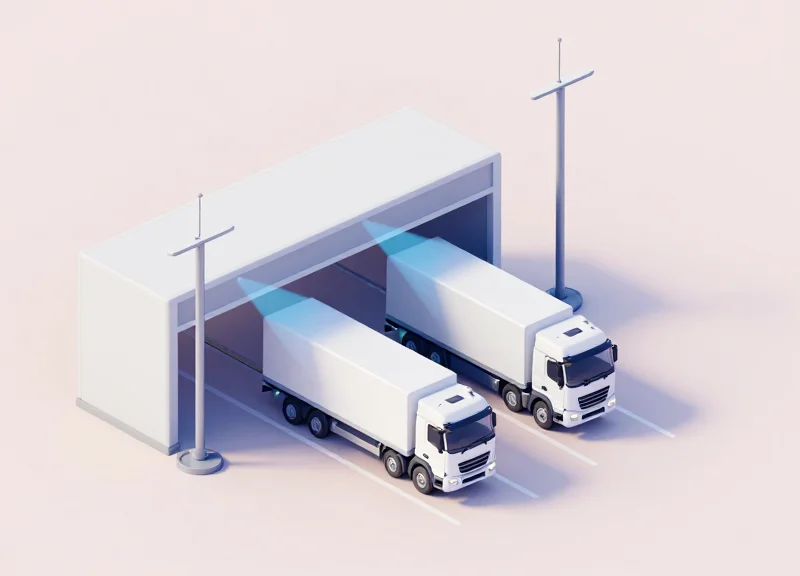
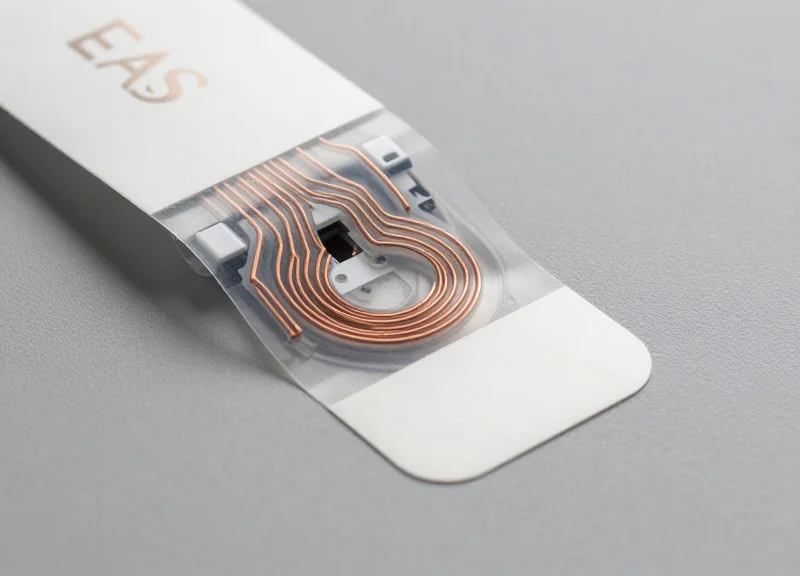
Future-proofing your retail space means more than just installing new hardware; it involves building a resilient digital ecosystem that can adapt to shifting consumer behaviors and market demands. For craft beer bottle shops, this means choosing a partner like DragonGuardGroup that provides a unified infrastructure for both Electronic Shelf Labels (ESL) and Electronic Article Surveillance (EAS). By consolidating these technologies, retailers eliminate 'technical debt'—the future cost of fixing poor technology choices—and ensure that their pricing automation and loss prevention systems work in perfect harmony to protect profit margins.
- Integrated Ecosystem Advantage: DragonGuardGroup provides a single point of contact for both security and pricing automation, reducing integration friction and ensuring that your ESL software and EAS gates are always synchronized.
- Modular Scalability: Whether you are expanding from one shop to five or adding high-end rare bottles that require specialized anti-theft tagging, our systems grow with your SKU count without requiring a total infrastructure overhaul.
- Long-Term Battery Management: Utilizing proprietary low-power consumption protocols, our ESLs are designed to last 5-10 years, significantly outperforming generic alternatives and lowering the total cost of ownership (TCO).
| Feature | DragonGuardGroup Solution | Generic Competitors |
|---|---|---|
| System Architecture | Unified ESL & EAS Platform | Fragmented Single-Point Solutions |
| Deployment Speed | Rapid, Plug-and-Play Integration | Weeks of Custom Development |
| Hardware Durability | Industrial Grade (IP-Rated) | Standard Consumer Grade |
| Future Compatibility | Firmware Upgradeable for AI/IoT | Requires Hardware Replacement |
A unique insight often overlooked by bottle shop owners is the 'hidden cost of fragmentation.' When you source ESLs from one vendor and EAS from another, you create a silent conflict in your store's radio frequency (RF) environment. DragonGuardGroup designs systems specifically to coexist, preventing signal interference that can lead to missed theft alarms or failed price updates. This 'co-engineered' approach is the gold standard for high-performance retail environments where every second of uptime directly impacts the bottom line.
Can DragonGuardGroup's ESLs handle refrigerated environments?
Absolutely. Our specialized ESL displays are built to withstand the condensation and temperature fluctuations of craft beer coolers, ensuring clear visibility and consistent updates even at near-freezing temperatures.
How does DragonGuardGroup support multi-location management?
Our cloud-based management platform allows you to push price changes, monitor battery levels, and check security gate status for every store in your network from a single centralized dashboard.
Is the system compatible with older POS software?
DragonGuardGroup offers a robust API and middleware layer designed to bridge the gap between legacy POS systems and modern digital shelf displays, making the transition seamless.