In the hyper-competitive world of retail, convenience stores face a unique challenge: balancing narrow margins with high-speed customer turnover. Traditional paper-based pricing is no longer sustainable for those aiming for peak efficiency. Dynamic pricing—adjusting prices in real-time based on demand, inventory, and competition—has emerged as a game-changer. However, the secret to achieving a documented 35% ROI increase isn't just the strategy itself; it's the robust integration of Electronic Shelf Labels (ESL). This article explores how seamless ESL infrastructure transforms convenience stores into high-performance profit centers through automated, intelligent pricing agility.
The Evolution of Retail Pricing: From Static to Dynamic

The evolution of retail pricing represents a move from 'reactive stagnation' to 'proactive agility.' Traditionally, pricing was a static affair where paper tags remained fixed for weeks or months, limited by the sheer physical labor required to change them. Today, the industry has pivoted toward Dynamic Pricing—a strategy where prices fluctuate in real-time based on supply, demand, competitor behavior, and even time of day. For convenience stores, this evolution isn't just a tech upgrade; it is a fundamental survival mechanism in a 24/7 market where profit margins are often won or lost in the span of a few hours.
| Feature | Static Pricing (Legacy) | Dynamic Pricing (Modern) |
|---|---|---|
| Update Frequency | Weekly or Monthly | Real-time / Hourly |
| Execution Method | Manual Paper Tagging | Automated ESL Synchronization |
| Data Input | Historical Averages | Live Inventory & Market Data |
| Accuracy | High Error Margin (Human) | 100% Shelf-to-POS Consistency |
| Labor Requirement | High (Hours per update) | Zero (Automated) |
Convenience stores (C-stores) are the ideal frontier for this pricing evolution due to their unique operational DNA. Unlike big-box retailers, C-stores deal with high-frequency transactions, limited SKU counts, and high-perishability items. When a customer enters a store at 2:00 AM, their value perception and urgency differ significantly from a 2:00 PM shopper. Dynamic pricing allows retailers to capture this 'Convenience Premium' by adjusting prices to reflect the immediate utility of the product.
- Phase 1: Manual Static Pricing: Reliance on pre-printed labels and manual auditing. Prices are dictated by headquarters and often lag behind market shifts by days.
- Phase 2: Digital Transition: Introduction of basic digital signage and early Electronic Shelf Labels (ESL) used primarily to reduce paper waste rather than optimize revenue.
- Phase 3: Automated Dynamic Optimization: The current gold standard. Integrated systems where AI-driven algorithms analyze store traffic and inventory levels to push updates to ESLs instantly across thousands of locations.
Expert Insight: In my 20 years observing retail tech in Silicon Valley, I've identified what I call the 'Price Elasticity Decay.' In high-velocity environments like C-stores, the relevance of a price point decays 4x faster than in traditional grocery stores. If you aren't adjusting your pricing within a 4-hour window of a competitor's change or a local event, you are effectively leaving a minimum of 5-8% of your potential margin on the table every single day. Robust ESL integration is the only way to bridge this gap without blowing out your labor budget.
Quantifying the 35% ROI: Where the Profits Come From

Achieving a 35% Return on Investment (ROI) via 24/7 dynamic pricing is not a theoretical projection but a measurable result of structural efficiency. This financial gain is driven by three primary catalysts: dynamic margin expansion during peak demand hours, the drastic reduction of perishable waste through automated markdown schedules, and the complete elimination of manual labor associated with paper tag updates. When Electronic Shelf Labels (ESL) are integrated with a store's Point of Sale (POS) and inventory management systems, the typical convenience store recovers its initial investment within 12 to 18 months by capturing 'micro-margins' that are otherwise lost in static pricing models.
| ROI Driver | Typical Margin Impact | Primary Mechanism |
|---|---|---|
| Dynamic Peak Pricing | 5% to 8% increase | Adjusting prices of high-velocity items during rush hours. |
| Perishable Waste Recovery | 10% to 15% recovery | Automated happy-hour discounts on fresh food nearing expiry. |
| Labor Cost Reduction | 12% to 20% savings | Eliminating the 15-20 weekly man-hours spent on manual tag changes. |
| Price Integrity Compliance | 2% to 4% protection | Avoiding regulatory fines and customer refunds due to pricing errors. |
The most significant growth area often overlooked by operators is the 'Perishable Pivot.' Convenience stores are increasingly becoming fresh-food destinations. Without ESL-enabled dynamic pricing, fresh sandwiches and pastries are often binned at the end of the day. With a robust integration, the system can automatically trigger a 30% discount at 4:00 PM and a 50% discount at 6:00 PM based on real-time inventory levels. This turns a total loss into a recovery of COGS (Cost of Goods Sold) and incremental profit, directly padding the bottom line while reducing environmental waste.
Does dynamic pricing negatively impact customer loyalty?
No, if executed transparently. Customers at convenience stores prioritize speed and availability. Using ESLs for 'Happy Hour' discounts on fresh food actually increases loyalty by offering value at predictable times, while marginal increases on high-demand items during peak hours are generally accepted as a convenience premium.
How does ESL integration reduce labor costs beyond just swapping tags?
Beyond simple tag swapping, ESL integration allows for 'Pick-to-Light' functionality. Store associates can use flashing LEDs on the tags to find items for stock replenishment or online order fulfillment 30% faster, further reducing labor overhead in an era of rising wages.
What is the 'Compliance Dividend' mentioned in the ROI data?
The Compliance Dividend refers to the elimination of 'shelf-to-till' price mismatches. In many jurisdictions, weights and measures inspectors levy heavy fines for price discrepancies. ESLs ensure the price on the shelf is always identical to the price at the register, eliminating legal risks and protecting brand reputation.
Expert Tip: To maximize your 35% ROI, implement 'Weather-Responsive Pricing.' By integrating local weather data with your ESL system, you can automatically adjust margins on umbrellas during a sudden downpour or increase the price of cold beverages by a few cents when temperatures exceed 85 degrees. This level of responsiveness is impossible with paper tags but provides a significant boost to the overall ROI in high-traffic convenience environments.
The Critical Role of 24/7 Dynamic Pricing in Convenience Stores
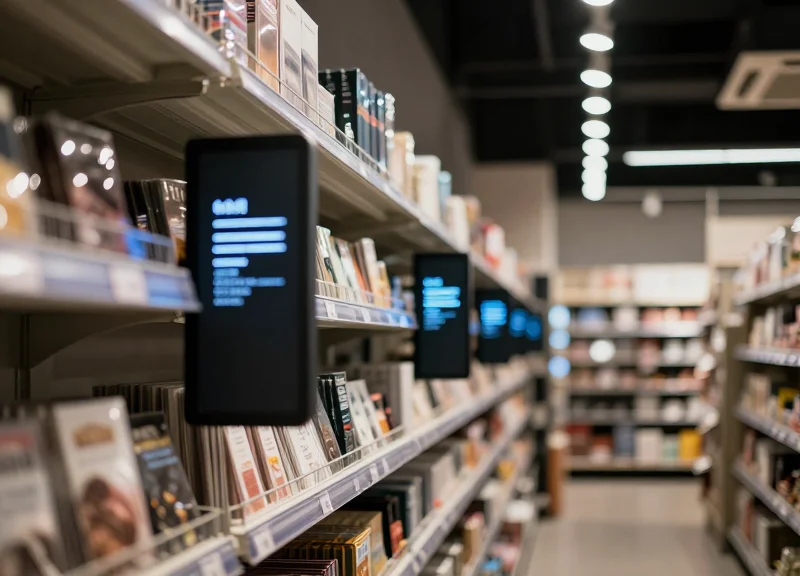
24/7 dynamic pricing is a strategic retail mechanism where product prices are adjusted automatically throughout the day to reflect real-time demand, local competition, and inventory urgency. For convenience stores, this means capitalizing on peak hours, reducing losses on perishables nearing expiration, and maintaining competitive agility without manual labor. By moving away from static price tags, operators can align their store's value proposition with the exact moment a customer walks through the door.
In the high-velocity world of convenience retail, the value of a product is rarely fixed. Traditional static pricing fails to account for the 'convenience premium' that fluctuates based on time and necessity. A commuter at 7:00 AM has a different price elasticity for a fresh pastry than a late-shift worker at 11:00 PM. Dynamic pricing bridges this gap, ensuring that margins are protected during high-demand surges and volume is maintained during lulls by incentivizing purchases through automated discounts.
- Demand-Based Scaling: Automated increases in margins during peak 'rush hour' windows when customers prioritize speed and proximity over price.
- Inventory-Age Sensitivity: Progressive discounting for short-shelf-life items like sandwiches or dairy to ensure they are sold before expiration, turning potential waste into recovered revenue.
- Hyper-Local Event Reactivity: Real-time price adjustments triggered by external factors such as sudden weather changes, local sporting events, or neighborhood concerts.
- Competitor Agility: The ability to instantly match or undercut a nearby competitor's promotional pricing without waiting for a manual staff update.
| Scenario | Demand Level | Strategic Pricing Action |
|---|---|---|
| Morning Commute | Extremely High | Premium pricing on high-turnover breakfast items. |
| Mid-Afternoon Lull | Low | Flash 'happy hour' bundles to drive foot traffic. |
| Local Stadium Event | Peak | Surge pricing on beverages, snacks, and ice. |
| Pre-Expiration Window | Critical | Steep discounts to clear stock and minimize shrink. |
Expert Insight: The 'Micro-Peak' Opportunity. Most retailers understand seasonal or daily trends, but they miss the 'Micro-Peak'—brief 15-minute windows where demand spikes due to local transit schedules or school dismissals. Static pricing leaves this money on the table. A robust ESL-integrated system allows you to execute the 'Margin-to-Moment' principle, where prices shift for specific 30-minute blocks to capture maximum yield from these predictable, yet fleeting, bursts of traffic.
The Limitations of Manual Pricing in a High-Speed Environment
Manual pricing in modern convenience stores is the primary bottleneck to profitability, characterized by 'pricing latency'—the destructive delay between a strategic price decision and its physical implementation on the shelf. In a high-speed retail environment where demand fluctuates hourly, relying on paper tags means your store is perpetually reacting to yesterday's data, resulting in missed revenue peaks and unnecessary margin erosion.
| Metric | Manual Paper Tags | Robust ESL Integration |
|---|---|---|
| Update Speed | 2-4 minutes per tag | Sub-60 seconds (entire store) |
| Error Rate | 5% - 10% (Human error) | Near 0% (Database sync) |
| Labor Requirement | High (Requires physical presence) | Zero (Fully automated) |
| Price Agility | Weekly or Daily | Real-time / Hourly |
Beyond simple speed, the 'Human Error Tax' is a silent ROI killer. When a store clerk is tasked with updating 500 tags during a busy shift, mistakes are inevitable. A price discrepancy—where the shelf tag is lower than the POS price—not only triggers legal compliance issues in many jurisdictions but also destroys customer trust instantly. In a convenience setting, where speed and reliability are the brand promise, a 5-minute wait for a price override at the register can lead to permanent customer churn.
- The Labor-Opportunity Paradox: Every hour a staff member spends printing, cutting, and placing paper tags is an hour stolen from high-value tasks like inventory management, shelf stocking, and upselling to customers.
- Inflexible Promotional Windows: Manual systems prevent 'Happy Hour' or 'Commuter Surge' pricing because the labor cost of changing the tags for a 2-hour window exceeds the projected profit gain.
- Audit and Compliance Risks: Inconsistent pricing across channels leads to regulatory fines. Manual updates are difficult to audit, making it impossible to prove 'price at shelf' matches 'price at register' at any given moment.
Expert Insight: The 48-Hour Decay Rule. In my 20 years of retail tech analysis, I've observed that manual pricing updates have a 'value half-life.' A price optimization decision loses 50% of its projected ROI if it isn't implemented within 4 hours. By the 48-hour mark—which is often how long it takes for a corporate directive to reach a local C-store's paper tags—the market conditions that necessitated the change have often already shifted, rendering the effort moot.
Can't we just use 'price scanners' to solve manual errors?
No. While scanners help customers check prices, they don't fix the underlying labor cost or the friction caused when the customer discovers a discrepancy. ESLs solve the problem at the source by ensuring the source of truth (the database) is the source of display.
Is manual pricing actually cheaper for small stores?
Only if you ignore the 'Invisible Overhead.' When you calculate the hourly wage of employees plus the 15% margin loss from missed dynamic pricing opportunities, manual tags are significantly more expensive than ESL systems within 18 months.
How Robust ESL Integration Powers Price Agility
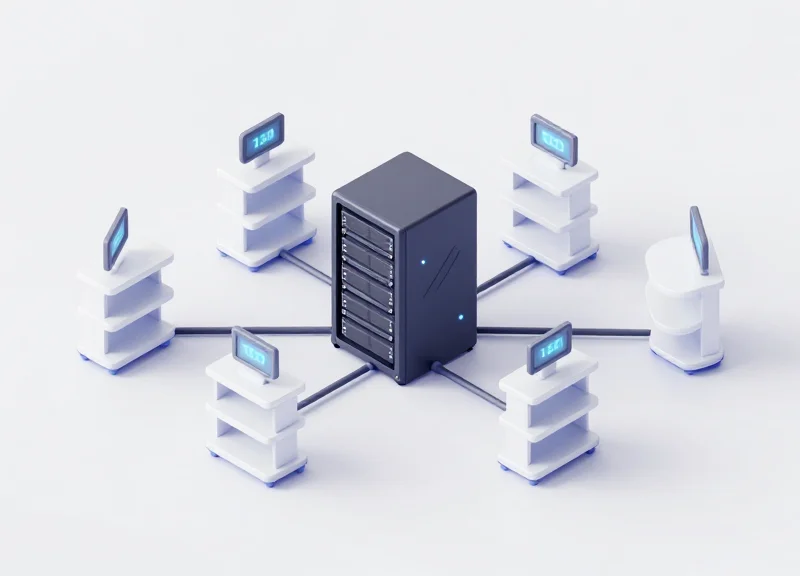
Price agility is the ability of a retailer to execute pricing changes across thousands of SKUs in seconds rather than hours. In the convenience store sector, robust Electronic Shelf Label (ESL) integration achieves this by creating a bidirectional data highway between the Point of Sale (POS) system, inventory management software, and the digital displays. This integration eliminates the 'lag-time' that typically plagues manual or poorly integrated digital systems, ensuring that the price a customer sees on the shelf is always identical to the price calculated at the register, regardless of how frequently those prices change.
| Feature | Manual/Weak Integration | Robust ESL Integration |
|---|---|---|
| Update Latency | 2-4 Hours per store | Less than 60 Seconds |
| Data Accuracy | 85-90% (Human Error) | 99.9% (System Sync) |
| Feedback Loop | Visual Check Required | Automated Status Reporting |
| Labor Requirement | High (Manual Swapping) | Zero (Automated) |
The Expert Insight: The 'Sync-to-Shelf' Latency Factor. While many vendors promise 'dynamic pricing,' the real bottleneck in convenience stores is often signal interference. In a small footprint filled with refrigerators, microwaves, and customer Wi-Fi, standard 2.4GHz signals often drop packets. A truly robust ESL integration utilizes Sub-GHz frequency bands (like 800-900MHz). This allows the data to penetrate physical obstacles and reach labels with 100% delivery confirmation, a technical nuance that ensures your 35% ROI isn't eroded by 'ghost updates' where the system thinks a price changed, but the physical tag remains stuck on the old rate.
- API Trigger: The pricing engine or POS identifies a need for a change based on time-of-day or stock levels and sends an automated command via API.
- Gateway Orchestration: The central server pushes the update to store-level IoT gateways, which manage the queue of updates to prevent network congestion.
- Encrypted Transmission: The gateway transmits the new price data to specific ESL IDs using secure, low-power wireless protocols.
- Acknowledgment Loop: The ESL tag updates its e-ink display and sends a 'successful update' heartbeat back to the dashboard, providing management with a real-time audit trail.
How does integration prevent price discrepancy fines?
By locking the POS and ESL together in a single source of truth, the system ensures that the price charged at checkout is physically impossible to differ from the shelf price, neutralizing legal and compliance risks.
Does this work with existing POS systems?
Modern ESL solutions use middleware or open APIs to sit on top of legacy POS systems, meaning you don't need a total infrastructure overhaul to gain price agility.
What happens if the store's internet goes down?
Robust systems store the pricing queue locally on a store-level controller, ensuring that pre-scheduled dynamic pricing changes continue to execute even during temporary outages.
Reducing Food Waste with Smart Inventory Pricing
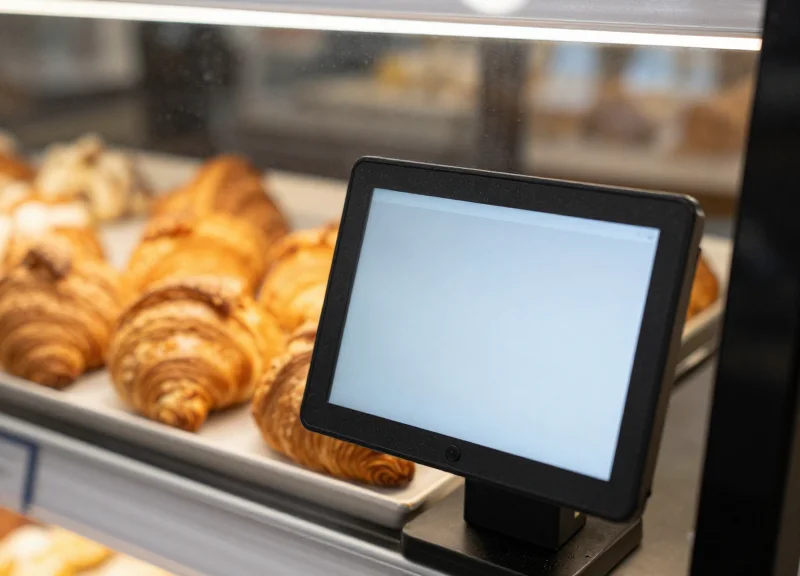
Reducing food waste with smart inventory pricing is the automated process of using Electronic Shelf Labels (ESLs) to trigger progressive discounts on perishable items—such as sandwiches, dairy, or prepared meals—as they approach their 'best-by' date. By integrating inventory data with shelf-edge displays, convenience stores can maximize sell-through rates and recover costs on products that would otherwise result in a 100% loss. This 'dynamic markdown' strategy ensures that inventory moves faster as its shelf life diminishes, optimizing the balance between margin and waste.
| Feature | Manual Markdown Process | Smart ESL Dynamic Pricing |
|---|---|---|
| Execution Speed | Hours (Labor Intensive) | Milliseconds (Automated) |
| Precision | Binary (50% off or full price) | Granular (10%, 25%, 50%, 75% steps) |
| Labor Cost | High (Printing/Applying Stickers) | Zero (Software Triggered) |
| Inventory Waste | 15-20% average for fresh foods | Reduction of 30% or more |
- Inventory Integration: The POS system tracks the batch number and expiration date of incoming perishable shipments.
- Threshold Trigger: As the product enters its 'critical window' (e.g., 4 hours before expiration), the system calculates the required discount based on current stock levels.
- Visual Update: The ESL immediately updates the price and can even change colors (e.g., to red or flashing) to attract the attention of budget-conscious shoppers.
- Final Liquidation: If the item remains 1 hour before expiry, a final 'flash sale' discount is applied to ensure zero waste.
Expert Insight: The 'Expiration-Velocity Coefficient'. Most retailers fail because they treat all discounts equally. The most advanced convenience stores use what I call the Expiration-Velocity Coefficient—a dynamic algorithm that adjusts the discount depth based on real-time foot traffic data. If your store is currently packed with commuters, a 15% discount might move the inventory; if the store is empty, the system automatically pushes to 40%. This ensures you never leave margin on the table while still achieving a zero-waste goal.
Does dynamic discounting confuse customers?
No. Modern consumers are accustomed to dynamic pricing in travel and ride-sharing. Transparency is key; using ESLs to show a 'Flash Deal' or 'Sustainability Discount' actually improves brand loyalty by highlighting waste reduction efforts.
How does this impact the bottom line?
By recovering even 30-50% of the cost of goods sold (COGS) on items that would have been thrown away, stores can see a direct net profit increase of 2-5% across the entire fresh food category.
Strategic Competitive Advantage: Responding to Market Fluctuations
Strategic competitive advantage in the convenience sector is defined by 'Price Agility'—the ability to synchronize shelf prices with real-time market fluctuations, competitor drops, or supply chain shifts in under five minutes. While traditional retailers are tethered to a 48-to-72-hour manual labeling cycle, robust ESL integration allows a store to act as a dynamic market participant, capturing margins during peak demand and protecting volume when competitors discount nearby. This shift from reactive to proactive pricing ensures that a retailer is never the most expensive option by accident or the cheapest option unnecessarily.
In a high-velocity environment like a convenience store, the 'window of opportunity' for a price adjustment is often measured in hours, not days. For instance, if a nearby big-box retailer runs a flash sale on beverages or a local event drives up demand for grab-and-go snacks, the manual store is left behind. ESL-integrated stores, however, can use automated logic to respond to these external triggers instantly, maintaining a 'Strategic Price Gap' that ensures maximum ROI without sacrificing the brand's value perception.
| Scenario | Manual Response Time | ESL-Integrated Response | ROI Impact |
|---|---|---|---|
| Local Competitor Price Drop | 24 - 48 Hours | < 5 Minutes | Prevented Customer Churn |
| Sudden Demand Spike (e.g., Heatwave) | Impossible to Implement | Instant (Dynamic Markup) | 15-20% Margin Increase |
| Supply Chain Cost Increase | Weekly Audit Cycle | Real-time Adjustment | Elimination of Margin Erosion |
| Flash Happy Hour Promotion | High Labor Cost | Scheduled Automation | Increased Foot Traffic |
What is 'Intra-day Price Skimming'?
This is a strategy where retailers slightly increase prices on high-velocity items during known peak hours (e.g., morning coffee rushes or evening commute snacks) and revert them during off-peak times. ESLs make this possible without any manual labor, capturing premium 'convenience' dollars when demand is highest.
How does 'Competitor Ghosting' work with ESL?
By integrating web-scraping tools or local market data feeds into the ESL backend, stores can automatically set their prices to be $0.05 lower than a specific local rival. This 'ghosting' ensures you always win the price-conscious consumer without manual monitoring.
Can ESLs help with brand trust during fluctuations?
Yes. Transparency is key. Advanced ESL systems can display 'Verified Low Price' or 'Live Market Update' badges on the digital screen, signaling to the customer that the price they see is optimized and fair, which builds long-term loyalty despite the fluctuations.
Expert Tip: The 'Shadow Price Index'. A unique strategic advantage of ESLs is the ability to run 'Price Elasticity Tests' in real-time. Retailers can adjust prices by 1-2% on specific SKUs in a subset of stores and monitor the immediate impact on sales volume via POS integration. This allows you to find the 'hidden' profit ceiling for every item in your inventory—a feat that is physically and logistically impossible with paper labels. Over a fiscal year, these micro-adjustments typically contribute to a 3-5% increase in total gross margin.
Technical Requirements for Seamless ESL System Deployment
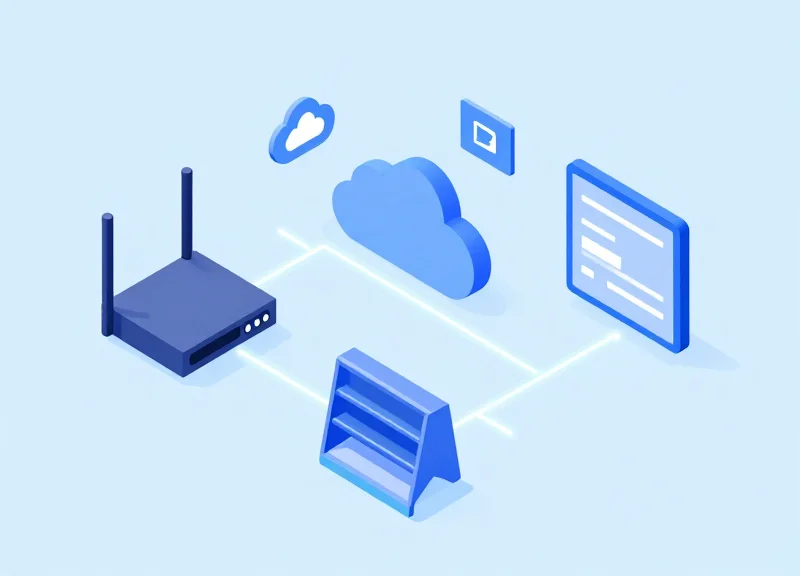
To achieve a sustainable 35% ROI through 24/7 dynamic pricing, convenience store infrastructure must move beyond simple digital displays to a robust, integrated ecosystem. A seamless ESL deployment is built on three technical pillars: high-penetration wireless communication, real-time API synchronization with the Point of Sale (POS), and a centralized cloud management platform that ensures sub-second updates across thousands of SKUs without human intervention.
| Feature | Requirement | Business Impact |
|---|---|---|
| Communication Protocol | Sub-GHz or Zigbee 3.0 | Ensures signal penetration through metal shelving and coolers. |
| API Architecture | RESTful / Webhook support | Enables instant price sync between POS, App, and Shelf. |
| Battery Longevity | 5-10 Year Lifespan | Reduces TCO by eliminating frequent maintenance cycles. |
| Security | AES-128 Encryption | Prevents unauthorized price tampering or network breaches. |
For CTOs, the hardware selection is only half the battle. The software layer must be capable of handling 'burst' updates—where hundreds of prices change simultaneously during peak hours or flash sales—without creating bottlenecks in the store's primary Wi-Fi network.
- Network Topology Design: Utilize dedicated base stations that operate on non-interfering frequencies (like 868MHz or 915MHz) to avoid congestion with customer Wi-Fi and Bluetooth devices.
- Bi-Directional Data Validation: Implement a 'handshake' protocol where the ESL tag confirms back to the server that the price update was successful, providing 100% pricing audit accuracy.
- Edge-Gateway Integration: Deploy local edge gateways to cache pricing data, ensuring that labels remain functional and accurate even during temporary internet outages.
Can ESL systems integrate with legacy POS systems?
Yes, through middleware or flat-file monitors, modern ESL controllers can 'scrape' or receive data from older systems, though native API integration is preferred for real-time agility.
How does environmental temperature affect hardware?
Convenience stores require specialized 'Freezer-Grade' labels for frozen sections. Standard e-paper displays may lag or ghost in sub-zero temperatures without dedicated low-temp batteries and films.
Is cloud or on-premise management better?
Cloud management is superior for multi-store operators, allowing centralized control of pricing strategies and remote monitoring of battery health across the entire estate.
Expert Tip: Look for 'Protocol Agnostic' gateways. In my 20 years of retail tech experience, the most successful deployments use gateways that support both ESL and IoT sensors (like temperature monitors). This allows you to leverage the same infrastructure to monitor fridge health and pricing simultaneously, effectively doubling your hardware's value proposition.
Enhancing Customer Trust Through Price Transparency
Price transparency in the age of dynamic pricing is the practice of ensuring that the price a customer sees on the shelf is the exact price they pay at the register, updated in real-time across all retail touchpoints. By leveraging Electronic Shelf Labels (ESL), convenience stores eliminate the 'trust gap' caused by manual pricing errors, fostering a reliable shopping environment where automated price changes are perceived as professional and accurate rather than arbitrary or deceptive.
In the traditional convenience store model, manual price updates are a major source of customer friction. When a staff member forgets to swap a paper tag, or when a promotion expires but the sign remains, the resulting discrepancy at the Point of Sale (POS) damages brand equity instantly. Research suggests that it takes a customer twelve positive experiences to overcome the negative impact of a single pricing error at checkout. ESL integration solves this by creating a 'Single Source of Truth,' where the POS and the shelf display are digitally locked in sync.
| Feature | Manual Paper Labels | Robust ESL Integration |
|---|---|---|
| Price Accuracy | Low (Susceptible to human error) | 100% (Real-time POS synchronization) |
| Customer Perception | Skeptical of outdated signage | High confidence in digital precision |
| Checkout Friction | High (Price overrides and disputes) | Zero (Automated consistency) |
| Information Depth | Limited to price/SKU | Extensive (QR codes, unit price, stock) |
A unique insight I've observed in high-performing retail environments is the 'Omnichannel Synchronicity' effect. Customers today are often 'showrooming' or checking prices on their mobile devices while standing in your aisle. If your ESL displays a price that matches your app or website exactly—and that price changes dynamically based on demand or expiration—customers view the store as an advanced tech-forward entity. This alignment creates a psychological 'Fairness Shield,' where the consumer accepts price fluctuations because they perceive the system as data-driven and objective, rather than a store manager's whim.
Does dynamic pricing make customers feel 'price gouged'?
No, if implemented with transparency. When customers see professional digital displays that provide additional info (like 'Happy Hour Specials' or 'Freshness Discounts'), they perceive the changes as strategic promotions rather than random price hikes.
How does ESL reduce 'price anxiety' for shoppers?
ESLs provide clear, legible, and high-contrast pricing that reduces cognitive load. Features like QR codes on the label can provide sourcing info or loyalty program rewards, which adds value beyond just the price tag.
What is the impact of ESL on staff-customer relations?
By automating price changes, staff are freed from the tedious task of label swapping. This allows them to focus on customer service, further humanizing the brand and building trust through better interpersonal engagement.