As campus environments evolve into high-tech hubs, traditional paper labeling in libraries has become a bottleneck for operational efficiency. In 2026, the shift toward Electronic Shelf Labels (ESL) is no longer a luxury but a strategic necessity for forward-thinking procurement officers. This guide explores how ESL technology transforms library management, offering real-time updates, reduced labor costs, and seamless integration into smart campus ecosystems, ensuring your institution stays at the forefront of the digital revolution.
Understanding the Role of ESL in the 2026 Modern Library

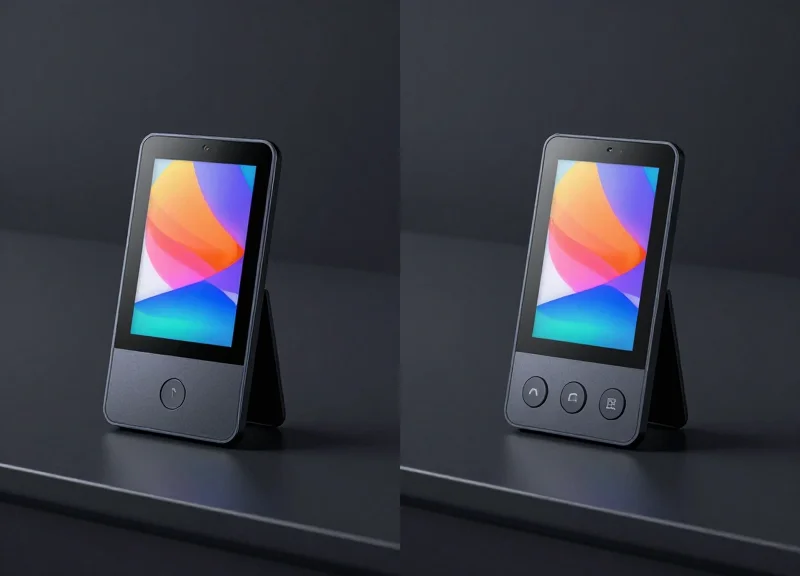
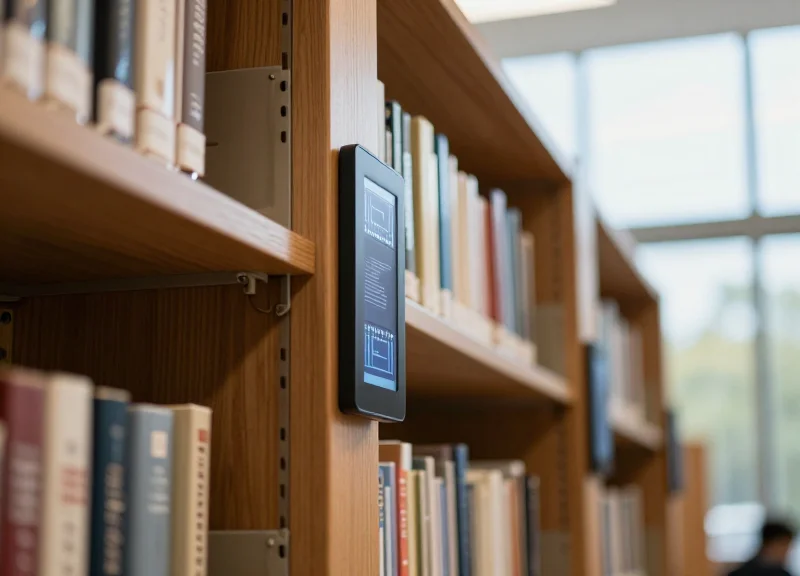
In the 2026 landscape, Electronic Shelf Labels (ESL) for libraries represent a specialized application of dynamic display technology that replaces traditional paper labels with high-definition, e-ink interfaces. Unlike their retail ancestors designed for price fluctuations, library-grade ESLs serve as live data nodes integrated directly with Library Management Systems (LMS). They provide real-time updates on book availability, multi-language metadata, and hyper-local navigation cues, transforming the physical stacks into a responsive digital environment.
| Feature | Traditional Paper Labels | 2026 Library ESL Systems |
|---|---|---|
| Data Accuracy | Manual updates; prone to lag. | Real-time LMS synchronization. |
| Patron Interactivity | None; static information. | NFC/QR codes for instant reserves. |
| Operational Cost | High labor for re-labeling. | Zero-labor automated updates. |
| Energy Use | Paper waste/printing costs. | Ultra-low power (10-year battery). |
Expert Insight: The Shift to 'Spatial Metadata Indexing' One critical trend we are seeing in Silicon Valley's EdTech sector is the transition from 'Labeling' to 'Spatial Metadata Indexing.' In 2026, the ESL is no longer just a tag; it is a beacon. Leading campus procurements are prioritizing ESLs that feature tri-color LED flash systems and sub-GHz wireless protocols. This allows librarians to trigger 'pick-to-light' sequences for requested holds, reducing the time spent locating misfiled volumes by up to 70%. The shelf itself effectively becomes a user interface for both the staff and the patron.
Why should libraries move away from retail-standard ESLs?
Retail ESLs are optimized for high-frequency price changes. Library-specific ESLs require higher pixel density for call numbers, ruggedized casing for high-traffic areas, and specialized mounting hardware that doesn't damage heritage shelving.
How does ESL integration impact the Digital Twin of a library?
ESLs act as the physical anchor for a library's 'Digital Twin' strategy, allowing administrators to see a live heatmap of collection movement and shelf density through their dashboard, facilitating better floor plan optimization.
Is the investment justifiable for smaller campus branches?
By 2026, the ROI is driven by labor reallocation. Instead of spending 15 hours a week on shelf-reading and labeling, staff are redeployed to high-value research support and community programming.
Key Features to Prioritize: Display Technology and Visibility
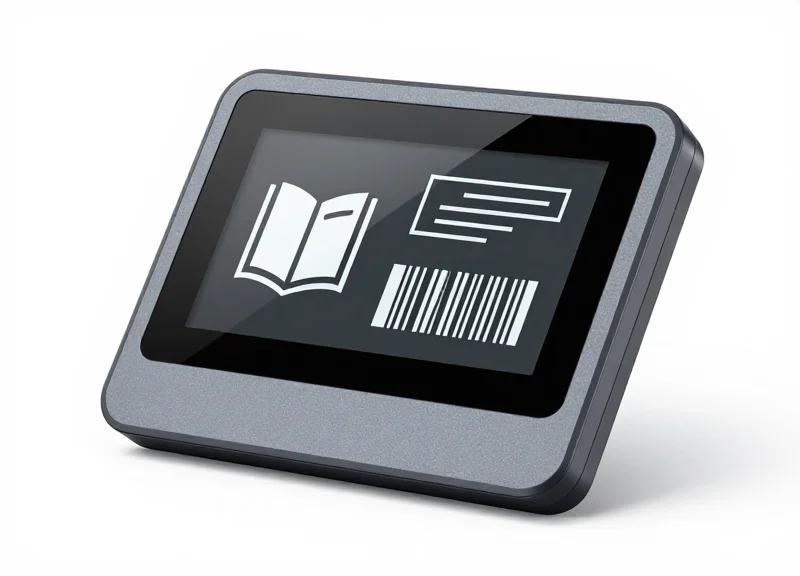
In the context of 2026 campus procurement, the best electronic shelf labels (ESLs) for libraries must prioritize high-contrast E-paper technology, specifically 4-color or 7-color electrophoretic displays (EPD) that offer 180-degree viewing angles and zero-flicker visibility. Unlike standard LCD screens, E-ink technology mimics the appearance of ink on paper, consuming power only during image updates and remaining perfectly legible under the diverse lighting conditions found in modern academic facilities, from bright skylights to dim archival stacks.
| Feature | Standard ESL (Retail) | Academic Library Grade (2026) | Benefit for Procurement |
|---|---|---|---|
| Display Tech | BWR (Black/White/Red) | BWRY or Full Color E-paper | Enables complex genre coding and branding. |
| Resolution | 100-120 DPI | 140-200+ DPI | Ensures scannable QR codes for resource links. |
| Surface Treatment | Glossy / Semi-gloss | Full Matte Anti-Glare | Reduces eye strain and allows reading under LED tracks. |
| Viewing Angle | 160 Degrees | True 180 Degrees | Maintains legibility for students searching from floor-level shelves. |
The move toward multi-color displays is not merely aesthetic; it is a functional requirement for modern library management. Using a fourth color, such as yellow or green, allows librarians to visually flag reserved items, 'New Arrivals,' or high-demand course reserves without printing additional paper inserts. Furthermore, the pixel density (DPI) of these displays is critical. In a library setting, students frequently use their smartphones to scan QR codes on labels to access digital versions or bibliographical data; a low-resolution display will fail to render these codes reliably, causing friction in the user experience.
How does E-ink technology improve ADA compliance?
E-ink provides a high-contrast, non-emissive surface that reduces glare and blue light exposure, making it significantly more accessible for students with visual impairments or neurodivergent conditions who are sensitive to screen flickering.
Are multi-color displays worth the extra cost?
Yes, for 2026 procurement, multi-color labels are essential for 'visual management.' They allow for instant color-coded shelf-mapping, which reduces search time for students and streamlines the inventory process for staff.
What is the 'Refresh Rate' requirement for library ESLs?
While libraries don't need high-speed video, 'Partial Refresh' capability is vital. This technology allows only specific parts of the label (like a 'Checked Out' status) to update without the distracting black-to-white flash of a full page refresh.
Expert Tip: When evaluating visibility, perform a 'Vertical Parallax Test.' Library shelves range from ground level to over six feet high. Generic retail ESLs often suffer from color shifting or contrast loss when viewed from steep vertical angles. Ensure your chosen hardware maintains a contrast ratio of at least 8:1 at a 45-degree vertical offset to remain accessible to all students, including those in wheelchairs or those browsing the lowest stacks.
Battery Life and Sustainability: Long-term ROI for Campus Projects
Battery life and sustainability for campus ESL projects are driven by bistable E-ink technology, which requires zero power to maintain an image, enabling 10- to 15-year operational lifecycles. By choosing hardware optimized for low-energy consumption, libraries can achieve a 'set-and-forget' infrastructure that eliminates recurring maintenance costs and aligns perfectly with institutional ESG (Environmental, Social, and Governance) goals for carbon-neutral campus operations by 2030.
For campus procurement, the ROI of an ESL system is not found in the initial purchase price, but in the longevity of the battery. Modern libraries rarely update their entire stack daily; they may update a fraction of the collection's status (availability, reservation status) or location data. This low update frequency, combined with 'Deep Sleep' wireless protocols like Zigbee or Bluetooth Low Energy (BLE) 5.4, ensures that the primary hardware stays dormant until a specific command is received, preserving the lithium-cell integrity for over a decade.
| Update Frequency | Typical Battery Life | Estimated 10-Year Maintenance Cost | Sustainability Impact |
|---|---|---|---|
| 1 Update / Day | 12 - 15 Years | $0 (No battery swaps needed) | Lowest waste; high ESG score |
| 3 Updates / Day | 8 - 10 Years | Low (1 cycle of replacements) | Moderate carbon footprint |
| 10+ Updates / Day | 3 - 5 Years | High (Frequent labor/disposal) | Poor alignment with green goals |
Expert Insight for 2026: Ambient Light Harvesting. While standard lithium-button cells (CR2450) remain the industry benchmark, the 2026 procurement cycle introduces 'Light-Assisted' ESLs. These units feature ultra-thin photovoltaic strips that capture ambient library lighting to trickle-charge an internal capacitor. In well-lit study areas, these labels can theoretically operate indefinitely without ever requiring a battery replacement, representing the pinnacle of sustainable campus technology.
How do we handle battery disposal for thousands of units?
Leading 2026 ESL vendors now offer 'Circular Economy' programs. Upon the end of a 10-year cycle, the vendor manages the extraction and certified recycling of lithium cells, providing the university with a documented sustainability report for accreditation.
Does cold library storage affect battery performance?
Most ESL batteries are rated for 0°C to 50°C. While libraries are climate-controlled, proximity to HVAC vents won't degrade modern lithium-thionyl chloride (Li-SOCl2) batteries, which are designed for high stability across varying temperatures.
Can the software predict when a battery is failing?
Yes. Modern Centralized Management Systems (CMS) provide real-time telemetry on every label. Procurement teams receive automated alerts when a unit's voltage drops below a specific threshold, allowing for targeted, rather than mass, maintenance.
Integration Capabilities: Connecting ESL with Integrated Library Systems (ILS)
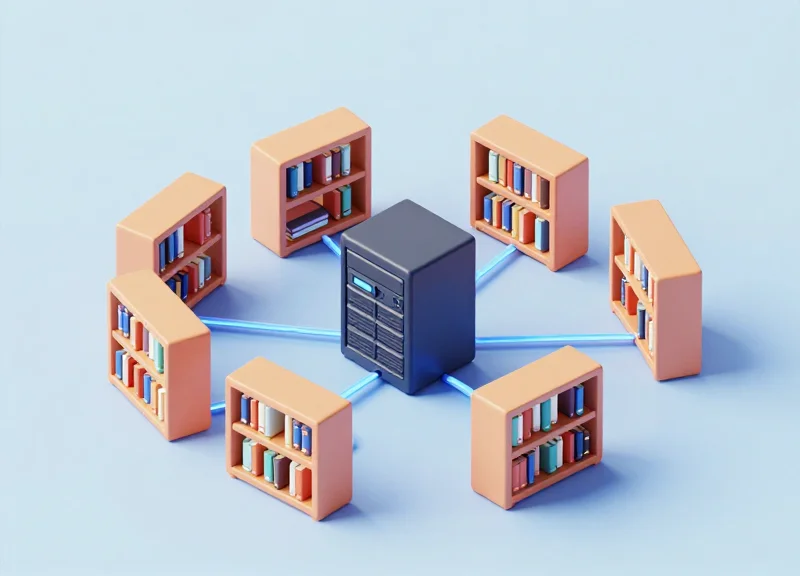
Integrating Electronic Shelf Labels (ESL) with an Integrated Library System (ILS) involves creating a synchronized data pipeline where book metadata—such as availability, call numbers, and reservation status—is pushed from the central database to the E-ink displays. In the 2026 procurement landscape, this is no longer a luxury but a baseline requirement; true integration ensures that the physical shelf always reflects the digital reality of the collection, eliminating 'ghost' availability where a book is listed as present online but is actually in the returns bin.
| Integration Method | Data Latency | Complexity | Best Use Case |
|---|---|---|---|
| Direct RESTful API | Near Real-Time | High | Modern cloud-based ILS (e.g., Alma, Koha) requiring instant updates. |
| Middleware Gateway | Low (Seconds) | Medium | Hybrid environments connecting legacy on-premise servers to IoT hardware. |
| CSV/Batch Export | High (Scheduled) | Low | Small archives or static collections where book status rarely changes. |
The 2026 Strategic Insight: Hyper-Local Contextualization. Most vendors talk about syncing prices or titles, but the real value for modern campus procurement lies in 'Contextual Triggering.' By 2026, leading libraries will use ILS data to trigger ESL behavior based on user behavior analytics. For example, if a book is trending in a specific curriculum, the ILS can signal the ESL to display a 'High Demand' badge or a QR code for a related digital syllabus, transforming the label from a static tag into an interactive academic concierge.
- Database Mapping: Identify the unique identifiers (typically ISBN or Barcode) that will serve as the primary key between the ILS and the ESL Management Software.
- API Handshake Configuration: Establish secure OAuth2 or API key authentication between the ESL cloud server and the library’s backend to allow authorized data fetching.
- Template Assignment: Design and map visual layouts to specific book categories (e.g., 'New Arrival' vs. 'Reference Only') so the label updates its UI automatically based on the book's status field.
- Testing Signal Strength: Ensure the IoT access points (APs) are positioned to handle the polling frequency required by the ILS without draining ESL battery life.
Will ESLs work with older ILS versions?
Yes, but they often require a middleware layer that converts legacy database queries into modern JSON/XML formats compatible with ESL software.
What happens if the Wi-Fi or API connection drops?
ESLs are designed to be 'fail-safe'; they will continue to display the last cached data. Modern systems include a 'Data Age' indicator or an offline alert for staff.
Can students interact with the labels to update the ILS?
Through NFC-enabled ESLs, students can tap their phones to 'Self-Check' or 'Hold' a book, sending a command back to the ILS via the ESL gateway.
Connectivity Standards: Why Wi-Fi 6E and Bluetooth 5.4 Matter

In the high-density RF environment of a modern campus, the success of an Electronic Shelf Label (ESL) system depends on its ability to bypass network congestion. By 2026, Wi-Fi 6E and Bluetooth 5.4 have emerged as the mandatory standards for library procurement because they utilize the 6GHz spectrum and advanced bidirectional communication protocols, ensuring that thousands of digital labels can update simultaneously without lagging or interfering with student research and streaming activities.
| Feature | Legacy Standards (BT 4.2 / Wi-Fi 5) | 2026 Standards (BT 5.4 / Wi-Fi 6E) |
|---|---|---|
| Spectrum Band | 2.4GHz / 5GHz (Overcrowded) | 6GHz (Dedicated Greenfield) |
| Device Capacity | Low (Frequent Collisions) | Ultra-High (Thousands per AP) |
| Update Latency | 30 - 120 Seconds | Sub-5 Seconds |
| Battery Efficiency | Moderate | Optimized via PAwR & TWT |
The transition to Wi-Fi 6E is particularly critical for libraries located in central campus hubs. While the 2.4GHz and 5GHz bands are saturated by smartphones, laptops, and IoT sensors, the 6GHz band offers 'clean air.' This prevents the 'packet loss' that frequently plagues older ESL systems, where a label might fail to update its price or availability because a nearby student is downloading a large research dataset. For procurement officers, Wi-Fi 6E is essentially an insurance policy against future network gridlock.
Bluetooth 5.4 introduces a revolutionary feature for ESL known as Periodic Advertising with Response (PAwR). Unlike older Bluetooth versions that required a constant, power-hungry connection to sync data, PAwR allows the library’s central access points to broadcast updates to specific groups of labels in synchronized bursts. The labels 'wake up' for milliseconds to receive data and confirm receipt, which is the primary reason why 2026-era labels can maintain a 10-year battery life even with daily updates.
- Expert Tip: The 'Spectral Conflict' Audit: Before deployment, insist on an RF site survey that accounts for 'transient load.' A library's signal environment changes drastically between 10:00 AM and 2:00 PM. Systems using Bluetooth 5.4 with 'Channel Hopping' are superior because they can dynamically switch frequencies if they detect a sudden spike in student device activity, a feature generic ESL platforms often lack.
- Security Note: WPA3 and AES-128: Ensure your ESL hardware supports WPA3 for Wi-Fi or AES-128 encryption for Bluetooth. In a campus setting, unsecured IoT devices are a prime vector for network intrusion; your labels should be as secure as your student records database.
Will ESL interference slow down the library's student Wi-Fi?
No, if you use Wi-Fi 6E or Bluetooth 5.4. These standards operate on different frequencies or use time-slicing techniques that ensure the ESL system and student devices never compete for the same micro-second of airtime.
Can we manage ESLs using our existing campus Access Points?
Most enterprise-grade APs manufactured after 2024 include dedicated IoT radios for Bluetooth 5.4. If your infrastructure is older, you may need USB 'gateway' dongles or a dedicated ESL base station.
What happens to the labels if the campus network goes down?
Modern ESLs are designed with 'fail-state retention.' If the connection is lost, the display remains on the last known correct information, and the radio enters a low-power polling mode until the gateway is restored.
Durability and Maintenance in High-Traffic Student Environments
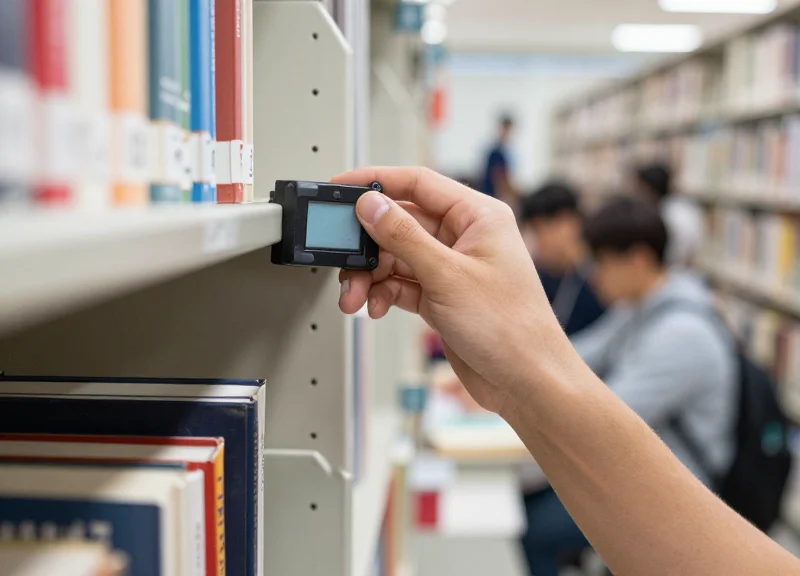
For 2026 campus procurement, durability in electronic shelf labels (ESL) is defined as 'Institutional Resilience'—the ability of hardware to maintain 99.9% uptime despite constant physical interaction, environmental stressors, and accidental or intentional tampering. In a library setting, labels must be more than just digital price tags; they must be ruggedized assets capable of surviving backpack strikes, coffee spills, and the curiosity of thousands of students. Choosing labels with a high IK impact rating and secure, integrated mounting systems is the only way to ensure a low Total Cost of Ownership (TCO) over a ten-year lifecycle.
| Feature | Retail-Grade ESL | Campus-Grade (2026) ESL | Institutional Benefit |
|---|---|---|---|
| Impact Resistance | IK03 (Basic) | IK07+ (Reinforced) | Survives heavy book carts and backpack impacts. |
| Ingress Protection | IP54 (Dust) | IP67 (Waterproof) | Protects against liquid spills and cleaning chemicals. |
| Screen Material | Standard Glass | Anti-Shatter Polycarbonate | Eliminates injury risk from broken display fragments. |
| Mounting Security | Snap-on Clips | Tamper-Proof Mechanical Locks | Prevents unauthorized removal or 'souvenir' theft. |
| Vibration Sensing | None | Integrated Accelerometers | Triggers alerts if a label is struck or moved. |
Maintenance in a sprawling university system cannot rely on manual checks. The 2026 standard for campus ESL deployment involves 'Active Health Monitoring.' This shift moves maintenance from a reactive task to a predictive one, where the Integrated Library System (ILS) receives real-time telemetry on battery health, signal strength, and even the physical orientation of the device. This ensures that the library staff's time is spent on curation and student support rather than hardware troubleshooting.
- The 'Triage Dashboard' Insight: A unique 2026 feature is the use of built-in accelerometers that detect 'High-G' events. If a student knocks a shelf or attempts to pry a label off, the system automatically flags that specific unit for a physical inspection, preventing long-term damage or data desync.
- Chemical Resistance for Sanitization: Modern campus hygiene protocols require frequent cleaning. Ensure ESL casings are rated for medical-grade isopropyl alcohol or bleach wipes without crazing the display cover or degrading the plastics.
- Modular Repairability: Prioritize vendors offering modular components where the battery or the mounting bracket can be replaced without discarding the entire E-ink display unit, supporting both budget and sustainability goals.
How do we prevent students from stealing or moving the labels?
Modern campus ESLs utilize proprietary rail-locking mechanisms that require a specialized magnetic or mechanical tool to release. Unlike retail clips, these are designed to be part of the shelving architecture.
What happens if a label's screen is scratched by a metal object?
Opt for labels with 3H or 4H hardness-rated coatings. While the E-ink underneath remains functional, a high-quality protective overlay prevents 'ghosting' or legibility issues caused by surface abrasions.
How often do these ruggedized units require physical maintenance?
With IP67 sealing and high-capacity batteries, physical maintenance is typically limited to a visual audit once per semester, with all other diagnostics handled remotely via the cloud management platform.
Scalability: From Small Archives to Multi-Campus University Systems
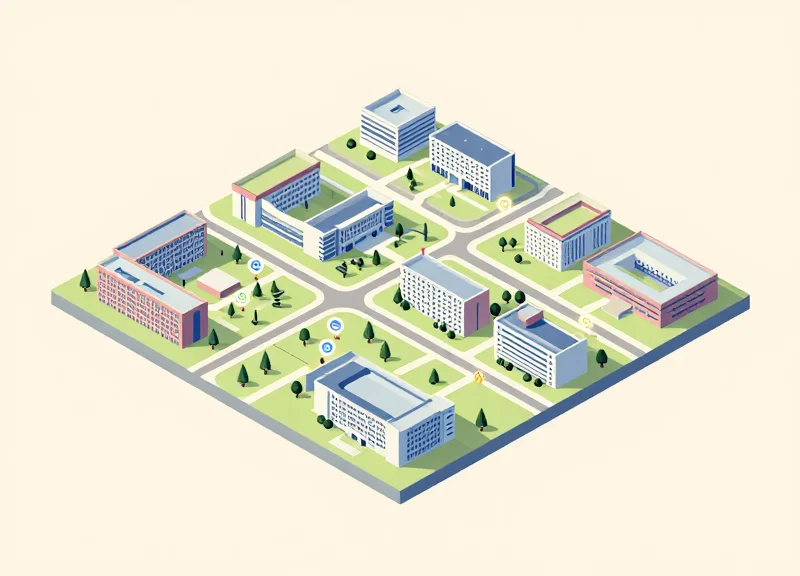
Scalability in the context of 2026 library technology is no longer just about adding more hardware; it is about the software's ability to manage a federated network of devices without exponential increases in latency or administrative overhead. For campus procurement officers, a truly scalable Electronic Shelf Label (ESL) system must offer a 'plug-and-play' expansion path that allows a single archive to pilot the technology today while maintaining the infrastructure required to support a global multi-campus university system tomorrow. This requires a cloud-native backend that abstracts hardware management into a unified dashboard, ensuring that adding a new library branch is as simple as registering a new gateway.
| Scaling Dimension | Small Archive / Department | Multi-Campus University Network |
|---|---|---|
| Management Mode | Local/Direct Control | Federated / Multi-Tenant Cloud |
| Gateway Density | 1-2 Access Points | Mesh Network of 50+ Access Points |
| Update Velocity | Synchronous (Real-time) | Asynchronous / Batch Prioritization |
| Permissioning | Single Admin | Role-Based Access Control (RBAC) |
Expert Insight: The 'Inheritance Model' for Efficiency. A critical oversight in many procurement cycles is failing to demand a system that supports hierarchical template inheritance. In 2026, the most efficient systems allow the main university library to set a global visual standard (brand, font, and layout) that automatically trickles down to specialized satellite branches. This ensures that while a Medical Library might display different metadata than a Music Library, the core infrastructure and visual identity remain consistent and centrally manageable, reducing the need for localized IT support.
Can we start with a pilot in one department and expand later?
Yes, look for systems with a modular subscription model. You should be able to scale your license based on the number of active tags or gateways, avoiding high upfront costs for theoretical future capacity.
How does network traffic handle 100,000+ labels during a system-wide update?
Modern ESL systems use 'Differential Updating'—only sending data to tags where information has changed. In 2026, Wi-Fi 6E integration allows for ultra-low power wake-up signals that prevent network congestion even during massive database syncs.
What happens if a satellite campus has an internet outage?
The best systems utilize 'Edge Persistence.' The gateways should store the current state of all labels locally so that displays remain accurate and functional even if the connection to the central cloud is temporarily severed.
Ultimately, the goal of a scalable ESL deployment is to achieve a lower 'Total Cost of Ownership (TCO) per Label' as the system grows. By centralizing the server logic in the cloud and utilizing low-maintenance gateways on-site, universities can expand their digital footprint across millions of square feet without a proportional increase in IT staffing.
Cost Analysis and Procurement Budgeting Strategies
For 2026 campus procurement committees, the cost of Electronic Shelf Labels (ESL) must be evaluated through the lens of Total Cost of Ownership (TCO) over a 7-to-10-year horizon, rather than a simple per-unit price point. While the initial capital expenditure (CapEx) for E-paper displays and infrastructure typically ranges from $5 to $12 per unit depending on size and features, the real value lies in the operational expenditure (OpEx) reduction—specifically the elimination of thousands of manual labor hours previously dedicated to re-labeling, inventory audits, and price corrections. Modern budgeting strategies now prioritize the 'Labor Offset Model,' which justifies the investment by redirecting staff from low-value administrative tasks to high-value student support and research assistance.
| Budget Category | Primary Cost Components | Economic Impact (10-Year Cycle) |
|---|---|---|
| Initial CapEx | ESL Hardware, Access Points, Railings, Professional Installation | High upfront investment; often eligible for one-time institutional grants. |
| Integration OpEx | API Middleware, Cloud Management Subscriptions, ILS Sync Licensing | Low recurring cost; ensures data integrity across all digital touchpoints. |
| Maintenance | Battery replacements (at Year 10), Firmware updates, Spare unit stock | Minimal; modern 2026 displays use ultra-low-power Bluetooth 5.4. |
| Labor Savings | Reallocation of student workers and professional librarians | Net positive ROI typically achieved within 18 to 24 months. |
Expert Insight: In the 2026 fiscal landscape, we recommend a 'Hybrid Funding Approach.' Libraries should look beyond the general fund and tap into 'Sustainability and Green Initiative' grants. Because ESL systems significantly reduce paper waste and toner consumption—aligning with university Net Zero goals—they often qualify for environmental subsidies that can cover up to 30% of the initial hardware procurement costs. Additionally, consider the 'Deferred Maintenance Offset': by installing a digital system today, you eliminate the future recurring costs of manual signage updates necessitated by evolving collection taxonomies.
Is the software subscription model mandatory for ESL?
Most 2026 enterprise solutions require a SaaS subscription for cloud-based management and ILS integration. However, libraries should negotiate 'Perpetual On-Premise' licenses if they have the internal IT capacity to manage the server, which can reduce long-term OpEx by 40%.
How do we account for battery life in a 10-year budget?
Modern ESLs using e-ink technology only draw power during image refreshes. For libraries with low update frequencies (less than 3 times daily), batteries are rated for 10-12 years. Budget for a bulk battery replacement or a 'refresh' hardware cycle in Year 9.
What is the hidden cost of integration?
The most common hidden cost is the 'API bridge.' Ensure your vendor provides a flat-rate integration fee for your specific Integrated Library System (ILS), such as Alma or Sierra, to avoid per-transaction data sync charges.
Security and Data Privacy in the Educational Sector
In 2026, security in the educational sector transcends simple password protection; it requires a Zero-Trust architecture where every Electronic Shelf Label (ESL) and access point is treated as a potential entry point for lateral network movement. For campus procurement officers, ensuring ESL systems are compliant with the Family Educational Rights and Privacy Act (FERPA) and the General Data Protection Regulation (GDPR) is non-negotiable. Modern ESL solutions must utilize AES-128 or AES-256 bit encryption for all over-the-air (OTA) updates to prevent 'man-in-the-middle' attacks that could alter display information or compromise the library’s Integrated Library System (ILS) backbone.
| Security Layer | Standard Requirement | Library-Specific Impact |
|---|---|---|
| Data Encryption | AES-128/256 Bit | Prevents unauthorized price/content spoofing and data interception. |
| Network Isolation | VLAN Tagging / WPA3-Enterprise | Separates ESL traffic from student Wi-Fi to mitigate 'Shadow IoT' risks. |
| Privacy Compliance | FERPA & SOC2 Type II | Ensures student borrowing habits or PII are never stored on the edge device. |
| Authentication | Mutual TLS (mTLS) | Verifies that only authorized gateways can communicate with the labels. |
- End-to-End Encryption (E2EE): All data transmitted from the central server to the individual e-ink display must be encrypted to ensure that sensitive collection data or restricted-access metadata remains confidential.
- Anonymized Metadata Handling: To maintain FERPA compliance, ESL systems should only receive record IDs or call numbers, never actual student names or identifiable borrowing histories, even when used for 'Hold' pick-up notifications.
- Hardware Hardening: Physical security is a digital gateway; ensure ESLs have locked battery compartments and disabled debug ports to prevent physical tampering that could lead to firmware injection.
Expert Insight: The 'Ghost Node' Audit. A unique vulnerability in large-scale campus ESL deployments is the 'Ghost Node'—a decommissioned or stolen label that remains registered in the system. As a 2026 best practice, procurement should demand systems that feature 'Heartbeat Monitoring' and automated de-authorization. If a label does not check in within a 24-hour window, it should be automatically quarantined from the network to prevent it from being used as a localized packet sniffer by malicious actors.
Does ESL technology collect student location data?
Standard ESLs do not collect location data. However, if using Bluetooth Low Energy (BLE) for wayfinding, data must be processed locally on the user's device and anonymized before reaching the server to comply with privacy laws.
How do ESLs affect the campus firewall configuration?
ESL gateways typically require specific outbound ports (e.g., MQTT or HTTPS). We recommend placing the ESL management server in a dedicated IoT VLAN with restricted access to the main administrative database.
What happens if an ESL is stolen?
Security-focused ESLs are 'bricked' once they lose contact with their authorized gateway. They contain no resident student data and cannot be repurposed without the proprietary infrastructure, rendering them useless to thieves.