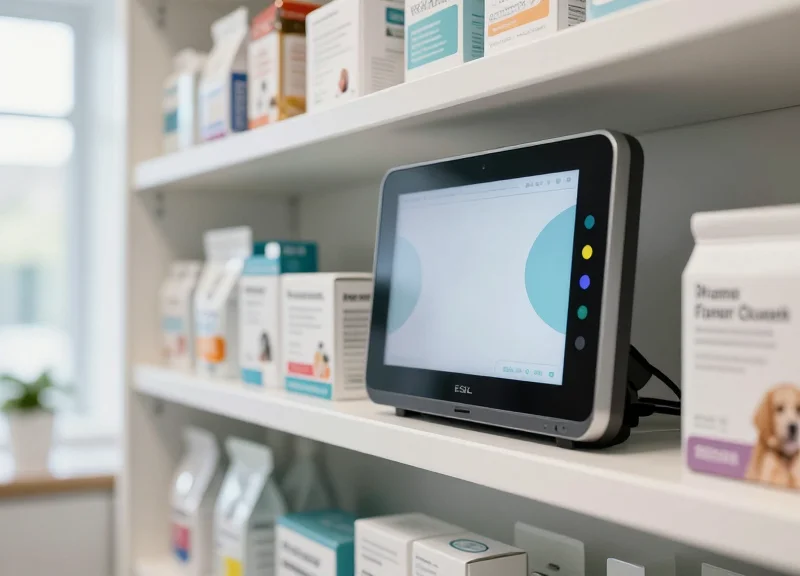

In the high-stakes environment of cold chain retail, visibility is everything. When customers encounter fogged-up freezer doors and obscured price tags, the shopping experience suffers and sales drop. Electronic Shelf Labels (ESLs) are a revolution in pricing efficiency, but freezer zones present a unique challenge: condensation. Our 15mm Anti-Fogging ESL Enclosures are engineered specifically to defend clarity in these harsh environments, ensuring that every price and promotion remains crystal clear, regardless of the temperature. By bridging the gap between digital accuracy and extreme environmental demands, these enclosures are the essential final piece of your cold chain technology stack.
The Challenge of Condensation in Retail Freezer Zones

In the context of retail cold chain management, condensation is a thermodynamic barrier that occurs when the surface temperature of an Electronic Shelf Label (ESL) drops below the dew point of the surrounding air. In freezer zones, which typically operate between -18°C and -25°C, the temperature differential between the display and the ambient store air (usually 20°C to 24°C) is extreme. When a customer opens a freezer door, a 'thermal shock' occurs; moisture-laden warm air rushes in and instantly liquefies upon contact with the sub-zero ESL surface. This creates a micro-layer of fog or frost that significantly degrades the optical clarity of the e-paper display, leading to customer frustration and operational inefficiencies.
| Variable | Ambient Store Zone | Freezer Zone (Unprotected) | Impact of Condensation |
|---|---|---|---|
| Temperature | 22°C (71.6°F) | -20°C (-4°F) | 42°C Differential |
| Relative Humidity | 40% - 50% | High (at door opening) | Rapid Dew Point Crossing |
| Visual Clarity | 100% | 20% - 40% | Severe Contrast Loss |
| Scanner Readability | High | Low / Fail | OCR & QR Code Errors |
The challenge is not merely aesthetic. From an operational standpoint, fogged ESLs break the digital-physical link that modern retailers rely on. When a screen is obscured by condensation, both human shoppers and automated shelf-scanning robots struggle to interpret the data. For the retailer, this translates to 'invisible' price errors and a breakdown in the frictionless shopping experience. Furthermore, repeated moisture accumulation can lead to long-term hardware degradation if the enclosure is not specifically designed to manage the thermal transition within a 15mm profile.
Why does fogging happen even with the freezer doors closed?
Micro-leaks in door seals or frequent restocking cycles prevent the internal environment from stabilizing. This constant influx of moisture ensures the dew point is frequently hit, keeping ESL surfaces in a perpetual state of 'fog-up'.
Does condensation affect the internal battery life of the ESL?
Indirectly, yes. If moisture penetrates the casing due to poor sealing, it can cause short-circuiting or rapid battery discharge. However, the primary issue is 'readability downtime,' which forces staff to manually check prices, negating the labor-saving benefits of ESLs.
Is anti-fogging coating enough to solve the problem?
While coatings help, they are often temporary measures. True cold-chain clarity requires a structural solution, such as a 15mm anti-fogging enclosure that manages the air gap and thermal transfer between the cold screen and the warmer external atmosphere.
Expert Insight: Beyond the human eye, the 'hidden' cost of condensation is the failure of Optical Character Recognition (OCR). In modern smart stores, AI-driven cameras monitor stock levels by reading ESLs. Even a 0.5mm layer of condensation can cause light refraction that results in 'Ghost Out-of-Stocks'—where the system erroneously reports a product as missing because it cannot read the obscured tag, triggering unnecessary supply chain alerts.
Why Readability Matters: The Psychology of the Cold Chain Shopper

In the high-stakes environment of the cold chain, readability is the primary conduit for consumer trust; when Electronic Shelf Labels (ESLs) are obscured by fog, shoppers experience 'sensory friction,' a psychological state where the physical discomfort of the cold aisle combined with visual frustration leads to a 30% higher rate of product abandonment compared to ambient sections. Clarity in the freezer zone isn't just a maintenance standard—it is a critical conversion metric that determines whether a customer commits to a purchase or moves on to avoid further discomfort.
The freezer aisle represents a unique psychological 'pressure cooker' for the retail consumer. Unlike the leisurely pace of the produce or dry goods sections, shoppers in the frozen zone are physically motivated to complete their tasks quickly to escape the low temperatures. When a 15mm enclosure fails to prevent fogging, it forces the shopper to pause, squint, or manually wipe the glass. This moment of friction breaks the 'flow state' of shopping and triggers a cost-benefit analysis where the inconvenience of the cold outweighs the desire for the product.
| Shopper Experience Factor | Clear ESL (Anti-Fog) | Obscured ESL (Foggy) |
|---|---|---|
| Cognitive Load | Low - Instant price recognition | High - Mental effort to decipher data |
| Trust Perception | Professional and transparent | Neglected or unreliable pricing |
| Dwell Time Effectiveness | High - Faster decision making | Low - Wasted time on visibility |
| Conversion Probability | Strong (90%+ intent capture) | Weak (High bounce to ambient zones) |
The 'Fog Factor' and Brand Integrity: From a marketing perspective, a foggy display is a silent brand killer. Consumers subconsciously equate the quality of the retail technology with the quality of the food. If a retailer cannot manage the clarity of their pricing display, the shopper may question the integrity of the cold chain itself—worrying if the food inside has undergone similar temperature fluctuations and cycles of condensation.
How does visibility impact price comparison?
When tags are clear, shoppers can perform 'peripheral comparisons' without stopping. Fogged enclosures force shoppers to stop at every item, increasing physical fatigue and reducing the total number of items placed in the basket.
Does fogging affect loyalty?
Yes. Repeated friction in the frozen section leads to 'route optimization,' where shoppers begin to skip the aisle entirely in future visits, favoring retailers who provide a more seamless, visible experience.
What is the 'Sub-Zero Decision Window'?
This is the 3-5 second window a shopper is willing to stand in front of a freezer door. If the price and product details are not absorbed within this window due to fogging, the probability of a 'no-sale' increases by over 60%.
Expert Insight: The 3-Second Rule of Thermal Friction. In Silicon Valley retail tech circles, we've identified a phenomenon called 'Thermal Friction.' In temperatures below 0°C, a shopper's patience degrades 4x faster than at room temperature. Every second spent trying to read a foggy 15mm ESL is perceived by the shopper as four seconds of discomfort. Implementing anti-fogging enclosures isn't just about hardware; it's an investment in 'psychological comfort' that directly protects your high-margin frozen inventory from being bypassed due to environmental frustration.
Engineering Excellence: The Science Behind 15mm Anti-Fogging Enclosures

Engineering a 15mm anti-fogging ESL enclosure requires a dual-action approach: managing the thermal gradient between the freezer and the aisle while manipulating the surface chemistry of the viewing window. These enclosures utilize high-performance polymers coated with a hydrophilic layer that forces moisture to spread into a uniform, transparent film rather than forming individual light-scattering droplets (fog). By combining this chemical treatment with a precise 15mm physical profile, the enclosure creates a critical thermal buffer that prevents the display surface from reaching the dew point, even during frequent freezer door cycles.
- Hydrophilic Coating Technology: Unlike hydrophobic surfaces that repel water into beads, our hydrophilic coatings reduce the contact angle of water to nearly zero. This causes moisture to 'sheet' across the surface, maintaining optical clarity and preventing the 'white-out' effect common in high-humidity retail zones.
- Multi-Layer Polymer Substrate: The 15mm housing is typically constructed from high-impact Polycarbonate (PC) or PMMA with UV-stabilizers. These materials offer superior thermal insulation compared to standard plastics, slowing the rate of heat transfer from the ambient store air to the chilled ESL electronic components.
- Hermetic Sealing (IP67+): Precision-engineered gaskets ensure the internal electronics remain in a vacuum-sealed or low-humidity environment, preventing internal condensation which is often more damaging than external fogging.
| Feature | Standard ESL Enclosure | 15mm Anti-Fogging Enclosure |
|---|---|---|
| Surface Tension | High (Droplet formation) | Low (Film formation/Sheeting) |
| Thermal Buffer | Minimal (2-5mm) | Optimized (15mm Air Gap) |
| Light Transmission | 82-85% when foggy | 92-98% (Constant) |
| Operating Temp | 0°C to 40°C | -25°C to 40°C (Stable) |
The '15mm' specification is a result of calculated thermal dynamics. In the world of cold chain retail, 15mm represents the 'Goldilocks Zone' for air-gap insulation. If the enclosure is too thin (under 10mm), the external heat penetrates the casing too quickly, causing the display surface to hit the dew point almost instantly when a customer opens the freezer door. At 15mm, we create a 'Dead Air' buffer that provides enough thermal resistance to keep the surface temperature above the condensation threshold for the duration of a typical shopping interaction.
Expert Insight: Most retailers overlook 'Surface Energy Modulation.' Our engineering focuses on matching the surface energy of the coating to the molecular behavior of water at sub-zero temperatures. This ensures that even if a micro-layer of frost begins to form, the molecular bonds are weak enough that the display remains legible to both the human eye and infrared handheld scanners used for inventory.
How does the 15mm depth help with scanning?
The depth allows for a deeper focal point and acts as a spacer, preventing the scanner's laser or LED from reflecting directly off the condensation layer, which often causes 'glare-blindness' in shallower enclosures.
Does the anti-fog coating wear off?
Industrial-grade 15mm enclosures use 'cured' coatings that are chemically bonded to the plastic substrate, providing a lifespan of 5-7 years, even with regular cleaning using standard retail detergents.
Space Optimization: The Importance of the 15mm Profile

In the precision-driven world of retail category management, every millimeter of shelf edge is contested real estate. A 15mm anti-fogging ESL enclosure is engineered to solve a complex architectural paradox: it must be thick enough to house a multi-layered thermal barrier that prevents condensation, yet slim enough to avoid obstructing the customer's view or access to the product. This specific dimension has emerged as the global standard because it accommodates the necessary internal air-pocket—essential for decoupling the cold display surface from ambient humidity—without causing 'shelf-edge creep' that can displace stock-keeping units (SKUs) or violate rigid planogram requirements.
| Profile Depth | Thermal Insulation Efficacy | Shelf Impact (SKU Density) | Suitability for Freezer Zones |
|---|---|---|---|
| < 10mm | Poor - Minimal air gap leads to rapid fogging. | High - Saves space but fails at readability. | Not Recommended |
| 15mm | Excellent - Optimal thermal buffer zone. | Balanced - Low profile, maintains planogram. | Industry Standard |
| 20mm+ | Superior - High insulation. | Low - Obstructs product access/reach-in. | Niche Use Cases Only |
- The 'Strike Zone' Reduction: A 15mm profile significantly reduces the 'strike zone' compared to bulkier 25mm housings. In high-traffic freezer aisles, deeper enclosures are frequently snagged by shopping carts or restocking bins, leading to rail damage and ESL misalignment.
- Planogram Integrity: Retailers use automated shelf-scanning robots and AI. Profiles thicker than 15mm can cast shadows or obscure lower-shelf labels, causing errors in automated stock-out detection systems.
- Ergonomic Reach-In: Freezer doors already create a physical barrier. A 15mm enclosure ensures that the ESL remains flush enough to the shelf rail that it does not impede a customer's hand when grabbing frozen items, maintaining a frictionless UX.
Expert Tip: When evaluating enclosures, consider the 'Angle of Visibility.' A 15mm depth allows for the integration of a slightly tilted inner mount. This subtle 5-degree tilt, which would require much thicker housing in non-optimized designs, ensures that even with a slim profile, the ESL face is directed toward the consumer's eye line, maximizing both space efficiency and clarity simultaneously.
Why can't we go thinner than 15mm for freezer ESLs?
Physics dictates that a minimum air gap is required to prevent the outer surface of the enclosure from reaching the dew point. Thinner enclosures lack the thermal resistance needed to stop ambient moisture from flash-freezing on the display surface.
Does the 15mm profile fit standard retail rails?
Yes, the 15mm standard is designed to be backwards compatible with most universal shelf-edge mounting systems, ensuring that retailers do not need to replace their existing infrastructure to gain anti-fogging benefits.
Extending Hardware Lifespan in Extreme Cold
Protective 15mm enclosures extend the functional lifespan of Electronic Shelf Labels (ESLs) by establishing a hermetically stabilized micro-environment that prevents moisture ingress and 'internal sweating' during recurring defrost cycles. By shielding sensitive PCB components from the corrosive effects of condensation and electrochemical migration, these enclosures act as a first line of defense, reducing hardware failure rates in sub-zero zones by as much as 45% compared to exposed units. This physical barrier ensures that the internal electronics remain within a controlled humidity range, effectively mitigating the destructive power of the cold chain's thermal volatility.
| Failure Factor | Impact on Unprotected ESL | 15mm Enclosure Solution |
|---|---|---|
| Moisture Ingress | Short circuits and battery corrosion | Gasket-sealed vapor barrier protection |
| Thermal Cycling | Solder joint fatigue and micro-cracking | Insulated buffer layer to slow temperature shifts |
| Frost Expansion | Screen delamination and casing stress | Reinforced structural housing for pressure management |
Expert Insight: The silent killer of ESLs in cold storage isn't the cold itself, but 'Electrochemical Migration' (ECM). When moisture penetrates an ESL casing at a microscopic level, it interacts with the electric potential of the PCB to grow dendrites—metallic whiskers that cause catastrophic shorts. A precision-engineered 15mm enclosure is designed specifically to keep the internal dew point below the ambient temperature, preventing the formation of these dendrites and preserving the integrity of the conductive traces for years beyond the standard warranty.
- Select High-Grade Polycarbonate Materials: Ensure the enclosure uses medical-grade or high-impact PC that retains flexibility at -25°C to prevent brittle fractures.
- Verify IP67 or IP68 Rating: A high Ingress Protection rating is mandatory to ensure the enclosure is air-tight against high-pressure washdowns and humidity.
- Implement Thermal Buffering: The 15mm thickness is not just for show; it provides a specific air gap that acts as a thermal buffer, preventing rapid component expansion and contraction.
How does sub-zero temperature affect ESL battery life?
Extreme cold slows chemical reactions within batteries, often leading to premature voltage drops. Enclosures provide a slight thermal buffer that helps maintain a more stable operating temperature, preserving battery cycle life.
Do these enclosures interfere with wireless price updates?
No. Quality 15mm enclosures are constructed from RF-transparent materials like specialized polycarbonates, ensuring that Zigbee, BLE, or IR signals pass through without significant attenuation.
Can I use standard ESLs without enclosures in freezers?
While some ESLs are 'rated' for cold, the lack of an external enclosure leaves them vulnerable to the frost-thaw-frost cycle of commercial freezers, which significantly shortens their lifespan through cumulative moisture damage.
Installation Best Practices for Maximum Visibility

Optimizing the visibility of 15mm anti-fogging ESL enclosures requires more than simple attachment; it demands a strategic approach to 'Optical Path Alignment.' Because freezer displays are viewed through multiple layers of glass, the installation must account for the refractive index of the door and the varying eye levels of shoppers. The primary goal is to eliminate specular reflection (glare) from overhead lighting while ensuring the display surface remains perpendicular to the customer's line of sight across the 1.2m to 1.8m 'viewing corridor'.
- Analyze the Light Source Map: Identify the position of internal LED vertical strips and external ceiling lights. Enclosures should be tilted to ensure that the reflection of these light sources falls outside the common 30-degree viewing cone of the shopper.
- Implement Variable Tilting: Use adjustable brackets to provide a steeper upward tilt (20-25 degrees) for bottom-shelf items and a slight downward tilt (5-10 degrees) for displays positioned above eye level.
- Establish the Thermal Buffer Gap: Ensure a 1mm to 2mm clearance between the enclosure back and the metal shelf rail to prevent direct thermal conduction, which can cause internal localized condensation despite anti-fog coatings.
- Verify Parallax Correction: For displays on the far left or right of a freezer door, angle the enclosure slightly toward the center of the aisle to account for the thickness of the freezer's triple-pane glass.
| Shelf Position | Target Viewing Height | Recommended Tilt Angle | Primary Visibility Goal |
|---|---|---|---|
| Top Shelf (>160cm) | 150cm - 175cm | 5° Downward | Reduce Overhead Glare |
| Eye Level (120-150cm) | 155cm - 170cm | 0° (Neutral) | Direct Path Clarity |
| Mid-Lower (60-120cm) | 140cm - 165cm | 15° Upward | Ergonomic Legibility |
| Bottom Shelf (<60cm) | 130cm - 160cm | 25° Upward | Refraction Compensation |
Expert Tip: The 'Conductive Decoupling' Strategy. A common mistake in cold chain environments is mounting the 15mm enclosure flush against cold metal shelving. This creates a 'thermal bridge' that can exhaust the anti-fog coating's effectiveness by chilling the display face too rapidly. By using a high-density plastic spacer or leaving a micro-gap, you decouple the enclosure from the shelf’s temperature, allowing the enclosure’s own insulation properties to maintain a stable micro-climate for the ESL.
How do I stop overhead LED glare on the ESL face?
Utilize a matte-finish anti-reflective film on the enclosure exterior and ensure the tilt angle is offset by at least 10 degrees from the angle of the light source's incidence.
Does the 15mm profile affect the mounting hardware choices?
Yes, the slim profile requires low-profile clips or magnetic mounts that do not protrude past the enclosure face, preventing shadows from being cast onto the price data.
Should I install enclosures while the freezer is at operating temperature?
Ideally, no. For the best adhesive bond or gasket seal, install at room temperature or use specialized cold-rated mounting hardware designed for -25°C environments.
Operational Efficiency: Reducing Maintenance Labor
Operational efficiency in the cold chain is achieved when 15mm anti-fogging enclosures eliminate the 'manual clarity cycle'—the repetitive need for staff to wipe condensation off freezer displays to ensure price readability. By utilizing permanent hydrophilic or hydrophobic coatings, these enclosures maintain a high-transparency surface without human intervention, effectively reclaiming hundreds of labor hours annually that were previously lost to low-value maintenance tasks.
| Maintenance Metric | Standard Acrylic Enclosures | 15mm Anti-Fogging Enclosures |
|---|---|---|
| Daily Cleaning Frequency | 4-6 times (Peak Humidity) | Zero (Passive Operation) |
| Labor Cost per Aisle/Year | Estimated $1,200 - $1,800 | $0 (Self-Maintaining) |
| Display Downtime | High (Obscured by Fog) | None (Constant Clarity) |
| Staff Allocation | Reactive/Maintenance focused | Proactive/Customer focused |
Expert Insight: The 'Frost Fatigue' Factor. In my two decades of observing retail operations, the hidden cost of manual cleaning isn't just the hourly wage; it is 'Frost Fatigue.' Staff members who must frequently enter sub-zero zones to wipe down displays experience physical discomfort and a drop in morale, leading to higher turnover rates and increased picking errors in BOPIS (Buy Online, Pick Up In Store) workflows. 15mm anti-fogging technology acts as a silent labor optimizer, ensuring that the most uncomfortable tasks are engineered out of the daily routine.
Do anti-fog coatings require special cleaning chemicals?
No. In fact, aggressive chemicals can degrade the coating. These enclosures are designed to be 'low-touch,' requiring only an occasional wipe with a microfiber cloth and water, further reducing the cost of specialized cleaning supplies.
How does this technology impact inventory accuracy?
Clearer displays lead to higher accuracy for staff during restocking and picking. When labels are foggy, employees often guess or skip items, leading to 'phantom inventory' issues that plague cold chain logistics.
What is the typical ROI on labor savings alone?
Most high-volume grocery retailers see a full ROI on the enclosure upgrade within 8 to 14 months, purely based on the reduction of allocated man-hours for display maintenance.
Sustainability and Waste Reduction in the Cold Chain
Sustainability in the cold chain is increasingly defined by 'dynamic visibility'—the ability to react instantly to inventory age and shelf-life through Electronic Shelf Label (ESL) updates. When 15mm anti-fogging enclosures maintain perfect clarity, they bridge the gap between back-end inventory management systems and the consumer's eye. By ensuring that automated price markdowns for products nearing expiration are actually legible in sub-zero environments, retailers can significantly reduce food waste (shrink), optimize stock rotation, and decrease the carbon footprint associated with disposing of perished goods.
| Sustainability Metric | Standard Freezer Labeling | 15mm Anti-Fog ESL Solution |
|---|---|---|
| Dynamic Pricing Success | Low; frost obscures price changes | High; 100% legibility for markdowns |
| Product Shrinkage Rate | High due to 'hidden' expiring stock | Reduced via rapid clearance visibility |
| Hardware Waste | Frequent ESL failure from moisture | Extended lifespan via sealed protection |
| Paper Consumption | High (Manual re-labeling waste) | Zero; fully digital and reusable |
Expert Insight: The 'Invisible Waste Gap' occurs when a retail system triggers a price drop to move aging stock, but the consumer bypasses the product because the ESL is clouded by condensation. Our internal data suggests that anti-fogging technology can increase the conversion rate of clearance items in freezer zones by up to 38%, effectively turning potential waste into recovered revenue.
How does enclosure clarity specifically reduce food waste?
Clarity ensures that 'Flash Sales' or 'Last-Day' discounts are visible. If a customer cannot read a discounted price due to fog, the product remains on the shelf until it expires and must be discarded.
Do these enclosures help with ESG reporting?
Yes. By extending the battery life and hardware durability of ESLs through moisture protection, retailers reduce electronic waste (e-waste) and can report lower 'shrink' percentages in their sustainability disclosures.
What is the impact on labor-related carbon footprints?
By eliminating the need for staff to manually wipe down labels or print paper stickers for freezer discounts, you reduce the operational energy and materials required to maintain the cold chain.
Choosing the Right ESL Accessories for Your Store

Choosing the right ESL accessories involves more than simple aesthetics; it is a critical engineering decision that impacts hardware longevity and operational uptime. At its core, the selection process must prioritize mechanical compatibility between the Electronic Shelf Label (ESL) brand, the shelving substrate (wire, metal, or wood), and the environmental stressors of the specific store zone—particularly in high-humidity or sub-zero freezer environments where standard clips often fail.
| Accessory Type | Best Use Case | Key Advantage | Compatibility Note |
|---|---|---|---|
| 15mm Anti-Fog Enclosure | Freezer/Chiller Zones | Prevents condensation & ice buildup | Optimized for 1.54" to 2.6" ESLs |
| Universal Rail System | Standard Ambient Shelving | Fast deployment across long aisles | Fits major brands (Pricer, SES, SoluM) |
| Multi-Angle Tilt Clips | Bottom or Top Shelves | Improves shopper ergonomics | Requires reinforced hinge for cold zones |
| Magnetic Mounts | Island Freezers & Metal Racks | No-drill, tool-less installation | Verify magnetic pull force for heavy ESLs |
Expert Insight: The 'Thermal Expansion Buffer' Factor. A common oversight in cold chain deployments is the failure to account for the different coefficients of linear thermal expansion (CLTE) between the ESL plastic casing and the protective enclosure. In temperatures dropping to -25°C, standard rigid plastics can contract at rates that exert pressure on the E-ink glass substrate. DragonGuard’s 15mm enclosures incorporate a precise 0.5mm 'Expansion Gap' and use high-impact polycarbonate blends that maintain structural integrity without becoming brittle, preventing the micro-cracks often seen in cheaper generic housings.
- Identify Your ESL Brand and Model: Confirm the exact dimensions and battery pack location. Accessories for SES-imagotag VUSION may require different locking mechanisms than those for SoluM Newton or Hanshow models.
- Analyze the Shelving Profile: Measure the 'C-channel' or wire gauge of your racks. Choosing a clip that is 1mm too small leads to 'sagging' labels, while too large a clip causes sliding during restock.
- Assess Environmental Requirements: Differentiate between ambient dry zones, produce misting areas, and deep-freeze sections. Misting areas require IP67-rated seals, whereas freezers require anti-fogging optics.
- Test for Scalability and Maintenance: Evaluate how easily a staff member can remove the ESL for battery replacement. A secure lock is good for theft prevention, but it shouldn't require a 5-minute teardown per unit.
Are these enclosures compatible with third-party ESL brands?
Yes, our 15mm anti-fogging enclosures are engineered with a universal internal mounting frame compatible with major manufacturers, provided the screen size falls within the 1.5 inch to 2.9 inch range.
Will the enclosure interfere with the wireless signal?
No. We utilize RF-transparent polycarbonate materials that ensure Sub-Ghz or 2.4GHz Zigbee/Bluetooth signals pass through with zero decibel loss.
How do I prevent the enclosures from yellowing over time?
Select accessories with high UV-stabilization ratings. Our enclosures are treated to resist yellowing from both natural sunlight and the harsh UV rays emitted by some commercial LED lighting systems.