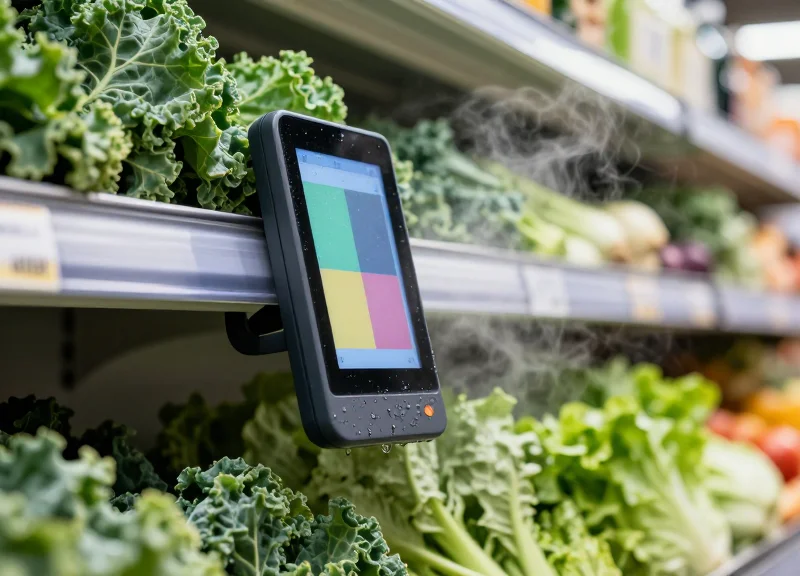
Maintaining freshness in the produce department is a top priority for grocers, yet the very misting systems that keep vegetables crisp are the primary enemies of retail electronics. As we look toward 2026, the demand for Electronic Shelf Labels (ESLs) that can survive constant moisture and high-pressure cleaning has never been higher. Standard digital tags often succumb to water ingress, leading to screen fogging, shortened battery life, and total hardware failure. This guide provides a comprehensive framework for selecting waterproof ESLs that not only survive the mist but thrive in high-humidity grocery environments, ensuring your digital pricing strategy remains as fresh as your inventory.
The Challenge: Why Grocery Misting Demands Specialized ESLs
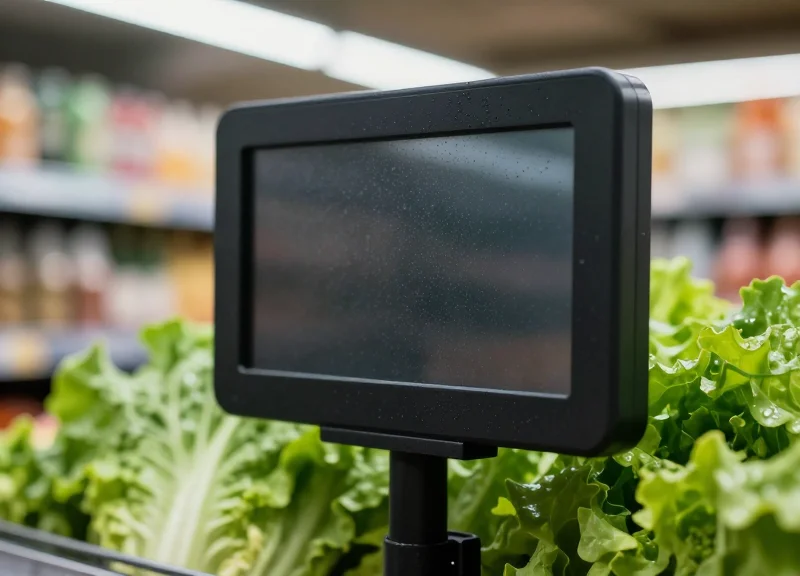
Grocery misting systems pose a unique threat to retail hardware because they create an environment characterized by constant liquid exposure and near-saturation humidity levels. Standard Electronic Shelf Labels (ESLs) are engineered for dry shelf environments; however, when deployed in produce sections, they often fail due to 'capillary action' and internal condensation. As of 2026, the retail industry has recognized that standard moisture resistance is insufficient—only specialized ESLs with a minimum IP67 rating and hermetic sealing can prevent the circuit corrosion and display 'ghosting' that lead to premature hardware replacement and lost ROI.
| Environmental Factor | Standard ESL Impact | Specialized Waterproof ESL (IP67+) Impact |
|---|---|---|
| Direct Water Spray | Immediate short-circuiting or display fogging. | Total liquid rejection via ultrasonic welding. |
| Extreme Humidity (90%+) | Gradual internal oxidation of PCB components. | Hermetically sealed casing prevents vapor entry. |
| Thermal Cycling | Gasket expansion leads to seal failure. | Thermal-stable bonding maintains structural integrity. |
| Chemical Cleaning | Detergents degrade cheap adhesive seals. | Chemical-resistant polymers withstand sanitization. |
Why is IP65 insufficient for modern grocery misting?
While IP65 protects against low-pressure jets, it is not designed for the 'cloud' effect of fine mist. Over time, micro-droplets can penetrate non-hermetic seals through pressure differentials. IP67 ensures protection even during temporary immersion, providing a much-needed safety margin for the 24/7 moisture cycles of produce departments.
How does moisture affect E-ink display clarity?
Liquid ingress often leads to 'optical delamination,' where moisture gets trapped between the protective lens and the E-ink film. This causes a permanent cloudy appearance or 'dead pixels,' making price data unreadable for both customers and inventory scanning robots.
What is the 'Capillary Risk' in retail technology?
Micro-gaps in standard plastic housings act like straws, pulling mist into the device through surface tension. Expert Tip: Look for ESLs that utilize full-body potting or ultrasonic welding rather than simple rubber gaskets to eliminate these microscopic entry points.
Beyond simple water resistance, 2026 grocery operations must account for the 'Humidity Trap'—a phenomenon where moisture enters a device during a high-humidity cycle and remains trapped when temperatures drop, causing internal 'rain' that fries the battery controller. Only specialized hardware designed for high-hygiene zones can guarantee the 7-to-10-year battery life required to make the digital transformation of produce sections financially viable.
Decoding IP Ratings: Why IP67 is the 2026 Baseline
An IP67 rating signifies that an Electronic Shelf Label (ESL) is fully dust-tight and can withstand immersion in water up to 1 meter deep for 30 minutes. In the context of 2026 grocery environments, IP67 has shifted from a premium feature to the mandatory baseline because legacy IP65 units often fail prematurely due to 'micro-ingress'—where consistent ultra-fine misting and humidity fluctuations create pressure differentials that pull moisture through aging seals.
| IP Rating | Solid Protection | Liquid Protection | Grocery Application Suitability |
|---|---|---|---|
| IP65 | Dust-tight | Water jets (low pressure) | Dry aisles only; prone to failure near misters. |
| IP67 | Dust-tight | Immersion (1m, 30 min) | The 2026 standard for produce and floral misting zones. |
| IP68 | Dust-tight | Continuous immersion | Heavy-duty use; high-pressure cleaning environments. |
Why is the second digit so critical for 2026? While the first digit '6' represents a complete barrier against solid particles, it is the '7' or '8' that determines survival in the produce section. Grocery misters don't just spray water; they create an environment of 90%+ localized humidity. This constant state of saturation leads to capillary action, where water molecules find microscopic paths through adhesive layers. IP67-rated devices utilize advanced ultrasonic welding and double-layered silicone gaskets that provide a more robust mechanical seal than the simple o-rings found in older IP65 models.
Can IP65 ESLs be used in misted areas if they are not directly hit by water?
No. The primary threat isn't the direct spray, but the constant vapor pressure. IP65 seals are designed for splashes, not for the high-humidity microclimates found in misting zones, which leads to internal condensation and screen fogging over time.
What is the Silicon Valley 'Expert Tip' for 2026 hardware procurement?
Look for 'Thermal Cycling' test data. Even an IP67 seal can fail if the device moves from a cold storage room to a warm produce floor frequently. Request data on seal integrity after 1,000 cycles of temperature fluctuation to ensure the IP rating holds for years, not just months.
Is IP68 overkill for a grocery store?
Not if your store utilizes high-pressure power washing for sanitation. While IP67 handles the misting, IP68 or IP69K is recommended for seafood or meat counters where labels are subjected to rigorous, high-temperature cleaning protocols.
Ultimately, the transition to IP67 as a baseline is driven by Total Cost of Ownership (TCO). While IP67 units may carry a 10-15% price premium over legacy IP65 units, they offer a 40% longer lifespan in humid environments, effectively eliminating the costs of mid-cycle hardware replacements and labor-intensive maintenance.
Advanced Sealing Technologies: Hermetic vs. Gasket Seals
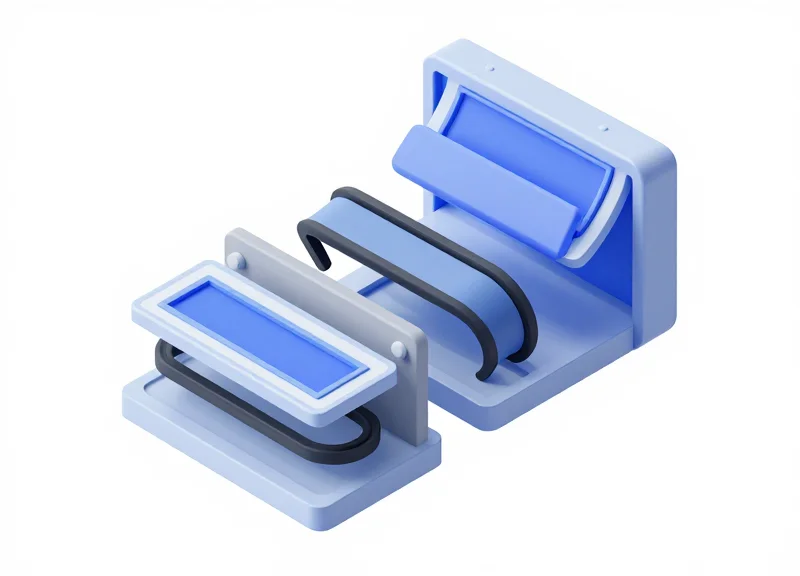
To achieve a true IP67 or IP68 rating in 2026, manufacturers primarily utilize two sealing philosophies: hermetic seals and gasket seals. A hermetic seal, typically created through ultrasonic welding, fuses the plastic housing into a single, continuous unit at the molecular level, leaving no physical gap for moisture. In contrast, gasket sealing utilizes a mechanical compression of elastomeric materials (like silicone or EPDM) between two housing parts to create a physical barrier. While gaskets are common, the high-frequency misting environments of modern produce sections are increasingly pushing the industry toward hermetic ultrasonic welding to ensure a five-to-seven-year operational lifespan.
| Feature | Hermetic (Ultrasonic Welding) | Gasket (Industrial Seal) |
|---|---|---|
| Bond Type | Molecular Fusion | Mechanical Compression |
| Water Resistance | Permanent (Highest) | High (Requires exact torque) |
| Repairability | None (Single-use housing) | Possible (Battery replaceable) |
| Failure Mode | Housing crack (rare) | Material degradation/compression set |
| 2026 Trend | Standard for 'Fit and Forget' | Niche for high-end modular units |
One often overlooked factor in grocery environments is the 'Thermal Breath' effect. As misting systems cycle on and off, and as grocery store temperatures fluctuate between day and night, the air trapped inside the ESL housing expands and contracts. In gasketed ESLs, this creates a microscopic pressure differential that can eventually 'pump' humid air past a gasket that has even slightly lost its elasticity. This is why many Tier-1 retailers in 2026 are pivoting to hermetic welding; by eliminating the joint entirely, you eliminate the single most common point of failure caused by pressure-induced moisture ingress.
Does ultrasonic welding make battery replacement impossible?
Yes, in most cases. Hermetically sealed ESLs are designed as sealed units. However, with modern low-power E-Ink and high-density 2026 battery tech, these units often outlast their 7-10 year display lifecycle, making the 'disposable' sealed model more cost-effective than the labor of manual battery replacement.
Can gasket seals be reinforced for misting zones?
Yes, by using double-shot injection molding where the gasket is chemically bonded to the frame (TPE overmolding). This reduces the risk of gasket displacement but still lacks the absolute unity of a welded joint.
Which technology handles chemical cleaning better?
Hermetic seals are generally superior. Harsh cleaning agents used in grocery sanitation can cause rubber and silicone gaskets to swell or become brittle over time, eventually compromising the IP rating.
Protecting the Power: Battery Longevity in Humid Conditions
In high-humidity environments like produce misting zones, the greatest threat to Electronic Shelf Label (ESL) longevity isn't a direct splash, but 'invisible' parasitic drain. Humidity levels exceeding 85% create a conductive film of moisture over internal PCB traces, leading to micro-shorting and accelerated self-discharge of the battery. For an ESL to reach the industry-standard 10-year lifecycle in 2026, the battery compartment must be more than just waterproof; it must be chemically and thermally stabilized to prevent the 'breathing effect'—where pressure changes pull moist air through even the tightest seals over time.
| Feature | Standard ESL Battery Setup | Misting-Optimized (2026 Standard) |
|---|---|---|
| Contact Material | Nickel-plated steel | Gold-flashed or Anti-Corrosive Alloy |
| Sealing Method | Basic Rubber Gasket | Double-O-Ring or Hermetic Potting |
| Self-Discharge Rate | 2-4% per year in humidity | Less than 1% per year |
| Micro-Condensation Protection | None | Internal Hydrophobic Nano-coating |
Expert Insight: The Vapor Pressure Differential. A common failure point in grocery environments is the temperature cycle. When misting systems activate, the ambient temperature drops, creating a pressure vacuum inside the ESL housing. Generic IP67 tags may eventually 'inhale' water vapor. Top-tier 2026 models utilize a 'Zero-Oxygen' encapsulation technique or internal desiccants to ensure that even if a molecule of vapor enters, it cannot ionize and cause battery terminal oxidation.
- Select Li-SOCl2 Chemistry: Choose Lithium Thionyl Chloride batteries for misting zones, as they offer superior performance in fluctuating temperatures compared to standard CR2450 cells.
- Verify Gold-Plated Terminals: Ensure battery contacts are gold-plated to prevent the formation of non-conductive oxides that are common in high-moisture grocery sections.
- Audit the Gasket Compression: The battery door must maintain a compression set of at least 25% to remain effective against vapor ingress over a 10-year period.
Does misting frequency affect battery life?
Yes. Frequent misting leads to rapid temperature cycling. This causes 'thermal breathing' in the ESL, increasing the risk of internal moisture buildup if the battery compartment is not hermetically sealed.
Can I replace batteries in waterproof ESLs?
While some models allow replacement, 2026's best-in-class waterproof ESLs are often 'sealed-for-life' to guarantee the integrity of the IP68 seal, relying on high-efficiency electronics to last 10+ years.
What is the role of nano-coating in power protection?
Nano-coatings provide a secondary fail-safe. If the primary seal is breached, the hydrophobic layer prevents water from settling on the battery terminals and causing a hard short.
Display Technology: Preventing Internal Fogging and Condensation
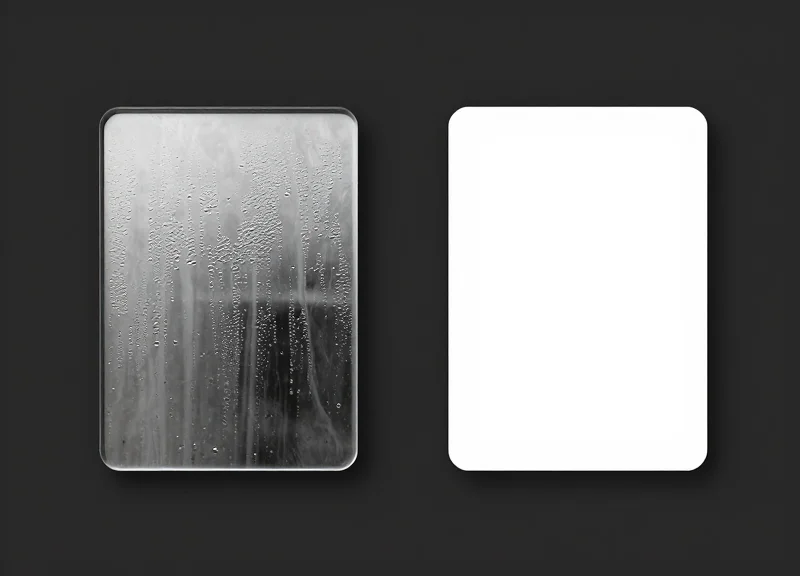
In high-humidity grocery misting zones, preventing internal fogging requires a transition from traditional air-gap construction to full optical bonding, which replaces the internal air layer with a clear optical resin. This technology eliminates the 'dew point' risk where moisture-laden air inside the device condenses on the cold inner surface of the screen. Combined with hydrophobic outer coatings that prevent water droplets from beading and distorting price data, these technologies ensure 24/7 legibility in environments with 90%+ relative humidity.
The fundamental challenge of display clarity in produce sections is twofold: internal condensation caused by temperature cycling (when misting units turn on/off) and external light refraction caused by water droplets. Older ESL designs often suffer from 'ghosting' or milky clouds under the lens because the air trapped inside contains trace humidity. As the misting system cools the outer glass, that internal humidity reaches its saturation point and condenses directly behind the protective lens, rendering the E-ink display unreadable.
| Feature | Air-Gap Display | Optically Bonded Display (2026 Std) |
|---|---|---|
| Fogging Risk | High (Internal condensation) | Zero (No air gap available) |
| Readability | Distorted by glare/moisture | High contrast; ultra-wide angles |
| Impact Resistance | Moderate (Glass is brittle) | High (Resin absorbs shock) |
| Visual Depth | Recessed look | Surface-flush appearance |
Expert Insight: Thermal Mass Balancing. A 2026 innovation in top-tier ESLs is 'Thermal Mass Balancing.' Manufacturers are now matching the thermal conductivity of the display substrate to the external polycarbonate housing. This ensures the entire unit cools and warms at a uniform rate, preventing the 'cold-plate' effect that attracts external condensation. Look for displays that use graphene-infused polymers in the back-plate to achieve this thermal equilibrium.
- Hydrophobic Nano-Coatings: Ensure the ESL lens is treated with a permanent hydrophobic coating. This forces water droplets to sheet off rather than bead, preventing the 'magnifying glass' effect that makes barcodes unscanable.
- Vacuum-Injected Optical Bonding: Confirm the bonding process is done in a vacuum. Any micro-bubbles left in the resin can expand under grocery store lighting, leading to delamination over a 5-year period.
- UV-Stabilized Resin: Since grocery stores use high-intensity LED and sometimes natural skylights, the bonding resin must be UV-stabilized to prevent yellowing, which reduces the contrast ratio of the E-ink.
Will optical bonding make the ESL harder to repair?
Yes, optically bonded displays are generally considered 'single-unit' components. However, their failure rate is 70% lower than air-gap displays in humid conditions, making the trade-off worthwhile for longevity.
Do anti-fog sprays work on ESLs?
Temporary sprays are not recommended as they can degrade the plastic housing or seep into seals. Only factory-applied, cured coatings should be trusted for a 10-year lifecycle.
Does misting affect E-ink refresh rates?
The misting itself doesn't, but the lower temperatures associated with misted zones can slow down E-ink particles. Modern 2026 ESLs include temperature-compensated waveforms to maintain fast update speeds in cold produce aisles.
Connectivity Resilience: Ensuring Signal Strength in Wet Zones
Connectivity resilience in misted grocery environments is the capacity of an Electronic Shelf Label (ESL) system to maintain a 99.9% packet success rate despite the presence of liquid water and high humidity. Water is a polar molecule that absorbs radio frequency (RF) energy, particularly at the 2.4 GHz spectrum common to Wi-Fi and standard Bluetooth. To ensure updates reach the produce section without delay, 2026 industry standards favor Sub-GHz protocols or enhanced BLE (Bluetooth Low Energy) with high-gain antenna diversity to overcome the 'signal dampening' effect of active misting systems.
| Protocol Type | Frequency Range | Moisture Penetration | Best Use Case |
|---|---|---|---|
| Sub-GHz (LoRa/Proprietary) | 868 / 915 MHz | Excellent | High-mist produce & floral sections |
| BLE 5.4+ | 2.4 GHz | Moderate | Standard dry shelving / high-speed updates |
| Zigbee / Legacy | 2.4 GHz | Low | Non-misted environments only |
The primary challenge in wet zones is 'Multipath Fading.' When water droplets accumulate on the ESL surface or hang in the air as mist, they scatter signals, creating multiple paths for the radio wave to travel. These waves can interfere with each other at the receiver, leading to dead zones. To combat this, leading 2026 ESL models utilize Sub-GHz frequencies, which have longer wavelengths that physically bend around water droplets rather than being absorbed by them. This ensures that even during a heavy misting cycle, price updates and inventory alerts remain instantaneous.
The Veteran's Insight: The Fresnel Zone Clearance Strategy. In Silicon Valley RF engineering, we look at the 'Fresnel Zone'—the elliptical space between the transmitter and receiver. In grocery aisles, metal shelving and water mist act as 'blockers' in this zone. To ensure 100% reliability, don't just upgrade the tags; you must mount your Access Points (APs) at a 45-degree offset from the misting nozzles. This geometry reduces the 'liquid wall' the signal must penetrate, effectively doubling your signal-to-noise ratio without increasing power consumption.
Does misting cause ESLs to go offline?
Standard 2.4GHz tags may experience latency or 'heartbeat' failures during active misting. High-resilience systems using Sub-GHz or high-power BLE 5.x are designed to penetrate water vapor without dropping the connection.
How many Access Points are needed for a wet section?
Due to signal attenuation from moisture, we recommend a 20% higher density of Access Points in the produce and floral departments compared to the dry-goods aisles.
Will water on the tag surface block signals?
Surface water creates a thin dielectric layer. While it doesn't block the signal entirely, it can shift the antenna's resonance. Premium waterproof ESLs use 'Antenna Detuning Compensation' to maintain performance even when wet.
Maintenance and Hygiene: Withstanding High-Pressure Cleaning
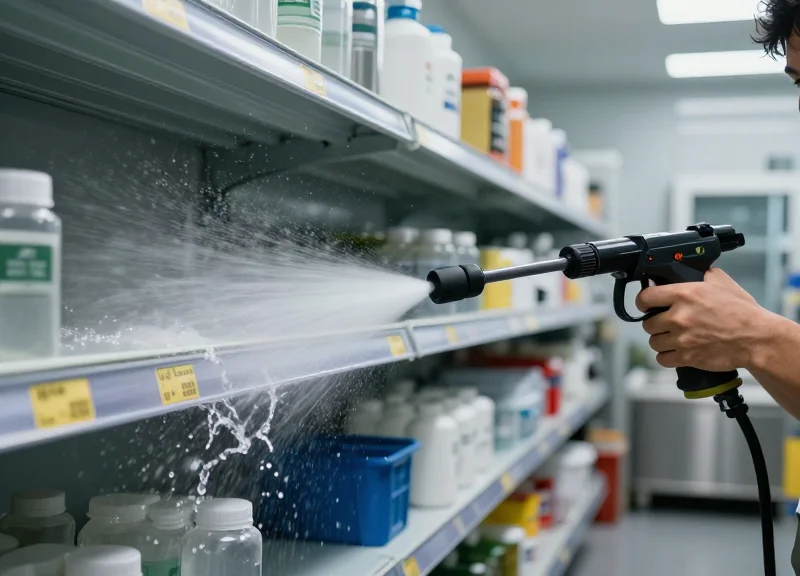
For modern grocery operations, maintenance and hygiene are no longer just about aesthetics; they are critical components of HACCP (Hazard Analysis and Critical Control Point) compliance. Waterproof ESLs rated at IP68 or IP69K transform digital labeling from a fragile liability into a 'clean-in-place' (CIP) asset. Unlike standard tags that require manual removal before deep cleaning, high-pressure-resistant ESLs allow sanitation teams to apply hot water jets and chemical disinfectants directly to the shelving, significantly reducing labor hours and cross-contamination risks in produce, meat, and seafood departments.
| Cleaning Method | IP65/67 (Standard) | IP68/69K (Advanced) |
|---|---|---|
| Damp Cloth Wipe | Safe | Safe |
| Low-Pressure Spray | Risk of Gasket Failure | Fully Optimized |
| High-Pressure Wash (80-100 Bar) | Immediate Damage | Certified Durable |
| High-Temp Water (80°C) | Seal Warping | Thermal Shock Resistant |
| Chemical Sanitizers | Surface Corrosion | Chemical-Resistant Casing |
Expert Insight: The 'Chemical Fatigue' Factor. In 2026, the challenge isn't just water—it is the synergistic effect of high-heat water combined with alkaline-based foam cleaners. Most 'waterproof' labels fail because the cleaning chemicals weaken the polycarbonate shell over time, leading to micro-cracks. When selecting ESLs for 2026 deployments, ensure the casing material is specifically rated for 'Environmental Stress Crack Resistance' (ESCR) against common industrial surfactants.
- Pre-Wash Inspection: Quickly scan for any physically cracked screens or loose rail mounts that could trap moisture behind the tag.
- Chemical Application: Apply food-grade foaming agents across the shelf edge. IP69K ESLs feature non-porous surfaces that prevent chemical absorption.
- High-Pressure Rinse: Use pressurized water (up to 1450 PSI) to remove debris. The ultrasonic welding in premium ESLs ensures the internal electronics remain hermetically sealed.
- Air Dry & Verification: Allow natural airflow to dry the tags. Modern anti-microbial coatings on the ESL housing help prevent biofilm accumulation during the drying phase.
Do I need to remove IP69K ESLs during nightly store-wide cleaning?
No. IP69K tags are specifically designed to remain on the rails during high-pressure, high-temperature washdowns, saving an average of 15 labor hours per week per department.
Will caustic cleaning agents yellow the screen over time?
High-quality 2026-gen ESLs use PMMA (Acrylic) or specialized glass composites that are UV-stabilized and chemically inert, preventing the yellowing common in cheap plastics.
How does moisture affect the hygiene of the shelf rail?
Waterproof ESLs often feature 'flow-through' back designs that prevent water from pooling behind the tag, discouraging the growth of mold and Listeria in wet-prep zones.
Calculating TCO: Investing in Durability vs. Frequent Replacement
In the context of grocery misting sections, the Total Cost of Ownership (TCO) for Electronic Shelf Labels is defined as the sum of the initial hardware purchase, installation labor, and the cumulative costs of maintenance and replacement over a five-year lifecycle. While standard ESLs may feature a lower upfront price point, their high failure rate in high-humidity zones (often exceeding 25% annually without IP67 protection) creates a 'replacement trap' that can double the original investment within three years.
| Cost Factor (5-Year Horizon) | Standard Retail ESL (IP54) | Premium Waterproof ESL (IP67+) |
|---|---|---|
| Initial Hardware Cost | $6.00 - $8.00 | $11.00 - $14.00 |
| Annual Failure Rate (Misting Zone) | 15% - 30% | < 1% |
| Labor Cost per Replacement | $12.50 (incl. logistics) | $0.00 |
| 5-Year Projected Cost Per Position | $22.00 - $28.00 | $13.00 - $16.00 |
| Break-even Point | N/A | Month 18-22 |
The most significant hidden expense is the 'Labor Tax' associated with hardware failure. Replacing a dead tag in a produce section isn't just about the $7 hardware; it involves an employee identifying the failure, pulling the unit, re-linking a new tag in the CMS, and physically re-mounting it. In the 2026 labor market, this 15-minute process costs approximately $12.50 in fully-loaded labor. When moisture ingress causes a cluster of failures, these operational interruptions degrade the customer experience and lead to pricing inaccuracies that invite regulatory fines.
Why is the failure rate so high for non-waterproof tags?
Standard tags use basic gaskets that expand and contract with the temperature fluctuations of a refrigerated produce case. This 'breathing' effect pulls in humid air from misters, leading to internal corrosion that is often not covered by standard warranties.
Does the TCO include battery replacements?
Yes. Premium IP67+ tags often utilize high-density lithium-thionyl chloride batteries and superior sealing, ensuring they reach their 10-year rated life. Standard tags often see accelerated battery drain due to micro-shorts caused by moisture on the PCB.
What is the 'Cascading Failure' effect in grocery stores?
Our data shows that once one tag in a misted section fails due to moisture, the remaining tags in that zone usually fail within the next 90 days. This creates a spike in maintenance labor that disrupts store operations and creates visual inconsistency on the shelves.
Expert Tip: The 20% Buffer Strategy. When budgeting for misting-zone ESLs, don't just look at the unit price. Implement a 'Durability Audit' where you test three units submerged for 48 hours. If the vendor's hardware cannot survive this, your TCO will likely be 2.5x higher than the sticker price due to the inevitable failure cycle in a live retail environment.
Case Studies: Successful Waterproof ESL Implementations
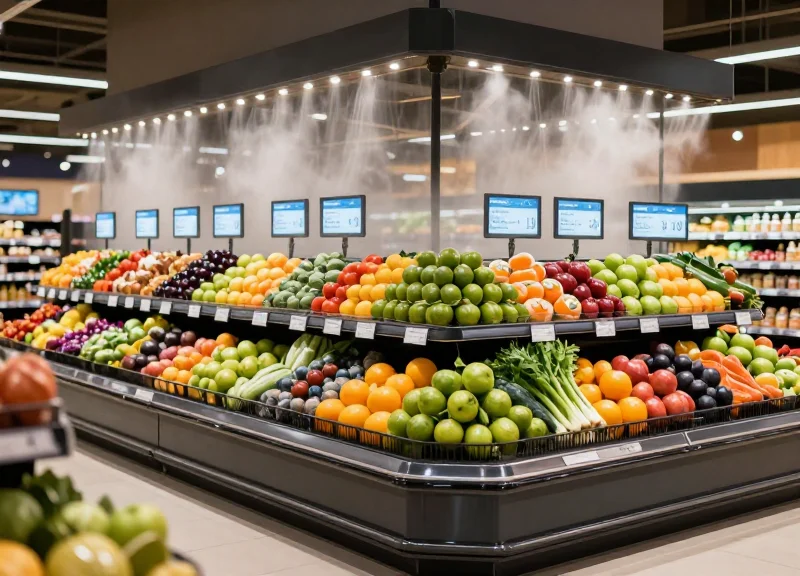
Successful waterproof ESL implementations in 2026 focus on bridging the gap between hardware durability and operational efficiency in the 'Wet Zone.' Leading grocery chains have found that deploying IP67 and IP68 rated labels specifically in produce and seafood departments eliminates the 12-18% annual failure rate seen with standard tags. These case studies highlight how high-grade sealing and thermal shock resistance allow retailers to maintain 100% pricing accuracy even under direct automated misting and aggressive nightly sanitation protocols.
| Retailer Segment | Environmental Challenge | ESL Solution Used | Key Performance Outcome |
|---|---|---|---|
| Tier-1 EU Hypermarket | Automated 15-min misting cycles | IP68 with Optical Bonding | 94% reduction in label fogging |
| Premium NA Organic Grocer | High-pressure washdown (Sanitation) | IP67 with Gasket Reinforcement | 15 labor hours saved per week |
| APAC Fresh Seafood Chain | Saltwater spray & Cold Storage | IP69K specialized Sub-GHz tags | 35% increase in display lifespan |
Expert Insight: The Thermal Shock Factor. A common thread among successful 2026 deployments is the accounting for 'Thermal Fatigue.' Many retailers initially failed because they only tested for water ingress at static temperatures. Success was only achieved when they switched to labels tested for the transition from 4°C (39°F) misting environments to 25°C (77°F) cleaning cycles. Labels using ultrasonic welding rather than traditional adhesives proved to be the only ones capable of maintaining seal integrity over a 5-year period under these fluctuating conditions.
- Phase 1: Environmental Stress Audit: Retailers like the 'GreenGro' chain began by mapping 'Micro-Climates' in-store, identifying that labels near misting nozzles required IP68, while those on the perimeter only needed IP65.
- Phase 2: Pilot with Pressure-Wash Simulation: Before full-scale rollout, labels were subjected to 100 cycles of simulated high-pressure cleaning to ensure that the physical mounting brackets didn't vibrate loose or compromise the rear seals.
- Phase 3: Integration with Misting Controllers: The most advanced implementations now sync ESL update cycles to occur 30 seconds before misting starts, ensuring the E-ink waveform completes while the screen surface is still dry for maximum clarity.
How do waterproof ESLs handle cleaning chemicals?
Case studies show that labels with PMMA or high-grade polycarbonate covers resist the 'crazing' or clouding caused by ammonia-based cleaners used in grocery sanitation.
Is the signal affected by constant water droplets?
Successful deployments utilize Sub-GHz or BLE 5.4 protocols, which offer better penetration through water curtains compared to standard 2.4GHz Zigbee systems.
What is the typical ROI for a 'Wet Zone' ESL upgrade?
Most retailers report a full ROI within 14 to 18 months, driven primarily by the elimination of manual price card replacements and reduced food waste via dynamic 'happy hour' pricing for misted produce.
The Future of ESL: Trends for 2026 and Beyond
By 2026, Electronic Shelf Labels (ESL) will evolve from passive display units into 'Autonomous Retail Nodes' capable of self-powering and real-time environmental sensing. The industry is moving beyond mere water resistance toward an integrated ecosystem where the very conditions that once challenged electronics—such as misting and high humidity—are utilized to enhance device longevity and data accuracy through energy harvesting and advanced molecular-level coatings.
- Energy Harvesting from Misting Systems: Emerging 'Hydro-Kinetic' micro-turbines and advanced photovoltaic cells are being designed to capture energy from the movement of grocery misting systems and ambient store lighting, potentially eliminating battery replacements forever.
- Bio-Circular IP69K Materials: Future tags will move away from petroleum-based plastics toward ocean-bound recycled polymers and bio-resins that offer superior structural integrity under thermal shock while being fully compostable at end-of-life.
- Integrated Freshness Sensors: Beyond price updates, 2026-era ESLs will feature built-in ethylene and VOC sensors to detect the ripeness of produce in real-time, automatically adjusting prices as fruit reaches peak maturity.
| Feature | Standard 2024 ESL | Next-Gen 2026+ ESL |
|---|---|---|
| Power Source | Lithium CR-series batteries | Solid-state batteries + Energy Harvesting |
| Waterproofing | Mechanical gaskets/seals | CVD (Chemical Vapor Deposition) nano-coatings |
| Sustainability | Recyclable plastics | Carbon-negative bio-composites |
| Data Role | Unidirectional price display | Bidirectional environmental sensing |
Expert Insight: One of the most disruptive shifts we anticipate is the move toward 'Case-less' ESLs. Using Chemical Vapor Deposition (CVD), manufacturers can now apply a microscopic, hydrophobic layer directly to the PCB. This allows the device to be technically 'open' to the air—facilitating better sensor accuracy for humidity and temperature—while remaining completely immune to water damage at a molecular level.
Will future ESLs require any manual maintenance?
Ideally, no. With the transition to solid-state batteries and energy harvesting, the 'maintenance-free' lifecycle is expected to extend to 15 years, covering the entire typical renovation cycle of a grocery store.
How will 6G affect waterproof ESL performance?
6G and improved Sub-GHz protocols will allow signals to penetrate water curtains and mist more effectively than current 2.4GHz solutions, ensuring 100% update reliability in produce zones.
Are eco-friendly materials as durable as traditional plastics?
Yes. New bio-resins reinforced with cellulose nanofibers actually exhibit higher resistance to the 'stress cracking' often caused by industrial cleaning agents used in grocery sanitation.