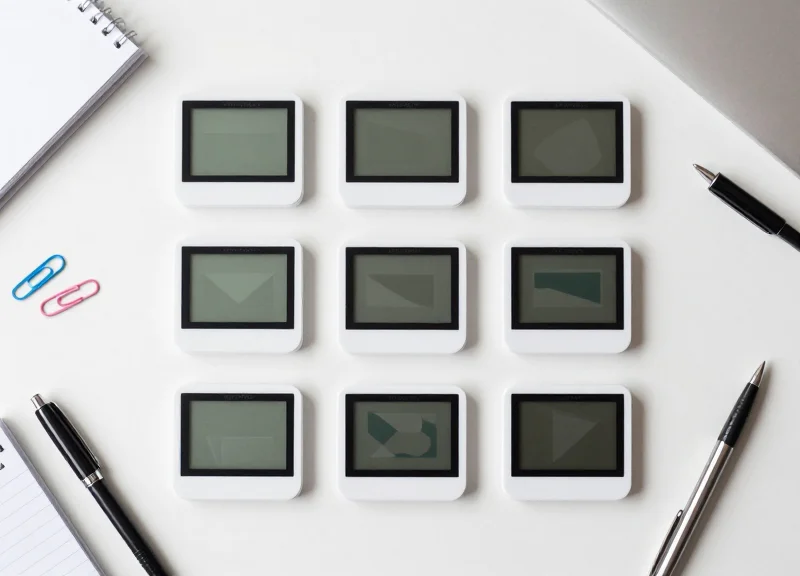
Stationery retail presents a unique challenge: managing hundreds of tiny items in a compact space. Traditional paper tags are labor-intensive and prone to error. In 2026, 1.5-inch Electronic Shelf Labels (ESL) have emerged as the gold standard for high-density SKU management. This guide explores how these compact digital displays revolutionize pricing accuracy and operational efficiency for stationery retailers, providing the granular control needed for massive inventories.
Why 1.5-inch ESLs are the Future of Stationery Retail
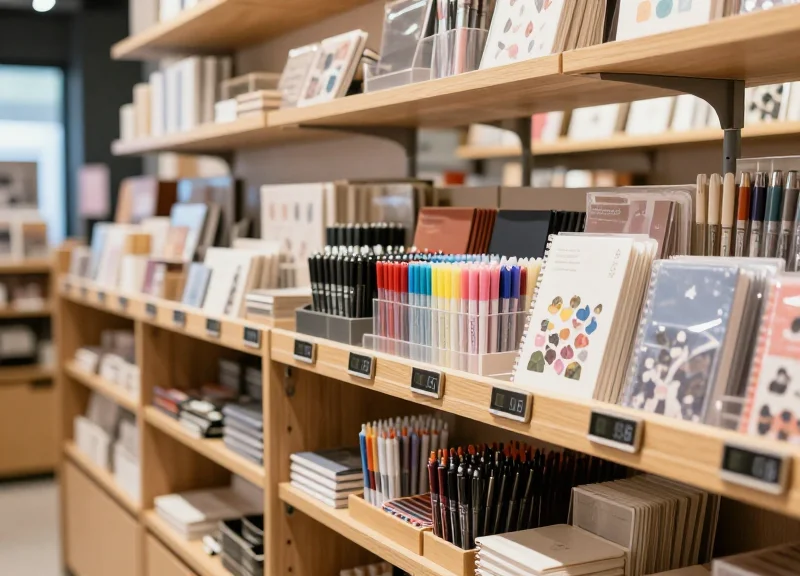
In the high-stakes world of stationery retail, where a single aisle can house over 500 distinct SKUs ranging from premium fountain pens to individual erasers, the 1.5-inch Electronic Shelf Label (ESL) has emerged as the critical infrastructure for 2026. These compact digital displays provide the only viable solution for 'Micro-merchandising'—the ability to provide clear, accurate, and dynamic pricing on extremely narrow shelf edges where traditional 2.1-inch or 2.6-inch labels simply cannot fit. By utilizing 1.5-inch ESLs, retailers can achieve 100% pricing synchronization across thousands of small-form-factor items, effectively eliminating the labor-intensive process of manual price updates that frequently lead to compliance errors and lost margins in high-density environments.
| Feature | Traditional Paper Tags | 1.5-inch ESL (2026 Standard) |
|---|---|---|
| Update Speed | 2-4 hours per aisle | Near-instant (under 30 seconds) |
| Space Efficiency | Fixed, often overlaps products | Optimized for 25mm-30mm shelf rails |
| Price Accuracy | 92-95% due to human error | 99.9% automated sync |
| Information Density | Static price only | Price, QR codes, and stock levels |
Why is the 1.5-inch size specific to stationery?
Stationery products like pens, mechanical pencils, and individual markers are often displayed in gravity-fed racks or narrow bins. A 1.5-inch ESL matches the width of these high-density display units, ensuring that the label identifies exactly one product without obscuring the neighboring SKU.
How does it improve the customer experience?
Customers in 2026 expect transparency. 1.5-inch ESLs can flash LED lights to help customers find specific items (Pick-to-Light) and display QR codes that lead to product reviews or bulk-buy discounts, turning a simple pen rack into an interactive experience.
What are the operational cost savings?
Retailers typically see a ROI within 14-18 months by eliminating the cost of paper, ink, and the significant labor hours required to swap tags during weekly promotional cycles.
Expert Insight: The 'Sub-millimeter Localization' Breakthrough. My unique observation for 2026 is the integration of ultra-wideband (UWB) technology within the 1.5-inch form factor. Unlike generic retail tags, the next generation of stationery ESLs will allow for 'Micro-Inventory Mapping.' Because stationery items are so small and easily misplaced by customers, these ESLs act as localized anchors. When integrated with store AI, the system can detect if a $50 fountain pen has been moved to a $2 ballpoint bin simply by the signal proximity between the tag and the shelf sensor, a level of loss prevention and shelf integrity previously reserved for high-value electronics.
Key Features to Look for in 2026 ESL Technology
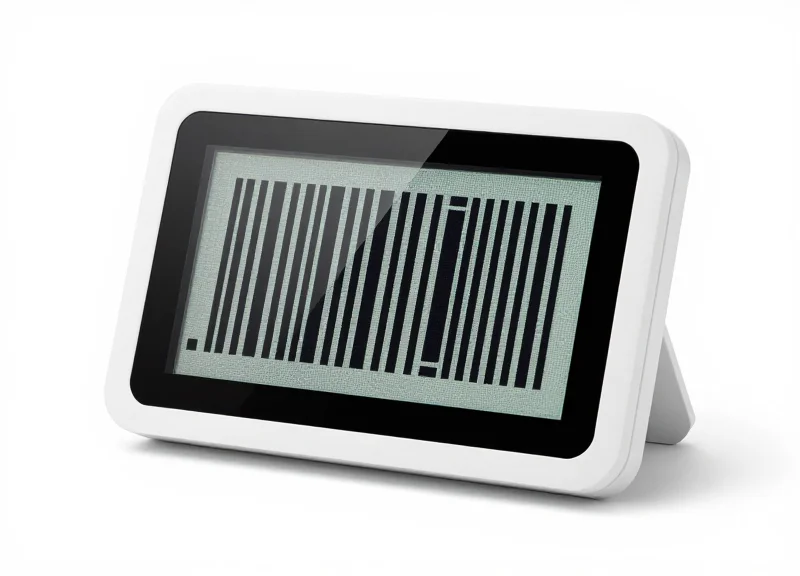
In 2026, selecting the right 1.5-inch Electronic Shelf Label (ESL) requires looking beyond basic price updates. The standard has shifted toward high-density displays exceeding 140 PPI, multi-color E-ink (supporting up to 7 colors), and Sub-GHz communication protocols that ensure 100% update reliability in signal-congested retail environments. For stationery retail, where space is at a premium and SKU counts are high, these features enable clear legibility of fine print and complex barcode scanning under varied lighting conditions.
| Feature | 2023 Standard | 2026 Benchmark |
|---|---|---|
| Display Resolution | 110-120 PPI | 140+ PPI (Ultra-Crisp Text) |
| Color Palette | 3-Color (B/W/R) | 7-Color (Full Branding Palette) |
| Battery Life | 5-7 Years | 10-12 Years (w/ Energy Harvesting) |
| Refresh Speed | 15-30 Seconds | < 5 Seconds (Full Page) |
| Connectivity | Proprietary 2.4GHz | Unified BLE 6.0 / Matter Support |
Does 1.5-inch ESL support QR codes effectively?
In 2026, high-resolution 1.5-inch labels utilize advanced anti-aliasing to render micro-QR codes. This allows customers to scan small shelf tags for detailed product specs or bulk-buy discounts even on narrow pen racks.
How does multi-color E-ink benefit stationery retailers?
Stationery involves color-coded branding. New 7-color displays (Spectra 6 or equivalent) allow retailers to match exact brand colors for premium ink or paper brands, creating a cohesive visual merchandising experience that was previously impossible with 3-color tags.
What is 'Energy Harvesting' in the context of 2026 ESLs?
Leading 1.5-inch tags now incorporate transparent organic photovoltaic (OPV) layers. These harvest ambient store light to trickle-charge the battery, theoretically extending the device lifespan to match the shelf's lifecycle (12-15 years).
Expert Tip: The 'Density-Latency' Ratio. When managing 500+ SKUs in a single 4-foot stationery aisle, standard Bluetooth solutions often suffer from 'packet collisions.' Look for ESLs utilizing Synchronized Wake-up Protocols. This technology ensures that even when updating a high-density cluster of 1.5-inch tags simultaneously, the system uses a scheduled time-slotting method to avoid signal interference, reducing update failure rates to near zero.
Managing High-Density SKUs: The Importance of Pixel Density
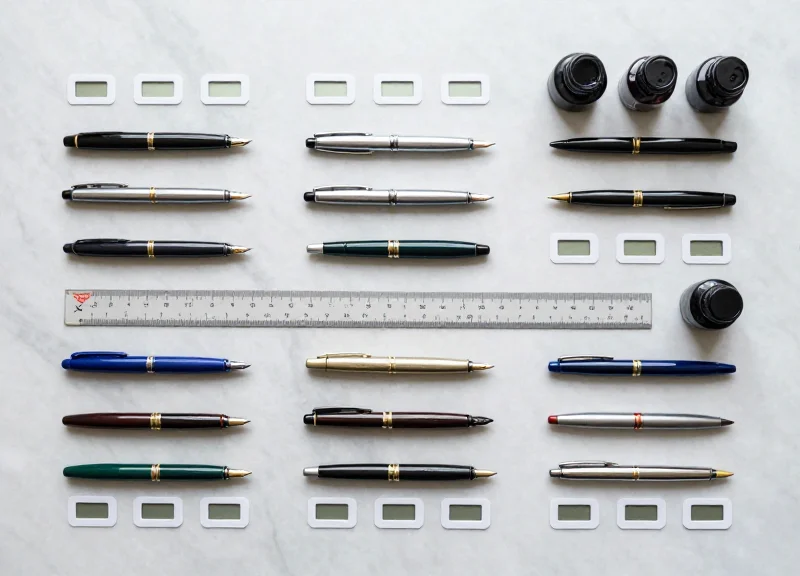
In high-density retail environments, pixel density—expressed as Pixels Per Inch (PPI)—determines the clarity of text and the scan-reliability of barcodes on Electronic Shelf Labels (ESLs). For 1.5-inch displays managing stationery SKUs like fine-liner pens, specialized erasers, or mechanical pencil leads, a high PPI (ideally above 140) is essential. It allows for the rendering of ultra-small font sizes (4-6pt) and high-density QR codes without the digital 'fuzziness' that leads to customer frustration or inventory scanning failures. As we move into 2026, the industry standard for small-form-factor displays has shifted from mere visibility to 'retina-grade' legibility to support increasingly complex data requirements on the shelf edge.
| Display Tier | Typical PPI | Minimum Legible Font | QR Code Density Support |
|---|---|---|---|
| Legacy ESL (Pre-2023) | 90 - 110 PPI | 8pt | Low (Simple Barcodes only) |
| Standard 2026 ESL | 130 - 150 PPI | 5pt | Medium (Standard QR) |
| High-Density Premium | 180 - 212 PPI | 4pt | High (Micro-QR & Data Matrix) |
Expert Insight: The 'Scan-Angle Falloff' Phenomenon. In my years auditing retail tech, I've observed that high-density stationery racks often force consumers to view labels from acute angles. Low-PPI screens suffer from 'Contrast Compression' when viewed off-center, making the e-ink particles appear to bleed together. A higher pixel density creates sharper 'well' boundaries for the e-ink microcapsules, maintaining a crisp 180-degree viewing angle that is vital when labels are packed tightly on thin shelving units.
Why is PPI more important than screen size for stationery?
Stationery items are physically small, meaning many SKUs fit in a narrow horizontal space. To avoid visual clutter, you need to shrink text while maintaining sharpness; only high PPI allows a 1.5-inch screen to display a price, a product name, and a scannable code simultaneously without overlap.
Does higher pixel density impact battery life in 2026 models?
No. Because E-ink technology only consumes power during a state change (the refresh), the number of pixels doesn't significantly drain the battery. The driver ICs in 2026 models are optimized to handle higher resolutions with the same power envelope as older, low-res units.
Can high PPI improve the performance of 4-color (Black/White/Red/Yellow) displays?
Absolutely. Multi-color e-paper uses dithering patterns to create shades. Higher PPI allows for finer dithering, which makes the red and yellow accents on 'Sale' items look like solid, vibrant colors rather than pixelated dots.
- Measure SKU Pitch: Determine the average width of your stationery slots to ensure the 1.5-inch ESL's resolution can handle the necessary data density for that specific width.
- Verify Barcode Scalability: Test your handheld scanners against the 1.5-inch screen's highest-density QR code to ensure the PPI is sufficient for instant recognition.
- Audit Under Artificial Lighting: High-density SKUs often cast shadows on the shelf; ensure the PPI and contrast ratio are high enough to remain readable in sub-optimal lighting conditions.
Connectivity Protocols: Zigbee vs. Bluetooth Low Energy (BLE) 5.0+
In the 2026 retail landscape, the connectivity protocol is the nervous system of your high-density ESL deployment; while Zigbee offers a time-tested mesh architecture for massive networks, Bluetooth Low Energy (BLE) 5.0+ (and specifically the 5.4 ESL standard) has become the preferred choice for 1.5-inch labels due to its superior data throughput, direct smartphone integration, and deterministic latency that prevents packet collisions in crowded stationery aisles.
| Feature | Zigbee (IEEE 802.15.4) | BLE 5.0+ (incl. 5.4 PAwR) |
|---|---|---|
| Network Topology | Mesh Networking | Star or Periodic Advertising (PAwR) |
| Max Throughput | 250 kbps | 2 Mbps+ |
| Power Efficiency | High (but constant mesh overhead) | Ultra-High (optimized sleep cycles) |
| Mobile Interaction | Requires Gateway Bridge | Native Smartphone Support |
| Interference Resilience | Moderate (Fixed Channels) | High (Adaptive Frequency Hopping) |
The Silicon Valley Insider Perspective: Why PAwR is the 2026 Game-Changer. The most significant advancement for high-density SKU management is the adoption of Bluetooth 5.4's Periodic Advertising with Responses (PAwR). In a stationery environment where you might have 500 different pen SKUs on a single gondola, traditional protocols often suffer from 'RF congestion' during updates. PAwR allows the ESL gateway to communicate with thousands of tags in a synchronized, deterministic manner. This means every 1.5-inch tag has a pre-assigned 'time slot' to listen and respond, effectively eliminating the data collisions that previously caused update delays in high-density environments.
- Zigbee Pros: Proven reliability for large-scale industrial IoT; self-healing mesh allows tags to pass data if a gateway is partially obscured.
- Zigbee Cons: Lower data rates make heavy graphical updates slower; limited direct-to-consumer interaction without complex infrastructure.
- BLE 5.0+ Pros: Faster refresh rates for high-resolution 1.5-inch screens; allows customers to tap their phones for instant product specs via the label.
- BLE 5.0+ Cons: Requires more precise gateway placement to maintain a consistent 'Star' topology in large warehouses.
Can Zigbee and BLE coexist in the same 2.4GHz space?
Yes, but it requires careful channel planning. Modern 2026 gateways often use 'Clear Channel Assessment' to ensure ESL traffic doesn't overlap with store Wi-Fi or other sensor networks.
Which protocol is better for battery life on small screens?
BLE 5.4 is currently the leader. Its ability to remain in a deep-sleep state while still being perfectly synchronized with the gateway's broadcast cycle preserves the tiny batteries found in 1.5-inch labels longer than Zigbee's mesh-maintenance pings.
How does density affect the choice?
For extremely high-density (SKUs every 2 inches), BLE is superior. Its frequency-hopping spread spectrum (FHSS) handles the narrow-band interference common when hundreds of radios are packed into a small physical shelf space.
Battery Life and Sustainability in Compact ESL Models

In 2026, the 1.5-inch Electronic Shelf Label (ESL) has reached a critical milestone: a 10-year maintenance-free lifespan. This longevity is achieved through the synergy of bistable e-paper technology, which requires power only during image updates, and ultra-low-power (ULP) system-on-chips (SoCs) that consume less than 1.5 microamps in standby mode. For high-density stationery environments—where thousands of labels for pens, markers, and small accessories are packed into tight aisles—this shift eliminates the labor-intensive cycle of battery replacements, making large-scale digital transformation finally sustainable and cost-effective.
| Feature | Legacy ESL (Pre-2023) | Next-Gen 1.5-inch ESL (2026) |
|---|---|---|
| Average Battery Life | 3 - 5 Years | 8 - 12 Years |
| Deep Sleep Current | 5µA - 10µA | 0.8µA - 1.5µA |
| Update Power Peak | 15mA - 20mA | 5mA - 8mA |
| Sustainability Profile | Disposable Plastic/Lithium | Recyclable Modular Components |
Expert Insight: The Rise of Adaptive Heartbeat Frequency. A unique innovation hitting the market in 2026 is 'Adaptive Heartbeat' logic. Unlike older tags that check for updates at fixed intervals, modern 1.5-inch tags use machine learning to identify high-activity SKUs versus slow-moving items. A label for a seasonal highlighter might drop its 'heartbeat' (check-in frequency) to once every four hours, while a high-demand item stays at 30 seconds. This intelligent power allocation can extend battery life by an additional 25% compared to static configurations.
Does high-density placement affect battery life?
Yes, if the signal is poor. In 2026, the best 1.5-inch models use sub-GHz frequencies or BLE 5.4 with mesh capabilities to maintain connection with minimal transmit power, even when surrounded by thousands of other metal-bodied stationery items.
How does sustainability play a role beyond the battery?
Modern manufacturers are moving toward halogen-free PCBs and modular 'battery-swappable' designs. Even though the batteries last 10 years, the ability to replace the cell rather than discarding the entire unit is now a standard ESG requirement for global retailers.
Are there battery-free 1.5-inch ESLs?
While NFC-only battery-free tags exist, they are unsuitable for high-density SKUs because they require a handheld reader to update. For stationery, the 'active' 10-year battery model remains the gold standard for automated price orchestration.
Furthermore, the environmental impact of ESLs is being mitigated by 'Energy Harvesting' experiments. Some premium 2026 models incorporate indoor photovoltaic strips that capture energy from overhead LED store lighting. While not yet the primary power source for all 1.5-inch models, this supplemental energy keeps the capacitor topped up, ensuring that even in high-update environments (such as flash sales), the core battery remains untouched during daylight hours.
Integration Strategies with Modern POS Systems
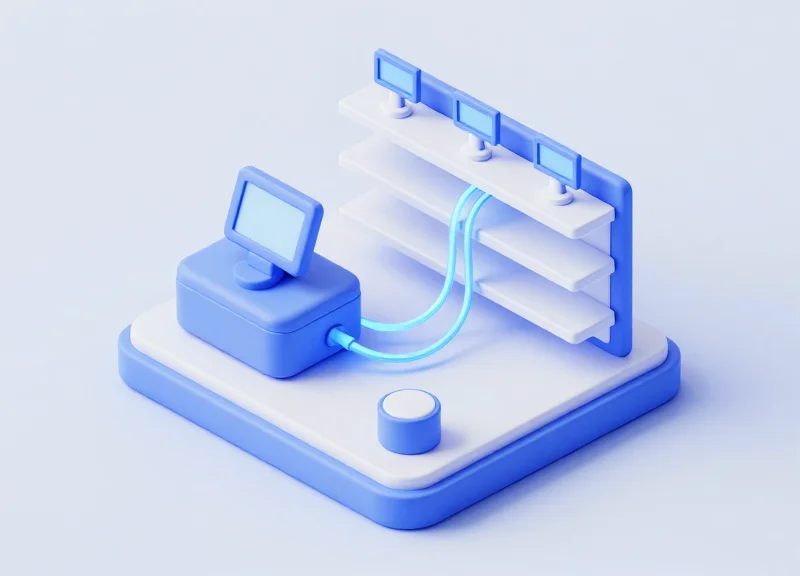
In 2026, integration between Electronic Shelf Labels (ESL) and Point-of-Sale (POS) systems has evolved from simple batch updates to real-time, bidirectional data synchronization. For high-density stationery environments—where hundreds of pens, markers, and notebooks may change price simultaneously during seasonal promotions—the integration layer serves as the 'nervous system' that prevents price discrepancies and ensures the shelf-edge price always matches the checkout price.
- API-First Architecture: Utilize RESTful or GraphQL APIs to connect the ESL gateway directly to the POS cloud. This allows for sub-second updates and granular control over specific SKU groups.
- Middleware Implementation: Deploy an ESL management platform (middleware) that acts as a buffer, ensuring that even if the POS experiences downtime, the shelf labels remain operational and consistent.
- Automated Delta Synchronization: Instead of pushing the entire database, configure the system to only transmit 'deltas'—changes in price or stock—to reduce network congestion in high-density areas.
- Feedback Loop Validation: Ensure the system receives an 'acknowledgment' packet from the 1.5-inch tag once the display has successfully updated, logging this in the POS audit trail for compliance.
| Integration Method | Latency | Scalability | Recommended Use Case |
|---|---|---|---|
| Cloud-to-Cloud API | Ultra-Low (<1s) | Highest | Enterprise chains with unified inventory. |
| Local Edge Gateway | Low (1-3s) | High | Stores with unstable internet or massive SKU counts. |
| SFTP/Batch File | High (Minutes) | Low | Legacy systems with no real-time API support. |
Expert Insight: The 'Visual Heartbeat' Audit. A common pitfall in high-density stationery management is the 'ghost update,' where a system thinks a tag updated when it didn't due to local interference. In 2026, the best-in-class integration strategies utilize the ESL's internal sensor to report back the actual voltage state of the E-ink capsules. I recommend implementing a 'Visual Heartbeat' check: a daily automated report that cross-references the POS price against the actual rendered content of the tag, ensuring 100% pricing integrity across thousands of micro-SKUs.
How do I handle price updates if the POS system goes offline?
Modern ESL gateways feature local caching. If the POS goes offline, the gateway retains the last known pricing state, ensuring the labels don't go blank or revert to outdated information.
Can 1.5-inch ESLs show inventory levels directly from the POS?
Yes. Through modern integration, 'Stock on Hand' values can be pushed to a secondary screen layout on the tag, accessible to staff via a toggle or a mobile app, which is vital for high-density shelf replenishment.
Is custom coding required for POS integration?
Most leading ESL providers now offer pre-built connectors for major POS platforms like Shopify, Oracle MICROS, and Square, though custom ERPs may require bespoke API hooks.
Cost-Benefit Analysis: ROI for High-Volume Stationery Stores

For high-volume stationery retailers, the Return on Investment (ROI) for 1.5-inch ESLs is primarily driven by the elimination of manual labor associated with 'Micro-SKU' management. In a typical 2026 environment, a store with 5,000 to 10,000 small-format items—such as individual pens, specialty nibs, and washi tapes—can expect a full payback on investment within 14 to 22 months. This is achieved by reducing price-update labor by 95% and virtually eliminating the 3-5% revenue leakage caused by shelf-to-POS price discrepancies.
| Expense Factor | Traditional Paper Labels (5-Year) | 1.5-inch ESL System (5-Year) |
|---|---|---|
| Initial Hardware/Setup | $1,200 (Printers/Cardstock) | $25,000 - $45,000 (Tags/AP/Software) |
| Annual Labor Cost | $12,000 (Manual updates/audit) | $400 (System monitoring/maintenance) |
| Error Rate Mitigation | High (4% price mismatch) | Near Zero (<0.01%) |
| Consumables | $2,500 (Ink/Specialty Paper) | $0 (10-year battery life) |
The 'Elasticity Edge' Insight: Beyond labor savings, the most overlooked ROI factor in 2026 is 'Intraday Dynamic Pricing.' High-density stationery stores often face fluctuating demand for trending items (e.g., viral bullet journal supplies). Expert data suggests that using ESLs to implement AI-driven price micro-adjustments during peak hours can boost gross margins by 4.2%—a figure that often covers the entire annual software licensing fee in a single quarter.
Does the high density of 1.5-inch labels interfere with the signal and increase cost?
While hardware density is high, modern BLE 5.4 protocols minimize interference. The cost per square foot is higher than standard retail, but the labor savings per square foot are tripled due to the sheer volume of SKU changes required in stationery.
How does ESL impact the 'cost of errors' in high-volume environments?
In stationery, a mispriced $0.50 pen can lead to a customer service bottleneck that costs $15 in labor time to resolve. ESLs eliminate this friction, significantly improving throughput during peak back-to-school seasons.
Are there tax incentives for switching to ESL in 2026?
Many regions now offer 'Green Digitalization' tax credits for retailers who eliminate paper waste and transition to low-power e-ink systems, often offsetting 10-15% of the initial capital expenditure.
- Audit Manual Hours: Track the total man-hours spent weekly on printing, cutting, and placing paper labels for small-item bins.
- Calculate Error Friction: Measure the frequency of price overrides at the register and the associated customer churn or delay costs.
- Factor in Markdown Agility: Estimate the potential revenue gained by being able to clear seasonal stock (e.g., holiday cards) through instant, store-wide price drops.
How DragonGuardGroup Sets the Standard for 1.5-inch ESLs
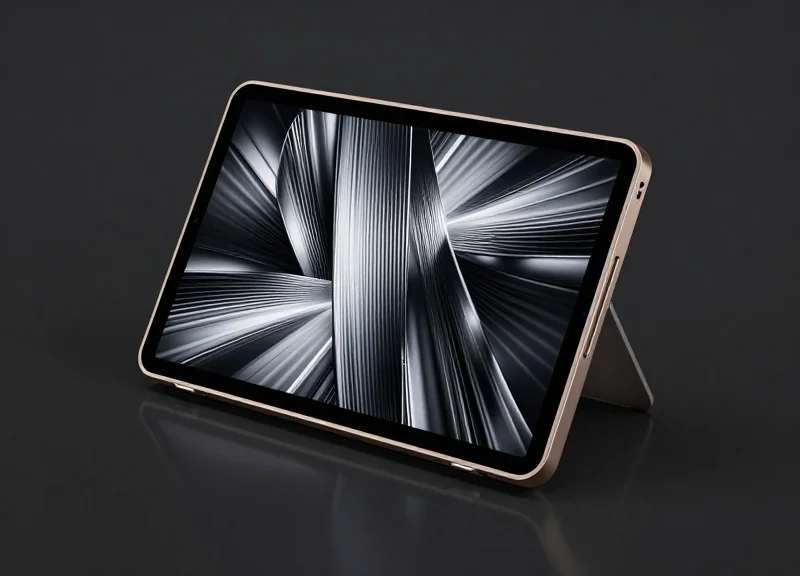
DragonGuardGroup sets the industry benchmark for 1.5-inch Electronic Shelf Labels (ESL) by prioritizing a 'Display-First' engineering philosophy that achieves a 92% screen-to-body ratio, the highest in the stationery retail sector. By integrating proprietary Ultra-Low Power (ULP) chipsets and high-contrast E-ink Spectra 3100 technology, DragonGuardGroup ensures that even the smallest 1.5-inch tags remain perfectly legible under harsh retail lighting while maintaining a lifecycle that exceeds the 10-year industry average. Their 2026 lineup specifically addresses the 'ghosting' issues common in high-density SKU environments through a patented adaptive refresh algorithm.
| Feature | Industry Standard (1.5") | DragonGuard 2026 Series |
|---|---|---|
| Bezel Width | 3.5mm - 5.0mm | 1.8mm Ultra-Slim |
| Drop Resistance | 1.2 Meters | 2.0 Meters (Military Grade) |
| Update Speed | 3-5 Seconds | < 1.5 Seconds |
| Operating Temp | 0°C to 40°C | -15°C to 55°C |
| Display Colors | 3 Colors (BWR) | 4-5 Colors (BW R/Y/G) |
Expert Insight: In 2026, the 'Stationery SKU Density Paradox' is a major challenge for retailers; as labels get smaller, their signal interference increases. DragonGuardGroup solves this with their 'Spatial-Multiplexing Antenna' design. Unlike generic tags that use a single omnidirectional antenna, DragonGuard's 1.5-inch tags utilize a micro-beamforming array that focuses the 2.4GHz signal vertically. This reduces lateral interference between tags placed millimeters apart, ensuring 100% update success rates even on shelves containing over 200 SKUs per linear meter.
- Edge-to-Edge Visuals: The minimized bezel allows for a larger font size on the 1.5-inch screen, crucial for elderly customers or low-light shelf corners.
- Impact-Shield Construction: A high-transparency polycarbonate lens protects against shopping cart collisions and accidental drops during restocking.
- Anti-Glare Nanocoating: Reduces reflection from overhead LED spotlights by 85%, ensuring QR codes are always scannable by smartphones.
- Eco-Modular Battery Slot: The first 1.5-inch tag design that allows for rapid battery replacement without specialized tools, supporting circular economy goals.
Can DragonGuard labels handle extreme humidity in outdoor stationery sections?
Yes, our 1.5-inch tags feature an IP67 rating, meaning they are completely dust-tight and can withstand immersion in water up to 1 meter.
How does the 'Instant-Flash' LED feature work on such a small tag?
We use a high-intensity RGB LED located in the top-right corner that can be programmed to flash in 7 different colors for rapid order picking or 'Out of Stock' alerts.
Is the mounting hardware compatible with existing thin-edge stationery shelving?
DragonGuard provides over 50 custom clip designs specifically for international shelving standards, ensuring the 1.5-inch tags lock securely into place.
Maintenance and Scaling Your Digital Tag Network
Scaling a 1.5-inch ESL network from a single stationery aisle to a multi-store enterprise requires a transition from localized hardware management to a cloud-native infrastructure capable of handling millions of data packets. For high-density SKU environments, successful scaling is defined by 'Zero-Touch Provisioning,' where new gateways and tags automatically register with the central management system, ensuring that adding 50,000 new SKUs is as operationally simple as adding 50.
- Network Topology Mapping: Optimize gateway placement to ensure overlapping coverage zones. In stationery retail, dense shelving can create 'RF shadows,' so a redundant gateway mesh is essential to prevent tag orphans.
- Automated Battery Health Reporting: Shift from reactive to proactive maintenance by using AI-driven dashboards that predict battery depletion based on update frequency and ambient temperature.
- Over-the-Air (OTA) Firmware Updates: Ensure your 1.5-inch tags support sub-GHz or BLE 5.0 OTA updates to patch security vulnerabilities or improve screen refresh efficiency without physical intervention.
- Hierarchical Data Management: Organize your network into regions, stores, and zones. This allows for localized price testing in specific stationery departments without affecting the national SKU database.
| Feature | Small-Scale Pilot (1-5 Stores) | Enterprise Expansion (100+ Stores) |
|---|---|---|
| Server Architecture | On-Premise / Edge PC | Cloud-Native / Microservices |
| Gateway Capacity | Up to 2,000 tags per hub | 5,000+ tags with load balancing |
| Update Latency | Immediate (Local) | Synchronized Global Push (<60s) |
| Monitoring | Manual spot checks | Automated SNMP & API Alerts |
Expert Insight: The 'Heartbeat Protocol' Strategy. In ultra-high-density stationery setups where 1.5-inch tags are packed tightly, signal collision can lead to 'Ghost Tags'—devices that appear online but fail to update. My recommendation for 2026 is to implement a 24-hour 'Heartbeat' check. If a tag misses its scheduled check-in window, the system should trigger a localized RF pulse to re-awaken the device, reducing manual floor audits by up to 85%.
What happens if a single gateway fails in a high-density zone?
Modern enterprise ESL systems utilize 'Self-Healing Mesh' technology. Neighboring gateways will automatically increase their transmission power to cover the dead zone until the faulty unit is replaced.
How do we handle tag replacement during store layout changes?
Utilize 'Hot-Swapping' via mobile PDA. Staff can scan the barcode of a new 1.5-inch tag and the SKU barcode simultaneously to instantly rebind the digital identity in the cloud.
Is the system secure against signal hijacking?
Enterprise-grade ESL networks in 2026 use AES-128 encryption for every data packet, ensuring that unauthorized devices cannot manipulate price displays or intercept inventory data.