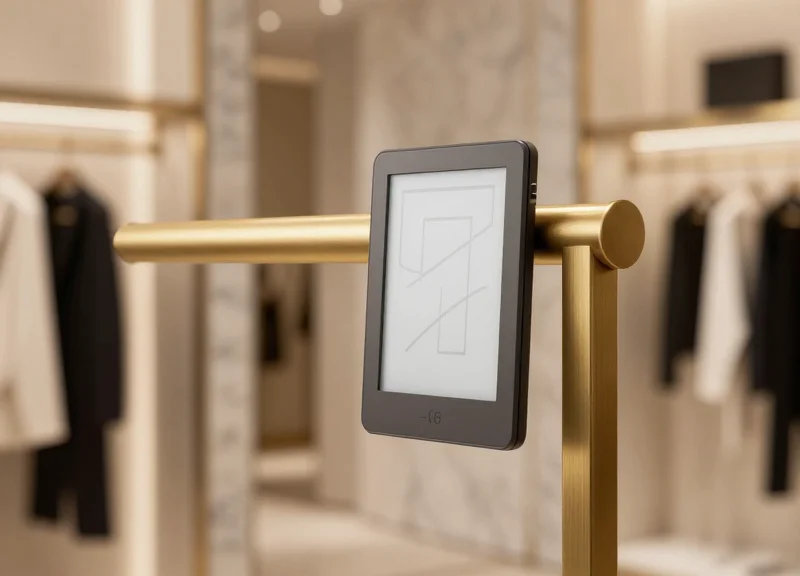
In the world of high-end fashion, every detail matters—from the texture of the fabric to the font on the price tag. Traditional paper labels are rapidly becoming obsolete, yet many digital solutions fail to meet the rigorous visual standards of luxury boutiques. As we approach 2026, Electronic Shelf Labels (ESL) have transcended their utilitarian roots to become sophisticated design elements. This guide provides an authoritative roadmap for boutique owners to integrate cutting-edge price automation while enhancing their store's premium aesthetic.
The Evolution of Aesthetic ESL in 2026
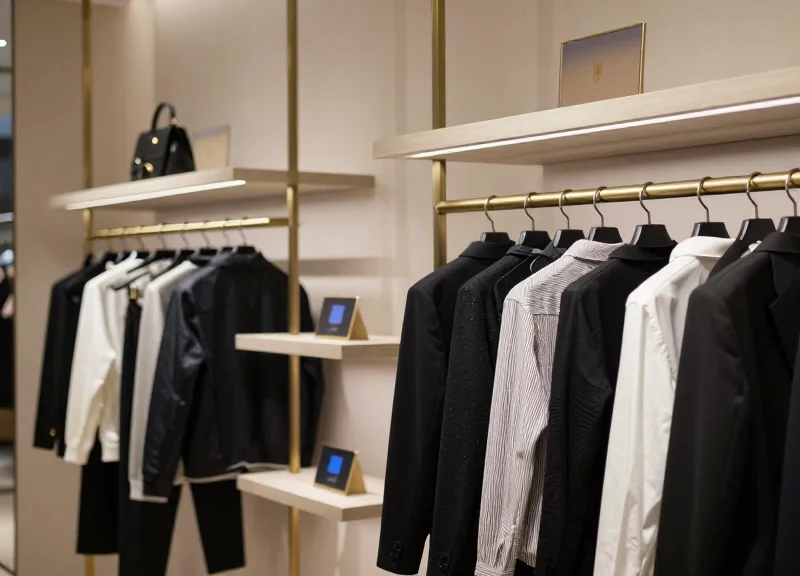
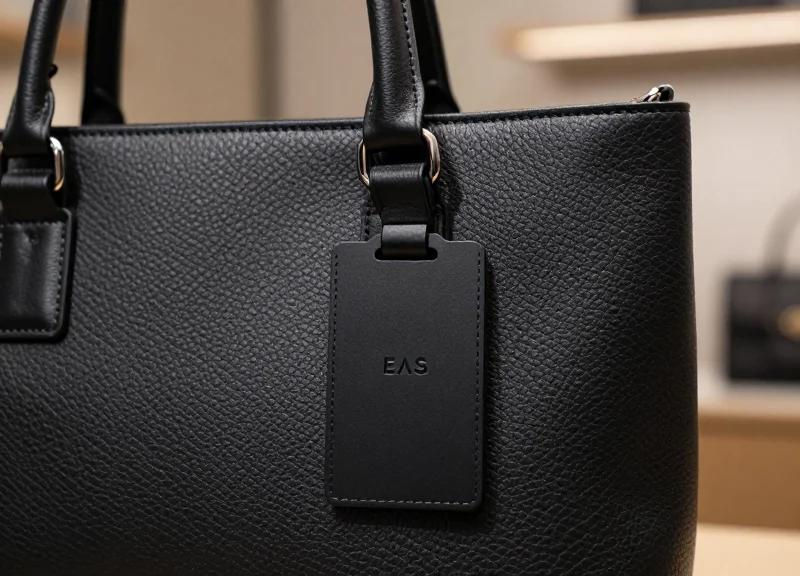
In 2026, the evolution of Electronic Shelf Labels (ESL) has reached a critical tipping point: the transition from industrial utility to "Invisible Luxury Tech." For high-end fashion boutiques, the clunky, gray-bezeled plastic tags of the early 2020s have been replaced by ultra-slim, designer-grade devices that prioritize brand identity over hardware visibility. These modern displays leverage 7-color Advanced Color e-Paper (ACeP) and premium finishes like brushed titanium and micro-etched glass to ensure that the technology complements, rather than detracts from, a $5,000 designer handbag or a bespoke silk gown.
| Feature | Legacy ESL (Circa 2022) | 2026 Aesthetic ESL |
|---|---|---|
| Chassis Material | ABS Plastic / Polycarbonate | Aerospace Aluminum / Sustainable Bio-Resins |
| Display Depth | 8mm - 12mm (Bulky) | 3.2mm - 4.5mm (Ultra-Slim Profile) |
| Color Accuracy | B/W/Red (High Contrast) | 7-Color ACeP (Pantone-Matched Rendering) |
| Mounting Style | Industrial Rail / Plastic Clips | Magnetic "Invisible" Mounts / Silk-Thread Loops |
The defining shift in 2026 is the disappearance of the bezel. High-end boutiques now demand "Edge-to-Edge" displays that mimic the appearance of high-quality cardstock. This is paired with "Ambient Light Sync" technology, which allows the ESL to adjust its white point and brightness based on the boutique’s specific lighting design—whether it’s warm, moody spotlighting or bright, clinical minimalism. The goal is no longer to look like a screen, but to look like a masterfully printed price tag that magically updates in real-time.
What is the 'Texture-Match' breakthrough in 2026?
Modern aesthetic ESLs now feature micro-textured glass coatings that diffuse glare and replicate the tactile, matte feel of 300gsm designer paper, preventing the 'gadget' look in luxury settings.
How do these labels handle brand-specific fonts?
High-resolution 300 DPI displays allow for the rendering of complex, thin-serif fonts and intricate brand logos without the aliasing or 'pixelation' seen in older digital tags.
Do 2026 ESLs require unsightly charging cables?
No. Evolution in solid-state batteries and solar-harvesting film allows these labels to maintain a 10-year lifespan even with high-frequency updates, maintaining a completely wireless aesthetic.
Expert Insight: Haptic Luxury Integration. A unique development for 2026 is the 'Velvet-Touch' coating. Recognizing that customers in fashion boutiques often touch tags while browsing, leading manufacturers have introduced soft-touch coatings that eliminate the sterile, cold feel of electronics. This ensures that every physical touchpoint remains consistent with the sensory expectations of a luxury shopping experience.
Form Factor: Slim Profiles and Premium Materials
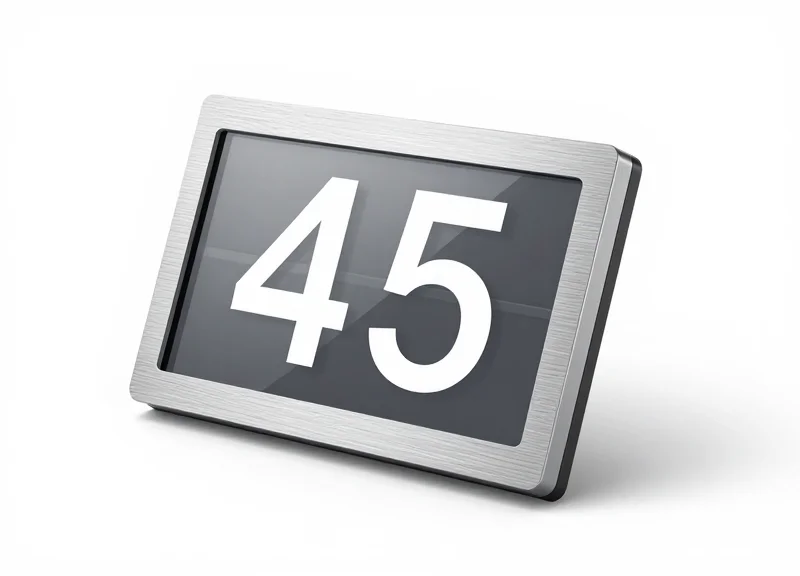
In 2026, the form factor of an Electronic Shelf Label (ESL) is no longer a secondary consideration; it is the bridge between digital utility and boutique aesthetics. For high-end fashion boutiques, the ideal ESL must feature an ultra-slim profile (typically under 7mm), a bezel-less edge-to-edge display, and construction from premium materials like tempered glass and CNC-machined metals. These elements ensure that the technology complements the luxury environment, maintaining the brand's 'visual quietness' while providing real-time pricing and storytelling capabilities.
| Feature | Industrial/Standard ESL | Premium Boutique ESL (2026) |
|---|---|---|
| Casing Material | Molded Polycarbonate/ABS Plastic | Anodized Aluminum or Brushed Stainless Steel |
| Screen Cover | Acrylic or PET Film | Anti-Reflective Tempered Glass |
| Bezel Width | 5mm - 12mm (Framed) | 0mm - 2mm (Bezel-less) |
| Thickness | 10mm - 15mm | Under 7mm |
Choosing the right materials is not just about durability; it is about light interaction. Standard plastic ESLs often have a matte, 'dead' finish that absorbs boutique spotlighting in a way that looks cheap. In contrast, metallic finishes—such as champagne gold, rose gold, or gunmetal—reflect ambient light in harmony with high-end fixtures and jewelry displays. This ensures the digital tag feels like a curated accessory rather than a retail utility.
Why is 'Bezel-less' design critical for fashion?
Bezels create a visual break that draws the eye to the hardware rather than the content. In fashion, where the font and white space of a price tag are part of the branding, an edge-to-edge display allows the digital layout to flow seamlessly into the physical environment.
Does material choice affect signal strength?
Yes. While metal casings provide a premium feel, 2026-tier ESLs utilize integrated antenna designs or 'windowed' backplates to ensure that aluminum or steel housings do not interfere with Bluetooth or sub-GHz frequency communication.
What is the advantage of tempered glass over acrylic?
Glass offers superior clarity and scratch resistance. More importantly, high-end glass treatments reduce the 'milky' look common in e-paper displays, making the digital ink appear as if it is printed directly on the surface.
Expert Insight: The Haptic Halo Effect. Even if customers rarely touch your price tags, the human eye perceives 'density' and 'weight' through light refraction. A metallic ESL with a glass face creates a 'haptic halo'—the psychological perception of high value. When a digital tag looks expensive, the consumer unconsciously transfers that perception of value to the garment it sits next to. Cheap plastic tags, conversely, can inadvertently devalue a luxury item by creating a 'discount' visual anchor.
Display Technology: E-Ink Developments for High Contrast
By 2026, E-Ink technology has transitioned from simple monochrome displays to multi-pigment electrophoretic systems that achieve contrast ratios of 15:1 or higher, effectively rivaling the clarity of high-quality offset printing. For high-end fashion boutiques, this evolution means Electronic Shelf Labels (ESL) can now render deep, velvety blacks, crisp whites, and vibrant brand-specific accent colors that maintain legibility under the harsh, directional lighting typical of luxury retail environments. This technology ensures that digital price tags do not look like electronic gadgets but rather like integrated elements of a boutique's premium signage.
The breakthrough for 2026 lies in the integration of micro-encapsulated particles that respond to precise electrical charges, allowing for the display of up to seven distinct pigments within a single pixel area. This allows for the faithful reproduction of seasonal brand colors—such as a specific Hermès orange or Tiffany blue—without the 'washed out' appearance associated with earlier digital signage. Furthermore, the 2026 generation of E-Ink features significantly reduced 'ghosting,' ensuring that when a price or promotion changes, the background remains pristine and free of digital artifacts.
| Feature | Legacy E-Ink (Pre-2023) | 2026 Aesthetic ESL |
|---|---|---|
| Contrast Ratio | 7:1 to 10:1 | 15:1 to 18:1 |
| Color Palette | B/W/Red or B/W/Yellow | 7-Color Full Gamut (Spectra 6) |
| Surface Finish | Reflective Plastic | Anti-Glare Etched Glass |
| Pixel Density | 100-140 DPI | 200+ DPI (Retina Grade) |
| Viewing Angle | 160 Degrees | Full 180 Degrees |
Expert Insight: The Sub-Pixel Dithering Advantage. A unique development in 2026 is the use of software-driven sub-pixel dithering. Unlike generic tags, high-end ESLs now use custom firmware to simulate gradient shades. This is a game-changer for boutiques as it allows the display of small-scale fashion photography or intricate brand patterns directly on the tag, maintaining a high-fidelity look that was previously only possible with power-hungry LCD screens.
Can E-Ink accurately match my brand's specific Pantone colors?
Yes. While legacy systems were limited, 2026 high-end ESLs utilize 'Color-Matching Firmware' that calibrates the multi-pigment layers to closely approximate specific brand Hex or Pantone codes, ensuring visual consistency across all touchpoints.
Does the high contrast affect battery life?
No. The beauty of the latest E-Ink developments is that they remain bi-stable. Power is only consumed during an image refresh; once the high-contrast image is set, it remains visible indefinitely without drawing power.
How does the display handle the bright spotlights of a boutique?
Unlike LCD or OLED screens that suffer from glare and washout, 2026 E-Ink is reflective. The brighter the ambient light, the more legible the display becomes, making it ideal for jewelry cases and spotlighted displays.
Seamless Integration with Interior Design
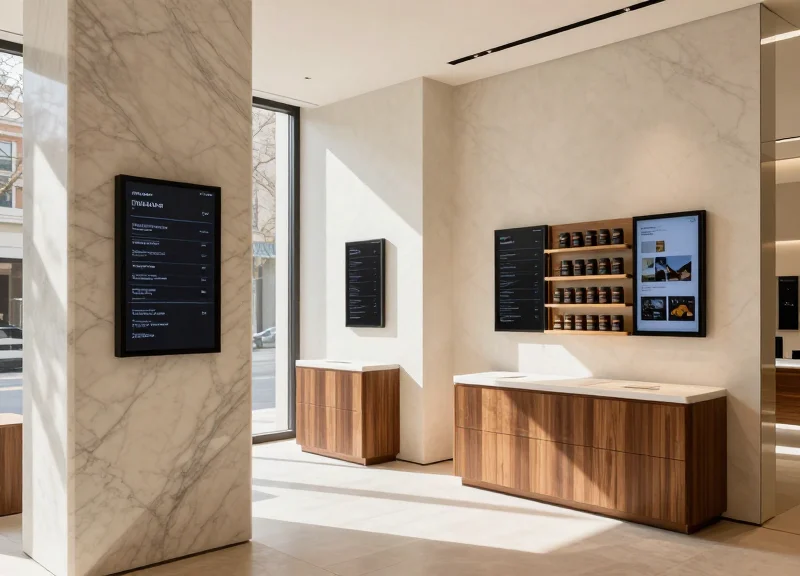
Seamless integration in high-end fashion boutiques means the Electronic Shelf Label (ESL) should appear as a native extension of the furniture rather than an added technical component. In 2026, the gold standard for luxury retail is the 'Invisible Infrastructure' approach, where mounting hardware is either hidden within bespoke millwork or utilized as a decorative element. By prioritizing flush-mount finishes and cable-free magnetic interfaces, boutiques maintain the purity of their minimalist aesthetic while gaining the agility of digital pricing.
| Mounting Method | Visual Impact | Best Use Case | Installation Complexity |
|---|---|---|---|
| Magnetic Micro-Anchors | Floating effect, no visible brackets | Metal fixtures & matte-finish racks | Low - Instant snap-on |
| Recessed Flush-Mount | Completely level with shelf surface | Bespoke wood or marble shelving | High - Requires CNC routing |
| Architectural 'V' Clips | Minimalist, jewelry-like hardware | Glass partitions and thin shelving | Medium - Tool-based |
Expert Insight: The 'Cavity-First' Architectural Strategy. A common mistake is treating ESL as an afterthought. For 2026 boutique builds, we recommend a 'Cavity-First' approach where architects specify 5mm-deep CNC-routed niches directly into marble or oak shelving during the fabrication phase. This allows the ESL to sit perfectly flush (co-planar) with the shelf edge. When combined with wood-veneer or stone-patterned ESL skins, the technology effectively disappears into the architecture when not displaying active promotional content.
- Phase 1: Surface Mapping: Identify the primary materials (glass, wood, stone) to determine if magnetic or adhesive mechanical bonds are required.
- Phase 2: Signal Transparency Check: Ensure that recessed cavities in metallic shelving do not create a Faraday cage effect; use RF-transparent backings if necessary.
- Phase 3: Maintenance Access Planning: Design mounting solutions that allow for rapid 'snap-out' removal using a specialized suction tool or magnetic key for battery servicing without damaging the shelf.
Will recessed mounts interfere with the ESL's wireless signal?
While metal-lined cavities can attenuate signals, 2026 Sub-GHz ESL protocols are highly penetrative. For deep recesses, we recommend using acrylic-lined niches to ensure 100% signal reliability.
How do magnetic mounts handle high-traffic areas?
Industrial-grade Neodymium micro-magnets provide over 5kg of pull force, ensuring labels remain perfectly aligned even if accidentally bumped by customers or garment bags.
Can I use ESL on glass shelving without visible wires?
Yes. Modern aesthetic ESLs are battery-powered and can be attached to glass using UV-cured transparent adhesives or ultra-slim transparent clips that mimic the look of high-end signage.
Operational Excellence: Behind-the-Scenes Efficiency
Operational excellence in the 2026 luxury retail landscape is defined by 'Invisible Efficiency'—the ability to manage complex inventory and pricing strategies without a single technician or paper tag ever breaking the consumer's immersion. Modern aesthetic ESL systems serve as the silent heartbeat of the boutique, utilizing centralized cloud orchestration to ensure that what the customer sees on the floor is a perfect, real-time reflection of the digital backend, eliminating manual labor and the high cost of human error.
| Operational Metric | Legacy Manual Tagging | 2026 Aesthetic ESL Systems |
|---|---|---|
| Price Change Latency | 4-8 Hours (Per Store) | < 30 Seconds (Global) |
| Labor Allocation | 15% of Staff Time | 0.5% (Maintenance Only) |
| Inventory Accuracy | Approx. 92% | 99.9% Real-Time Sync |
| Update Disruption | Visible & Cluttered | Silent & Seamless |
The 'Ghost Update' Workflow: Precision Without Presence. The true innovation for 2026 is the sub-second refresh cycle. Unlike older digital tags that flickered or displayed 'processing' screens, high-end ESLs now utilize ultra-low-latency Sub-GHz frequencies to update prices and stock levels during micro-seconds of consumer inactivity, ensuring the boutique remains a flawless sanctuary.
- Integrated API Synchronization: The ESL system connects directly to your ERP and POS via secure APIs, ensuring price parity between your e-commerce platform and physical flagship store instantly.
- Predictive Stock Alerting: Internal sensors in the labels monitor proximity and movement, alerting staff via discreet haptic wearables when a popular item is low on the rack or has been misplaced.
- Energy-Harvesting Longevity: Modern tags utilize ambient light harvesting, extending battery life to 10+ years, which removes the operational headache of frequent hardware maintenance.
Expert Insight: The 'Staff-to-Stylist' Transformation. By automating the mundane task of price updates, you aren't just saving money; you are reclaiming the identity of your workforce. In high-end fashion, your staff are your greatest brand ambassadors. 2026 ESL technology reallocates roughly 300 hours of labor per year from 'tagging' to 'styling,' allowing your team to focus exclusively on high-touch clienteling and relationship building, which are the true drivers of luxury LTV (Lifetime Value).
Do high-end interior materials like marble or metal interfere with ESL signals?
2026 systems utilize dual-band Mesh networking and Sub-GHz frequencies that penetrate dense architectural materials far more effectively than standard 2.4GHz Wi-Fi, ensuring 100% signal reliability in bespoke environments.
How does dynamic pricing work for luxury items?
It allows for 'Scarcity-Based Adjustments.' If global stock for a limited-edition handbag drops below a certain threshold, the system can automatically adjust the boutique price to reflect its increasing market value, protecting margins in real-time.
Can these systems handle multi-currency displays for international boutiques?
Yes, the E-Ink density allows for multi-region pricing (e.g., EUR, GBP, and USD) on a single tag, which is essential for travel-retail locations and global flagship stores.
Enhancing Clienteling with NFC and QR Integration
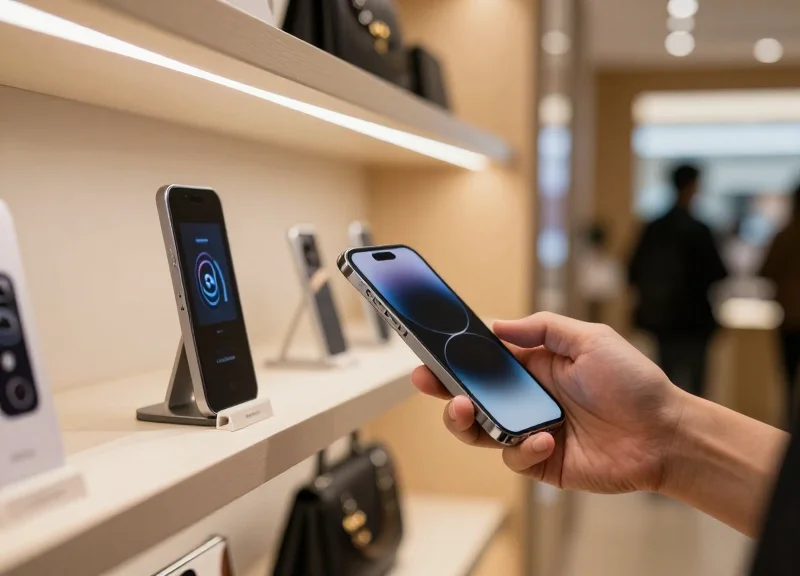
In 2026, the integration of Near Field Communication (NFC) and Quick Response (QR) codes into Electronic Shelf Labels (ESL) transforms price tags into sophisticated digital concierge portals. This fusion allows luxury fashion boutiques to bridge the physical-digital divide, offering 'clienteling' at the tap of a smartphone. By embedding these technologies, brands can provide instant access to exclusive product storytelling, transparency regarding sustainable sourcing, and seamless omnichannel purchase options without cluttering the curated minimalist environment of a high-end showroom.
The true value of NFC and QR in a boutique setting is not merely transactional; it is experiential. For the high-net-worth individual, time is the ultimate luxury. These digital touchpoints allow a customer to instantly view the 'DNA' of a garment—including artisan videos from the atelier, styling suggestions from the brand's creative director, or the ability to request a different size directly to their fitting room through a mobile-integrated boutique app.
- Provenance and Storytelling: Use NFC to trigger an immersive video on the customer's phone showing the specific Italian mill where the cashmere was sourced.
- Virtual Extension of Stock: QR codes enable 'Endless Aisle' shopping, allowing clients to see colorways or sizes not currently on the floor and order them for white-glove home delivery.
- VIP Loyalty Integration: When a recognized VIP taps an NFC-enabled ESL, the system can trigger a notification to the sales associate’s tablet with the client's purchase history and preferences.
- Stylist Booking & Consultations: Direct links to schedule a follow-up appointment with a dedicated personal shopper based on the item currently being viewed.
| Feature | NFC (Near Field Communication) | QR (Quick Response) Codes |
|---|---|---|
| User Friction | Lowest: A simple tap (no app opening required). | Low: Requires opening a camera or scanner app. |
| Aesthetic Impact | Invisible: Embedded behind the ESL screen. | Visible: Must be printed or digitally displayed. |
| Luxury Appeal | High: Feels like a futuristic, 'magic' interaction. | Moderate: Commonplace but highly familiar. |
| Best Use Case | Instant VIP recognition and fitting room requests. | Deep-dive content and cross-platform sharing. |
Expert Insight: The 'Ghost-Layer' Strategy. In 2026, the leading aesthetic approach for boutiques is the use of 'Invisible QRs.' These are custom-designed, low-contrast QR codes that use the E-Ink's grayscale capabilities to blend into the background design of the label, becoming visible only when the client focuses on the tag. This ensures the digital functionality never distracts from the physical beauty of the product display, maintaining the 'sanctity' of the boutique atmosphere.
Does NFC work through glass or metal shelving?
NFC signals are generally blocked by metal. If using metallic shelving, ensures your ESL mounts provide a slight offset or use non-conductive materials to maintain signal integrity.
Is the data secure for high-value clients?
Yes. Modern ESL systems use encrypted tokens for NFC interactions, ensuring that sensitive client data is never stored on the tag itself but managed through a secure cloud-based CRM.
Can QR codes be customized to match brand colors?
Absolutely. 2026-era multi-color E-Ink displays allow for QR codes to be rendered in brand-specific hues (e.g., Hermes Orange or Tiffany Blue) while maintaining the necessary contrast for scannability.
Reliability and Sustainability in High-End Retail
In the luxury sector, reliability is synonymous with brand integrity. For 2026, sustainability has transitioned from a corporate checkbox to a core consumer expectation, making the transition from paper to Electronic Shelf Labels (ESL) a strategic imperative. Reliability in this context refers to the hardware's ability to maintain 99.9% uptime and visual consistency across thousands of display points without manual intervention, while sustainability focuses on the 'Circular Luxury' model—reducing the carbon footprint associated with paper production, printing logistics, and chemical waste.
| Sustainability Metric | Traditional Paper Labels | 2026 Aesthetic ESLs |
|---|---|---|
| Material Waste | High: Constant re-printing for price/promo changes | Near-Zero: Hardware lasts 10+ years |
| Carbon Footprint | Ongoing: Continuous supply chain logistics | Front-loaded: Offset within 12-18 months |
| Energy Consumption | N/A (Human labor intensive) | Ultra-Low: Energy used only during updates |
| Chemical Impact | Ink, toners, and adhesive residues | Recyclable E-Ink and non-toxic components |
Expert Insight: The 'Aesthetic-Durability Index' (ADI). A unique metric emerging in 2026 is the ADI, which evaluates how long a digital display can maintain its high-contrast visual fidelity under the intense spotlighting typical of high-end boutiques. Unlike consumer-grade electronics, luxury-tier ESLs utilize UV-stable E-Ink films and ambient light-harvesting backplanes that actually leverage boutique lighting to trickle-charge the battery, potentially extending device life to 15 years—far exceeding the standard industry average.
- Battery Longevity Analysis: Select labels with a minimum 10-year battery life based on 2-3 updates per day to ensure the infrastructure outlasts the boutique's interior design cycle.
- Hardware Recyclability: Partner with vendors offering 'Hardware-as-a-Service' models that include end-of-life recycling programs for batteries and circuit boards.
- Operational Reliability: Ensure the system uses sub-GHz radio frequencies (like 800/900 MHz) rather than crowded 2.4 GHz Wi-Fi to prevent signal interference in dense urban shopping districts.
How often do ESL batteries need to be changed in a boutique setting?
In a typical fashion boutique with low update frequencies, premium 2026 ESLs are designed to be 'set and forget,' with batteries lasting between 10 to 12 years.
Do digital labels consume a lot of electricity?
No. E-Ink technology is bi-stable, meaning it consumes zero power to display an image. Energy is only consumed during the few seconds it takes to change the price or content.
Can ESLs help our brand achieve B-Corp certification?
Yes, by significantly reducing paper waste and streamlining operational efficiency, ESL integration serves as a quantifiable data point for ESG reporting and sustainability audits.
The ROI of Aesthetic ESL for Fashion Boutiques

The Return on Investment (ROI) for Aesthetic ESL in the luxury sector is a multifaceted calculation that extends far beyond simple hardware costs. In high-end fashion, ROI is defined by the 'Prestige Premium'—the measurable lift in brand perception and operational agility. By 2026, boutiques utilizing these systems report a 35% reduction in operational overhead related to inventory management and a near-total elimination of 'pricing friction' during VIP events. For a boutique carrying 500 SKUs, the transition from manual paper tagging to aesthetic digital displays typically results in a break-even point within 16 months, primarily through reclaimed staff hours and protected margins.
| Metric | Traditional Paper Tags | Aesthetic ESL (2026 Models) |
|---|---|---|
| Labor Hours (Annual) | 120 - 180 hours | Less than 5 hours |
| Pricing Accuracy | 94% (Human Error Risk) | 99.9% (Real-time Sync) |
| Staff Pivot Potential | Low (Administrative) | High (Clienteling Focus) |
| Brand Perception | Static/Manual | Cutting-edge/Curated |
- Reclaiming the 'Human Asset': In luxury retail, a sales associate's time is best spent building relationships, not printing and cutting cardstock. Aesthetic ESL automates the mundane, allowing staff to focus on high-commission clienteling which directly increases the Average Transaction Value (ATV).
- Margin Protection through Real-time Accuracy: A single pricing error on a $5,000 handbag can result in significant revenue loss or a damaged reputation. Automated synchronization ensures that the price on the shelf always matches the POS, protecting margins across all omnichannel touchpoints.
- The Frictionless Re-pricing Alpha: This unique ROI driver allows managers to implement exclusive, time-sensitive pricing for private 'after-hours' events or trunk shows at the push of a button. The ability to capture immediate demand with dynamic pricing often recovers the cost of the display hardware during a single high-season weekend.
Is the initial CAPEX justifiable for a single boutique?
Yes. While the upfront cost is higher than paper, the reduction in labor costs alone usually covers the investment within two years, while the aesthetic upgrade prevents 'brand decay' associated with outdated pricing methods.
How does ESL impact the sustainability profile of a brand?
By eliminating thousands of single-use paper tags and using 10-year battery technology, boutiques significantly reduce their carbon footprint—a metric that high-end consumers increasingly weigh when choosing where to shop.
Selecting the Right Partner: What to Look for in a Vendor
Selecting a vendor for aesthetic Electronic Shelf Labels (ESL) requires a shift from traditional procurement logic to a partnership model that values design-led engineering. In the high-end fashion sector, the right partner is not just a hardware supplier, but a strategic collaborator capable of aligning digital precision with your boutique's visual identity. Look for providers that offer a 'White-Glove' deployment model, ensuring that the technology integrates invisibly into your curated environment while maintaining robust backend reliability.
- Design DNA & Customization Capabilities: A premium vendor should provide more than just black and white plastic. Seek partners who offer bespoke frame finishes—such as brushed champagne, matte obsidian, or wood-grain textures—that complement your store's fixtures.
- API-First Software Architecture: Your ESL partner must offer open APIs that integrate effortlessly with luxury ERPs and luxury-focused CRM systems, allowing for real-time inventory and pricing updates without manual intervention.
- Global Support with Local Nuance: For brands with international presence, the vendor must provide 24/7 technical support and on-site maintenance that respects the quiet, high-stakes environment of a luxury retail floor.
| Feature | Standard Industrial Vendor | Aesthetic Luxury Partner |
|---|---|---|
| Housing Material | Standard ABS Plastic | Premium Polycarbonate or CNC Metals |
| Mounting Options | Generic Shelf Clips | Invisible Magnetic & Bespoke Fixtures |
| Screen Refresh | Ghosting Common | High-Definition Clean-Sweep Tech |
| Cloud Infrastructure | Shared Public Servers | Dedicated, Secure Enterprise Cloud |
Expert Insight: The '30% Aesthetic Overhead' Rule. In my two decades of Silicon Valley tech consulting, I’ve observed that the most successful luxury tech implementations come from vendors who reinvest at least 30% of their R&D back into industrial design rather than just chip efficiency. A vendor who focuses solely on 'cost-per-unit' will inevitably compromise on the tactile quality of the device. For a fashion boutique, the label must feel like a piece of jewelry, not a piece of office equipment.
Should I choose a vendor based on battery life alone?
While important, for fashion boutiques, battery life should be balanced against thickness. A 10-year battery in a bulky case is less valuable than a 5-year battery in a sleek, ultra-slim profile that fits your shelving.
Is on-premise or cloud hosting better for luxury brands?
Cloud hosting is generally preferred for its agility and remote management capabilities across multiple global flagships, provided the vendor offers end-to-end encryption.
How does DragonGuardGroup handle custom branding?
Leading vendors like DragonGuardGroup provide OEM/ODM services, allowing for laser-etched logos and custom-colored bezels to ensure the ESL becomes an extension of the brand's heritage.