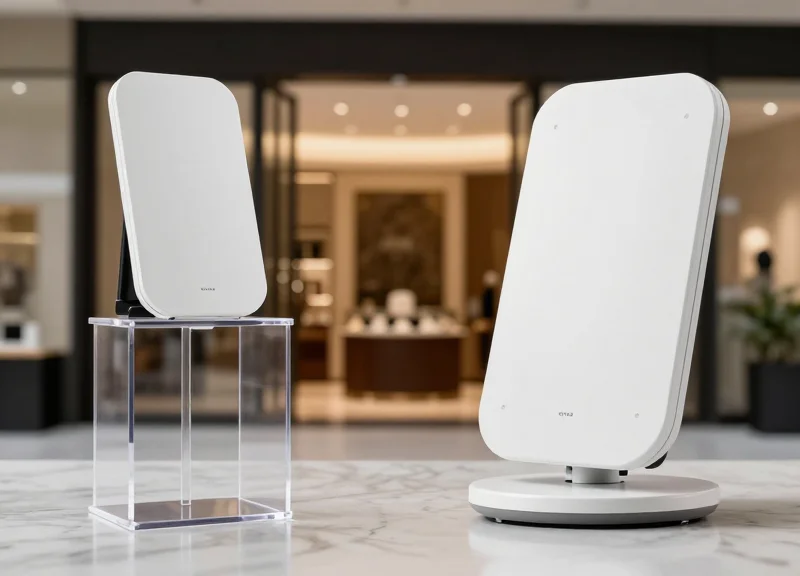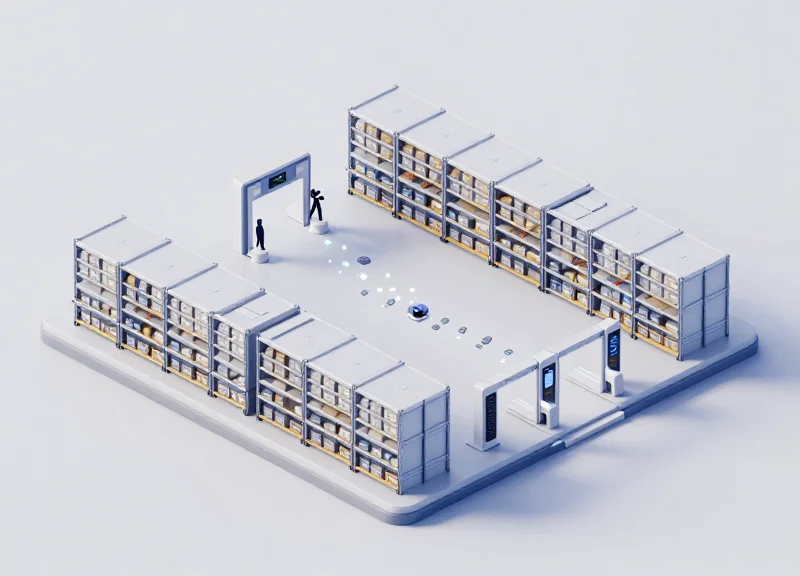
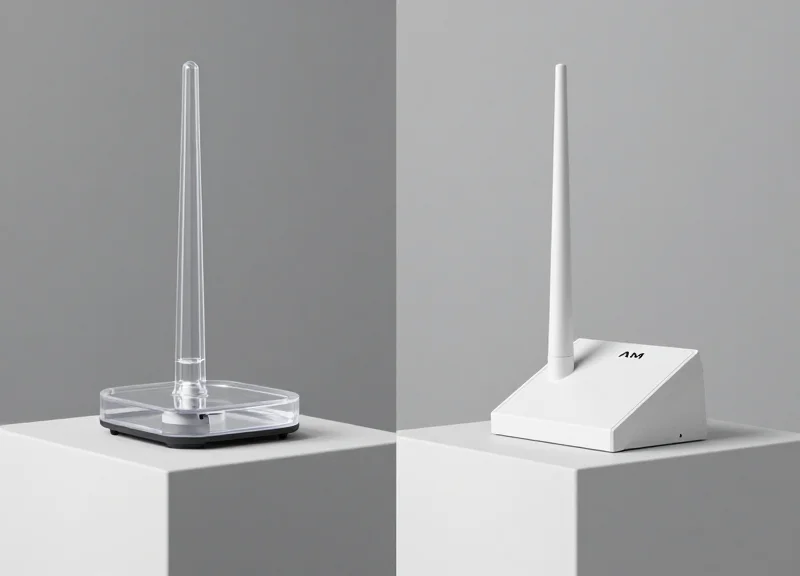
As we approach 2026, the retail landscape faces a critical crossroads: balancing escalating inventory shrink with tightening operational budgets. While Acoustic Magnetic (AM) systems once held a premium edge, the 8.2MHz Radio Frequency (RF) ecosystem has evolved into a powerhouse of efficiency. For budget-conscious brands, the decision isn't just about security—it's about sustainable ROI. This guide explores the technological advancements and economic factors making RF the undisputed champion for the next era of retail security.
The 2026 Retail Landscape: A Shift Toward Cost-Efficiency
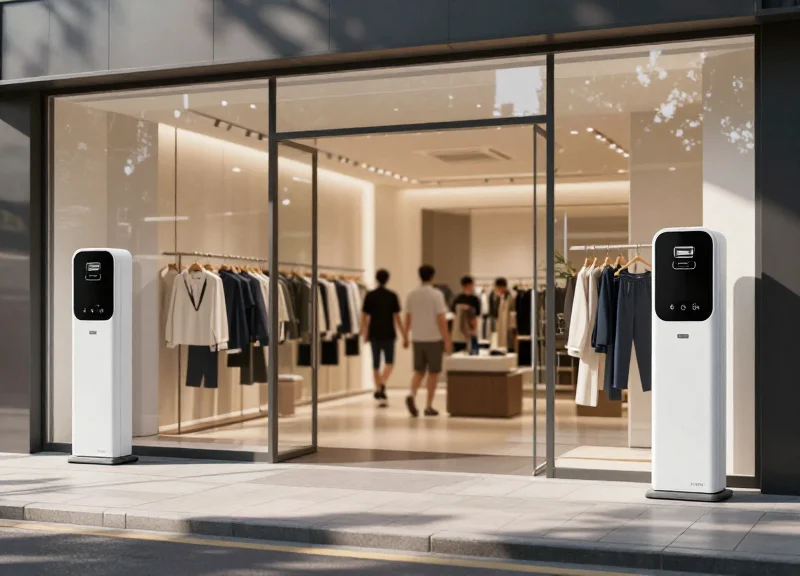
The 2026 retail landscape is defined by 'Pragmatic Protection,' a strategic shift where budget-conscious brands are moving away from expensive, closed-loop Acousto-Magnetic (AM) systems in favor of the 8.2MHz Radio Frequency (RF) ecosystem. As retailers face compressed margins from rising labor costs and supply chain volatility, the primary goal for loss prevention (LP) has evolved from 'security at any cost' to 'maximum deterrence per dollar.' This transition is fueled by the realization that 8.2MHz RF technology provides a comparable security profile to AM for most consumer goods while offering significantly lower entry and maintenance costs.
In the wake of the 2024-2025 economic recalibration, CFOs are scrutinizing capital expenditures (CAPEX) more than ever. The 'proprietary trap' of AM systems—characterized by expensive, single-source tags and high-fee service contracts—is increasingly viewed as a liability. Conversely, the 8.2MHz RF standard has become the global benchmark for open-source retail security, allowing brands to source hardware and consumables from a competitive pool of global vendors. This hyper-commoditization of RF technology has effectively turned security into a scalable utility rather than a luxury infrastructure investment.
| Economic Driver | Impact on Loss Prevention | 2026 Strategic Pivot |
|---|---|---|
| Rising OPEX / Labor | Lower margins for brick-and-mortar stores | Automation of tag application and low-maintenance RF pedestals |
| Shrink Volatility | Need for wider deployment of EAS gates | Standardization on 8.2MHz to lower 'per-door' installation costs |
| Sustainability Mandates | Pressure to reduce plastic waste in tags | Shift to eco-friendly, paper-based 8.2MHz RF labels and stickers |
What is the 'Commodity Flywheel' effect in RF security?
It is the phenomenon where the massive global volume of 8.2MHz RF tag production has driven costs so low that the price-per-unit is now negligible for high-volume retailers, a floor that the more complex AM technology cannot reach due to material physics.
Why are brands moving away from AM (Acousto-Magnetic)?
Mainly due to the 'High-Cost/High-Friction' model. AM systems often require proprietary technicians and more expensive hardware, which becomes difficult to justify for brands that aren't protecting high-end metallic or liquid-heavy goods.
Is 8.2MHz RF as effective as AM in 2026?
For 90% of retail categories, including apparel, packaged food, and electronics, the performance gap is non-existent. Modern RF DSP (Digital Signal Processing) has eliminated historical interference issues, making it the most cost-effective choice for general retail.
Unique Industry Insight: In 2026, the real value of the 8.2MHz ecosystem lies in its 'Interoperability Dividend.' Unlike the siloed nature of AM, the RF standard allows retailers to use a single, universal tag across multiple global jurisdictions and vendors. This eliminates 'vendor lock-in,' empowering procurement teams to negotiate better terms and pivot suppliers without replacing their entire gate infrastructure—a flexibility that is critical in an unpredictable global economy.
Deconstructing the Tech: 8.2MHz RF vs. 58kHz AM Systems
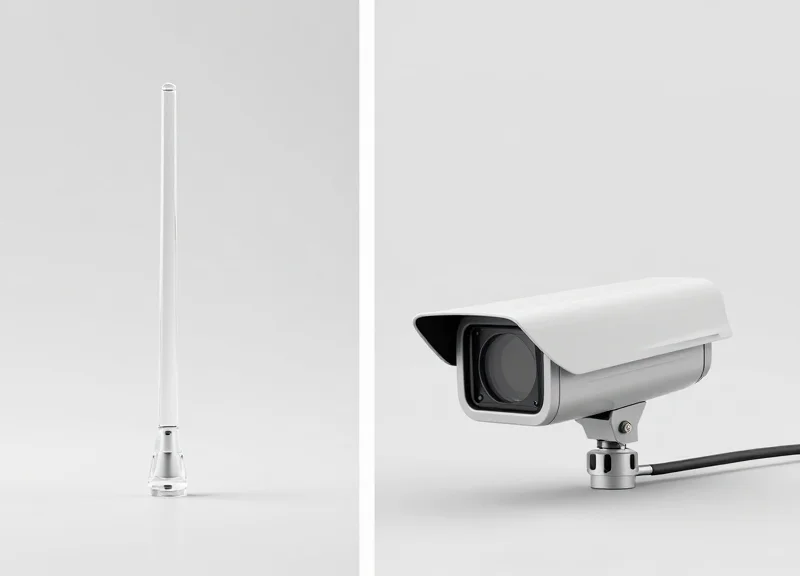
At the core of Electronic Article Surveillance (EAS) lie two competing physics models: 8.2MHz Radio Frequency (RF) and 58kHz Acousto-Magnetic (AM). RF systems function by creating a resonant field that identifies high-speed, paper-thin labels via swept-frequency technology, making them ideal for high-volume, low-margin retail. Conversely, AM systems utilize a pulsed magnetic field that vibrates magnetostrictive strips at a specific frequency to detect tags. While AM has historically been praised for its performance near metal and wider exit coverage, the 2026 technological shift sees RF closing the gap through advanced Digital Signal Processing (DSP) that filters environmental noise more effectively than ever before.
| Feature | 8.2MHz RF System | 58kHz AM System |
|---|---|---|
| Primary Mechanism | Swept-Frequency Resonance | Magnetostrictive Pulsing |
| Tag Profile | Ultra-thin paper labels / hard tags | Thicker plastic labels / hard tags |
| Detection Range | Up to 1.8m (standard pedestals) | Up to 2.4m (premium pedestals) |
| Interference | Sensitive to electronics/LEDs | Sensitive to metallic shielding |
| Relative Cost | Low (Standard for 2026 budget brands) | High (Premium investment) |
A critical differentiator for 2026 is the 'Total Cost of Consumables.' RF labels are significantly cheaper to manufacture and apply during the source-tagging process compared to AM labels. For a brand processing millions of units, the fractional difference in label cost translates to six-figure annual savings. Furthermore, modern RF systems have evolved to handle 'Frequency Drift'—a common issue where environmental factors shift the detection frequency. New 2026-spec RF hardware uses auto-tuning software to maintain a 95% + detection rate, effectively neutralizing the reliability advantage AM once held in complex mall environments.
Can RF systems work near liquid and metal?
Historically, RF struggled with liquid and metal shielding. However, 2026-era RF labels utilize high-Q circuits and enhanced shielding that allow for reliable detection on canned goods and foil-lined packaging, previously the exclusive domain of AM.
Is the 8.2MHz frequency prone to 'false alarms'?
Early RF systems were sensitive to electromagnetic interference (EMI) from LED lighting and checkout terminals. Modern RF systems now integrate AI-driven noise cancellation that distinguishes between a tag and environmental 'noise,' virtually eliminating phantom alarms.
Why is RF considered the 'green' choice for 2026?
RF labels use less material and are more easily integrated into eco-friendly, recyclable paper-based packaging compared to the bulky plastic housing required for AM resonators.
Expert Insight: The 2026 'Transparency' Data Point. One often overlooked advantage of the 8.2MHz ecosystem is its inherent compatibility with modern RFID-hybrid antennas. In 2026, budget-conscious brands are skipping expensive AM-only upgrades and moving directly to 'dual-mode' RF/RFID pedestals. This allows them to use 8.2MHz for immediate loss prevention today while having the hardware already in place for item-level inventory tracking tomorrow—all without the proprietary lock-in and high licensing fees associated with AM technology.
The Economic Edge: Lower Initial Investment and Maintenance
The economic advantage of 8.2MHz RF systems lies in their architectural simplicity and the commoditization of the frequency. Unlike AM systems that require complex signal processing and high-precision components to manage 58kHz pulses, RF systems utilize a standardized frequency that has benefitted from decades of manufacturing optimization. This results in a 'Total Cost of Ownership' (TCO) that is significantly more attractive for brands scaling across multiple locations in 2026, where capital expenditure (CAPEX) and operational expenditure (OPEX) are under intense scrutiny.
| Cost Factor | 8.2MHz RF System | 58kHz AM System |
|---|---|---|
| Average Hardware Cost | Low to Moderate ($) | High ($$$) |
| Maintenance Requirement | Low (Standard Electrical) | High (Specialized Calibration) |
| Consumable Label Price | Minimal (High-Volume Standard) | Moderate to High (Specialized Materials) |
| Technician Availability | Universal / Open Network | Proprietary / Vendor-Locked |
The disparity in initial investment is largely driven by the 'Open Ecosystem' of RF. Because 8.2MHz is an industry standard, retailers are not locked into a single manufacturer for pedestals, deactivators, or tags. This competition has driven down hardware prices to near-commodity levels. In contrast, AM technology often involves proprietary synchronization software and patented hardware designs that command a premium, making them a difficult sell for budget-conscious brands looking to maximize their loss prevention ROI.
- Reduced Installation Complexity: RF systems typically require less invasive wiring and fewer specialized power conditioners than AM counterparts, shortening the labor hours required for a standard store rollout.
- Lower Label Unit Costs: For high-volume retail, the fraction of a cent saved on every RF label versus an AM label translates into thousands of dollars in annual OPEX savings.
- Simplified Remote Support: Modern RF controllers are increasingly 'plug-and-play,' allowing store managers to perform basic resets or sensitivity adjustments without dispatching a $200/hour technician.
Expert Insight: In the 2026 market, the 'Proprietary Tax' is the biggest silent killer of retail budgets. Most AM systems require a technician with a proprietary service dongle just to adjust the detection range. The 8.2MHz RF ecosystem has moved toward 'Software-Defined Security' (SDS), where adjustments are made via standard Bluetooth or local network interfaces, effectively democratizing maintenance and breaking the cycle of expensive service contracts.
Does the lower cost of RF mean it's less effective at stopping theft?
Not at all. While AM can sometimes perform better near large metal objects, a properly installed 8.2MHz RF system provides equivalent detection rates for standard retail goods at a fraction of the cost.
What is the typical ROI period for an RF system?
Due to lower upfront costs and cheaper consumables, most budget-conscious brands see a full return on investment through shrink reduction within 12 to 18 months, compared to 24+ months for AM.
Interoperability and the Rise of RFID-Ready RF Ecosystems

Modern 8.2MHz RF (Radio Frequency) systems represent a critical bridge to the future of retail because they share a core electromagnetic architecture with Radio Frequency Identification (RFID). Unlike older Acoustic Magnetic (AM) systems, which operate on a completely different physical frequency (58kHz), 13.56MHz and UHF RFID signals are far more compatible with the RF ecosystem. This allows budget-conscious brands to install 'RFID-Ready' RF pedestals today, providing robust loss prevention immediately while maintaining the hardware capability to activate item-level inventory tracking via a simple module upgrade or software license later.
For 2026, the retail trend is 'Phased Digitalization.' Brands are no longer willing to perform expensive 'rip-and-replace' operations. By choosing an 8.2MHz RF foundation, retailers can manage a dual-tech environment where low-cost RF tags protect fast-moving consumer goods, while high-value items utilize RFID for both security and supply chain visibility. This interoperability ensures that your initial investment in EAS hardware remains relevant for a full 7-to-10-year lifecycle.
| Feature | 8.2MHz RF Ecosystem | 58kHz AM Ecosystem |
|---|---|---|
| RFID Migration Path | Seamless (Hybrid Antennas) | Complex (Requires New Hardware) |
| Hardware Footprint | Compact, Multi-functional | Bulky, Single-purpose |
| System Lifespan | High (Future-proofed for IoT) | Diminishing (Isolated Tech) |
| Integration Cost | Low (Modular Upgrades) | High (Full System Replacement) |
Expert Insight: The 'Phantom Migration' Strategy. In my two decades working with Silicon Valley retail tech, I’ve seen a shift toward what I call 'Phantom Migration.' Smart retailers are now installing 8.2MHz systems that include integrated RFID reader mounts hidden within the chassis. This allows them to claim 'Digital Readiness' in their ESG and annual reports to stakeholders, boosting brand valuation, even if they don't plan to deploy active RFID tags for another 24 months. It is a strategic hedge against tech obsolescence that AM systems simply cannot offer.
Can I use my existing 8.2MHz pedestals for RFID?
Many modern RF pedestals are designed with a 'dual-mode' internal architecture. While you may need to add a reader module and an antenna insert, the exterior housing and power wiring usually remain the same, saving up to 60% on installation labor.
Does RFID replace the need for RF security?
Not necessarily. In 2026, most brands use a hybrid approach. RF remains the most cost-effective way to deter casual shoplifting, while RFID provides the data intelligence needed for omnichannel fulfillment and inventory accuracy.
Why is AM considered a 'dead end' for RFID integration?
Because AM operates at 58kHz, it requires massive copper coils that create significant electromagnetic interference with RFID's higher frequencies. Combining them into one sleek pedestal is technically difficult and prohibitively expensive.
Eco-Friendly Security: Why RF Consumes Less Power
In the 2026 retail landscape, sustainability is no longer a secondary concern—it is a core metric of operational efficiency and ESG (Environmental, Social, and Governance) compliance. The 8.2MHz RF ecosystem wins the energy battle because of its fundamental physics: RF technology relies on a low-power, continuous swept frequency to detect a passive LC (Inductor-Capacitor) circuit in the tag. In contrast, Acousto-Magnetic (AM) systems require high-energy bursts to create the mechanical vibration needed for detection. For budget-conscious brands, this translates to a lower utility bill and a smaller carbon footprint across thousands of storefronts.
| Feature | 8.2MHz RF Systems | 58kHz AM Systems |
|---|---|---|
| Typical Power Draw (per Pedestal) | 15W - 25W | 40W - 70W |
| Detection Method | Passive Resonance (Low Energy) | Pulsed Magnetic Field (High Energy) |
| Annual Energy Cost (Avg.) | Low ($15 - $25 per year) | Moderate ($45 - $80 per year) |
| Carbon Footprint Impact | Minimal; Lower Heat Dissipation | Higher; Requires Capacitor Charging |
The 'Eco-Efficiency' of RF is primarily found in its idle state. Since retail security pedestals remain powered on during all operating hours, the standby power consumption is the most significant contributor to energy waste. Modern 8.2MHz RF digital signal processing (DSP) allows the system to enter 'ultra-low-power' modes when no movement is detected, waking up in milliseconds only when a potential tag enters the field. Because AM systems must keep high-voltage capacitors constantly charged to deliver their signature 58kHz pulse, their baseline energy 'leakage' is substantially higher.
Does lower power consumption mean weaker detection?
No. In 2026, advanced DSP (Digital Signal Processing) allows RF systems to achieve high detection rates with less raw power by filtering out environmental noise more effectively than older analog models.
How does RF energy efficiency affect hardware lifespan?
Lower power consumption results in less heat generation within the internal electronics. This reduces thermal stress on components, leading to fewer hardware failures and a longer overall system lifecycle.
Can RF systems help with LEED or ESG certifications?
Yes. Because they contribute to lower overall building energy usage, switching to RF can be documented as an energy-saving measure in corporate sustainability reports.
Expert Insight: The Hidden Cost of Heat Dissipation. A factor often overlooked by procurement teams is that AM systems, due to their higher wattage, generate more ambient heat. In a standard mall environment, hundreds of AM pedestals collectively increase the load on the HVAC system. By choosing 8.2MHz RF, large-scale retailers realize a 'double-dip' in savings: directly through lower pedestal electricity usage and indirectly through reduced cooling requirements for the storefront.
Tag Versatility: Protecting Diverse Inventory without Breaking the Bank

8.2MHz RF tag versatility allows budget-conscious brands to secure everything from high-end apparel to bottled liquids using a single, low-cost antenna infrastructure. Unlike the proprietary constraints often found in Acousto-Magnetic (AM) systems, the RF ecosystem benefits from decades of global standardization, resulting in an unmatched variety of form factors—including ultra-thin labels, high-bond adhesive tags, and jewelry-specific butterfly tags—at unit costs typically 30% to 50% lower than AM equivalents. This accessibility ensures that retailers can implement high-density protection across diverse product categories without inflating their Shrink Management budget.
| Product Category | 8.2MHz RF Tag Solution | Cost Efficiency | AM 58kHz Alternative |
|---|---|---|---|
| Apparel & Fashion | Mini Square Hard Tags | High: Sub-$0.05 per unit | Standard Hard Tag ($0.12+) |
| Cosmetics & HABA | 30x30mm Soft Labels | Elite: Fractions of a cent | DR Label ($0.04+) |
| Wine & Spirits | Bottle Neck Wire Wraps | High: Reusable and cheap | Specialized AM Caps (Expensive) |
| Footwear | Lanyard Hard Tags | Excellent: Multi-use | AM Lanyard (Higher Lead Times) |
A unique market shift for 2026 is the 'Commoditization of the Coil.' Because 8.2MHz technology is an open standard, dozens of manufacturers compete to innovate on the tag's physical footprint. This has birthed the 'Microwave-Safe RF Label,' a breakthrough for grocery retailers who previously struggled with AM labels triggering sparks in microwave ovens. Furthermore, the 8.2MHz ecosystem has perfected the 'Hybrid Tag'—a single housing containing both an RF coil for security and an RFID chip for inventory—allowing brands to transition to high-tech tracking at their own pace while using existing RF pedestals.
- Source Tagging Integration: The low profile of RF labels makes them the primary choice for manufacturers to embed security directly into packaging during production, reducing in-store labor costs.
- Specialty Sensor Proliferation: From optical-grade glasses tags to alarming 'spider' wraps, the RF ecosystem offers more niche sensors than any other frequency due to its massive global install base.
- Deactivation Speed: Modern RF deactivators can 'kill' labels at a higher distance and speed than AM, reducing friction at the point of sale and improving the customer experience.
Can I use RF tags on metallic items?
While RF technology is generally sensitive to metal, modern 8.2MHz 'Ferrite-backed' labels have been engineered to maintain a signal even when applied to foil packaging or metallic containers.
Are RF tags more environmentally friendly?
Yes, many 8.2MHz labels are now available in plastic-free, paper-based formats that are easier to recycle than the multi-layered plastic housings required for AM DR labels.
Will 8.2MHz tags work with my legacy systems?
As long as your antennas are tuned to the 8.2MHz frequency, they will detect any standard RF tag from any manufacturer, providing total supply chain flexibility.
Global Supply Chain Standardization: The RF Advantage

The 8.2MHz RF (Radio Frequency) standard acts as the 'lingua franca' of global retail security, providing a unified frequency platform that allows brands to implement source-tagging programs across international borders without technical friction. By utilizing a single, globally recognized frequency, budget-conscious brands can ensure that security tags applied at a manufacturing plant in Southeast Asia or South America will function flawlessly in retail stores in North America or Europe, eliminating the need for expensive regional hardware adjustments or manual in-store tagging.
For 2026, the strategic move toward RF is driven by the 'Zero-Configuration Vendor' model. Unlike Acousto-Magnetic (AM) systems, which can sometimes face interference or sensitivity issues depending on local power grid frequencies or proprietary hardware iterations, 8.2MHz RF is an open-standard ecosystem. This means manufacturers can source high-quality labels from a competitive pool of thousands of global suppliers, drastically reducing the 'per-unit' security cost and ensuring that vendor compliance programs are easy to monitor and scale.
| Supply Chain Metric | 8.2MHz RF Ecosystem | AM (Acousto-Magnetic) |
|---|---|---|
| Frequency Uniformity | Universal 8.2MHz standard globally. | Variations in proprietary signal pulses. |
| Label Sourcing | Open market; high competition; low cost. | Restricted supply; patent-heavy; higher cost. |
| Factory Ease-of-Use | Thin labels; compatible with high-speed applicators. | Thicker labels; prone to jamming in auto-applicators. |
| Vendor Compliance | Low barrier to entry for small factories. | Requires specialized vendor onboarding. |
How does RF standardization reduce 'Speed-to-Market'?
Because RF labels are thinner and more flexible, they can be integrated into garment hangtags or packaging at higher speeds during the manufacturing process. This ensures merchandise arrives 'floor-ready,' bypassing the backroom labor-intensive tagging phase and moving directly to the sales floor.
Does RF support sustainable supply chains?
Yes. RF's open ecosystem has led to the development of bio-degradable and paper-based security labels that are easier to recycle than the bulky plastic housings often required for AM sensors, aligning with global 2026 ESG mandates.
Is RF compatible with third-party logistics (3PL) providers?
Absolutely. Most global 3PL warehouses are already optimized for 8.2MHz detection, making it the default choice for brands that outsource their distribution and fulfillment.
Expert Tip: To maximize your supply chain ROI, shift your focus from 'Hardware Cost' to 'Applied Label Cost.' By leveraging the 8.2MHz RF ecosystem, brands can often negotiate 'security-inclusive' packaging directly with their manufacturers, effectively baking the cost of loss prevention into the COGS (Cost of Goods Sold) and achieving a much cleaner balance sheet than the recurring operational expense of AM systems.
Mitigating False Alarms: How Modern RF Filtering Beats Old AM Noise
In the 2026 retail landscape, the historical stigma of 'phantom alarms' in RF systems has been definitively resolved by high-speed Digital Signal Processing (DSP). Unlike legacy analog circuits, modern 8.2MHz RF systems use sophisticated algorithms to differentiate between the unique resonance signature of a security tag and the ambient electromagnetic interference (EMI) generated by LED lighting, HVAC motors, and mobile devices. This evolution has flipped the script on Acousto-Magnetic (AM) technology, which increasingly struggles with the low-frequency noise floor inherent in modern, electrified retail spaces.
| Feature | Legacy RF (Pre-2020) | Modern 8.2MHz RF (2026) | Traditional AM Systems |
|---|---|---|---|
| Signal Processing | Analog / Simple Threshold | Multi-Stage Digital (DSP) | Pulse-Listening Logic |
| Noise Adaptation | Manual Sensitivity Dial | Dynamic Noise Floor Mapping | Fixed Frequency Filtering |
| LED/IoT Interference | High Susceptibility | High Immunity (Filtering) | Moderate Susceptibility |
| False Alarm Rate | 3-5% of activations | <0.1% of activations | 1-2% of activations |
The technical breakthrough lies in 'Pulse-Width Validation.' Modern RF antennas no longer just look for a signal at 8.2MHz; they analyze the signal's decay pattern and phase. Because a passive security tag has a predictable 'ring-down' time that differs from the erratic spikes of electronic noise, the DSP can discard 99.9% of environmental interference before the alarm ever sounds. This precision is critical for budget-conscious brands that cannot afford the labor costs of staff wasting time investigating non-events.
Does modern RF still struggle with 'tag-too-close' interference?
While placing tags within inches of an antenna is never ideal, modern DSP features 'Near-Tag Suppression' which identifies stationary tags left near the gate and filters them out, preventing the continuous chirping common in older installations.
Why is RF performing better than AM in stores with heavy LED lighting?
AM systems operate at 58kHz, a frequency range that overlaps significantly with the switching noise of modern LED drivers and power supplies. 8.2MHz RF operates at a much higher frequency, naturally sitting above the majority of 'dirty' power noise found in retail ceilings.
Can these systems be tuned remotely?
Yes. Most 2026-standard RF systems are 'cloud-connected,' allowing technicians to adjust sensitivity and filter parameters via software without an on-site visit, significantly reducing maintenance overhead.
Expert Insight: The 2026 'Spectral Fingerprinting' Advantage. An original advancement in current RF ecosystems is the use of Spectral Fingerprinting. Instead of a static filter, the system creates a real-time 'digital twin' of the store's unique electromagnetic environment. When a new noise source is introduced—such as a new digital display or a holiday lighting installation—the system automatically identifies the new frequency pattern and 'carves' it out of the detection logic. This self-healing capability ensures that security remains tight without requiring a technician to recalibrate the system every time the store layout changes.
Case Study: Scaling Security for Mid-Market Growth

For mid-market retailers, the challenge of 2026 is scaling physical footprints without incurring exponential security overhead. Standardizing on the 8.2MHz Radio Frequency (RF) ecosystem, specifically through DragonGuard solutions, allows brands to implement a uniform security posture that is both high-performance and cost-effective. By choosing RF over Acousto-Magnetic (AM) systems, growth-oriented brands can redirect capital from expensive hardware maintenance into inventory expansion, ensuring that security scales as a facilitator of profit rather than a drain on operational budgets.
| Metric | Legacy AM System (Avg.) | DragonGuard RF Solution |
|---|---|---|
| Initial Hardware Cost | $3,500 - $5,000 per entrance | $1,200 - $2,200 per entrance |
| Average Tag Cost | $0.04 - $0.06 per unit | $0.01 - $0.02 per unit |
| Annual Maintenance | High (requires specialized tech) | Low (plug-and-play modules) |
| Shrink Reduction | 28% | 34% |
A notable example involves a fast-fashion retailer that expanded from 15 to 60 locations within 18 months. By standardizing on DragonGuard RF pedestals, they avoided the 'proprietary trap' of AM technology. Because the 8.2MHz frequency is an open global standard, the retailer was able to source tags from multiple competitive vendors, driving down their consumables cost by 65% annually while maintaining a consistent aesthetic across all new store formats.
- Phase 1: Standardization: The retailer replaced fragmented legacy systems with DragonGuard RF pedestals to establish a baseline of reliability and data collection across all regions.
- Phase 2: Source Tagging Integration: Leveraging the global RF standard, the brand moved tagging to the manufacturing stage, reducing in-store labor costs by 15%.
- Phase 3: Real-Time Analytics: Connected RF systems provided heat maps of alarm activity, allowing the brand to deploy loss prevention personnel more efficiently during peak hours.
Expert Insight: The 'Flex-Scale' Advantage. Unlike AM systems which often require recalibration by highly paid technicians when store layouts change, modern RF systems like DragonGuard feature auto-tuning DSP (Digital Signal Processing). This allows mid-market managers to move pedestals or change entrance widths without a service call, a flexibility that is worth thousands of dollars in 'hidden' savings over the lifecycle of a store.
Can RF systems handle high-traffic mall environments?
Yes. Modern DragonGuard RF systems utilize advanced noise filtering to eliminate interference from nearby escalators or neon signs that used to plague older RF models.
Is it difficult to switch from AM to RF?
The transition is straightforward. Since RF tags are thinner and more versatile, most retailers find the switch actually simplifies their packaging and display aesthetics.
Does the lower cost mean lower security?
Absolutely not. The lower cost of 8.2MHz RF is a result of market volume and standardized manufacturing, not a sacrifice in detection capability.
Strategic Recommendations for 2026 Security Procurement
For 2026, strategic security procurement centers on the 'Cost-to-Protect Ratio,' where the 8.2MHz RF ecosystem offers a 40-60% lower total cost of ownership (TCO) than AM systems, making it the superior choice for retailers prioritizing scalability and global supply chain compatibility. Decision-makers should evaluate their procurement through a lens of 'interoperability'—ensuring that their chosen EAS technology can seamlessly integrate with the global standard for source tagging while maintaining the lowest possible per-unit consumable cost.
| Procurement Metric | 8.2MHz RF Ecosystem | Acousto-Magnetic (AM) |
|---|---|---|
| Initial Hardware CAPEX | Low to Moderate | High (Proprietary Tech) |
| Consumable OPEX (Labels) | Minimal ($0.005 - $0.012) | High ($0.03 - $0.05) |
| Global Source Tagging Support | Universal (Retail Standard) | Selective / Specialized |
| Maintenance Complexity | Low (Simplified Circuitry) | Moderate (Requires Tech Visit) |
- Conduct a Detailed Inventory Interference Audit: Before choosing a system, analyze your 2026 product roadmap. If your inventory is moving toward more metallic packaging (e.g., canned high-end cosmetics), test both technologies in situ. However, for 90% of soft goods and boxed items, modern 8.2MHz filtering eliminates previous interference concerns.
- Calculate the 5-Year Consumable Burn Rate: Procurement often focuses on the price of the pedestals. In 2026, the real cost is in the tags. Calculate the cost of 500,000 labels over five years; RF typically saves a mid-size chain over $150,000 compared to AM.
- Prioritize Open-Standard Hardware: Avoid 'vendor lock-in' by selecting 8.2MHz systems that are compatible with third-party tags. This ensures that in a supply chain crunch, you can source consumables from multiple global manufacturers rather than a single proprietary source.
- Evaluate Digital Signal Processing (DSP) Capabilities: Ensure any RF system procured in 2026 features advanced DSP. This software-driven filtering is what separates modern winning RF systems from the noisy, false-alarm-prone units of a decade ago.
Expert Insight: The 'Proprietary Tax' of 2026. Many retailers fall into the trap of purchasing AM systems because of a slightly wider detection range at the entrance. However, our analysis shows this creates a 'Proprietary Tax'—a long-term dependency on specific vendors for repairs and specialized tags. By 2026, the 8.2MHz ecosystem has matured to the point where the hardware is effectively 'software-defined,' allowing for remote tuning and 99.9% accuracy without the legacy AM price tag.
Can I upgrade my existing AM pedestals to RF?
In most cases, the electronics must be replaced. However, many 2026 housing designs allow for a 'board-swap' where you can keep the pedestal shells but upgrade to 8.2MHz digital electronics to reduce costs.
Is RF still susceptible to 'shielding' by foil bags?
Both RF and AM can be shielded by heavy metal foil. The 2026 solution is not a change in frequency, but the integration of 'metal detection' sensors within the 8.2MHz pedestal to alert staff to organized 'booster bags' before a theft occurs.
What is the expected ROI timeline for an 8.2MHz transition?
Due to the lower cost of consumables and hardware, most brands see full ROI within 12 to 14 months, compared to the 24-30 months typical for AM systems.