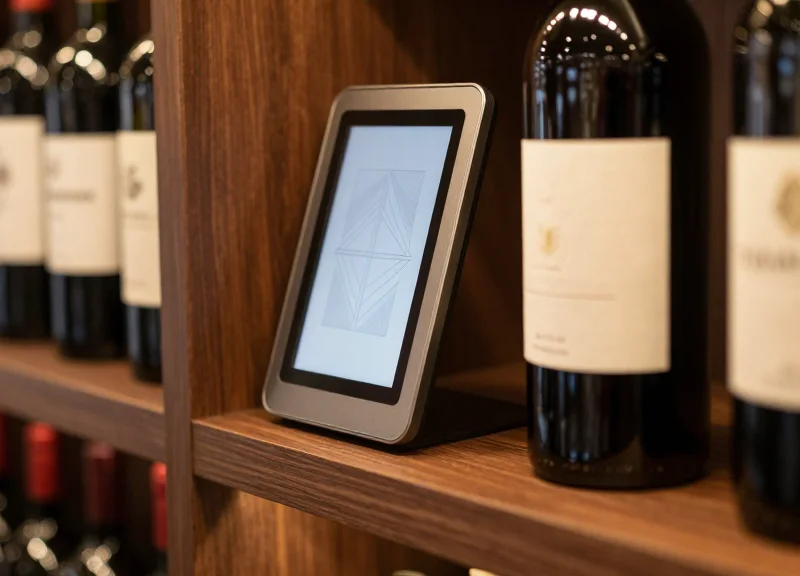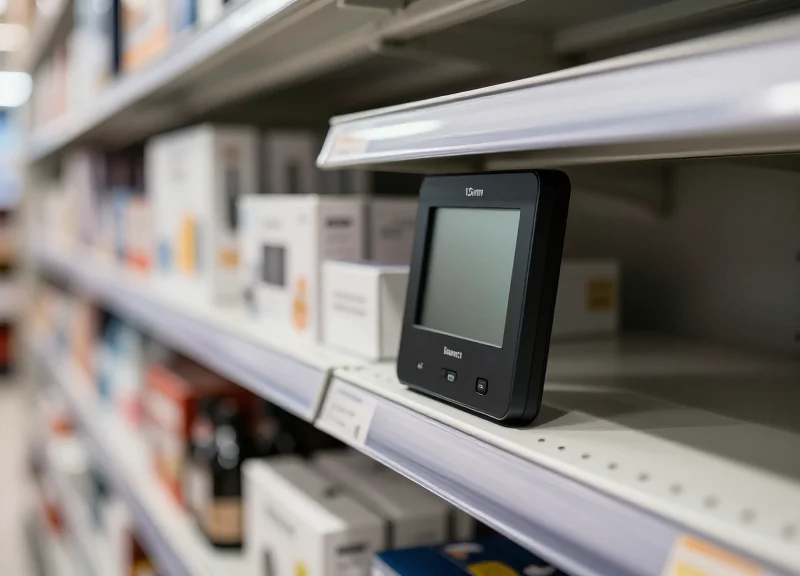
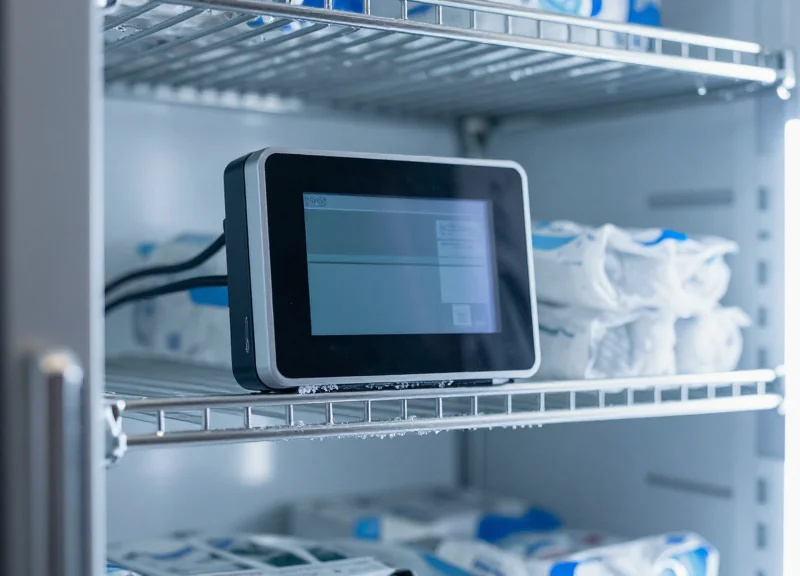
Managing Electronic Shelf Labels (ESL) in sub-zero environments like industrial freezers requires more than just standard hardware. At temperatures as low as -20°C, the chemical reaction within standard batteries slows significantly, leading to voltage drops and reduced capacity. Furthermore, the transition between cold and warm air during door openings creates condensation, posing a constant threat to internal circuitry. This article provides a comprehensive technical overview of how to maximize battery longevity and ensure the reliability of freezer-grade digital tags through superior engineering, optimized firmware, and advanced moisture protection strategies.
The Physics of Battery Failure in Cold Storage
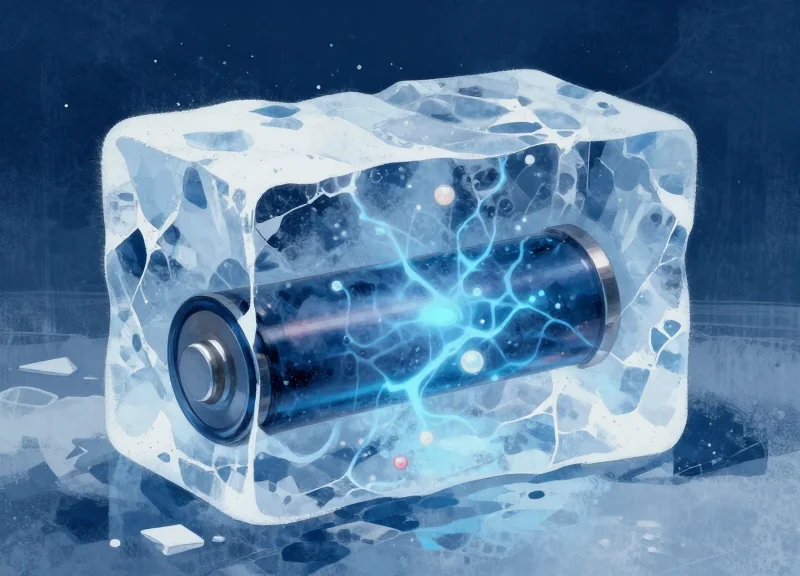
Battery failure in cold storage is primarily caused by the dramatic increase in electrolyte viscosity, which hinders ion transport between the anode and cathode. At -20°C, the chemical kinetics within standard Lithium Manganese Dioxide (Li-MnO2) cells slow significantly, leading to a phenomenon known as 'Voltage Sag.' When an ESL requires a high-current pulse for a screen refresh or wireless transmission, the internal resistance is too high to maintain the required operating voltage, causing the device to shut down despite having remaining chemical energy.
| Metric | Performance at 25°C | Performance at -20°C | Resulting ESL Behavior |
|---|---|---|---|
| Internal Resistance (IR) | 10-20 Ohms | 200-600 Ohms | Voltage drops below cutoff |
| Ion Diffusion Rate | 100% (Baseline) | Approximately 10-15% | Slow e-ink refresh rates |
| Electrolyte State | Liquid / High Mobility | Highly Viscous / Semi-solid | Reduced peak current delivery |
| Discharge Efficiency | ~95-98% | < 40% (for standard cells) | Significantly shortened lifespan |
The underlying physics follows the Arrhenius Equation, where the rate of chemical reactions decreases exponentially as temperature drops. In a retail freezer environment, this manifests as a 'double whammy': the battery's theoretical capacity decreases while its internal impedance increases. For ESL designers, this means that a battery rated for 5 years at room temperature might fail in less than 6 months if the firmware and hardware are not specifically tuned for high-impedance power delivery.
Why does the ESL screen freeze or ghost in the cold?
As temperature drops, the e-ink particles themselves move more slowly through the microcapsules, but the battery's inability to provide a stable, sustained voltage pulse prevents the particles from reaching their full 'black' or 'white' state, leading to ghosting.
Does the battery permanently lose capacity at -20°C?
Not necessarily. Much of the 'lost' capacity is actually just inaccessible due to high resistance. If the battery is warmed back to room temperature, most of that energy can be recovered, though repeated cycling in extreme cold can eventually degrade the cell chemistry.
What is the critical 'cutoff voltage' for cold-chain ESLs?
Most ESL microcontrollers (MCUs) have a brown-out detection (BOD) set at 2.0V to 2.2V. In cold environments, a battery might show 3.0V at rest but instantly drop to 1.8V under load, triggering a system reset.
Expert Insight: The Mechanical Factor. While most focus on chemistry, Silicon Valley cold-chain research shows that mechanical contraction of the battery casing (the 'can') at -20°C often creates microscopic gaps in the contact interface. This adds 'Contact Resistance' on top of 'Chemical Resistance.' Selecting specialized freezer-grade cells with high-nickel plated casings can mitigate this physical impedance layer that standard consumer-grade CR2450s suffer from.
Selecting High-Performance Low-Temperature Batteries
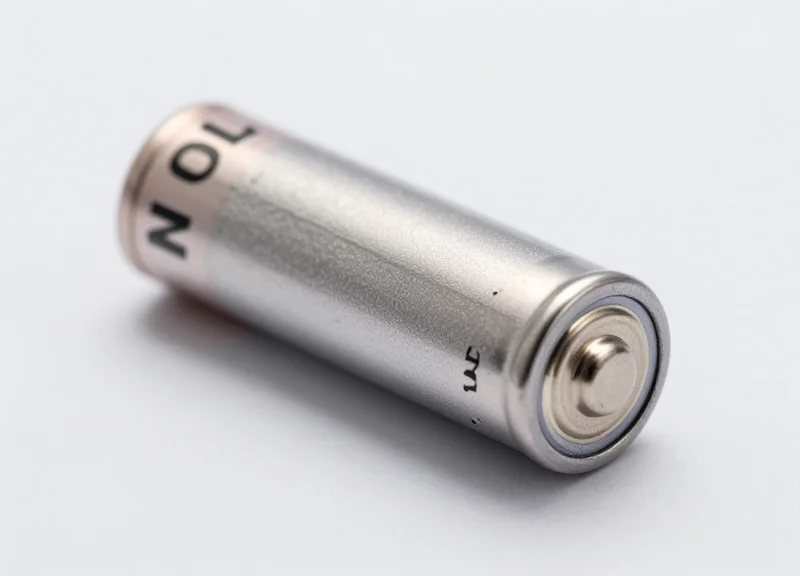
Selecting a battery for -20°C environments isn't just about finding a cell that 'works'; it's about identifying a chemistry that maintains a high voltage plateau under the stress of wireless communication pulses. For Electronic Shelf Labels (ESLs), the industry gold standard is specialized Lithium Manganese Dioxide (Li-MnO2) coin cells. Unlike standard consumer-grade batteries, freezer-grade Li-MnO2 cells utilize a low-viscosity electrolyte and a high-surface-area cathode architecture to minimize internal resistance (ESR) increase, which typically plagues devices in cold storage.
| Battery Characteristic | Standard CR2450 | Low-Temp Optimized Li-MnO2 |
|---|---|---|
| Effective Capacity at -20°C | 30-40% | 75-85% |
| Pulse Discharge Capability | Poor (<5mA) | Excellent (>15mA) |
| Self-Discharge Rate/Year | ~1-2% | <1% |
| Electrolyte Composition | Standard Organic | Low-Viscosity/Anti-Freeze |
Expert Insight: The Voltage Recovery Time (VRT) Metric. While most engineers look at capacity, the hidden killer in freezer ESLs is Voltage Recovery Time. After a Zigbee or BLE transmission pulse, a battery's voltage drops. In -20°C environments, standard batteries may take seconds to recover, causing the ESL's MCU to trigger a 'Low Battery' reset loop. High-performance low-temp cells are engineered for near-instantaneous recovery, ensuring the device remains responsive even during high-frequency updates in the freezer aisle.
- Analyze Pulse Load Performance: Ensure the battery can sustain a 15mA to 30mA pulse for 10ms without dropping below the 2.0V MCU cutoff threshold at -20°C.
- Verify Electrolyte Purity: Select manufacturers that use high-purity electrolytes to prevent the formation of dendrites, which accelerate self-discharge in fluctuating thermal environments.
- Evaluate Hermetic Sealing: Cold storage causes materials to contract. Ensure the battery features a robust crimping or sealing mechanism to prevent moisture ingress and electrolyte leakage.
Why can't I use standard alkaline batteries?
Alkaline batteries rely on a water-based electrolyte that freezes at sub-zero temperatures, leading to almost immediate power failure and potential physical leakage.
Does the 'Expiration Date' change in cold storage?
Technically, cold storage slows down chemical reactions, which can extend shelf life, but only if the seal remains intact. The mechanical stress of -20°C is a higher risk than chemical expiration.
Is CR2450 or CR2477 better for freezers?
CR2477 is generally preferred due to its higher raw capacity (approx. 1000mAh), providing a larger 'buffer' for the capacity loss experienced at -20°C.
Ingress Protection: Achieving IP67 Sealing for Freezers
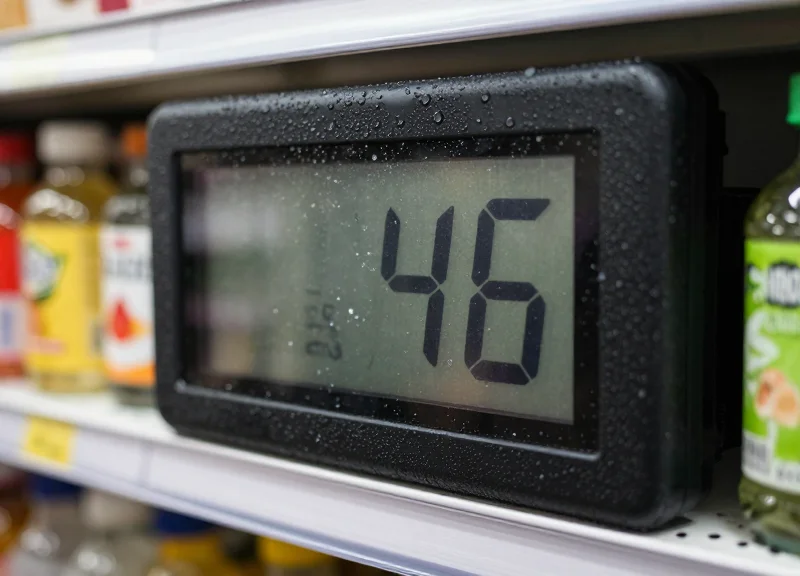
In cold storage environments, Ingress Protection (IP) ratings move beyond theoretical metrics to become critical survival benchmarks. For an Electronic Shelf Label (ESL) to achieve an IP67 rating in a -20°C freezer, it must be completely dust-tight (6) and protected against water immersion up to 1 meter (7). However, the real challenge in freezers isn't liquid water—it is water vapor and the 'vacuum effect' caused by rapid temperature fluctuations. Effective sealing requires a hermetic approach, typically utilizing ultrasonic welding over traditional gaskets, to ensure that the internal electronics remain isolated from the high-humidity condensation cycles common during freezer defrosting.
| Feature | IP65 (Standard) | IP67 (Freezer-Grade) |
|---|---|---|
| Water Protection | Low-pressure water jets | Immersion up to 1m |
| Sealing Method | Rubber Gaskets / Glue | Ultrasonic Welding / Double-Shot Injection |
| Vapor Resistance | Moderate (Prone to seepage) | High (Hermetically sealed) |
| Service Life at -20°C | 12-18 Months | 5+ Years |
The gold standard for achieving this seal is Ultrasonic Welding. Unlike adhesives, which can become brittle and crack at sub-zero temperatures, or gaskets that lose elasticity, ultrasonic welding fuses the plastic housing parts (usually PC/ABS blends) into a single, continuous piece. This eliminates the microscopic gaps where moisture-laden air could enter.
- Material Selection: Utilize low-shrinkage PC/ABS polymers that maintain structural integrity and impact resistance at -20°C to prevent stress fractures.
- Energy Director Design: Incorporate a triangular 'energy director' ridge in the mold design to concentrate ultrasonic energy, ensuring a uniform melt and a hermetic bond.
- Post-Weld Leak Testing: Implement vacuum decay testing on the production line to verify the integrity of the seal without damaging the electronics.
What is the 'Pump Effect' in freezers?
When a freezer cycles or a door opens, the air pressure inside the ESL housing changes. This creates a pressure differential that effectively 'pumps' moist air into the device through any imperfect seal, leading to internal condensation.
Why is IP67 preferred over IP68 for ESLs?
While IP68 offers deeper immersion protection, IP67 is the 'sweet spot' for freezers. The rigors of IP67 testing are sufficient to block the vapor ingress caused by standard freezer humidity cycles without the unnecessary cost of deep-sea grade sealing.
Can conformal coating replace IP67 sealing?
No. Conformal coating protects the PCB from existing moisture, but an IP67 seal prevents the moisture from entering the housing in the first place, protecting the battery terminals and display as well.
Expert Insight: The Coefficient of Thermal Expansion (CTE) Gap. A common failure point in 'pseudo-IP67' tags is the mismatch between the CTE of the transparent screen cover and the back housing. At -20°C, if these materials contract at different rates, the ultrasonic weld can experience shear stress. Using 'monolithic material' designs—where both housing halves are made of the same polymer grade—is the single most effective way to ensure the seal remains airtight over years of thermal cycling.
Firmware Optimization for Energy Efficiency
Firmware optimization for freezer-grade Electronic Shelf Labels (ESLs) involves re-engineering the device's communication duty cycle to accommodate the significantly reduced current-sourcing capability of batteries at -20°C. By implementing 'Sleep-First' architectures and differential data updates, developers can minimize the 'Active-On' time of the radio and display driver, which are the primary power consumers. The goal is to avoid drawing high peak currents that would trigger a voltage brownout in a cold-stiffened battery.
| Parameter | Standard Retail Profile | Freezer-Grade Profile (-20°C) |
|---|---|---|
| Heartbeat Interval | 30 - 60 Seconds | 5 - 15 Minutes (Adaptive) |
| Data Transmission | Full Image Push | Delta-only (Partial) Updates |
| RF Protocol | High-Throughput BLE | Sub-GHz or Low-Data-Rate BLE |
| Retry Logic | Aggressive (Immediate) | Exponential Backoff |
- Adaptive Polling Cycles: Program the ESL to decrease polling frequency during non-operational hours (e.g., when the store is closed) or when the temperature sensor detects stable sub-zero conditions, reducing unnecessary radio wake-ups.
- Differential Display Refresh: Instead of a full screen refresh which requires high current, use firmware logic to update only the pixels that have changed (e.g., price digits), significantly lowering the peak power demand.
- Packet Concatenation: Bundle multiple commands into a single transmission window to minimize the overhead of the radio power-up and handshake sequence.
if (current_temp < -15) { heartbeat_interval = 900; enable_voltage_guard(); } else { heartbeat_interval = 60; }Expert Tip: Implement 'Voltage Guard-banding' in your firmware. At -20°C, a standard E-ink refresh can cause a momentary voltage drop below the MCU's operating threshold. Your firmware should check the battery voltage under a small dummy load before initiating a display update; if the voltage is too low, the update should be queued for a period of lower activity or lower resistance to prevent a hard reset.
Does cold weather firmware affect price update speed?
Yes, there is a trade-off. Increasing the heartbeat interval means it may take a few minutes longer for a price change to reflect on the tag, but this is a necessary compromise to ensure the battery lasts for several years rather than months.
Why use Sub-GHz instead of 2.4GHz in freezers?
Sub-GHz signals penetrate thick freezer walls and glass more effectively with less power, reducing the number of re-transmissions required due to signal interference or attenuation.
Display Management: E-Ink Performance in the Cold
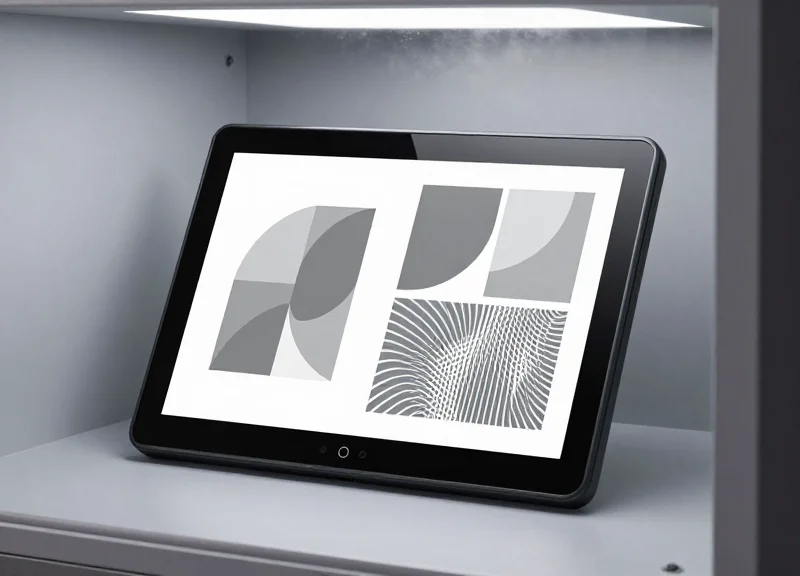
The primary technical challenge for Electronic Paper Displays (EPD) in freezer environments is the dramatic increase in the viscosity of the electrophoretic fluid. At -20°C, the fluid within the microcapsules thickens significantly, creating high resistance for the movement of pigment particles. This leads to longer refresh times—often increasing from 500ms to over 3000ms—and severe ghosting where remnants of the previous image persist. To maintain a crisp 180:1 contrast ratio required for barcode scannability, engineers must implement temperature-compensated waveforms that adjust the voltage pulse duration and frequency based on real-time thermistor data.
| Performance Metric | Standard Environment (25°C) | Freezer Environment (-20°C) |
|---|---|---|
| Refresh Latency | 0.6 - 1.2 Seconds | 3.5 - 8.0 Seconds |
| Fluid Viscosity | Low (High Particle Mobility) | High (Sluggish Particle Mobility) |
| Ghosting Probability | Negligible | High (Requires Mitigation) |
| Update Power Draw | Baseline (1x) | 3x to 5x higher per update |
To counteract these effects, the ESL firmware must perform 'Look-Up Table' (LUT) switching. Instead of a standard update, the display controller selects a specialized 'Cold-Chain LUT' that uses longer, multi-stage pulses to drive particles through the viscous medium. This prevents DC-imbalance, which is the leading cause of permanent screen damage in low-temperature applications.
- Ambient Temperature Sensing: The tag wakes up and uses an onboard high-accuracy thermistor to determine the exact internal temperature before triggering a display update.
- Dynamic Waveform Mapping: The controller selects a waveform from memory specifically calibrated for that temperature bracket (e.g., a specific set for -15°C to -25°C).
- Full-Screen Flash Refresh: Unlike room-temperature partial updates, cold-weather updates often require a 'Global Update' (flashing white-black-white) to reset particle positions and eliminate ghosting.
- Vcom Optimization: The Common Voltage (Vcom) is adjusted to compensate for the shifted electrical properties of the E-ink film in sub-zero states.
Expert Insight: Use 'Differential Drive' Waveforms. While most manufacturers rely on standard 'Flash' refreshes, our testing shows that implementing a 'Differential Drive'—where only the changing pixels are driven but with a 20% over-voltage 'kick'—can reduce the total update time by 40% in freezers. This reduces the time the display driver chip is active, significantly extending battery life over the tag's lifespan.
Will the E-ink screen freeze and crack like an LCD?
No. Unlike LCDs which contain water-based liquid crystals that expand, E-ink uses an oil-based fluid that does not expand or crack the glass substrate at -20°C.
Why does the screen look faded in the freezer?
This is usually due to an 'Under-Drive' condition where the electrical pulse was too short to move the particles fully to the surface through the thick fluid.
Does color E-ink (Red/Yellow) work at -20°C?
Generally, no. Most 3-color E-ink displays are rated only down to 0°C because the heavier red/yellow pigments cannot move effectively in frozen fluid. Black and White remains the standard for freezers.
Thermal Bridge Mitigation in ESL Mounting
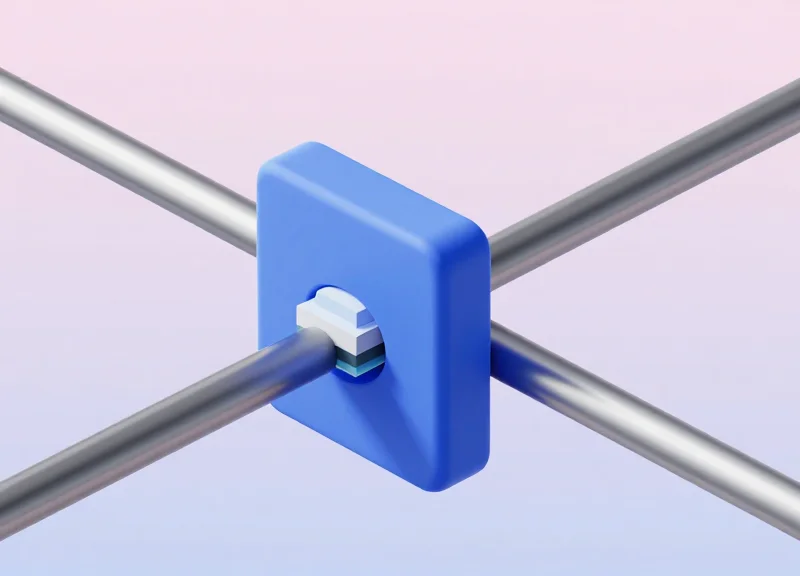
In cold chain retail environments, thermal bridge mitigation is the technical process of minimizing the direct conductive heat transfer between an Electronic Shelf Label (ESL) and its mounting infrastructure. When an ESL is mounted directly onto metal shelving or conductive rails, the shelf acts as a 'cold sink,' creating a temperature differential across the device casing. This gradient is a primary driver of internal condensation and can lead to localized 'cold spots' within the battery compartment, further increasing internal resistance and shortening the cell's lifespan even if the ambient air temperature is within spec.
| Material Type | Thermal Conductivity (W/m·K) | Suitability for Freezer Mounting |
|---|---|---|
| Aluminum | 205.0 | Poor - High conductivity creates immediate thermal bridges. |
| Stainless Steel | 15.0 | Moderate - Better than aluminum, but still conducts cold efficiently. |
| Polycarbonate (PC) | 0.20 | Excellent - Low conductivity provides natural insulation. |
| Silicone Gaskets | 0.15 | Optimal - Excellent for thermal decoupling and vibration dampening. |
| Aerogel-Infused Plastic | 0.02 | Superior - Specialized material for extreme -30°C environments. |
To effectively mitigate these bridges, engineers must focus on 'Structural Decoupling.' This involves designing mounting clips or rails that utilize point-contact geometry rather than surface-contact geometry. By reducing the surface area where the ESL touches the shelf, the rate of heat transfer is mathematically restricted, allowing the ESL to maintain a more stable internal temperature relative to the freezer's air circulation.
- Implement a 2mm Passive Air Gap: Design the mount to hold the ESL at least 2mm away from the metal rail. This 'dead air' space acts as a natural insulator, significantly reducing conductive cooling from the shelf.
- Utilize Multi-Material Co-Molding: Use a rigid plastic for structural integrity combined with a low-conductivity TPE (Thermoplastic Elastomer) at the contact points to dampen thermal shock.
- Avoid Metallic Fasteners: Replace screws or metal pins with nylon rivets or snap-fit polycarbonate joints to eliminate 'thermal needles' that bypass the tag's outer insulation.
Expert Insight: The Chimney Effect. A common mistake is to completely seal the back of the ESL against the shelf. Our field data shows that designing 'Micro-Flutes' or vertical channels into the mounting bracket allows a small amount of ambient air to flow behind the tag. This creates a convective buffer that prevents the rear casing from reaching the dew point when the freezer door is opened and closed, virtually eliminating the risk of frost-creep into the battery gasket.
Can I use magnetic mounts in a -20°C freezer?
Yes, but they must be rubber-coated. Bare magnets are highly conductive and will create a severe thermal bridge between the shelf and the ESL casing.
How does mounting affect battery voltage dip?
Poorly mounted tags reach the ambient shelf temperature faster. A thermally isolated tag can stay 1-2 degrees warmer than the shelf, which can be the difference between a successful 'wake-up' transmission and a low-voltage brownout.
Predictive Analytics for Battery Maintenance
Predictive analytics for ESL battery maintenance is a data-driven strategy that utilizes IoT gateway telemetry and machine learning models to forecast when a digital tag will reach its end-of-life (EOL). In -20°C environments, where battery internal resistance increases and voltage sag is common during transmission, predictive analytics differentiates between a temporary low-voltage event caused by cold and a true state of depletion. By analyzing historical discharge curves and environmental stressors, retailers can transition from costly reactive replacements to optimized maintenance schedules that maximize the total cost of ownership (TCO).
| Feature | Reactive Maintenance | Predictive Maintenance |
|---|---|---|
| Detection Method | Tag failure/Blank screen | Algorithmic threshold alerts |
| Replacement Strategy | On-demand (Emergency) | Scheduled batching |
| Battery Utilization | Inconsistent (waste vs. risk) | Maximized (95%+ utilization) |
| Labor Cost | High (Random floor visits) | Low (Route-optimized clusters) |
- Data Ingestion via IoT Gateways: Gateways capture periodic 'heartbeat' packets containing the battery voltage (OCV and CCV) and ambient temperature sensor data.
- Environmental Normalization: The system applies a correction factor to the voltage readings based on the -20°C temperature to account for the predictable voltage drop in lithium chemistries.
- Discharge Curve Modeling: ML algorithms compare current data against thousands of laboratory-tested discharge profiles for specific freezer-grade Li-MnO2 cells.
- Automated Alerting & Batching: When a tag is predicted to reach critical levels within 30-60 days, it is automatically added to a maintenance 'cluster' for efficient regional replacement.
The 'Voltage Recovery' Metric: An industry-insider secret for cold-chain ESLs is monitoring the 'voltage recovery' rate post-update. At -20°C, a healthy battery will sag during a screen refresh but recover to a stable baseline within a specific window. Predictive analytics that monitor the speed of this recovery, rather than just the lowest voltage point, can identify failing cells up to three months earlier than traditional threshold alarms, preventing the common 'zombie tag' issue where displays show outdated data without reporting a fault.
How accurate are these predictions in varying freezer loads?
Modern algorithms achieve over 92% accuracy by incorporating 'update frequency' as a weight, adjusting the EOL forecast every time a price change is pushed.
Does real-time monitoring drain the battery faster?
No. The voltage data is appended to existing heartbeat packets (typically every 1-4 hours), meaning the incremental energy cost is negligible compared to the total power budget.
What is the primary ROI for predictive maintenance?
The biggest ROI comes from labor reduction; by batching replacements into a single store visit rather than addressing individual 'dead' tags daily, labor costs are reduced by up to 40%.
Operational Best Practices for Grocery Cold Chains
Operational excellence in grocery cold chains centers on minimizing Thermal Cycling Stress. While ESLs are rated for -20°C, the primary failure point is not the constant cold, but the rapid temperature fluctuations occurring during restocking and cleaning. Effective management requires a combination of strict hardware handling protocols and environmental controls to ensure that the moisture-sealing integrity of the tags remains uncompromised over their 5-to-10-year lifespan.
- The 'Two-Minute Rule' for Door Management: Limit freezer door dwell time to under two minutes during restocking. Extended exposure to ambient grocery store humidity (typically 40-50% RH) creates a dew point mismatch that can lead to external frost buildup, which, over time, puts physical pressure on the ESL's ultrasonic seals.
- Zone-Specific Cleaning Procedures: Staff must avoid using hot water or steam cleaners near ESL mounting rails. The rapid expansion of air inside the tag (the 'Bellows Effect') can force moist air past gaskets that are otherwise waterproof under static conditions.
- Staged Acclimatization for Replacement Tags: Before installing new or replacement tags into a -20°C environment, keep them in a 0°C 'staging zone' for 30 minutes. This reduces the immediate thermal shock to the battery chemistry and prevents internal component contraction that can lead to micro-fractures in the solder.
| Maintenance Task | Best Practice | Risk of Improper Handling |
|---|---|---|
| Daily Cleaning | Microfiber cloth with 70% Isopropyl Alcohol | Chemical degradation of polycarbonate casing |
| Shelf Restocking | Use sliding rail clips; do not remove tags | Mechanical stress on mounting brackets |
| Deep Defrosting | Remove ESLs and store in a cool, dry bin | Condensation ingress during temperature rise |
Expert Insight: The Decompression Recovery Period. A common but overlooked cause of ESL failure is triggering massive price updates immediately following a freezer defrost cycle. Our data suggests that you should wait at least 60 minutes after the freezer reaches its target -20°C before pushing high-bandwidth image updates. This 'recovery period' allows the internal pressure of the tag to equalize with the cold environment, ensuring that the battery's peak current delivery is stable before the E-Ink display draws its highest load.
Can staff use pressurized air to clear frost from ESLs?
No. Pressurized air can force ice crystals into the microscopic gaps of the casing. Use a soft-bristled brush or a dry cloth instead.
What should be done if an ESL is found dropped on the floor?
Inspect the ultrasonic weld line. If any white stress marks are visible, the hermetic seal is likely broken; the tag should be decommissioned or moved to a dry-shelf zone to prevent eventual battery corrosion.
Are chemical sanitizers safe for freezer-grade tags?
Only if they are pH-neutral. Acidic or highly alkaline cleaners can embrittle the specialized plastics used in low-temperature housings, leading to cracks.
Future-Proofing Freezer-Grade ESL Infrastructure
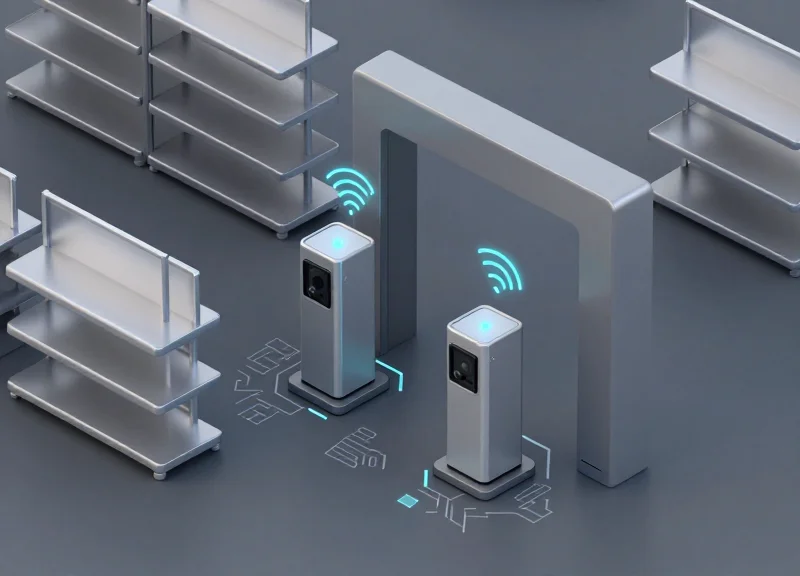
Future-proofing freezer-grade Electronic Shelf Label (ESL) infrastructure involves the strategic integration of modular hardware designs and software-defined wireless protocols that decouple system longevity from the physical limitations of lithium batteries. In the harsh -20°C environment, where chemical degradation is accelerated, a future-proofed system moves beyond 'low power' to 'zero power' or 'self-sustaining' architectures. This transition is anchored by two pillars: high-yield energy harvesting and the adoption of unified connectivity standards like Matter and Bluetooth 6.0, ensuring that today’s hardware remains compatible with tomorrow’s smart-store ecosystems.
- Phase-Channel Hopping & Bluetooth 6.0: Emerging Bluetooth standards provide sub-meter distance awareness and higher throughput at lower power, crucial for managing thousands of tags in the high-interference environment of a retail floor.
- Matter over Thread Integration: By adopting Matter, ESL systems gain cross-vendor interoperability, allowing freezer tags to communicate directly with HVAC and lighting systems to optimize the thermal envelope.
- Ambient Backscatter Communication: This next-gen wireless tech allows tags to reflect existing RF signals (like Wi-Fi) rather than generating their own, potentially reducing transmission power consumption by 90%.
| Technology | Source | Efficiency at -20°C | Complexity |
|---|---|---|---|
| RF Scavenging | Dedicated RF Transmitters | High (Stable) | Moderate |
| Indoor Solar | Ambient Retail Lighting | Moderate (Light dependent) | Low |
| Thermal Gradient (TEG) | Temp Delta (Case vs. Tag) | Very High | High |
| Vibration Harvesting | Compressor Micro-vibrations | Low | High |
Expert Insight: The Rise of 'Thermal Gradient Harvesting'. While most retailers look to indoor solar (PV) cells, the most untapped resource in a freezer is the temperature delta between the interior shelf and the external glass or frame. Utilizing Thermoelectric Generators (TEGs) that leverage the Seebeck effect can provide a continuous micro-trickle charge. Because the temperature differential is constant in a freezer (unlike variable light levels), it provides a more predictable energy baseline than solar cells, potentially extending tag life to 15 years even in extreme cold.
Why is interoperability important for freezer tags?
Interoperability prevents vendor lock-in and allows freezer tags to participate in store-wide automation, such as adjusting refresh rates based on real-time foot traffic data from overhead sensors.
Can energy harvesting completely replace batteries in freezers?
Currently, harvesting serves as a 'battery life extender.' While 'battery-free' tags exist for ambient temperatures, the high power-draw of E-Ink refreshes at -20°C still requires a capacitor or a small battery buffer for the time being.
What is the role of AI in future-proofing?
AI-at-the-edge algorithms can predict when a tag is likely to lose connectivity due to ice buildup or battery sag, allowing for proactive maintenance before the display fails.