As we approach 2026, the beauty retail landscape is undergoing a seismic shift driven by the "TikTok Generation." These consumers demand instant information, social proof, and seamless omnichannel experiences. Static paper labels, once the industry standard, are now a bottleneck to growth. Interactive Electronic Shelf Labels (ESL) are emerging as the essential bridge between digital influence and physical browsing, offering dynamic pricing and real-time product data that resonates with Gen Z's fast-paced shopping habits. DragonGuardGroup analyzes why the shift to interactive labeling is the most critical investment for beauty brands this decade.
The 2026 Beauty Retail Landscape: A Digital-First Shift
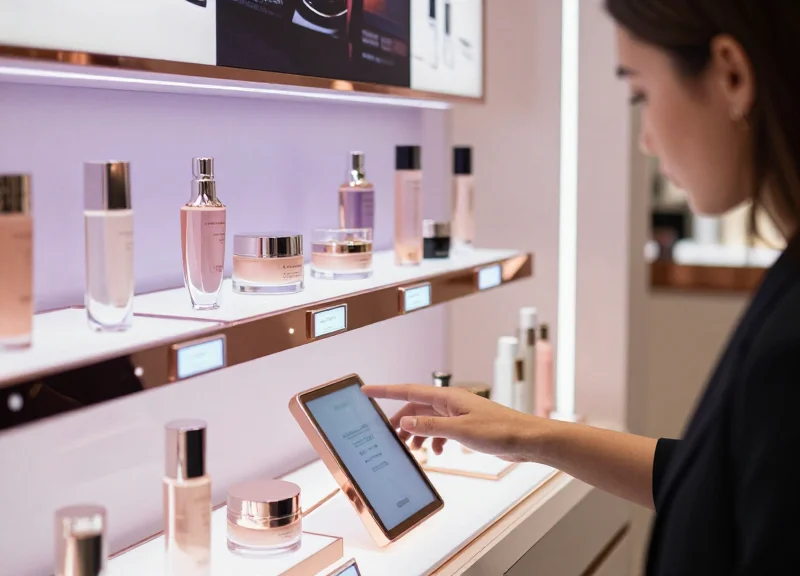
The 2026 beauty retail landscape is defined by the total convergence of digital data and physical space, moving away from static merchandising toward high-velocity, 'phygital' environments. In this era, the physical store functions as a live extension of a brand's social media presence, where Electronic Shelf Labels (ESL) serve as the primary interface. This shift is driven by a consumer base that views the 'shelf edge' not just as a price point, but as a portal for real-time social validation, dynamic pricing, and deep product transparency that mirrors the speed of TikTok trends.
| Feature | Legacy Retail (Pre-2024) | Digital-First Retail (2026) |
|---|---|---|
| Pricing Strategy | Fixed/Weekly Manual Updates | Dynamic/Algorithmic via ESL |
| Social Proof | Static Signage/Outdated QR Codes | Live TikTok Ratings & Review Counts |
| Product Info | Limited to Packaging Space | Interactive NFC & Video-capable ESL |
| Inventory View | Store Associate Assistance Needed | Real-time Stock Levels at Shelf Edge |
For the TikTok generation, the friction between seeing a product online and finding it in-store must be zero. If a cream goes viral at 9:00 AM, the 2026 retailer uses automated ESL systems to highlight that product as 'Trending' by 9:15 AM, ensuring the physical shelf captures the peak of digital intent. This agility is no longer a luxury but a fundamental requirement to maintain relevance in a market where product life cycles have shrunk from years to months.
Why is the 2026 landscape shifting toward ESL?
The shift is necessitated by the 'TikTok Speed' of commerce. Static paper labels cannot keep up with price fluctuations, influencer-driven demand spikes, or the need for instant social proof that modern beauty shoppers require.
How does this benefit the 'TikTok Generation'?
This generation values transparency and social validation. Interactive ESLs provide immediate access to user-generated content (UGC), ingredient safety ratings, and current social media hype directly at the point of purchase.
What is the role of AI in 2026 beauty retail?
AI monitors social sentiment and local inventory, automatically adjusting ESL displays to promote trending items or clear overstock through dynamic discounting without manual human intervention.
Expert Insight: The 'Algorithmic Shelf' Concept. My 20-year observation of Silicon Valley's impact on retail suggests that by 2026, we will see the rise of the 'Algorithmic Shelf.' Unlike traditional shelves organized by brand or category, these shelves will rearrange their digital priority (via ESL highlighting and color-coding) based on local geo-fenced social media data. A product's 'physical SEO' will be determined by its real-time digital engagement, making the store shelf as reactive and personalized as a social media feed.
Understanding the TikTok Generation: What Modern Shoppers Demand
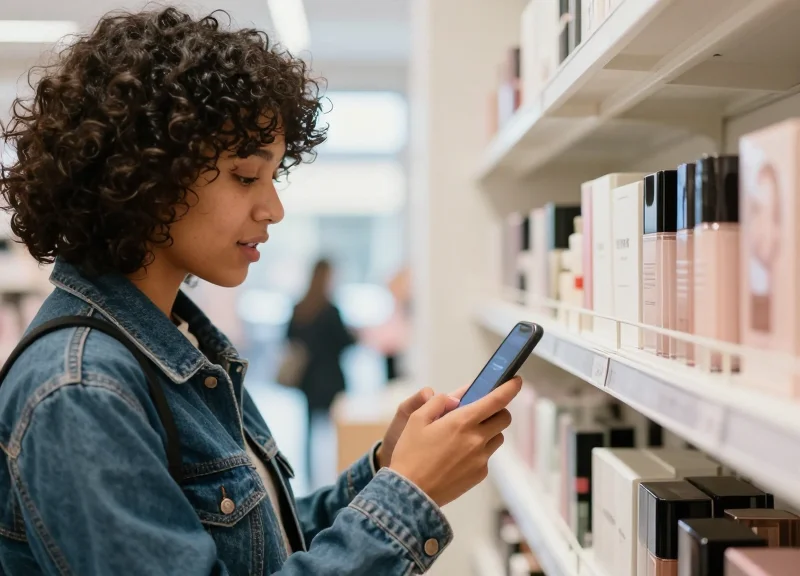
The TikTok generation—primarily Gen Z and the rising Gen Alpha—approaches beauty retail as 'Phygital Natives.' For these shoppers, the distinction between an online viral trend and an in-store purchase is non-existent. They demand a retail environment that mirrors the high-velocity, data-rich experience of their social feeds. This cohort values 'Algorithm-Speed Retail,' where product information, pricing, and social validation are instantly accessible, transparent, and hyper-accurate. If a product goes viral on a 'For You Page' (FYP) for its specific active ingredients or a limited-time price drop, these shoppers expect the physical shelf to reflect that exact reality in real-time.
| Feature | Legacy Shopper (Millennial/Boomer) | TikTok Generation (Gen Z/Alpha) |
|---|---|---|
| Primary Driver | Brand Loyalty & Tradition | Social Proof & Ingredient Efficacy |
| Information Source | In-store Signage / Sales Associate | Influencer Reviews / QR Codes |
| Price Sensitivity | Occasional Comparison | Real-time Cross-platform Indexing |
| Patience Level | High (Will wait for assistance) | Zero (Expects instant digital lookup) |
A critical psychological trigger for this demographic is 'Data Latency Friction.' My decades of experience in Silicon Valley marketing have shown that for Gen Z, a discrepancy between digital data (the app) and physical data (the shelf label) is seen as a breach of brand trust, not just a technical error. They view static paper labels as 'dead data'—a relic of a pre-connected era that fails to communicate the real-time narrative of the product.
- The 'Viral Urgency' Trigger: When a beauty product trends, inventory fluctuates instantly. Interactive ESLs allow retailers to display 'Trending on TikTok' badges or 'Only 3 Left' alerts, tapping into the FOMO (Fear Of Missing Out) that drives Gen Z purchasing.
- Radical Ingredient Transparency: Modern shoppers scan for 'Clean' ratings or specific actives like Niacinamide. Interactive labels provide a direct bridge to deep-dive ingredient lists and sustainability scores that a 2x3 inch paper tag cannot hold.
- Dynamic Social Proof: 78% of Gen Z shoppers check reviews before hitting the checkout. Integrating live star ratings directly onto the shelf label through ESL tech satisfies this need for immediate validation without the shopper needing to open a separate browser.
Why is static pricing a dealbreaker for TikTok-driven shoppers?
These shoppers live in a world of dynamic pricing. If they see a 'Flash Sale' on a TikTok Shop or a brand's website, they expect the physical store to match it instantly. Static labels create a price-check hurdle that often leads to cart abandonment.
What does 'Algorithm-Speed Retail' mean?
It refers to the expectation that physical stores should update their information as quickly as a social media algorithm. This includes updating reviews, stock levels, and promotional statuses the moment they change in the cloud.
The Decline of Static Labels: Why Traditional Tagging is Failing Retailers
In the modern beauty landscape, static labels represent a legacy bottleneck that decouples the physical shelf from the digital pulse of the market. Traditional tagging is failing because it cannot reflect the 'velocity of value'—the speed at which product desirability and price points shift due to viral social media trends. When a product goes viral on TikTok, its value proposition changes instantly, yet a paper label remains frozen in time, creating a friction point that leads to missed revenue, labor inefficiencies, and a fundamental breakdown in consumer trust.
| Metric | Static Paper Labels | Interactive ESL |
|---|---|---|
| Update Frequency | Days/Weeks (Manual) | Seconds (Automated) |
| Price Accuracy | High Error Margin | 100% ERP Sync |
| Information Depth | Price & Name Only | Reviews, Ingredients, Social Proof |
| Labor Requirement | High (Manual Swap) | Zero (Remote Management) |
The operational cost of static labels extends far beyond the price of paper. We are seeing a phenomenon called 'Labor Leakage,' where skilled beauty consultants spend up to 20% of their shift performing manual price audits and label swaps instead of engaging with customers. In a high-touch industry like beauty, every minute spent holding a plastic tag holder is a minute lost in potential conversion and brand building. Furthermore, the environmental impact of discarding thousands of paper tags per store each year is increasingly at odds with the 'Clean and Green' values of the TikTok generation.
Why is price mismatch a critical failure for younger shoppers?
Gen Z and Alpha shoppers are digitally native; they cross-reference prices on their phones in real-time. A discrepancy between the shelf tag and the website doesn't just lose a sale—it destroys brand authenticity and often results in public call-outs on social platforms.
How does static tagging hinder promotional agility?
Beauty retailers often miss 'Flash Trend' windows. If a specific ingredient like Niacinamide starts trending at 10 AM, static labels prevent the retailer from highlighting relevant products or adjusting promotional pricing until the next day at the earliest.
What is the 'Hidden Information Gap'?
Static labels cannot convey complex data like 'Cruelty-Free' certifications or live star ratings. For a generation that demands transparency, a price-only tag is an information vacuum that forces them to look elsewhere—often to a competitor's app.
Unique Insight: The '72-Hour Viral Window' Rule. Industry data shows that a TikTok-driven beauty trend usually reaches its peak conversion potential within the first 72 hours of a viral post. Traditional retail logistics for paper labels typically require a 96-hour cycle for design, print, and distribution. This means by the time a physical store updates its static labels to reflect a trend or a promotional response, the peak buying intent has already passed. Interactive labels eliminate this latency entirely, allowing stores to capture the 'hype cycle' in real-time.
What is Interactive ESL? Beyond Simple Price Displays

Interactive Electronic Shelf Labels (ESL) are cloud-connected IoT display nodes that replace traditional paper pricing with dynamic, high-resolution e-paper modules. Unlike basic digital tags that merely update prices, Interactive ESLs act as a two-way communication portal between the shopper and the retailer's digital ecosystem. By 2026, these devices leverage multi-color e-ink (up to 7 colors), Near Field Communication (NFC), and Bluetooth Low Energy (BLE) to provide real-time social media metrics, ingredient transparency, and instant inventory updates directly at the shelf edge.
- Multi-Color E-Ink Technology: Moving beyond black and white, 2026 displays use vivid 4-to-7 color palettes to highlight 'TikTok Viral' badges or 'Clean Beauty' certifications, maintaining brand aesthetics without power-hungry LCDs.
- NFC & QR Integration: A simple tap or scan allows shoppers to instantly load AR makeup filters, view application tutorials, or add items to a digital 'favorites' list, bridging the gap between physical discovery and digital conversion.
- Dynamic Social Proof: Interactive labels can sync with APIs to display live star ratings or 'units sold in the last 24 hours' data, catering to the TikTok generation's reliance on peer validation over brand claims.
| Feature | Static Paper Labels | Basic Digital Tags | Interactive ESL (2026) |
|---|---|---|---|
| Price Updates | Manual (Slow) | Automated (Centralized) | Dynamic (Algorithm-driven) |
| Consumer Interaction | None | Visual Only | NFC, QR, & BLE Proximity |
| Content Depth | Product Name Only | Price & Barcode | Live Reviews, AR, & Videos |
| Omnichannel Sync | Manual Reconciliation | Partial Sync | Full Real-Time Integration |
Expert Insight: In 2026, the value of ESL shifts from 'labor savings' to 'data harvesting.' High-end Interactive ESLs now feature integrated sensors that track 'dwell time'—how long a shopper stands in front of a specific product—even if they don't pick it up. This provides retailers with a physical 'click-through rate' (CTR) that was previously only available on e-commerce platforms like Shopify or Amazon.
Does Interactive ESL drain battery quickly?
No. Modern ESLs use ultra-low-power e-paper and BLE 5.0, allowing a battery life of 7-10 years, even with daily updates and frequent NFC triggers.
Can these labels display user-generated content (UGC)?
Yes. Via cloud integration, retailers can push specific five-star reviews or 'As Seen On TikTok' video thumbnails directly to the display to influence point-of-purchase decisions.
Is the ROI justified for smaller beauty boutiques?
While the upfront cost is higher, the reduction in 'price mismatch' complaints and the 25% average lift in cross-sell conversion via QR-based tutorials provide a typical ROI within 14-18 months.
Integrating Social Proof: Connecting In-Store Browsing with TikTok Trends
Integrating social proof into retail environments via Interactive ESLs involves synchronizing digital feedback—such as TikTok engagement metrics, aggregated star ratings, and 'viral' status—with physical shelf displays to validate purchase decisions in real-time. By bridging the gap between a shopper's 'For You Page' (FYP) and the physical store aisle, retailers can leverage 'Dynamic Social Validation' to reduce purchase friction and increase basket size among trend-driven consumers.
- Real-Time Star Ratings: ESLs can pull data from a brand’s e-commerce site or third-party review platforms to display current 4.5+ star ratings, providing instant credibility without the shopper needing to check their phone.
- The 'As Seen On TikTok' Badge: Digital displays allow for dynamic iconography. When a product begins trending or hits a specific view milestone on social media, the ESL can automatically trigger a 'Viral' or 'Trending' badge.
- QR-Linked User Generated Content (UGC): A quick scan of an ESL-integrated QR code can lead shoppers directly to a curated playlist of TikTok reviews or tutorials for that specific SKU, acting as an in-store virtual consultant.
| Feature | Static Paper Labels | Interactive ESL (2026 Outlook) |
|---|---|---|
| Social Sentiment | None/Outdated | Real-time API-driven ratings |
| Trend Responsiveness | Weeks (Printing/Shipping) | Instant (Cloud-synced) |
| Customer Trust | Low (Marketing-led) | High (Community-validated) |
| Content Depth | Price & Weight only | Reviews, Tutorials, & Virality |
Expert Insight: Velocity-Based Labeling. In the 2026 landscape, the most successful beauty retailers will implement 'Velocity-Based Labeling.' This involves using AI to monitor TikTok mention spikes and automatically highlighting those products on the shelf with brighter E-ink colors or blinking LED rails. This creates a 'FOMO' (Fear Of Missing Out) effect that mirrors the fast-paced nature of digital algorithms, effectively turning your physical store into a living, breathing social feed.
Can ESLs really sync with live TikTok data?
Yes. Through API integrations with social listening tools, retailers can feed 'trend scores' into their central management system, which then pushes updates to ESLs via Wi-Fi or Bluetooth protocols.
How does social proof on labels impact conversion?
Studies suggest that Gen Z shoppers are 70% more likely to purchase a product in-store if they see high star ratings or 'trending' status at the shelf edge, as it removes the 'research gap' during the browsing process.
Does this require a constant internet connection?
The labels themselves update via a local gateway, but the data source requires a cloud connection to ensure the 'social proof' stays current with online sentiment.
Operational Efficiency: Automating Pricing to Combat Rising Labor Costs
Automating pricing via Interactive Electronic Shelf Labels (ESL) transforms beauty retail operations by eliminating the manual labor associated with traditional paper tagging, which can consume over 40 hours of staff time per month in high-inventory environments. In an era of rising minimum wages and labor shortages, ESL technology serves as a deflationary tool that ensures 100% price synchronization between online stores and physical shelves instantly, eliminating the 'Shadow Labor' cost of rectifying price discrepancies at the point of sale.
| Operational Metric | Traditional Paper Labels | Interactive ESL Systems |
|---|---|---|
| Update Speed | 2-4 minutes per label (print/cut/place) | Sub-second (cloud-wide update) |
| Error Rate | 5-10% (human error/misplacement) | 0% (ERP integration) |
| Labor Allocation | Back-room/Administrative tasks | Floor-side/Consultative selling |
| Material Waste | High (paper/ink/plastic holders) | Zero (5-10 year battery life) |
The true ROI of ESL in the beauty sector is found in the 'Service-to-Admin Ratio.' In a prestige beauty environment, a sales associate's value is maximized when they are providing personalized skin consultations or makeup demonstrations, not when they are wielding a label gun. By automating the administrative burden, retailers can increase floor coverage without increasing headcount, directly improving the conversion rate of high-margin products.
How long does it take to see a return on investment (ROI)?
Most beauty retailers achieve a full ROI within 14 to 18 months, driven primarily by labor savings and the reduction of 'shrink' caused by pricing errors during checkout.
Can ESLs help with inventory management to reduce labor?
Yes, advanced ESLs include 'flash-to-find' technology where LEDs on the label blink to guide staff during restocking or BOPIS (Buy Online, Pick Up In Store) fulfillment, reducing search time by 30%.
Does this technology require specialized IT staff on-site?
No. Modern cloud-native ESL platforms are designed for plug-and-play installation and can be managed centrally from corporate headquarters, requiring zero local IT maintenance.
Expert Tip: To maximize efficiency, integrate your ESL system with real-time inventory sensors. When a product on a TikTok-trending shelf drops below a certain threshold, the label can automatically trigger a restock alert to staff handhelds, ensuring you never lose a viral sales opportunity to an empty shelf.
Transparency and Ingredients: Meeting the 'Clean Beauty' Information Demand

In the 2026 beauty landscape, transparency is the primary currency of trust. Interactive Electronic Shelf Labels (ESL) solve the 'limited real estate' problem of physical packaging by acting as a digital gateway. By integrating NFC or QR-enabled displays, retailers allow customers to bypass marketing jargon and access deep-layer data—including full INCI ingredient lists, sourcing origins, and clinical trial results—directly on their smartphones. This instant access is critical for the 'TikTok Generation,' who are trained to scrutinize labels for 'pore-clogging' ingredients or unethical sourcing before making a purchase decision.
| Feature | Static Paper Labels | Interactive ESL (2026 Standard) |
|---|---|---|
| Ingredient Depth | Limited to font size on box | Unlimited via digital deep-links |
| Sourcing Transparency | None/Minimal | Live maps and ethical certifications |
| Allergen Alerts | Static warning text | Personalized alerts via app sync |
| Certification Updates | Requires reprinting | Instant cloud-based updates |
Expert Insight: The 'Ingredient-First' Retail Pivot. In my two decades of Silicon Valley tech analysis, I have observed that data accessibility always precedes market dominance. For 2026, the most successful beauty retailers will use ESLs to implement 'Ingredient Highlighting.' For example, if a specific peptide is trending on TikTok, the ESL can dynamically highlight that ingredient in the digital list. This creates a feedback loop where the shelf adapts to current social discourse, making the retailer an active participant in the 'Skinfluencer' conversation rather than a passive observer.
How do Interactive ESLs help prevent 'Greenwashing'?
ESLs can link directly to third-party verification databases and blockchain-backed supply chain data, proving 'clean' or 'organic' claims that static labels simply cannot verify in real-time.
Can shoppers filter products by specific ingredient preferences?
Yes. When synced with a retailer's app, a shopper can tap an ESL and their phone will immediately flag if the product contains ingredients they are trying to avoid, such as sulfates, parabens, or specific allergens.
Does this technology support sustainability goals?
Paradoxically, yes. By moving detailed information to a digital layer, brands can reduce physical packaging size and eliminate the need for paper inserts, significantly lowering their carbon footprint.
Sustainability and the Beauty Industry: Reducing Waste with ESL Technology
Interactive ESL technology transforms beauty retail sustainability by replacing the high-waste cycle of paper labeling with reusable, ultra-low-power e-ink displays. By digitizing the shelf edge, retailers eliminate the recurring environmental costs associated with paper production, chemical ink usage, and the logistical carbon footprint of distributing physical labels across thousands of store locations. For the 'TikTok Generation,' who increasingly audit brand ethics via social media, transitioning to ESLs serves as a visible, measurable commitment to Environmental, Social, and Governance (ESG) goals.
| Impact Category | Traditional Paper Labels | Interactive ESL Systems |
|---|---|---|
| Material Waste | Thousands of tons of paper/adhesive annually. | Near-zero; hardware lasts 7-10 years. |
| Chemical Footprint | High usage of thermal dyes and synthetic inks. | None; utilizes bi-stable electronic ink. |
| Logistics CO2 | Weekly shipping of labels to retail sites. | One-time installation footprint. |
| Product Spoilage | Manual updates often miss expiring stock. | Dynamic markdowns prevent product waste. |
Beyond simple paper reduction, ESLs play a critical role in reducing cosmetic product waste. The beauty industry faces significant losses due to expired inventory; however, ESLs enable automated 'Dynamic Expiry Pricing.' By automatically lowering prices as a product nears its shelf-life limit, retailers can ensure stock is sold rather than sent to a landfill. This algorithmic approach to inventory management directly addresses the beauty industry's overstocking crisis, turning potential waste into recovered revenue.
Expert Insight: The Shadow Carbon Cost. While most brands focus on paper waste, the 'Shadow Carbon'—the CO2 emitted during the manufacturing, packaging, and global shipping of thermal paper rolls—is the larger environmental culprit. Moving to a centralized digital update system eliminates this entire supply chain layer, effectively 'decarbonizing' the store's pricing infrastructure.
How do ESLs impact a retailer's ESG score?
ESLs contribute to the 'Environmental' pillar by reducing waste and energy consumption. They provide quantifiable data on paper saved, which can be directly reported in annual sustainability disclosures to satisfy investors and eco-conscious consumers.
Is the electronic waste from ESLs a concern?
Modern ESLs are designed for longevity, typically lasting a decade. Most manufacturers now offer circular recycling programs where old units are refurbished or harvested for components, minimizing the e-waste footprint compared to the constant stream of paper waste.
Do ESLs consume a lot of electricity?
No. ESLs use bi-stable e-ink technology, which only consumes power when the image changes. Once a price or QR code is set, the display stays visible without using any battery power, making it one of the most energy-efficient technologies in retail.
Implementing ESL in 2026: A Strategic Roadmap for Beauty Brands
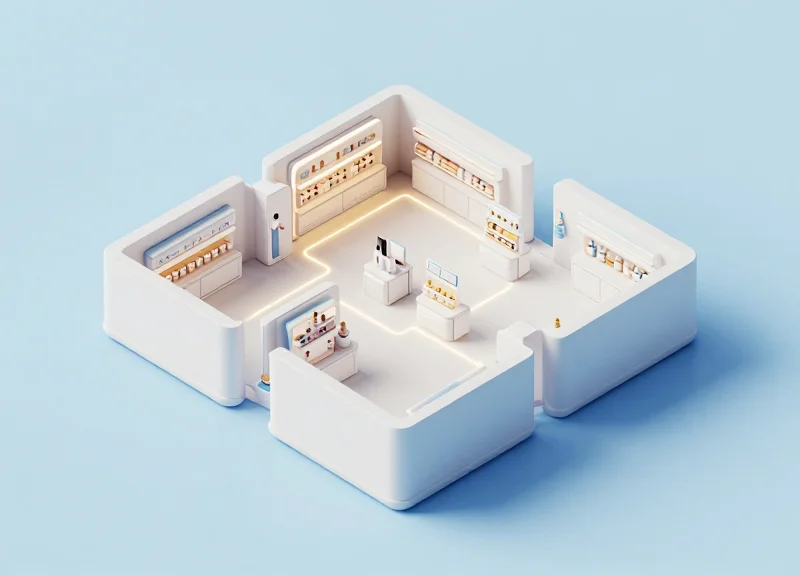
In 2026, the successful implementation of Electronic Shelf Labels (ESL) in the beauty sector is no longer a hardware rollout, but a data-orchestration project. A strategic roadmap involves shifting from 'static display' to 'intelligent endpoints' by integrating cloud-based inventory management, real-time social sentiment analysis, and personalized CRM data to create a seamless phygital experience that resonates with the TikTok generation.
| Phase | Key Objective | Technical Focus |
|---|---|---|
| Phase 1: Foundation | API & Cloud Infrastructure | Ensuring sub-1 second latency between E-com and ESL via 5G/Private LTE. |
| Phase 2: Engagement | Dynamic Social Integration | Linking TikTok API to display real-time 'Viral Status' and UGC badges. |
| Phase 3: Intelligence | AI-Driven Dynamic Pricing | Automating price drops based on batch expiration dates or competitor moves. |
| Phase 4: Personalization | Hyper-Local UX | NFC-triggered personalized offers sent to user smartphones upon label interaction. |
- Establish a Unified Content CMS: Treat your ESLs as micro-webpages. Centralize content so that 'Clean Beauty' icons or 'Viral' badges updated by the marketing team reflect instantly on the physical shelf.
- Optimize for the 'TikTok Glance': Design display templates that mirror social media aesthetics. Use high-contrast e-ink colors (Red/Yellow/Black/White) to highlight the specific metrics the TikTok generation values, such as 'Climate Pledge Friendly' or 'Cruelty-Free'.
- Bridge the 'Shadow Inventory' Gap: Integrate shelf sensors with ESLs to notify staff and customers simultaneously when 'Viral' products are low on stock, offering a 'Scan to Ship' QR code to prevent lost sales.
- Train Staff as Tech Concierges: Shift store associates from manual price-taggers to experts who use ESL data to explain ingredient sourcing or trend origins to curious shoppers.
Expert Insight: The 'Social-to-Shelf' Feedback Loop. By 2026, the most advanced beauty brands will use ESLs not just to push info, but to pull it. By tracking which labels receive the most NFC taps or QR scans, retailers can identify 'Hot Interest' products that haven't converted to sales yet. This allows for real-time A/B testing of shelf-level marketing copy—a capability previously reserved only for e-commerce environments.
What is the biggest mistake brands make during ESL rollout?
Treating ESL as a cost-cutting tool for labor rather than a revenue-generating tool for engagement. If the labels only show prices, you've missed the Gen Z opportunity.
How do we handle battery life with frequent updates?
By 2026, many ESLs will utilize 'Light Harvesting' technology or high-efficiency 5.4 Bluetooth Low Energy (BLE), allowing for multiple daily updates while maintaining a 7-10 year battery life.
Can ESLs help with 2026 sustainability regulations?
Yes. Beyond reducing paper waste, they allow for instant digital 'Product Passports' required by new EU and US regulations, accessible via a simple tap of the label.