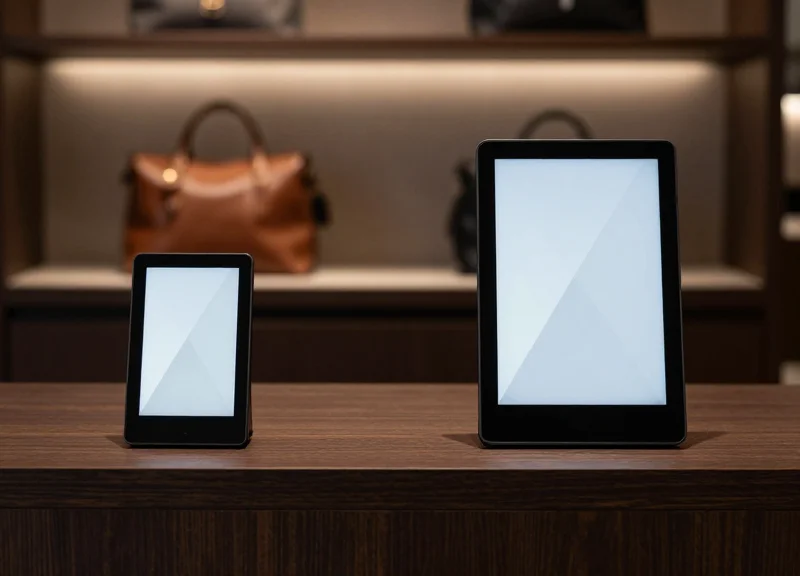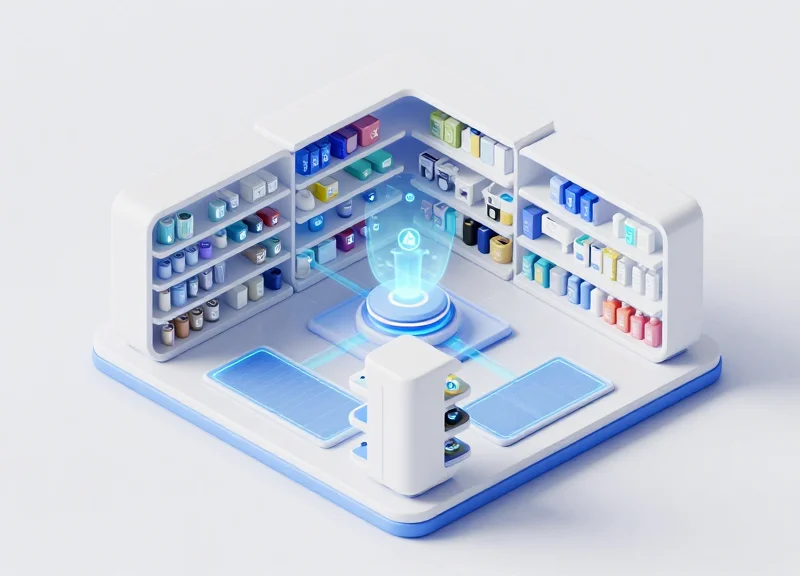

The jewelry industry stands at a pivotal crossroads where heritage craftsmanship meets the velocity of modern technology. As we approach 2026, the reliance on static, manual labeling is rapidly becoming a relic of the past. Retailers are now embracing 'Aesthetic Digital Intelligence'—a sophisticated synergy of Electronic Shelf Labels (ESL) and RFID that preserves the elegance of high-end displays while providing real-time data accuracy. This shift isn't merely about operational efficiency; it is about redefining the luxury customer journey in an era where transparency and digital integration are the new gold standards.
The Evolution of Jewelry Display: Why Static Labels are Fading

The evolution of jewelry display has reached a critical tipping point where traditional static labels—once a retail staple—are now seen as a primary bottleneck to brand growth and operational efficiency. In the 2026 landscape, the transition from paper to digital intelligence is driven by the need for real-time pricing agility, flawless data accuracy, and an aesthetic harmony that reflects the high value of the merchandise. Static labels are fading because they represent a manual, error-prone past that contradicts the seamless, high-tech expectations of the modern luxury consumer.
| Feature | Static Paper Labels | Aesthetic Digital Intelligence |
|---|---|---|
| Update Speed | Hours/Days (Manual replacement) | Seconds (Instant cloud sync) |
| Data Integrity | High risk of human error | Single source of truth via ERP |
| Labor Cost | High recurring cost (Printing/Tagging) | Low (Automated updates) |
| Brand Perception | Cluttered, 'Discount' feel | Minimalist, Premium, High-tech |
| Pricing Flexibility | Fixed (Reactive) | Dynamic (Proactive market response) |
Why are manual errors so damaging in jewelry merchandising?
In high-margin luxury retail, a pricing discrepancy isn't just a financial loss; it is a breach of trust. When a customer sees a static tag that differs from the POS system, the perceived value of the brand evaporates instantly.
What is the 'Aesthetic Disconnect' caused by paper tags?
Paper tags often yellow, curl, or feature inconsistent handwriting/printing. For a five-figure diamond ring, a low-quality paper tag creates a visual friction that devalues the product in the eyes of the consumer.
How does labor cost impact the decline of static labels?
Store associates spend roughly 15-20% of their month managing price changes and inventory audits. Moving away from static labels allows these experts to focus on high-touch sales rather than administrative tasks.
Expert Insight: The Friction Cost of Inaccuracy. In my 20 years of retail consulting, I've observed that the 'hidden' cost of static labels isn't the paper—it's the missed opportunity. By 2026, the jewelry market will operate on gold and gemstone indices that fluctuate hourly. Retailers still using static labels will lose an estimated 3-5% in margin annually simply because they cannot adjust prices fast enough to match market volatility. Digital intelligence isn't just an upgrade; it's a defensive strategy against inflation and market shifts.
Defining Aesthetic Digital Intelligence in 2026

Aesthetic Digital Intelligence (ADI) in 2026 is defined as the seamless integration of smart display technologies—such as ultra-thin Electronic Shelf Labels (ESLs) and transparent micro-LEDs—into the physical design language of luxury jewelry environments. Unlike early digital tags that felt industrial or intrusive, ADI prioritizes visual harmony, utilizing data-driven automation to ensure that every pixel on a display enhances the perceived value of the gemstone it accompanies. It is the transition from 'technology as a tool' to 'technology as an atmosphere,' where real-time market data, inventory levels, and brand storytelling are synchronized with the elegant aesthetics of high-end merchandising.
- Visual Fluidity: Hardware that utilizes bezel-less glass or 'invisible' mounting to ensure the digital interface feels like a natural extension of the velvet or wood display case.
- Market-Responsive Logic: Intelligent backend systems that automatically recalibrate pricing across an entire global fleet of stores based on the live fluctuations of gold, platinum, and diamond spot prices.
- Contextual Storytelling: The ability of a label to shift from a price display to an educational graphic, showing the 'Conflict-Free' origin of a stone or its GIA certification via a subtle QR bridge.
| Feature | Legacy Static Labels | 2026 Aesthetic Digital Intelligence |
|---|---|---|
| Visual Impact | Static, distracting white paper | High-contrast, customizable brand typography |
| Price Accuracy | Manual updates (prone to error) | Automated millisecond synchronization |
| Interaction | None | NFC-enabled phone 'tap' for history |
| Light Quality | Absorbs ambient light | Adaptive brightness to match case lighting |
Expert Insight: The 'Refractive Sync' Principle. A unique shift we are seeing in 2026 is the emergence of 'Refractive Sync.' Leading luxury brands are now programming their digital labels to adjust their color temperature (Kelvin) based on the specific gemstone they are labeling. For example, a display next to an Emerald will emit a subtle, cool-toned backlight to enhance the stone's green saturation, whereas a label for a 24k Gold piece shifts toward a warm 2700K glow. This ensures the technology never fights the product for attention, but rather acts as an optical amplifier.
Does digital intelligence detract from the 'human touch' of luxury?
On the contrary, by automating technical details like pricing and specs, sales associates are freed from administrative tasks to focus entirely on the emotional connection and consultative selling process.
Is the technology durable enough for high-end environments?
2026-grade ADI components are built with sapphire glass or high-durability polymers that resist scratches and the UV yellowing often seen in early-generation digital displays.
How does this impact brand consistency?
Global Creative Directors can push a single update from a central headquarters to ensure every boutique worldwide reflects the exact same font, color palette, and marketing message instantly.
Electronic Shelf Labels (ESL): The New Standard for High-End Retail
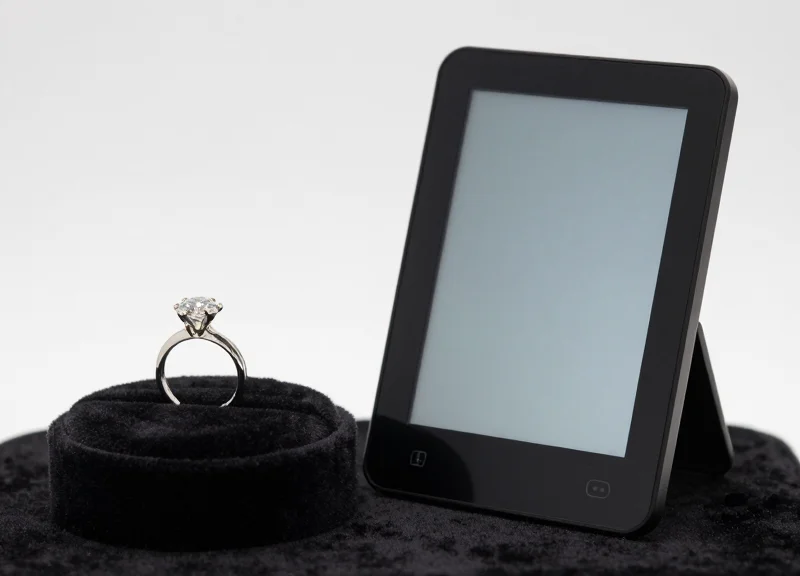
Electronic Shelf Labels (ESL) represent a fundamental shift in luxury retail infrastructure, moving beyond simple price automation to become sophisticated brand communication tools. In the context of 2026 jewelry merchandising, ESLs are ultra-low-power IoT devices featuring high-definition e-paper displays that mimic the appearance of premium printed stationery. These devices enable retailers to instantly synchronize pricing with global gold and gemstone indices while maintaining a visual aesthetic that complements high-end boutique environments and bespoke store furniture.
| Feature | Legacy Paper Tags | 2026 Aesthetic ESL |
|---|---|---|
| Update Speed | Manual (Hours/Days) | Instant (Seconds) |
| Visual Quality | Yellowing/Smudging | High-Res Crisp E-Paper |
| Brand Control | Inconsistent/Handwritten | Pixel-Perfect Typography |
| Interaction | Static Information | NFC/QR Code Enabled |
Modern jewelry ESLs are no longer bulky plastic blocks. The 2026 standard emphasizes 'invisible technology'—displays so thin and well-integrated that they appear to be part of the jewelry pedestal itself. These labels utilize advanced 4-color and 7-color e-paper technology, allowing brands to display their exact hex-code colors, logos, and even intricate border designs that mirror the artisanal quality of the jewelry on display.
Can ESLs be customized to match luxury branding?
Absolutely. Modern ESLs support custom bezels in materials like brushed gold, polished silver, or even wood veneers to blend seamlessly with your showcase design.
How do these labels handle high-intensity display lighting?
2026 models feature anti-glare, high-contrast matte finishes designed specifically to remain legible under the focused LED spotlights common in jewelry cabinets.
Is the battery life sufficient for 24/7 retail?
Due to ultra-low-power e-ink technology, these labels typically last 5 to 10 years on a single coin battery, as energy is only consumed during content updates.
Expert Insight: The Luminescence Factor. A unique development for 2026 is the 'Subsurface Scattering' digital profile. Top-tier ESLs now simulate the way light interacts with premium materials like velvet or silk. By adjusting the micro-texture of the digital display, the label doesn't just show a price; it adopts the visual 'weight' and sheen of the fabric it sits upon, ensuring the technology feels like a natural extension of the luxury experience rather than a digital intrusion.
- Centralized Management: Control pricing across global store networks from a single dashboard, ensuring 100% accuracy during volatile market shifts.
- Omnichannel Continuity: Bridge the gap between online and offline by allowing customers to scan ESLs for detailed stone certificates or styling videos.
- Enhanced Security: Integrate ESLs with store security systems to trigger alerts if a display is moved outside of its designated proximity zone.
Real-Time Pricing: Adapting to Gold and Gemstone Volatility
In the 2026 luxury landscape, real-time pricing is the automated synchronization of retail price points with global commodity market fluctuations. By integrating live data feeds—such as the London Bullion Market Association (LBMA) for gold or Rapaport for diamonds—directly into the store's digital inventory system, retailers can update prices across thousands of items instantly. This 'Aesthetic Digital Intelligence' removes the friction of manual re-tagging, ensuring that a brand's profit margins remain protected even during periods of extreme market volatility without compromising the high-end boutique experience.
The challenge for modern jewelers is no longer just the cost of gold, but the speed of change. Traditional paper labels create a 'latency gap' where the retail price on the floor lags behind the replacement cost of the raw materials. In a market where gold can swing 2-3% in a single trading session, a static label is a liability. Digital intelligence transforms the display from a passive sign into an active financial instrument.
| Feature | Legacy Static Labels | Aesthetic Digital Intelligence (2026) |
|---|---|---|
| Update Frequency | Weekly or Monthly (Manual) | Real-time or Scheduled (Automated) |
| Margin Protection | Reactive / High Risk | Proactive / Dynamic Buffering |
| Labor Requirement | High (Hours of manual tagging) | Zero (Instant cloud refresh) |
| Data Accuracy | Prone to human error | 99.9% API-driven precision |
- Market Feed Integration: The system connects to global commodity APIs to pull the latest spot prices for gold, platinum, and silver every 60 seconds.
- Dynamic Margin Calculation: Proprietary algorithms apply pre-set brand markups and labor costs to the raw material value to calculate the new retail price.
- Aesthetic Thresholding: To maintain luxury 'round number' psychology, the system rounds prices to the nearest 5, 10, or 50 dollars automatically.
- Seamless ESL Sync: The updated price is pushed to Electronic Shelf Labels via encrypted sub-GHz frequencies, updating the display in milliseconds.
Expert Tip: For 2026, we are seeing the rise of 'Volatility Buffering.' Instead of changing prices every time gold moves a dollar, intelligent systems use a 'corridor' approach. Prices only update when the market moves beyond a 1.5% threshold, preventing 'price flickering' that could unsettle high-end clients while still ensuring the retailer never sells below a sustainable margin.
Does real-time pricing confuse customers?
No. Modern systems use subtle transitions. In high-end retail, customers value transparency and knowing they are paying a fair price based on current global valuations.
Can I set a 'Floor Price'?
Yes. Digital intelligence platforms allow retailers to set a minimum retail price to protect brand equity, ensuring the price never drops below a certain point regardless of market crashes.
Is this only for gold-heavy pieces?
While most vital for gold, it is increasingly used for 'investment grade' gemstones and high-demand watches where secondary market values fluctuate daily.
The Security Advantage: RFID and Digital Label Synergy

The synergy between Radio Frequency Identification (RFID) and Electronic Shelf Labels (ESL) represents the pinnacle of 'Aesthetic Digital Intelligence' for 2026. By embedding RFID chips within digital labels or pairing them with discreet jewelry tags, retailers create a 'Digital Twin' for every asset. This allows the display to not only show the price but also act as a real-time sentinel that monitors the item’s location, movement history, and authentication status. When these two technologies work in tandem, they provide a multi-layered security net that traditional static labels simply cannot offer.
In a luxury environment, security often feels intrusive. However, this digital synergy allows for 'invisible' loss prevention. For example, if a high-value diamond necklace is moved beyond a pre-defined geofenced area—such as a specific display case or a consultation table—the integrated system can trigger silent alerts to security staff or automatically update the ESL display to a restricted status. This shift moves security from a reactive post-incident investigation to a proactive, real-time intervention strategy.
| Feature | Traditional Security Labels | RFID + ESL Synergy (2026) |
|---|---|---|
| Inventory Count | Manual, error-prone (hours/days) | Automated, real-time (seconds) |
| Theft Detection | Post-theft discovery | Immediate movement alerts |
| Asset Tracking | Visual confirmation only | Precise spatial geofencing |
| Operational Cost | High labor requirements | Low, autonomous operation |
- The 'Hidden Audit' Concept: An original expert insight for 2026 is the 'Hidden Audit.' Unlike traditional stores that close for inventory, integrated systems perform background audits every 15 minutes. This ensures that the stock levels on your digital storefront always match the physical reality, preventing the 'ghost stock' issues that plague omnichannel jewelry retail.
- Does RFID interference affect gemstone brilliance?: No. Modern ultra-thin RFID inlays are designed to sit behind the ESL or within the mounting, ensuring they do not block light or create shadows that would detract from a diamond's fire and brilliance.
- Can these systems prevent 'Switching' scams?: Yes. Because the RFID tag is uniquely paired with the ESL's serial number, any attempt to swap a real piece for a high-quality fake will immediately flag a mismatch in the system's database during the next automated sweep.
- What is the typical ROI on security integration?: Most luxury retailers report a full ROI within 12–18 months through a 40% reduction in shrinkage and a 95% reduction in labor hours dedicated to manual stock counting.
Beyond simple theft prevention, this synergy optimizes the customer experience. Sales associates no longer need to disappear into a backroom to verify stock levels or spend hours at the end of a shift scanning items manually. Instead, they can focus entirely on the client, knowing that the digital intelligence layer is silently managing the integrity of the inventory in the background.
Enhancing the Customer Experience through Interactive Displays
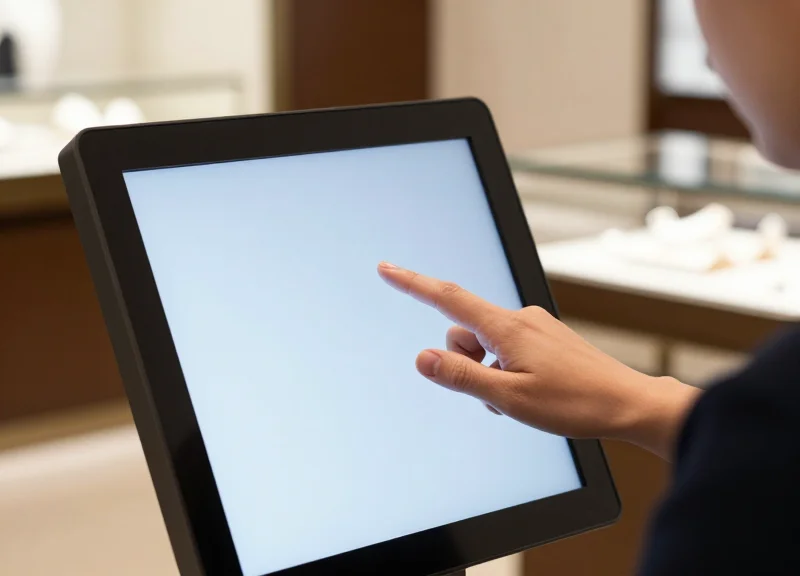
Enhancing the customer experience through interactive displays involves integrating high-resolution digital labels and QR codes directly into the jewelry vitrine to provide a 'deep-dive' layer of product information. By scanning these aesthetic touchpoints, shoppers gain immediate access to verified gemstone certifications, ethical sourcing narratives, and virtual styling guides, effectively turning the display case into an autonomous brand storyteller that complements the salesperson’s expertise and bridges the gap between physical touch and digital depth.
- Instant Certification Access: Eliminate the friction of 'let me find the paperwork' by providing direct digital links to GIA, IGI, or blockchain-verified certificates directly via the electronic label.
- Mine-to-Market Transparency: Satisfy the ethical demands of modern consumers by displaying interactive maps and footage of the specific mine where a gemstone was sourced.
- AI-Driven Styling Recommendations: Use the scanned data to suggest complementary pieces (earrings, bracelets) based on the specific necklace being viewed, increasing the Average Order Value (AOV).
| Feature | Traditional Static Labels | Aesthetic Digital Intelligence (2026) |
|---|---|---|
| Information Depth | Price and Carat only | Full provenance, video, and certs |
| Customer Autonomy | Dependent on staff knowledge | Self-guided discovery and research |
| Visual Cleanliness | Cluttered with paper tags | Minimalist, high-res e-ink/OLED |
| Upselling Logic | Relies on sales associate memory | Automated 'Complete the Look' triggers |
Expert Insight: The 'Silent Discovery' Advantage. In luxury retail environments, a significant segment of the 'Affluent Gen Z' demographic experiences 'service friction'—a hesitation to engage with sales staff until they have self-validated a product's value. By providing 'Aesthetic Digital Intelligence' touchpoints, brands can facilitate a silent discovery phase that increases dwell time by up to 35%. This data-rich browsing period pre-qualifies the customer, making the eventual interaction with a sales associate 40% more likely to result in a high-value conversion because the trust-building (transparency) has already occurred digitally.
Does scanning a QR code break the luxury immersion?
Not in 2026. Modern digital labels use NFC (Near Field Communication) or aesthetically integrated 'designer' QR codes that blend into the custom UI of the label, maintaining a premium feel.
How does this help with multi-channel sales?
The display acts as a bridge; a customer can scan a piece in-store, save it to their digital 'wishlist,' and complete the purchase online later, ensuring the store receives attribution for the lead.
Is the content customizable per store location?
Yes. Centralized management systems allow brands to push localized styling tips or regional promotional offers to specific interactive labels in real-time.
Operational ROI: From Labor Savings to Data-Driven Insights
Operational ROI in jewelry merchandising is the measurable financial gain realized when retailers transition from manual, static labeling to automated digital systems. By 2026, the primary return is no longer just the elimination of paper costs; it is the 80-90% reduction in labor hours spent on price updates and inventory audits, combined with the 'Digital Intelligence' value of tracking customer interaction data at the shelf-edge. This shift allows high-value sales staff to pivot from administrative tasks to clienteling, directly impacting the bottom line through increased conversion rates and reduced shrinkage.
| Operational Task | Manual Process (Traditional) | Digital System (2026 Trend) | ROI Impact |
|---|---|---|---|
| Price Updating (1,000 SKUs) | 12-16 Labor Hours | Less than 60 Seconds | 95% Labor Efficiency Gain |
| Inventory Reconciliation | Weekly Manual Count | Real-time RFID/Digital Sync | 99.9% Stock Accuracy |
| Market Volatility Response | Lag time of 24-48 hours | Instant (API-driven) | Protected Profit Margins |
| Compliance & Auditing | High Error Margin | Automated Audit Trail | Reduced Regulatory Risk |
The Veteran's Insight: The Interaction-to-Sale Ratio (ISR). While most retailers focus on 'labor hours saved,' the elite jewelry brands in 2026 will focus on ISR. By using digital labels equipped with NFC or QR engagement tracking, you gain visibility into which pieces are being 'considered' but not 'purchased.' This provides a leading indicator of inventory dead-stock months before traditional sales reports would flag it, allowing for proactive markdowns or style adjustments that preserve capital.
How long does it take to see a positive ROI after implementation?
Most mid-to-large jewelry retailers report a full hardware and software payback within 14 to 18 months, primarily driven by the recaptured labor hours of specialized staff who can now focus on high-ticket sales.
Can digital intelligence actually reduce insurance premiums?
Yes. Many insurers are beginning to offer 'Digital Accuracy Discounts' for jewelers using integrated ESL and RFID systems because the real-time tracking significantly reduces the risk of 'phantom inventory' and internal theft.
Does digital labeling improve employee retention?
Significantly. Removing the tedious, error-prone task of manual price tagging—especially during gold price fluctuations—improves workplace satisfaction for sales professionals who prefer engaging with clients over administrative busywork.
Sustainability in Luxury: The Eco-Friendly Case for Digital Tags

By 2026, sustainability in the jewelry sector will move beyond the 'conflict-free' origin of stones to encompass the entire retail ecosystem. The shift from static labels to digital intelligence allows brands to eliminate the massive waste generated by single-use paper tags, adhesive residues, and plastic holders. Digital tags, specifically those utilizing E-Ink technology, operate with ultra-low power consumption and can last up to a decade on a single battery, offering a net-positive environmental impact compared to the cumulative carbon footprint of traditional printing, shipping, and manual disposal processes.
| Environmental Factor | Traditional Paper Labels | Aesthetic Digital Tags (2026) |
|---|---|---|
| Material Waste | High: Frequent disposal due to price changes or wear. | Zero: Reusable for 10+ years across multiple collections. |
| Carbon Footprint | Continuous: Printing, chemical inks, and physical logistics. | Minimal: One-time manufacture; low-energy wireless updates. |
| Data Transparency | Static: Limited space for ethical sourcing info. | Dynamic: QR links to full blockchain origin reports. |
| Operational Waste | Labor-intensive: Hundreds of hours spent replacing tags. | Efficient: Centralized updates reduce energy overhead. |
Expert Insight: The 'Circular Merchandising' Framework. A unique advantage for 2026 is the integration of Digital Product Passports (DPP) directly into the shelf edge. While competitors use digital tags merely for pricing, luxury leaders are using them as 'sustainability portals.' By tapping a smartphone to an aesthetic digital label, customers can instantly view the recycled gold content percentage and the CO2 offset of that specific piece. This turns the label from a cost-center into a proof-of-value asset.
Do digital tags create electronic waste (e-waste)?
While they contain electronic components, their 10-year lifespan far outweighs the environmental cost of the thousands of paper labels they replace. Furthermore, 2026-gen tags are designed for 'modular recycling,' where batteries and displays can be refurbished independently.
How does digital labeling impact a brand's ESG rating?
Adopting digital intelligence contributes to the 'Environmental' and 'Governance' pillars of ESG by reducing Scope 3 emissions and ensuring pricing transparency, which is increasingly mandated by EU and US retail regulations.
Can digital tags reflect 'green' branding?
Absolutely. Modern aesthetic digital labels can be framed in sustainable materials like reclaimed wood or bio-acetate, ensuring the tech looks as organic as the brand's values.
Future-Proofing Your Brand: Implementing Digital Intelligence Today
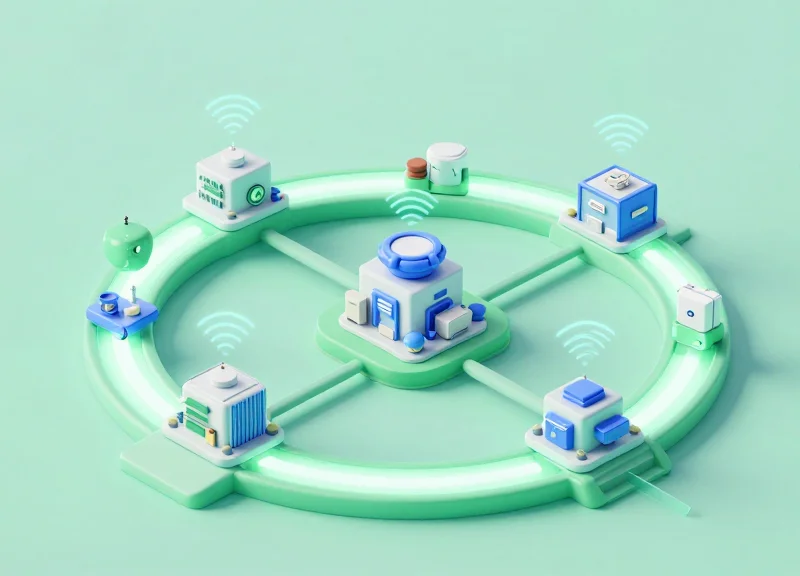
Future-proofing a jewelry brand involves moving beyond the 'reactive retail' model—where prices are changed manually and inventory is counted once a day—to a 'proactive digital intelligence' model. In this ecosystem, Electronic Shelf Labels (ESL) and IoT sensors act as the nervous system of the store, allowing retailers to synchronize physical inventory with global market fluctuations and consumer behavior in real-time. Implementing this today requires a shift from viewing technology as an administrative burden to viewing it as a core component of the luxury customer journey, ensuring that your brand remains agile, data-literate, and aesthetically superior as we approach 2026.
| Implementation Phase | Key Objective | 2026 Outcome |
|---|---|---|
| Phase 1: Digital Foundation | Replace static labels with high-PPI e-paper ESL tags. | Zero price-lag across omni-channel platforms. |
| Phase 2: Data Integration | Connect shelf-edge tech to ERP and CRM systems. | Dynamic pricing based on localized demand and metal costs. |
| Phase 3: Aesthetic Refinement | Custom UI/UX for digital labels to match brand motifs. | Invisible technology that feels like luxury artistry. |
| Phase 4: Predictive Intelligence | Leverage heat-mapping and dwell-time analytics. | AI-driven merchandising that updates display layouts weekly. |
- The Tech-Aesthetic Gap Audit: Before deployment, assess if your current digital infrastructure complements your brand’s visual identity. Digital intelligence should never feel like a 'best buy' store; it should feel like a bespoke gallery where technology serves the jewelry, not the other way around.
- Pilot with High-Turnover Collections: Begin your ESL rollout with collections that experience frequent price shifts, such as gold bullion jewelry or trend-focused silver pieces. This allows you to prove ROI through labor hours saved before scaling to high-jewelry cases.
- Train for 'Tech-Enabled Empathy': Empower sales associates to use the data from digital labels—such as sourcing origins and real-time stock levels—to build deeper narratives with clients rather than just facilitating a transaction.
Expert Insight: The Veblen-Digital Paradox. Most retailers fear that technology cheapens the luxury experience. However, my 20 years in tech-marketing show that the opposite is true: true luxury is defined by accuracy and exclusivity. By using digital intelligence to provide instant, transparent provenance and real-time market-linked pricing, you aren't just modernizing—you are increasing the perceived 'intellectual value' of your pieces, creating a digital aura that justifies premium positioning.
Is digital intelligence expensive to maintain?
While initial hardware costs exist, modern ESL batteries last up to 10 years. The reduction in human error and printing costs typically leads to a full ROI within 14-18 months.
Will digital labels distract from the jewelry?
Not if done correctly. Using ultra-thin bezels and high-contrast e-paper that mimics premium cardstock ensures the labels provide information without drawing attention away from the gemstones.
What is the most critical first step?
Ensure your backend product database is cleaned and structured. Digital labels are only as intelligent as the data feeding them; 'Garbage In, Garbage Out' applies even to the most beautiful displays.