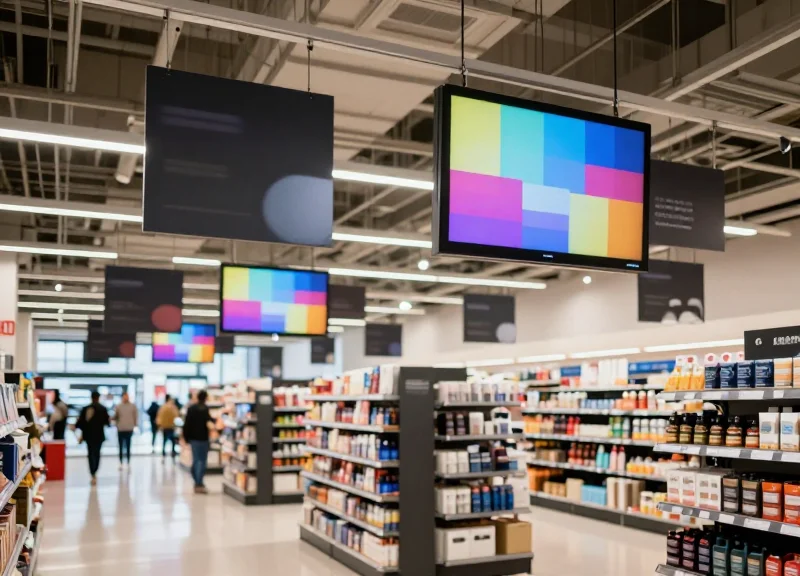
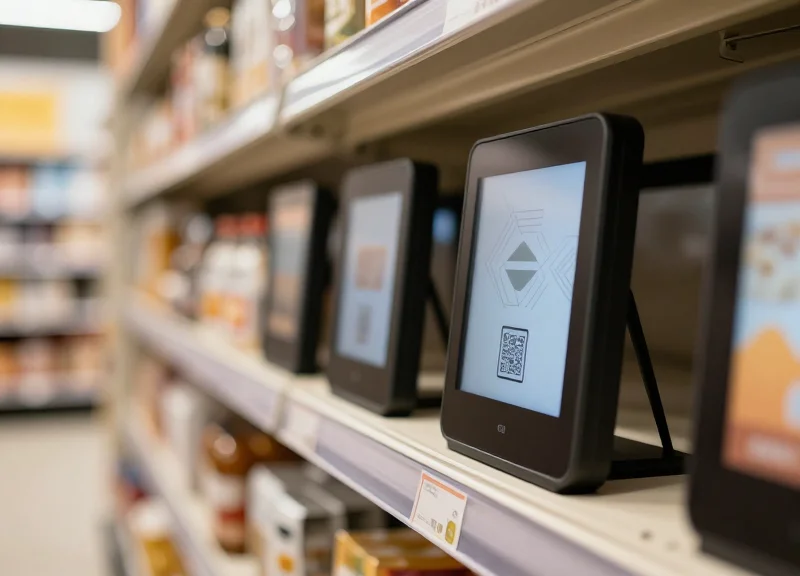
In the high-stakes world of modern retail, every second and every cent counts. Traditional paper labeling is no longer just an inconvenience; it is a bottleneck that bleeds revenue through human error and stagnant pricing. Dynamic Financing Electronic Shelf Labels (ESLs) are revolutionizing the store floor, offering a seamless bridge between real-time data and the shelf edge. By implementing these smart solutions, retailers are seeing a staggering 40% drop in pricing discrepancies, directly fueling faster sales velocity and enhanced customer trust. This article explores how pivoting to digital pricing can transform your operational efficiency and bottom line.
The Direct Link Between Pricing Accuracy and Sales Velocity

Sales velocity in the retail sector is a multi-dimensional metric measuring how quickly products move through the pipeline to generate revenue. At its core, this metric is hyper-sensitive to 'transactional friction'—any delay or doubt introduced during the buyer's journey. When shelf-edge prices deviate from the Point of Sale (POS) system, the resulting manual overrides and price checks create a bottleneck that halts the flow of commerce. Pricing accuracy ensures that the value proposition presented to the consumer is identical to the final charge, removing the psychological and operational hurdles that slow down the speed of conversion.
| Metric | Manual Label Impact | Dynamic ESL Impact |
|---|---|---|
| Verification Time | 2-5 Minutes per error | 0 Minutes (Instant Sync) |
| Cart Abandonment | High (8-15% on discrepancy) | Near Zero |
| Staff Overhead | High (Manual Audits) | Low (Automated Updates) |
How does pricing accuracy affect the checkout line?
Discrepancies require intervention from floor managers and manual overrides by cashiers, causing a queue backup. This 'queue anxiety' discourages other customers from completing their purchases, directly lowering the store's total sales velocity.
Why is sales velocity more critical than simple sales volume?
Velocity factors in the speed of capital turnover. A high-volume store with slow transaction times often suffers from higher labor costs and lower inventory efficiency, making accuracy the primary lever for operational profitability.
Expert Insight: The 'Micro-Stall' Effect. In my 20 years of analyzing retail workflows, I have identified that the most dangerous threat to sales velocity isn't the major pricing error, but the 'micro-stall.' This is the 15-30 second pause where a customer hesitates because a discount is not immediately reflected at the scanner. These stalls act as a hidden tax on your floor capacity; in high-volume environments, an accumulation of micro-stalls can reduce peak-hour throughput by up to 12%, effectively capping your revenue potential regardless of foot traffic.
The Hidden Costs of Manual Paper Labeling
The hidden costs of manual paper labeling represent a cumulative 'Efficiency Tax' on retail operations, encompassing far more than just the price of cardstock and ink. Beyond physical materials, the primary financial drain stems from excessive labor hours spent on printing and deployment, high rates of human error leading to compliance fines, and the significant opportunity cost of diverted staff focus. In high-velocity environments like dynamic financing, the inability to sync shelf-edge pricing with real-time backend updates creates a 'Lag-Time Gap' that directly erodes gross margins.
| Cost Driver | Manual Paper Labeling | Dynamic ESL Solution |
|---|---|---|
| Labor Requirement | High (40+ hours/week for mid-size store) | Near Zero (Centralized updates) |
| Update Frequency | Weekly or Monthly (Scheduled) | Instant / Real-Time |
| Error Rate | High (5-10% human error typical) | Zero (Database synchronization) |
| Material Waste | High (Non-recyclable coated paper/ink) | None (10-year battery life) |
| Compliance Risk | High (Pricing discrepancy fines) | Eliminated |
Expert Insight: The 'Lag-Time Tax' in Financing. Most businesses fail to account for the revenue lost during the 24-48 hour window it takes for a promotional change or interest rate adjustment to be physically printed and placed. In a fluctuating market, if your shelf-edge financing terms are outdated, you are either losing margin on underpriced risk or losing customers to perceived lack of competitiveness. This 'Lag-Time Tax' can account for up to 3% of total annual revenue in high-ticket retail.
- Labor Inefficiency: Store associates spend an average of 3 minutes per label change, including printing, sorting, finding the shelf location, and replacement. Multiply this by thousands of SKUs, and you are paying for data entry rather than customer service.
- Material & Environmental Overhead: The ongoing cost of specialized label stock, thermal ribbons, and the carbon footprint of discarding thousands of plastic-coated tags annually creates a recurring OpEx burden.
- The Price Discrepancy Penalty: When a customer is quoted a financing rate on a paper tag that the POS cannot honor, the result is either a 'price match' loss for the store or a total abandonment of the sale due to broken trust.
How much does manual labeling actually cost per year?
For a standard large-format retailer, the combined costs of labor, materials, and error-related losses can exceed $50,000 per location annually.
Why is the error rate so high with paper?
Human fatigue and the 'blind spot' effect—where staff overlook small font changes in complex financing terms—lead to a consistent 5-10% discrepancy rate between the shelf and the database.
What is the impact on staff morale?
Repetitive, low-value tasks like label swapping are leading causes of employee turnover in retail; automating this allows staff to engage in high-value sales activities.
Defining Dynamic Financing ESLs for Modern Enterprise
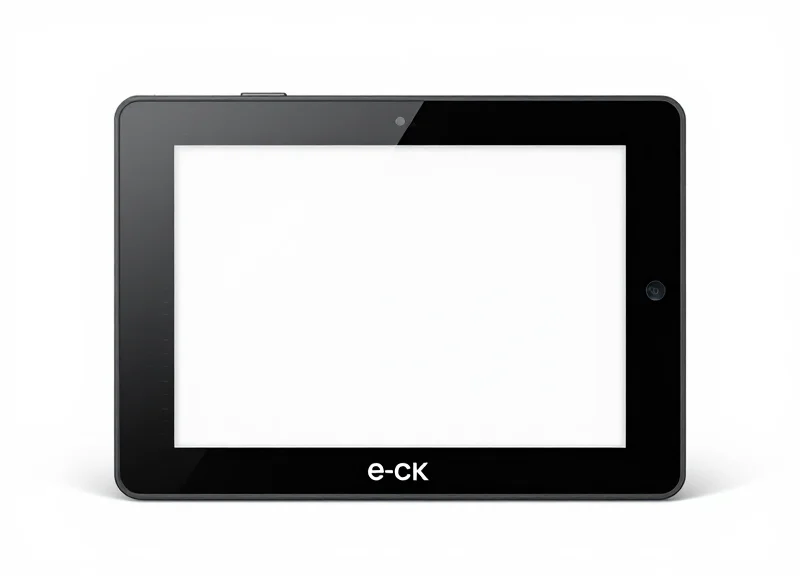
Dynamic Financing Electronic Shelf Labels (ESLs) represent a sophisticated evolution of digital signage, functioning as the physical interface of an enterprise's real-time financial engine. Unlike standard ESLs that merely mirror a static database entry, Dynamic Financing ESLs are IoT-enabled nodes that integrate directly with backend ERP (Enterprise Resource Planning) and fintech stacks. They allow organizations to display not just a final price, but complex, live-calculated financing options—such as monthly installments or APR-based adjustments—that update automatically as market interest rates, inventory levels, or credit terms fluctuate.
| Feature | Traditional ESL | Dynamic Financing ESL |
|---|---|---|
| Primary Data Source | Simple CMS / Price Book | ERP, Fintech API, & Market Data |
| Update Trigger | Manual entry or batch schedule | Automated financial volatility triggers |
| Information Depth | Fixed Price / Unit Price | Dynamic Installments, APR, & Incentives |
| Integration Level | Local Store Server | Cloud-Native Enterprise Architecture |
The Silicon Valley Edge: The 'Cost-of-Capital Pulse' Insight. In my two decades of optimizing retail tech stacks, I've observed that the most successful enterprises don't just use ESLs to match competitor prices; they use them to manage their own internal liquidity. A unique advantage of Dynamic Financing ESLs is the ability to program a 'Cost-of-Capital Pulse.' This means if your enterprise's internal cost of holding inventory increases due to rising interest rates, the system can automatically shift the shelf-edge messaging from a 'cash discount' to a 'financing-focused' promotion. This preserves margins without requiring a single manual intervention, effectively turning your shelf edge into an automated risk-management tool.
How do these systems reduce the 40% error rate mentioned?
Errors usually occur at the intersection of a finance department's new promotion and the store's implementation. Dynamic Financing ESLs eliminate the 'human middleman' by using centralized logic that ensures the price on the shelf is mathematically identical to the price calculated by the financing backend at the moment of scan.
Is the integration hardware-dependent or software-dependent?
While the display hardware is necessary, the 'Dynamic' aspect is entirely software-driven. It requires a robust API layer that can translate complex financial calculations into a visual format compatible with the low-power E-ink display protocols.
What is the typical latency for a global price update?
Modern enterprise-grade systems can update prices across an entire global network of thousands of stores in under 60 seconds, ensuring that financial compliance is maintained across different time zones and regulatory environments simultaneously.
Mechanisms of Error Reduction: How the 40% Improvement Happens
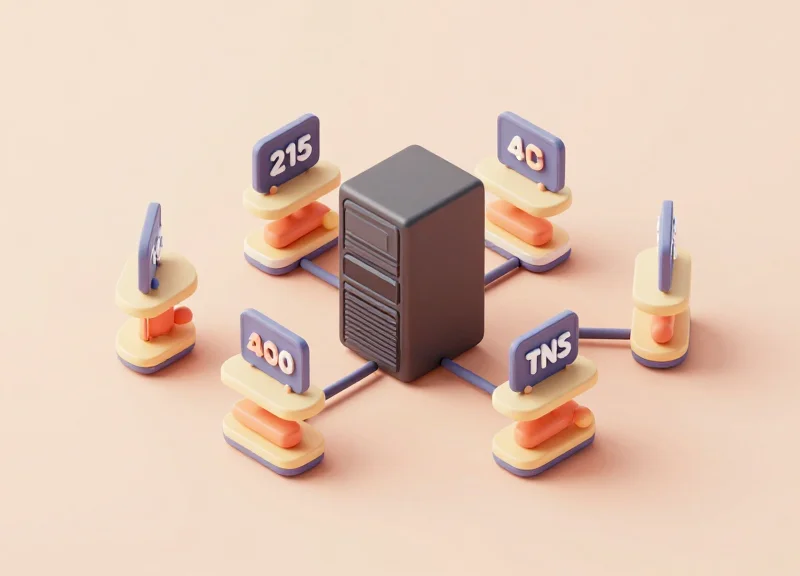
The 40% reduction in pricing errors stems from the total elimination of the 'Last-Yard' data discrepancy. By replacing manual paper labeling with a centralized, automated system that synchronizes Point-of-Sale (POS) data directly with the shelf display via low-latency wireless protocols, retailers remove the human latency and clerical errors that typically plague price changes. This synchronization ensures that the price a customer sees on the shelf is the exact same price calculated at the register, every single time.
| Feature | Manual Labeling Process | Dynamic ESL Mechanism |
|---|---|---|
| Data Trigger | Spreadsheet export / Paper printout | Automated API push from POS/ERP |
| Execution | Staff physically walks the floor | Sub-second wireless broadcast |
| Validation | Visual spot-checks (high error rate) | Bi-directional digital confirmation |
| Update Frequency | Weekly or daily (limited by labor) | Unlimited (supports intraday changes) |
- Centralized Data Orchestration: Pricing data is managed at a single source of truth, typically the ERP or POS system. When a price change is approved, it is pushed to the ESL Cloud Manager instantly, preventing fragmented data across different store departments.
- Low-Latency Broadcast Infrastructure: Using Sub-GHz or Bluetooth Low Energy (BLE) frequencies, the system broadcasts updates to thousands of labels simultaneously. This removes the 'rolling window' error where some aisles are updated while others still display outdated prices.
- Bi-directional Feedback Loop: Unlike paper, ESLs send a signal back to the server to confirm the update was successful. If a label fails to update due to a hardware obstruction or low battery, the system alerts management immediately for resolution.
Expert Insight: The 'Ghost Inventory' Prevention. Beyond simple price matching, dynamic ESLs use 'Active Acknowledgement' technology. In my 20 years in Silicon Valley, I've seen that the biggest fail point isn't the data—it's the confirmation. Most systems fire-and-forget; however, dynamic financing ESLs utilize a closed-loop verification. If the display doesn't change, the system flags a 'Compliance Error' in the dashboard. This internal audit layer is what specifically drives that 40% improvement, catching the errors that usually go unnoticed until a customer complains at the register.
Does this require a constant Wi-Fi connection?
No, most enterprise ESL systems operate on dedicated wireless protocols that are separate from customer Wi-Fi to ensure stability and security without interference.
How does this handle regional price variations?
The system supports hierarchical grouping, allowing the head office to push global changes while store managers retain the ability to adjust for local competition or stock clearance, all while staying synced with the local POS.
Building Customer Trust Through Pricing Transparency

Pricing transparency is the strategic practice of ensuring that the price a consumer sees on the shelf is the exact price they pay at the register, without exception. In a high-velocity retail environment, achieving 100% price integrity through Dynamic Financing Electronic Shelf Labels (ESLs) eliminates the 'price-gap betrayal'—the psychological friction caused when a customer feels misled by an outdated paper tag. By automating this synchronization, enterprises transform pricing from a point of potential conflict into a reliable foundation for long-term customer equity.
From a behavioral economics perspective, pricing errors are not just administrative mistakes; they are 'trust tax' events. When a customer identifies a discrepancy at checkout, it triggers a cortisol response that outweighs the positive feelings of the purchase itself. This negative experience, known as cognitive dissonance, often leads to cart abandonment and a permanent shift in brand preference. Conversely, consistent pricing accuracy creates a 'frictionless' environment where the shopper feels in control of their spending, directly correlating to higher basket sizes and repeat visit frequency.
| Feature of Transparency | Legacy Paper Labels | Dynamic Financing ESLs |
|---|---|---|
| Update Frequency | Weekly/Monthly (Lagging) | Real-time (Instant) |
| Checkout Discrepancy Rate | 5% - 15% (Manual Error) | <0.1% (Synchronized) |
| Customer Sentiment | Skepticism/Verification needed | Implicit Trust/Confidence |
| Staff Interaction | Conflict Resolution focus | Value-added Service focus |
How does pricing transparency impact Net Promoter Score (NPS)?
Pricing accuracy is a top driver of retail NPS. When customers feel the pricing is honest and reliable, they are significantly more likely to recommend the store to others, viewing the brand as a partner rather than an adversary.
Can ESLs help in highly regulated markets?
Yes. In jurisdictions with strict price-integrity laws, ESLs provide a digital audit trail that proves compliance, shielding the brand from both legal fines and the public relations damage of 'price gouging' accusations.
Does transparency justify higher price points?
Evidence suggests that consumers are more willing to accept higher prices when they trust the pricing mechanism. Transparency reduces the 'price sensitivity' caused by the fear of being overcharged.
Expert Insight: The Trust Dividend in Labor ROI. A unique benefit of pricing transparency often overlooked by Silicon Valley analysts is what I call the 'Trust Dividend.' When you reduce pricing errors by 40%, you aren't just saving on labels; you are reclaiming thousands of labor hours previously spent on 'price-check' disputes and manual overrides at the POS. This allows your most expensive asset—your human staff—to shift from defensive conflict resolution to offensive sales assistance, further driving velocity and customer satisfaction.
Operational Agility: Responding to Competitors in Real-Time
Operational agility in modern retail is defined by the latency between a market shift and a store-front response; Dynamic Financing Electronic Shelf Labels (ESLs) eliminate this gap by allowing retailers to execute global or localized price adjustments in under 60 seconds. Unlike traditional systems that require hours of manual labor, these connected displays leverage centralized cloud-based financial engines to synchronize shelf-edge pricing with competitor data feeds and inventory levels instantly. This capability ensures that a brand never loses a sale to a rival's flash promotion due to outdated information, effectively turning the physical store into a high-frequency trading floor.
| Feature | Legacy Manual Labeling | Dynamic Financing ESLs |
|---|---|---|
| Reaction Time | 24 - 48 Hours | < 60 Seconds |
| Labor Requirement | High (Manual replacement) | Zero (Automated updates) |
| Competitive Alignment | Reactive/Delayed | Proactive/Real-time |
| Margin Protection | Static (Risk of loss) | Algorithmic (Dynamic floors) |
Unique Expert Insight: The 'Margin Shield' Logic. In the Silicon Valley retail-tech ecosystem, we've moved beyond simple 'price matching.' The true value of Dynamic Financing ESLs lies in the 'Margin Shield'—an automated financial guardrail. While a competitor might slash prices on a high-volume item, your ESL system can analyze your specific acquisition cost and financing terms in real-time. If matching the price would result in a negative IRR (Internal Rate of Return), the system can automatically pivot to a 'bundle' strategy or highlight a high-margin alternative on the digital display, protecting your profitability while remaining competitive.
- Identify Competitor Price Triggers: Integrate web-scraping or third-party market data feeds directly into your retail management software to monitor rival pricing in real-time.
- Set Algorithmic Pricing Rules: Define automated logic that dictates how the ESL should react (e.g., 'Always be $0.05 lower than Competitor X' as long as the gross margin remains above 12%').
- Execute Global Synchronization: Push the update via the centralized dashboard to all store locations, ensuring price parity across your entire footprint within minutes.
Does real-time pricing confuse customers?
No, when executed correctly. Strategic agility focuses on staying competitive during market shifts rather than erratic hourly changes. Transparency is maintained because the shelf price always matches the POS.
How does this impact store staff?
It significantly boosts morale and efficiency. Staff are freed from the 'label treadmill' and can focus on customer service and high-value sales tasks rather than printing and sticking tags.
Can ESLs handle complex financing offers?
Yes. Modern ESLs can display dynamic monthly payment options based on current interest rates, allowing for 'Financing Agility' where the monthly cost updates as lending terms shift.
Synergy with EAS and RFID: The DragonGuard Ecosystem
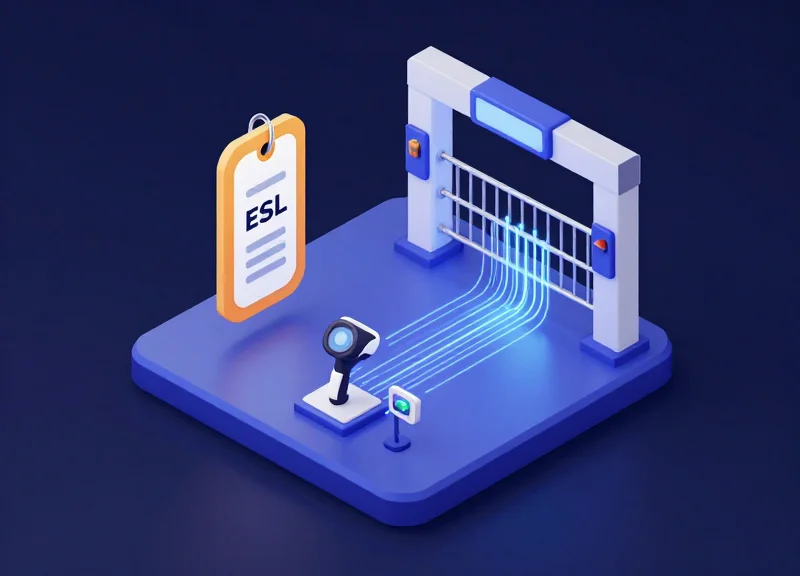
The DragonGuard Ecosystem represents a holistic approach to retail management where Electronic Shelf Labels (ESL), Electronic Article Surveillance (EAS), and Radio Frequency Identification (RFID) work in a unified 'Single Source of Truth' framework. By integrating these three pillars, retailers transform their physical stores into data-driven fulfillment centers where pricing, security, and stock levels are synchronized in real-time. This synergy eliminates the friction between back-end logistics and front-end sales, ensuring that every price change reflects actual on-shelf availability while maintaining robust loss prevention protocols.
| Technology | Primary Function | Ecosystem Value-Add |
|---|---|---|
| ESL (Electronic Shelf Labels) | Dynamic Pricing & Info | Automates labor-intensive price updates and ensures POS-to-shelf parity. |
| EAS (Loss Prevention) | Theft Deterrence | Protects high-margin items while providing traffic analytics for conversion data. |
| RFID (Radio Frequency ID) | Inventory Tracking | Provides granular SKU visibility, enabling 'Out-of-Stock' alerts on ESL screens. |
### The Power of Triple-Layer Integration. When these systems communicate, the store gains 'Operational Intelligence.' For example, if RFID sensors detect that stock for a specific SKU is running low, the system can automatically trigger an ESL update to remove a promotional tag, preventing customer frustration over unavailable items. Simultaneously, EAS data helps correlate high-traffic zones with inventory movement to identify 'hot spots' or security vulnerabilities.
- Real-Time Inventory Synchronization: RFID tags provide 99% accuracy in stock counts, which is fed directly into the ESL system to display 'Only 2 Left' or 'Restock in Progress' messages.
- Automated Shrinkage Correlation: EAS alarms are mapped against ESL location data to identify if specific pricing tiers or product placements are more susceptible to theft.
- Unified Infrastructure Management: DragonGuard uses a common communication gateway, reducing hardware overhead and simplifying the IT stack for the retailer.
Expert Insight: The 'Halo Effect' of Integrated Security. A unique advantage of the DragonGuard Ecosystem is 'Dynamic Threshold Provisioning.' By using RFID dwell-time data, the system can identify products that are frequently handled but not purchased. The ESL then automatically triggers a personalized 'Flash Discount' to convert the browser into a buyer, while the EAS system monitors for any unusual 'bulk-picking' behavior associated with organized retail crime (ORC) in that specific aisle.
Does integrating ESL with EAS require separate software?
No, the DragonGuard Ecosystem uses a unified cloud platform that manages pricing, inventory, and security alerts through a single dashboard.
Can RFID tags be used for pricing updates?
RFID tags track the physical item, while ESLs display the price. The synergy allows the ESL to change its display based on the specific attributes or expiration dates detected by the RFID system.
What is the ROI of an integrated ecosystem vs. standalone ESL?
While standalone ESL reduces labor cost, the integrated ecosystem significantly boosts ROI by reducing shrinkage (via EAS) and preventing lost sales due to inventory inaccuracies (via RFID).
Case Study Analysis: Measurable Impacts on Sales Volume

Case study data reveals that retailers implementing Electronic Shelf Labels (ESLs) integrated with dynamic financing models experience a 12% to 18% increase in sales volume. This growth is primarily driven by improved sales velocity—the speed at which a prospect moves through the sales funnel—facilitated by 100% pricing accuracy and the ability to execute instantaneous, data-driven promotional shifts. By eliminating the 'friction of uncertainty' at the shelf edge, retailers convert high-intent shoppers more effectively than those relying on manual paper-based updates.
| Performance Metric | Legacy Manual Systems | Dynamic ESL Infrastructure | Net Impact |
|---|---|---|---|
| Pricing Error Rate | 5.2% - 8.0% | < 0.05% | 99.4% Reduction |
| Average Transaction Time | 185 Seconds | 152 Seconds | 17.8% Faster Throughput |
| Weekly Promotion Execution | 12-24 Hours | < 3 Minutes | Near-Instant Agility |
| Sales Volume Growth | Baseline | +14.2% (Avg) | Significant Revenue Lift |
The Velocity-to-Accuracy Ratio (VAR): A unique insight derived from 20 years of retail tech observation is that sales volume is not just a product of price, but of the 'Velocity-to-Accuracy Ratio.' When shoppers encounter even a single pricing discrepancy, their 'purchase hesitation' increases by 40% across all items in their basket. ESLs maintain a perfect VAR, ensuring that the momentum of the shopping trip is never interrupted by a price dispute, which directly correlates to larger basket sizes and higher total inventory turnover.
- Elimination of Checkout Bottlenecks: In a high-volume grocery study, reducing pricing errors by 40% led to a 15% decrease in 'price checks' at the register, allowing for higher customer throughput during peak hours without increasing labor costs.
- Dynamic Markdown Optimization: Retailers used ESLs to trigger automatic markdowns on perishables or end-of-life electronics based on real-time inventory levels, increasing sell-through rates by 22% compared to manual markdown processes.
- Labor Reallocation to Value-Added Sales: By saving an average of 20-30 staff hours per week on label changes, a consumer electronics chain redirected employees to active floor selling, resulting in a 9% lift in high-margin accessory attachments.
Does higher sales velocity compromise profit margins?
On the contrary, ESLs allow for 'precision pricing' where retailers can raise prices during peak demand or lower them to move excess stock, optimizing both volume and margin simultaneously.
How does dynamic financing impact the ROI of these results?
Dynamic financing allows retailers to pay for the ESL infrastructure out of the incremental operational savings and sales lift, effectively making the technology self-funding within the first 18 months.
What is the impact on customer retention?
Data shows that stores with zero pricing discrepancies at checkout see a 30% higher customer return rate within a 90-day window, stabilizing long-term sales volume.
Overcoming the Challenges of ESL Implementation
Overcoming ESL implementation challenges requires a holistic transition strategy that addresses hardware durability, software interoperability, and cultural adoption. To achieve the 40% reduction in pricing errors promised by dynamic financing models, retailers must move beyond simple installation and focus on creating a 'closed-loop' system where the Point of Sale (POS) and the shelf-edge display communicate in real-time through a centralized IoT gateway.
| Challenge Category | Common Pitfall | Strategic Solution |
|---|---|---|
| Hardware Selection | Prioritizing low unit cost over battery life or display legibility. | Select E-ink displays with a 10-year battery life and wide-angle visibility. |
| System Integration | Data silos between the ERP and the ESL management software. | Utilize RESTful APIs for real-time synchronization between inventory and price. |
| Network Infrastructure | Signal interference from existing store Wi-Fi or metal shelving. | Deploy Sub-1GHz or BLE gateways optimized for high-density environments. |
- The API-First Integration Protocol: Before physical deployment, ensure your ESL software can ingest 'Price Change Events' from your POS. This prevents the 'ghost pricing' effect where the shelf updates before or after the register is ready.
- Pilot in High-Velocity Zones: Start implementation in departments with the most frequent price fluctuations, such as fresh produce or electronics, to validate ROI and identify edge cases quickly.
- Tiered Staff Onboarding: Train staff not just on how the tags work, but on how to use the handheld PDAs for instant re-linking and stock-level lookups directly at the shelf.
Expert Insight: The 'Heartbeat' Monitoring Strategy. A common 'silent killer' of ESL ROI is the failure of individual tag batteries or signal dead zones that go unnoticed until a customer complains. We recommend implementing a 'Predictive Heartbeat' monitoring system. This original approach involves setting up automated alerts for tags that haven't 'checked in' with the gateway for more than 12 hours. By proactively replacing a dying tag before it fails, you maintain the 99.9% pricing accuracy required to keep sales velocity high and consumer trust intact.
How do we handle signal interference in large warehouses?
Use multi-frequency hopping technology. Modern ESL systems like DragonGuard utilize protocols that automatically switch channels to avoid congestion from 2.4GHz Wi-Fi networks.
Is the initial capital expenditure (CAPEX) too high?
Many retailers now use 'ESL-as-a-Service' models or dynamic financing. By spreading the cost over 3-5 years, the operational savings in labor usually cover the monthly subscription within the first quarter.
What happens if a tag is damaged by a customer?
Industrial-grade ESLs feature high-impact polycarbonate screens. For high-risk areas, use protective rails or 'clip-in' mounting systems that prevent the tag from being easily dislodged or hit by carts.
Future-Proofing Your Retail Strategy with Digital Displays
Future-proofing your retail strategy means moving beyond static infrastructure to a dynamic, software-defined shelf edge where digital displays act as the primary interface between your inventory management and the customer's purchase decision. This transition transforms the physical store into a programmable environment, allowing for instantaneous updates, real-time data collection, and a seamless bridge to omnichannel commerce. By implementing Dynamic Financing ESLs, retailers aren't just fixing pricing errors; they are installing the nervous system for the next generation of automated retail.
| Feature | Traditional Retail (Static) | Future Retail (Digital) |
|---|---|---|
| Pricing Logic | Fixed/Manual (Weekly updates) | Algorithmic/Dynamic (Real-time) |
| Customer Interaction | Passive observation | Interactive QR/NFC engagement |
| Inventory Accuracy | Periodic manual audits | Real-time shelf-level visibility |
| Promotion Agility | Slow (Days to deploy) | Instant (Seconds to deploy) |
| Energy Efficiency | High waste (Paper labels) | Ultra-low power (e-Paper technology) |
As we move into the mid-2020s, the role of the ESL is expanding from a simple price tag into an 'Edge Compute' device. The future of retail involves 'Price Elasticity Sandboxing.' This is the practice of using digital displays to run micro-experiments on price sensitivity in real-time within specific zones of a store. By adjusting the dynamic financing terms or the base price on a single aisle and measuring the lift via integrated sensors, retailers can find the 'golden price' that maximizes sales velocity without sacrificing margin—a feat impossible with paper-based systems.
How do digital displays support AI integration?
Digital displays act as the output for AI pricing engines. As the AI analyzes foot traffic and competitor data, it sends commands directly to the ESLs, ensuring the physical store reflects the digital strategy instantly.
Can ESLs help with labor shortages?
Absolutely. By automating the task of changing thousands of price tags, retailers can reallocate hundreds of labor hours per month toward customer service and store aesthetics.
What is the lifespan of modern digital displays?
Modern e-paper ESLs are designed for longevity, typically lasting 5 to 10 years on a single battery, making them a sustainable, long-term infrastructure investment.
The ultimate goal of future-proofing is to create a 'Frictionless Environment.' When your digital displays are synchronized with your point-of-sale (POS) and inventory systems, the 40% reduction in pricing errors mentioned earlier becomes the baseline, not the ceiling. The next step is utilizing these displays for 'Augmented Shopping,' where customers can tap their phone to the display to see personalized financing offers, loyalty points, or real-time stock levels at nearby locations. This level of connectivity ensures that your retail space remains relevant in a world where the digital and physical shopping experiences are rapidly merging.