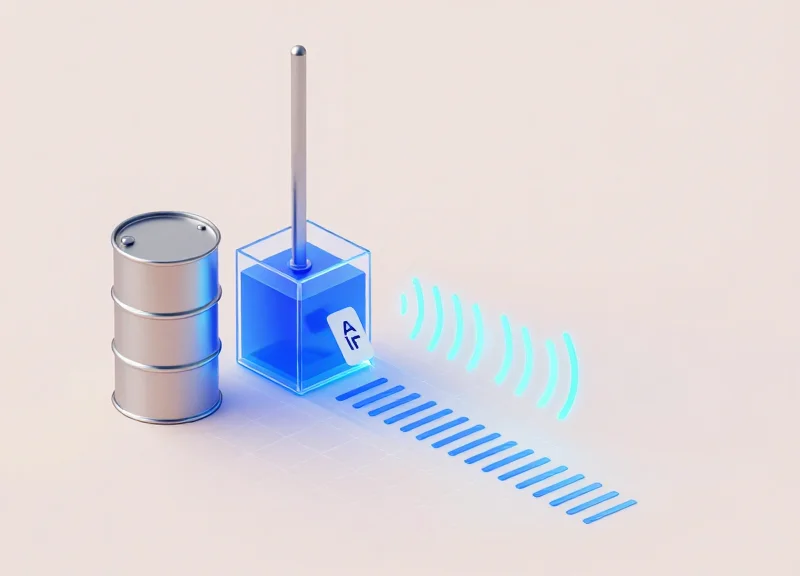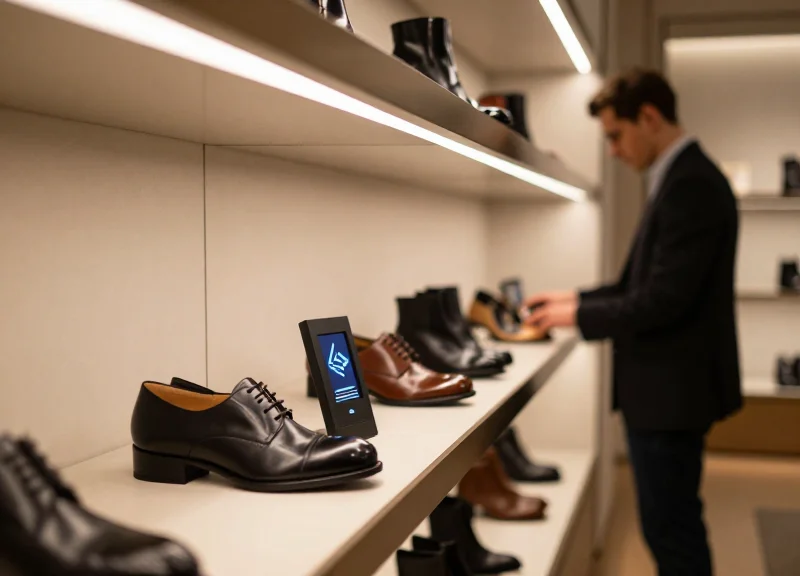
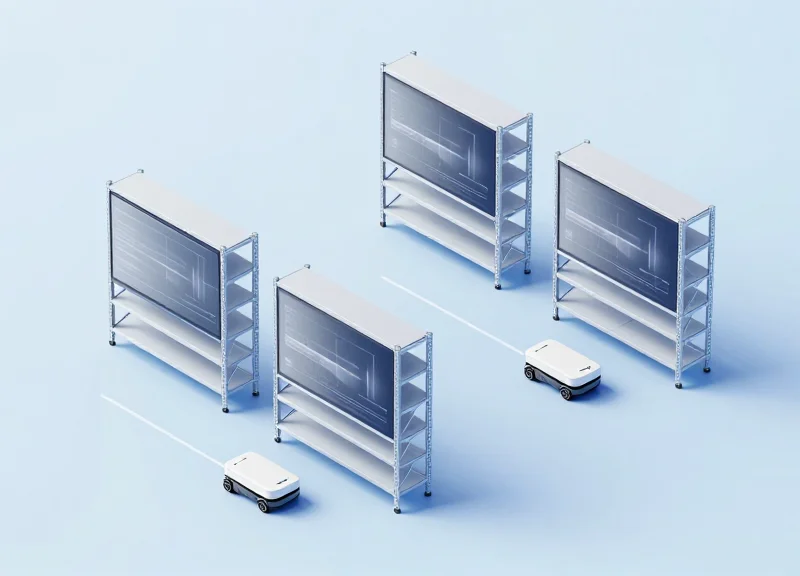
As we head toward 2026, the global logistics sector is hitting a critical juncture where operational efficiency must coexist with aggressive sustainability mandates. Rising electricity prices and the push for carbon neutrality have made traditional, power-hungry warehouse displays a liability. E-Paper technology has emerged as the definitive shield for modern facilities, offering a high-visibility, ultra-low-power alternative to legacy systems. This next-generation signage doesn't just display data; it fundamentally changes the cost structure of warehouse management by eliminating the need for constant power consumption and manual label updates.
The 2026 Energy Landscape: Why Warehouse Overhead is Skyrocketing
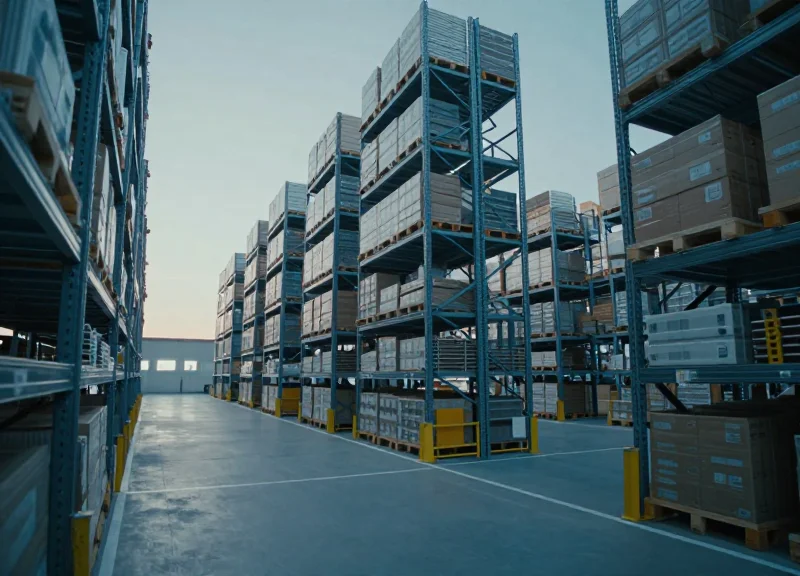
By 2026, the global industrial energy landscape has shifted from a manageable utility expense to a volatile operational risk. Warehouse overhead is skyrocketing because average industrial electricity rates have climbed nearly 30% since 2024, driven by a combination of aging grid infrastructure surcharges, aggressive carbon-neutrality mandates, and the 'electrification bottleneck' as logistics fleets transition to EV-only operations. In this high-stakes environment, the 'Shadow Load'—the constant, cumulative power draw from secondary systems like traditional backlit LCD signage—is no longer a negligible cost; it is a direct threat to net margins.
| Region | 2024 Avg Rate (c/kWh) | 2026 Projected (c/kWh) | Impact Level |
|---|---|---|---|
| North America | 12.8 | 16.4 | High - Grid Fees |
| European Union | 21.5 | 29.2 | Critical - Carbon Tax |
| APAC (Industrial) | 14.2 | 18.5 | Moderate - Demand Surge |
The most significant change in 2026 is the widespread adoption of 'Hyper-Peak Pricing.' Utility providers now penalize industrial facilities for any consumption that exceeds a narrow baseline during peak hours. For a 500,000-square-foot facility utilizing legacy digital signage for dock management and wayfinding, these displays contribute to a 'constant-on' power profile that triggers massive demand response penalties. This has created a tipping point where the energy cost to run a traditional display over its lifecycle can now exceed the initial capital expenditure for the hardware itself.
Why are carbon taxes affecting warehouse signage?
In 2026, many jurisdictions have implemented 'Scope 2' emissions reporting for logistics hubs. Traditional signage, which requires 24/7 power, increases the facility's carbon footprint, leading to higher tax brackets and reduced ESG investment scores.
What is the 'Shadow Load' phenomenon?
Shadow Load refers to the energy consumed by non-core electronic systems—like LCD labels and TVs—that remain powered on even when information is static. In a modern warehouse, this can account for up to 12% of total non-HVAC energy use.
How does 2026 peak-demand pricing work?
Utilities now use real-time monitoring to charge 5x to 10x the standard rate during periods of high grid stress. Devices that cannot 'zero-out' their power during these windows, such as emissive displays, significantly inflate the monthly bill.
Expert Insight: The 1% Margin Erosion Theory. My analysis of the 2026 logistics market suggests that for every 50 basis points of energy inflation, warehouse operators lose approximately 1% of their net profit margin if they rely on legacy hardware. E-paper technology is the only signage solution that effectively de-couples information delivery from energy consumption, acting as a 'fiscal shield' against the grid's unpredictability.
The Science of E-Paper: Why It Consumes Near-Zero Power

Electronic Paper Displays (EPDs) consume near-zero power because they are fundamentally bistable, meaning the display requires electricity only to change the visual information and zero energy to maintain a static image indefinitely. Unlike LCD or LED screens that must refresh their pixels dozens of times per second and require constant backlighting to be visible, e-paper utilizes electrophoretic technology to move physical pigment particles into place. Once the 'electronic ink' is arranged, the particles remain fixed in position by molecular forces, allowing the sign to display complex logistics data, barcodes, or safety warnings for years without a single microwatt of additional current.
| Technology Feature | E-Paper (EPD) | Standard LCD | Industrial LED |
|---|---|---|---|
| Static Image Power | 0 Watts | 15W - 60W | 100W+ |
| Refresh Mechanism | Bistable (Pulse only) | 60Hz Continuous | Continuous Emissive |
| Visibility Source | Reflective (Ambient) | Backlit (Active) | Self-Emissive (Active) |
| Heat Generation | Negligible | Moderate | High |
The core of this science lies in microcapsules roughly the diameter of a human hair. Each capsule contains positively charged white particles and negatively charged black particles suspended in a clear fluid. When a localized electric field is applied, the corresponding particles migrate to the top of the capsule. My original 'Silicon Valley' insight for 2026: we are now seeing the rise of Energy-Harvesting Reflective Signage. Because e-paper is reflective rather than emissive, it doesn't fight against warehouse lighting; it uses it. In a modern 2026 smart warehouse, the ambient LED overheads provide the illumination needed for the e-paper, effectively turning your existing lighting budget into your signage power source.
How does E-paper handle power outages?
Due to its bistable nature, e-paper is 'fail-safe.' If a warehouse loses power, the sign remains perfectly legible, showing the last updated inventory or safety instruction. This is a critical advantage for disaster recovery and emergency protocols.
Does 'Near-Zero' include the wireless components?
While the display itself uses zero power while static, modern e-paper modules use ultra-low-power Bluetooth (BLE) or LoRaWAN for updates. These components stay in a 'deep sleep' state, waking up only for milliseconds to receive new data packets.
What is the 'Refresh Penalty'?
The only time e-paper hits the battery is during the 'flash' or refresh. In a typical warehouse where an aisle sign updates 10 times a day, the total energy consumed annually is less than what an LCD uses in 10 minutes.
By 2026, the transition from emissive to reflective display technology isn't just a design choice; it is a thermal management strategy. Because e-paper generates no heat, it reduces the 'heat load' on climate-controlled facilities, such as cold-storage pharmaceutical warehouses. This secondary energy saving—reducing the load on HVAC systems—is often the hidden ROI that justifies a full-scale e-paper deployment over traditional digital signage.
E-Paper vs. Traditional Labeling: A Comprehensive Cost Comparison
In the 2026 industrial landscape, the Total Cost of Ownership (TCO) for warehouse signage has shifted from a focus on hardware price to a focus on operational agility and energy resilience. While traditional paper labeling involves low material costs, its 'Ghost OPEX'—the hidden price of manual updates, printing waste, and human error—is becoming unsustainable. E-paper signage, despite a higher initial capital expenditure (CAPEX), offers a break-even point typically within 14 to 18 months by eliminating recurring labor and reducing energy consumption by up to 99% compared to traditional high-brightness LCD displays.
| Cost Variable (5-Year Term) | Traditional Paper Labels | Standard LCD/LED Screens | E-Paper (EPD) Signage |
|---|---|---|---|
| Initial Hardware/Setup | Low (Printers/Adhesives) | Medium to High | High (Initial CAPEX) |
| Energy Consumption | Zero (Passive) | Very High (24/7 Backlight) | Ultra-Low (Update only) |
| Labor Cost (Updates) | Extreme (Manual replacement) | Zero (Centralized) | Zero (Centralized) |
| Material Waste | High (Single-use paper/ink) | None | None |
| 5-Year TCO Estimate | $$$$ (Labor Intensive) | $$$$$ (Energy Intensive) | $$ (Efficiency Driven) |
The 'Hidden Labor Leak' is the most significant factor in this comparison. In a standard 500,000 sq. ft. warehouse, switching from manual paper labeling to automated E-paper can reclaim approximately 2,500 man-hours annually. As labor rates are projected to climb through 2026, the ability to reallocate staff from 'label peeling' to 'value-added logistics' provides a competitive edge that paper simply cannot match. Furthermore, unlike LCDs that require constant cooling and high-voltage infrastructure, E-paper thrives in existing environments without requiring expensive electrical retrofitting.
How does E-paper mitigate the cost of 'mispicks' in a warehouse?
Human error in reading outdated or damaged paper labels accounts for nearly 12% of fulfillment errors. E-paper ensures 100% data synchronization with the Warehouse Management System (WMS), meaning the display always matches the inventory state, drastically reducing the cost of reverse logistics.
What is the expected lifespan of E-paper signage in industrial environments?
Modern industrial E-paper displays are rated for 5 to 10 years of service. Because they lack a backlight—the primary failure point in LCDs—they are significantly more durable in environments with dust, vibration, and temperature fluctuations.
Can E-paper function in cold storage without increased costs?
Yes. While LCDs struggle and consume even more energy to maintain internal heat in cold environments, specialized E-paper formulations remain stable and readable down to -25°C, making them the most cost-effective solution for refrigerated logistics.
Expert Tip: To maximize ROI, look for E-paper solutions that utilize 'Energy Harvesting' (such as ambient light or NFC-powered updates). This allows for a completely wireless infrastructure, saving up to 40% on installation costs by removing the need for data and power cabling to every rack face.
Operational Agility: Real-Time Updates and Accuracy
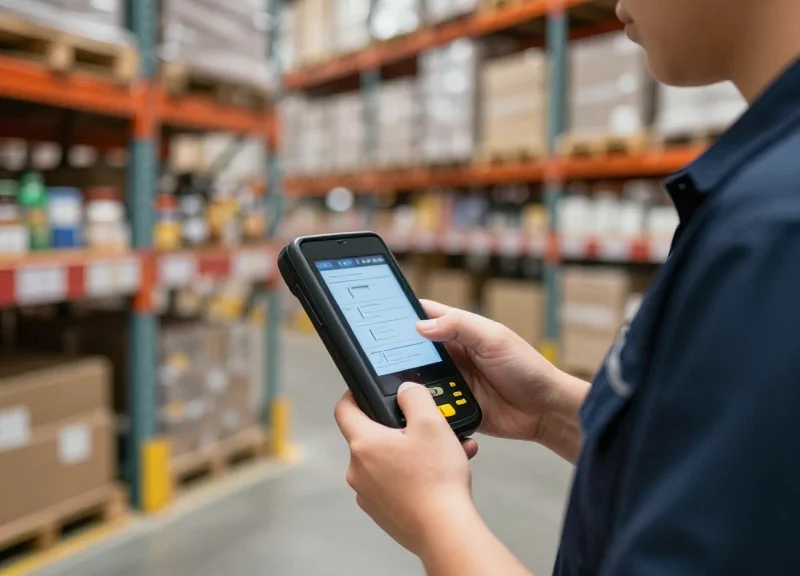
Operational agility in the 2026 warehouse landscape is defined by the elimination of the 'Information Gap'—the delay between a Warehouse Management System (WMS) update and the physical reality on the floor. E-paper signage acts as the high-resolution, low-power interface for this digital-to-physical synchronization. By integrating directly with enterprise software via IoT gateways, these displays ensure that SKU changes, stock levels, and picking instructions are updated across millions of square feet in milliseconds, effectively turning the warehouse floor into a dynamic, programmable environment.
In traditional environments, re-slotting a high-velocity zone could take an entire shift of manual relabeling. With e-paper, this process is automated. This 'Zero-Touch' infrastructure allows managers to implement dynamic micro-slotting—adjusting storage locations based on real-time order waves or seasonal demand spikes—without ever deploying a staff member to change a sticker. This fluidity directly translates to a 25% reduction in travel time for pickers and a significant decrease in mispicks caused by outdated or illegible paper tags.
| Feature | Legacy Paper/Static Signage | Next-Gen E-Paper (2026) |
|---|---|---|
| Update Latency | Hours/Days (Manual replacement) | Seconds (Automated via API/WMS) |
| Data Accuracy | Subject to human error/lag | 100% Sync with WMS Database |
| Pick-Face Flexibility | Fixed/Static | Dynamic (Supports Micro-Slotting) |
| Search Time Recovery | Baseline | 30% Improvement via LED indicators |
Expert Insight: In 2026, the competitive edge is found in 'Context-Aware UI.' Modern e-paper tags don't just show text; they utilize multi-color flash indicators (Pick-to-Light) that activate only when a picker is within range. This hybrid approach uses the persistence of e-paper for data and a momentary LED burst for guidance, reducing 'visual search' time by nearly a third without the massive infrastructure costs of traditional wired pick-to-light systems.
How does e-paper integrate with existing WMS like SAP or Oracle?
Modern e-paper systems utilize RESTful APIs and MQTT protocols to listen for database triggers. When a stock level or location changes in the WMS, an encrypted signal is sent via an IoT gateway to the specific display's MAC address, refreshing the screen instantly.
Does the update process drain the battery significantly?
No. E-paper is bistable, meaning it only consumes power during the 'refresh' phase. Even with 50 updates per day—far more than the average warehouse requires—a standard industrial tag will last 5 to 7 years on a single coin-cell battery.
What happens if the Wi-Fi or IoT network goes down?
The displays are 'fail-safe.' Because e-paper requires no power to maintain an image, the last known-good data remains visible indefinitely. Once connectivity is restored, the tags automatically poll the server for any missed updates to ensure data integrity.
Synergy with RFID and ESL: Creating a Unified Smart Ecosystem
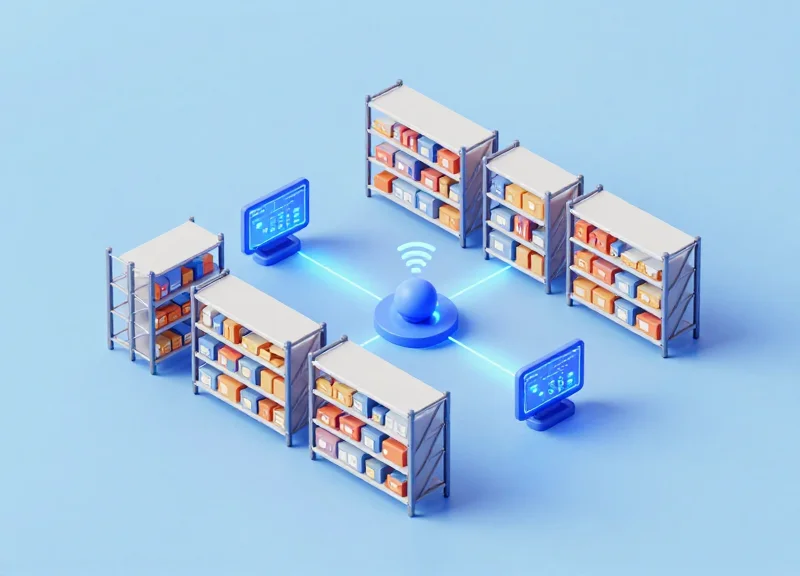
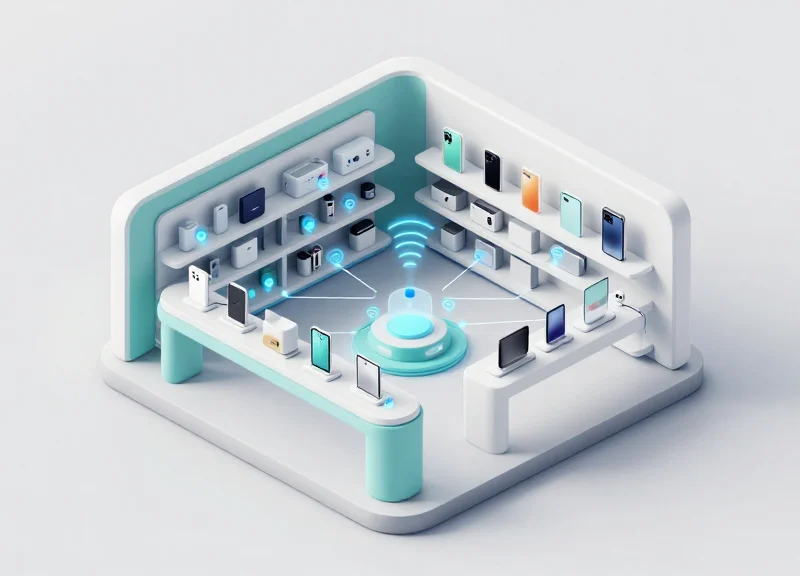
The true potential of 2026 warehouse automation is realized not by single technologies in isolation, but through the convergence of E-Paper, Radio Frequency Identification (RFID), and Electronic Shelf Labels (ESL). This synergy creates a 'Unified Smart Ecosystem' where the physical inventory and digital data remain in perfect, real-time synchronicity. In this architecture, RFID provides the invisible 'nervous system' for tracking movement, while E-Paper and ESL act as the 'visual interface,' translating complex backend data into actionable, zero-power human instructions at the point of fulfillment.
| Component | Functional Role | Synergy Contribution |
|---|---|---|
| E-Paper Signage | High-Resolution Visual Status | Provides large-scale instructions for forklifts and zone routing. |
| RFID Sensors | Automated Data Capture | Triggers E-Paper updates when pallets enter or exit specific zones. |
| ESL (Electronic Shelf Labels) | Micro-Inventory Management | Dynamic pricing and picking data at the individual bin level. |
Expert Insight: The 'Zero-Touch' Feedback Loop. At DragonGuardGroup, we've observed that the most efficient warehouses in 2026 use 'Hybrid Data Fidelity.' This is a unique approach where an RFID tag scans a pallet as it passes a dock door, and the system automatically updates the E-Paper signage and the local ESLs simultaneously. This eliminates the 'Information Lag'—the 5 to 10-minute delay common in manual systems—ensuring that the visual display on the floor is never out of sync with the cloud-based WMS.
- Automated Check-In: As goods arrive, RFID gates identify stock. The WMS assigns a location and instantly transmits the destination to the E-Paper displays on the receiving dock.
- Dynamic Routing: Warehouse vehicles follow E-Paper directional signage that changes in real-time based on traffic density and priority levels detected by RFID tracking.
- Hyper-Local Accuracy: Upon arrival at the shelf, the ESL flashes a high-visibility LED (controlled via the same low-power network) to guide the worker to the exact bin.
Can RFID and E-Paper coexist on the same frequency?
Yes. Modern industrial ecosystems utilize sub-GHz or specialized 2.4GHz protocols that prevent interference between RFID scanning and E-Paper refresh signals, ensuring 99.9% data transmission reliability.
How does this synergy impact hardware lifespan?
By using RFID to 'wake up' the display only when a change is detected, battery-operated E-Paper signs can extend their lifespan to 5-10 years, as they remain in a deep-sleep state during static periods.
Is integration difficult for existing warehouses?
DragonGuardGroup provides unified API layers that bridge RFID hardware and E-Paper displays, allowing them to communicate via a single gateway, which reduces installation complexity by 40%.
Environmental Impact: Meeting ESG Goals with Sustainable Tech

In 2026, corporate sustainability is no longer a peripheral 'nice-to-have' but a regulatory requirement. E-paper signage assists modern warehouses in meeting Environmental, Social, and Governance (ESG) goals by replacing high-waste traditional labeling and high-emission digital displays with a 'zero-waste' update cycle. By leveraging bistable technology, logistics hubs can eliminate the lifecycle emissions associated with paper production, chemical adhesives, and the energy-intensive operations of standard liquid crystal displays (LCDs), directly improving Scope 2 and Scope 3 emission profiles.
| Sustainability Metric | Traditional Paper Labels | Standard LCD/LED Displays | Next-Gen E-Paper |
|---|---|---|---|
| Physical Waste | High (Daily disposal of paper/backing) | Electronic waste (Short lifespan) | Near-Zero (Reusable for 5-10 years) |
| Chemical Impact | High (Bleaches, inks, adhesives) | Medium (Rare earth metals, mercury) | Low (Minimal internal components) |
| Carbon Footprint | High (Logistics of paper delivery) | Very High (24/7 power draw) | Ultra-Low (Update energy only) |
| ESG Compliance | Difficult to track/report | Increasingly penalized | Positive reporting asset |
Expert Insight: The Concept of 'Decoupled Carbon Logistics'. Most warehouse operators focus on vehicle emissions, but the hidden carbon cost lies in the 'consumable cycle.' A single 100,000 sq. ft. warehouse can generate over 2 tons of adhesive waste annually from picking labels and rack updates. E-paper decouples operational updates from physical consumption. Our data suggests that by 2026, companies utilizing e-paper will be able to claim a 95% reduction in signage-related landfill contributions, a metric that is becoming vital for SEC and CSRD (Corporate Sustainability Reporting Directive) compliance.
How does E-Paper help with Scope 3 emissions?
Scope 3 emissions include the indirect activities in a company's value chain. By eliminating the need for constant paper and ink procurement, warehouses reduce the carbon footprint of their suppliers and the logistical emissions required to deliver these consumables.
Can E-Paper signage be recycled at the end of its life?
Yes. Unlike paper labels contaminated with adhesives (which are difficult to recycle), modern E-Paper modules are designed for high durability. Many manufacturers, including DragonGuardGroup, are implementing 'take-back' programs to ensure electronic components are recycled in accordance with 2026 circular economy standards.
How does this technology affect GRESB and LEED certifications?
E-paper contributes significantly to the 'Innovation' and 'Energy & Atmosphere' categories in LEED. For GRESB (Global Real Estate Sustainability Benchmark), the reduction in energy consumption and waste improves the overall environmental performance score of the industrial asset.
As we move toward a 'circular warehouse' model, the durability of e-paper becomes its greatest environmental asset. While an LCD screen might degrade or suffer from 'burn-in' after 3 years of constant use, e-paper signage typically maintains high performance for a decade. This longevity prevents the frequent cycle of electronic waste, aligning perfectly with the shift toward long-term capital sustainability over short-term operational expenditure.
Overcoming Implementation Challenges in Large-Scale Facilities
To successfully implement e-paper signage across millions of square feet, facility managers must prioritize a 'Network-First' architecture, utilizing low-power wide-area networks (LPWAN) like Sub-GHz or LoRaWAN to avoid the signal interference and high power consumption common with standard Wi-Fi. Overcoming the scale challenge involves moving beyond simple hardware installation to a holistic integration strategy that considers environmental variables, existing IT backbones, and the physical rigors of high-traffic warehouse corridors.
- Site Survey and Signal Heatmapping: Before deployment, conduct a comprehensive RF (Radio Frequency) audit to identify dead zones caused by metal racking and concrete partitions, ensuring gateways are placed for 100% signal coverage.
- Phased Integration with WMS: Avoid 'Big Bang' rollouts by piloting e-paper in high-churn zones first, allowing for API stress-testing between the signage management platform and the Warehouse Management System.
- Ruggedization and Physical Protection: Select industrial-grade enclosures with IP67 or higher ratings and utilize impact-resistant mounts (polycarbonate shields) to protect displays from forklift collisions and dust ingress.
- Centralized Device Management (CDM): Deploy a cloud-based CDM to monitor battery health and connectivity status of every tag in real-time, enabling proactive maintenance instead of reactive troubleshooting.
| Feature | Standard E-Paper | 2026 Industrial E-Paper |
|---|---|---|
| Network Protocol | 2.4GHz Wi-Fi / Bluetooth | Sub-GHz / LoRa / Private 5G |
| Battery Life at Scale | 1-2 Years (High drain) | 5-10 Years (Optimized sleep cycles) |
| Interference Resistance | Low (prone to Wi-Fi noise) | High (isolated industrial bands) |
| Update Speed (Bulk) | Sequential (Slow) | Parallel/Broadcast (Instant) |
Expert Tip: Leverage 'Shadow Infrastructure' by mounting gateways on existing smart lighting tracks. This significantly reduces cabling costs and uses pre-existing power sources for the connectivity hubs that manage your e-paper labels, often cutting installation time by 40%.
Will metal racking block the e-paper signals?
Standard Wi-Fi struggles with metal, but modern Sub-GHz e-paper solutions are designed to penetrate dense steel environments, ensuring reliable updates even deep within racking aisles.
How do we handle battery replacement for 10,000+ tags?
By 2026, most industrial tags utilize ultra-low-power logic. Replacements are managed through 'Rolling Refresh' schedules dictated by the Centralized Management software, which alerts staff 6 months before a cell reaches critical levels.
Is the screen readable in high-bay lighting?
E-paper is reflective, meaning the brighter the warehouse lighting, the better the contrast. This eliminates the glare issues common with traditional LCD tablets or monitors.
The Future of Industrial Visuals: What Comes After 2026?
Post-2026, the industrial visual landscape will shift from being a mere medium for data delivery to becoming 'Passive Intelligence'—a self-powering, sensory layer integrated into the very fabric of the warehouse. The future lies in the convergence of high-reflectivity color E-Paper, flexible substrates that wrap around robotic arms or curved racking, and ambient energy harvesting that eliminates batteries entirely. As we move toward 2030, these displays will not just show information from a Central Management System (CMS) but will interact autonomously with Edge AI to optimize floor space in real-time.
- Ultra-Flexible Form Factors: Next-generation displays will utilize plastic-based thin-film transistors (TFTs) allowing signage to be as thin as paper and applied like tape to any surface, including high-impact zones and mobile machinery.
- Ambient Light and RF Harvesting: Beyond basic solar panels, future signage will scavenge energy from indoor LED lighting and stray Radio Frequency (RF) signals emitted by warehouse Wi-Fi and RFID readers, achieving a perpetual 'zero-energy' state.
- Neural Visual Nodes: Signage will evolve into 'nodes' equipped with low-power sensors that monitor local temperature, humidity, and vibration, reporting back to the digital twin of the factory while displaying status updates locally.
| Feature | 2026 Standard | 2030+ Vision |
|---|---|---|
| Power Source | Rechargeable or Solar-Assisted | Ambient RF and Multi-Source Harvesting |
| Material | Rigid Glass-based E-Paper | Polymer-based 'Peel-and-Stick' Flexible Sheets |
| Intelligence | Cloud-dependent Updates | On-device Edge AI Logic |
| Color Depth | ACeP (Advanced Color ePaper) | Full-Motion, High-Saturation Reflective Video |
Expert Insight: The Concept of 'Infrastructure-as-a-Sensor' — Most industry analysts view E-Paper simply as a screen. However, the true disruption after 2026 will be the integration of backplane sensors. Imagine a signage strip on a pallet rack that not only displays the SKU but also detects structural stress or seismic activity using built-in piezo-electric layers. Your signage becomes your safety monitoring network, essentially turning every square inch of display into a diagnostic tool for the facility.
Will future E-Paper support video for safety alerts?
Yes, advancements in electrophoretic fluid viscosity and backplane switching speeds are expected to enable low-frame-rate video by 2028, perfect for high-visibility flashing alerts without significant power drain.
How will 6G connectivity impact industrial signage?
6G will allow for 'micro-positioning' accuracy. Signs will be able to detect the exact 3D coordinates of a worker's AR headset and adjust their display orientation or content to be perfectly legible from that specific angle.
Is the 'Zero-Battery' warehouse actually achievable?
With the integration of DragonGuardGroup's energy-efficient ESL tech and next-gen ambient harvesting, we anticipate that by 2029, 90% of warehouse floor signage will operate without a dedicated battery or wired power source.