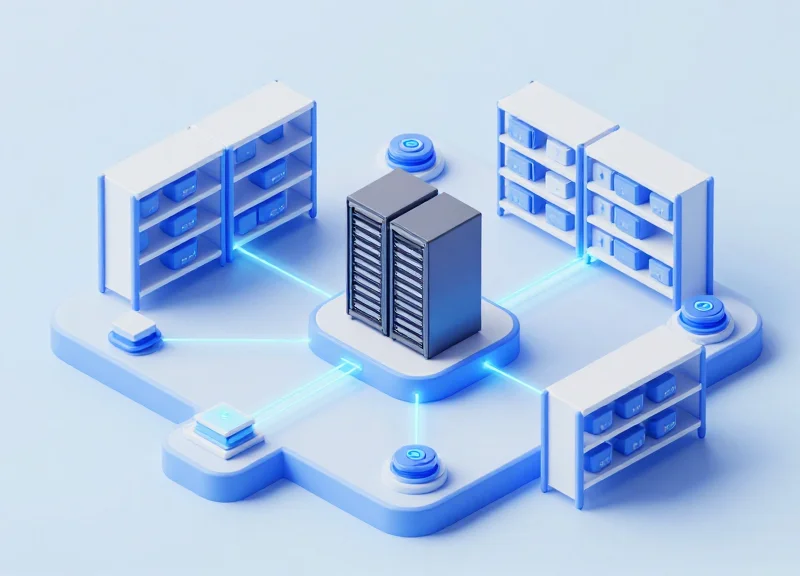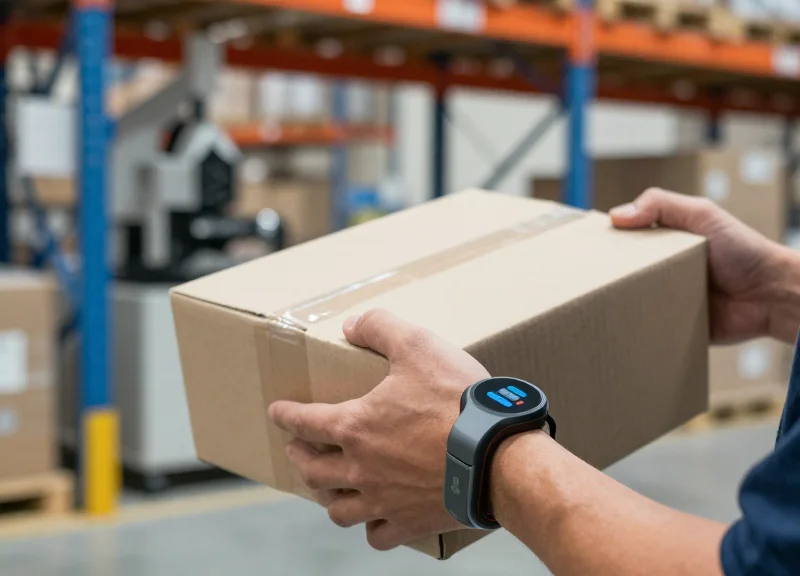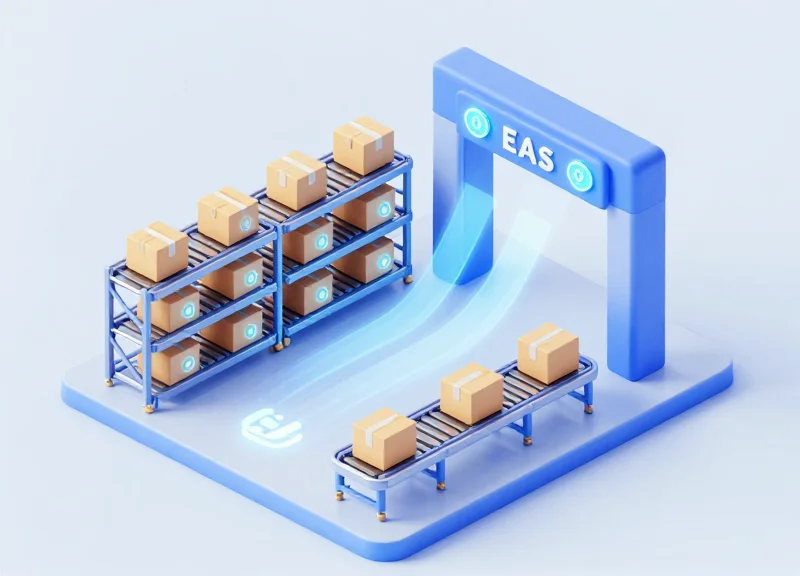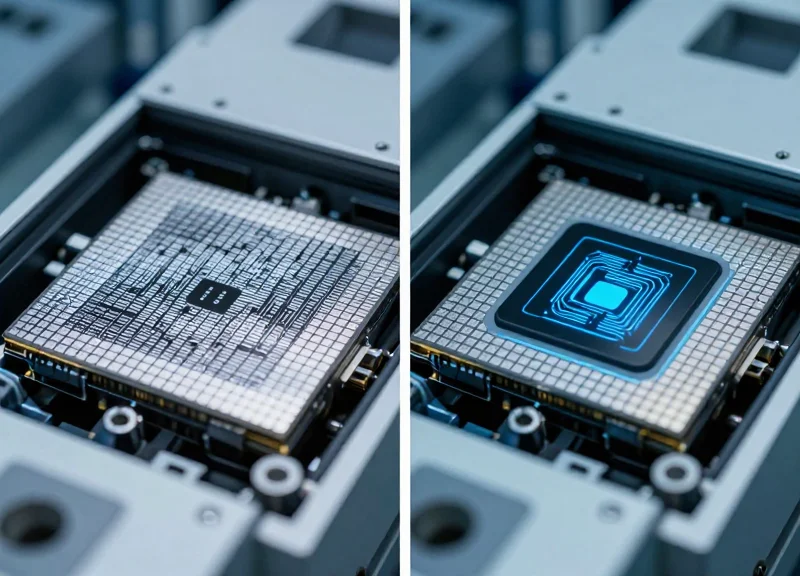
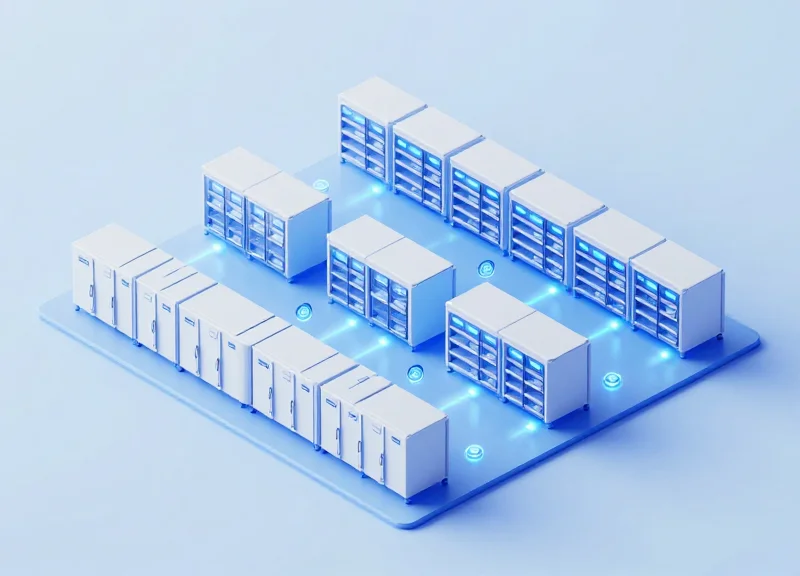
As we approach 2026, the global cold chain logistics sector is undergoing a radical digital transformation. While RFID has long been the gold standard for asset tracking, a new contender is emerging at the micro-inventory level: Next-Generation Electronic Shelf Labels (ESL). This shift is driven by the need for more than just location data; logistics managers now demand real-time, visual, and environmental feedback at the point of storage. This article explores why industry leaders are pivoting toward ESL to achieve unprecedented transparency in temperature-sensitive environments, solving the age-old challenges of granular stock control and regulatory compliance.
The Evolution of Cold Chain Visibility: Moving Beyond 2025

The evolution of cold chain visibility beyond 2025 represents a paradigm shift from macro-tracking (monitoring shipping containers and pallets) to micro-level transparency (monitoring individual SKUs). In this new era, visibility is no longer defined by the arrival of a refrigerated truck at a loading dock, but by the continuous, real-time data stream of every single perishable unit within that truck. This shift is fueled by the 'Unit-Level Digital Twin' concept, where every individual pharmaceutical vial or food package acts as a live data node, providing instant insights into its temperature history, humidity exposure, and projected shelf-life.
| Feature | Standard Logistics (Pre-2025) | Next-Gen Cold Chain (2026+) |
|---|---|---|
| Tracking Granularity | Pallet or Container level | Individual Item/Unit level |
| Data Latency | Periodic (Checkpoints) | Real-time (Always-on) |
| Primary Metric | Location / ETA | Integrity / Viability |
| Technology focus | Passive RFID / GPS | Active ESL / IoT Sensors |
| Waste Management | Reactive (Discard after failure) | Predictive (Dynamic Routing) |
One original insight defining the 2026 landscape is the rise of Dynamic Expiration Logic (DEL). Unlike traditional static 'Best Before' dates, DEL uses sensor data from Next-Gen Electronic Shelf Labels (ESL) to update the item's expiration status based on actual environmental exposure during transit. This transition effectively ends the era of 'First-In, First-Out' (FIFO) and ushers in 'First-Expiring, First-Out' (FEFO), significantly reducing spoilage costs for high-value biologicals and fresh produce.
Why is the industry moving away from batch-level tracking?
Batch tracking often masks micro-climates within a single container. A pallet near the door might experience different temperature fluctuations than one in the center; micro-level tracking ensures every unit's safety is verified independently.
What role does 2026 regulation play in this shift?
New global mandates, such as FSMA 204 in the US and similar EU pharmaceutical directives, are requiring stricter end-to-end traceability that macro-level RFID systems struggle to provide cost-effectively at the item level.
How does this evolution impact operational ROI?
By moving to micro-transparency, companies can salvage partial shipments. Instead of discarding an entire pallet due to a brief temperature excursion, logisticians can identify the specific units affected, saving millions in potential waste.
Defining Micro-Level Inventory Transparency in Modern Logistics
Micro-level inventory transparency is the capability to monitor and manage individual product batches or specific shelf-facing units in real-time, providing granular insights into their environmental history, remaining shelf life, and exact physical location. In the context of 2026 cold chain logistics, this moves beyond traditional 'gate-to-gate' tracking—which typically stops at the pallet level—to an 'item-level accountability' model. By capturing data at the edge of the shelf, logistics providers can transition from reactive waste management to proactive, data-driven distribution, ensuring that products with the shortest remaining lifespan are prioritized for delivery.
| Feature | Macro-Level Visibility (2020-2024) | Micro-Level Transparency (2025-2026+) |
|---|---|---|
| Granularity | Pallet or Shipping Container | Individual Batch or Shelf SKU |
| Data Frequency | Periodic (Checkpoints) | Real-time (Continuous) |
| Temp. Sensing | Ambient Trailer Temperature | Zonal or Item-Specific Temperature |
| Inventory Logic | First-In, First-Out (FIFO) | First-Expired, First-Out (FEFO) |
The shift toward micro-level transparency is driven by the 'Last-Mile Integrity Gap.' Historically, cold chain integrity was often lost once a pallet was broken down for retail or pharmacy shelves. Next-gen technologies now bridge this gap by maintaining a digital twin of the product until it reaches the consumer's hand.
What is the 'FEFO' advantage?
First-Expired, First-Out (FEFO) leverages micro-level data to ensure products with the nearest expiration date are sold first, reducing perishable waste by up to 40% compared to standard FIFO methods.
Does micro-transparency require more hardware?
While it requires more 'endpoints,' next-gen Electronic Shelf Labels (ESLs) integrate sensors into existing retail infrastructure, reducing the need for standalone tracking devices.
How does it impact regulatory compliance?
It provides a continuous audit trail (Audit-at-the-Edge), satisfying FSMA 204 and other global food/pharma safety standards by proving the cold chain was never broken at the item level.
Expert Insight: The Rise of 'Dynamic Expiration Pricing'. A unique advantage of micro-level transparency is the ability to implement automated dynamic pricing. By linking ESL data to a product's real-time 'Shelf-Life Residual Value' (SRV), retailers can automatically apply discounts to items nearing expiration. This doesn't just reduce shrink; it optimizes the margin on inventory that would otherwise be a total loss, a strategy that is becoming the gold standard for high-efficiency 2026 logistics models.
The RFID Limitation: Why Passive Tags Fall Short in 2026 Cold Chains
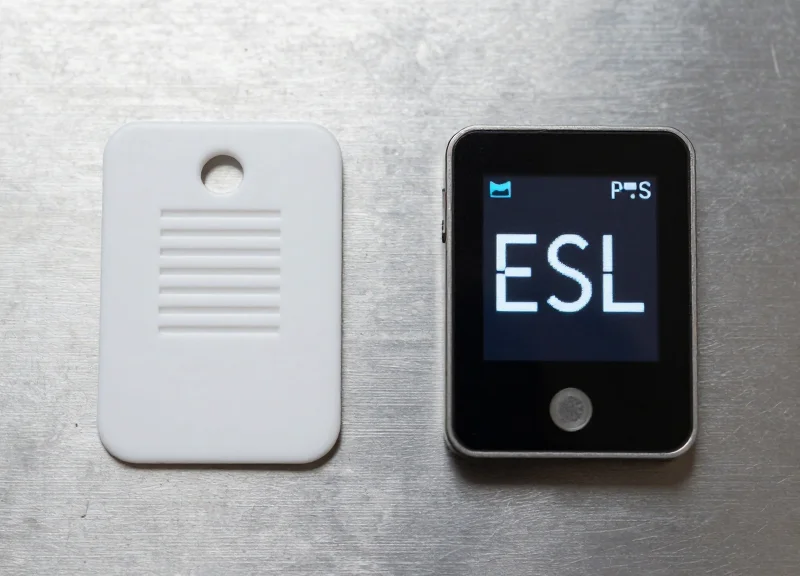
By 2026, the 'good enough' accuracy of passive RFID is no longer sufficient for cold chain operations requiring 99.9% micro-level transparency. Passive RFID falls short because it relies on electromagnetic backscatter that is easily disrupted by the high moisture and metallic environments of refrigerated storage. Furthermore, RFID is a 'blind' technology; it lacks a Human-Machine Interface (HMI) like an e-paper display, forcing workers to rely on external handheld devices to verify contents, which creates a critical delay in time-sensitive, temperature-controlled workflows.
| Feature | Passive RFID (Legacy) | Next-Gen ESL (2026 Standard) |
|---|---|---|
| Signal Integrity | High interference from ice/water | Stable via Sub-1GHz or Mesh BLE |
| Visual Feedback | None (Requires reader) | Real-time E-paper display |
| Data Granularity | ID number only | Dynamic SKU, Batch, & Temp data |
| Automation Support | Requires proximity/gateways | Interactive LED 'Pick-to-Light' |
The Dielectric Barrier: Why Physics is Against RFID. In cold chain environments, the primary enemy of Ultra-High Frequency (UHF) RFID is the dielectric constant of water and frost. As condensation forms on packaging or ice crystals build up in blast freezers, the RF energy is absorbed rather than reflected. This leads to 'tag shadowing,' where items in the center of a pallet become invisible to the reader. In 2026, where every pallet is a high-value asset, these 'blind spots' result in expired inventory and massive financial leakage that passive RFID simply cannot solve through software alone.
Why does moisture affect RFID so heavily?
Passive RFID tags operate on the UHF spectrum, which is highly sensitive to liquids. In cold chains, humidity and ice act as a shield, absorbing the signal and preventing the tag from harvesting enough energy to respond to the reader.
What is the 'Last-Meter' communication gap?
This refers to the disconnect between the digital system and the physical worker. RFID requires a device to 'see' the data. ESL provides an on-screen display, allowing workers to instantly see expiration dates or batch numbers without pulling out a scanner, saving seconds that prevent cold-chain breaks.
Is RFID still useful in 2026?
RFID remains effective for bulk gate-tracking (macro-level), but it fails at the micro-level—individual shelf or bin tracking—where environmental interference and the need for visual validation are highest.
Expert Insight: The 'Hidden Labor' of RFID. A common misconception is that RFID automates everything. In reality, when an RFID read fails due to ice interference, it triggers a manual 'exception' process that is 5x more expensive than the original automated task. Next-gen ESL eliminates this 'hidden labor' cost by providing a persistent visual state that matches the digital twin, ensuring that even if a network dip occurs, the physical data on the shelf remains accurate and visible.
Next-Gen ESL: The Integrated Sensor Revolution
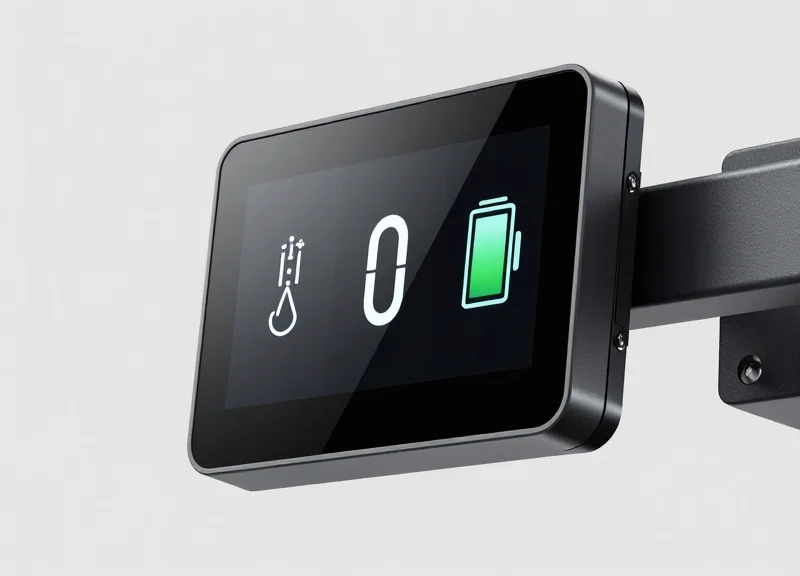
Next-gen Electronic Shelf Labels (ESL) have evolved from simple digital price tags into sophisticated IoT edge devices that integrate high-precision temperature and humidity sensors directly within the display hardware. Unlike traditional systems that require separate data loggers and identification tags, these integrated units provide a unified 'Single Point of Truth.' By combining e-paper display technology with active sensing, 2026-era ESLs offer real-time environmental telemetry that is simultaneously transmitted to central management software and displayed visually for floor personnel, effectively bridging the gap between digital data and physical action.
| Feature | Legacy Digital Tags (Pre-2024) | Next-Gen Sensor ESL (2026) |
|---|---|---|
| Primary Function | Price & SKU display only | Dynamic visual alerts + Environmental sensing |
| Sensor Integration | External or non-existent | Internal NTC/Digital Humidity sensors |
| Data Transmission | Periodic pull (Passive) | Real-time interrupt-driven (Active) |
| Visual Feedback | Static monochrome | Multi-color (Red/Yellow) alert triggering |
The true breakthrough in this revolution is 'Edge-Logic Synchronization.' In previous iterations, a sensor would send data to a cloud server, which would then process the alert and send a command back to a display. For 2026, Next-Gen ESLs utilize local edge computing to trigger visual changes—such as a flashing red screen—instantly when a temperature threshold is breached. Expert Insight: This 'Local-First' architecture ensures that even if a facility’s Wi-Fi or LoRaWAN gateway experiences a temporary outage, the ESL continues to monitor and visually flag compromised products, providing a critical fail-safe for high-value biologics and perishables.
Does adding sensors significantly decrease ESL battery life?
No. While sensors require power, the shift to BLE 5.4 and Sub-GHz communication protocols allows these devices to operate for 5–7 years by using 'event-driven' reporting rather than constant polling.
How accurate are the integrated sensors compared to industrial loggers?
2026 ESLs utilize medical-grade CMOS sensors calibrated to within ±0.1°C, meeting stringent NIST and ISO standards for pharmaceutical cold chain monitoring.
Can these labels withstand extreme freezing environments?
Yes, next-gen cold-chain specific ESLs utilize specialized low-temperature e-paper and ruggedized enclosures rated for temperatures as low as -30°C without ghosting or display lag.
Visual Confirmation: Reducing Human Error in Sub-Zero Environments

Visual confirmation in cold chain logistics is the ability for warehouse personnel to instantly verify product data, batch status, and temperature integrity through human-readable Electronic Shelf Label (ESL) displays without interacting with a handheld scanner. Unlike passive RFID tags that require an external reader to interpret data, next-gen ESLs act as a persistent Human-Machine Interface (HMI). In sub-zero environments, where device screens often lag and manual dexterity is limited by thermal gear, the high-contrast e-paper technology provides a 'glance-and-go' workflow that significantly lowers the cognitive load on workers and virtually eliminates pick-and-place errors.
| Feature | Traditional Paper/LCD | Next-Gen Cold-Chain ESL |
|---|---|---|
| Readability | Frosts over/Low contrast | High-contrast E-ink (180° viewing) |
| Update Speed | Manual replacement required | Instantaneous wireless updates |
| Human Interface | Static text only | Multicolor LED indicators for status |
| Cold Durability | Adhesive failure/Liquid Crystal lag | Solid-state E-ink stable at -25°C |
A unique advantage of ESL in the 2026 cold chain is the mitigation of the 'Cold-Induced Cognitive Gap.' Studies in industrial psychology show that worker productivity and accuracy drop by up to 25% in environments below -18°C due to the physical stress of the cold. By using 'Optical Pick-Pathing'—where multicolor LEDs on the ESL flash to guide the worker to the correct bin—the system removes the need for the worker to interpret complex alphanumeric sequences on a frosted handheld screen. This visual shortcut reduces 'dwell time' in hazardous cold zones, enhancing both safety and throughput.
- Visual Trigger: The central management system triggers a 7-color LED on the ESL when a pick order is initiated, guiding the worker to the specific pallet or bin.
- Instant Data Verification: The worker confirms the 'Use-By' date and batch number directly on the e-paper display, which remains crisp even in high-humidity or frost-prone areas.
- Dynamic Status Update: If a temperature excursion is detected by the integrated sensor, the ESL screen automatically flips to a 'DO NOT SHIP' warning pattern, preventing human error at the loading dock.
- Hands-Free Confirmation: The worker completes the action, and the ESL updates its local inventory count immediately, providing a closed-loop visual record for the next shift.
Does the e-paper display lag in extreme cold?
While traditional LCDs suffer from slow refresh rates in the cold, next-gen cold-chain ESLs use specialized electrolytes that maintain high-speed transitions at temperatures as low as -25°C.
How does visual confirmation improve traceability?
It provides a physical 'audit trail' at the shelf edge. If there is a discrepancy between the system and the floor, the visual display serves as the immediate source of truth for the operator.
Can these displays withstand frost buildup?
Yes, high-end 2026 ESL models feature anti-frost coatings and optically bonded displays that eliminate the air gap where condensation typically forms, ensuring 100% legibility.
Cost-Efficiency Analysis: Scaling ESL vs. RFID for Granular Tracking
For cold chain operators scaling to micro-level transparency, the financial debate shifts from 'cost per tag' to 'Total Cost of Ownership (TCO) per data point.' In 2026, while a passive RFID tag remains cheaper than an Electronic Shelf Label (ESL) unit at point-of-purchase, the hidden costs of RFID infrastructure—specifically the need for high-density reader networks, manual scanning labor, and the environmental disposal tax of single-use tags—often result in a TCO that is 40% higher than an ESL deployment over a five-year lifecycle.
| Cost Factor | Passive RFID (Micro-Scale) | Next-Gen ESL (Micro-Scale) |
|---|---|---|
| Initial Hardware (CapEx) | Low (Tags) to High (Readers) | High (Per Label Unit) |
| Recurring Costs (OpEx) | High (Disposable Tag Replacement) | Near-Zero (10-Year Battery Life) |
| Infrastructure Density | Requires 1 Gateway per 10-15m | 1 Base Station per 5,000 Labels |
| Labor Requirement | High (Scanning/Verification) | Zero (Automated Real-Time Updates) |
| Sensor Integration | Requires separate data loggers | Embedded (Temp/Humidity included) |
A unique insight for 2026 is the 'Granularity Paradox': the more items you track, the more expensive RFID becomes to manage due to signal collision and the sheer volume of physical waste. ESL flips this model by acting as a permanent digital asset. Because ESL units are reusable and offer a visual Human-Machine Interface (HMI), they eliminate the need for secondary paper labeling and specialized scanning hardware, which are the primary drivers of 'hidden' operational bloat in traditional cold chain logistics.
Does ESL require a more expensive software backend than RFID?
No. Modern ESL systems utilize standardized APIs and cloud-native management platforms that integrate directly into existing WMS/ERP systems, often with lower subscription fees than proprietary RFID middleware.
How does the 'Environment Tax' affect RFID cost-efficiency in 2026?
New global regulations on electronic waste and single-use plastics mean that disposing of millions of RFID tags now incurs a recovery fee, whereas ESLs are classified as long-term assets with modular, recyclable batteries.
Is ESL viable for high-velocity SKUs compared to RFID?
Yes. For high-velocity items, the labor saved by not having to manually tag every individual unit (since the ESL stays on the shelf or bin) creates a faster ROI than the recurring material cost of RFID tagging.
Ultimately, the shift toward ESL is driven by the 'Data Quality Premium.' When tracking perishables at a micro-level, the cost of a single missed temperature excursion can exceed $50,000 in lost inventory. ESL’s ability to provide 24/7 autonomous monitoring without a human in the loop provides a level of risk mitigation that passive RFID systems—which only record data when passing a reader—simply cannot match financially.
Dynamic Data Updates: Reacting to Real-Time Environmental Fluctuations
In the volatile world of cold chain logistics, a two-degree temperature spike can be the difference between a high-value pharmaceutical batch and a total loss. Dynamic data updates in Next-Gen ESL systems represent a paradigm shift from 'data logging' to 'data action.' Unlike traditional systems that require a manual scan to retrieve history, ESLs utilize edge-integrated sensors to trigger immediate, autonomous visual modifications. When an environmental threshold is breached—be it humidity, temperature, or ambient light—the label's e-paper display changes its instruction set in real-time, providing an on-package visual feedback loop that requires no handheld devices to initiate.
| Environmental Trigger | Legacy RFID/Manual Process | Next-Gen ESL Dynamic Response |
|---|---|---|
| Temperature Excursion (>5°C) | Logged to memory; discovered only at receiving dock scan. | Label flashes red LED and updates text to 'PRIORITY INSPECTION REQUIRED'. |
| Humidity Threshold Breach | Data remains 'silent' inside tag; no visible change. | QR code dynamically regenerates to point to a 'Salvage Protocol' URL. |
| Extended Transit Delay | Requires physical inventory count to re-assess shelf life. | Dynamic FEFO (First-Expired-First-Out) logic updates the 'Ship By' date visually. |
| Vibration/Shock Impact | Damage often invisible until package is opened. | Screen displays a 'FRAGILE: CHECK INTEGRITY' warning automatically. |
The unique advantage of 2026-era ESLs lies in their ability to act as the 'Voice of the Product.' By utilizing sub-GHz or BLE 5.4 protocols, these labels receive over-the-air (OTA) updates from central management systems that analyze sensor telemetry at the pallet or item level. This creates a truly responsive supply chain where the packaging itself dictates the next logistical move based on its current physical state.
How fast is the update latency for a fleet of labels?
Modern ESL infrastructure can push updates to over 10,000 labels in under 60 seconds. This low latency ensures that if a freezer door is left open, every affected item displays an alert before the temperature reaches a critical threshold.
Does real-time updating significantly drain the label battery?
Next-Gen ESLs use 'Differential Refreshing' technology, which only updates the specific pixels required for the alert (e.g., a warning icon), consuming microwatts of power and maintaining a 5-10 year battery life.
Can the labels update without a central server connection?
Yes. Leading 2026 models feature 'Edge Logic' where the label's internal processor can trigger a screen change based on its onboard sensor readings even if it loses connection to the warehouse gateway.
Expert Tip: To maximize the ROI of dynamic updates, implement 'Conditional Routing.' By integrating ESL data with your WMS, the label can automatically change a product’s destination from 'Retail' to 'Quick-Sale Outlet' the moment a temperature deviation occurs during transit, effectively automating loss mitigation without a single human touchpoint.
Interoperability: Integrating ESL with Modern WMS and ERP
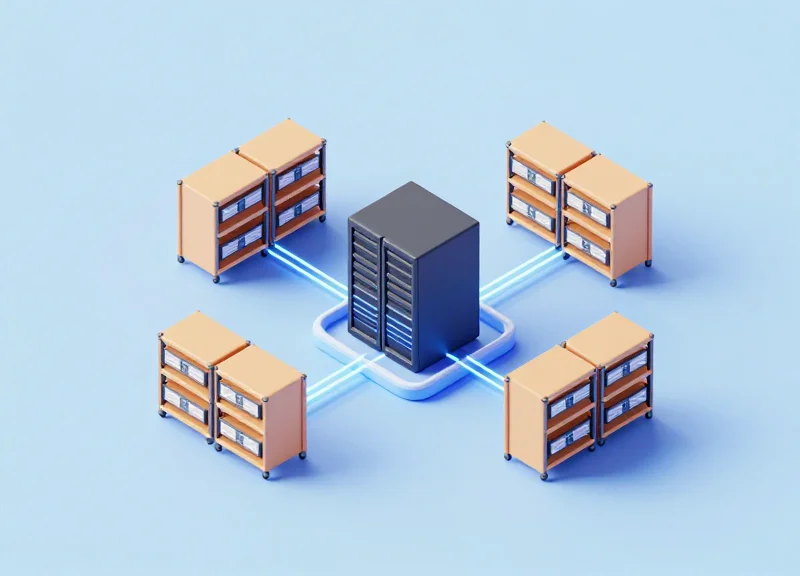
Interoperability in 2026 cold chain logistics refers to the seamless, bi-directional data exchange between Electronic Shelf Labels (ESL) and core enterprise software such as Warehouse Management Systems (WMS) and Enterprise Resource Planning (ERP) platforms. Unlike legacy RFID systems that often require complex middleware to interpret passive pings, next-gen ESLs function as active IoT nodes. They utilize standardized API architectures to ensure that real-time temperature telemetry and stock levels are instantly reflected in the master inventory database, eliminating data silos and enabling automated decision-making at the edge.
- Real-Time Synchronization: Ensures that price changes, SKU updates, or temperature alerts in the ERP are reflected on the freezer shelf in under 200 milliseconds.
- Bi-Directional Feedback Loops: Allows workers to acknowledge tasks directly on the ESL (via integrated buttons), which then updates the WMS task completion status automatically.
- Automated Reordering: When ESL sensors detect stock depletion or 'out-of-bound' temperature events, they can trigger an automated restock or salvage ticket within the ERP.
| Integration Protocol | Primary Use Case | Latency Level | Data Complexity |
|---|---|---|---|
| RESTful API | Standard WMS/ERP syncing | Low | High (JSON/XML support) |
| MQTT | Real-time sensor telemetry | Ultra-Low | Minimal (Lightweight) |
| Webhooks | Event-driven alerts | Instant | Medium (Trigger-based) |
Expert Insight: The most significant shift we are seeing for 2026 is the transition from 'Push' logic to 'Edge-In' logic. Historically, the ERP pushed data to labels. Today, the most resilient cold chains use the ESL as an edge-computing hub. By processing temperature and humidity data at the label level before sending a consolidated status update to the WMS, companies are reducing their cloud data ingress costs by up to 30% while significantly lowering network congestion in massive sub-zero facilities.
{ "esl_id": "CC-4092", "status": "alert", "sensor_data": { "temp": "-22.5C", "humidity": "12%" }, "wms_action": "trigger_inspection", "timestamp": "2026-05-14T08:00:01Z" }Does ESL integration require replacing my existing ERP?
No. Modern ESL gateways are designed to be ERP-agnostic, connecting via standardized APIs or specialized middleware that sits between the IoT network and your legacy or modern ERP/WMS.
How does interoperability handle network outages in cold storage?
Next-gen ESL systems utilize 'Stateful Synchronization'. If the connection to the WMS is lost, the labels continue to log local sensor data and will batch-sync the information the moment the connection is restored.
Sustainability and Battery Longevity in Extreme Conditions
In 2026, the sustainability of cold chain logistics hinges on 'bi-stable' e-paper technology and specialized Lithium Thionyl Chloride (Li-SOCl2) batteries that maintain chemical stability in temperatures as low as -30°C (-22°F). Unlike traditional digital displays that require a constant power draw, next-gen Electronic Shelf Labels (ESL) only consume energy during a state change (updating the screen). This 'zero-power-to-hold' architecture, combined with ultra-low-leakage microcontrollers, enables a single coin-cell battery to power a micro-level inventory tracker for up to a decade, even in deep-freeze environments where standard lithium-ion batteries typically fail within months.
| Feature | Standard Consumer Battery (Li-ion) | Next-Gen Cold-Chain ESL (Li-SOCl2) |
|---|---|---|
| Operating Temperature | 0°C to 45°C | -40°C to +85°C |
| Annual Self-Discharge | 15% - 30% | < 1% at Room Temp |
| Display Power Draw | Constant (Refresh needed) | Zero (Bi-stable state) |
| Typical Lifespan | 1 - 2 Years | 8 - 12 Years |
The engineering breakthrough for 2026 lies in 'Thermal Inertia Management.' By utilizing high-density polymer casings with specific thermal resistance, manufacturers are now able to buffer the internal circuitry against the rapid temperature fluctuations common during defrost cycles or loading dock transfers. This prevents 'thermal shock' to the battery chemistry, which is the leading cause of premature voltage drops in legacy IoT devices.
- Bi-Stable Electrophoretic Displays: The display uses physical micro-capsules that stay in place without electricity, ensuring inventory data remains visible even if the battery is removed.
- Pulse-Width Modulation (PWM) Optimization: Advanced firmware adjusts the update speed based on ambient temperature sensors, using slower, higher-torque pulses in colder air to ensure screen clarity without spiking power consumption.
- Energy Harvesting Integration: Emerging 2026 models include thin-film photovoltaic layers that can trickle-charge from warehouse LED lighting, potentially extending the 'infinite' shelf life of the label.
Expert Tip: The 'Voltage Delay' Phenomenon. In sub-zero storage, Li-SOCl2 batteries can develop a passivation layer that causes a temporary voltage drop when the device wakes up. Ensure your 2026 ESL provider uses 'supercapacitor-buffered' circuitry. This hardware bridge stores a small charge to handle the initial wake-up spike, preventing the label from resetting or reporting a false 'low battery' status in deep-freeze conditions.
Do these labels require frequent maintenance in freezers?
No. Because they utilize bi-stable e-paper and cold-optimized electrolytes, maintenance is typically reduced to a single battery check once every 7 to 10 years, depending on the frequency of data updates.
How does ESL sustainability compare to RFID tags?
While passive RFID tags have no battery, they require high-powered readers and manual scanning labor. ESL provides 'always-on' visibility with a much lower total carbon footprint when factoring in the energy required for constant industrial RFID sweepers.
Are the batteries recyclable?
Yes. Most 2026 ESL manufacturers have implemented 'Circular Logistics' programs where depleted labels are collected during routine audits and sent to specialized facilities to recover the lithium and thionyl chloride components.
Future-Proofing Your Supply Chain: A Step-by-Step Implementation Strategy
Future-proofing a cold chain supply chain requires shifting from a batch-processed RFID mindset to a continuous, micro-level visibility model powered by Next-Gen Electronic Shelf Labels (ESL). By 2026, the most resilient supply chains will be those that move beyond simple 'point-in-time' data to an 'always-on' ecosystem where the label serves as both the sensor and the visual interface. Successful implementation hinges on a phased migration that prioritizes API-first integration and network density to support sub-meter location accuracy and real-time environmental telemetry.
| Implementation Phase | Primary Objective | Key Milestone |
|---|---|---|
| Phase 1: Infrastructure Audit | Assess BLE/Sub-1GHz network coverage in cold storage environments. | Network Heatmap & Connectivity Validation |
| Phase 2: Data Harmonization | Map ESL dynamic fields to existing WMS/ERP database structures. | Bidirectional API Handshake Verification |
| Phase 3: Pilot Micro-Tracking | Deploy ESL on high-value, temperature-sensitive SKUs. | 99.9% Inventory Accuracy in Test Zone |
| Phase 4: Full-Scale Orchestration | Global rollout with automated threshold-based visual alerts. | Reduction in Spoilage-Related OpEx by 30%+ |
- Network Density Optimization: Ensure your facility is equipped with specialized IoT gateways capable of penetrating high-density cold storage racking. Unlike RFID which requires proximity, ESL requires consistent low-power wide-area network coverage.
- Threshold-Based Logic Programming: Configure your WMS to push dynamic updates to ESL units when specific environmental triggers are met, such as a 2-degree temperature deviation or a 48-hour expiration window.
- Worker Interface Training: Transition staff from handheld scanners to 'Pick-to-Light' workflows. Teach personnel to utilize the ESL's multi-color LED indicators for rapid identification of priority or compromised stock.
- Post-Quantum Security Layering: Ensure your 2026 hardware supports updated encryption standards to prevent 'Shadow-IoT' vulnerabilities where unauthorized actors could spoof inventory data.
Expert Insight: The Rise of Edge-Label Orchestration (ELO). By 2026, the industry will move toward ELO, where the ESL doesn't just display data—it processes it. In high-interference cold rooms where Wi-Fi often drops, next-gen labels will have enough local compute power to maintain 'offline' integrity, updating their own status and LED alerts based on internal sensor history even when disconnected from the central server. This 'Zero-Dark-Visibility' capability is what truly separates ESL from the passive, 'dumb' nature of traditional RFID tags.
Can we run ESL and RFID in parallel during the transition?
Yes. Most enterprise-grade WMS platforms can handle hybrid inputs. We recommend using RFID for pallet-level bulk movement while deploying ESL at the micro-level (case and item) for superior granular control.
What is the expected ROI period for an ESL migration?
In cold chain environments, ROI typically occurs within 14 to 18 months, primarily driven by a 40% reduction in manual labor hours and a significant decrease in write-offs due to temperature excursions.
Is special hardware needed for ultra-low temperature zones?
Yes. Ensure you specify 'Polar-Grade' ESL units with e-paper displays and specialized electrolyte batteries designed to operate down to -25°C without ghosting or rapid discharge.