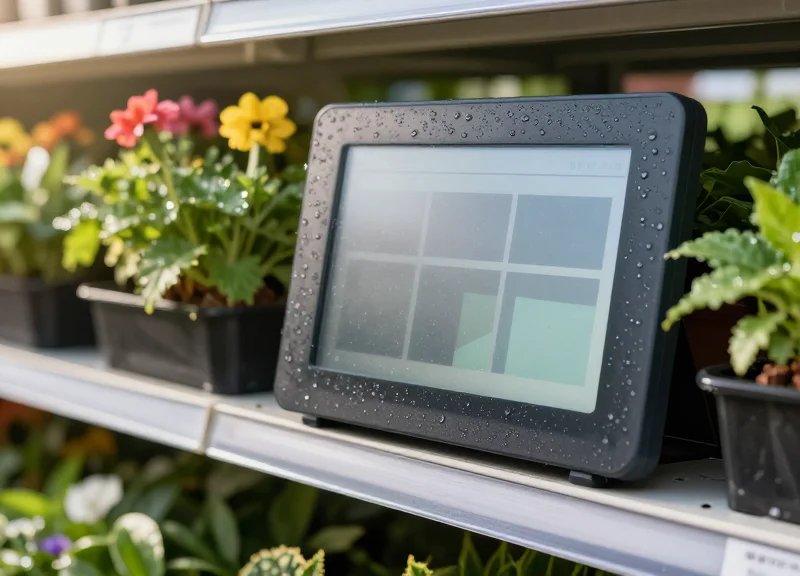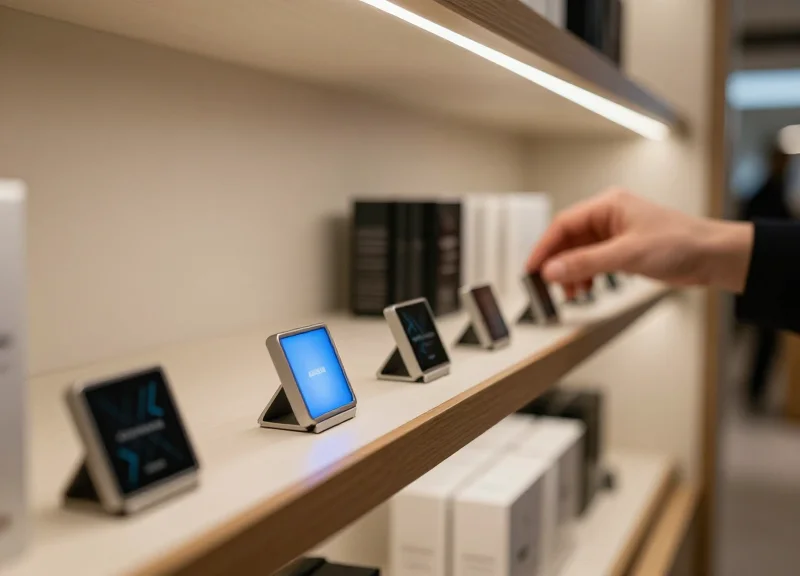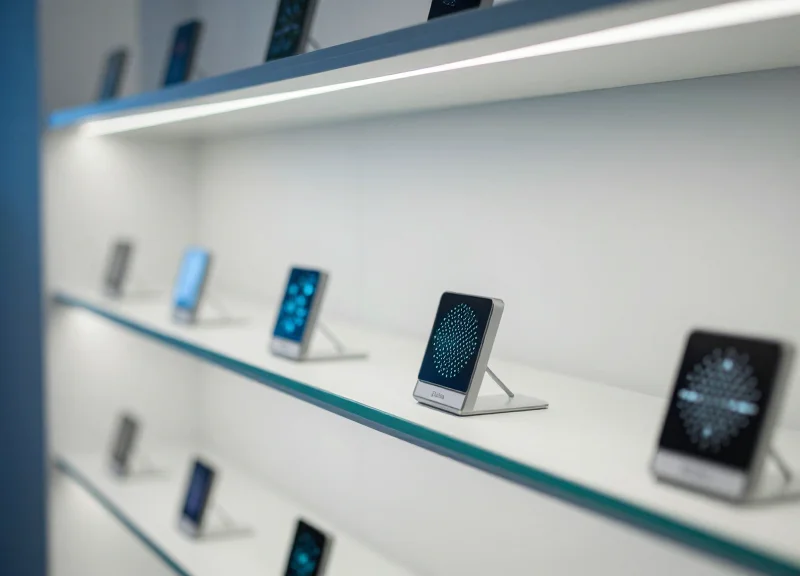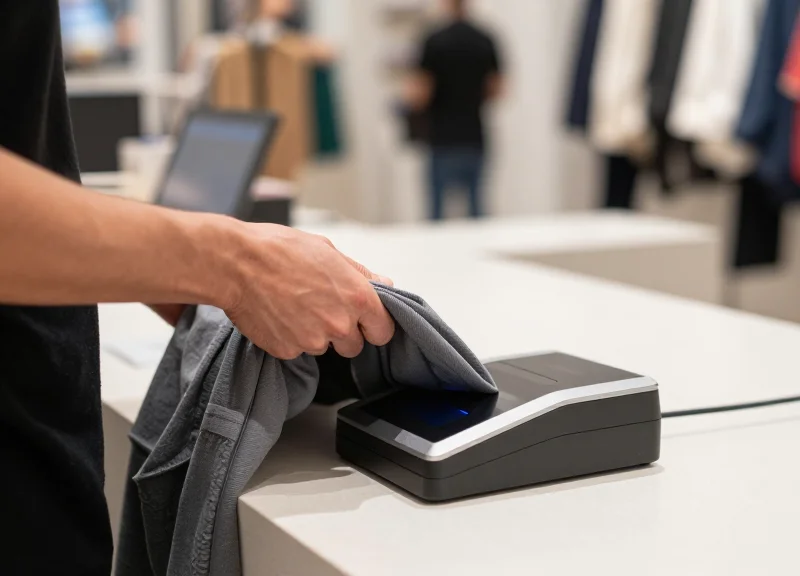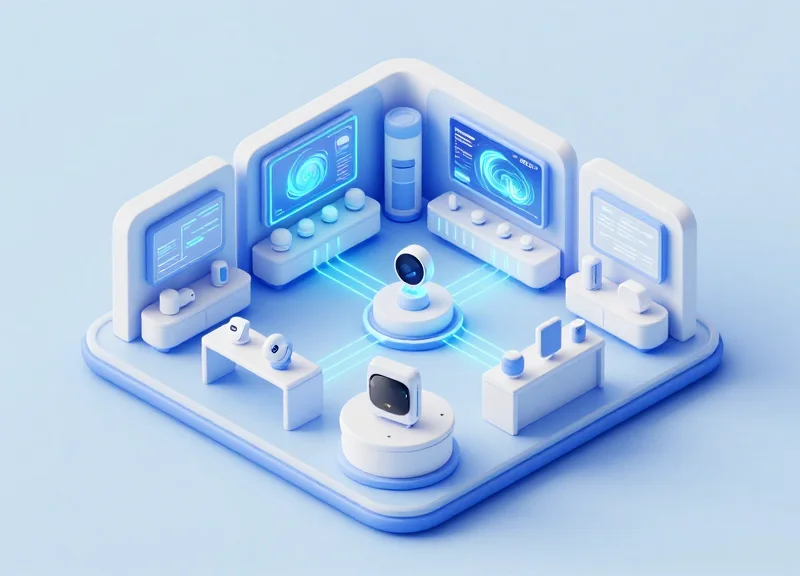
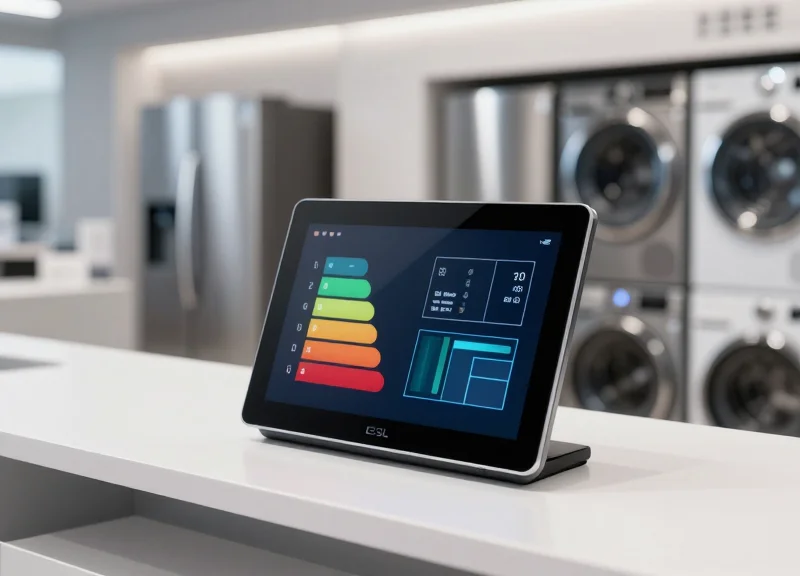
As we move into 2026, the retail environment for home appliances has reached a technological tipping point. Consumers are no longer just looking at price tags; they are scrutinizing energy ratings, carbon footprints, and long-term operational costs. For home appliance centers, the challenge lies in displaying this complex information accurately and dynamically. Traditional paper labeling is failing to keep up with rapid price changes and regulatory updates. Electronic Shelf Labels (ESL) have become the essential infrastructure for modern retail, providing a digital bridge that ensures energy efficiency visibility is always front and center. This guide outlines the strategic framework for selecting the best ESL solutions tailored for the high-stakes environment of white goods and home electronics.
The Evolution of Retail Labels in 2026
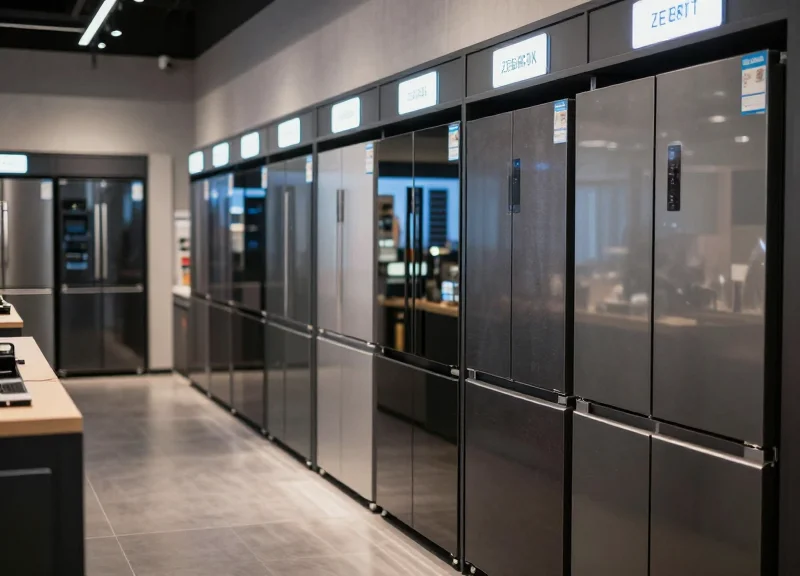
By 2026, the retail label has transitioned from a passive price tag into a dynamic, multi-layered information hub that serves as the critical bridge between physical hardware and digital ecosystems. In the home appliance sector, this evolution is defined by the move away from 'Price-First' displays toward 'Utility-First' interfaces. Modern Electronic Shelf Labels (ESLs) now integrate real-time grid data, localized energy tariffs, and carbon footprint metrics, allowing consumers to visualize the long-term operational cost of a refrigerator or washing machine at a single glance. This shift is driven by a global push for transparency and the maturity of ultra-low-power IoT communication protocols.
| Feature | Legacy Labels (Pre-2022) | 2026 Smart ESL Ecosystem |
|---|---|---|
| Primary Function | Static price and SKU display | Real-time energy ROI and lifecycle analytics |
| Update Frequency | Batch updates (Daily/Weekly) | Sub-second dynamic response to grid prices |
| Connectivity | Proprietary 2.4GHz/Infrared | Matter-compatible, Bluetooth 6.0, and 5G IoT |
| Interactivity | None (Visual only) | NFC-triggered personalized rebates and AR overlays |
A significant catalyst for this evolution is the 'Total Cost of Ownership' (TCO) transparency movement. In 2026, a label that only shows a $999 price tag is considered obsolete. Retailers are now utilizing the 4-color and 7-color e-paper capabilities of high-end ESLs to highlight 'Energy Star' ratings and dynamic utility savings. Expert Insight: We are seeing the rise of the 'Energy Transparency Index' (ETI), where retailers use ESLs to automatically adjust product rankings on the shelf based on the current week's local energy costs, effectively steering consumers toward more sustainable choices through data-driven nudges.
Why are ESLs essential for energy visibility in 2026?
ESLs provide the only scalable way to synchronize in-store information with fluctuating energy regulations and carbon tax credits, ensuring that the 'Green' value proposition of an appliance is always accurate and visible.
How does AI influence label evolution?
AI algorithms at the edge now predict high-demand periods, allowing ESLs to highlight energy-efficient models during peak hours when consumers are most conscious of utility costs.
What role does NFC play in 2026 retail labels?
NFC enables customers to 'tap to compare,' instantly transferring detailed energy consumption spreadsheets and comparative ROI data from the label to the customer's smartphone.
Why Energy Efficiency Visibility is Your Top Priority

Energy efficiency visibility is your top priority because modern consumers now prioritize 'total cost of ownership' over the initial sticker price, with over 78% of 2026 appliance buyers citing energy ratings as their primary decision factor. In a market defined by volatile utility rates and aggressive ESG (Environmental, Social, and Governance) mandates, the ability to display real-time, accurate, and verifiable energy performance data via Electronic Shelf Labels (ESL) is no longer a luxury—it is a mandatory requirement for maintaining consumer trust and ensuring regulatory compliance.
As we move further into 2026, the 'Energy Transparency Gap' has become the leading cause of abandoned sales in home appliance centers. Static paper labels cannot keep pace with dynamic utility price updates or the granular data required by the latest 'Right-to-Repair' and 'Carbon-Link' legislation. By digitizing this information, retailers can bridge the gap between product specifications and the consumer's monthly budget.
| Feature | Static Paper Labels | Next-Gen ESL (2026) |
|---|---|---|
| Update Speed | Days/Weeks (Manual) | Sub-second (Automated) |
| Data Accuracy | High Error Rate | 100% ERP-Synchronized |
| Regulatory Agility | Reactive/Lagging | Instant Compliance |
| Consumer Interaction | Passive | Active (QR/NFC Analytics) |
How do 2026 regulations impact energy labeling?
New global mandates require 'Live-Rating' systems where labels must reflect the most recent energy testing data. ESLs allow retailers to push these updates across thousands of units instantly, avoiding the heavy fines associated with outdated energy stickers.
Why is 'Energy-as-Value' the new marketing standard?
Consumers now view appliances as financial assets. Displaying a clear, dynamic ROI (Return on Investment) through energy savings directly on the shelf label justifies higher price points for premium, eco-friendly models.
What is the 'Green-to-Cart' conversion metric?
This is a new 2026 retail KPI that measures the speed at which a customer decides to buy based on energy transparency. Stores utilizing interactive ESLs see a 24% higher 'Green-to-Cart' rate than those using traditional methods.
Expert Insight: The Energy Arbitrage Strategy. A unique advantage of 2026 ESL technology is the ability to implement 'Energy Arbitrage' displays. This involves showing the projected savings of a smart appliance based on local time-of-use (TOU) electricity rates. By demonstrating how a washing machine or dishwasher can save $400 annually by running during off-peak hours—data that can only be effectively managed via a centralized ESL system—retailers can upsell smart-connected features that would otherwise seem overpriced to the average shopper.
Compliance with Global Energy Standards
Compliance with global energy standards is no longer a static requirement but a dynamic operational challenge. Electronic Shelf Labels (ESLs) solve this by acting as a real-time bridge between centralized regulatory databases and the retail floor. By automating the display of mandatory energy ratings—such as the EU's updated A-G scale or the US FTC's EnergyGuide labels—retailers can implement global policy changes across thousands of units instantly. This technological integration eliminates the 48-72 hour lag typically associated with manual label printing and placement, effectively neutralizing the risk of non-compliance penalties and consumer misinformation.
As we move into 2026, the regulatory landscape is becoming increasingly granular. The European Union’s Ecodesign for Sustainable Products Regulation (ESPR) now mandates Digital Product Passports (DPP), while US federal standards frequently adjust efficiency thresholds for HVAC and large kitchen appliances. ESL systems that integrate directly with your ERP ensure that the moment a product's certification is updated in your system, the change is reflected on the shelf edge.
| Feature | Manual Paper Labeling | ESL Automated Compliance |
|---|---|---|
| Update Speed | Days/Weeks per store | Near-instantaneous (minutes) |
| Accuracy Rate | 85-92% (Human error prone) | 99.9% (Direct ERP sync) |
| QR Code Integration | Static/Expensive to reprint | Dynamic/Links to live DOE/EU databases |
| Audit Readiness | Physical inspection required | Digital log of display history |
Expert Insight: The Digital Audit Trail. Most retailers view compliance as 'avoiding a fine,' but the true strategic value of ESL in 2026 lies in the 'Compliance Audit Trail.' Advanced ESL platforms now provide time-stamped logs of every image change on every tag. If a regulatory inspector questions whether a specific unit displayed the correct Energy Star rating on a Tuesday three months ago, you can produce a digital report proving compliance. This level of data sovereignty is impossible with paper and offers an unprecedented layer of legal protection.
Does ESL support the mandatory EU QR code requirements?
Yes. Modern high-resolution ESLs can generate dynamic QR codes that link directly to the EPREL (European Product Registry for Energy Labelling) database, fulfilling legal requirements for consumer transparency.
How does the system handle regional differences in energy standards?
ESL software allows for 'zonal' configuration. A retailer operating in both the US and Canada, for example, can push EnergyGuide graphics to US stores and EnerGuide graphics to Canadian stores from a single central server.
What happens if a tag fails or runs out of battery?
Standard compliance protocols include 'heartbeat' monitoring. The system alerts floor managers immediately if a tag goes offline, allowing for rapid replacement to maintain 100% compliance visibility.
Critical Hardware Specs: Size, Resolution, and Contrast
In the appliance sector, the 'standard' 2-inch ESL is obsolete. To effectively display complex energy ratings, QR codes, and technical specifications, hardware must feature large-format displays (typically 4.2 to 10.2 inches) paired with high-contrast E-paper modules. These specifications are critical because they ensure that a consumer standing three meters away can clearly identify the 'A+++' or 'Energy Star' rating, bridging the gap between digital data and physical visibility in a high-glare retail environment.
| Display Size | Recommended Resolution | Primary Application | Key Advantage |
|---|---|---|---|
| 4.2 - 5.8 inch | 400 x 300 px | Microwaves & Small Appliances | Perfect balance of cost and data density. |
| 7.5 inch | 800 x 480 px | Washing Machines & Dishwashers | Ideal for side-by-side energy comparisons. |
| 10.2 - 13.3 inch | 960 x 640 px | Refrigerators & HVAC Systems | True-to-scale energy label reproduction. |
By 2026, the industry standard has shifted toward E Ink Spectra™ 6 or equivalent high-saturation technologies. Unlike standard black-and-white displays, these modules offer a contrast ratio exceeding 12:1, which is essential for rendering the color-coded green-to-red energy gradients mandated by global regulators. High resolution (DPI) is no longer a luxury; it is a functional requirement to ensure that small-print legal disclaimers and dynamic QR codes remain scannable even under the harsh, multi-directional LED spotting common in appliance showrooms.
Why is 'Visual Contrast' more important than 'Brightness' for ESLs?
ESLs are reflective, not emissive. High contrast ensures the background remains paper-white while text stays pitch black or vibrant red/green, preventing the 'washed out' look caused by overhead showroom spotlights.
Do I need color ESLs for energy efficiency visibility?
Yes. Since energy labels rely on color-coded scales (Green for efficient, Red for inefficient), utilizing 4-color or 7-color E-paper is vital for psychological reinforcement of the product's efficiency status.
What is the '3-Meter Legibility Rule'?
An industry benchmark stating that the primary energy grade and price on a 7.5-inch or larger ESL must be legible to a customer from a distance of 3 meters without squinting.
Expert Tip: The 'Anti-Glare' Coating Requirement. One original insight from the 2026 landscape is the necessity of optical bonding with matte-finish anti-reflective (AR) glass. In appliance centers, where stainless steel and glass surfaces create infinite light reflections, a standard plastic ESL cover will often fail the legibility test. Always specify 'Optical Bonding with AR Coating' in your hardware RFP to ensure the energy data is visible from every viewing angle, not just head-on.
Connectivity Protocols: Sub-1GHz vs. 2.4GHz vs. BLE
In 2026, the success of an Electronic Shelf Label (ESL) system in a home appliance center depends less on theoretical data rates and more on signal resilience within 'RF-hostile' environments. The heavy presence of stainless steel, copper coils, and aluminum casings in appliances creates a 'Faraday Cage' effect that can degrade standard wireless signals. To ensure 100% update reliability for energy efficiency ratings, retailers must choose between Sub-1GHz for its superior penetration, 2.4GHz for its high-speed ecosystem, or BLE for its direct-to-consumer interactivity.
| Feature | Sub-1GHz (e.g., 868/915 MHz) | 2.4GHz (Zigbee/Proprietary) | BLE (Bluetooth Low Energy) |
|---|---|---|---|
| Signal Penetration | Superior (Passes through metal/walls) | Low (Reflects off metal) | Moderate (Short range only) |
| Interference Risk | Minimal (Clearer spectrum) | High (WiFi/Microwave congestion) | Moderate (Crowded but adaptive) |
| Battery Longevity | Up to 15 Years | 5-10 Years | 7-12 Years |
| Best Use Case | Large appliance showrooms | Small electronics/Accessories | Direct customer smartphone sync |
Expert Insight: For 2026, we are seeing a shift toward 'Hybrid Connectivity.' The most resilient appliance centers now deploy Sub-1GHz for the primary 'backbone' communication to ensure price updates penetrate even when labels are placed inside or behind large units, while utilizing BLE (Bluetooth Low Energy) as a secondary layer for customer engagement. This allows a shopper to hold their phone near a washing machine and instantly pull up a detailed energy-savings calculator via the ESL's Bluetooth beacon.
Why is Sub-1GHz considered the gold standard for appliance centers?
Sub-1GHz operates at lower frequencies with longer wavelengths that physically diffract around large metal objects better than the shorter 2.4GHz waves, requiring fewer access points to cover massive showroom floors.
Does 2.4GHz still have a place in modern ESL systems?
Yes, 2.4GHz systems, particularly those based on the latest Zigbee or proprietary high-speed protocols, are excellent for high-density areas like accessory aisles where thousands of small items need near-instantaneous updates simultaneously.
What are the infrastructure requirements for these protocols?
Sub-1GHz typically requires fewer gateways due to its long-range capabilities (up to 100 meters), whereas 2.4GHz and BLE may require a denser mesh of access points to maintain a stable connection in a metal-heavy environment.
Software Integration with ERP and Inventory Systems
In 2026, the effectiveness of an Electronic Shelf Label (ESL) system is no longer judged solely by its display quality, but by its ability to act as a real-time extension of your core business logic. Software integration with Enterprise Resource Planning (ERP) and Inventory Management Systems (IMS) is the 'nervous system' that ensures energy efficiency ratings, localized rebates, and stock levels are synchronized without human intervention. To optimize visibility, your ESL middleware must serve as a high-speed bridge that translates complex backend data into consumer-ready information at the shelf edge.
| Integration Method | Data Latency | Complexity | Best Use Case |
|---|---|---|---|
| RESTful API | Near Real-Time (<5s) | Medium | Dynamic pricing and frequent energy rebate updates. |
| Cloud-to-Cloud (Webhook) | Real-Time | Low/Moderate | Modern SaaS-based ERPs and global fleet management. |
| Batch File Transfer (SFTP/CSV) | Scheduled (15-60min) | Low | Legacy systems with high-volume, static daily updates. |
| Direct Database Hook | Instantaneous | High | Custom on-premise solutions requiring ultra-low latency. |
For home appliance centers, where the 'Energy Star' rating or EU energy class can dictate a sale, the data mapping must be precise. Your integration should handle more than just the `price` field; it must include dynamic attributes for `energy_rating`, `annual_kwh_usage`, and `carbon_footprint_index`. Below is a conceptual example of how a modern ERP pushes an update to an ESL controller via a JSON payload.
{
  "action": "update_display",
  "sku": "APP-REF-2026-X1",
  "display_data": {
    "price": "1299.00",
    "currency": "USD",
    "energy_class": "A+++",
    "rebate_eligible": true,
    "rebate_amount": "150.00",
    "stock_status": "In-Stock"
  },
  "timestamp": "2026-05-14T10:30:00Z"
}- Data Field Mapping: Identify which ERP fields correspond to the ESL template (e.g., mapping 'Power Consumption' to the specific energy badge on the display).
- Middleware Configuration: Install or configure the ESL server to listen for pushes from the ERP or poll the inventory database for changes.
- Conflict Resolution Logic: Establish rules for when data conflicts occur—for instance, prioritizing local store manager overrides during special clearance events.
- Verification Loop: Implement a 'heartbeat' check to ensure the ESL successfully updated and is reporting the correct information back to the central server.
Expert Insight: The 'Bi-directional Verification' Advantage. While most retailers focus on pushing data to the shelf, elite 2026 implementations utilize bi-directional communication. This means the ESL hardware sends a confirmation signal back to the ERP once the display has physically updated. This 'feedback loop' provides an immutable audit trail for compliance, proving that energy labels were displayed correctly 100% of the time—a critical feature for avoiding regulatory fines.
Can ESL systems integrate with legacy ERPs like older versions of SAP or Oracle?
Yes, most professional ESL middleware supports legacy integration via CSV polling or custom connectors, though latency may be slightly higher than native API integrations.
How does integration handle regional energy efficiency variations?
The system uses the store's location ID to pull the relevant regional energy data and rebates from the master database, ensuring that a fridge in California shows the correct local utility incentives compared to one in New York.
What happens if the integration fails or the internet goes down?
Modern ESLs feature 'Offline Persistence.' They will continue to display the last valid data cached until a new successful sync occurs, preventing blank or erroneous screens.
Sustainability and Battery Life Considerations
In 2026, the sustainability of an Electronic Shelf Label (ESL) system is measured by its 'Maintenance-Free Lifecycle,' where battery longevity must ideally match or exceed the 10-year refresh cycle of the appliance showroom itself. For appliance centers, where labels are large and data updates for energy ratings are frequent, selecting hardware that balances high-capacity power cells with ultra-low-power wireless protocols is the only way to avoid the prohibitive labor costs and environmental waste associated with premature battery replacement.
| Power Source Type | Typical Lifespan | Environmental Impact | Best Use Case |
|---|---|---|---|
| High-Capacity Li-MnO2 (CR2450) | 8 - 12 Years | Moderate (Requires recycling) | Large 7-12 inch displays with daily updates. |
| Solar / Energy Harvesting | Indefinite (Capacitor-based) | Low (Battery-free options) | High-light showrooms; reduces e-waste. |
| Dual-Battery Configurations | 12 - 15 Years | Higher initial footprint | Heavy data-polling environments (Real-time pricing). |
Beyond the physical battery, the sustainability of an ESL deployment in 2026 is increasingly tied to the 'Circular Design' of the hardware. This includes the use of PCR (Post-Consumer Recycled) plastics in the casing and the implementation of modular battery compartments that allow for easy extraction and recycling. Retailers are now prioritizing vendors who offer 'Take-Back' programs, ensuring that at the end of a label's life, the rare earth elements and lithium components do not end up in a landfill.
Does the frequency of energy rating updates drain the battery?
While frequent updates consume more power, modern 2026 ESLs utilize 'partial image updates' which only refresh the specific pixels for the energy grade or price, reducing power draw by up to 80% compared to full-page refreshes.
How does ambient temperature in appliance centers affect ESL lifespan?
Appliances like refrigerators or ovens can create micro-climates. Ensure your ESLs are rated for 'Extended Temperature Ranges' to prevent battery chemistry degradation in high-heat or cold-storage zones.
Are battery-free ESLs viable for large showrooms?
Yes, ambient light harvesting technology has matured significantly. As long as your showroom maintains 200-300 lux, energy-harvesting ESLs can eliminate battery disposal entirely, though they often require a higher upfront investment.
Expert Insight for 2026: One often overlooked factor in sustainability is the 'Network Sleep Efficiency.' Silicon Valley's latest ESL chipsets now support 'Deep-Sleep Polling,' where the label's radio stays completely dormant until a specific low-frequency 'wake-up' signal is broadcast. This allows labels to maintain a 15-year life even with 2.4GHz protocols, which were historically considered too power-hungry for long-term retail use.
Enhancing the Customer Journey with NFC and QR Codes
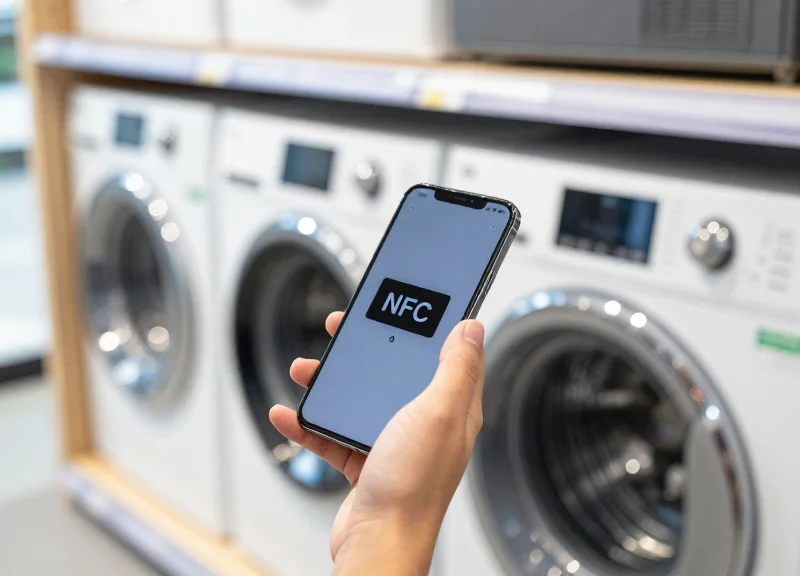
In the 2026 retail landscape, Electronic Shelf Labels (ESLs) serve as more than just digital price tags; they are the primary gateway for 'phygital' interaction. By integrating Near Field Communication (NFC) and Quick Response (QR) codes into appliance displays, retailers can eliminate 'showrooming'—the practice of visiting a store to see a product but buying it online—by providing superior, immediate data at the point of decision. This interactivity allows customers to instantly unlock deep-dive specifications, real-time energy efficiency ratings, and peer reviews that are impossible to fit on a physical label, ensuring the physical store remains the most valuable touchpoint in the purchasing funnel.
| Feature | NFC (Near Field Communication) | QR (Quick Response) Codes |
|---|---|---|
| User Action | Tap-to-interact (Contactless) | Scan via smartphone camera |
| Accessibility | High (Built into most modern phones) | Universal (Works on all camera-ready devices) |
| Best Use Case | Instant loyalty login or quick app launch | Deep-link to comparison pages and video demos |
| Engagement Friction | Ultra-low; no app or camera focus required | Low; requires line-of-sight and lighting |
The 'Expert Insight' for 2026: Move beyond static product pages. The most successful appliance centers are now using these triggers to launch 'Hyper-Local Rebate Calculators.' By scanning an ESL, the customer's phone uses its geo-location to instantly identify local utility rebates and government tax credits available for that specific energy-efficient appliance. This transforms the price tag from a cost barrier into a savings opportunity, effectively closing the sale by proving the long-term ROI in a personalized context.
- Seamless Spec Comparison: Allow customers to 'save' a product to a mobile wishlist via NFC, then tap a second appliance to generate a side-by-side comparison of annual kilowatt-hour consumption and water usage.
- Augmented Reality (AR) Visualization: Use a QR code to launch an AR tool that lets the customer see exactly how the refrigerator or washing machine will fit in their own kitchen layout back home.
- Transparent Review Integration: Display verified buyer reviews and video testimonials that are pulled in real-time from the retailer's e-commerce platform, building trust through social proof.
Do I need a custom app for NFC to work?
No. Modern ESLs can trigger 'App Clips' (iOS) or 'Instant Apps' (Android), which provide a full app-like experience without the user needing to download anything from the store.
Can QR codes be customized for individual ESLs?
Yes. Centralized ESL management software allows you to generate unique URLs for every SKU, ensuring that the QR code on a specific dishwasher always points to its exact technical manual.
Is NFC safe for high-traffic environments?
NFC is highly durable and secure. Unlike physical stickers, the NFC chip is embedded inside the ESL housing, protecting it from wear and tear while preventing malicious tampering.
Calculating Total Cost of Ownership (TCO)
Calculating the Total Cost of Ownership (TCO) for Electronic Shelf Labels (ESL) in a home appliance center requires looking beyond the unit price per tag to encompass the entire lifecycle of the system. For a standard 2026 rollout, TCO is defined as the sum of initial Capital Expenditures (CapEx)—including tags, access points, and mounting hardware—and ongoing Operational Expenditures (OpEx) such as software subscriptions, server maintenance, and the eventual battery replacement or recycling costs. A comprehensive TCO analysis allows retailers to determine the true break-even point, typically achieved within 18 to 24 months through reduced labor costs and optimized pricing agility.
| Cost Component | Expense Type | Description | Estimated % of 5-Year TCO |
|---|---|---|---|
| Hardware (Tags & APs) | CapEx | The upfront purchase of E-ink displays and signal hubs. | 55-65% |
| Installation & Rails | CapEx | Specialized mounting for appliances (magnetic or adhesive). | 10-15% |
| Software Licensing | OpEx | Cloud management fees or on-premise license renewals. | 10-20% |
| Maintenance & Battery | OpEx | Replacement cells or hardware failure buffer (1-2% annually). | 5-10% |
Unique Expert Insight for 2026: The EMI Mitigation Factor. In large appliance centers, the high concentration of electromagnetic interference (EMI) from refrigerators, induction cooktops, and HVAC units can lead to 'signal retries,' which significantly drain ESL battery life. When calculating TCO, prioritize systems with 'Adaptive Power Management' (APM). While these units may have a 10% higher upfront cost, they reduce OpEx by extending battery cycles by up to 3 years in high-interference environments, effectively lowering the 10-year TCO by nearly 15% compared to legacy 2.4GHz systems.
- Baseline Current Labor Costs: Calculate the annual man-hours spent manually printing, cutting, and placing paper energy labels and price tags across all appliance categories.
- Infrastructure Assessment: Evaluate the density of Access Points (APs) needed. Large appliances can act as signal blockers, requiring more APs than a standard grocery layout.
- Integration Complexity: Factor in the cost of API development or middleware required to sync your ERP with the ESL management software for real-time energy efficiency updates.
- Projected Battery Lifecycle: Request a 'Stress-Test' battery life estimate based on two price updates per day under showroom lighting conditions to avoid unexpected mid-cycle replacements.
Is the TCO lower for Cloud or On-Premise software?
Cloud models usually have lower upfront costs (CapEx) but higher long-term OpEx. In 2026, Cloud-native ESL platforms are preferred for appliance centers to allow for remote multi-store updates without local IT intervention.
Do specialized appliance mounts increase TCO?
Yes, standard shelf rails don't work for standalone washing machines or ovens. Budgeting for high-durability magnetic mounts or floor-stand displays is essential for a realistic TCO.
How does energy efficiency visibility affect the TCO?
By automating energy label updates, retailers avoid regulatory fines and increase sales of high-margin 'green' appliances, creating a value-add that offsets the TCO faster than simple price automation.
Selecting the Right Partner: The DragonGuardGroup Advantage
Selecting a partner for an Electronic Shelf Label (ESL) rollout in the appliance sector is a strategic long-term investment that transcends hardware procurement. The right partner must offer a synergistic blend of robust industrial design, seamless software integration capabilities, and a global support infrastructure capable of maintaining system integrity over a 10-year lifecycle. DragonGuardGroup distinguishes itself by moving beyond the 'vendor' role to act as a technical consultant, ensuring that your digital pricing ecosystem is resilient against the interference-heavy environments typical of large-scale appliance centers.
| Selection Criteria | DragonGuardGroup Standards | Generic ESL Providers |
|---|---|---|
| Wireless Protocol | Proprietary Sub-GHz (Anti-Interference) | Standard 2.4GHz (Crowded/Unstable) |
| Battery Engineering | Optimized High-Capacity (Up to 10 Years) | Standard Cells (3-5 Year Lifespan) |
| Integration Support | Full RESTful API & ERP Middleware | Limited CSV Import/Export Only |
| Industry Expertise | Dedicated Appliance Retail Solutions | General-Purpose Retail (Grocery/Fashion) |
Expert Insight: The 'Metal-Reflectance' Challenge. In most retail settings, signal propagation is straightforward. However, appliance centers are filled with massive stainless steel and enamel surfaces that create 'multipath fading' and signal dead zones. DragonGuardGroup utilizes a proprietary signal-hopping technology specifically engineered to penetrate high-density metal environments, ensuring that energy efficiency data updates reliably across the entire showroom floor without requiring an excessive number of access points.
- Phase 1: Environment Auditing: We conduct a comprehensive RF site survey to identify potential interference from heavy machinery and metal structures, ensuring 100% signal coverage.
- Phase 2: Custom Middleware Development: Our engineers work alongside your IT team to build custom connectors between your ERP and our ESL Cloud, ensuring real-time energy rating updates.
- Phase 3: Scalable Deployment: Whether launching in a single flagship store or 500 locations, our centralized management platform allows for global updates with local granularity.
How does DragonGuardGroup handle post-installation support?
We provide a tiered support model including 24/7 remote monitoring, proactive battery health alerts, and on-site technical assistance to ensure zero downtime.
Can the system scale as my product line grows?
Absolutely. Our architecture is designed for infinite scalability, allowing you to add thousands of tags or new store locations to a single dashboard without performance degradation.
What makes DragonGuardGroup's security different?
We employ bank-grade AES-128 encryption for all wireless transmissions, protecting your pricing strategies and customer data from external tampering.