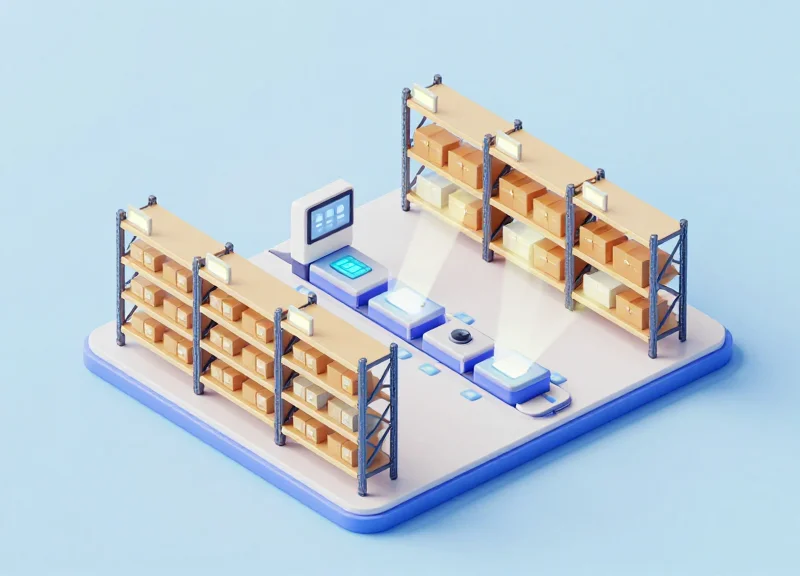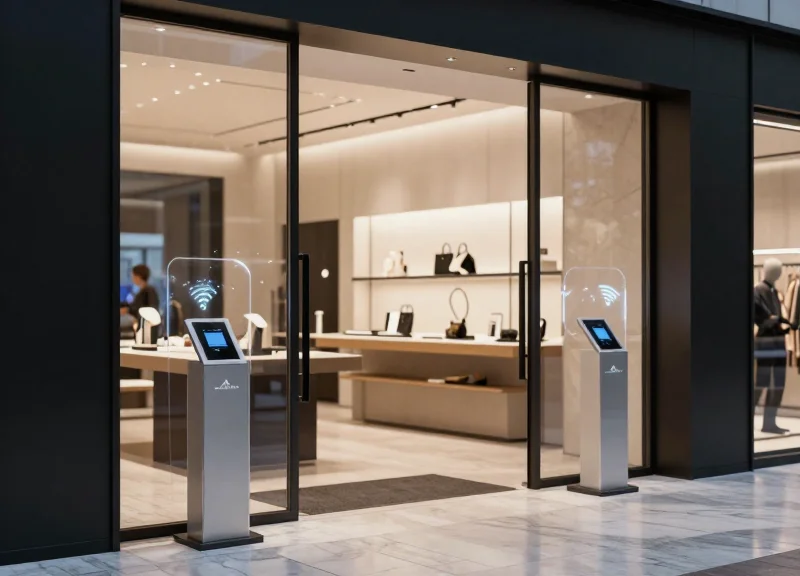

The warehouse club landscape is undergoing a seismic shift. As we approach 2026, the traditional reliance on manual price tags and siloed inventory tracking is giving way to a more sophisticated, integrated approach. To remain competitive in a high-volume, low-margin environment, warehouse giants are moving beyond simple automation. The convergence of Radio Frequency Identification (RFID) and Electronic Shelf Labels (ESL) is creating a 'single source of truth' that enables real-time dynamic pricing, hyper-accurate inventory management, and a seamless member experience. This article explores how integrated ESL ecosystems are becoming the backbone of the next-generation warehouse club.
The Evolution of Warehouse Club Operations: Toward 2026
As we approach 2026, warehouse club operations are undergoing a fundamental metamorphosis, moving away from labor-intensive manual price tagging and siloed RFID tracking toward fully integrated Electronic Shelf Label (ESL) ecosystems. This evolution represents a shift from 'static bulk selling' to 'dynamic inventory orchestration,' where pricing, stock levels, and consumer demand are synchronized in real-time. In this new era, the warehouse floor is no longer just a storage space but a responsive digital environment capable of adjusting margins and inventory flows instantly to meet shifting macroeconomic conditions.
| Operational Pillar | The 2020 Legacy Model | The 2026 Integrated Model |
|---|---|---|
| Pricing Strategy | Static/Manual (Weekly updates) | Dynamic (Real-time AI-driven) |
| Inventory Visibility | RFID (Building-level accuracy) | ESL + IoT (Shelf-level precision) |
| Labor Allocation | High (Focus on tag maintenance) | Low (Focus on CX and fulfillment) |
| Consumer Interaction | Print signage & physical mailers | NFC-enabled tags & app integration |
The true catalyst for 2026 is the convergence of high-speed 5G connectivity and low-power display technology. In the past, RFID was the 'gold standard' for tracking pallets, but it failed to solve the last-mile problem of the retail floor: the price-to-product disconnect. Integrated ESL ecosystems bridge this gap by acting as localized communication hubs. They don't just display a price; they signal stock replenishment needs to autonomous robots and provide localized data to regional managers, effectively turning every shelf edge into a point of intelligence.
Why is RFID alone no longer sufficient for warehouse clubs?
While RFID excels at bulk tracking through loading docks, it offers no visual interface for the consumer and requires manual intervention to sync with price changes. By 2026, the 'Latency Gap'—the time between a corporate price change and its physical manifestation—must be zero to maintain competitiveness.
What is the 'Ghost Stock' Paradox in 2026?
This is a unique insight where RFID systems report an item is in the building (inventory) but cannot confirm it is available for purchase (on the shelf). Integrated ESL ecosystems solve this by using sensors to detect 'out-of-stock' states at the shelf edge, instantly triggering a restock alert.
How does dynamic pricing benefit the warehouse club member?
Beyond operational efficiency, dynamic pricing allows clubs to pass on 'flash savings' to members, moving perishable goods faster and optimizing the high-volume, low-margin model that defines the industry.
Expert Insight: The most successful warehouse clubs in 2026 will be those that treat their ESL ecosystem as a data-gathering network rather than just a digital display. By capturing dwell time and interaction data via NFC-enabled labels, clubs can finally achieve the same level of customer journey granularity that e-commerce giants have enjoyed for decades.
Why Traditional RFID is No Longer Enough for Bulk Retail
While Radio Frequency Identification (RFID) has long been the gold standard for inventory accuracy, it suffers from a critical 'visibility blind spot' at the moment of purchase. In a warehouse club environment where margins are razor-thin and volume is massive, RFID acts as a silent back-end auditor, whereas modern operations require a front-end communicator. The transition from traditional RFID to integrated Electronic Shelf Label (ESL) ecosystems is driven by the need to bridge the gap between back-of-house data and front-of-house execution.
| Feature | Standalone RFID | Integrated ESL Ecosystem |
|---|---|---|
| Primary Function | Inventory Tracking & Security | Dynamic Pricing & UX |
| Consumer Interface | Invisible / None | Digital Display / QR Interaction |
| Price Update Speed | Manual (Relies on Paper) | Instantaneous (Milliseconds) |
| Data Direction | One-way (Tag to Reader) | Bi-directional (System to Shelf) |
| Labor Requirement | High for pricing audits | Near-zero for pricing updates |
The fundamental limitation of RFID in bulk retail is its inability to change the physical representation of data. When a warehouse club decides to drop the price of a bulk pallet of electronics to clear stock, an RFID tag remains static. A staff member must still manually find the item, print a new sign, and replace the old one. This 'Latency Gap' creates a discrepancy between the digital price in the ERP system and the physical price seen by the member, leading to friction at the checkout and lost revenue.
Is RFID becoming obsolete in 2026?
No, RFID is not becoming obsolete; it is being subsumed. In 2026, RFID serves as the data foundation, but without an ESL interface, the data is trapped in the cloud rather than being leveraged on the sales floor.
What is the 'Synchronicity Premium'?
This is an original industry term referring to the hidden cost of labor and lost trust incurred when shelf-edge prices do not match the digital inventory system. Integrated ESLs eliminate this premium by ensuring 100% parity.
Why is item-level RFID insufficient for bulk items?
In bulk retail, the pallet or the 'slot' is often more important than the individual item for flow. RFID tracks the unit, but it cannot tell the customer why they should buy it today—only an ESL can communicate dynamic value.
Expert Insight: By 2026, the 'Blind Pallet' problem—where inventory exists but is incorrectly priced due to human error—will be the leading cause of churn in warehouse memberships. Integrated ESL ecosystems solve this by turning every shelf edge into a programmable IoT node that reflects real-time supply and demand metrics, a feat RFID alone can never achieve.
The Rise of Integrated ESL Ecosystems: More Than Just Digital Tags

An Integrated Electronic Shelf Label (ESL) ecosystem is a multi-layered infrastructure that connects digital price displays to a warehouse's core Enterprise Resource Planning (ERP) and Inventory Management Systems (IMS) via high-speed, wireless communication protocols. Unlike standalone digital tags, these ecosystems function as two-way communication hubs, utilizing IoT sensors and cloud-based analytics to synchronize pricing, stock levels, and promotional data across thousands of SKUs in milliseconds.
| Feature | Legacy Digital Tags (Pre-2023) | Integrated ESL Ecosystems (2026) |
|---|---|---|
| Data Flow | One-way (Server to Tag) | Bi-directional (Real-time Feedback) |
| Update Speed | Minutes to Hours | Near-Instant (Sub-second) |
| Connectivity | Infrared / Proprietary RF | Sub-GHz / BLE 5.0 / Private 5G |
| Sensors | None | Temperature, Out-of-Stock, Geo-location |
| Battery Life | 3-5 Years | 10-15 Years (Energy Harvesting) |
The shift toward 'Ecosystems' is driven by the need for a 'Single Source of Truth' in the warehouse. In the past, a price update in the ERP might take hours to reflect on the floor. Today, integrated systems ensure that the price seen by the customer, the price scanned at the self-checkout, and the price listed in the mobile app are identical at all times. This eliminates price discrepancies—a major friction point in high-volume warehouse clubs.
- Dynamic Feedback Loops: Modern ESLs use built-in LEDs and NFC chips to guide employees during restocking (Pick-to-Light), reducing human error in massive warehouse layouts.
- Heat-Map Generation: By tracking interactions with the tags, ecosystems provide foot-traffic analytics, helping managers optimize shelf placement for high-margin bulk items.
- Automated Markdown Engines: ESLs can automatically lower prices on perishables as they approach expiration dates, based on real-time inventory age data.
Expert Insight: The Sub-GHz Advantage. While many retailers attempt to run ESLs on standard 2.4GHz Wi-Fi, the 2026 gold standard for warehouse clubs is Sub-GHz infrastructure. This lower frequency penetrates massive steel racking and concrete floors much more effectively than Wi-Fi, ensuring 99.9% transmission reliability across facilities exceeding 150,000 square feet.
Does an ESL ecosystem require a complete ERP overhaul?
No. Modern ESL platforms use API-first architectures that 'plug into' existing ERPs like SAP or Oracle, acting as a visual translation layer for the data already present in your system.
How do these systems handle the 'Cold Chain' in warehouses?
Integrated ESLs include specialized low-temperature displays and sensors that monitor ambient humidity and temperature, alerting staff immediately if a freezer door is left ajar or if cooling fails.
What is the typical ROI for a warehouse club integration?
Most warehouse clubs see a full ROI within 14 to 18 months, primarily driven by the elimination of manual relabeling labor and a 20% reduction in perishable waste through automated dynamic discounting.
Unlocking Next-Gen Dynamic Pricing Strategies

Next-gen dynamic pricing in the warehouse club sector is the automated, algorithmic adjustment of bulk SKU pricing based on high-frequency data inputs—including real-time competitor benchmarking, local inventory velocity, and supply chain fluctuations. Unlike traditional retail markdowns, this 2026 model uses integrated Electronic Shelf Label (ESL) ecosystems to synchronize price changes across thousands of locations in sub-seconds, allowing clubs to protect margins and maintain their 'lowest price' brand promise without the lag of manual labor.
- Omnichannel Data Ingestion: AI engines aggregate pricing data from local competitors, e-commerce giants, and regional logistics costs to determine the optimal price point for every bulk SKU.
- Algorithmic Decisioning: Machine learning models calculate the 'price elasticity of the pallet,' determining how a small price shift will affect the turnover rate of high-volume floor space.
- Instantaneous ESL Synchronization: The central pricing office pushes updates to the cloud, which instantly updates digital tags on the warehouse floor, eliminating the 24-48 hour window previously required for manual relabeling.
| Feature | Legacy Pricing (Manual/RFID) | Next-Gen Dynamic Pricing (ESL) |
|---|---|---|
| Update Frequency | Weekly or Bi-Weekly | Intra-day / Real-time |
| Labor Requirement | High (Manual tag swapping) | Zero (Automated digital update) |
| Price Accuracy | Prone to human error | 100% System-to-Shelf Sync |
| Margin Protection | Reactive to market shifts | Proactive and Predictive |
The 'Pallet-Velocity Premium': An Expert Insight. In 2026, the most sophisticated warehouse clubs will use pricing as a logistical load-balancer. By integrating warehouse management systems (WMS) with ESLs, clubs can automatically trigger a 'Flash Volume Discount' when a specific SKU’s stock exceeds storage capacity or when a new shipment is precisely two hours from arrival. This transforms pricing from a pure sales tool into a critical lever for floor space optimization, ensuring that high-velocity floor zones are never bottlenecked by slow-moving pallets.
Does dynamic pricing hurt member loyalty?
On the contrary, clubs use ESL displays to show 'Verified Best Price' comparisons against local competitors, using transparency to reinforce the value of the membership.
How does this handle member-only 'Instant Savings'?
The ESL ecosystem allows for personalized or tier-based pricing triggers, where the tag can display both the standard price and the member-exclusive savings instantly as the promotion goes live.
What is the primary ROI driver?
Beyond labor savings, the primary ROI comes from 'Margin Recovery'—the ability to raise prices by cents as soon as a competitor’s stock runs low or logistics costs spike.
Synergizing RFID and ESL for Real-Time Inventory Visibility
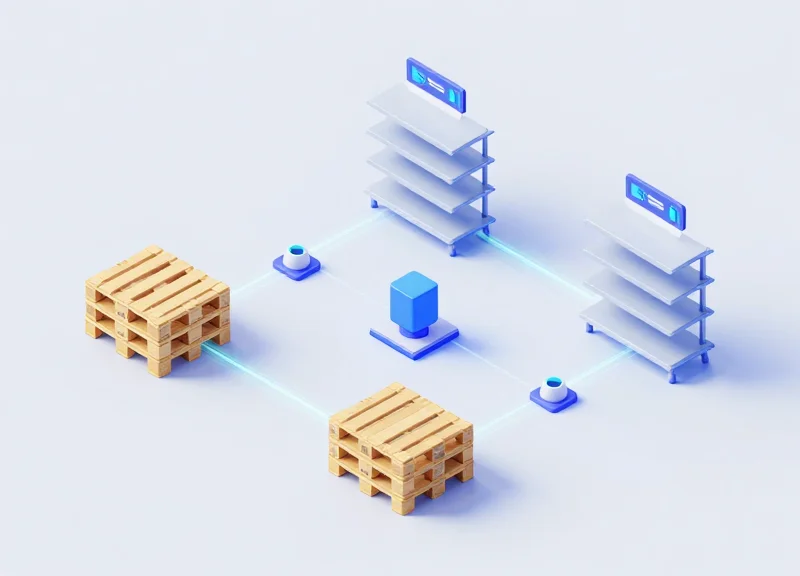
Synergizing RFID (Radio Frequency Identification) and ESL (Electronic Shelf Labels) creates a 'smart shelf' ecosystem that bridges the gap between backend inventory management and front-end consumer interaction. By linking RFID tags on bulk pallets or individual units to the digital display on the shelf, warehouse clubs can achieve 100% data accuracy. In this integrated model, the RFID system provides the 'where' and 'how much' of inventory, while the ESL provides the 'what' and 'how much it costs,' updating both the price and the real-time stock availability on the display automatically without manual intervention.
| Feature | Standalone RFID | Standalone ESL | Integrated RFID + ESL |
|---|---|---|---|
| Inventory Accuracy | High (Backend only) | Low (Manual input) | Real-Time (Continuous) |
| Price Update Speed | Manual relabeling | Instant (Centralized) | Instant + Stock-Aware |
| Labor Requirement | High for auditing | Low for pricing | Minimal (Autonomous) |
| Customer UX | Limited visibility | Digital price only | Live availability counts |
- RFID-to-Gateway Transmission: Sensors continuously scan for RFID tags within the warehouse club aisles, feeding real-time stock counts into the central Inventory Management System (IMS).
- Automated Buffer Calculation: The IMS analyzes stock velocity and automatically calculates if the current shelf quantity requires a price adjustment or a restocking alert.
- ESL Data Synchronization: The cloud platform sends an encrypted signal to the specific ESL tag via sub-GHz or Bluetooth, updating the display with the new price or a 'Low Stock' warning.
- Visual Feedback Loop: The shelf label provides visual confirmation to both customers and staff, ensuring that the physical reality on the floor matches the digital data in the system.
Expert Insight: In 2026, the true differentiator is 'Zero-Latency Merchandising.' Beyond simple price updates, integrated systems allow the ESL to act as an active beacon for floor staff. If an RFID sensor detects a misplaced pallet or a critical stock-out, the ESL can trigger a discrete LED flash or a dynamic QR code specifically for store associates' handhelds. This transforms the shelf from a passive display into a primary data terminal, reducing 'phantom inventory' by up to 98%.
Does this integration require a complete infrastructure overhaul?
No, modern ESL ecosystems are designed to sit on top of existing IoT meshes, often utilizing the same access points as current RFID or Wi-Fi systems to minimize hardware costs.
How does this impact the customer experience in bulk retail?
Customers no longer face the frustration of 'available in app but empty on shelf.' The integration ensures that the inventory they see in their digital cart is physically present on the floor.
Can integrated ESLs help with expiration date management?
Yes, by linking RFID lot numbers to the ESL, the system can automatically trigger dynamic markdowns as products approach their best-by dates, significantly reducing waste in perishable sections.
Enhancing the Member Experience with Interactive Display Tech
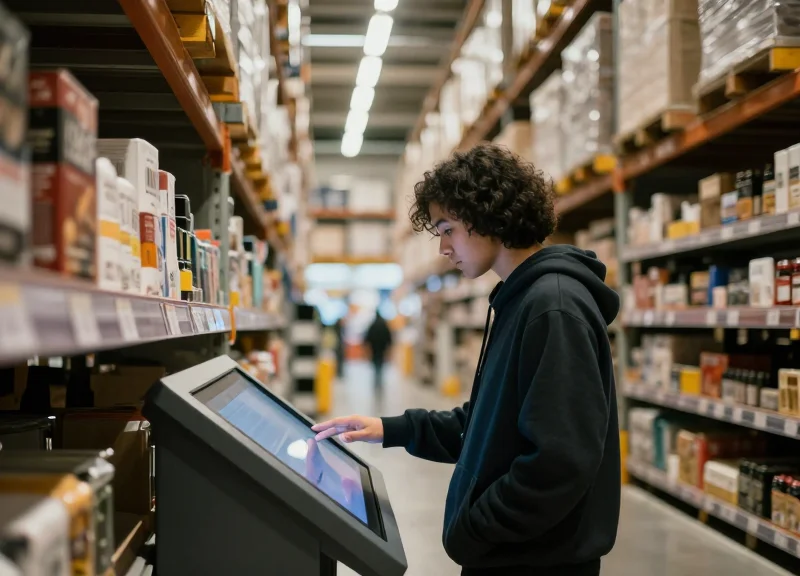
Interactive display technology in 2026 warehouse clubs represents the 'phygital' bridge between physical inventory and digital intelligence, utilizing advanced Electronic Shelf Labels (ESL) to provide members with high-utility data that was previously locked within mobile apps or backend databases. By integrating real-time member sentiment, granular value comparisons, and supply chain transparency directly onto the shelf edge, warehouse clubs are reducing friction and cognitive load for shoppers who are increasingly making complex value-based purchasing decisions in a high-volume environment.
- Real-Time Member Sentiment: ESLs now display live aggregate star ratings and the number of reviews directly from the club’s digital platform, providing immediate social proof that validates the purchase of unknown brands or new seasonal items.
- Automated Bulk Savings Math: To emphasize the warehouse value proposition, next-gen displays automatically calculate and show the 'Savings vs. Standard Retailer,' updating in real-time as market prices fluctuate, eliminating the need for members to do mental math on unit pricing.
- Traceability and Origin Tracking: With a simple QR code scan on the ESL, members can access the 'life story' of a product, from the specific farm where organic produce was grown to the sustainable certifications of bulk-packed seafood.
- Allergy and Dietary Indicators: Color-coded digital borders or icons on the display highlight gluten-free, vegan, or keto-friendly options, allowing members with specific dietary needs to scan aisles more efficiently.
| Feature | Traditional Paper Tags | Interactive ESL Ecosystems (2026) |
|---|---|---|
| Information Depth | Price and Basic Name only | Reviews, Sourcing, and Dietaries |
| Price Transparency | Static; often outdated | Real-time dynamic updates |
| Member Engagement | Zero (Passive) | High (QR-linked interactions) |
| Omnichannel Sync | Disconnected from App | Perfect parity with online data |
Expert Insight: In my two decades of observing Silicon Valley retail tech, the shift toward 'Interstitially-Augmented Shopping' is the most significant change for 2026. We are moving beyond the tag as a display and toward the tag as a beacon. By utilizing Bluetooth Low Energy (BLE) within the ESL, clubs can now trigger 'Haptic Notifications'—if a member has a 'favorited' item in their digital cart that is currently on a 'Treasure Hunt' markdown, the ESL can blink a specific color or vibrate the member's smartphone as they walk past, creating a personalized shopping experience at scale.
Does more tech at the shelf slow down the shopping process?
Actually, it accelerates it. By providing all necessary data (reviews, unit price, dietaries) at a glance, members spend less time searching for information on their phones or looking for employees, reducing 'aisle dwell time' and congestion.
How do members who aren't tech-savvy benefit from interactive ESLs?
The most critical information—price and unit value—is displayed in larger, higher-contrast digital ink than traditional paper. The interactivity is an 'opt-in' layer via QR codes, but the basic legibility and accuracy improvements benefit every demographic.
Can these displays help with 'Out-of-Stock' frustrations?
Yes. When a product is out of stock, the ESL can automatically pivot to show the nearest alternative item or display a 'Scan to Ship to Home' QR code, ensuring the member's need is met even if the pallet is empty.
Operational Efficiency: Reducing Labor Costs and Margin Leakage
Operational efficiency in the 2026 warehouse club landscape is defined by the elimination of 'friction hours'—the thousands of collective labor hours spent manually updating paper price tags and auditing shelf accuracy. By transitioning to an integrated ESL (Electronic Shelf Label) ecosystem, clubs can realize a 100% reduction in manual pricing labor while simultaneously plugging 'margin leakage,' which occurs when the price at the shelf fails to match the real-time dynamic price at the point of sale. This digital synchronization ensures that wholesale cost fluctuations are instantly reflected in retail pricing, protecting margins in volatile market conditions.
| Operational Metric | Traditional Manual Process | Integrated ESL Ecosystem |
|---|---|---|
| Update Speed | 2-4 Minutes per SKU | Sub-second (Batch updates) |
| Error Rate | 3% - 5% (Human Error) | 0% (System Sync) |
| Labor Allocation | Nightly/Weekly 'Tag Runs' | Zero dedicated pricing labor |
| Margin Protection | Reactive (Delayed updates) | Proactive (Real-time dynamic) |
The Labor Arbitrage Pivot: My unique observation from two decades in the tech sector is that the ROI of ESL isn't just about 'saving money' on labor—it's about labor reallocation. In 2026, the most successful warehouse clubs aren't firing the staff who used to change price tags; they are redeploying them into high-value roles like 'Last-Mile Micro-Fulfillment' and 'Member Concierge' services. This pivot transforms a depreciating cost center (manual labor) into an appreciating asset (enhanced member experience).
- Eradicating Price Discrepancy Fines: Automated systems eliminate the legal and financial risks associated with pricing audits, where mismatched labels can lead to heavy regulatory fines.
- Optimizing Inventory Turnaround: Linking ESL to backend inventory levels allows for automated 'Flash Sales' on perishable goods, reducing waste and recouping capital that would otherwise be lost to spoilage.
- Streamlining Night-Shift Operations: By removing the need for a dedicated 'tagging crew' during the graveyard shift, clubs can reduce utility costs and security overhead.
How does ESL prevent 'Margin Leakage' specifically?
Margin leakage often occurs when wholesale costs rise but the physical tag isn't updated for 48 hours. ESL allows corporate to push a price increase globally in seconds, capturing the margin delta immediately.
What is the typical ROI period for a warehouse club ESL rollout?
Based on current 2026 projections, most large-format clubs reach a break-even point within 14 to 18 months through labor savings and inventory optimization alone.
Can ESL help with out-of-stock (OOS) issues?
Yes. When integrated with RFID, the ESL can automatically flip to a 'Restocking' status or display a QR code for home delivery when the shelf sensor detects zero units remaining.
Security and Loss Prevention in the Integrated Retail Era

Security and loss prevention in the integrated retail era represent the shift from standalone Electronic Article Surveillance (EAS) to a unified 'Security-as-a-Service' model. By linking Electronic Shelf Labels (ESL) with RFID-enabled inventory and AI-driven video analytics, warehouse clubs can now detect 'irregular shelf activity' in real-time. This integration allows the system to identify potential shrinkage—whether through theft, misplacement, or administrative error—the moment a high-value item is removed from its designated shelf zone without a corresponding transaction trigger, effectively moving security from the exit door to the point of selection.
| Feature | Traditional EAS Systems | Integrated ESL/RFID Ecosystem (2026) |
|---|---|---|
| Detection Point | Exit Pedestals Only | Continuous Shelf-to-Exit Monitoring |
| Data Granularity | Binary (Tag present/not present) | Specific SKU, Time, and Location data |
| Alert Method | Audible Alarm (Reactive) | Silent Staff Mobile Alerts (Proactive) |
| False Positives | High (Tag deactivation failures) | Low (POS-sync validation) |
A unique insight for 2026 is the 'Visual Deterrence Synchronization' strategy. In this model, ESLs act as the front line of defense. When sensors detect that an unusual quantity of high-theft items (like electronics or premium spirits) is removed simultaneously, the ESL can automatically trigger a status change—such as a subtle LED flash or a 'Stock Check in Progress' message. This provides an immediate psychological deterrent to organized retail crime (ORC) groups by signaling that the system has logged the activity, without creating a confrontational environment for legitimate members.
Does the integration of ESL and RFID replace the need for security personnel?
No, it enhances their effectiveness. Instead of monitoring exits or patrolling randomly, security teams receive precision alerts on their mobile devices indicating exactly which aisle and product is experiencing suspicious activity, allowing for targeted intervention.
How does this ecosystem handle 'sweethearting' at checkout?
Because the ESL and RFID systems are synced with the POS, any discrepancy between the physical item's RFID signature and the SKU scanned at the register triggers an immediate flag, preventing collusion between employees and customers.
Is the privacy of the club members protected in this high-tech environment?
Yes. The system tracks the movement of the product tags, not the individual's personal identity. The focus is on the lifecycle of the inventory and identifying 'non-purchase' movement patterns rather than biometric surveillance.
Ultimately, the shift toward integrated ecosystems reduces 'margin leakage' by addressing the $100 billion global shrinkage problem through data-driven visibility. By 2026, the most successful warehouse clubs will view loss prevention not as a cost center, but as a critical component of their inventory accuracy and profit protection strategy.
Implementing the Shift: A Roadmap for Technical Integration
Transitioning to a next-gen integrated ESL ecosystem requires moving beyond hardware procurement to an API-first strategy that bridges the gap between physical inventory and digital price-points. The shift involves upgrading from passive, standalone RFID systems to an 'Active Intelligence' architecture where Electronic Shelf Labels (ESL) serve as the localized communication hub, processing real-time signals from RFID-tagged pallets and ERP price engines simultaneously to ensure 100% data parity across the warehouse floor.
- Audit and Network Hardening: Assess existing 2.4GHz and Sub-GHz infrastructure. Integrated ESL systems in high-volume warehouses require robust, interference-free backbones, often necessitating the deployment of dual-band access points to support both BLE (Bluetooth Low Energy) for ESL and UHF for legacy RFID.
- Middleware Orchestration: Implement an abstraction layer between your ERP/WMS and the hardware. This middleware should normalize data from different vendors, ensuring that a price update in the database triggers an ESL refresh and an RFID gate update in the same transaction.
- Pilot: The 'High-Velocity' Zone: Deploy the integrated stack in a high-churn section, such as fresh produce or electronics. Monitor latency between the ERP update and the physical label refresh; the 2026 standard for warehouse clubs is sub-15 second updates for a whole-aisle batch.
- Edge Compute Optimization: Shift logic from central servers to localized edge gateways to minimize latency and ensure that even if the main WAN goes down, shelf-level pricing and inventory tracking continue to function via local cache.
| Feature | Legacy RFID/Manual Stack | Integrated 2026 ESL Ecosystem |
|---|---|---|
| Data Synchronization | Asynchronous (Manual/Batch) | Real-Time (Event-Driven API) |
| Infrastructure | Siloed Wi-Fi and RFID Readers | Unified BLE/UHF IoT Gateways |
| Labor Requirement | High (Manual Price/Audit) | Near-Zero (Auto-Dynamic) |
| Edge Intelligence | None (Passive Tags) | High (Active Display/NFC) |
Expert Insight: The 'Ghost Stock' Eradication. A common pitfall in warehouse management is 'ghost stock'—items that exist in the database but are misplaced on the floor. Our unique recommendation for 2026 is the implementation of 'Relative Signal Strength Indication' (RSSI) triangulation within the ESL labels themselves. By using the ESL as a fixed-point beacon, the system can locate RFID-tagged pallets relative to the shelf label with sub-meter accuracy, effectively turning your pricing display into a localized GPS for inventory.
{
  "action": "SYNC_PRICING_INVENTORY",
  "target_id": "ESL_ZONE_44B",
  "payload": {
    "sku": "WC-9982-PRO",
    "new_price": 49.99,
    "currency": "USD",
    "rfid_status": "IN_STOCK",
    "last_audit": "2026-10-12T14:30:05Z"
  },
  "trigger": "ERP_DYNAMIC_ADJUSTMENT"
}
Can we use our existing Wi-Fi access points for the ESL rollout?
While some modern APs have BLE radios, enterprise-grade ESL deployments usually require dedicated gateways to handle the density of thousands of labels without interfering with member Wi-Fi traffic.
What is the expected lifespan of these integrated systems?
By 2026, battery optimization and e-paper tech allow for a 10-year lifespan even with multiple daily price updates, making the TCO significantly lower than traditional signage.
How do we handle hardware failure in a unified stack?
Built-in heartbeat monitoring in the middleware alerts technicians via mobile app the moment an ESL or RFID sensor goes offline, ensuring the 'digital twin' of your warehouse is never out of sync.
Future-Proofing Your Warehouse Club for 2026 and Beyond
To future-proof a warehouse club for 2026, operators must pivot from viewing technology as a series of isolated hardware upgrades to treating it as an integrated, 'elastic' ecosystem. The winners of the next decade will be those who move beyond basic price automation and embrace an interoperable data architecture where Electronic Shelf Labels (ESL), computer vision, and AI-driven dynamic pricing converge. Future-proofing isn't about buying the most expensive tech today; it's about building a modular infrastructure that allows for rapid software iteration and seamless integration of third-party logistics (3PL) and last-mile delivery protocols.
- Prioritize Data Fluidity Over Hardware Specs: Ensure your middleware can communicate across platforms. Hardware will evolve, but your ability to aggregate real-time data from ESLs and RFID into a single source of truth is the ultimate competitive advantage.
- Invest in 'Green' Infrastructure: By 2026, sustainability is a mandate. Opt for ESL ecosystems with ultra-low power consumption and long-life batteries (10+ years) to minimize electronic waste and operational disruption.
- Bridge the 'Phygital' Gap: Use your physical footprint as an asset. Future-proof by integrating mobile app experiences directly with shelf-edge tech, allowing members to 'unlock' bulk deals or access customized nutrition data via NFC or QR triggers.
| Feature | Legacy Warehouse Model (2020-2023) | Future-Proofed Club (2026+) |
|---|---|---|
| Pricing Logic | Static / Manual weekly updates | Dynamic / Real-time algorithmic shifts |
| Connectivity | Proprietary 2.4GHz / Siloed | Bluetooth LE / Multi-protocol Open API |
| Staff Role | Task-oriented (Labeling / Inventory) | Member-centric (Hospitality / High-value sales) |
| Stock Visibility | Estimated via EOD reports | Live-sync via ESL and RFID feedback |
Expert Insight: The 70/20/10 Innovation Rule. Silicon Valley retail veterans suggest a 70/20/10 investment strategy for warehouse clubs: Allocate 70% of your budget to core ESL/RFID reliability, 20% to emerging dynamic pricing algorithms, and 10% to experimental 'moonshots' like in-aisle robotic restocking or AR-guided member shopping. This prevents 'tech-lock' while ensuring you remain at the cutting edge of member expectations.
How often should we update our dynamic pricing algorithms?
While the tech allows for per-minute changes, for warehouse clubs, we recommend 2-3 daily cycles based on peak traffic and competitor web-scraping to maintain member trust while optimizing margins.
Will ESLs become obsolete by 2030?
Unlikely. The physical display is essential, but the communication protocol (the software) will change. Choosing a system with over-the-air (OTA) update capabilities is the best way to prevent obsolescence.
Is the ROI purely in labor savings?
No. While labor reduction is the immediate gain, the long-term ROI is found in 'Margin Recovery'—the ability to clear short-dated stock instantly and capture high-demand price premiums in real-time.