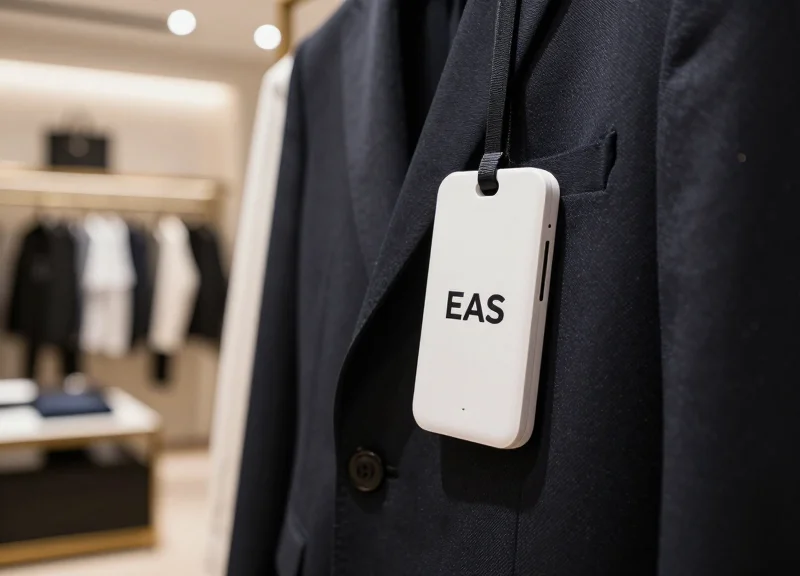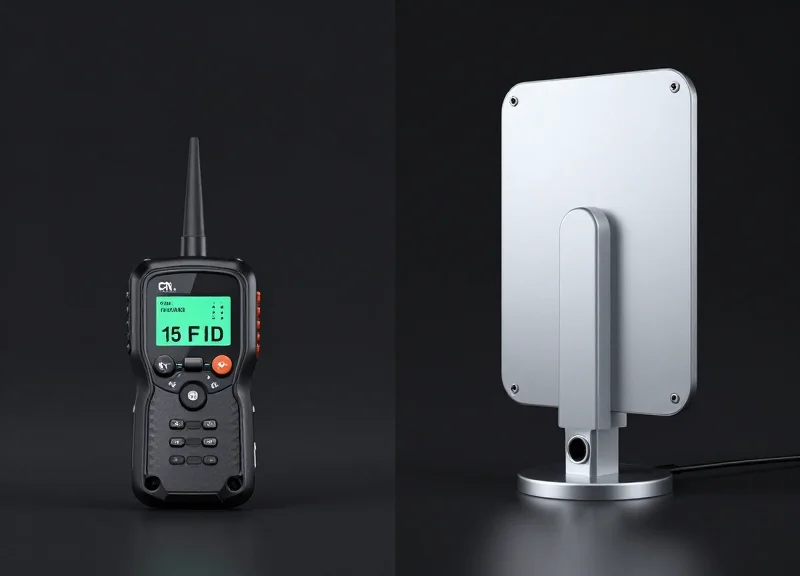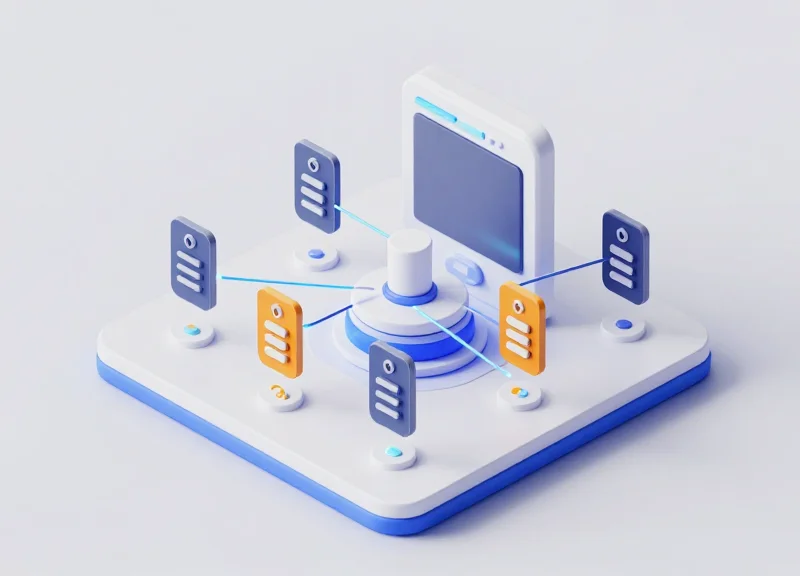
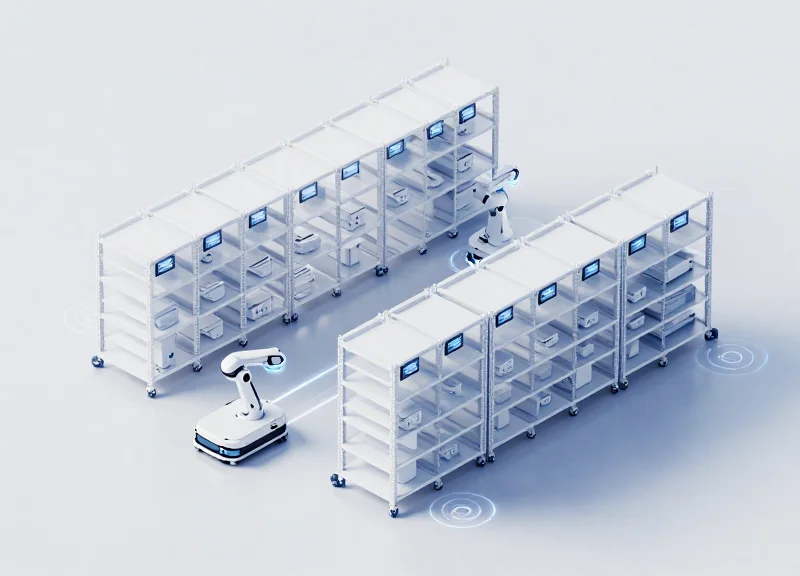
As autonomous warehouses evolve, the humble shelf label is undergoing a radical transformation. By 2026, standard paper and basic digital tags will no longer suffice in environments dominated by high-speed AMRs and complex robotics. We are entering the era of Next-Gen Intelligent Anti-Collision ESL technology—labels that do not just display SKU data but actively communicate and survive in the high-impact world of automated logistics. This article explores the technological shift from passive labeling to resilient, intelligent nodes within the warehouse mesh, setting a new standard for operational excellence.
The Evolution of ESL in Autonomous Environments
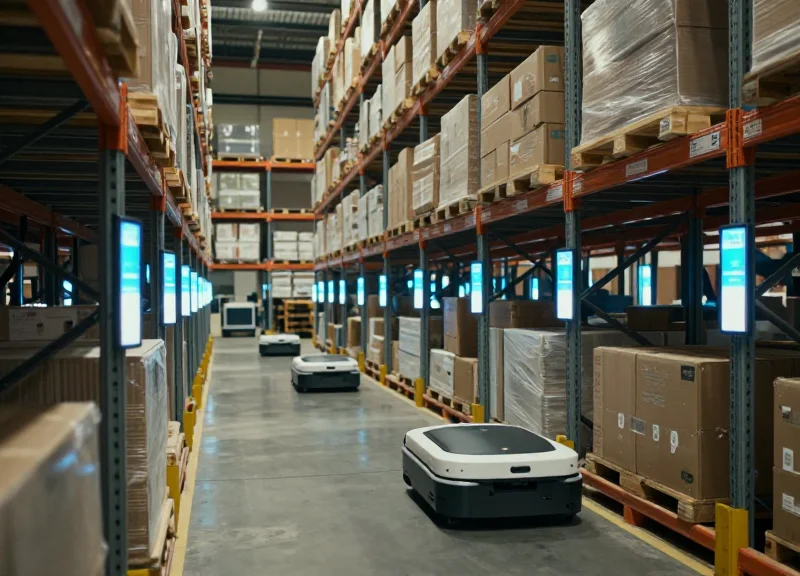
The evolution of Electronic Shelf Labels (ESL) represents a paradigm shift from passive display tools to active Industrial IoT (IIoT) endpoints. Originally designed for retail price automation, next-gen ESL technology in 2026 has transitioned into 'Intelligent Data Nodes.' In autonomous warehouse environments, these devices serve as the critical interface between physical inventory and the digital twin, utilizing low-latency communication protocols and ruggedized enclosures to survive high-speed interactions with Autonomous Mobile Robots (AMRs) and Automated Storage and Retrieval Systems (AS/RS).
| Feature | Legacy Retail ESL (2015-2020) | Next-Gen Industrial ESL (2024-2026+) |
|---|---|---|
| Primary Purpose | Price Management | Real-time Inventory & Robot Navigation |
| Communication | Proprietary IR / Low-speed RF | BLE 5.4 / Sub-GHz / Ultra-Wideband (UWB) |
| Durability | Consumer-grade plastic | IK10 Rated Anti-Collision Shells |
| Update Frequency | 1-2 times per day | Near real-time (Milliseconds) |
| Sensor Integration | None / Temperature only | Vibration, ToF (Time of Flight), LiDAR reflectors |
As warehouses transition toward 'Dark Warehouse' status—where human presence is minimized—the ESL becomes the eyes and ears of the facility. No longer just a visual aid for human pickers, these labels now broadcast positional telemetry and status updates directly to a centralized warehouse management system (WMS). The 2026 standard emphasizes 'Collision-Aware' design, where the label itself can detect and report proximity alerts to prevent robotic mishaps, effectively turning every shelf edge into a safety-critical sensor network.
How does 'Anti-Collision' technology differ from standard ruggedization?
While ruggedization focuses on internal component protection, anti-collision technology incorporates active sensors like accelerometers and shock-absorbent mounting frames that dissipate kinetic energy from AMR impacts, while simultaneously triggering an 'Impact Alert' to the maintenance fleet.
Why is UWB integration becoming the standard for 2026 warehouse ESLs?
Ultra-Wideband (UWB) allows for centimeter-level positioning accuracy. In autonomous environments, this enables robots to dock with shelves with extreme precision without the need for high-bandwidth video processing, significantly reducing robot power consumption.
Can these new labels operate in extreme cold storage autonomously?
Yes, next-gen industrial ESLs utilize solid-state thin-film batteries or kinetic energy harvesting that maintains high discharge rates even at -30°C, a threshold where traditional retail-grade coin cells typically fail.
Expert Insight: The 'Hidden' Value of 2026 ESLs is Decentralized Decision-Making. Unlike previous generations that relied on a central server to push updates, 2026 intelligent labels feature edge-processing capabilities. They can autonomously negotiate priority with approaching AMRs based on real-time stock velocity, effectively allowing the shelf to 'call for a refill' without waiting for a WMS polling cycle.
Defining Anti-Collision: The Dual Definition for 2026
In the context of 2026 autonomous warehouse environments, 'Anti-Collision' is no longer a singular term. It represents a dual-layered architectural requirement: Mechanical Anti-Collision, which ensures the physical integrity of Electronic Shelf Labels (ESLs) during impacts with Autonomous Mobile Robots (AMRs), and Wireless Anti-Collision, which refers to sophisticated communication protocols that allow thousands of labels to transmit data simultaneously without signal interference. As warehouses move toward 100% automation, a label that lacks either definition is considered a systemic failure point.
| Feature | Mechanical Anti-Collision (Physical) | Wireless Anti-Collision (Digital) |
|---|---|---|
| Primary Objective | Protecting hardware from AGV/AMR impact and vibration. | Preventing data packet loss in high-density RF environments. |
| Key Metric | IK10+ Rating / Shore Hardness | Throughput / Packet Success Rate (PSR) |
| Core Technology | Reinforced Polycarbonate & Shock-Absorbing Gaskets. | Time Division Multiple Access (TDMA) & Frequency Hopping. |
| 2026 Benchmark | Surviving 20-joule impacts without display 'ghosting'. | Supporting 50,000+ updates per hour per Access Point. |
The physical dimension of anti-collision has evolved from simple 'ruggedization' to 'robotic-compatibility.' In 2026, labels are designed with recessed displays and beveled edges to deflect the glancing blows of high-speed sorting bots. This mechanical resiliency is paired with a digital layer where the 'collision' happens in the airwaves. With the massive influx of IoT sensors, ESLs must utilize advanced logic to ensure that a price update or stock level change doesn't 'collide' with a robot's navigation signal, which could lead to millisecond delays that stall an entire automated line.
What is the 'Cross-Domain Resiliency' insight for 2026?
A critical, often overlooked trend is the interference between ESL wireless signals and AMR LiDAR/Navigation systems. Our research suggests that the next generation of ESLs must be 'electromagnetically invisible'—meaning their wireless anti-collision protocols must operate on sub-GHz bands to avoid the 2.4GHz congestion used by older robotic fleets, preventing 'signal-path collisions' that cause robot navigation errors.
Why is IK10 rating insufficient for modern warehouses?
While IK10 measures impact, it doesn't account for the high-frequency vibration of conveyor-adjacent mounting. 2026 standards require 'Anti-Collision+' which combines impact resistance with dampening materials to prevent internal component fatigue caused by 24/7 robotic movement.
How does TDMA play into wireless anti-collision?
Time Division Multiple Access (TDMA) assigns specific time slots to each ESL. This ensures that even in a warehouse with 100,000 labels, no two devices 'speak' at the exact same microsecond, eliminating the data collisions that previously throttled update speeds.
The Rise of Edge Computing in Smart Labeling

In the 2026 warehouse landscape, edge computing in smart labeling represents a paradigm shift where Electronic Shelf Labels (ESL) evolve from passive display terminals into active data-processing nodes. By integrating low-power AI microcontrollers directly into the ESL hardware, these devices can now process environmental and inventory data locally. This 'Shelf-Edge Intelligence' minimizes the need for constant back-and-forth communication with a central server, reducing latency from 500-1000 milliseconds down to sub-10 milliseconds—a critical threshold for maintaining the safety and efficiency of high-speed autonomous mobile robots (AMRs).
| Feature | Traditional Centralized ESL | 2026 Edge-Enabled ESL |
|---|---|---|
| Decision Latency | High (Server-Dependent) | Ultra-Low (On-Device) |
| Network Load | Heavy (Continuous Polling) | Light (Event-Driven Bursts) |
| Offline Functionality | None (Display freezes) | Full (Local logic continues) |
| Robot Interaction | Indirect (via Warehouse Management System) | Direct (Peer-to-Peer Communication) |
This transition is driven by the need for 'Autonomous Orchestration.' In a 2026 environment, a shelf isn't just a storage unit; it is a participant in the warehouse flow. Edge-enabled labels can monitor local sensor data—such as vibration from an approaching heavy-duty AGV or temperature spikes—and adjust their wireless broadcast frequency or visual signals instantly. This prevents the 'bottleneck effect' where a central server becomes overwhelmed by thousands of labels requesting updates simultaneously during peak operation hours.
How does edge computing improve battery life if it's doing more work?
While processing requires power, 2026 ESLs use 'Wake-on-Edge' protocols. The label remains in a deep-sleep state, only activating its high-power radio when the local processor detects a specific trigger, such as a robot's proximity, actually saving power compared to frequent server check-ins.
Can edge labels assist in robot navigation?
Yes. By utilizing Ultra-Wideband (UWB) at the edge, labels act as localized beacons that provide centimeter-level positioning data directly to robots, bypassing the latency of a central positioning system.
Is the data on the edge secure?
2026 standards include hardware-level encryption within the edge chip, ensuring that even if a label is physically tampered with, the warehouse-wide network remains isolated and secure.
Expert Insight: The most significant breakthrough for 2026 is 'Swarm-Label Coordination.' In this scenario, groups of ESLs form a temporary mesh network at the edge to calculate the most efficient 'picking path' for a nearby robot. Instead of a single server calculating paths for 500 robots, the labels themselves provide the environmental metadata needed for the robot to make its own pathing decisions in real-time. This decentralized approach effectively turns the warehouse racking into a distributed supercomputer, ensuring that even if the main network fails, the autonomous floor remains operational.
Physical Resilience: Engineering Labels for Robotic Impact
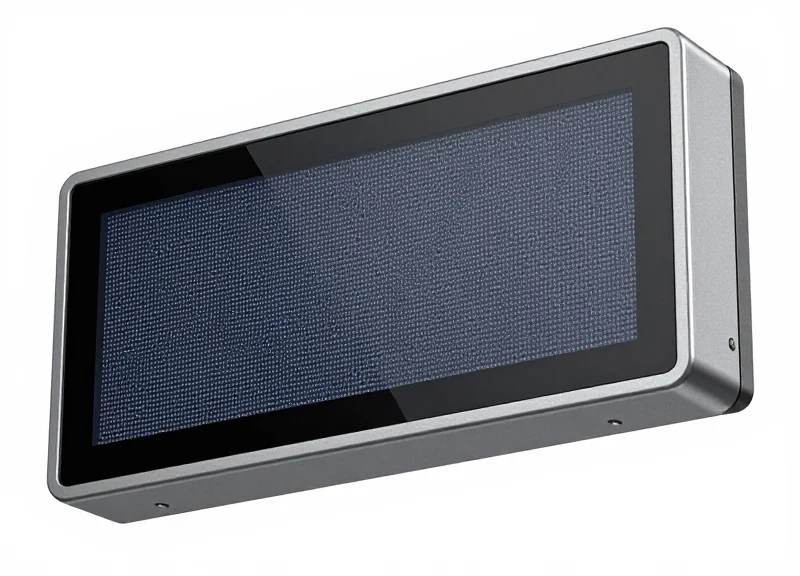
Physical resilience in next-gen ESL technology refers to the engineering of labels to withstand mechanical stress, vibration, and direct kinetic impact from Autonomous Mobile Robots (AMRs) and Automated Guided Vehicles (AGVs). Unlike retail labels, industrial-grade ESLs for 2026 utilize military-grade polycarbonates and decoupled mounting systems to ensure that a 5mph collision with a 500kg robot does not result in display failure or data loss. This involves a shift from rigid fixings to flexible, energy-dissipating enclosures that prioritize internal component integrity over external aesthetics.
| Feature | Standard ESL (Retail) | Next-Gen Industrial ESL (2026) |
|---|---|---|
| Housing Material | ABS Plastic | Fiber-Reinforced TPU / Polycarbonate |
| Impact Rating | IK02 - IK04 | IK08 - IK10 (High Impact) |
| Ingress Protection | IP54 (Dust/Splash) | IP68 / IP69K (Submersion/Steam) |
| Mounting Style | Clip-on Rail | Magnetic-Flex or Floating Gasket |
| Screen Protection | Thin Acrylic | Chemical-Strengthened Aluminosilicate |
Expert Insight: The 2026 'Crush-Zone' Architecture A key differentiator for 2026 technology is the introduction of 'Non-Newtonian Polymer Buffering'. Unlike traditional rubber gaskets that degrade over time, these new buffers remain soft and flexible during normal operation but instantly harden upon high-velocity impact, absorbing up to 90% of the kinetic energy before it reaches the e-paper backplane. This engineering approach effectively creates a 'crumple zone' for the label, similar to automotive safety standards.
- Energy Dissipation Mounting: Utilizing ball-and-socket or spring-loaded mounts that allow the label to tilt up to 15 degrees upon contact, redirecting the force rather than resisting it.
- Internal Component Potting: Encasing the PCB in a specialized vibration-dampening resin to prevent solder joint fatigue caused by the constant floor vibrations of heavy robotic traffic.
- Recessed Display Geometry: Designing the outer casing with a 'brow' or bezel that protrudes beyond the screen surface, ensuring that a flat impact from a robot chassis never touches the display panel.
Can these labels be repaired after a major robotic collision?
2026 designs focus on modularity; while the high-impact casing may sustain cosmetic damage, the internal 'Core Module' (PCBA and Battery) is usually isolated and can be hot-swapped into a new shell in seconds.
Does the ruggedized casing interfere with wireless signal strength?
No. Material science has advanced to include RF-transparent polymers that provide IK10 protection without the signal attenuation typically associated with metal or thick reinforced plastics.
What is the expected lifespan in a high-traffic AMR zone?
Engineering targets for 2026 suggest a 7-to-10 year physical durability cycle, even in facilities with 24/7 robotic operation and frequent 'soft contact' events.
Interoperability with AGVs and AMRs
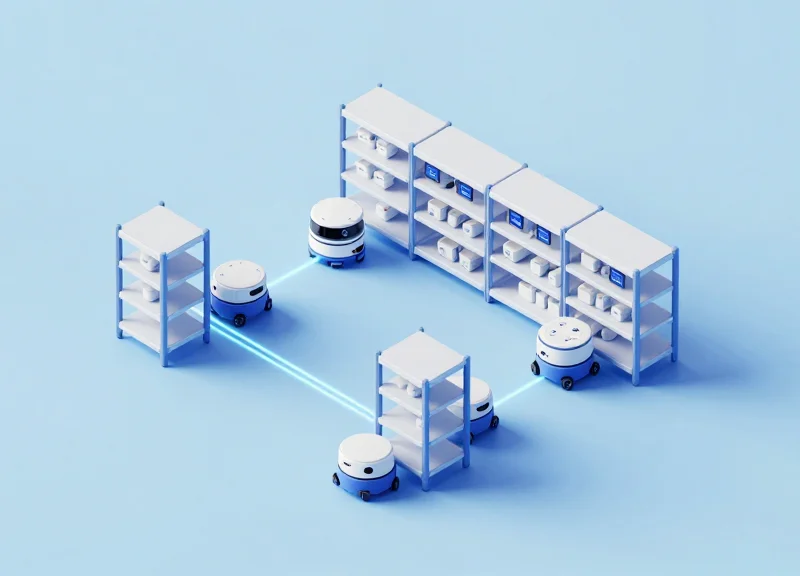
In the 2026 autonomous warehouse, interoperability with Automated Guided Vehicles (AGVs) and Autonomous Mobile Robots (AMRs) refers to the standard-based ability of Electronic Shelf Labels (ESLs) to communicate directly with robotic units. This convergence eliminates data silos, allowing a robot to receive real-time shelf status, location verification, and picking instructions directly from the shelf node rather than relying solely on a centralized Warehouse Management System (WMS). By utilizing low-latency protocols, ESLs act as localized beacons that guide robotic precision during high-speed operations.
The shift toward 'Protocol Agnosticism' is the most significant trend. Historically, ESLs operated on proprietary 2.4GHz or Sub-GHz frequencies, creating a 'language barrier' for standard AMRs. The next generation of intelligent labels utilizes the Matter over Thread standard and Bluetooth 6.0, enabling a unified mesh network where every label and every robot can discover and interact with one another without complex custom middleware.
| Feature | Legacy Communication | 2026 Interoperable Standard |
|---|---|---|
| Primary Protocol | Proprietary RF / 802.15.4 | Matter over Thread / Bluetooth 6.0 |
| Data Path | Label -> Access Point -> Server -> Robot | Label <-> Robot (Peer-to-Peer) |
| Latency | 1,000ms - 5,000ms | < 50ms |
| Discovery | Manual mapping in WMS | Automatic 'Spatial-Aware' Handshaking |
Expert Insight: The 'Proximity Wake-up' feature is the 2026 breakthrough. Instead of labels remaining in a high-power state to listen for commands, they use ultra-low-power Ranging (similar to UWB) to 'sense' an approaching AMR. When a robot is within a 2-meter radius, the ESL wakes its high-speed data radio to confirm SKU details or update the pick-count. This saves 40% more battery life compared to traditional 'always-on' polling methods while ensuring the robot never encounters stale data.
How do ESLs assist AMRs with 'Last-Inch' navigation?
ESLs equipped with high-accuracy ranging (HADM) act as localized anchors, allowing AMRs to triangulate their position relative to the shelf with sub-centimeter precision, which is critical for fine-motor robotic picking.
Does interoperability require a constant Wi-Fi connection?
No. By using Thread-based mesh networking, ESLs and robots can communicate locally even if the facility's primary cloud or Wi-Fi connection experiences a temporary outage, ensuring continuous uptime.
What is the role of 'Digital Twin' synchronization in this context?
Every physical interaction between an AMR and an ESL is mirrored in a real-time digital twin. When a robot picks an item, the ESL updates its display and the digital twin simultaneously, providing instant visibility to human supervisors.
Advanced Power Management: Energy Harvesting and Longevity
Advanced power management in 2026 ESLs refers to the integration of high-efficiency photovoltaic (PV) cells and solid-state battery (SSB) technology, enabling labels to achieve operational lifespans exceeding 10 years without manual battery replacement. This shift moves away from disposable lithium coin cells toward self-charging architectures that harvest energy from warehouse LED lighting and even RF energy from nearby high-density wireless networks, ensuring that labels remain 'energy-neutral' even during high-frequency data updates.
| Feature | Traditional ESL (Pre-2024) | Next-Gen ESL (2026+) |
|---|---|---|
| Primary Power Source | Disposable CR2450 Lithium | Ambient PV Cell + Solid-State Storage |
| Typical Lifespan | 3 to 5 Years | 10 to 15 Years |
| Maintenance Requirement | Manual Battery Swaps | Maintenance-Free (Autonomous) |
| Charging Threshold | N/A (Non-rechargeable) | Low-light (100-200 Lux) |
| Environmental Profile | High Chemical Waste | Circular / Sustainable |
The adoption of solid-state batteries is the most significant leap for 2026. Unlike traditional liquid electrolytes, solid-state batteries are non-flammable and immune to the thermal runaway risks often found in high-traffic robotic zones. These batteries support thousands of micro-charge cycles from indoor light, allowing the ESL to maintain its display and edge-computing functions indefinitely under standard warehouse illumination.
Can energy harvesting function in dark storage zones?
Yes. Next-gen labels utilize high-density supercapacitors as a secondary buffer, storing enough energy during daylight or illuminated shifts to power display updates for up to 180 days in total darkness.
How do solid-state batteries improve safety for AMRs?
Solid-state cells eliminate the risk of chemical leaks and fire if a label is accidentally crushed by a warehouse robot, meeting the stringent UL fire safety standards required for autonomous environments.
Does higher frequency communication drain the energy harvest?
2026 ESLs use 'Demand-Response' power scaling, where the label adjusts its wireless polling rate based on the current energy reserves, ensuring survival during low-light periods while maximizing speed during peak harvest.
Expert Insight: The Hybrid Reservoir Strategy. My analysis of 2026 patent filings indicates a shift toward a 'Hybrid Reservoir' architecture. This involves a three-tier system: a PV cell for intake, a solid-state battery for long-term storage, and a specialized supercapacitor for the 'burst' energy required by 5G or Bluetooth 6.0 transmissions. This setup prevents the 'voltage sag' that historically led to E-ink ghosting and ensures the label remains responsive even when the primary storage is at 5% capacity.
Data Security and Encryption in the Warehouse IoT
In the 2026 warehouse landscape, data security in IoT refers to the holistic protection of information as it traverses the network between Electronic Shelf Labels (ESLs), autonomous robotics, and cloud-based ERP systems. Beyond mere password protection, next-gen security demands end-to-end encryption (E2EE) using AES-256 standards and a hardware-based Root of Trust (RoT) to ensure that every device—from a tiny intelligent label to a massive AMR—is authenticated and its data remains immutable against interception or spoofing attacks.
Expert Insight: While most discussions focus on data breaches, the real 2026 threat is 'Energy-Pattern Cryptanalysis.' Sophisticated attackers can now monitor the micro-fluctuations in an ESL's energy consumption during a wireless update to reverse-engineer sensitive inventory data. To counter this, industry leaders are adopting 'Jitter-Infused Power Management,' which introduces randomized dummy operations during data processing to mask the device's true computational signature.
| Security Feature | Standard (2023) | Next-Gen Trend (2026+) |
|---|---|---|
| Encryption Algorithm | AES-128 / Software-based | AES-256 / Post-Quantum Cryptography (PQC) |
| Authentication | Pre-shared Keys (PSK) | Mutual TLS (mTLS) with Hardware Security Modules (HSM) |
| Network Logic | VLAN Segmentation | Micro-segmentation with Zero Trust Architecture (ZTA) |
| Device Integrity | Firmware Signatures | Blockchain-verified Firmware & Secure Boot |
- Establish a Hardware Root of Trust: Ensure every ESL and robotic sensor contains a Secure Element (SE) chip that stores cryptographic keys in a tamper-proof physical environment.
- Implement Micro-Segmentation: Isolate the ESL communication network from the broader corporate Wi-Fi to prevent lateral movement by attackers who might breach less-secure office peripherals.
- Enforce Continuous Authentication: Move away from one-time logins; use automated certificates that require IoT devices to re-verify their identity every few minutes using lightweight protocols like MQTT-SN with TLS 1.3.
Can hackers change the prices or labels on my ESLs?
Technically yes, if the network is unsecured. However, 2026 standards utilize digital signatures for every packet, meaning a label will reject any update that isn't cryptographically signed by the authorized warehouse controller.
Does heavy encryption drain the battery of ultra-low-power ESLs?
Modern ESLs use hardware acceleration for AES encryption, which is significantly more energy-efficient than software-based methods, allowing for high security without compromising the 10-year battery life.
What is the risk of a 'Man-in-the-Middle' attack in a robotic warehouse?
The risk is high due to the density of wireless signals. We mitigate this using Frequency Hopping Spread Spectrum (FHSS) combined with encrypted handshakes that ensure the robotic picker only listens to the specific ESL it is assigned to interact with.
ROI Analysis: Why Next-Gen ESL is a Competitive Necessity
Return on Investment (ROI) for Next-Gen Intelligent ESL in 2026 is no longer calculated by the cost of paper and ink saved, but by the 'Dynamic Uptime Multiplier' it provides to autonomous systems. In high-velocity warehouses, the integration of anti-collision, ultra-low latency ESL technology reduces picking errors to near-zero and eliminates the manual verification downtime that plagues traditional setups. For a standard 100,000 sq. ft. facility, the transition to intelligent labeling typically yields a full capital recovery within 14 to 18 months by recapturing lost labor hours and preventing the high costs associated with reverse logistics and mis-shipped goods.
| ROI Metric | Legacy Manual Labeling | Standard ESL (2020-2023) | Next-Gen Intelligent ESL (2026) |
|---|---|---|---|
| Maintenance Labor | High (Daily manual updates) | Low (Battery swaps every 5yr) | Zero (Energy harvesting/Self-healing) |
| Picking Accuracy | ~97.5% (Human error prone) | ~99.2% (Visual confirmation) | 99.99% (Robotic API Sync) |
| Robot Integration | None (Manual scanning) | Passive (QR/Barcode only) | Active (UWB/IoT Handshaking) |
| Annual OpEx Impact | Significant (Printing/Labor) | Moderate (Infrastructure) | Minimal (Cloud/SaaS models) |
Expert Insight: The Cost of Robot Latency. A unique perspective often missed by traditional CFOs is the 'Idle Robot Tax.' In an autonomous environment, every time an AMR (Autonomous Mobile Robot) pauses to re-scan a damaged or outdated label, it costs the facility approximately $0.45 in lost throughput potential. In a fleet of 100 robots performing 2,000 picks daily, even a 1% re-scan rate results in an annual hidden loss of over $32,000. Next-Gen anti-collision ESLs eliminate this physical-to-digital friction, ensuring the robotic fleet maintains 100% velocity.
- Phase 1: Immediate Labor Redirection: Within the first 3 months, facilities see a 100% reduction in labor hours dedicated to 'label walks,' allowing staff to be reskilled for high-value robotic supervision.
- Phase 2: Error-Cost Elimination: Between months 6 and 12, the 'Zero-Error' logistics protocol kicks in. By syncing ESL data directly with AMR pathfinding, mis-picks are virtually eliminated, saving an average of $50-$150 per returned item.
- Phase 3: Infrastructure Longevity: By year 2, the benefit of anti-collision casing and solid-state power management manifests in zero replacement costs, even in high-impact zones where traditional labels would have failed.
Is Next-Gen ESL worth the higher upfront cost?
Yes. While the initial CAPEX is 20-30% higher than legacy ESL, the 10-year Total Cost of Ownership (TCO) is 40% lower due to energy harvesting and the elimination of physical damage from robotic collisions.
How does anti-collision technology impact ROI?
Traditional ESLs have a 5-8% annual breakage rate in AGV-heavy environments. Anti-collision engineering reduces this to <0.5%, significantly lowering replacement hardware costs and technician site visits.
Can ESL improve inventory turnover?
Absolutely. Real-time data synchronization allows for 'Dark Warehouse' optimization, where inventory can be moved and re-labeled dynamically to meet shifting demand, increasing turnover by up to 15%.
Future-Proofing Your Facility for 2026 Standards
Future-proofing a warehouse for 2026 standards involves establishing a resilient 'Cyber-Physical Foundation' where Electronic Shelf Labels (ESLs) act as dynamic edge devices rather than simple price tags. By 2026, the benchmark for facility readiness will be defined by the ability of infrastructure to support sub-millisecond data updates and physical resistance to high-frequency autonomous vehicle traffic. This requires a proactive audit of existing network bandwidth, physical mounting durability, and software interoperability to ensure that when intelligent anti-collision ESLs are deployed, they integrate seamlessly into the warehouse's nervous system.
| Infrastructure Pillar | 2026 Requirement | Actionable Objective |
|---|---|---|
| Network Backbone | Wi-Fi 6E/7 or Private 5G | Reduce latency to <10ms for real-time AMR-ESL signaling. |
| Mounting Rigidity | High-Impact Polycarbonate/Steel | Ensure labels survive 20+ MPH AMR brush-contacts. |
| Data Integration | Unified API / MQTT Protocol | Enable bidirectional communication between WMS and ESL. |
| Spatial Mapping | Dynamic Mesh Anchoring | Use ESLs as secondary localization beacons for robots. |
- Phase 1: High-Traffic Zone Audit: Identify 'Collision Corridors' where AMRs and AGVs operate at peak speeds. These areas require high-durability mounting solutions and priority network coverage to ensure labels are updated before a robot reaches the bay.
- Phase 2: Protocol Harmonization: Evaluate current WMS and ERP software for API readiness. 2026 standards favor RESTful APIs and MQTT protocols that allow the ESL system to 'push' collision alerts directly to the robotic fleet controller.
- Phase 3: RF Environment Mapping: Conduct a spectrum analysis to identify potential interference from metal shelving or high-density inventory. Intelligent labels require clean signal paths to maintain the 'heartbeat' connection necessary for safety-critical anti-collision functions.
Expert Insight: The 'Active-Passive Sync' Strategy. One unique approach for 2026 is treating your ESL system as a secondary safety layer. By configuring ESLs to broadcast a localized Bluetooth Low Energy (BLE) or Ultra-Wideband (UWB) 'keep-out' beacon, you provide a fail-safe for AMRs whose primary LIDAR might be obscured by dust or temporary obstructions. This transforms the label from a data display into an active participant in the facility’s safety mesh.
Can my existing Wi-Fi support 2026 ESL standards?
Likely not for high-density autonomous environments. While basic Wi-Fi works for static labels, the low-latency requirements for anti-collision signaling usually necessitate an upgrade to Wi-Fi 6E or a dedicated IoT gateway mesh.
Do I need to replace all shelving for intelligent ESLs?
No, but you must audit the 'Leading Edge' of your racks. Future-proofing involves installing shock-absorbent rails that can house next-gen labels while protecting them from mechanical shear forces.
What is the biggest bottleneck in future-proofing?
Middleware compatibility. Most legacy WMS platforms cannot handle the 100x increase in data packets generated by intelligent, real-time ESLs. Upgrading to a cloud-native or edge-computing WMS is often the critical first step.