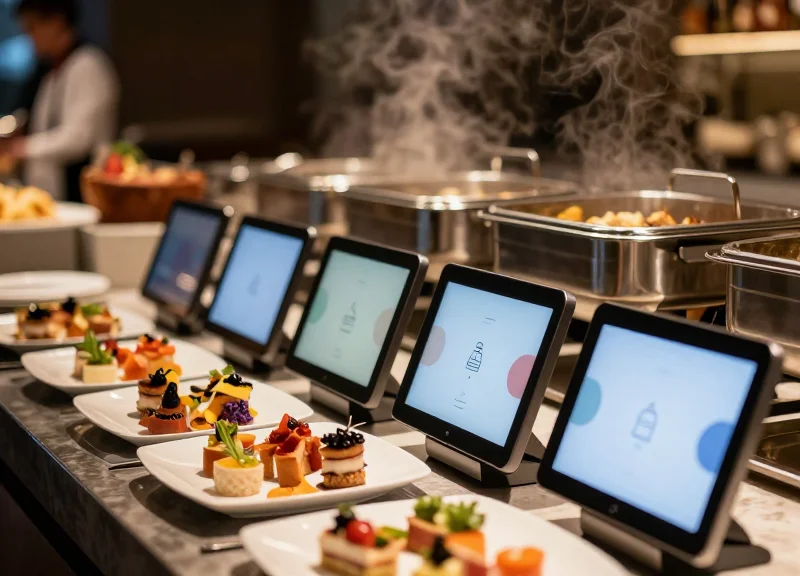
In the fast-paced world of hospitality, particularly in high-volume buffet settings, the transition from traditional paper signage to digital buffet labels is no longer a luxury—it is a necessity for operational efficiency. Manual menu updates are prone to error, labor-intensive, and often fail to reflect real-time ingredient or allergy changes. Electronic Shelf Labels (ESL) designed specifically for dining environments offer a dynamic solution. This guide delves into the essential factors that restaurant managers and hospitality owners must consider to choose a digital labeling system that streamlines daily rotations and elevates the brand.
The Strategic Shift to Digital Buffet Management
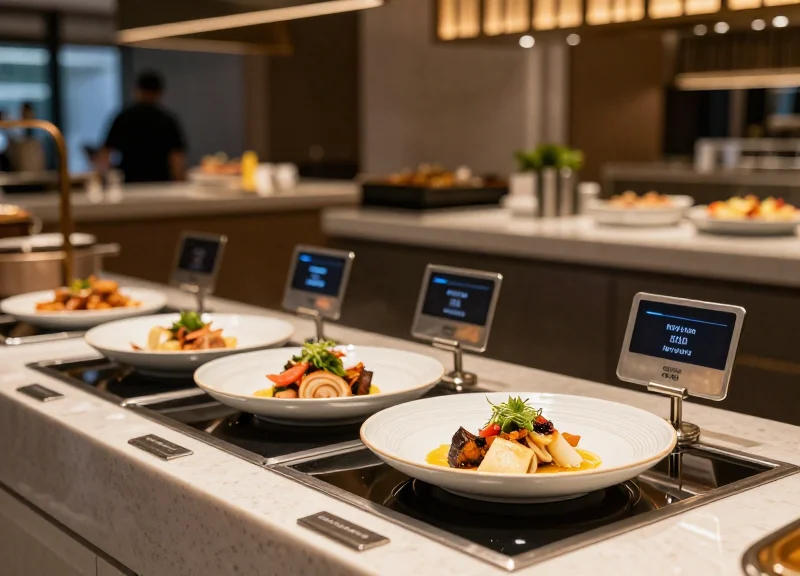
The strategic shift to digital buffet management involves replacing traditional paper or chalkboard signage with centralized Electronic Shelf Labels (ESL) to automate menu updates and allergen reporting. This transition solves the primary inefficiencies of manual systems—namely high labor costs, human error in ingredient disclosure, and the inability to respond to real-time inventory changes. By synchronizing the buffet display with the kitchen management system (KMS), hospitality operators can ensure that every food station reflects the current menu accurately within seconds.
For decades, the 'hidden drain' of buffet operations has been the manual labeling cycle. Every menu rotation requires a staff member to design, print, cut, and place physical cards. In a high-traffic hotel or casino, this process can consume 10 to 15 labor hours per week. Digital buffet management turns this into a zero-touch workflow, allowing staff to focus on guest service rather than administrative tasks.
| Feature | Manual Paper Labels | Digital Buffet Labels |
|---|---|---|
| Update Speed | 15-30 minutes per rotation | Near-instantaneous (< 5 seconds) |
| Allergen Accuracy | Prone to human transcription error | Automated sync with master database |
| Labor Cost | High (Daily recurring hours) | Low (One-time setup) |
| Brand Image | Inconsistent (Wear and tear) | Premium, modern, and unified |
The Expert Perspective: Dynamic Menu Agility. Beyond simple efficiency, the true strategic value of digital labels is 'Menu Agility.' Most operators don't realize that digital labels allow for real-time food waste mitigation. For example, if a specific dish is over-prepped, a manager can instantly update the digital label to highlight it as a 'Chef's Special' or pair it with an upsell item. This level of responsiveness is impossible with static paper tags and can improve food cost margins by as much as 3-5% through better inventory turnover.
Why is the shift to digital labels happening now?
The convergence of labor shortages in hospitality and the falling cost of e-ink technology has reached a tipping point, making the ROI of digital labels achievable within 12 to 18 months for most large-scale operations.
Does digital management improve food safety?
Yes. By pulling data directly from recipe management software, digital labels eliminate the risk of a server forgetting to mark a specific allergen, such as gluten or nuts, which is a major liability for buffet operators.
Can digital labels integrate with existing POS systems?
Modern digital labels are built on open APIs, allowing them to communicate directly with Point of Sale and Inventory Management systems for seamless data flow.
Factor 1: Durability and Hygiene Standards
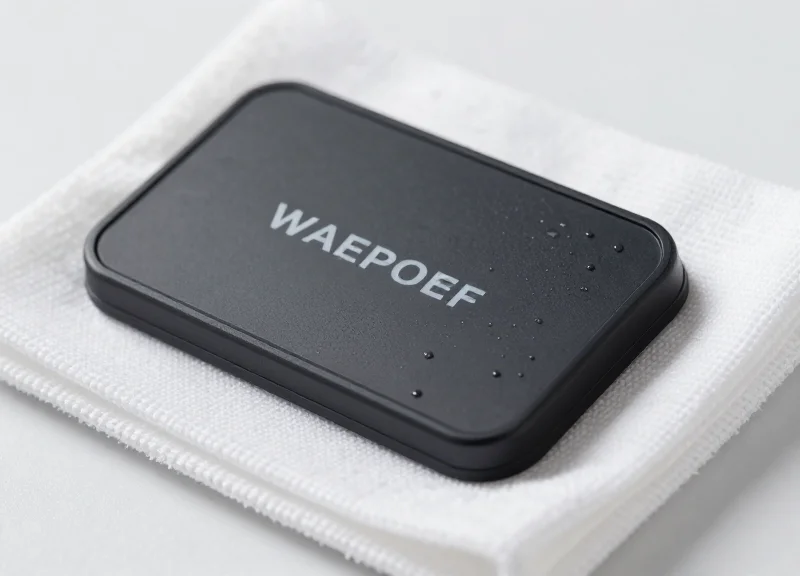
In the high-stakes environment of commercial food service, durability and hygiene are non-negotiable. Digital buffet labels must possess an Ingress Protection (IP) rating of at least IP67 to survive the rigors of commercial dishwashing and high-humidity environments. Furthermore, the housing must be constructed from food-grade, antimicrobial materials that meet FDA or EU food contact regulations to prevent cross-contamination during daily menu rotations. Choosing a device that cannot withstand steam or frequent sanitization will lead to a high failure rate and compromised food safety.
| IP Rating | Protection Level | Buffet Suitability |
|---|---|---|
| IP54 | Limited dust and splash protection | Risky; only for dry, ambient displays. |
| IP65 | Protected against low-pressure water jets | Suitable for salad bars and low-moisture areas. |
| IP67 | Protected against full immersion in water | The gold standard; required for heavy steam and deep cleaning. |
Expert Insight: The 'Thermal Cycling' Trap. Most operators focus on water resistance, but 'Thermal Cycling' is the silent killer of digital labels. In a buffet, labels move between hot holding stations (60°C+) and cold storage or wash stations. This temperature swing creates internal pressure changes that can 'suck' moisture through microscopic gaps in the seals. To ensure a 5-year lifespan, look for labels with specialized internal potting or pressure-equalization membranes that prevent internal screen fogging—a feature often missing in generic retail-grade ESLs.
Can digital labels be cleaned with commercial sanitizers?
Yes, provided the housing is made from high-impact Polycarbonate or 'Hospital-Grade' polymers. Standard ABS plastics may suffer from 'stress cracking' when repeatedly exposed to quaternary ammonium sanitizers.
Are these labels safe for direct proximity to food?
Labels should be BPA-free and manufactured using non-porous materials. Always request NSF certification or evidence of compliance with FDA/EU food contact standards to satisfy health inspectors.
How do they handle heat from induction buffet warmers?
Quality digital labels use high-temperature-rated batteries and e-ink film that functions up to 60°C. However, ensure the mounting system provides a small thermal buffer between the heat source and the label's electronics.
Factor 2: Software Integration and Real-Time Synchronization
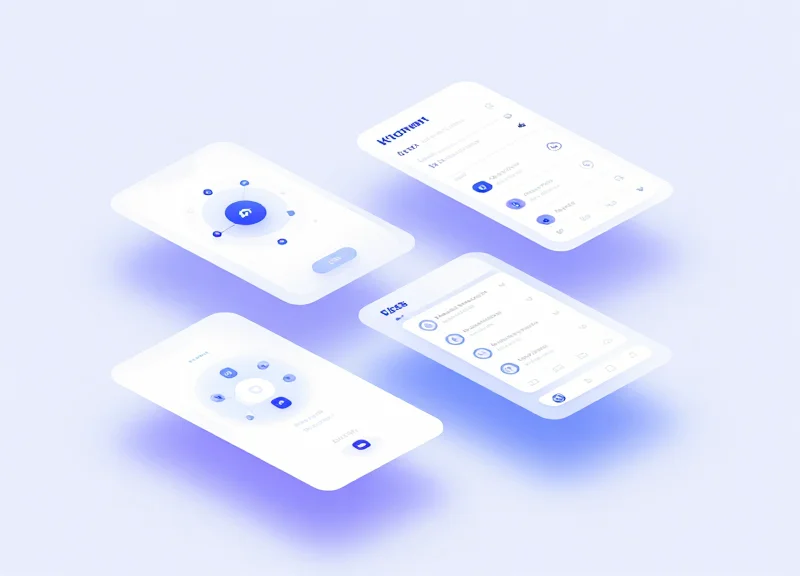
Software integration for digital buffet labels is the architectural link between your Point of Sale (POS) or Kitchen Management System (KMS) and the physical display on the buffet line. This synchronization ensures that when a chef updates an allergen profile or a manager changes a menu item in the back-office system, the electronic label updates instantly. Without robust real-time synchronization, digital labels are merely expensive 'digital paper' that still require manual labor to maintain, defeating the purpose of automation.
| Integration Level | Workflow Impact | Best Use Case |
|---|---|---|
| Manual CSV Upload | High manual effort; prone to data entry errors. | Small pop-up events with static menus. |
| Cloud-Based CMS | Centralized control but often disconnected from live POS data. | Boutique hotels with weekly menu rotations. |
| Full API Integration | Zero-touch automation; updates triggered by POS/KMS changes. | High-volume casinos, cruise ships, and luxury resorts. |
Expert Tip: The 'API-First' Advantage. In my two decades in Silicon Valley tech, the biggest mistake I see enterprises make is choosing 'walled garden' hardware. When selecting labels, prioritize vendors that offer an Open REST API. This allows your internal IT team or software provider to build custom triggers—for instance, automatically changing a label to 'Sold Out' or 'Refilling Soon' based on real-time kitchen inventory levels.
Does the system support batch scheduling?
Top-tier systems allow you to pre-program breakfast, lunch, and dinner rotations weeks in advance. The software should automatically push the correct templates to the correct labels at specific timestamps.
What happens if the Wi-Fi goes down?
Look for systems with 'Edge Caching.' The labels should continue to display the last known information and sync immediately once the connection is restored, rather than showing an error screen in front of guests.
Can it integrate with third-party nutritional databases?
Advanced integrations can pull calorie counts and allergen data directly from databases like USDA or Nutritics, ensuring your buffet remains compliant with local labeling laws automatically.
Furthermore, consider the refresh latency. In a fast-paced buffet environment, a delay of more than 60 seconds between a software update and a hardware change can lead to guest confusion, especially regarding high-risk allergen information. Look for sub-Ghz radio frequency (RF) protocols which often provide more reliable, low-latency communication in crowded kitchen environments compared to standard 2.4GHz Wi-Fi.
Factor 3: Display Clarity and Visual Appeal
In the fast-paced environment of a high-end buffet, display clarity is not just an aesthetic choice—it is a functional necessity. To optimize guest flow and minimize inquiries, digital labels must provide a high-contrast, paper-like reading experience. The industry gold standard is Electronic Paper Display (EPD) technology, commonly known as E-ink. Unlike traditional LCD screens that emit light and cause eye strain or glare, E-ink reflects ambient light, making the text sharper and more legible even under direct overhead spotlights or near sunny windows. For a label to be considered 'Retina-grade' in a hospitality setting, it should typically offer a resolution of at least 100 to 140 DPI (dots per inch) to ensure that small font sizes used for allergen warnings and nutritional facts remain crisp.
| Feature | E-ink (EPD) Labels | Standard LCD/LED Labels |
|---|---|---|
| Viewing Angle | Near 180° (Visible from any side) | Limited (Colors shift or fade at angles) |
| Glare Resistance | High (Matte finish, non-reflective) | Low (High reflections from buffet lamps) |
| Power Usage | Ultra-low (Only uses power to change image) | High (Requires constant power to stay on) |
| Visual Comfort | Paper-like, high contrast | Digital glow, can be distracting |
Expert Insight: The 'Five-Foot Legibility Rule'. A common mistake in digital label selection is focusing on screen size rather than visual hierarchy. Our recommendation for premium venues is to implement the 'Five-Foot Rule': the primary dish name must be legible from five feet away to prevent guest bottlenecks. This requires a display that supports 'Partial Refresh' technology, which allows the label to update specific data—like a 'Sold Out' badge or a 'Spicy' icon—without a full-screen flicker, maintaining a premium atmosphere during the lunch or dinner rush.
- Prioritize Three-Color Displays: While monochrome is standard, look for labels that offer Black/White/Red or Black/White/Yellow. This allows you to highlight dietary triggers (e.g., 'Contains Nuts') or 'Chef's Specials' in a way that immediately draws the eye.
- Verify Anti-Fog Coatings: In steam-heavy environments (chafing dishes), ensure the labels have an anti-fog or laminated display layer to prevent condensation from clouding the screen.
- Test Under Warm vs. Cool Lighting: Buffet heat lamps often use warm spectrum bulbs. Ensure your labels maintain a high contrast ratio (typically 10:1 or higher) so that the background remains white, not grey, under yellow light.
Can digital labels display full-color photography of the food?
While full-color E-ink exists (ACeP), it often has a slower refresh rate and higher cost. Most high-efficiency buffet labels use 3-color or 4-color palettes, which are better for icons and text clarity while maintaining multi-year battery life.
Why is the viewing angle so important for buffets?
Guests approach the buffet from different heights and angles. If a label has a poor viewing angle (like some cheap LCDs), the text will appear invisible or distorted to children or those in wheelchairs, leading to a poor accessibility experience.
How does resolution affect the 'branding' of the buffet?
Low-resolution labels look 'cheap' and pixelated, which can undermine a luxury dining brand. High-resolution (120+ DPI) allows for the rendering of elegant serif fonts and brand logos that match your printed collateral.
Factor 4: Battery Longevity and Low Maintenance
Battery longevity is the silent backbone of a digital buffet system; the best digital labels utilize bistable E-ink technology, which consumes power only during content updates, allowing a single battery to last between 5 to 10 years. For high-volume buffets rotating menus daily, a low-maintenance design ensures that the transition from manual to digital does not trade paper-cutting tasks for constant battery-swapping chores.
The operational efficiency of digital labels is rooted in their 'set-it-and-forget-it' architecture. Unlike standard LCD screens that require continuous backlighting, electronic paper displays (EPD) maintain a static image indefinitely without drawing a single microamp of current. This is critical in food service environments where downtime or visible 'low battery' icons on a serving line can diminish the guest experience.
| Update Frequency | Estimated Battery Life | Maintenance Requirement |
|---|---|---|
| 1-2 Updates / Day | 8 - 10 Years | Zero (Device Lifecycle) |
| 5-10 Updates / Day | 5 - 7 Years | One-time replacement |
| Hourly Updates | 2 - 3 Years | Periodic Monitoring |
Expert Insight: The 'Deep Sleep' Protocol. Top-tier digital labels utilize proprietary wireless protocols (like sub-GHz or low-power BLE) that allow the device to enter a 'Deep Sleep' state between updates. This reduces 'parasitic drain,' a common issue in cheaper consumer-grade electronics. When selecting a label, look for devices that report battery health via a centralized cloud dashboard. This allows your team to perform proactive maintenance rather than reacting to a dead label during a busy lunch service.
Can the batteries be replaced in digital labels?
Most high-quality buffet labels use standard coin-cell batteries (like CR2450) that are easily replaceable. However, some IP-rated waterproof models are hermetically sealed for maximum hygiene, meaning the entire unit is replaced after its 10-year lifecycle.
Does cold temperature affect battery life?
Yes, labels used in chilled buffet sections or salad bars face higher battery strain. Look for labels specifically rated for 'refrigeration temperatures' which utilize specialized battery chemistry to prevent voltage drops in the cold.
How do I know when a label is running low on power?
Advanced systems include a centralized management platform that triggers an alert or email notification when any label's battery falls below 10%, ensuring zero disruption to your buffet line.
Factor 5: Mounting Versatility and Aesthetic Integration
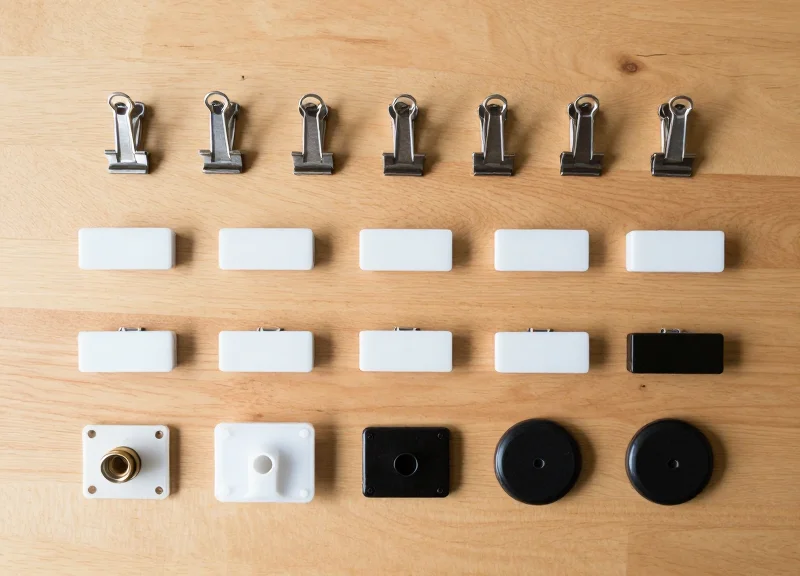
Mounting versatility and aesthetic integration represent the final 'last mile' of digital buffet deployment, defining how well the technology blends into your brand’s physical environment. High-quality labels should offer a modular mounting ecosystem—a suite of interchangeable clips, stands, and pins—that allow the same electronic unit to be securely positioned on ice beds, heat lamps, or glass shelving without compromising the label's longevity or the buffet's visual harmony. Selecting hardware that respects your interior design while providing functional stability is critical for a professional guest experience.
| Mounting System | Primary Application | Key Aesthetic Benefit |
|---|---|---|
| Universal Ice-Pin | Seafood and Cold Bars | Discreet vertical orientation that prioritizes food visibility. |
| Thermal-Break Stand | Hot Plates and Chafing Dishes | Elevates the label to prevent heat transfer while looking premium. |
| Multi-Angle Clip | Tiered Displays and Wire Racks | Maintains a clean line of sight across various shelf heights. |
| Magnetic Base | Stainless Steel Carving Stations | Tool-less installation for a minimalist, modern appearance. |
Beyond mere placement, aesthetic integration involves 'Brand Alignment.' Look for digital labels that offer customizable bezels or frames. While standard white or black shells work for modern setups, luxury environments often require metallic finishes or wood-grain textures to ensure the digital hardware doesn't feel like an industrial afterthought but rather an intentional design element of the dining experience.
- Expert Tip: The Air-Gap Thermal Principle: A common mistake is choosing flush-mount labels for hot buffet sections. Our veteran recommendation is to utilize mounting hardware that creates a 5mm to 10mm 'thermal air gap' between the label and the heat source. This simple physical buffer prevents heat-induced 'ghosting' on the E-ink display and significantly extends battery life by keeping the internal chemistry within its optimal operating temperature range.
Can digital labels be customized to match our restaurant's specific color palette?
Yes, top-tier manufacturers offer snap-on frames or custom-colored shells. This allows you to maintain brand consistency without needing to buy entirely new labels if your decor changes.
How do you secure labels in high-traffic areas where guests might knock them over?
Look for weighted bases or 'anti-tip' designs. Some systems also offer adhesive or semi-permanent magnetic mounts for stations where the label position is fixed.
Are there mounts specifically designed for crushed ice?
Yes, stainless steel ice-pins are the industry standard. They ensure the label stays upright even as the ice melts and shifts throughout service.
The ROI of Digital Labels in Food Service
The Return on Investment (ROI) for digital buffet labels is typically achieved within 12 to 18 months by eliminating recurring printing costs and reducing manual labor associated with daily menu updates by up to 80%. In a professional food service environment, the financial benefit extends beyond simple paper savings; it includes the mitigation of expensive legal risks related to allergen mislabeling and the ability to implement dynamic menu changes that can capture an 'Agility Premium' of 3-5% in food cost recovery.
| Expense Category | Traditional Paper Labels (Annual) | Digital Labeling System (Annual) |
|---|---|---|
| Labor (Updates/Setup) | $4,500 - $6,000 (Based on 1hr/day) | $300 - $500 (Software Syncing) |
| Consumables (Ink/Card) | $1,200 - $1,800 | $0 |
| Waste (Overproduction) | High (Slow menu response) | Low (Real-time adjustments) |
| Compliance Risk | Moderate (Manual error) | Low (Automated updates) |
- Labor Reallocation: By automating the daily rotation of hundreds of labels, staff members are freed from repetitive administrative tasks and can focus on high-value guest interactions and food preparation quality.
- Zero Waste Consumables: Digital labels eliminate the need for specialized cardstock, thermal ribbons, and lamination sleeves, supporting both financial bottom lines and corporate sustainability goals.
- Risk Mitigation and Accuracy: Automating the flow of data from the central menu management system directly to the buffet line removes the 'human error' factor, significantly reducing the liability associated with mislabeled allergens.
Expert Insight: The Agility Premium. A unique financial advantage of digital labels is the ability to leverage 'Menu Agility.' If a kitchen manager notices an overstock of a specific high-margin ingredient, the digital display can be updated instantly across all buffet stations to promote those dishes. This real-time inventory matching allows for a reduction in food waste that paper-based systems—which take hours to print and replace—simply cannot match.
What is the typical 'Payback Period' for a digital label installation?
Most mid-to-large scale buffet operations see a full return on investment within 14 months, primarily driven by the drastic reduction in daily labor hours previously spent on manual printing and placement.
How do digital labels impact guest satisfaction scores?
Studies indicate that guests perceive digital labeling as a sign of modern hygiene and transparency. Clear, high-contrast E-ink displays reduce guest frustration and wait times by making dietary information instantly legible.
Overcoming Common Implementation Challenges
Successfully implementing digital buffet labels (ESLs) involves navigating two primary hurdles: technical infrastructure stability and staff operational adoption. While the hardware offers long-term efficiency, the initial deployment often faces resistance due to network interference in high-metal kitchen environments and employee friction with new software workflows. To ensure a seamless transition, operators must treat the rollout as a holistic upgrade to their communication ecosystem rather than just a hardware installation.
| Implementation Challenge | Primary Root Cause | Strategic Solution |
|---|---|---|
| Signal Dead Zones | Interference from stainless steel equipment. | Strategic placement of Sub-Ghz IoT Gateways. |
| Staff Resistance | Perceived complexity in menu updates. | Gamified training and simplified UI overlays. |
| Data Synchronization Lag | Incompatible legacy POS systems. | Middleware APIs for real-time cloud polling. |
| Physical Displacement | Labels being moved or lost during cleaning. | Custom-fit, locked mounting brackets. |
Expert Insight: The 'Faraday Cage' Effect in Modern Buffets. One often-overlooked challenge is the signal interference caused by extensive stainless steel surfaces—found in commercial kitchens and buffet warmers—which act like a Faraday cage, blocking standard 2.4GHz signals. To overcome this, we recommend utilizing ESL systems that operate on the Sub-GHz frequency (typically 868MHz or 915MHz). This lower frequency provides superior penetration through metal and liquid barriers, ensuring your labels refresh instantly even in the most crowded, high-heat environments.
How long does it take for staff to become proficient?
With a user-friendly CMS (Content Management System), basic training takes less than 30 minutes. Most operators find that staff reach full proficiency within three meal service rotations, as the physical labor of printing and cutting paper is replaced by simple digital clicks.
What happens if the local Wi-Fi goes down?
Premium digital labels operate on dedicated IoT gateways rather than standard guest Wi-Fi. If the internet fails, the labels will continue to display the last cached data, ensuring your buffet remains accurately labeled until connectivity is restored.
Can labels survive the humidity of steam tables?
Yes, provided you choose labels with an IP67 or IP68 rating. These are hermetically sealed to prevent moisture ingress, which is critical for equipment placed near steam pans or ice beds.
- Site Survey & Signal Mapping: Conduct a wireless site survey during peak hours to identify potential interference from microwaves or heavy kitchen machinery.
- Database Cleanup: Ensure your menu management database or POS has clean, standardized item names and allergen icons before syncing to the labels.
- Pilot Program Deployment: Launch in a single section (e.g., the dessert station) for one week to gather staff feedback and refine the update workflow.
- Full Scale Integration: Roll out to the entire buffet line, accompanied by a 'superuser' on-site to assist other staff members during the first live shift.