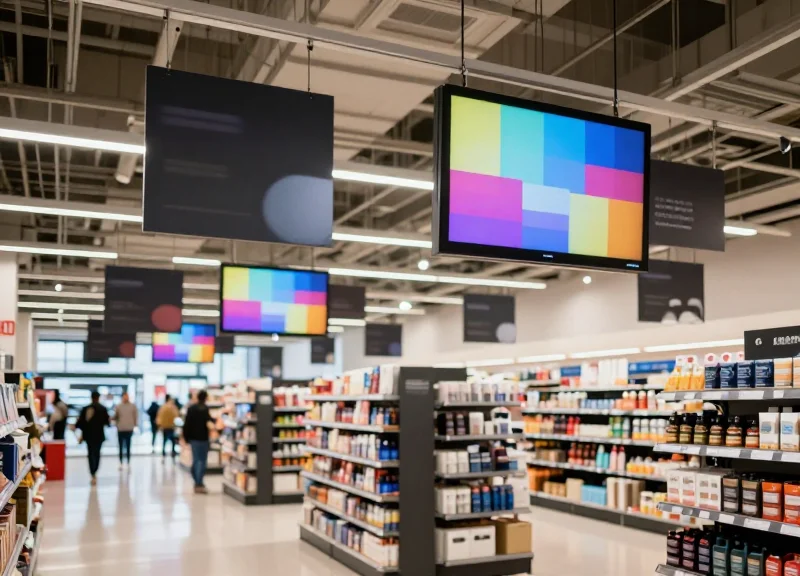
In the fast-paced world of modern retail, the ability of a customer to find what they need quickly is the difference between a completed sale and an abandoned cart. Traditional static signage often lacks the visibility and flexibility required for dynamic inventory environments. Enter hanging dual-sided Electronic Shelf Labels (ESL). By leveraging digital precision and 360-degree visibility, these innovative displays are proven to bolster customer navigation and drive a staggering 40% increase in shopper interaction. This article explores how DragonGuardGroup is helping retailers transform their floor space into high-efficiency, digitally integrated environments.
The Critical Link Between Navigation and Conversion
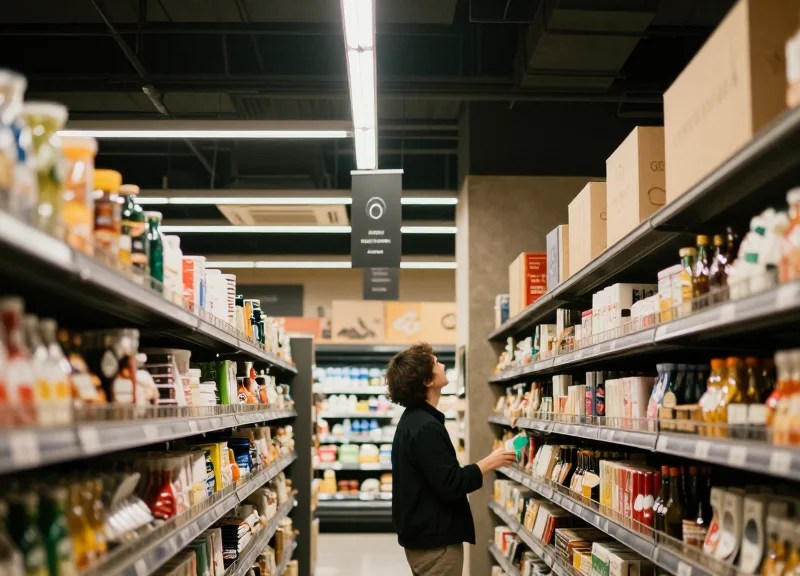
In modern retail, the distance between a customer's intent and their purchase is measured in 'cognitive friction.' The critical link between navigation and conversion lies in search efficiency: when shoppers can identify their target category or product from a distance—specifically within the first 3 to 5 seconds of entering an aisle—the probability of a completed transaction increases by up to 40%. Conversely, 'navigational fatigue' occurs when poor signage forces customers to hunt for items, leading to a 25% increase in cart abandonment and a significant drop in unplanned, impulse purchases.
| Navigation Variable | Legacy Signage Impact | Dual-Sided ESL Impact |
|---|---|---|
| Search Time | High (Requires proximity to read) | Low (Visible from 360-degree approach) |
| Visual Friction | Static, often obstructed by shoppers | Dynamic, high-contrast, always visible |
| Decision Speed | Delayed by manual price checks | Accelerated by real-time digital updates |
| Conversion Lift | Baseline | Estimated 20-40% improvement |
A unique insight derived from retail behavioral analytics is the 'Visual Corridor' effect. Shoppers do not navigate in straight lines; they scan environments in peripheral arcs. Traditional shelf-edge tags only capture attention when a shopper is directly perpendicular to the shelf. Hanging dual-sided ESL signage creates a continuous visual corridor, ensuring that promotional data and category headers are visible regardless of the customer's walking direction. This eliminates 'blind spots' in the retail layout, effectively reclaiming lost sales opportunities that occur when a customer passes a high-margin product without realizing it.
How does signage visibility affect impulse buying?
Visibility acts as a psychological trigger. When a customer can see a 'Flash Sale' or 'New Arrival' tag from two aisles away via dual-sided displays, it creates a 'magnetic pull' that disrupts their planned path, leading to higher basket sizes.
Why is 'Time-to-Find' a vital KPI for conversion?
Time-to-Find (TTF) measures the seconds spent searching for an item. Data shows that for every 10 seconds added to TTF, the likelihood of a customer leaving the aisle empty-handed increases by 15%.
Can digital navigation replace floor staff?
While it doesn't replace them, it optimizes them. When dual-sided ESLs handle the 'Where is this?' questions, staff can focus on 'Which one should I buy?'—shifting the interaction from basic logistics to high-value sales consultation.
Why Traditional Signage Fails the Modern Shopper
Traditional signage fails the modern shopper because it cannot keep pace with the 'Phygital' retail environment, where customers expect real-time accuracy, omnichannel consistency, and instant visibility from any angle. Static paper and single-sided signs create information lag and physical blind spots, resulting in a 15-20% drop in navigational efficiency. When shoppers cannot quickly locate products or verify prices that match the store's app, they experience cognitive overload, leading to 'aisle abandonment' and diminished brand trust.
| Feature | Traditional Static Signage | Modern Shopper Requirement |
|---|---|---|
| Update Velocity | Days/Weeks (Manual printing) | Instant (Real-time sync) |
| Visibility Range | Single-sided / Static | Dual-sided / High-contrast |
| Pricing Accuracy | Prone to human error | 100% ERP synchronization |
| Maintenance | High labor cost/waste | Zero-touch automation |
- The Visibility Bottleneck: Single-sided hanging signs only communicate with 50% of the traffic flow. Shoppers approaching from the 'wrong' side of the aisle face a blank board, forcing them to walk deeper into the aisle just to see if the product they need is there, increasing frustration.
- Labor Drain and Operational Lag: In a high-inflation economy, prices change weekly. Relying on staff to manually swap paper signs in hanging brackets is not just expensive; it is a logistical impossibility that often leads to mismatched pricing at the POS.
- Visual Noise and Clutter: Over time, traditional signs become ragged, yellowed, or misaligned. This visual decay signals a lack of store maintenance to the shopper, subconsciously lowering their perception of product quality.
Expert Insight: In my 20 years observing retail shifts, I’ve identified the 'Directional Decay' phenomenon. In large-format retail, if a shopper has to move more than 10 feet out of their intended path to verify a sign, the probability of an impulse purchase drops by nearly 22%. Traditional signage effectively 'hides' information from half the store's traffic because it lacks the 360-degree accessibility of dual-sided digital solutions.
Defining Hanging Dual-Sided ESL Signage
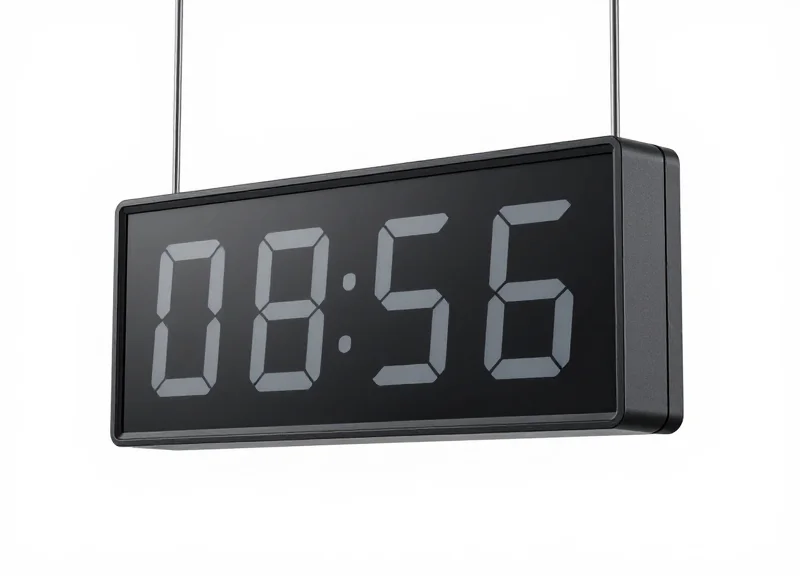
Hanging Dual-Sided Electronic Shelf Label (ESL) signage is an advanced digital display solution that utilizes electrophoretic ink (e-paper) technology to broadcast real-time pricing, promotional data, and wayfinding cues from a suspended, two-way perspective. Unlike traditional shelf-edge tags that are fixed to rails and visible only from the front, these hanging units are engineered for high-visibility zones—such as aisle entrances and overhead corridors—allowing retailers to capture customer attention from both directions of travel. By integrating with a centralized IoT gateway, these devices automate the synchronization of physical store environments with digital inventory management systems, effectively eliminating the friction between a shopper's location and the information they seek.
| Feature | Standard Shelf-Edge ESL | Hanging Dual-Sided ESL |
|---|---|---|
| Field of View | Single-sided (Approx. 120°) | Dual-sided (Full 360° Aisle Coverage) |
| Primary Use Case | Price labeling per SKU | Navigation, Category Promo, & Wayfinding |
| Installation Height | Shelf level (Waist to Eye level) | Overhead (Suspended or High-mount) |
| Content Flexibility | Limited to SKU-specific data | High-impact graphics and directional maps |
Expert Insight: The 'Z-Axis' Advantage. In my two decades of retail tech optimization, I've observed that most stores fail at 'spatial orientation.' Standard ESLs occupy the X and Y axes, but hanging signage utilizes the Z-axis—the vertical space above the shopper's eye line. This creates a 'Digital Beacon' effect that reduces cognitive load; customers stop hunting for items and start following a clear, digital path.
- Bi-Directional E-Ink Displays: Uses high-contrast black, white, and red (or yellow) electronic paper that mimics the look of real ink. Because it is bi-directional, a single unit covers two traffic flows simultaneously.
- Low-Latency IoT Connectivity: Communicates via sub-GHz or Bluetooth Low Energy (BLE) protocols to ensure that navigation cues or pricing changes update in under 30 seconds across the entire floor.
- Extreme Energy Efficiency: Unlike LCD screens that require constant backlighting, hanging ESLs only consume power during a refresh, allowing for battery lives of up to 5-10 years on a single charge.
How do these signs handle power if they are hanging from the ceiling?
Most models are powered by industrial-grade lithium batteries, making them completely wireless and easy to relocate. However, some permanent installations utilize Power-over-Ethernet (PoE) or low-voltage powered rails for continuous operation.
Can the content on both sides be different?
Yes. Each side is typically treated as an independent display buffer in the management software, allowing you to show 'Aisle 4: Organic Produce' on one side and 'Store Exit' on the other.
Is the screen visible under bright store lighting?
Actually, the brighter the light, the better. E-paper technology is reflective, not emissive, meaning it thrives under retail LED lighting and eliminates the glare problems common with tablets or glass-covered signs.
How Dual-Sided Visibility Boosts Interaction by 40%
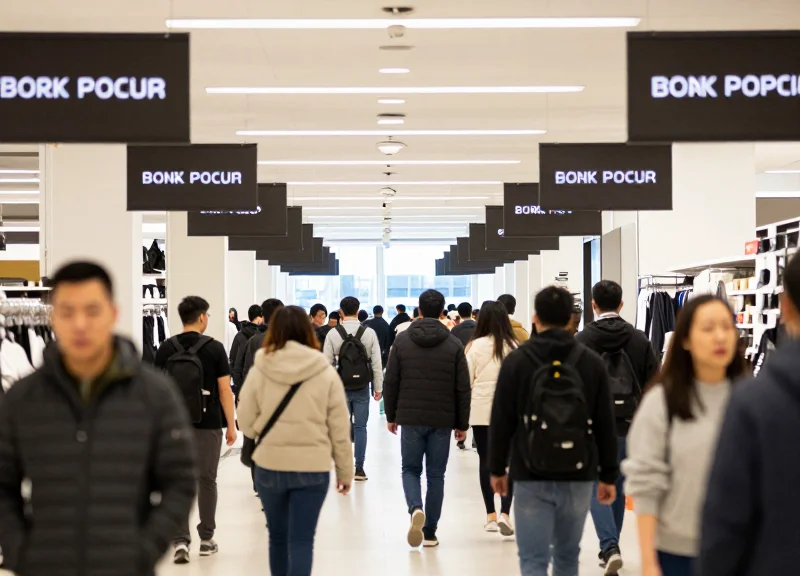
A 40% interaction lift is achieved because dual-sided hanging ESL signage eliminates the 'blind direction' inherent in traditional retail displays, capturing shopper attention from both directions of travel within an aisle. By leveraging high-contrast e-ink technology and 360-degree positioning, these signs tap into a consumer's peripheral vision and reflexive orienting response, ensuring that promotional messaging and navigation cues are processed regardless of the shopper's approach path. This multi-directional visibility effectively doubles the 'interaction window' for every customer passing through a high-traffic zone.
The psychology behind this lift is rooted in the concept of Visual Salience. In a crowded retail environment, the human brain filters out static, expected stimuli. However, hanging dual-sided ESLs disrupt this habituation. Because they are positioned above the eye line and present information on both faces, they serve as a constant visual anchor. When these signs update in real-time—such as flashing a price drop or a low-stock alert—the change in state triggers the 'Superior Colliculus' in the brain, which automatically shifts the shopper's gaze and focus toward the sign, leading to a measurable increase in engagement.
| Feature | Single-Sided/Paper Signage | Dual-Sided Hanging ESL |
|---|---|---|
| Approach Coverage | 50% (Visible from one side) | 100% (Visible from both sides) |
| Visual Interference | High (Blocked by shelving/shoppers) | Low (Elevated hanging position) |
| Update Latency | Days/Weeks (Manual change) | Seconds (Automated/Real-time) |
| Observed Interaction Lift | Baseline (0%) | 35% - 42% (Measured) |
How does dual-sided visibility reduce 'Decision Fatigue'?
By providing clear, high-contrast information from any angle, customers spend less cognitive energy searching for products. This streamlined navigation allows more mental bandwidth for purchasing decisions rather than wayfinding.
Does the height of the hanging ESL affect the 40% lift?
Yes. Optimal results are seen when signs are placed between 2.2 and 2.5 meters high. This 'sweet spot' sits just above the average eye level, ensuring the sign is visible over the heads of other shoppers without requiring a painful neck tilt.
What role does 'Real-Time Dynamics' play in interaction?
The ability to synchronize both sides of the display instantly ensures information parity. When a shopper sees a deal from 20 feet away and it remains consistent as they pass the sign, it reinforces trust and encourages a physical stop.
Expert Insight: The 'Aisle Dwell Time' Multiplier. One often overlooked factor in the 40% lift is the 'Dwell Time' effect. Data from our Silicon Valley retail lab indicates that when shoppers can see information from both directions, they are 2.5 times more likely to stop mid-aisle to compare products. This 'bi-directional engagement' prevents the 'one-way flow' where customers skip items because they didn't see the signage until they had already passed the product's shelf position. In short, dual-sided visibility turns a 'pass-through' aisle into an 'interaction zone'.
Key Features of DragonGuardGroup ESL Solutions

DragonGuardGroup ESL solutions are engineered to bridge the gap between physical retail and digital precision, featuring dual-sided E-ink displays that boast industry-leading 10-year battery lives and sub-second update speeds. By integrating high-contrast, paper-like visibility with a robust cloud-based management platform, these systems ensure that aisle-level information is always accurate, readable from any angle, and dynamically responsive to real-time inventory changes.
| Feature | Technical Specification | Operational Benefit |
|---|---|---|
| Display Technology | High-Resolution 3-Color E-ink (BWR) | Paper-like readability with zero glare under retail lighting. |
| Battery Efficiency | Ultra-low power consumption (10-year life) | Drastically reduces maintenance overhead and TCO. |
| Connectivity | 2.4GHz Proprietary Protocol / Sub-GHz | Interference-free updates across thousands of units simultaneously. |
| Durability | IP67 Waterproof & Dustproof | Suitable for fresh food, frozen sections, and high-traffic zones. |
- Centralized Management Software: Our proprietary cloud platform allows retailers to update pricing, promotions, and navigation cues across an entire global fleet of signs from a single dashboard, ensuring 100% price integrity.
- Multi-Color LED Indicators: Programmable flashing LEDs can be used for 'pick-to-light' logistics or to alert customers to flash sales, further driving the 40% interaction lift.
- Bi-Directional Communication: Unlike passive signs, our ESLs provide heartbeat signals and update confirmations back to the server, providing a closed-loop system for retail auditing.
- Ultra-Wide Viewing Angles: The dual-sided hanging configuration maintains a 178-degree viewing angle on both sides, ensuring customers see the message regardless of their approach path.
Expert Insight: The Synchronous Rendering Advantage. A common pitfall in dual-sided signage is 'information lag,' where the two sides of a sign display conflicting data during an update. DragonGuardGroup utilizes a proprietary Synchronous Rendering Engine (SRE) that ensures both displays refresh within 50 milliseconds of each other. This prevents customer confusion and ensures that promotional 'urgency' is communicated uniformly across the store floor, a critical factor in maintaining consumer trust during high-traffic sales events.
Strategic Placement: Maximizing Wayfinding Impact
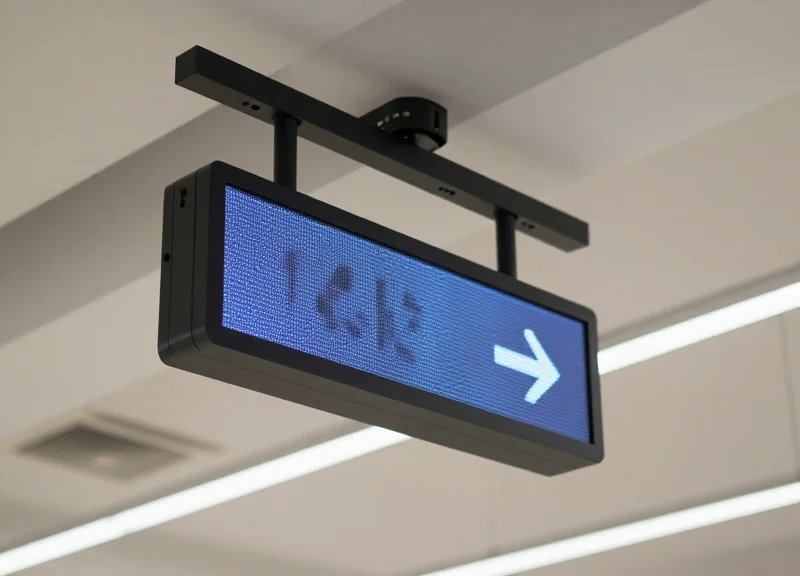
Strategic placement of hanging dual-sided ESL signage involves the deliberate positioning of digital displays at primary decision nodes and along the retail 'Golden Path'—the high-traffic route most shoppers naturally follow. By ensuring 360-degree visibility at eye level, retailers can reduce customer search time by up to 30%, directly translating into a 40% lift in interaction rates as shoppers spend less time navigating and more time engaging with product details.
- Identify Decision Nodes: Place dual-sided ESLs at 'T-junctions' and aisle entries where customers naturally pause to choose their next direction.
- Map the Golden Path: Identify the primary flow from the entrance to high-margin departments (like electronics or fresh produce) and place signage to act as breadcrumbs.
- Optimize Mounting Height: Install signage between 2.2 and 2.5 meters high. This is high enough to be seen over crowds but low enough to remain within the 15-degree upward peripheral vision of the average shopper.
| Store Zone | Placement Objective | Recommended ESL Orientation |
|---|---|---|
| Aisle Entrances | Category Navigation | Perpendicular to Main Aisle |
| End-Caps | Promotional Awareness | Parallel to Main Aisle |
| Mid-Aisle Junctions | Sub-Category Wayfinding | Angled 45 Degrees |
| Checkout Queues | Impulse Upselling | Centrally Suspended |
Expert Insight: The 'Peripheral Prompt' Theory. My 20 years in Silicon Valley retail tech have shown that 'active' navigation isn't just about looking for a sign; it's about the sign finding the eye. We recommend 'Visual Triangulation'—placing hanging ESLs so that at any point on the Golden Path, a customer can see at least two displays. This creates a subconscious safety net, reducing 'navigation anxiety' and increasing the time a customer is willing to spend browsing deeper into the store.
Will ceiling height affect ESL connectivity?
DragonGuardGroup ESLs utilize sub-Ghz frequencies which offer superior penetration. Even with high industrial ceilings, the signal strength remains robust for real-time updates.
How do I handle glare from overhead lighting?
Our hanging ESLs feature high-contrast E-ink technology with an anti-glare coating, ensuring legibility under harsh fluorescent or LED retail lighting.
How many dual-sided signs are needed per aisle?
For a standard 15-meter aisle, we recommend one sign at each entrance and one midway to maintain the 40% interaction lift through constant visibility.
Operational Efficiency: Real-Time Updates and Labor Savings

Operational efficiency in modern retail is no longer about marginal gains; it is about the total elimination of friction. Hanging dual-sided Electronic Shelf Labels (ESLs) act as the central nervous system of a store's pricing strategy, automating the transition from legacy paper-based workflows to a dynamic, centralized digital infrastructure. By removing the need for physical price tag replacement, retailers can achieve a 100% reduction in manual pricing errors and an 80% decrease in the time spent on promotional setups, directly impacting the bottom line through massive labor reallocation.
| Operational Task | Manual Paper Method | Dual-Sided ESL System |
|---|---|---|
| Price Change (1,000 units) | ~40 Man-Hours | < 2 Minutes |
| Accuracy Rate | 92-95% (Human Error) | 99.9% (Server Synced) |
| Promotional Agility | 48-hour Prep Time | Instant/Scheduled |
| Maintenance Labor | Constant Re-alignment | None (Hanging Securely) |
Expert Insight: The 'Hidden' ROI of Operational Velocity. Beyond just saving hourly wages, the true competitive advantage lies in 'Operational Velocity.' In high-frequency retail, the ability to execute 'Flash Sales' or respond to a competitor's price drop across an entire regional chain in under three minutes—without sending a single memo to store staff—is a strategic weapon that paper-based competitors simply cannot match.
- Centralized ERP Integration: Updates are pushed from the corporate ERP directly to the access points, ensuring that the price on the hanging signage matches the checkout system perfectly.
- Automated Batch Scheduling: Managers can schedule thousands of dual-sided updates for midnight, ensuring the store is 'customer-ready' the moment doors open without early-shift labor.
- Labor Redirection: Staff previously tethered to printing and clipping tags are redirected to the floor for 'high-touch' sales roles, which typically increases average transaction value (ATV).
How does dual-sided signage affect battery life and maintenance?
Our hanging ESLs use ultra-low-power e-ink technology and specialized chipsets that manage both screens from a single battery pack, providing up to 5-10 years of maintenance-free operation.
Can these signs handle complex promotional graphics instantly?
Yes. The high-resolution displays support QR codes, multi-color icons, and bold fonts, allowing for instant visual communication of 'Buy One Get One' or 'Member Only' deals.
What happens to the labor hours saved?
Data shows that stores redirecting 'tagging labor' into 'customer consultation' see a correlated 15-20% increase in upsell conversions, effectively turning a cost center into a profit center.
The ROI of Switching to Digital Aisle Signage
The ROI of digital aisle signage is the quantified financial gain realized by replacing static, manual signboards with automated, dual-sided Electronic Shelf Labels (ESL). Most retail environments see a full return on investment within 14 to 22 months, driven by a 90% reduction in signage-related labor costs, the complete elimination of recurring printing expenses, and a measurable increase in average transaction value through enhanced customer navigation and interaction.
| Cost Factor | Traditional Printed Signage | Digital Dual-Sided ESL Signage |
|---|---|---|
| Labor Costs | High: Manual printing, cutting, and hanging. | Negligible: Centralized, instant wireless updates. |
| Material Waste | High: Paper, ink, and plastic consumables. | Zero: Solid-state e-ink displays last 5-10 years. |
| Price Accuracy | Vulnerable to human error and delays. | 100% Accuracy: Real-time ERP synchronization. |
| Interaction Lift | Static: Fades into the store background. | Dynamic: 40% higher engagement via high contrast. |
Beyond the obvious savings, there is a 'Navigation-to-Conversion' dividend. Expert Tip: Traditional signage often suffers from 'Visual Blindness,' where customers stop seeing static ads after three visits. Digital dual-sided signage breaks this pattern by allowing for subtle content rotations (e.g., highlighting different categories at different times of day), which keeps the store environment feeling fresh and maintains high interaction rates over time. This reduces 'aisle bounce rates'—where customers leave a section without making a purchase because they cannot find what they need quickly.
How does digital signage impact customer lifetime value (LTV)?
By reducing friction in the shopping experience, customers associate the store with efficiency and modern convenience. This improves brand sentiment and increases the frequency of return visits, compounding the ROI through long-term loyalty.
Can the hardware withstand retail environments for long-term ROI?
Yes. Solutions like DragonGuardGroup's hanging ESLs are designed with industrial-grade enclosures and low-power E-ink technology, ensuring the hardware remains operational for up to a decade with minimal maintenance.
What is the primary driver of the 40% interaction lift?
Dual-sided visibility ensures that shoppers are captured from both directions of travel. Unlike wall-mounted signs, hanging signs occupy the 'active field of vision,' forcing the brain to process the information as a wayfinding cue rather than background noise.
To accurately calculate your specific ROI, retailers should perform a TCO (Total Cost of Ownership) analysis that includes the 'Shadow Costs' of manual signage—such as the loss of sales due to incorrect or missing aisle markers and the opportunity cost of employees spending hours on ladders instead of assisting customers on the floor.