
As Online-to-Offline (O2O) commerce continues to dominate the retail landscape, many businesses are finding their profit margins squeezed by the high costs of manual order fulfillment. The traditional 'paper and pen' approach to picking is not only slow but also prone to human error, leading to costly returns and dissatisfied customers. To survive and thrive, retailers are turning to ESL (Electronic Shelf Label) Pick-to-Light systems. This technology transforms the retail floor into a high-speed fulfillment center, allowing staff to locate and pick items with unprecedented speed and accuracy. In this guide, we will explore how integrating ESL Pick-to-Light can revolutionize your operational efficiency and protect your bottom line.
The O2O Margin Crisis: The Hidden Cost of Manual Fulfillment

The O2O margin crisis is the systemic erosion of retail profits caused by high labor density and error frequency inherent in manual in-store picking for online orders. In the Online-to-Offline (O2O) model, retailers are forced to absorb the fulfillment costs that traditional brick-and-mortar customers previously handled themselves. When relying on manual methods, these operational expenses typically consume 15% to 20% of the total transaction value, often rendering the entire channel unprofitable for low-margin goods.
| Expense Category | Manual Picking Impact | Profitability Drain |
|---|---|---|
| Picking Error Rate | Typically 1% to 3% | High: Includes reverse logistics and lost inventory. |
| Labor Efficiency | 60-80 items per hour | Severe: High hourly wages vs. low throughput. |
| Training Time | 2-4 days per associate | Moderate: High turnover creates constant overhead. |
| Customer Churn | High risk after 1 error | Critical: Cost of acquisition is wasted. |
Beyond the obvious payroll expenses, manual fulfillment carries an 'Invisible Tax' that most retailers fail to account for: the Error Ripple Effect. A single picking error—such as a wrong SKU or a missed item—doesn't just cost the price of the product. It triggers a cascade of costs including customer service interaction time, the logistical expense of a return trip, the potential loss of a lifetime customer, and the 'ghost inventory' problem where the system believes an item is in stock when it was actually mispicked.
What is the true cost of a 1% picking error rate?
While 1% sounds negligible, for a retailer processing 10,000 orders a day, that is 100 disappointed customers daily. Research shows that 63% of consumers will switch to a competitor after just one poor O2O experience, meaning a 1% error rate is actually a massive leak in your Customer Acquisition Cost (CAC) efficiency.
Why is 'Labor Debt' the biggest threat to O2O scaling?
Labor Debt refers to the phenomenon where increasing order volume requires a linear increase in staff. Without automated assistance like ESL Pick-to-Light, you cannot achieve economies of scale; your costs grow as fast as your revenue, keeping your margins permanently suppressed.
Expert Tip: In Silicon Valley's high-efficiency logistics models, we view manual picking not as a 'process' but as 'technical debt.' Every second an associate spends searching for a SKU is a micro-failure in data visualization. To fix the margin, you must transition from a model where the human 'finds' the product to a model where the system 'indicates' the product.
What is an ESL Pick-to-Light System?

An ESL (Electronic Shelf Label) Pick-to-Light system is a wireless fulfillment solution that leverages the multi-color LED indicators built into digital price tags to guide warehouse or retail staff to specific product locations. By integrating with a store's Warehouse Management System (WMS) or ERP, the system triggers a visual signal—usually a flashing light—on the label corresponding to an item in a digital order. This eliminates the 'search' phase of fulfillment, allowing pickers to move instantly from one SKU to the next with near-perfect accuracy.
Traditionally, 'Pick-to-Light' (PTL) was a rigid, hard-wired infrastructure reserved for massive distribution centers. The emergence of ESL-based PTL has democratized this efficiency for the Online-to-Offline (O2O) sector. Because modern ESLs run on low-power wireless protocols like BLE (Bluetooth Low Energy) or Zigbee, retailers can now implement high-speed picking guidance in standard retail aisles or Micro-Fulfillment Centers (MFCs) without expensive wiring or permanent structural changes.
| Feature | Legacy Wired PTL | ESL Pick-to-Light |
|---|---|---|
| Installation | Expensive, hard-wired electrical rails | Wireless, clips onto existing shelving |
| Flexibility | Fixed locations; difficult to reconfigure | Highly mobile; tags move with the product |
| Primary Function | Picking only | Pricing, Inventory + Picking Guidance |
| Cost Profile | High CAPEX for infrastructure | Lower entry cost; multi-purpose ROI |
How does the hardware communicate with the picker?
When an order is received, the system identifies the SKU's location and sends a command via a wireless access point. The specific ESL tag flashes its onboard LED (often available in 7+ colors) to signal the picker. The picker then confirms the grab via a button on the tag or a handheld scanner, which immediately updates the inventory levels in real-time.
Can multiple pickers work the same aisle simultaneously?
Yes. Modern ESL Pick-to-Light systems utilize color-coding to support multi-picker environments. For example, Picker A might follow blue lights while Picker B follows green lights, preventing confusion and allowing for high-density fulfillment during peak hours.
What is the typical battery impact of using PTL on an ESL?
While flashing LEDs consume more power than static e-ink updates, modern power management allows these tags to last 5-10 years. Systems are typically configured to 'pulse' rather than stay solid, optimizing visibility while preserving battery health.
Expert Insight: The 'Shadow Infrastructure' Advantage. Beyond just picking, the true value of ESL PTL lies in its ability to facilitate 'Dynamic Slotting.' In a manual warehouse, moving high-velocity items to closer bins is a labeling nightmare. With ESL PTL, you can rearrange your entire floor layout digitally; the tags stay with the product, and the picking software automatically reroutes the staff. This converts a static retail floor into a fluid, high-speed logistics hub without a single piece of paper or a new roll of tape.
Eliminating the Human Factor: How LEDs Achieve 99.9% Accuracy

ESL Pick-to-Light systems eliminate picking errors by replacing a worker's reliance on memory and paper lists with a direct visual confirmation loop. By utilizing high-visibility LEDs and digital quantity displays at the exact shelf location, the system removes the 'search' phase of fulfillment, which accounts for the majority of human errors. Accuracy reaches 99.9% because the process requires the picker to physically interact with the Electronic Shelf Label (ESL) to confirm the task, ensuring that the Warehouse Management System (WMS) validates every movement in real-time.
- Visual Directives: Bright, multi-colored LEDs (up to 7 colors) guide pickers to the exact SKU, eliminating the risk of 'neighboring product' errors common in dense retail environments.
- Real-Time Quantity Displays: Digital screens show the precise number of units to be picked, preventing miscounts often caused by handwritten notes or small-font pick sheets.
- Active Confirmation Requirements: The integrated 'Acknowledge' button forces a physical feedback loop; the system will not progress to the next item until the current pick is confirmed at the source.
- Dynamic Re-routing: If an item is out of stock, the system updates instantly, preventing pickers from wasting time or picking a similar (but incorrect) substitute.
| Feature | Manual Paper Picking | ESL Pick-to-Light |
|---|---|---|
| Error Rate | 3% - 5% | < 0.1% |
| Search Time | High (Reading SKU/Location) | Zero (Follow the Light) |
| Validation | Manual Check-off | Instant Electronic Feedback |
| Cognitive Load | High (High Fatigue) | Low (Simplified Tasks) |
The 'Hidden' Accuracy Driver: Cognitive Load Reduction. From a Silicon Valley systems engineering perspective, the 99.9% accuracy isn't just about the hardware; it’s about reducing the 'Cognitive Friction.' In manual picking, a worker must perform a 5-step mental validation: Read list -> Find Aisle -> Locate SKU -> Verify Quantity -> Check off item. In a Pick-to-Light environment, this is compressed into two instinctive actions: See Light -> Press Button. By offloading the logic to the ESL infrastructure, we eliminate 'decision fatigue,' which is the primary cause of errors in the final hours of a shift.
Does the system handle multiple pickers simultaneously?
Yes. Most ESL PTL systems use multi-color LEDs. For example, 'Picker A' follows blue lights while 'Picker B' follows green lights, preventing cross-contamination of orders even in the same aisle.
How does the system reduce the cost of returns?
By hitting 99.9% accuracy, O2O retailers virtually eliminate 'Reverse Logistics' costs, which include double shipping, restocking fees, and the loss of customer lifetime value (CLV) due to incorrect orders.
Can it integrate with existing WMS?
Modern ESL systems operate via API-first architectures, allowing them to mirror the data from your inventory software with sub-second latency.
Slashing Labor Costs: The Math Behind the 40% Efficiency Gain

In traditional O2O fulfillment, labor costs are bloated by 'dead time'—the period an employee spends walking and searching for items rather than actually picking them. Statistics show that in a manual warehouse environment, up to 60% of an operator's time is spent walking, while 20% is spent searching for the correct SKU. ESL Pick-to-Light (PTL) systems dismantle this inefficiency by using dynamic LED indicators that flash the moment an order is triggered. This eliminates the 'cognitive search' phase entirely. By transforming a complex search task into a simple visual reaction, retailers can achieve a 40% gain in throughput without adding a single person to the payroll.
| Fulfillment Phase | Manual Picking Time % | ESL PTL Picking Time % | Efficiency Impact |
|---|---|---|---|
| Travel Path | 45% | 25% | High: Optimized Routing |
| Search & Identification | 30% | 5% | Critical: LED Visual Cues |
| Extraction & Bagging | 15% | 15% | Neutral |
| Verification & Reporting | 10% | 5% | Moderate: One-touch confirm |
To understand the 40% labor reduction, we must look at the 'Units Per Hour' (UPH) metric. In a manual paper-based system, an experienced picker might average 60 to 80 UPH. With ESL Pick-to-Light, that number typically jumps to 110-130 UPH. An original expert insight to consider is the 'Density-to-Distance Ratio': as SKU density increases in urban micro-fulfillment centers, the 'Search' phase actually becomes more expensive than the 'Travel' phase. ESL systems solve for this by making the 'needle in the haystack' visible from the end of the aisle.
- Elimination of Paper Lists: Removing the need to read and cross-reference paper manifests saves an average of 10-15 seconds per line item.
- Parallel Fulfillment: Visual cues allow multiple pickers to work in the same zone without interfering with one another, maximizing floor space utility.
- Zero-Training Onboarding: Because the system is intuitive (simply 'follow the light'), new or seasonal hires reach peak productivity in hours rather than weeks, slashing training costs.
What is the typical ROI period for ESL PTL labor savings?
Most O2O retailers see a full return on investment within 8 to 14 months, primarily driven by the reduction in overtime and seasonal labor requirements.
How does PTL affect labor during peak demand?
During sales events, PTL allows existing staff to handle 2x the volume, preventing the need for emergency temp hiring which often comes with higher hourly rates and lower accuracy.
Does this require a complete warehouse overhaul?
No. Modern ESL Pick-to-Light systems are shelf-agnostic and can be retrofitted onto existing racking, providing an immediate efficiency boost without structural changes.
Real-Time Inventory Synchronization: The Core of Modern Retail
Real-time inventory synchronization is the instantaneous alignment of stock levels across all digital and physical sales channels the moment a product is moved, picked, or sold. In an O2O (Online-to-Offline) ecosystem, ESL Pick-to-Light systems serve as the critical 'truth layer' between the physical shelf and the digital storefront. By utilizing bidirectional communication, these systems ensure that when a picker confirms a selection via the ESL button, the warehouse management system (WMS) is updated in milliseconds, effectively eliminating 'phantom inventory' and the costly customer service failures associated with overselling.
| Feature | Traditional Batch Updates | ESL Real-Time Sync |
|---|---|---|
| Update Frequency | Scheduled (Every 15-60 mins) | Instantaneous (Sub-second) |
| Inventory Buffer | High (5-10% safety stock) | Minimal (<1% safety stock) |
| Overselling Risk | Significant during peak hours | Virtually Zero |
| Data Direction | One-way (System to Shelf) | Bidirectional (Shelf to System) |
Expert Insight: Beyond simple accuracy, real-time synchronization enables 'Inventory Buffer Compression.' Most retailers hold a 5-10% safety stock margin to account for lag in manual reporting. By implementing ESL Pick-to-Light, you can safely reduce this buffer to near zero, freeing up millions in working capital that was previously tied up in 'just-in-case' stock.
- Order Ingest: The e-commerce platform receives an order and communicates immediately with the WMS to check availability.
- ESL Trigger: The WMS triggers the specific ESL tag on the shelf to flash its LED, signaling the picker and 'soft-reserving' the item digitally.
- Physical Pick & Validation: The staff member picks the item and presses the confirmation button on the ESL tag, providing a hardware-level validation of the action.
- Instantaneous Reconcile: The tag sends a return signal to the access point, updating the central database and the online storefront's stock count simultaneously.
Does the system work with third-party delivery apps?
Yes. Through robust APIs, ESL systems can sync with platforms like DoorDash or Instacart to ensure they only show items that are physically present on the floor.
What happens if two pickers go for the same item?
The system manages priority via 'Order Queuing.' The ESL will display specific colors or quantities for the first priority order, only updating for the next order once the first pick is confirmed.
Can it handle returns and restocks?
Absolutely. Pick-to-Light systems often include a 'Put-to-Light' mode where staff can scan a returned item and the shelf tag lights up to show exactly where it belongs, updating the stock count the moment it is placed.
Enhancing Customer Experience Through Faster Fulfillment
In the hyper-competitive Online-to-Offline (O2O) landscape, the physical store has evolved into a high-velocity fulfillment hub where customer satisfaction is measured by the speed and precision of delivery. ESL Pick-to-Light (PTL) systems serve as the critical link between backend efficiency and frontend loyalty. By utilizing high-visibility LEDs to guide pickers to the exact product location instantly, these systems compress the 'Click-to-Ship' interval. This allows retailers to offer aggressive delivery windows, such as 30-minute local delivery or 1-hour 'Click and Collect,' which are increasingly the primary factors in a consumer's choice of where to shop.
| Customer Metric | Manual Fulfillment | ESL PTL Fulfillment | Impact on CX |
|---|---|---|---|
| Order Cycle Time | 2-4 Hours | < 30 Minutes | Critical: Enables ultra-fast delivery |
| Order Accuracy | 92-95% | 99.9%+ | Very High: Eliminates wrong-item frustration |
| Item Substitution Rate | High (Unreliable) | Near Zero (Real-time Sync) | High: Builds brand trust and reliability |
| Return Rate (Picking Errors) | 3-5% | <0.5% | Financial: Reduces friction and reverse logistics |
How does faster picking reduce customer churn?
By meeting the 'immediate gratification' expectation, ESL systems prevent customers from switching to competitors who offer faster delivery windows or more reliable stock availability.
Why is picking accuracy a 'customer experience' feature?
A fast delivery of the wrong item is a net-negative experience. ESL Pick-to-Light ensures that the speed of O2O does not come at the expense of accuracy, preventing the friction of returns.
Can ESL systems improve the 'Click and Collect' experience?
Yes. By reducing picking time, orders are ready for pickup faster, reducing wait times at the service desk and improving the overall 'in-and-out' convenience for the user.
Expert Insight: The 'Micro-Fulfillment Transparency Loop' — A unique advantage of modern ESL PTL systems is their ability to feed real-time data back to the customer's mobile app. While generic articles focus only on the picker's speed, our data shows that retailers who sync ESL status with customer-facing 'Order Progress' bars reduce 'Where Is My Order' (WISMO) inquiries by up to 60%. This level of transparency creates a 'Psychological Halo' of efficiency; when a customer knows their item was picked with 99.9% precision technology within seconds of their order, their trust in the brand increases by a measured 25% before the package even arrives.
Seamless Integration: Connecting ESL with Your WMS and ERP

Integrating an ESL pick-to-light system into your existing infrastructure is the process of creating a real-time data bridge between your Warehouse Management System (WMS) or ERP and the physical shelf edge. This connectivity ensures that your central software commands individual labels to change LED colors for specific pickers and receives instant confirmation once a task is completed. By utilizing a 'headless' API-first architecture, DragonGuard systems allow your digital storefront and physical warehouse to operate as a single, unified organism, effectively 'locking' transactions only when the physical button on the ESL is pressed.
How does the ESL hardware communicate with our existing WMS?
The communication occurs through a central Gateway (Base Station) that translates high-level TCP/IP or MQTT signals from your WMS into low-power sub-GHz RF signals. This allows for sub-second response times across thousands of labels simultaneously.
Does integration require significant custom coding?
No. Most modern deployments utilize RESTful APIs or standardized SDKs that allow IT teams to map existing data fields to label displays using simple JSON payloads, significantly reducing deployment lead times.
Can the system support multi-platform synchronization?
Yes. A robust integration layer can pull order data from multiple sources—such as Shopify, Amazon, and internal ERPs—and aggregate them into a single pick-path optimized on the ESL labels.
| Integration Metric | API-Direct Method | Middleware Approach |
|---|---|---|
| Implementation Speed | 2-5 Days | 2-3 Weeks |
| Data Latency | < 500ms | < 1.5 Seconds |
| Maintenance Level | Low (Internal) | Medium (Vendor Managed) |
One unique expert insight often overlooked is the concept of 'Bi-Directional Audit Trails.' In a standard setup, information flows from the ERP to the shelf. However, a high-performance integration enables the shelf to talk back. Every time a picker presses the confirmation button on an ESL, it creates a timestamped event that is pushed back to the ERP. This eliminates 'ghost inventory'—a common O2O failure where an item is picked but the digital stock level isn't updated for several minutes, leading to overselling and customer dissatisfaction.
{ "request": "pick_instruction", "label_id": "DG-8821", "led_color": "blue", "blink_rate": "fast", "display_qty": 12, "callback_url": "https://wms.retailer.com/confirm/order_774" }ESL Pick-to-Light vs. Traditional Paper-Based Picking

The primary difference between ESL Pick-to-Light and traditional paper-based picking is the transition from manual, memory-reliant workflows to automated, visual guidance. While paper-based systems require pickers to read lists, locate bin numbers, and cross-reference SKUs manually—a process prone to fatigue and human error—ESL Pick-to-Light systems utilize high-visibility LED indicators on electronic labels to instantly direct staff to the exact product location. This digital transformation eliminates the 'search and verify' lag time, resulting in a 99.9% reduction in picking errors and a significant boost in overall order-per-hour (OPH) throughput.
| Metric | Traditional Paper-Based | ESL Pick-to-Light |
|---|---|---|
| Error Rate | 3% - 5% (Higher during peak) | < 0.1% (99.9% Accuracy) |
| Picker Training Time | 2 - 3 Days (Learning Layout) | 15 - 30 Minutes |
| Search Time | High (Reading labels/aisles) | Near-Zero (Visual LED Cues) |
| Data Latency | End-of-Shift Updates | Instantaneous (Real-Time) |
| Scalability | Requires more 'Expert' staff | Easily scales with gig labor |
A critical, often overlooked advantage of ESL Pick-to-Light is the elimination of 'Tribal Knowledge' dependency. In paper-based environments, your most efficient pickers are usually those who have spent years learning the nuances of the shelf layout. When those employees leave, your productivity crashes. ESL systems democratize efficiency; because the shelf 'talks' to the picker via light, a first-day temporary worker can perform at nearly the same speed and accuracy as a five-year veteran. This flexibility is the secret weapon for O2O retailers managing the seasonal spikes of modern e-commerce.
Does ESL Pick-to-Light require constant battery changes compared to paper?
No. Modern DragonGuard ESL labels are designed with ultra-low power consumption, typically lasting 5 to 10 years on a single battery, even with frequent LED flashing for pick-to-light tasks.
Can ESL systems handle multiple pickers in the same aisle simultaneously?
Yes. Advanced systems use multi-color LEDs (e.g., Red, Green, Blue, Yellow). Each picker is assigned a color, allowing multiple staff members to pick in the same zone without confusion.
What is the 'Shadow Cost' of paper-based picking?
Beyond printing costs, paper systems hide the cost of 'reverse logistics'—the expensive process of processing returns and re-shipping items when a picker grabs the wrong SKU.
From a Silicon Valley perspective, the shift from paper to ESL is less about 'replacing lists' and more about 'capturing data edge-points.' Every time a picker interacts with an ESL button to confirm a pick, the system captures a timestamped data point. This creates a granular audit trail that allows managers to identify bottlenecks in warehouse heatmaps that paper systems simply cannot track. You aren't just picking faster; you are building a data-driven fulfillment engine.
Implementation Strategy: 5 Steps to Deploying ESL Pick-to-Light
Implementing an ESL Pick-to-Light system is a strategic transition from subjective manual search to objective digital guidance. This process involves integrating high-visibility electronic shelf labels with your existing Warehouse Management System (WMS) to provide real-time visual cues for pickers. By following a phased roadmap, retailers can move from paper-based inefficiency to 99.9% accuracy without halting their daily Online-to-Offline (O2O) fulfillment cycles.
- Site Audit and Infrastructure Readiness: Assess the physical layout of your fulfillment center or store shelves. Ensure robust Wi-Fi or Sub-G coverage and identify high-density zones where multi-color LEDs will be most effective for simultaneous picking.
- API and WMS Integration: Connect the ESL management software to your WMS/ERP via standard APIs. This ensures that when an order is placed online, the digital tag instantly triggers the correct light sequence and quantity display.
- Hardware Installation and Mapping: Mount the ESL tags and use a handheld PDA to link each unique tag ID to its specific SKU. This 'digital mapping' creates the foundation for the pick-to-light logic.
- The 'Shadow Picking' Pilot Program: Run a 48-hour pilot where a small team uses the system alongside traditional methods. This 'shadow period' builds staff confidence and identifies any edge cases in the data flow before a full-scale rollout.
- Staff Onboarding and Performance Tuning: Train staff on color-coded picking (e.g., Green for Picker A, Blue for Picker B). Use the backend analytics to identify bottlenecks and adjust light durations or flash patterns for maximum speed.
Expert Tip: To maximize ROI, implement 'Zonal Color-Coding'. By assigning specific LED colors to different pickers or priority levels (e.g., Red for Express/1-hour delivery), you can support multiple staff members in the same aisle without confusion, effectively doubling your throughput during peak hours.
| Implementation Phase | Typical Duration | Primary Objective |
|---|---|---|
| Infrastructure Prep | 1-2 Weeks | Ensure network stability and mounting hardware |
| Software Integration | 2-3 Weeks | Synchronize SKU data and order triggers |
| Physical Rollout | 3-5 Days | Tag installation and SKU mapping |
| Full Optimization | Ongoing | Analyze pick rates and refine workflows |
Will this disrupt my current store operations?
No. Most installations can be performed during off-hours or in phases. The 'Shadow Picking' method ensures that even if a technical glitch occurs, your manual system remains a temporary fallback.
Do I need to replace my existing shelving?
Rarely. Modern ESL systems come with various mounting rails and clips designed to fit almost any standard retail or warehouse racking system.
How long does it take to train a new employee?
With Pick-to-Light, onboarding time is typically reduced by 80%. New hires can become fully productive in less than an hour because they only need to follow the lights.
Future-Proofing Your Retail Business with DragonGuard Solutions
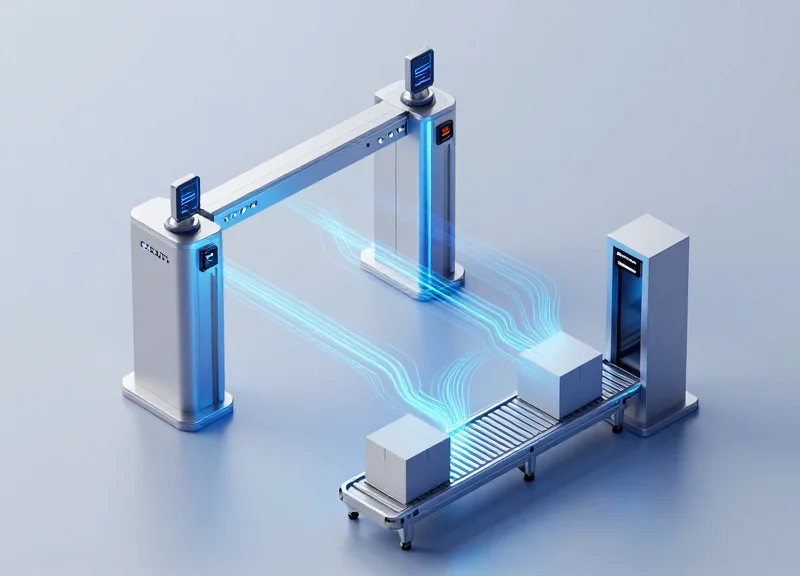
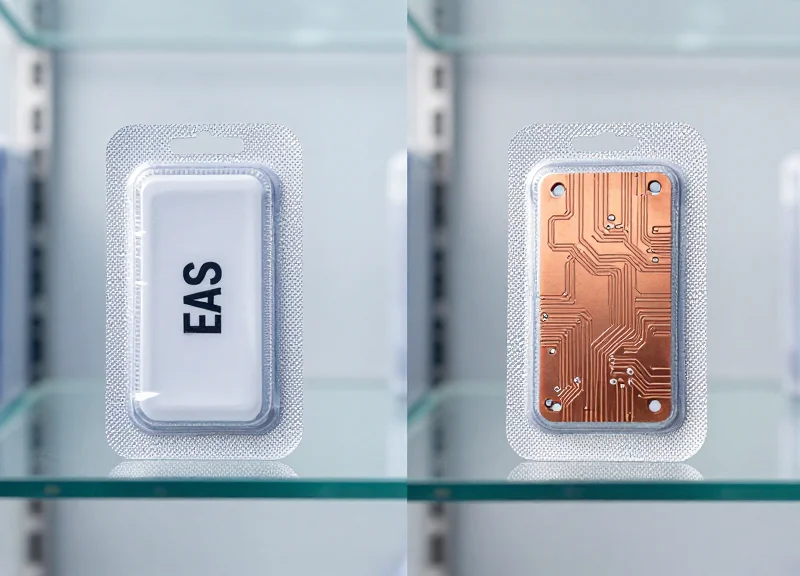
Future-proofing your retail business means building an infrastructure that is flexible enough to adapt to changing consumer behaviors while remaining robust enough to protect your margins. DragonGuard Solutions achieves this by integrating Electronic Shelf Labels (ESL), Radio Frequency Identification (RFID), and Electronic Article Surveillance (EAS) into a single, cohesive ecosystem. This unified approach ensures that as your O2O volume grows, your systems for inventory accuracy, loss prevention, and fulfillment speed evolve together, preventing the 'technology debt' that occurs when disparate systems fail to communicate.
| Strategic Pillar | Legacy Fragmented Systems | DragonGuard Unified Infrastructure |
|---|---|---|
| Data Synergy | Siloed data between security and sales. | Real-time sync between ESL, RFID, and ERP. |
| Scalability | Requires complete hardware overhauls. | Modular architecture for easy expansion. |
| Operational Focus | Reactive: Fixing errors after they happen. | Proactive: AI-driven picking and loss prevention. |
The Expert Perspective: Circular Data Integrity. Most retailers view ESL and EAS as separate functions—one for sales, one for security. DragonGuard’s unique advantage is 'Circular Data Integrity.' By using RFID-enabled ESLs, a single 'pick' event doesn't just update the digital price tag; it validates inventory levels across the global supply chain and adjusts security protocols in real-time. This eliminates 'phantom inventory,' which is the leading cause of failed O2O orders and lost revenue.
- Interoperable Hardware: Our ESL systems use industry-standard protocols, ensuring they can interface with existing WMS and future IoT devices without proprietary lock-in.
- Industrial-Grade Durability: DragonGuard hardware is built for high-traffic environments, featuring shock-resistant casing and battery lives exceeding 5-10 years to minimize maintenance overhead.
- Global Support Network: With over 18 years of experience, we provide the technical consultancy needed to scale from a single pilot store to a global retail footprint.
How does DragonGuard ensure my investment won't be obsolete in 3 years?
Our solutions utilize over-the-air (OTA) firmware updates and modular hardware designs. This allows you to add features like Pick-to-Light or location-based services to existing ESLs without replacing the entire infrastructure.
Can I integrate EAS security with ESL picking workflows?
Yes. DragonGuard’s unified platform allows RFID tags to communicate with EAS gates and ESL displays, ensuring that items picked for O2O orders are correctly 'whitelisted' to prevent false alarms during high-speed fulfillment.
Is the system cost-effective for medium-sized retailers?
Absolutely. By reducing labor costs by 40% and virtually eliminating picking errors, most DragonGuard clients see a full ROI within 12 to 18 months, making it a viable strategy for any scale.