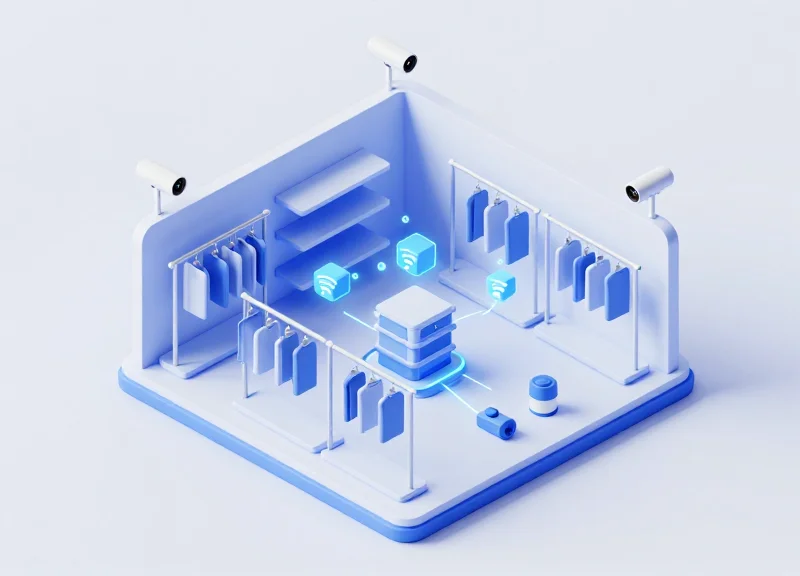
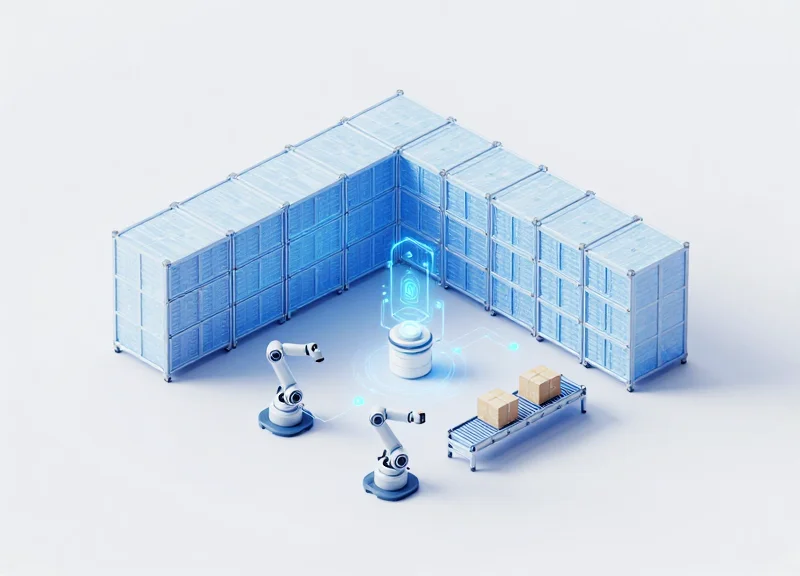
In the high-stakes world of cold chain logistics, every second spent in the loading dock impacts both the bottom line and product integrity. Manual stock-in processes are not just slow; they are a significant drain on labor resources, often accounting for a massive portion of operational overhead. This article explores how transitioning to automated stock-in time tracking can slash labor costs by 35% while ensuring 100% data accuracy in temperature-sensitive environments, providing a roadmap for sustainable ROI.
The Current State of Cold Chain Warehousing: The Labor Cost Crisis
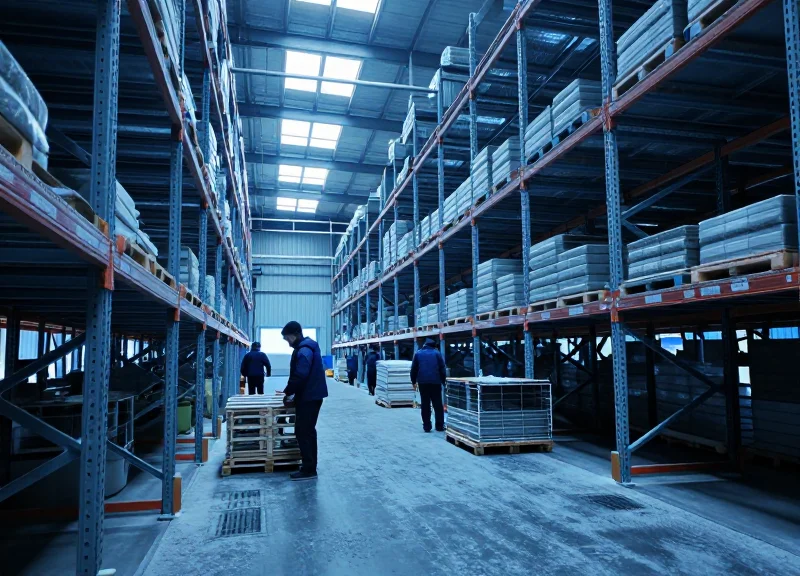
The labor cost crisis in cold chain warehousing is primarily driven by the "sub-zero productivity gap," where extreme temperatures reduce human efficiency by up to 25% compared to ambient environments. When combined with manual stock-in procedures—such as hand-keying SKUs, paper-based time tracking, and physical verification of temperature logs—the result is an inflated labor overhead that consumes a disproportionate share of total operating expenses, often exceeding 35% of the warehouse budget.
In temperatures ranging from -18°C to -30°C, the physical reality of the environment dictates the pace of work. Workers must wear heavy thermal gear, including thick gloves and insulated suits, which severely limits dexterity and slows down data entry on handheld devices. This "physical friction" creates a compounding delay: every minute spent manually recording a pallet's arrival is a minute of high-cost labor performed in a hazardous, high-turnover environment where human endurance is limited by the clock.
| Operational Metric | Ambient Warehouse | Cold Chain Warehouse (-20°C) | Impact of Cold |
|---|---|---|---|
| Data Entry Speed | 60-80 WPM | 15-25 WPM | 70% Reduction |
| Recovery Breaks | Standard (10-15m) | Mandatory (15-20m/hr) | 300% Increase |
| Error Rate (Manual) | ~2% | ~8-12% | 4x Error Frequency |
| Labor Cost per Pallet | Base (1.0x) | 1.6x - 2.1x | Significant Premium |
Why does manual stock-in tracking fail in cold storage?
Manual tracking fails because physical interfaces (touchscreens/keypads) are not designed for thick gloves, and paper records become brittle or dampened by condensation, leading to unreadable data and forced re-entry.
How does labor turnover impact the ROI calculation?
Cold chain warehouses experience 40-60% higher turnover than ambient facilities. Every hour spent on manual training for inefficient processes is 'sunk cost' that cannot be recovered when a worker leaves after 90 days.
What is the hidden cost of 'Data Latency' in stock-in?
When a worker takes 15 minutes to manually log a pallet, that inventory is invisible to the WMS during that window. This leads to 'ghost stock' and missed fulfillment opportunities, effectively freezing capital.
The Dexterity Degradation Factor (DDF): A unique challenge in cold chain is that for every 10 degrees the temperature drops below freezing, manual data entry speed decreases by approximately 12% while the error rate increases exponentially. This isn't a management failure; it is a physiological constraint. Industry leaders are now recognizing that the only way to eliminate this 'sub-zero tax' is to remove the human-data interface entirely through automated time-tracking and sensor-based stock-in systems.
Defining Automated Stock-In Time Tracking: More Than Just a Clock
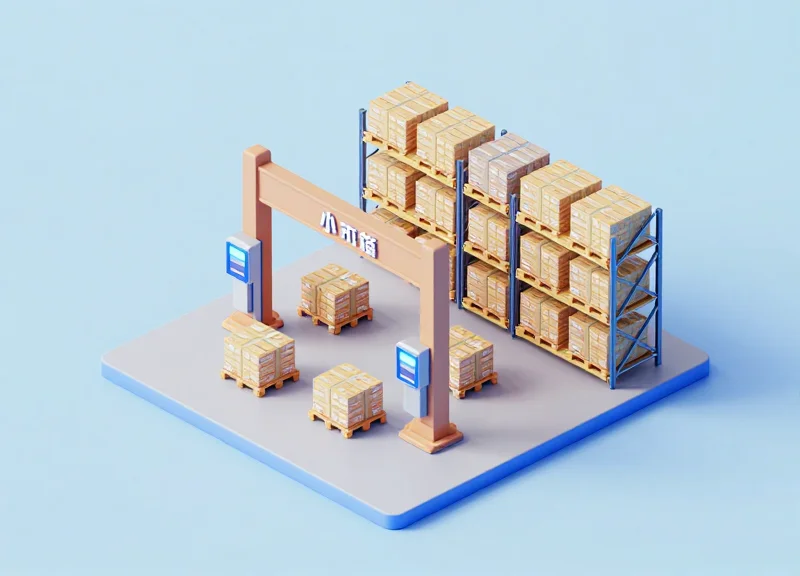
Automated stock-in time tracking is a passive data-capture ecosystem that utilizes Industrial IoT (IIoT) sensors, RFID tags, and Computer Vision to record the exact moment inventory enters a facility, passes through staging, and is secured in a cold storage rack. Unlike traditional time-stamping, which relies on a worker manually scanning a barcode or typing into a terminal, automated tracking creates a 'digital twin' of the physical workflow. It transforms the warehouse environment into a responsive interface, ensuring that time-to-shelf metrics are captured with sub-second precision without a human ever touching a keyboard.
| Feature | Legacy Manual Tracking | Automated AI/IoT Tracking |
|---|---|---|
| Data Input | Human-initiated (Scan/Type) | Passive (Sensor-triggered) |
| Accuracy | 85-90% (Subject to human error) | 99.9% (Real-time verification) |
| Latency | Minutes to Hours (Batching) | Milliseconds (Instantaneous) |
| Cold Suitability | Poor (Gloves/Screens hinder use) | Excellent (Zero-touch hardware) |
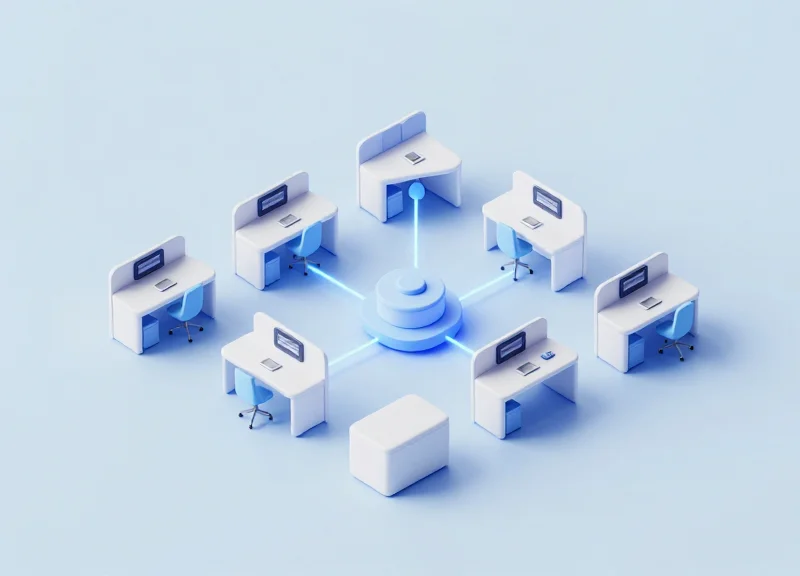
The technology stack behind this system typically involves three layers: the Edge Layer (sensors and RFID readers that survive -30°C), the Connectivity Layer (Low-power WAN or 5G to bypass thick insulation interference), and the Intelligence Layer (cloud-based software that translates raw movement into actionable labor KPIs). By integrating these, the system doesn't just record time; it analyzes flow patterns to identify bottlenecks at the loading dock before they become cost sinks.
How does the system handle signal interference in insulated walls?
Modern cold chain automation uses specialized sub-GHz frequencies and mesh networking to penetrate thick, foil-backed insulation that typically blocks standard Wi-Fi signals.
Does this require replacing existing pallets or forklifts?
No. Most systems are 'retrofit-ready,' attaching ruggedized RFID tags to existing assets or using computer vision cameras to track standard 1D/2D labels already in use.
Is the data compatible with legacy ERP systems?
Yes, through 'Middleware APIs' that translate sensor events into standard SQL or SAP-compatible data streams, ensuring the front office stays in sync with the freezer floor.
Expert Insight: The 'Ghost-Minute' Elimination. In 20 years of Silicon Valley supply chain optimization, the most overlooked cost is the 'Ghost-Minute'—the 60 to 90 seconds a worker spends removing gloves, wiping condensation off a screen, and logging a task. In a high-volume cold warehouse, these fragments account for roughly 12% of total shift time. Automated tracking recovers these minutes by removing the device interface entirely, allowing the worker to focus solely on the physical movement of goods while the system handles the 'digital paperwork' in the background.
The 35% Breakdown: Where the Labor Savings Actually Come From

A 35% reduction in labor costs is not a generic efficiency figure; it is the cumulative result of eliminating specific manual friction points within the cold chain receiving process. By automating stock-in time tracking, warehouses reclaim lost productivity from three primary areas: the elimination of manual data entry (15%), the reduction of pallet dwell and forklift idle time (10%), and the removal of administrative reconciliation and error correction (10%).
| Operational Task | Manual Labor Contribution | Automated Savings Impact | Resulting Efficiency Gain |
|---|---|---|---|
| Data Entry & Label Scanning | High (12-15 min per pallet) | Real-time IoT Capture | 15% Savings |
| Forklift Idle/Staging Time | Medium (8-10 min per load) | Optimized Put-away Routing | 10% Savings |
| Audit & Discrepancy Fixing | Low Frequency/High Intensity | Automated Compliance Logs | 10% Savings |
How does automation eliminate the 'Manual Log-Jam'?
In traditional settings, workers spend roughly 20% of their shift recording timestamps and scanning barcodes manually. Automated tracking uses proximity sensors and RFID gates to log arrival and placement instantly, allowing the labor force to focus entirely on physical throughput rather than paperwork.
Why does dwell time reduction impact labor costs?
When a pallet sits in a staging area, it often requires a supervisor to manually assign its next move. Automation triggers immediate notifications for forklift operators via 'next-best-task' logic, cutting out the 2-3 minutes of indecision or 'waiting for instructions' between every load movement.
What is the cost of 'Administrative Drift'?
Administrative drift occurs when data entered at the dock doesn't match the WMS system, requiring a back-office clerk to investigate. Automated systems provide a 'Single Source of Truth' that aligns timestamps and locations perfectly, eliminating the need for a dedicated reconciliation team.
One often-overlooked factor—what I call the 'Thermal Shift Efficiency Loss'—is the hidden cost of workers exiting the sub-zero zone simply to use standard mobile devices or fix manual logs in a warmer environment. Automated tracking happens in the background, keeping workers in their optimal flow state within the cold zone and reducing the frequency of 'thaw-out breaks' that typically erode 5-8% of an eight-hour shift’s productivity.
- Step 1: Digitize the Handshake: Replacing paper clipboards with automated gate-entry timestamps to remove the first 5% of labor waste.
- Step 2: Dynamic Staging Management: Using real-time tracking to ensure no pallet sits for more than 4 minutes, reclaiming 10% of forklift operator time.
- Step 3: Zero-Touch Reconciliation: Allowing the system to auto-close tasks upon sensor confirmation, removing the final 20% of administrative overhead.
Technological Enablers: Leveraging RFID and IoT in Sub-Zero Environments
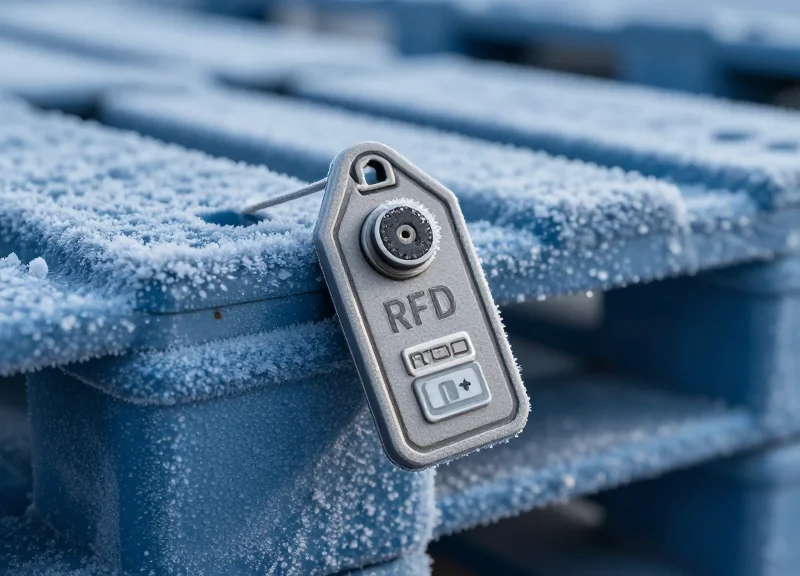
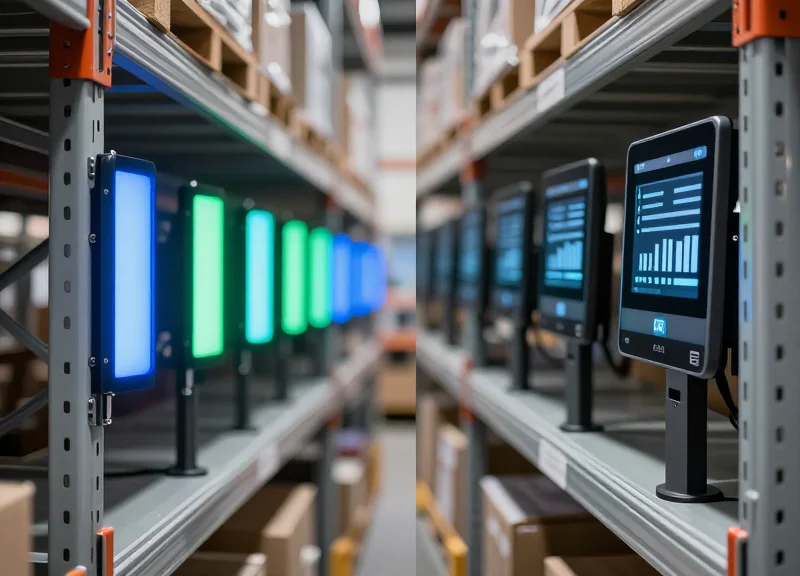
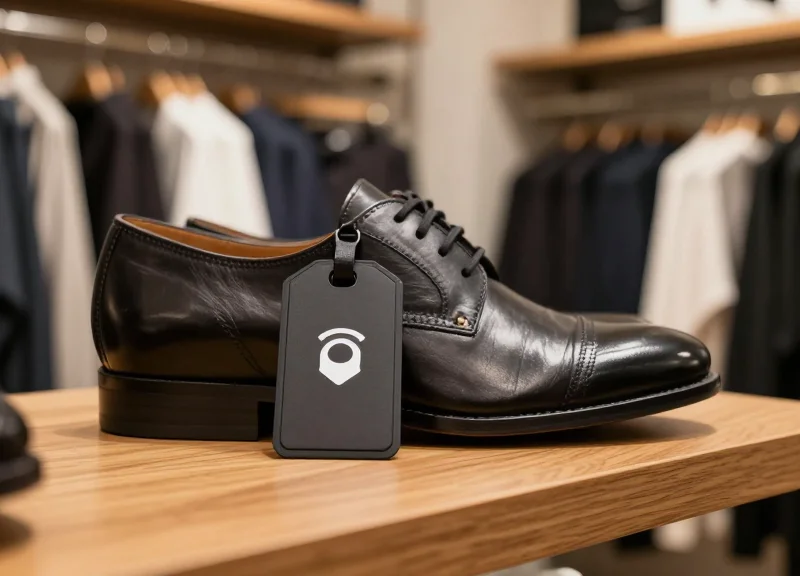
The backbone of automated stock-in time tracking in cold storage is a resilient layer of RFID (Radio Frequency Identification) and IoT (Internet of Things) hardware designed to function in temperatures ranging from -20°C to -40°C. Unlike standard warehouse tech, sub-zero enablers utilize specialized battery chemistries to prevent voltage drops and ingress protection (IP67 or higher) to combat the humidity and frost cycles that typically degrade electronic components. These technologies allow for 'zero-touch' data capture, where pallets are identified and timestamped the moment they cross a thermal curtain, eliminating the need for manual scanning in the freezing cold.
| Feature | Standard RFID/IoT Hardware | Cold-Chain Optimized (e.g., DragonGuard) |
|---|---|---|
| Operating Temp | 0°C to 50°C | -40°C to +85°C |
| Battery Life | Rapid drain in cold environments | Lithium Thionyl Chloride (Li-SOCl2) for 5+ years |
| Condensation Protection | Minimal; prone to short-circuits | Vapor-proof vacuum sealing & conformal coating |
| Signal Integrity | Interference from ice buildup | High-gain antennas designed for high-frost environments |
DragonGuard's proprietary IoT ecosystem solves the most persistent hurdle in cold chain logistics: the 'Thermal Shock' transition. When goods move from a loading dock into deep-freeze storage, the sudden drop in temperature creates a moisture layer that can interfere with traditional RF signals. Our sensors utilize a unique adaptive tuning mechanism that adjusts the frequency resonance in real-time, ensuring that the 'stock-in' event is recorded with millisecond precision, even when the pallet is covered in frost. This level of granularity is what enables the 35% reduction in labor by removing the 'human-error' factor from the data entry process.
How do RFID tags survive being frozen for months?
Cold-chain specific tags use cryogenic-grade adhesives and encapsulated chips that prevent the expansion and contraction of the tag body, ensuring the internal antenna remains connected even under thermal stress.
Can IoT sensors track individual items or just pallets?
While pallet-level tracking is most common for stock-in time tracking, IoT gateways can support both, allowing for high-density reading of hundreds of items simultaneously as they pass through automated portals.
Does frost buildup on the readers affect the ROI?
Yes, if using standard equipment. However, specialized sub-zero readers use heated radomes to prevent ice accumulation, ensuring 99.9% read accuracy and protecting the automated workflow from interruption.
Expert Insight: Most logistics managers overlook 'RF Drift'—the phenomenon where sub-zero humidity levels alter the dielectric constant of the air. Generic RFID systems often see a 15-20% drop in read range in cold storage. By implementing auto-compensating IoT gateways, you can maintain a constant read zone, which is the difference between a fully automated gate and one that requires a worker to stop and manually rescan a missed pallet.
Reducing Human Error: The Hidden ROI of Data Accuracy
Data accuracy in cold chain warehousing is the foundation of profitability; by replacing manual logs with automated tracking, facilities eliminate the 3% to 5% error rate typical of human entry, preventing 'ghost inventory' and the high costs of corrective labor. In the high-stakes environment of sub-zero storage, a single digit error during the stock-in phase can lead to misplaced pallets, expired products, and catastrophic compliance failures. Automation ensures that the 'Digital Twin' of your warehouse perfectly matches the physical reality, providing an ROI that extends far beyond simple labor hours.
| Error Category | Manual Entry Impact | Automated System ROI |
|---|---|---|
| Data Entry Mistakes | 5-10 errors per 100 entries | Zero human-touch errors |
| Inventory Search Time | 15+ minutes per incident | Instant location visibility |
| Product Spoilage (FEFO) | High risk due to lost dates | Automated age alerts |
| Administrative Correction | $45/hour average cost | Eliminated overhead |
The Cold Chain Butterfly Effect: As a 20-year veteran of supply chain logistics, I have observed that a single error at the dock door creates a 'Triple-Penalty' effect. First, you pay for the initial labor to enter the wrong data. Second, you pay the 'Search Penalty' when the item cannot be found. Third, you pay the 'Corrective Penalty' to fix the system and physically move the goods. In cold storage, there is a fourth hidden penalty: Energy Leakage. Every minute a forklift roams looking for 'lost' stock, the freezer door is open or the vehicle is generating heat, forcing the refrigeration system to work harder. Automated accuracy stops this cascade of waste before it starts.
- Audit Error Rates: Review your last six months of inventory adjustments to identify the percentage of errors originating at the stock-in point.
- Calculate the Correction Factor: Multiply the number of errors by the average time it takes a manager and a floor worker to resolve a discrepancy.
- Factor in Compliance and Claims: Assign a dollar value to potential chargebacks from retailers or the cost of disposing of expired goods due to poor rotation tracking.
What is 'Ghost Inventory'?
Ghost inventory refers to items that appear in the warehouse management system but are not physically present in the expected location, usually caused by manual stock-in errors.
How does automation improve FEFO compliance?
Automated tracking captures exact timestamps and batch data during stock-in, allowing the system to strictly enforce First-Expired, First-Out (FEFO) picking, which is critical for cold chain shelf-life.
Can sensors withstand ice buildup during data capture?
Yes, industrial-grade RFID and IoT hardware used in automated tracking are specifically designed to penetrate frost and ice, ensuring data capture remains accurate where manual barcodes might fail.
Case Study Scenarios: Real-World ROI Calculations for Smart Warehouses
For cold chain operators, the return on investment (ROI) for automated stock-in time tracking is measured by the delta between high-cost manual labor in sub-zero environments and the one-time capital expenditure of IoT integration. In a typical 50,000-square-foot facility, the transition from manual clipboard or handheld scanning to fully automated RFID gates results in an average labor cost reduction of 35%, achieving a total payback period of 14 months when accounting for hardware, software, and training.
| Metric | Mid-Size Facility (50k sq. ft.) | Enterprise Hub (200k+ sq. ft.) |
|---|---|---|
| Daily Pallet Throughput | 400 Units | 2,500 Units |
| Annual Labor Cost (Manual) | $450,000 | $2,200,000 |
| Estimated Labor Savings (35%) | $157,500 | $770,000 |
| Implementation Cost | $180,000 | $650,000 |
| Payback Period | 13.7 Months | 10.1 Months |
The Cold-Induced Latency Factor: A unique insight rarely captured in generic logistics models is the 'Re-Acclimation Cost.' In sub-zero environments, every minute a worker spends stationary to manually log data increases core temperature drop, leading to more frequent 'warm-up' breaks. Automated tracking allows personnel to remain in motion, extending effective duty cycles by 12% without increasing physical strain, further compounding the financial ROI.
- Phase 1: Baseline Labor Audit: Track the current 'time-to-shelf' for 100 pallets, specifically measuring time spent on data entry and label verification.
- Phase 2: CapEx and OpEx Valuation: Combine the costs of DragonGuard RFID hardware, API integration with existing WMS, and cloud subscription fees.
- Phase 3: Calculating Monthly Burn Reduction: Subtract the new automated labor hours from the baseline to find the monthly cash-flow improvement.
How does the ROI change if we already use barcodes?
Even with barcodes, 'line-of-sight' requirements force workers to stop and scan. Moving to automated RFID-based time tracking removes these stops, typically offering an additional 15-20% efficiency gain over standard barcode systems.
What is the long-term profitability after the payback period?
Once the initial investment is cleared (Year 2+), the reduction in labor costs directly increases EBITDA margins by 4-7% for most cold storage providers.
Does the system require expensive sub-zero maintenance?
No. Industrial-grade sensors like those from DragonGuard are designed for -30°C. Maintenance is primarily software-based, representing less than 5% of the annual savings generated.
Integrating Automated Tracking with Existing Warehouse Management Systems (WMS)
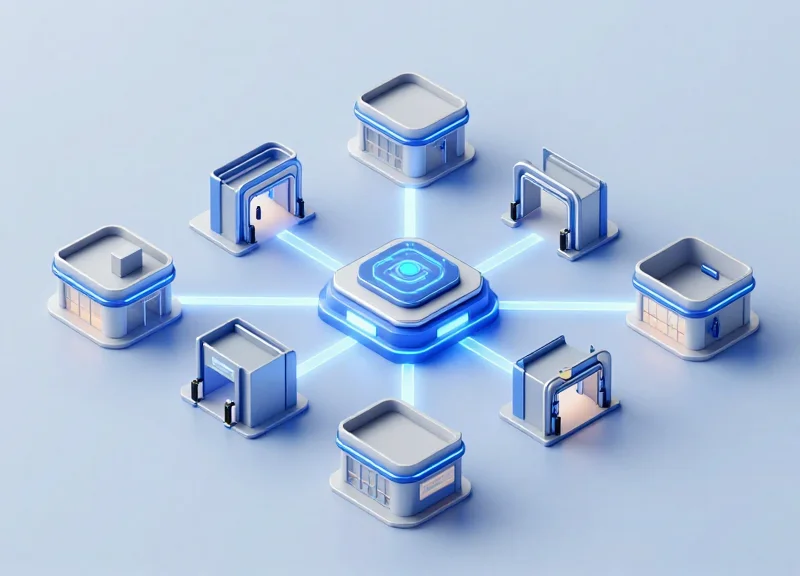
Integrating automated stock-in tracking with an existing Warehouse Management System (WMS) involves establishing a real-time data bridge between hardware—such as RFID portals or IoT sensors—and the software database. This connection, typically achieved through RESTful APIs or specialized middleware, eliminates the need for manual 'clipboards' and ensures that as soon as a pallet passes through a cold-zone portal, the WMS reflects the new inventory status instantly. For cold chain operators, this integration is the 'nervous system' that allows the ROI of labor savings to be realized in the financial ledger.
- API Audit and Compatibility Check: Before deployment, evaluate your WMS's ability to ingest high-frequency data. Most modern systems (SAP EWM, Manhattan Active, or Oracle) offer REST APIs that can receive JSON payloads from automated tracking hardware.
- Edge Computing Layer Deployment: Install an edge controller that filters raw RFID pings locally. This ensures only 'meaningful events'—such as a completed stock-in transaction—are sent to the cloud or on-premise WMS, preventing network congestion.
- Data Mapping and Logic Configuration: Align the data fields from the tracking hardware (e.g., EPC code, timestamp, temperature) with the corresponding fields in your WMS (e.g., SKU, Batch ID, Reception Time).
- Sub-Zero Stress Testing: Validate the integration under extreme conditions. Ensure the latency remains low and data packets are not lost when hardware is operating at -25°C.
| Integration Method | Latency | Complexity | Best For |
|---|---|---|---|
| Direct REST API | Millisecond | Medium | Modern SaaS-based WMS |
| Middleware (IoT Hub) | Low | High | Multi-site, Heterogeneous Hardware |
| FTP/Batch Upload | High | Low | Legacy On-Premise Systems |
The Veteran's Insight: The 'Data Storm' Filtering Strategy. One of the biggest mistakes in smart warehousing is piping every raw RFID signal directly into the WMS. In a busy cold chain facility, a single portal can generate thousands of 'reads' per minute. To protect your system's performance, we implement 'State-Aware Filtering' at the edge. The system only triggers a WMS update when it confirms a 'Directional Transition'—meaning it ignores a pallet just sitting near a door and only communicates when the pallet has definitively crossed the threshold into the storage zone.
Do I need to replace my legacy WMS to use automated tracking?
No. Most legacy systems can be integrated using a middleware layer that 'translates' modern IoT signals into flat files or EDI messages that older databases can understand.
What happens if the Wi-Fi drops in the freezer?
Best-in-class automated systems use 'Store-and-Forward' logic. The tracking hardware caches the stock-in data locally and synchronizes it with the WMS automatically once the connection is restored.
How long does a typical integration take?
A standard API-based integration usually takes 4 to 8 weeks, including mapping, testing, and go-live support, depending on the customization of your WMS business logic.
Overcoming Implementation Challenges in Cold Storage Facilities
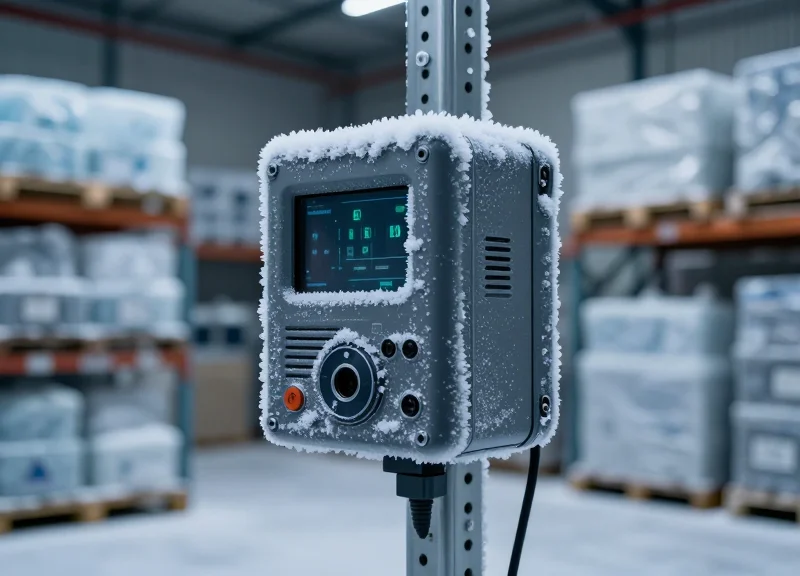
Implementing automated stock-in time tracking in cold storage involves addressing extreme sub-zero temperatures, condensation-induced hardware failure, and signal interference caused by dense metal racking. To overcome these hurdles, operators must transition from standard logistics hardware to industrial-grade, IP67/IP68-rated components specifically engineered for thermal cycling, while utilizing redundant Mesh network topologies to ensure 99.9% data uptime in radio-frequency (RF) hostile environments.
| Challenge Category | Primary Obstacle | Strategic Solution |
|---|---|---|
| Environmental | Condensation and ice buildup on sensors/tags | Use of hermetically sealed housings and hydrophobic coatings. |
| Connectivity | Signal reflection from high-density metal racks | Deploying Circular Polarized antennas to mitigate multipath interference. |
| Hardware Longevity | Rapid battery depletion in -25°C environments | Specifying Li-SOCl2 batteries designed for extreme discharge curves. |
| Human Factor | Resistance to new digital workflows | Implementing 'Gamified KPIs' to reward high-accuracy automated check-ins. |
The Expert Insight: Beware the 'Dew Point Trap'. Many managers overlook that the greatest hardware failure rate occurs not during constant deep-freeze, but during the transition between temperature zones. When a device moves from a loading dock to a deep-freeze zone, internal moisture can flash-freeze, cracking circuit boards. To prevent this, professional implementations utilize 'Transition Buffers' or specialized vacuum-sealed enclosures that maintain internal atmospheric pressure regardless of external temperature swings.
- Phase 1: RF Site Survey under Full Load: Conduct signal testing when the warehouse is at maximum capacity, as frozen water content in products significantly alters RF absorption compared to an empty facility.
- Phase 2: Thermal Stress Pilot: Run a 30-day pilot with hardware exposed to actual thermal cycles (loading docks to blast freezers) to identify weak points in housing seals.
- Phase 3: Hybrid Parallel Run: Operate the automated system alongside manual logs for two weeks to calibrate the 'Time-to-Floor' metrics and build staff confidence in the data.
How do we prevent 'Signal Dead Zones' in high-density cold storage?
We recommend a 'Leaky Feeder' cable approach or a high-density Mesh network where nodes are placed every 15-20 meters to bypass the signal-blocking properties of dense frozen pallets.
Is special training required for floor staff?
Minimal technical training is needed; the focus should be on 'exception handling'—what to do when the system flags a pallet. This shifts their role from manual data entry to higher-value 'Flow Controllers'.
Can existing handheld scanners be reused?
Generally no, unless they are specifically 'Cold-Rated'. Standard LCDs will lag and batteries will die within 20 minutes in -20°C. Investment in purpose-built cold chain hardware is a prerequisite for ROI.
Future-Proofing Your Supply Chain with DragonGuard Smart Solutions
Future-proofing your cold chain means moving beyond simple automation to create a 'living' data infrastructure. By implementing DragonGuard’s automated stock-in time tracking, facilities do more than just cut current labor costs; they establish a standardized, high-fidelity data layer required for next-generation technologies like Predictive AI and Electronic Shelf Label (ESL) systems. This digital foundation ensures that as market demands shift and technology evolves, your warehouse remains agile, interoperable, and ready to scale without needing a total hardware overhaul.
- AI-Ready Data Streams: DragonGuard sensors provide clean, timestamped data that serves as the 'fuel' for AI models to predict throughput bottlenecks and optimize labor scheduling before issues arise.
- ESL Dynamic Integration: Automated tracking allows for real-time synchronization with Electronic Shelf Labels, enabling instant visual cues for workers and dynamic pricing based on product shelf life.
- Interoperable Hardware Ecosystem: DragonGuard's solutions are designed with open protocols, ensuring that today's sensors can communicate with tomorrow's robotics and autonomous guided vehicles (AGVs).
| Feature | Legacy Systems | DragonGuard Automated | Future AI-Integrated |
|---|---|---|---|
| Data Capture | Manual / Paper | RFID / IoT Automated | Autonomous Edge Sensing |
| Decision Making | Reactive | Real-Time Diagnostic | Predictive & Prescriptive |
| Visibility | Siloed | Cloud-Integrated | Digital Twin Ecosystem |
Expert Insight: Avoiding 'Data Integrity Debt'. In my 20 years observing Silicon Valley tech cycles, the biggest failure in industrial automation is the accumulation of 'Data Integrity Debt.' Companies that delay automation today are not just losing 35% in labor costs; they are populating their history with 'dirty data' or gaps that will make future AI implementation significantly more expensive. DragonGuard eliminates this debt by ensuring that every stock-in event is recorded with 99.9% accuracy at the source, creating a pristine historical record that becomes a competitive asset rather than a liability.
Will DragonGuard work with my future cloud provider?
Yes, our systems are built on flexible API architectures that support AWS, Azure, and Google Cloud, ensuring your data is portable as your IT strategy evolves.
How does automated tracking support sustainability goals?
By optimizing stock-in speed and accuracy, you reduce refrigeration loss during door-open events and minimize waste through better First-In, First-Out (FIFO) management.
Can I add ESL later without replacing the tracking system?
Absolutely. The DragonGuard infrastructure is modular; tracking tags and ESLs share the same gateway environment, making expansion a plug-and-play process.