In the high-stakes world of luxury piano sales and premium musical gear, the showroom experience is everything. However, behind the elegant facade, many dealers struggle with the manual burden of price updates and inventory discrepancies. As we look toward 2026, the integration of Electronic Shelf Labels (ESL) is no longer just a tech upgrade—it is a strategic pivot. By replacing paper with precision, digital price tags are helping elite retailers achieve a staggering 35% increase in ROI by streamlining backend operations and elevating the customer journey.
The Evolution of the Luxury Music Showroom: Why 2026 Demands Digital
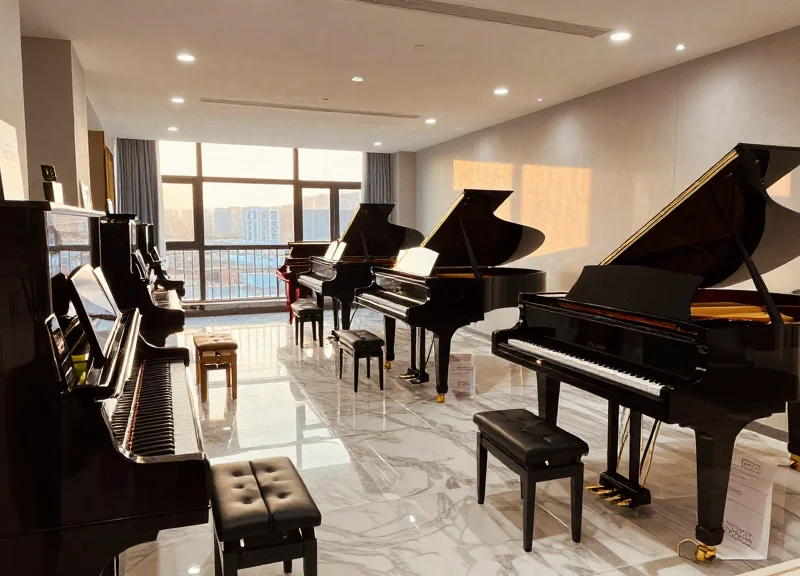
The evolution of the luxury music showroom represents a fundamental shift from static inventory displays to 'intelligent retail environments' where digital price tags serve as the nervous system. In 2026, luxury piano dealers and high-end gear retailers are abandoning manual pricing to eliminate 'Update Lag'—the costly gap between online price changes and physical tag updates. This digital transformation allows showrooms to maintain 100% pricing parity across all channels, protecting high-margin items from being sold under market value while providing customers with instant access to technical provenance and rich media via integrated NFC and QR technology.
| Feature | Traditional Showroom (Pre-2024) | Modern Digital Showroom (2026+) |
|---|---|---|
| Price Update Speed | Manual (Hours/Days) | Instant (Millisecond Sync) |
| Information Depth | Static Paper Specs | Dynamic (Videos/Serial History) |
| Inventory Accuracy | High Discrepancy Risk | Real-time ERP Integration |
| Customer Experience | Transactional/Generic | Interactive/Personalized |
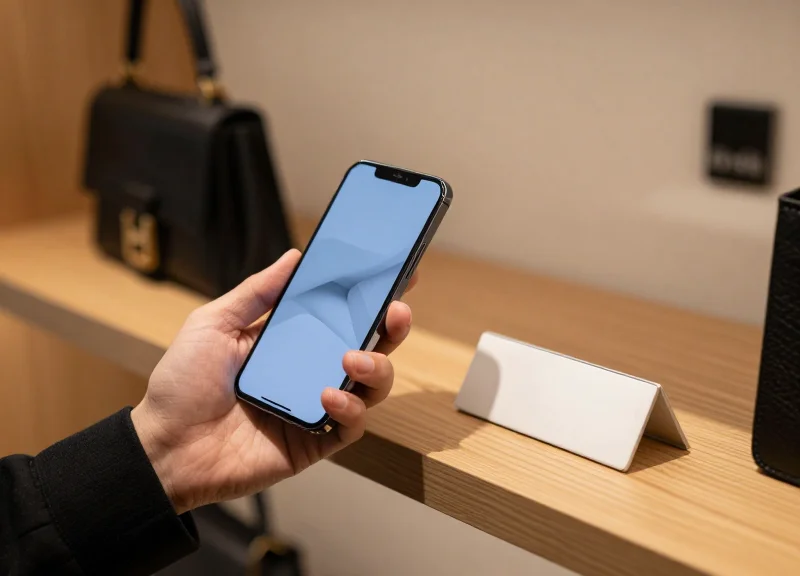
A unique insight into the 2026 market is the rise of 'Dynamic Provenance Tracking.' For luxury piano dealers, the value of an instrument often lies in its specific voicing history or the artist who last performed on it. Digital tags now act as live data portals; a customer can tap their phone to an Electronic Shelf Label (ESL) to see the exact humidity history of that specific grand piano over the last six months. This level of transparency builds unprecedented trust, justifying the premium price points found in the luxury segment and directly boosting conversion rates by reducing buyer hesitation.
Why is paper pricing failing luxury dealers today?
Paper pricing creates operational friction and brand erosion. When a luxury dealer is slow to update prices on high-value gear during market volatility, they suffer 'margin leak.' Furthermore, worn or outdated paper tags signal a lack of attention to detail that contradicts the luxury brand promise.
How do digital tags impact the sales staff's role?
Instead of spending 10-15 hours a week auditing and replacing tags, sales consultants can focus on high-value relationship building. Digital tags provide the salesperson with instant data on stock levels at other locations and historical price trends, empowering them to close deals with better information.
What role does 2026 consumer behavior play in this shift?
The 2026 consumer is 'digitally native' even in the luxury space. They expect to bridge the gap between their mobile research and the physical product. If a showroom cannot provide the same depth of digital info as their smartphone, the physical location loses its competitive advantage.
The transition to digital is no longer about saving on paper costs; it is about reclaiming the 35% ROI lost to operational inefficiency and missed cross-selling opportunities. By integrating Electronic Shelf Labels with a store's central ERP, retailers can implement 'Smart Floor' strategies—where pricing automatically adjusts based on floor traffic, inventory age, or local competitor stock levels, ensuring the showroom floor is always optimized for maximum yield.
The 35% ROI Breakthrough: Breaking Down the Numbers

A 35% increase in Showroom Return on Investment (ROI) is achieved by luxury retailers through a three-pronged financial recovery strategy: the elimination of manual labor hours, the total reduction of pricing 'shrinkage' due to human error, and the implementation of dynamic pricing that captures real-time market demand. For a high-end piano dealer, this translates to recapturing approximately 15-20 hours of expert sales staff time per month—time previously wasted on administrative paper-tagging that is now redirected toward high-touch client consultations and closing five-figure deals.
| Metric Category | Traditional Manual System | ESL-Integrated Showroom | ROI Impact |
|---|---|---|---|
| Labor Cost (Monthly) | $1,200 - $2,500 | $50 - $100 | 95% Reduction |
| Pricing Discrepancy Loss | 2% of Gross Margin | 0.1% of Gross Margin | Significant |
| Update Lead Time | 24 - 72 Hours | < 60 Seconds | Immediate Agility |
| Staff Opportunity Cost | High (Admin focused) | Low (Sales focused) | Revenue Multiplier |
In the luxury gear sector, the 'Cost of Friction' is the silent killer of margins. When a 2026 gear retailer has a discrepancy between their online store and the physical floor price, it creates a trust gap that can kill a sale instantly. Digital price tags eliminate this by ensuring 100% parity across all channels. Furthermore, the unique 'Expert Insight' for 2026 is the Velocity Premium: the ability to raise prices instantly on high-demand, limited-stock items (like vintage-reissue synths) based on global supply chain shortages, a move that is impossible to execute across 50+ items manually in a single afternoon.
How does ESL reduce 'Hidden Shrinkage' in luxury music retail?
Hidden shrinkage occurs when staff sell an item at an outdated, lower price because the tag wasn't updated to reflect a manufacturer's price hike. In the piano industry, where a 5% increase can mean thousands of dollars, ESL ensures that your floor price always reflects the current replacement cost, protecting your net margins automatically.
Is the 35% ROI achievable for smaller boutique shops?
Yes. While the scale is smaller, the percentage remains consistent because boutique shops often have fewer staff members. Freeing up a single owner-operator from the burden of inventory auditing provides a disproportionately high return by allowing them to focus on high-level procurement and VIP client relationships.
What is the typical 'Payback Period' for the hardware investment?
Most luxury showrooms see a full return on the initial hardware investment within 14 to 18 months, primarily driven by the 'Sales Conversion Lift' that occurs when staff spend 100% of their floor time engaging with customers rather than maintaining signage.
Ultimately, the financial breakthrough isn't just about saving money; it is about 'Capital Reallocation.' By automating the most mundane aspect of piano and gear retail—price management—dealerships transform their showroom from a static museum into a reactive, high-performance sales environment where the data on the tag is as sophisticated as the instrument it represents.
Eliminating Human Error: Automated Inventory Management for Piano Dealers
In the high-stakes world of luxury piano retail, a single pricing discrepancy can lead to a catastrophic loss of consumer trust or thousands of dollars in evaporated margins. Automated inventory management solves this by integrating Electronic Shelf Labels (ESL) directly with a dealership's Enterprise Resource Planning (ERP) or Point of Sale (POS) system. This ensures that the price, specifications, and availability status displayed on the showroom floor are a 100% accurate reflection of the central database, updated instantly without manual intervention.
| Feature | Traditional Paper Labels | Automated Digital Tags |
|---|---|---|
| Update Speed | Hours/Days per floor reset | Sub-60 seconds across all units |
| Data Accuracy | Subject to human oversight | 100% ERP-to-Floor Synchronicity |
| Margin Protection | High risk of 'stale' pricing | Real-time inflation/cost adjustments |
| Staff Utilization | Significant manual labor | Zero labor for price maintenance |
The 'human element' in manual pricing is a silent ROI killer. When a dealer manages a fleet of premium grands, uprights, and digital hybrids, the logistics of printing, cutting, and placing paper cards leads to 'Ghost Inventory'—items that are sold but still marked as available, or units with outdated promotional pricing that the dealer is legally or ethically forced to honor at a loss.
- ERP Trigger: A price or metadata change is entered into the central management system (e.g., NetSuite, Microsoft Dynamics, or a custom music retail POS).
- Encrypted Gateway Transmission: The update is transmitted via a secure wireless gateway using Sub-GHz or BLE frequencies to avoid interference with the showroom's guest Wi-Fi.
- Instant Visual Confirmation: The e-ink display on the piano's digital tag updates instantly, often including a QR code that links to the specific unit's maintenance history or a video demonstration.
- Feedback Loop: The tag sends a 'successful update' signal back to the ERP, providing managers with an audit trail of exactly when the showroom floor was updated.
Expert Insight: The 'Trust-to-Transaction' Ratio. In luxury sales, the 'Trust-to-Transaction' ratio is the most sensitive metric. For a customer ready to invest $150,000 in a concert grand, finding a discrepancy between the floor tag and the final invoice doesn't just annoy them—it creates a psychological barrier that suggests a lack of professional rigor. Automation isn't just about saving labor; it is about protecting the sanctity of the brand's premium positioning.
Does the system work with existing inventory software?
Yes, modern ESL systems use open APIs that can bridge with virtually any retail POS or legacy ERP system used by piano dealers.
What happens if the power goes out?
ESL tags use e-paper technology, which requires no power to maintain an image. The price remains visible even if the system is completely offline.
Can we display technical specs like humidity history?
Absolutely. Because the tags sync with your database, you can automatically display wood types, manufacturing dates, or even real-time humidity data from sensors.
Dynamic Pricing Agility: Responding to Market Fluctuations in Real-Time
Dynamic pricing agility in the luxury instrument and pro-audio sector is the capability to update showroom floor pricing across an entire retail network in under 60 seconds. Leveraging Digital Price Tags (ESLs), dealers can automatically adjust for manufacturer price hikes, currency fluctuations, or flash competitor sales. This technology transforms the price tag from a static sticker into a strategic asset, ensuring that high-value assets like Steinway pianos or boutique synthesizer racks are never sold below the optimized margin due to outdated labeling.
| Feature | Traditional Paper Pricing | ESL Dynamic Pricing |
|---|---|---|
| Update Speed | 4-8 hours per showroom | < 60 seconds (Global) |
| Margin Protection | Reactive (Weekly/Monthly) | Proactive (Real-Time) |
| Competitor Matching | Manual / Inconsistent | Automated via API |
| Labor Requirement | High (Printing/Applying) | Zero (Automated Sync) |
One of the most significant advantages for 2026 gear retailers is the ability to hedge against 'The Hidden Margin Leak.' In high-end gear, supplier price increases often occur without warning. If a dealer has $2M in inventory and a supplier raises costs by 4%, a delay of just three days in updating floor tags can cost thousands in potential profit. Digital tags remove this lag entirely by syncing directly with the dealer's ERP and manufacturer price feeds.
Expert Insight: The Velocity Premium Strategy. A unique strategy used by Silicon Valley-influenced retailers is 'Scarcity Indexing.' When your ERP detects that a specific high-demand model (e.g., a limited edition Moog or a specific Yamaha grand) has fallen below a certain stock threshold across the regional network, the digital tags can automatically apply a 2-5% 'demand premium.' This maximizes ROI on the final units of high-velocity inventory where buyers are less price-sensitive and more availability-focused.
Does dynamic pricing hurt customer trust in luxury settings?
Contrary to concerns, luxury buyers value transparency. When digital tags provide QR codes linking to real-time specs and 'Current Market Value' justifications, it builds confidence that they are paying a fair, up-to-date price rather than an arbitrary sticker price.
How do retailers handle MAP (Minimum Advertised Price) compliance?
ESL systems can be programmed with MAP 'guardrails.' The software will automatically flag or block any price update that falls below the manufacturer's threshold, preventing costly legal and relationship friction with brands.
Can I run time-sensitive promotions?
Yes. Retailers can schedule 'Happy Hour' or 'Event Only' pricing that automatically reverts to standard rates at a specific time, perfect for VIP showroom events or local music festivals.
Enhancing the Luxury Aesthetic: Sleek Designs for High-End Environments
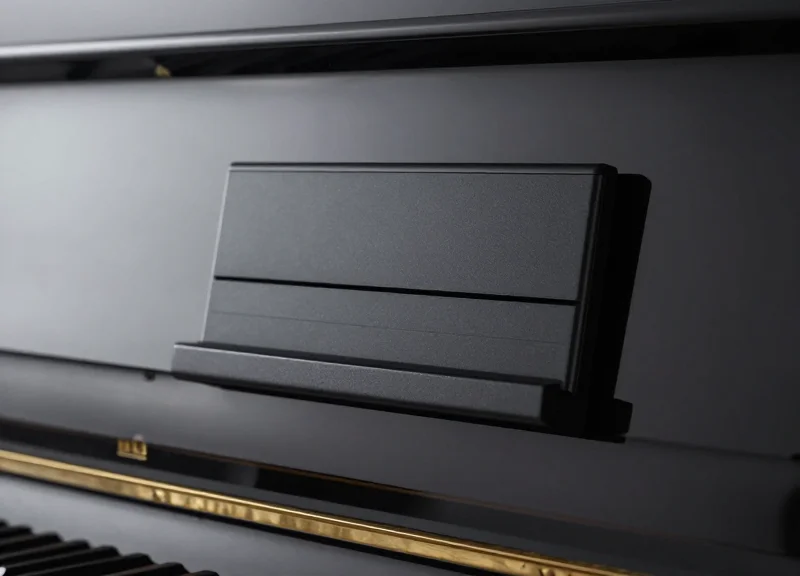
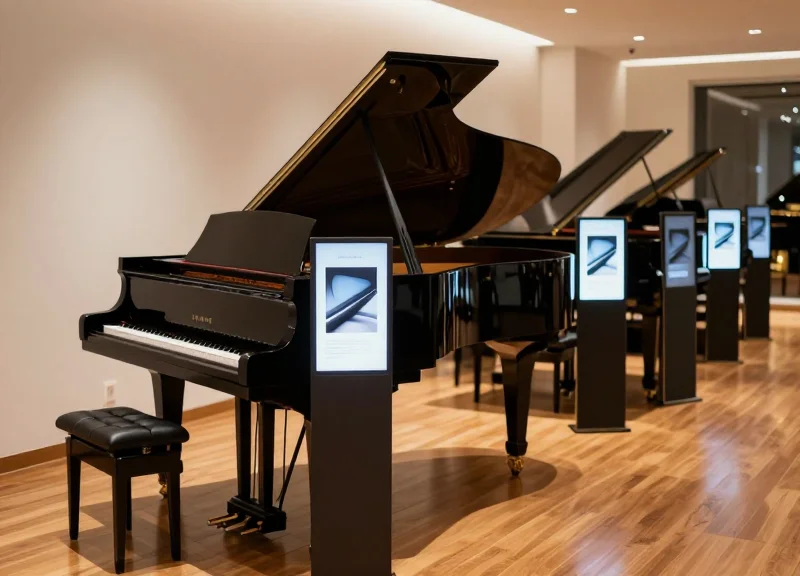
Digital price tags enhance the luxury showroom aesthetic by replacing distracting, often misaligned paper signage with ultra-slim, high-contrast E-ink displays that mimic the appearance of premium gallery labels. Modern Electronic Shelf Labels (ESLs) are designed with minimalist bezels and anti-glare screens that integrate seamlessly into the high-end environments of piano galleries and boutique gear retailers, ensuring that the focus remains on the craftsmanship of the instrument rather than the administrative clutter of the sale.
In the world of luxury retail, 'visual silence' is a commodity. When a customer walks into a showroom to view a $150,000 concert grand piano, their experience is shaped by the environment's harmony. Traditional paper tags—often yellowed, curled at the edges, or printed in inconsistent fonts—create visual 'noise' that devalues the product. Premium ESL hardware solves this by offering customizable digital canvases that can be programmed to match the specific branding and elegance of the showroom.
| Aesthetic Feature | Traditional Paper Tags | Modern Luxury ESLs |
|---|---|---|
| Visual Consistency | Variable (handwritten or misaligned prints) | Uniform (pixel-perfect typography) |
| Material Quality | Paper or plastic cardstock | Polycarbonate or brushed metal frames |
| Lighting/Clarity | Fades under showroom spotlights | High-contrast E-ink with 180° viewing angles |
| Clutter Factor | High (physical replenishment needed) | Zero (wireless, nearly invisible mounting) |
One of the most significant advantages for piano dealers is the 'Adaptive Branding' capability. Unlike a static piece of paper, a digital tag can be updated to use specific serif fonts that complement a 19th-century vintage Bechstein, or a clean, modern sans-serif for a cutting-edge Roland digital hybrid. This subtle attention to detail reinforces the dealer's expertise and respect for the instrument's heritage.
Do digital tags look too 'industrial' for a piano gallery?
No. Leading ESL manufacturers now offer wood-grain finishes or metallic bezels specifically designed for luxury environments. These units are thinner than a standard deck of cards and can be mounted on discreet floor stands or elegant acrylic blocks.
Will the glare from showroom spotlights make them hard to read?
Actually, the opposite is true. Premium E-ink technology is reflective, meaning the more light you shine on it, the clearer it becomes, unlike LCD screens which suffer from glare and washout.
How long do the batteries last in these sleek designs?
Despite their slim profile, modern ESLs use ultra-low power consumption, typically offering a battery life of 5 to 10 years, ensuring they remain a set-and-forget solution for the showroom floor.
Expert Insight: The 'Ghost-Tag' Strategy. For the ultimate luxury experience, we recommend 'ghost-tagging'—using ESLs with custom-milled wooden housing that matches the finish of your pianos (e.g., Polished Ebony or Satin Walnut). This makes the technology appear as a bespoke part of the instrument's display stand rather than an external piece of hardware. When the price is nearly invisible yet perfectly legible upon inspection, you’ve achieved the pinnacle of luxury retail design: information without intrusion.
The Power of Information: QR Codes and Instant Product Specifications
In the luxury piano and high-end gear market, the 'Power of Information' refers to the seamless delivery of deep-dive technical specifications and historical provenance directly to a customer's smartphone via QR codes integrated into Electronic Shelf Labels (ESL). By bridging the gap between the physical instrument and its digital pedigree, retailers provide the transparency and detail required for five-figure investment decisions. This digital integration allows customers to explore soundboard materials, string tension data, and artisan history without the friction of searching external websites or waiting for a sales associate.
| Feature | Traditional Paper Tags | QR-Enabled Digital Tags |
|---|---|---|
| Information Depth | Limited to price and model name | Unlimited: technical PDFs, videos, and history |
| Customer Engagement | Passive viewing | Active interaction and lead capture |
| Provenance Tracking | Manual certificates (often missing) | Instant digital authentication and factory logs |
| Media Support | None | Audio samples and 360-degree build videos |
- Identify Key Metadata: Gather high-fidelity data points specific to luxury pianos, such as the age of the spruce used in the soundboard, hammer felt density, and the specific technician's signature.
- Curate the Digital Pedigree: Link the QR code to a dedicated landing page that details the instrument's journey from the factory to the showroom floor, emphasizing its uniqueness.
- Embed Interactive Media: Include professional audio recordings of that specific model, allowing customers to compare tonal signatures via headphones while standing in front of the instrument.
Expert Insight: The 'Digital Pedigree' Strategy. In 2026, luxury retail is no longer about selling a product; it is about selling the 'Invisible Value.' By using QR codes to reveal the hidden engineering of a piano—such as the moisture content of the wood or the number of hours spent on manual voicing—you create a psychological 'Information Scent' that justifies a premium price point. This data-heavy approach effectively eliminates 'showrooming' because the customer becomes tethered to your specific curated data set, making them less likely to price-shop generic models online.
Do customers actually use QR codes in a luxury setting?
Yes. Modern high-net-worth buyers are tech-savvy and often prefer to conduct initial deep-dive research privately before engaging with a sales professional.
Can QR codes help with lead generation?
Absolutely. Retailers can gate 'Extended Warranty' info or 'VIP Pricing' behind a simple email opt-in on the landing page the QR code directs to.
Is the content easily updated?
Unlike paper, the digital destination of a QR code can be updated in seconds via your CMS without ever touching the tag on the showroom floor.
Technical Synergy: Integrating ESL with RFID and EAS Systems
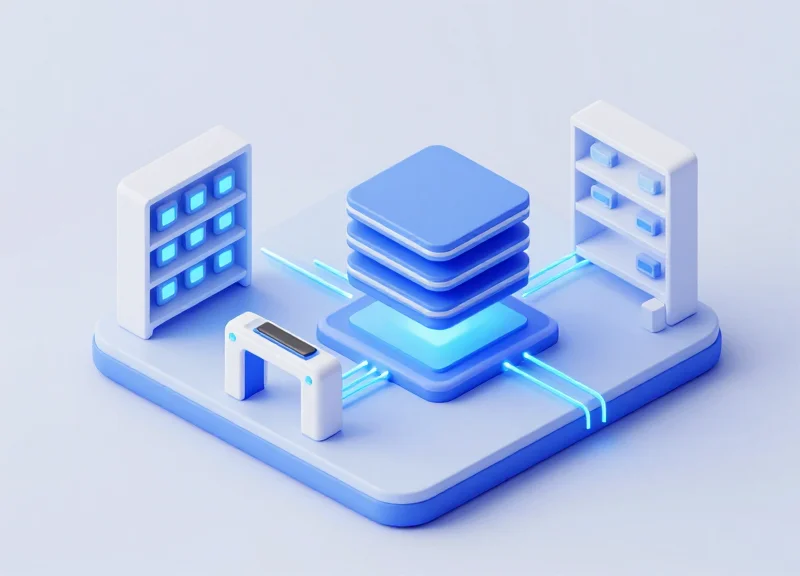
Technical synergy in high-end retail is defined as the bidirectional data exchange between Electronic Shelf Labels (ESL), Radio Frequency Identification (RFID), and Electronic Article Surveillance (EAS) to create a 'living' showroom floor. By integrating these three pillars, luxury piano dealers and gear retailers can ensure that every high-value asset is simultaneously priced correctly, tracked geographically within the store, and protected against unauthorized removal. This unified ecosystem, often managed via a centralized API, transforms static displays into intelligent nodes that communicate directly with your ERP and security software, significantly reducing the 'shrinkage' and 'phantom inventory' issues that plague traditional retail models.
| System Component | Primary Function | Integration Synergy Value |
|---|---|---|
| ESL (Digital Tags) | Dynamic Pricing & Specs | Visualizes RFID status (e.g., 'In Stock' or 'Reserved') instantly. |
| RFID (Tracking) | Inventory Localization | Updates ESL location data automatically when a piano is moved. |
| EAS (Security) | Loss Prevention | Triggers ESL visual alerts (flashing LEDs) during unauthorized movement. |
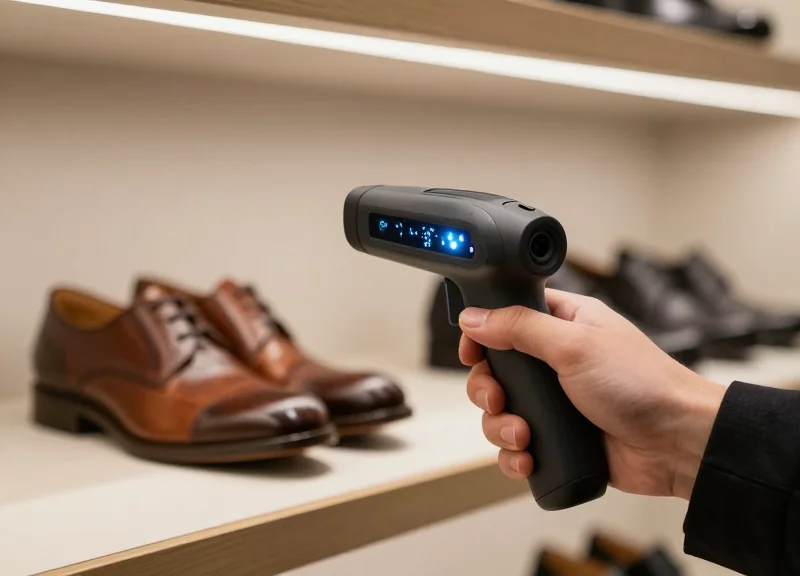
For the 2026 gear retailer, the real power lies in 'Event-Driven Merchandising.' Imagine a scenario where a customer picks up a high-end guitar; the RFID sensor detects the movement, and the adjacent ESL immediately switches from a price display to a promotional video or a list of 'compatible accessories' on a nearby screen. This level of technical cohesion not only protects the inventory but actively drives the upsell process without requiring human intervention.
- API Layer Mapping: Connect the ESL management software to the RFID middleware using RESTful APIs to ensure a single source of truth for inventory status.
- Hardware Co-Location: Install DragonGuard multi-protocol gateways that can handle both ESL Zigbee/Sub-G signals and RFID UHF frequencies to reduce infrastructure clutter.
- Logical Trigger Configuration: Set automated rules, such as: 'If EAS alarm is triggered for Item X, update ESL X to show a Red Alert status for staff identification.'
- Maintenance Syncing: For pianos, use RFID to track tuning schedules and reflect 'Last Tuned' dates directly on the ESL display for customer transparency.
Will RFID signals interfere with ESL wireless communication?
No. Professional systems like DragonGuard operate on distinct frequencies—typically 2.4GHz or Sub-G for ESL and UHF for RFID—ensuring zero signal crosstalk even in dense gear environments.
How does this synergy impact the ROI of 35%?
The 35% ROI boost is achieved through the elimination of manual stock takes (RFID), the reduction in theft (EAS), and the total removal of pricing labor (ESL), combined with higher conversion rates from accurate data.
Can I use existing EAS pedestals with new ESL tags?
Yes, modern ESL systems are designed to be hardware-agnostic, allowing you to wrap security protocols around the digital pricing infrastructure without replacing your current theft-deterrent gates.
Expert Insight: In my 20 years of retail tech, the most overlooked benefit of ESL-RFID integration is 'Hyper-Accurate Depreciation Tracking.' For luxury piano dealers, the floor age of a unit matters. By linking the RFID 'birth certificate' of a unit to the ESL, the system can automatically apply 'Showroom Model' discounts the moment a unit exceeds a specific floor-time threshold, ensuring inventory never goes stale.
Future-Proofing Your Retail Space: Preparing for the 2026 Gear Market
Future-proofing a luxury piano or music gear showroom for 2026 means evolving from a static display space into a data-driven, 'phygital' environment where every physical asset is digitally connected. By 2026, consumer expectations will shift from simple product availability to hyper-personalized, immersive experiences where the transition from online browsing to in-store testing is seamless. Achieving this requires a foundational digital layer—centered on Electronic Shelf Labels (ESL) and integrated IoT sensors—that allows retailers to automate operations while focusing human capital on the consultative sales process that luxury instruments demand.
| Feature | 2023 Traditional Retail | 2026 Future-Proofed Retail |
|---|---|---|
| Price Management | Manual updates, weekly or monthly. | Real-time, algorithmic pricing based on global supply/demand. |
| Customer Insight | Anecdotal feedback from sales staff. | Heat-mapping and dwell-time data via digital tag interactions. |
| Inventory Visibility | Periodic stock takes and manual audits. | Live, 100% accurate cloud-synced floor inventory. |
| Sustainability | Heavy reliance on paper labels and waste. | Zero-waste digital infrastructure with low-power e-ink. |
A critical, often overlooked evolution is the 'Showroom-as-a-Service' model. In 2026, the value of a piano gallery will be measured not just by units moved, but by the quality of data harvested. By monitoring which digital tags are scanned or which demo instruments are moved, retailers can provide manufacturers with precise 'intent to purchase' metrics. This 'Cognitive Retail' approach transforms the showroom into a massive sensor, where digital price tags act as the primary interface between the physical instrument and the digital analytics engine.
How will the 2026 musical instrument consumer differ?
The 2026 consumer will be 'digital-first' even in-store. They will expect to verify wood provenance, artist endorsements, and maintenance history via instant mobile links, making digital labels the essential bridge for this data transfer.
Is the investment in digital infrastructure worth it for small boutiques?
Yes, because as labor costs rise, the 'hidden cost' of manual updates becomes unsustainable. Future-proofing levels the playing field, allowing small shops to provide the same real-time accuracy and information depth as global giants.
Will AI play a role in the 2026 showroom?
Absolutely. AI will analyze the interaction data collected by digital tags to suggest the optimal floor layout, identifying which instruments are 'hot' and which need promotional adjustments to maximize ROI.
Expert Tip: To truly future-proof, don't just view digital tags as price displays. View them as dynamic 'micro-billboards.' By 2026, the most successful retailers will use these tags to display social proof—such as live 'trending' icons for popular gear or 'limited edition' countdowns—to create urgency and mirror the dynamic experience of online shopping in a premium physical setting.
Implementing Your Digital Transformation: A Step-by-Step Roadmap

A successful digital transformation in a luxury showroom requires a strategic shift from static paper-based workflows to a dynamic, data-driven ecosystem where Electronic Shelf Labels (ESL) act as the primary interface between your inventory and your customer. To achieve a 35% ROI boost, dealers must integrate their pricing infrastructure directly with their ERP (Enterprise Resource Planning) systems, ensuring that every price adjustment, promotional event, or inventory update is reflected across the floor in real-time without manual intervention.
| Phase | Key Objective | Timeline |
|---|---|---|
| Infrastructure Audit | Assess Wi-Fi dead zones and ERP compatibility. | Weeks 1-2 |
| Hardware Selection | Choose tag sizes (e.g., large 7.5" for pianos). | Weeks 3-4 |
| Software Integration | API handshake between POS and ESL gateway. | Weeks 5-6 |
| Pilot Launch | Testing system in one department (e.g., Digital Gear). | Weeks 7-8 |
| Full Deployment | Showroom-wide rollout and staff training. | Week 10+ |
- Define Your Connectivity Backbone: Ensure your showroom has a dedicated sub-network for ESL gateways. Since luxury showrooms often have thick walls or acoustic treatment, strategic placement of 2.4GHz or Sub-Ghz base stations is critical to prevent signal lag.
- Map Your Dynamic Content Strategy: Decide what information goes on the tag beyond price. For pianos, this includes year of manufacture, wood finish, and a QR code linking to a video of the instrument's sound profile.
- Automate Price-to-Margin Rules: Program your backend to automatically adjust prices based on external factors like manufacturer MSRP changes or localized competitor promotions to maintain your 35% ROI target.
Expert Insight: In the luxury sector, the 'silent salesperson' effect is paramount. Use high-definition E-ink tags that mimic the texture of fine paper; this maintains the premium aesthetic while providing the agility of a digital platform. Avoid high-gloss screens that create glare under showroom spotlights.
Will digital tags distract from the beauty of the instruments?
No. Modern ESLs are designed with ultra-thin bezels and customizable frames that can be matched to wood finishes (ebony, mahogany, walnut) to blend seamlessly with high-end pianos.
How long does the battery last in a 2026-ready system?
Current industry standards for DragonGuard and similar systems offer 5 to 10 years of battery life, as E-ink only consumes power during a content refresh.
Can I update prices from my mobile phone?
Yes, a mobile-responsive management console allows showroom managers to scan an instrument and update its price or promotional status instantly from the floor.