In the world of luxury retail, the difference between a simple purchase and a lifelong brand advocate lies in the quality of the personalized experience. As digital and physical realms converge, Next-Gen Electronic Shelf Labels (ESL) equipped with Near Field Communication (NFC) technology are emerging as the silent architects of this transformation. This article provides a strategic roadmap for implementing NFC-driven personal shopping, ensuring your boutique remains at the cutting edge of retail innovation while maintaining the exclusivity and high-touch service your clients expect.
The Evolution of Luxury: Why NFC and ESL Matter Now
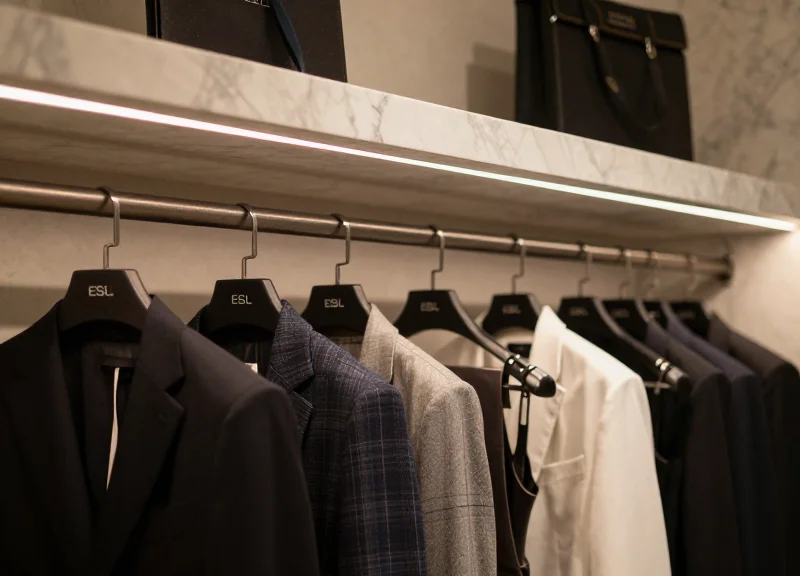
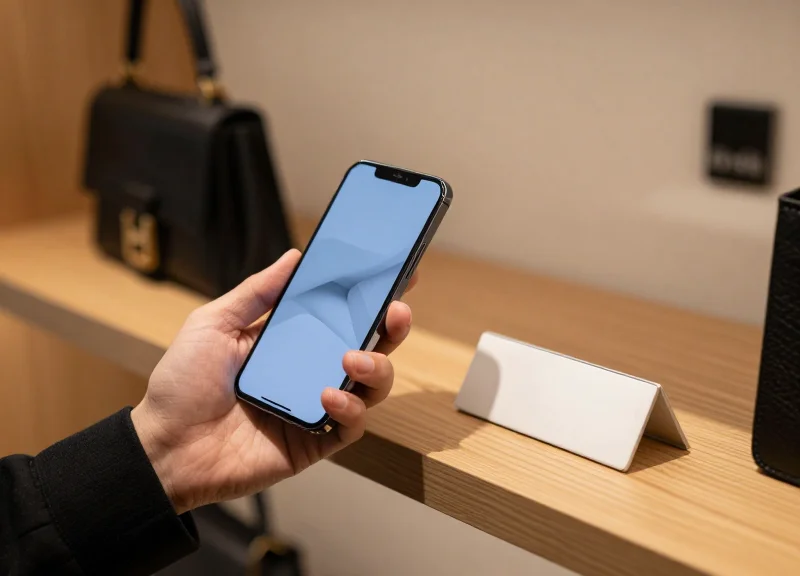
In the modern luxury landscape, the retail floor is no longer just a point of sale; it is a high-fidelity data environment. The integration of Near Field Communication (NFC) into Next-Gen Electronic Shelf Labels (ESL) represents a critical shift from static pricing to dynamic engagement. By tapping a smartphone against a digital label, customers gain immediate access to exclusive brand stories, real-time inventory, and personalized styling advice, allowing luxury houses to maintain a 'high-touch' feel without the friction of traditional browsing.
| Feature | Legacy ESL | Next-Gen NFC-ESL |
|---|---|---|
| Primary Function | Price Automation | Customer Experience & Data Bridge |
| Interaction | Visual Only | NFC Tap-to-Engage & Mobile Sync |
| Customer Insight | None | Direct Attribution of In-Store Intent |
| Content Support | Text/Basic Graphics | Rich Media via Mobile Redirection |
Expert Insight: The 'Invisible Concierge' Strategy. In luxury retail, the most successful technology is that which remains invisible. Unlike QR codes, which can disrupt the aesthetic of a high-end boutique and require an active camera scan, NFC triggers are embedded within the ESL hardware. This allows for a 'silent handshake'—a frictionless way for the brand to recognize the client and push personalized content to their device based on their loyalty profile, effectively turning the shelf label into a private digital concierge. This tech also solves 'showrooming' by allowing customers to save a product to their digital cart with a physical tap, ensuring the store gets credit for the eventual purchase.
Why is NFC superior to QR codes in a luxury setting?
NFC provides a more premium user experience; it requires no app-switching or camera focusing. A simple tap feels like an intentional, high-end interaction rather than a utility scan, maintaining the boutique's sophisticated atmosphere.
How does ESL impact brand perception?
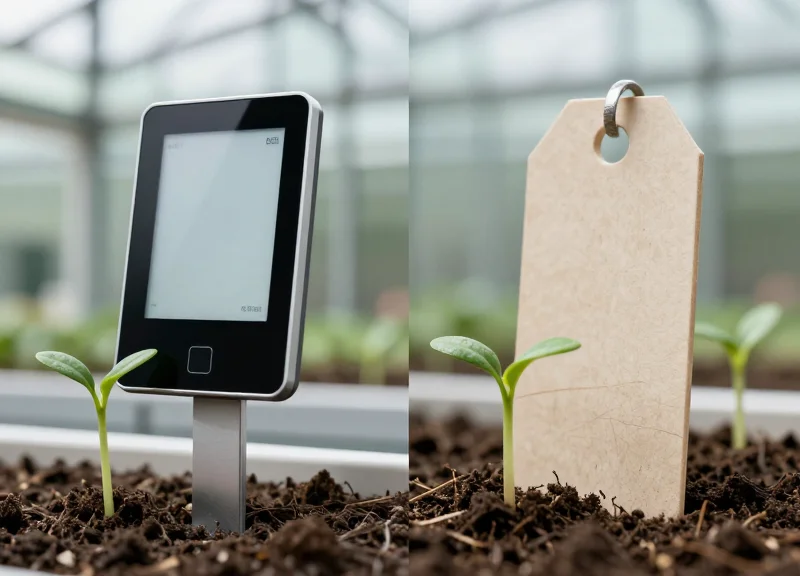
Modern ESLs use high-contrast e-paper that mimics premium cardstock and supports custom typography. They ensure pricing accuracy across global boutiques instantly, maintaining the brand's reputation for precision and eliminating the 'clearance' feel of manual price tags.
Can this technology track customer behavior without privacy concerns?
Yes. NFC interactions are user-initiated (opt-in by nature), ensuring compliance with privacy standards like GDPR while providing brands with invaluable data on which physical products are generating the most engagement.
Phase 1: Strategic Planning and Objective Setting
Strategic planning for NFC-driven Electronic Shelf Label (ESL) implementation in luxury retail is the process of defining specific, high-value performance indicators—such as dwell time, digital interaction rates, and conversion lift—before any hardware is deployed. Unlike traditional retail, where the goal is often speed, luxury strategic planning focuses on using NFC technology to deepen the narrative between the brand and the client, ensuring that digital touchpoints enhance the physical boutique experience while providing measurable data on customer intent.
| Key Performance Indicator (KPI) | Traditional Definition | Luxury Retail Strategic Focus |
|---|---|---|
| Dwell Time | Time spent in the store aisle. | Depth of interaction with product storytelling via NFC-triggered content. |
| Conversion Rate | Percentage of visitors who buy. | Attribution of digital content engagement to high-value bespoke sales. |
| Client Engagement | Generic clicks or views. | Percentage of 'High-Touch' clients accessing exclusive artisan videos or origin data. |
| Basket Value (ATV) | Total dollar amount per sale. | NFC-driven cross-selling of matching accessories or limited edition items. |
- Baseline Data Collection: Before deployment, audit your current floor performance. Use existing heatmaps and POS data to establish a 'pre-digital' benchmark for customer movement and product interaction.
- Define 'Value-Added' Interactions: Identify which products require deep storytelling. In luxury, not every item needs an NFC tag; prioritize high-complexity pieces like mechanical watches or sustainable leather goods.
- Stakeholder Alignment: Ensure the digital team and the floor sales associates are aligned. The ESL system should be viewed as a tool to empower associates, not replace the human touch.
- Threshold Setting: Set realistic 3-month and 6-month targets for NFC interaction rates. A 5% engagement rate in luxury can be more valuable than 20% in mass-market retail if it leads to a single high-ticket conversion.
Expert Insight: The Luxury Friction Paradox. In Silicon Valley, we usually optimize for 'frictionless' experiences. However, in luxury retail, 'curated friction' is a strategic advantage. Use NFC-driven ESLs to purposely slow the customer down. By triggering a high-definition video of a watchmaker in Geneva the moment a client taps an ESL, you are creating a 'luxury pause' that builds emotional value and justifies premium pricing. The goal of Phase 1 is to plan for these emotional milestones, not just technical connectivity.
How does NFC-driven ESL impact store staff?
It reduces the manual burden of price updates, allowing staff to focus entirely on clienteling while providing them with real-time inventory and product data at their fingertips.
Is dwell time really a success metric for luxury?
Yes, but with a caveat. It is not about 'waiting'; it is about 'immersion.' Increased dwell time at a specific display indicates a successful narrative engagement triggered by the NFC tag.
Can we track ROI on luxury ESL systems?
By using unique NFC identifiers, you can track the specific digital content a user viewed and match it to their CRM profile during checkout, creating a direct ROI link.
Phase 2: Hardware Selection – Prioritizing Aesthetics and Performance
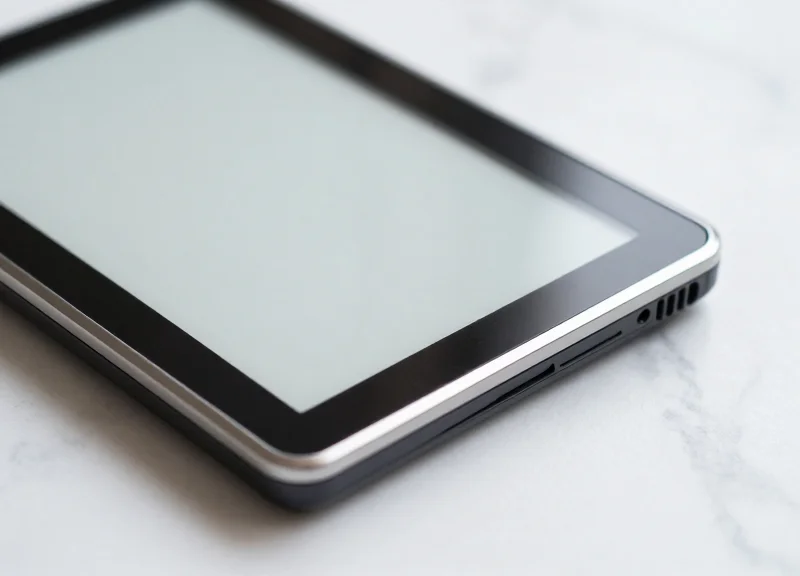
Hardware selection for next-gen Electronic Shelf Labels (ESL) in a luxury context represents a critical intersection of industrial design and high-frequency communication. Unlike mass-market retail, luxury hardware must achieve 'Visual Silence'—the ability to provide high-resolution, multi-color digital information while blending seamlessly into high-end store fixtures. The primary objective is to source ESL units that offer high-PPI (Pixels Per Inch) E-ink displays, robust NFC (Near Field Communication) sensitivity for instant mobile pairing, and ultra-low power consumption to ensure a 5-to-10-year battery lifecycle without maintenance intervention.
| Feature | Standard Retail ESL | Luxury Next-Gen ESL |
|---|---|---|
| Display Tech | Low-res 3-color E-ink | High-PPI 4-color/Full-color Spectra |
| Bezel Design | Plastic/Industrial | Bezel-less or Customizable Metallic |
| NFC Protocol | Passive/Basic | NFC Forum Type 4 (Secure Element support) |
| Viewing Angle | 160 Degrees | Full 180 Degrees (Paper-like) |
| Refresh Rate | 5-10 Seconds | Sub-2 Seconds (Active Updates) |
When evaluating the NFC component, the antenna placement within the ESL housing is paramount. In luxury environments, items are often displayed on metal shelving or within glass-and-steel vitrines. These materials can cause significant signal attenuation or detuning. Ensure your hardware provider utilizes a ferrite-backed NFC antenna, which allows the tag to function reliably even when mounted directly onto conductive surfaces, ensuring the customer's smartphone can trigger the personalized shopping experience from a distance of 1-4 centimeters without friction.
How does display resolution affect brand perception?
In luxury retail, pixelation is a brand-killer. Higher resolution (over 120 PPI) ensures that elegant typography and brand logos appear as if they are printed on premium cardstock, maintaining the prestige of the display.
Why is NFC Forum Type 4 support necessary?
Type 4 tags support more complex communication protocols and higher security levels, which are essential for luxury brands that want to integrate the ESL with secure CRM data or authentication services.
What role does battery chemistry play in hardware choice?
Luxury stores often have strictly controlled lighting that may not be sufficient for solar-powered ESLs. Lithium thionyl chloride (Li-SOCl2) batteries are preferred for their high energy density and stable voltage throughout a decade of use.
Expert Tip: Implement the '10mm Buffer Rule.' Even with the highest quality NFC antennas, proximity to thick metallic luxury watch stands or jewelry displays can disrupt the magnetic field. I recommend selecting ESL hardware that allows for a 10mm non-conductive internal spacer or choosing labels with integrated 'on-metal' shielding. This prevents the 'Dead Zone' effect where customers tap their phone but fail to trigger the digital experience, a friction point that must be eliminated to satisfy the expectations of high-net-worth individuals.
Phase 3: Designing the Frictionless 'Tap-to-Connect' Journey
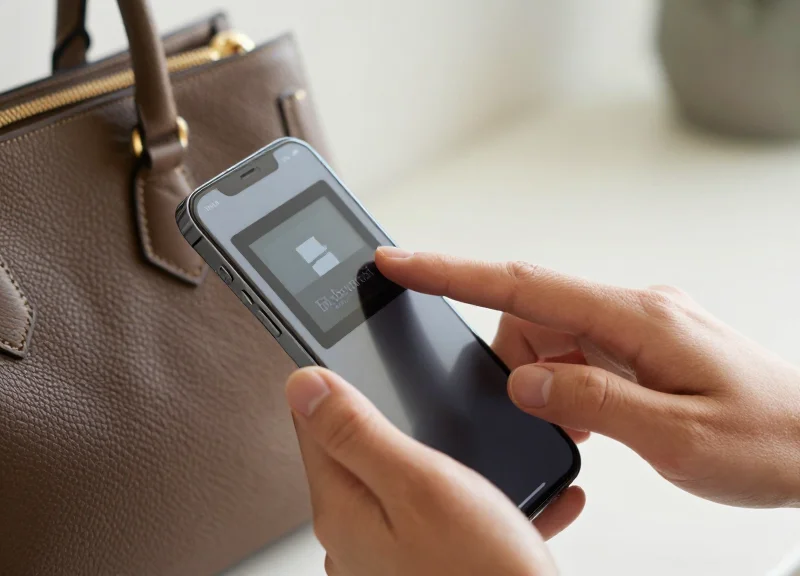
The 'Tap-to-Connect' journey is a strategic user experience (UX) framework that leverages Near Field Communication (NFC) embedded in Electronic Shelf Labels (ESLs) to bridge the physical and digital divide. In luxury retail, this journey must be invisible yet impactful, focusing on zero-latency access to product provenance, real-time inventory, and on-demand personal styling. By removing the friction of app installations and login screens, brands can capture high-intent data while providing a bespoke service that feels like a natural extension of the physical boutique.
- The Visual Invitation: Unlike mass-market retail, luxury ESLs should use subtle, high-contrast visual cues—such as a minimalist NFC icon or 'Tap for Provenance' text—to invite engagement without cluttering the display.
- The Instant Handshake: Utilize NDEF (NFC Data Exchange Format) records to trigger a mobile browser instantly. The URL should be dynamic, passing unique identifiers for the specific ESL and the customer's location within the store.
- The Digital Concierge Landing: Redirect to a Progressive Web App (PWA) or a light, high-speed landing page that serves rich media, such as 'The Making Of' videos or styling suggestions from the current runway collection.
- The Human Bridge: Provide a prominent 'Request Assistance' button that sends an immediate notification to the nearest sales associate's mobile device, including the customer's exact location and the item they are viewing.
| Feature | Standard Retail NFC | Luxury 'Frictionless' NFC |
|---|---|---|
| Access Method | App-required or QR focus | App-less, browser-native PWA |
| Content Goal | Price comparison / Coupons | Storytelling / Brand Heritage |
| Assistance | Self-service only | Seamless human-associate handoff |
| Data Capture | Aggregated / Anonymous | Hyper-personalized CRM integration |
Expert Insight: The 'Ghost-Tap' Analytics Strategy. To truly outperform competitors, implement 'shadow logging' on your NFC triggers. By capturing the signal strength and dwell time of a tap before the page even loads, luxury brands can distinguish between accidental bumps and genuine interest. This data allows for more accurate 'intent mapping,' enabling associates to approach with a 'just-in-time' service model that feels like serendipity rather than a sales pitch.
Does the customer need to unlock their phone for the NFC to work?
For modern iOS and Android devices, Background Tag Reading is supported. The user only needs the screen to be active; they do not need to open a specific app or the camera.
How do we handle privacy for high-net-worth individuals?
Use 'First-Party Only' cookies and ephemeral sessions. Ensure that personal data is only linked to the tap if the user explicitly opts in through a loyalty profile or concierge request.
What is the ideal response time for a 'Tap' to load content?
In luxury retail, latency is the enemy. Your landing page must reach its Largest Contentful Paint (LCP) in under 1.2 seconds to maintain the feeling of an 'invisible' digital layer.
Phase 4: Digital Core Integration – CRM and ERP Connectivity
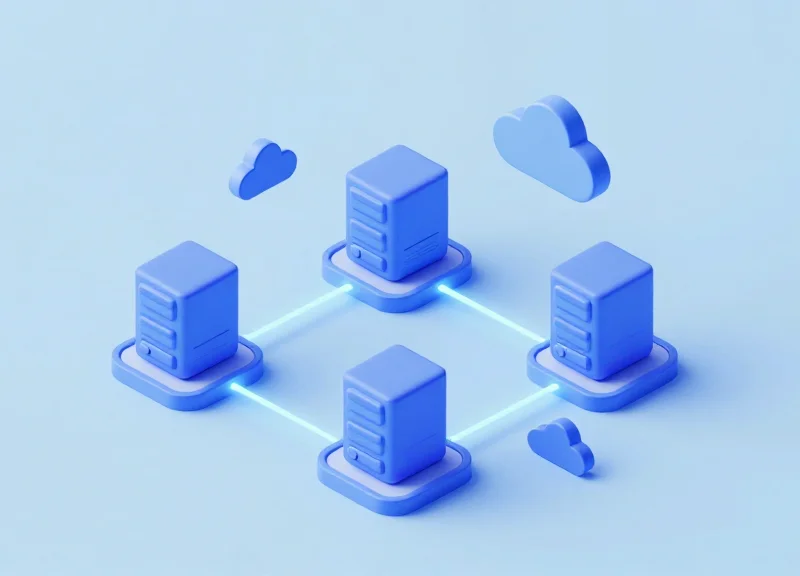
Digital core integration represents the 'nervous system' of the luxury retail environment, where the frontend NFC touchpoint communicates directly with the backend ERP (Enterprise Resource Planning) and CRM (Customer Relationship Management) platforms. This synchronization ensures that when a client taps an Electronic Shelf Label (ESL), the information displayed is not just accurate regarding stock levels, but also contextually relevant to the individual’s purchase history and status. In luxury, where exclusivity and precision are paramount, this connectivity eliminates the friction of 'out of stock' surprises and enables sales associates to provide white-glove service through data-backed recommendations.
- API Gateway Configuration: Establish a secure, high-speed API layer (REST or GraphQL) that facilitates bidirectional communication between the ESL Cloud Management System and the internal ERP. This allows for sub-second updates of pricing and availability.
- Real-time Stock Synchronization: Map the unique ESL identifier (MAC address or QR/NFC ID) to specific ERP SKUs. This ensures that the 'available in store' status on the client's smartphone is accurate to the precise shelf location.
- Client ID Reconciliation: Utilize the NFC tap event to trigger a lookup in the CRM. If the user is logged into the brand's app, the system can immediately retrieve 'Clienteling' data, such as past purchases or wish-list items, to tailor the content shown upon the tap.
- Event-Driven Logic Implementation: Set up Webhooks that trigger specific actions—such as notifying a personal shopper when a VIP client taps a high-value item—transforming a digital interaction into a physical service moment.
| System Component | Data Contributed | Impact on Customer Experience |
|---|---|---|
| ERP (Enterprise Resource Planning) | Real-time Inventory & SKU Specifics | Ensures product availability and prevents 'phantom stock' disappointment. |
| CRM (Customer Relationship Management) | Purchase History & Loyalty Tier | Enables personalized pricing, exclusive offers, and tailored storytelling. |
| ESL Cloud Platform | Interaction Metadata (Tap Time/Location) | Provides heatmaps of product interest and dwell time for store optimization. |
{ "event": "nfc_tap", "client_id": "VIP_9921", "product_id": "LVMH_BAG_042", "store_location": "NYC_5TH_AVE", "timestamp": "2023-10-27T10:15:30Z", "trigger_associate_alert": true }Expert Insight: To truly differentiate in the luxury sector, implement a 'Predictive Availability Score.' By analyzing ERP data alongside CRM purchase trends, your system can predict if a product is likely to sell out before a client reaches the register, proactively offering to reserve the item via the NFC interface. This moves the integration from reactive data-sharing to proactive luxury concierge service.
How do you handle data privacy (GDPR/CCPA) with NFC tracking?
Interaction data should be anonymized unless a user explicitly opts in via the brand's loyalty app. Always use secure, encrypted tokens for CRM lookups to ensure PII (Personally Identifiable Information) is never stored on the NFC chip or local ESL gateway.
What is the acceptable latency for a CRM-NFC handshake?
In luxury retail, latency must be under 200ms. Anything slower disrupts the 'magical' feel of the interaction. Edge computing at the store level is often used to cache common data and reduce round-trip times to the main server.
Can the system function if the store's internet goes down?
A robust integration includes an 'Offline Mode' where the ESLs display the last cached price/stock data from the ERP. The NFC tap will still redirect to a landing page, though real-time CRM personalization may be temporarily limited.
Phase 5: Empowering the Sales Associate as a Tech-Enabled Advisor
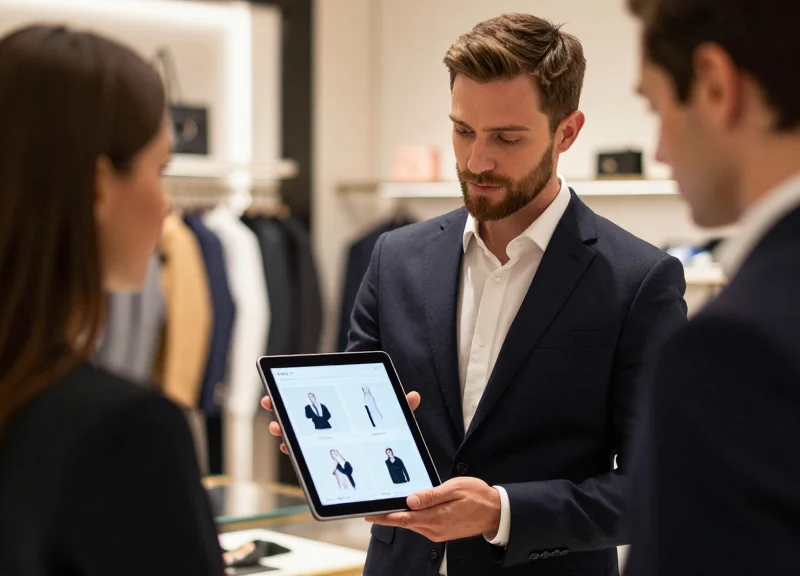
A tech-enabled advisor in luxury retail is a sales professional who utilizes real-time data captured via Electronic Shelf Labels (ESL) and NFC interactions to transition from a traditional floor clerk to a high-value consultant. By accessing a client's 'digital breadcrumbs'—such as products tapped, content viewed, and dwell time—associates can provide bespoke recommendations that merge human intuition with precise digital intent, significantly increasing conversion rates and average transaction values.
- Interpreting NFC Engagement Analytics: Train staff to use handheld tablets or mobile CRM apps that display real-time 'heat maps' of customer interest based on recent NFC taps, allowing them to approach clients with relevant conversation starters rather than generic greetings.
- Mastering the 'Seamless Handoff': Develop protocols for transitioning a customer from a self-guided digital exploration (NFC-driven) to a personalized human interaction without repeating information, ensuring the digital journey feels like a continuous thread.
- Utilizing Dynamic Inventory Insight: Empower associates to use the ESL system to immediately identify cross-selling opportunities, such as matching accessories that are currently in stock or available at nearby flagship locations.
| Feature | Traditional Sales Associate | Tech-Enabled Advisor (ESL/NFC) |
|---|---|---|
| Customer Insight | Relies on visual cues and verbal cues. | Driven by real-time tap history and digital intent. |
| Product Knowledge | Limited to memorization and manual lookups. | Instant access to deep storytelling and global stock via NFC. |
| Clienteling | Reactive: waiting for the client to ask. | Proactive: personalized curation based on dwell data. |
| Efficiency | High time spent checking back-room stock. | Zero-latency stock status reflected directly on ESL/Tablet. |
Expert Insight: The 'Micro-Intent' Strategy. While many retailers focus on the final purchase, the true power of NFC-enabled ESL lies in capturing 'Micro-Intent.' By tracking which specific variations (e.g., a specific leather finish or a limited-edition color) a customer taps but does not buy, the associate gains a high-fidelity profile of the customer's aesthetic preferences. Use this data to curate future 'private viewing' invitations, effectively turning a missed sale today into a loyal client relationship tomorrow.
How do we prevent tech from feeling intrusive in a luxury environment?
The tech should be 'invisible.' Associates should use tablets to support the conversation, not replace it. The goal is to use the data to be more observant, not to recite the customer's digital history back to them.
What is the biggest hurdle for staff adoption?
The 'fear of the tool.' Overcome this by gamifying the learning process and showing clear links between data usage and higher commission earnings through improved closing rates.
Can ESLs help with language barriers?
Absolutely. Modern ESL systems can trigger multi-language product displays on a customer's phone via NFC, allowing the associate to facilitate a premium experience even when a shared language is limited.
Security and Privacy: Protecting the Luxury Clientele
For the luxury sector, digital security is not merely a technical requirement; it is a foundational brand promise. When a VIP client taps an NFC-enabled Electronic Shelf Label (ESL), they are trusting the retailer with their behavioral data and personal preferences. To protect this clientele, retailers must implement a 'Privacy-by-Design' framework that utilizes AES-256 end-to-end encryption for all NFC handshakes and ensures that any data transmitted between the ESL, the mobile device, and the CRM is tokenized to prevent identity theft or unauthorized tracking.
| Security Layer | Technical Implementation | Client Benefit |
|---|---|---|
| Data Transmission | AES-256 Encryption & TLS 1.3 | Protects against man-in-the-middle (MITM) attacks during the NFC tap. |
| Identity Management | Dynamic Tokenization | Personal data is never stored on the ESL hardware itself, only temporary tokens. |
| Regulatory Compliance | GDPR/CCPA 'Right to Erasure' Automation | Ensures VIPs can wipe their in-store browsing history instantly via the app. |
| Hardware Security | Secure Element (SE) Chips | Prevents physical tampering or 'skimming' of the ESL units by bad actors. |
- Implement Just-In-Time (JIT) Data Access: Configure your CRM to only pull sensitive client profiles when a verified NFC handshake occurs, and automatically flush the local cache once the session ends.
- Anonymize Behavioral Analytics: Aggregate traffic patterns and product interaction data at the edge. Ensure that individual browsing habits are disconnected from PII (Personally Identifiable Information) unless the user explicitly opts into a personalized session.
- Regular Penetration Testing: Conduct quarterly 'Red Team' exercises specifically targeting the NFC-ESL mesh network to identify potential vulnerabilities in the radio frequency (RF) protocol.
Expert Insight: The Concept of the 'Digital Ghost Mode'. A unique differentiator for ultra-luxury brands is the implementation of 'Ghost Mode' within the retail app. This allows high-profile clients to interact with NFC-driven ESLs to receive product information and storytelling via their own device without leaving any trace in the store's analytics. By utilizing Zero-Knowledge Proofs (ZKP), the system can verify the client is a tiered loyalty member (granting access to exclusive content) without actually transmitting their name or account ID to the local store network.
Is NFC communication vulnerable to 'skimming' in-store?
While basic NFC can be intercepted, next-gen ESLs use proximity-gating and encrypted handshakes that require a device to be within 4cm, making remote skimming virtually impossible in a retail environment.
How is GDPR 'Consent' handled via a shelf label?
The initial NFC tap should trigger a 'Privacy First' splash page on the user's mobile device, clearly outlining what data is being accessed and requiring an explicit 'Opt-In' before any personal CRM data is displayed.
What happens if an ESL unit is stolen?
Enterprise-grade ESLs feature 'Remote Kill' switches and hardware-level encryption. If a tag is removed from the store network, it becomes an inert piece of plastic with no accessible data.
Phase 6: Pilot Testing and UX Refinement
Phase 6: Pilot Testing and UX Refinement is the strategic process of transitioning the NFC-enabled Electronic Shelf Label (ESL) system from a lab environment to a live luxury showroom. In the high-stakes world of luxury retail, 'beta' is not a word the customer should ever hear; therefore, this phase is about polishing the 'tap-to-connect' journey until the digital interaction is as seamless and prestigious as the brand's heritage. It focuses on identifying latency issues, refining the mobile UI/UX for high-net-worth individuals, and ensuring the technical infrastructure can withstand peak foot traffic without compromising the white-glove service standards.
| KPI Category | Target Metric | Luxury Benchmark |
|---|---|---|
| Interaction Latency | Time from NFC tap to content load | < 1.5 seconds |
| Engagement Rate | Percentage of visitors tapping an ESL | 15% - 25% |
| UX Friction Score | Abandonment rate on digital concierge page | < 5% |
| Staff Assistance Delta | Reduction in routine info queries | 20% Increase in high-value consulting |
- Selection of the 'Shadow' Boutique: Choose a flagship location that represents your core demographic but allows for controlled observation. During the first week, run the system in 'shadow' mode where staff use it before it is fully promoted to VIP clients.
- Iterative UI Refinement: Monitor the heatmap of the mobile interface triggered by the NFC tap. If clients are missing the 'Request Personal Shopper' button or failing to scroll through product storytelling, the UI must be simplified and the typography elevated.
- Edge Case Stress Testing: Test the NFC response in varied lighting and with different smartphone models. In luxury retail, a client's older device must still receive a premium experience, or the system must gracefully fail-over to a QR fallback.
- Post-Pilot Qualitative Interviews: Conduct one-on-one debriefs with top-tier clients who used the system. Their feedback on whether the tech felt 'intrusive' or 'exclusive' is more valuable than quantitative click data.
Expert Tip: The 'Invisible Tech' Principle. In Silicon Valley, we often talk about 'feature-rich' apps, but in luxury, the best UX is the one that disappears. Our unique insight for this phase is to implement 'Contextual Dimming.' If a client taps an ESL in a high-jewelry section, the mobile interface should automatically adopt a high-contrast, dark-mode 'Gala' aesthetic to match the low-light ambiance of the physical space. This synchronization between the digital interface and the physical environment is what separates a generic retail tool from a bespoke luxury experience.
How long should a luxury NFC-ESL pilot last?
Ideally, 4 to 6 weeks. This allows for two weeks of technical stabilization, two weeks of customer data collection, and two weeks of iterative design updates.
What is the biggest risk during the pilot phase?
Connectivity 'dead zones' within the boutique. If a client taps an ESL and the page fails to load due to poor in-store Wi-Fi or cellular signal, it breaks the luxury immersion. Always conduct a site survey prior to the pilot.
How do we measure 'Elegance' in a digital interface?
We measure elegance through 'Task Success Rate' combined with 'Interaction Minimalism.' The fewer taps it takes for a client to reach their desired outcome (e.g., viewing a size in stock), the more elegant the system is perceived to be.
Scaling Success: From Boutique to Global Flagship
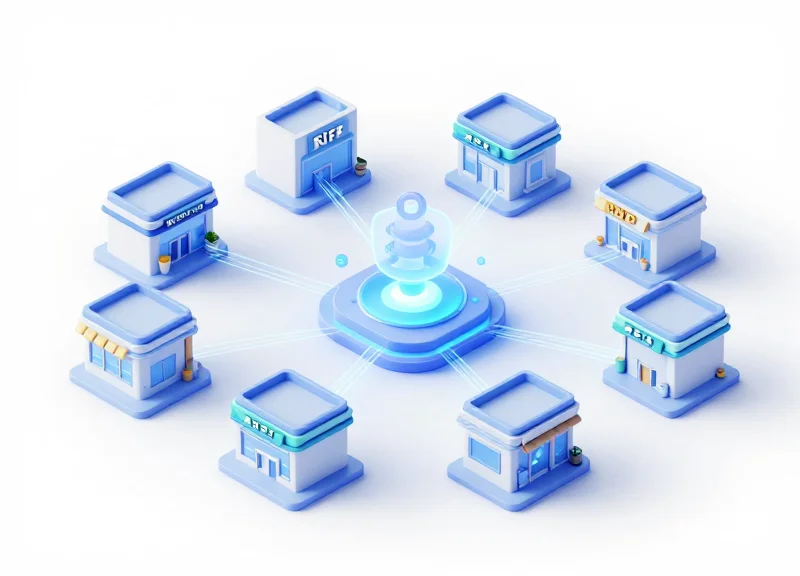
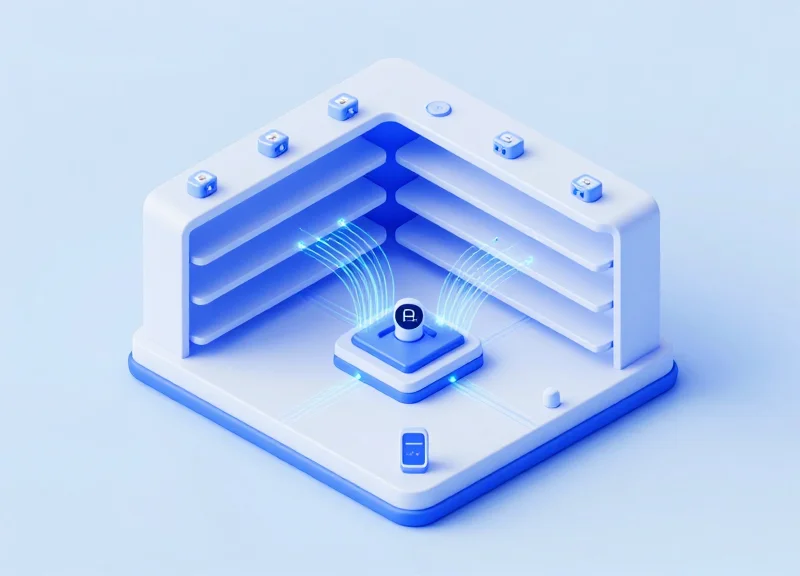
Scaling an NFC-ESL ecosystem from a single boutique to a global flagship network involves transitioning from localized edge computing to a centralized, cloud-native orchestration layer that synchronizes pricing, inventory, and personalized customer journeys across international borders. By utilizing a 'hub-and-spoke' architecture, luxury brands can maintain strict aesthetic consistency and brand voice while leveraging localized data streams to adapt to regional shopping behaviors and regulatory requirements.
The transition from a pilot to a global rollout is the ultimate test of a brand's digital infrastructure. In the luxury sector, the 'Global-Local' (Glocal) paradox is particularly acute: the technology must be invisible enough to preserve the store's ambiance, yet robust enough to handle high-traffic flagship volume. Success depends on the 'Golden Thread' principle—using a unique global UUID for every physical SKU linked to a digital twin, ensuring that an NFC tap provides consistent provenance and storytelling data regardless of the store's geographical location.
- Establish a Global Design System for ESL: Standardize typography, color palettes, and NFC landing page templates within a Centralized Asset Management (DAM) system to ensure visual parity across all territories.
- Deploy Multi-Region Cloud Orchestration: Utilize cloud providers with regional availability zones to minimize latency. An NFC tap in London must respond as quickly as one in New York to maintain the 'premium' feel.
- Implement Automated Localization Workflows: Integrate translation management systems (TMS) directly with the ESL backend to automatically update product descriptions and marketing copy into local languages based on the store's GPS coordinates.
- Standardize Hardware Monitoring: Shift from manual store checks to a centralized Network Operations Center (NOC) that monitors battery levels and connectivity of every ESL tag across the entire global estate.
| Feature Attribute | Centralized Management (Global) | Localized Management (Store-Level) |
|---|---|---|
| Product Storytelling | Brand-approved heritage and 'The Why' | Real-time local inventory levels |
| Pricing Logic | Global pricing strategy and MSRP | Local tax, duty, and currency display |
| Customer Data | Unified CRM profile and global purchase history | Local event invitations and store-specific appointments |
| Hardware Maintenance | Firmware updates and security patches | Physical tag placement and battery replacement |
How do we maintain connectivity in historic flagship buildings?
Use Sub-GHz IoT protocols (like 802.15.4) which penetrate thick stone walls better than standard 2.4GHz Wi-Fi, paired with aesthetically disguised micro-gateways.
How is cross-border data privacy handled?
Implement a 'Privacy by Design' architecture where NFC interactions trigger local data processing, only syncing anonymized telemetry to the global hub to comply with GDPR, CCPA, and PIPL.
What is the biggest operational risk during a global rollout?
Data desynchronization. If the ESL price differs from the POS price during a high-profile launch, it erodes trust. Real-time API polling is mandatory for 100% accuracy.
Expert Tip: To truly differentiate, implement 'Follow-Me' personalization. If a client interacts with a specific high-jewelry piece via NFC in Paris, their assigned sales associate in their home city of Los Angeles should receive a notification to prepare a curated viewing for their next visit, bridging the gap between global travel and local loyalty.