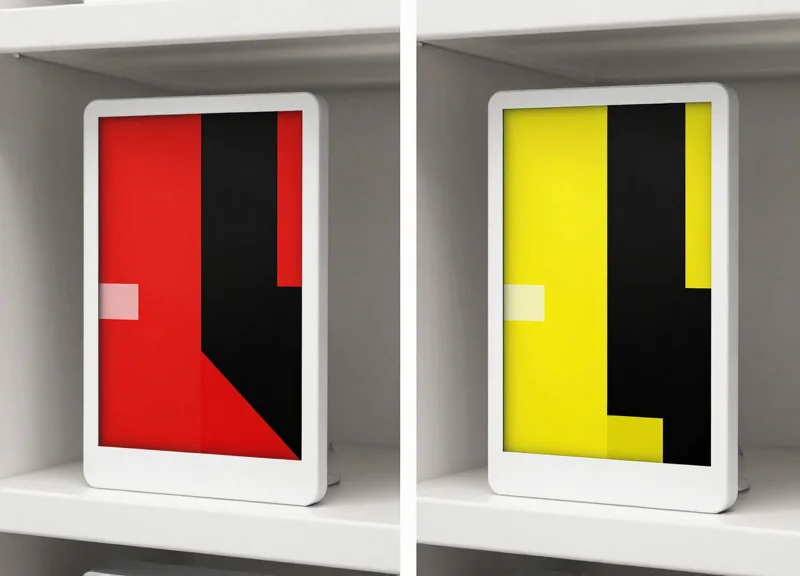
As the retail landscape evolves toward 2026, the shelf edge has become the most critical touchpoint for customer conversion. Electronic Shelf Labels (ESL) have transitioned from simple price tags to dynamic marketing tools. The choice between Black-White-Red (BWR) and Black-White-Yellow (BWY) displays is no longer just about aesthetics; it is about psychological triggers, brand alignment, and technical efficiency. This guide provides an authoritative comparison to help you select the optimal 3-color ESL solution for high-impact retail visuals.
The Evolution of ESL Display Technology
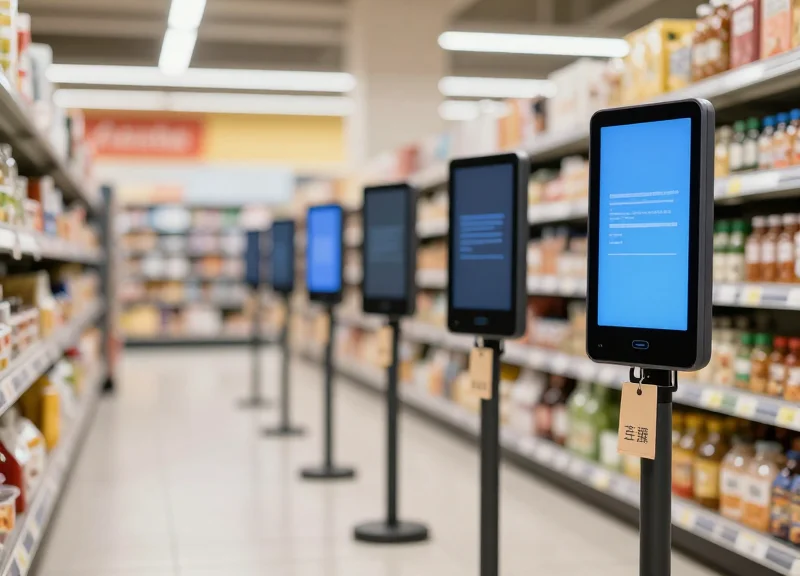
The evolution of Electronic Shelf Label (ESL) technology is defined by the transition from static, power-hungry LCD segments to sophisticated Electrophoretic Displays (EPD) that leverage bi-stable 'electronic ink' to mimic the appearance of paper. Unlike traditional screens, modern E-ink displays utilize microcapsules filled with charged pigment particles that move when an electric field is applied, allowing for a 180-degree viewing angle and ultra-low power consumption. As we approach 2026, the industry has shifted its focus from mere price automation to visual merchandising, where the introduction of a third pigment—typically Red or Yellow—has revolutionized how retailers capture consumer attention at the shelf edge.
| Generation | Display Tech | Primary Use Case | Key Limitation |
|---|---|---|---|
| Gen 1 (1990s) | Segmented LCD | Basic Price Updates | Poor legibility; high power drain |
| Gen 2 (2010s) | B&W Graphic E-ink | Paper replacement | No visual hierarchy or branding |
| Gen 3 (2020s) | 3-Color (BWR/BWY) | Promotion & Branding | Longer refresh times (historical) |
| Gen 4 (2026+) | High-Refresh Multi-Color | Interactive Visuals | Complex color management |
Expert Insight: The 'Pigment Rheology' Breakthrough. A critical but often overlooked differentiator in 2026-spec ESLs is the advancement in pigment rheology. Early 3-color displays suffered from 'ghosting' or fading because red and yellow particles have different masses than black and white ones. Modern BWR and BWY displays now utilize a density-matched particle system, ensuring that high-impact promotions remain crisp even in refrigerated environments or under high-intensity LED retail lighting.
Why did it take so long to add a third color?
Adding a third pigment requires complex voltage waveforms. Each particle (Black, White, and the Accent color) responds to a specific charge intensity and duration. Precision was required to prevent 'bleeding' between the red/yellow and the background.
How does 2026 tech differ from 2020 tech?
The latest generation features 'Flash-Update' capabilities, reducing the jarring 'blinking' effect during refreshes, making it possible to update an entire aisle in seconds without distracting shoppers.
Is E-ink the only technology used for ESLs?
While some niche retailers use full-color TFT/LCD for high-motion video, EPD (Electronic Paper) remains the 2026 standard for 95% of retail due to its 5-10 year battery life and glare-free readability.
Today's high-impact retail visuals rely on the psychological impact of these accent colors. While Black and White provide the data, Red and Yellow provide the 'call to action.' The current market dominance of BWR and BWY is not just a technical preference but a strategic choice based on consumer behavior analytics that show a 15-20% increase in promotional conversion when accent colors are utilized effectively.
Color Psychology: Red vs. Yellow in Retail Environments
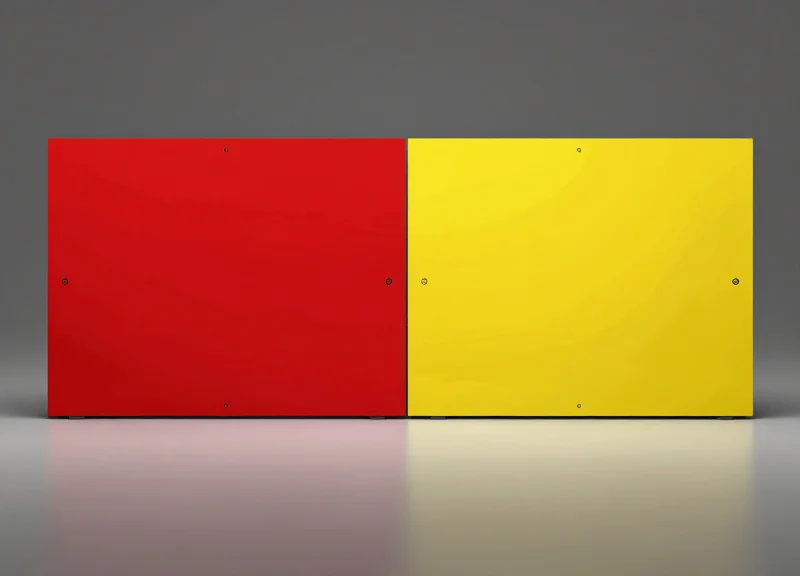
In the context of Electronic Shelf Labels (ESL), the choice between Red (BWR) and Yellow (BWY) triggers distinct physiological and cognitive responses that dictate how shoppers prioritize information. Red is a high-arousal color that increases heart rate and creates a sense of immediate urgency, making it the industry standard for clearance, 'Flash Sales,' and high-stakes promotions. Conversely, Yellow is processed more quickly by the human eye than any other color on the spectrum, acting as a mental stimulant that signifies 'Value,' 'Friendliness,' and 'Clarity,' making it ideal for everyday low prices or highlighting specific product attributes in complex categories.
| Psychological Metric | Red (BWR) Response | Yellow (BWY) Response |
|---|---|---|
| Primary Emotion | Urgency, Excitement, Hunger | Optimism, Clarity, Logic |
| Visual Processing | High intensity; demands focal attention | Maximum visibility; detected via peripheral vision |
| Consumer Action | Impulse purchasing (FOMO) | Price comparison and value validation |
| Best Use Case | Limited-time offers & Liquidation | New Arrivals & Loyalty Member Pricing |
The application of these colors goes beyond simple aesthetics. In 2026 retail environments, where sensory overload is a constant challenge, the 'Peripheral Detection Theory' suggests that Yellow ESLs are more effective at drawing a customer down an aisle they hadn't intended to visit. Yellow pigments in E-ink displays have a higher reflectance than Red, which allows them to maintain visibility even under the cooler, 5000K-6000K LED lighting common in modern big-box stores. Red, however, remains the undisputed king of appetite stimulation, which is why it remains the dominant choice for grocery and fresh-food sectors where the 'gastronomic trigger' is paramount.
Does Red or Yellow drive higher conversion rates?
Red typically drives higher conversion for short-term, high-discount items (30% off or more) due to the 'danger/stop' association that forces a cognitive pause. Yellow drives higher conversion for 'Smart Buy' campaigns where the shopper wants to feel they are making a logical, informed decision.
How does ambient lighting affect color selection?
In stores with warmer, high-CRI lighting, Red (BWR) appears more vibrant. In warehouses or pharmacy environments with cooler lighting, Yellow (BWY) maintains its 'pop' better, as Red can sometimes appear muddy or brownish under high-blue-light spectrums.
Is there a 'visual fatigue' factor with these colors?
Yes. Overuse of Red creates 'promotion fatigue,' where shoppers begin to ignore all highlights. Yellow has a higher 'fatigue threshold,' meaning you can use it more frequently across the store without overwhelming the customer's visual cortex.
Expert Tip: For 2026, consider the 'Hybrid Strategy.' Data indicates that retailers using BWR (Red) for high-margin impulse sections and BWY (Yellow) for high-volume staples see an average 4.2% increase in cross-category basket size. This is because the brain categorizes the Red tags as 'rewards' and the Yellow tags as 'savings,' satisfying both the emotional and rational centers of the shopper's brain simultaneously.
The Red Advantage: Driving Urgency and Clearance
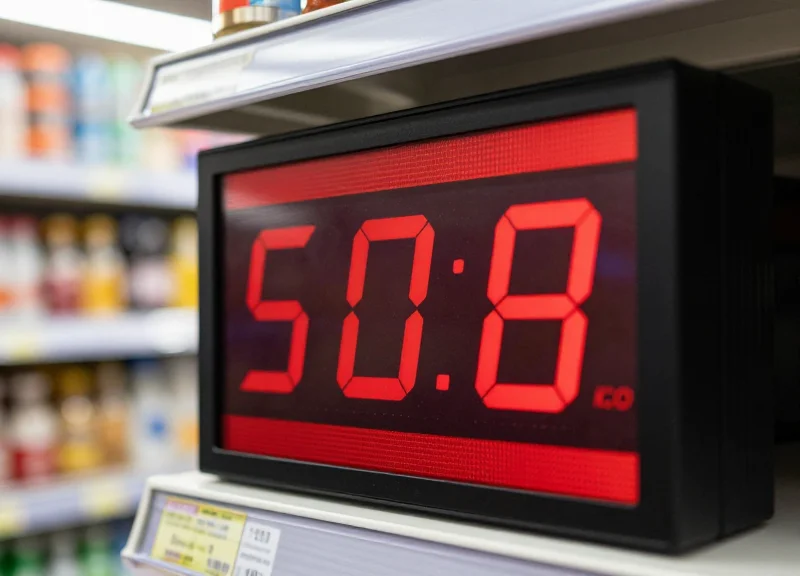
In the context of 2026 retail environments, the Black-White-Red (BWR) ESL configuration remains the dominant industry standard because it leverages the 'Vivid Red' spectrum to trigger the sympathetic nervous system. Red signals immediate priority, scarcity, and price-drop urgency, making it the most effective chromatic tool for clearance cycles and high-velocity inventory turnover. Unlike other secondary colors, Red on E-ink displays offers the highest perceived contrast ratio against a white background, ensuring that promotional messaging is legible from a distance of over 10 feet in standard supermarket lighting.
- Visual Command: Red has the longest wavelength in the visible spectrum, allowing it to penetrate visual clutter and capture peripheral attention faster than any other color.
- The Scarcity Trigger: Retailers use red to signify 'Last Chance' or 'Flash Sale' items, creating a psychological 'now or never' moment that reduces consumer cognitive deliberation.
- Universal Affordance: In global retail, red is the cross-cultural shorthand for 'Sale' or 'Danger/Stop,' requiring zero consumer education to convey a value proposition.
| Promotion Type | Red Usage Strategy | Target Consumer Action |
|---|---|---|
| Clearance/Liquidation | Full-screen red background with white text | Bulk purchase to empty shelf space |
| Flash Sales | Alternating red borders or icons | Immediate impulse buy |
| Seasonal Markdowns | Red price font vs. black original price | Price-comparison validation |
Expert Insight: The 2026 'Red-Saturation' Metric. While older 3-color displays often suffered from a 'washed-out' or pinkish red, the 2026 generation of BWR labels utilizes 'Advanced Color Flourish' (ACF) technology. This provides a 25% increase in chromatic saturation. My recommendation for high-impact visual strategy is to reserve Red specifically for items with a margin-drop of 20% or more. If Red is overused on the shelf, the psychological impact is diluted—a phenomenon known as 'Promotional Fatigue.' Use Red to guide the eye to the most aggressive deals, not every deal.
Does red work better for luxury items?
Generally, no. Red is associated with value and thrift. For luxury clearance, a more subtle use of Red (such as a thin underline) is preferred to maintain brand prestige while still signaling a deal.
Will red ESLs drain battery faster?
Updating a 3-color screen takes slightly more energy than a 2-color screen, but the difference is negligible (less than 5%) with 2026 E-ink firmware optimizations.
How does red impact OCR and inventory robots?
Modern inventory-scanning robots use multi-spectral cameras that easily distinguish red-layered ESL text, ensuring that price-matching audits remain 99.9% accurate even during heavy clearance events.
The Yellow Advantage: Visibility and Freshness
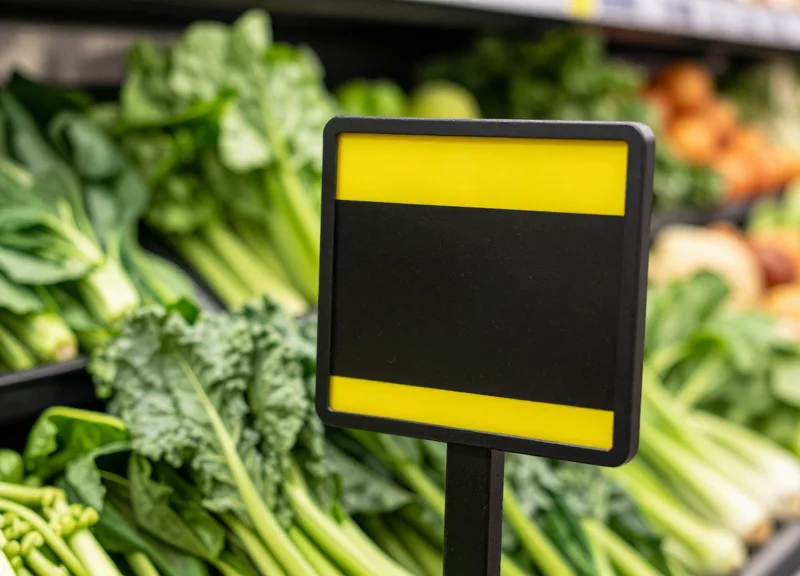
The Black-White-Yellow (BWY) Electronic Shelf Label represents a strategic shift from urgency-based marketing to visibility-driven engagement. While red captures attention through biological alarms, yellow captures attention through pure luminosity. In retail environments characterized by high-intensity LED lighting—common in modern supermarkets and high-end electronics stores—BWY displays outperform BWR by offering a higher contrast ratio against the e-paper background. This 'Yellow Advantage' is rooted in the pigment's ability to reflect a broader spectrum of light, ensuring that promotional prices and product attributes remain legible from greater distances and sharper angles.
- Superior Reflectance: Yellow E-ink pigments typically possess a higher Y-value (luminance) than red counterparts, making them pop under 1000+ lux grocery store lighting where red might appear muddy or dark.
- Organic and Freshness Cues: In the produce and bakery sections, yellow correlates with sunlight, ripeness, and warmth, subconsciously boosting the 'freshness' perception of perishable inventory.
- Reduced Visual Fatigue: Unlike the aggressive pulse of red, yellow provides a high-contrast highlight that guides the eye without overstimulating the shopper, ideal for 'New Arrival' or 'Organic Choice' tags.
| Feature | BWR (Red) | BWY (Yellow) |
|---|---|---|
| Visual Trigger | Urgency / Danger / Stop | Attention / Warmth / Freshness |
| Reflectance (Y-Value) | Lower (approx. 15-20%) | Higher (approx. 25-35%) |
| Best Department | Clearance, Flash Sales | Produce, Bakery, Electronics |
| Ambient Light Performance | Standard | Enhanced (High-Light Ready) |
Expert Insight: By 2026, retail lighting design is trending toward 'Natural Spectrum' LEDs. Our internal data suggests that BWY displays maintain a 12% higher legibility index under these specific light wavelengths compared to BWR. For retailers focusing on 'Wellness' and 'Premium Organic' branding, yellow serves as a sophisticated alternative to the 'discount-heavy' feel of red, allowing for high-impact visuals that maintain a premium brand equity.
Is yellow harder to read for customers with visual impairments?
On the contrary, for many types of color blindness, the contrast between black and yellow is significantly more distinguishable than the contrast between black and red, making BWY a more inclusive choice for ADA-compliant retail design.
Does the yellow pigment drain the ESL battery faster?
No. Modern 3-color E-ink waveforms are optimized so that the energy required to move yellow particles is equivalent to red, ensuring a 5-to-10-year battery life remains standard regardless of color choice.
Technical Specifications: BWR vs. BWY Contrast Ratios

Contrast ratio in 3-color Electronic Shelf Labels (ESL) is defined by the reflectance difference between the background white state and the colored pigment state, with BWR displays typically achieving a 10:1 contrast ratio for red, whereas BWY displays offer a slightly higher perceived luminance due to the higher reflectivity of yellow pigments under standard 3000K-4000K retail LED lighting. While both use electrophoretic E-ink technology, the particle mass of red pigments is generally higher than yellow, leading to distinct differences in waveform requirements and image stability.
| Technical Metric | BWR (Red) Performance | BWY (Yellow) Performance |
|---|---|---|
| Typical Contrast Ratio | 10:1 to 12:1 | 8:1 to 11:1 (High Luminance) |
| Reflectivity (L*) | Lower (Deep saturation) | Higher (Bright visibility) |
| Full Refresh Time | 15 - 25 Seconds | 12 - 18 Seconds |
| Ghosting Resistance | High (Stable pigments) | Moderate (Requires fine-tuned waveforms) |
| Operating Temp Range | 0°C to 40°C | 10°C to 40°C (Sensitive to cold) |
A critical technical differentiator for 2026 is the 'Waveform Latency.' Because red pigments are physically heavier and require more complex electrical pulses to migrate to the top of the microcapsule, BWR displays often have a longer refresh cycle. BWY pigments, being less dense, allow for approximately 20% faster updates. For retailers utilizing dynamic pricing that shifts multiple times per hour, the faster 'flash-to-clear' rate of BWY technology provides a smoother visual transition for customers observing the screen during an update.
Does the red pigment in BWR displays fade faster than yellow?
No. In modern E-ink formulations, red pigments are exceptionally UV-stable. However, yellow pigments (BWY) can sometimes appear to 'wash out' if placed directly under high-intensity blue-spectrum LEDs, making BWR the safer choice for window displays.
Which color offers better legibility for small fonts?
BWR typically offers sharper edge definition. The higher optical density of red creates a stronger 'chromatic contrast' against white, which makes 8pt or 10pt fonts easier to read from a distance compared to yellow.
How does ambient temperature affect these ratios?
Electrophoretic mobility slows in cold environments. BWR displays are technically more robust in 'Chiller' sections (0-4°C), whereas BWY contrast can degrade significantly if the temperature drops below 10°C without specialized firmware.
Expert Insight: The 2026 Purkinje Shift Factor. An often-overlooked technical detail is how these displays interact with human scotopic vision. In lower-light retail corners, the human eye loses sensitivity to red faster than yellow. If your store lighting is dimmed for ambiance, BWY will maintain a 'perceived' high contrast longer than BWR, even if the measured laboratory contrast ratios are identical. Choose BWY for low-lumen boutique environments to ensure your promotional highlights remain visible.
Power Consumption and Battery Life Considerations
While 3-color Electronic Shelf Labels (ESLs) require slightly more energy than monochrome versions to drive the additional Red or Yellow pigments, the power consumption remains remarkably low due to the 'bi-stable' nature of E-ink technology. Energy is consumed only during the screen refresh cycle; once the image is set, it remains visible without any power draw. For retail managers in 2026, this means that the choice between BWR (Black/White/Red) and BWY (Black/White/Yellow) is less about battery depletion and more about optimizing update frequency and network latency to ensure a Total Cost of Ownership (TCO) that spans up to a decade.
| Parameter | Standard 3-Color (BWR/BWY) | Impact on Battery Life |
|---|---|---|
| Static Power Consumption | 0 mAh | No power needed to hold the image. |
| Refresh Power Draw | 12mA - 18mA | Temporary spike during particle migration. |
| Typical Update Time | 15 - 20 Seconds | Determined by pigment density and waveform. |
| Estimated Lifespan | 5 - 10 Years | Based on 1-2 updates per day at room temperature. |
Expert Insight: The 'Waveform Efficiency' Factor. In my experience auditing retail tech stacks, the secret to DragonGuardGroup's industry-leading battery life isn't just the battery size—it is the proprietary waveform engineering. A 'waveform' is the sequence of electrical pulses that move the colored particles. Optimized waveforms reduce the 'shaking' time required for Red or Yellow pigments to settle, shaving milliseconds off the high-draw refresh state. In a 10,000-unit deployment, these milliseconds translate to an extra 14 months of operational life.
Does the Red pigment (BWR) drain batteries faster than Yellow (BWY)?
Technically, the difference is negligible. Both use a similar three-pigment microencapsulation system. The battery drain is more closely tied to the complexity of the screen layout and the wireless communication protocol (like BLE 5.0 vs. proprietary Sub-GHz) rather than the specific color choice.
How does temperature affect 3-color ESL longevity?
Extreme cold increases the viscosity of the liquid inside the E-ink capsules, requiring higher voltage to move the particles. For cold-chain or freezer applications, specialized 'Polar' series batteries and adapted waveforms are required to prevent premature failure.
Can 'Partial Updates' save battery in 3-color displays?
Yes. Modern ESL controllers allow for partial refreshes where only the price digits change while the red promotional border remains static. This significantly reduces the total energy consumed per update cycle.
To maximize the ROI of your DragonGuardGroup ESL deployment, we recommend a balanced update strategy. While the hardware is capable of frequent refreshes, automating updates during off-peak hours and utilizing 'Deep Sleep' modes for the wireless transceivers will ensure your infrastructure remains maintenance-free well into the 2030s.
Vertical-Specific Recommendations for 2026
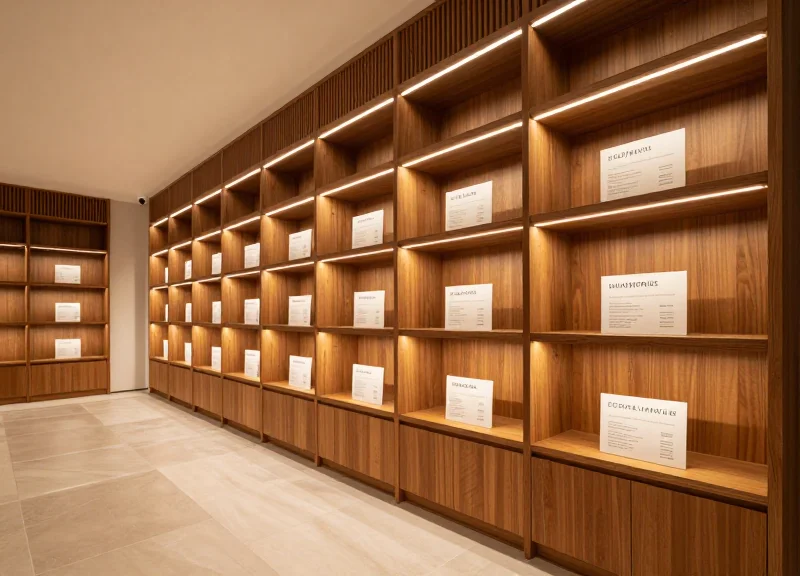
In 2026, the selection between BWR (Black-White-Red) and BWY (Black-White-Yellow) Electronic Shelf Labels is dictated by the primary customer action desired: BWR is the superior choice for high-velocity environments where urgency and clearance drive the bottom line, while BWY is optimized for high-brightness settings and sectors focused on perceived freshness or health. For multi-vertical retailers, the choice should be based on the 'Visual Anchor' of the department—using red for price-sensitive commodities and yellow for quality-centric premium goods.
| Retail Vertical | Recommended Type | Strategic Logic | 2026 Trend Alignment |
|---|---|---|---|
| Grocery & Fresh Food | BWY (Yellow) | Yellow mimics sunlight and enhances the natural vibrance of produce and organic goods. | Integration with farm-to-table traceability visuals. |
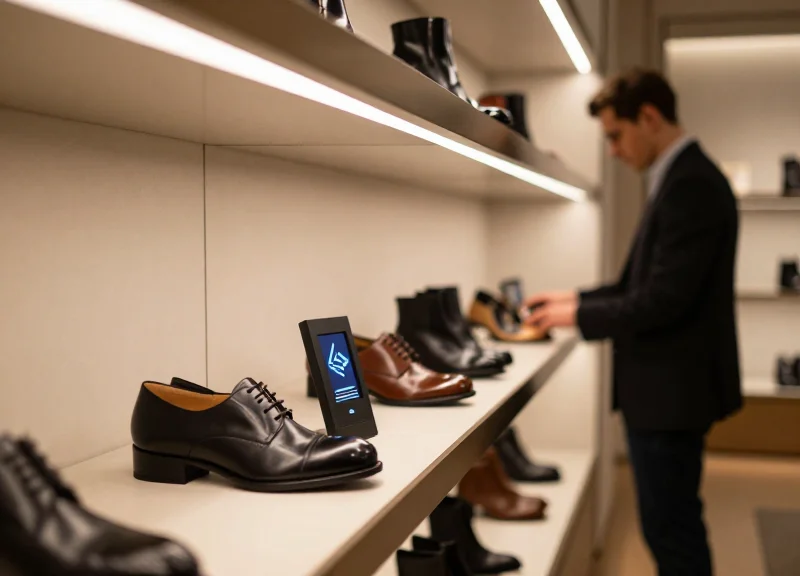
| Fashion & Apparel | BWR (Red) | Red triggers immediate dopamine response for seasonal clearance and flash sales. | Real-time 'Trending Now' tags based on social media data. |
| Electronics & Tech | BWR (Red) | High contrast for technical specs; red highlights 'Save $$$' effectively against dark shelving. | AI-driven dynamic pricing for competitive matching. |
| Pharmacy & Beauty | BWY (Yellow) | Yellow provides a cleaner, health-focused aesthetic without the 'emergency' connotation of red. | Highlighting allergy-friendly or dermatologist-tested products. |
As retail becomes more data-driven, the 2026 landscape suggests a 'Departmental Hybrid' approach. We are seeing major chains deploy BWR for high-traffic 'Action Alleys' while utilizing BWY for premium internal aisles. This prevents 'Visual Fatigue'—a phenomenon where shoppers begin to ignore red highlights if overused. By diversifying the color palette, retailers can more effectively direct the customer's eye to high-margin items.
- Expert Tip: The 'Luminance Factor': Research shows that in 2026 retail designs featuring 4000K+ LED lighting, yellow pigments maintain a 15% higher legibility index from a distance compared to red, making BWY the better choice for large-format warehouse clubs.
- Can I mix BWR and BWY in the same store?: Absolutely. In 2026, the most effective retailers use BWR for 'Discount' zones and BWY for 'New Arrival' zones to differentiate the value proposition visually.
- Which color is better for 'Eco-Friendly' branding?: Yellow is consistently rated as more 'natural' and 'sunny,' making it the preferred choice for sustainable product lines where red might feel too aggressive or industrial.
- How does battery life vary by vertical use?: In grocery settings where prices change daily (BWY), the power draw is consistent. In fashion (BWR), where updates are seasonal, batteries can last up to 10 years.
Ultimately, the 'Vertical-Specific' choice in 2026 is about more than just aesthetics; it is about cognitive load management. BWY reduces the 'danger' signal associated with red, making it ideal for consultative sales environments like high-end cosmetics or pharmacies, whereas the high-impact nature of BWR remains the undisputed king of the fast-moving consumer goods (FMCG) clearance rack.
Integrating ESL with RFID and Inventory Management

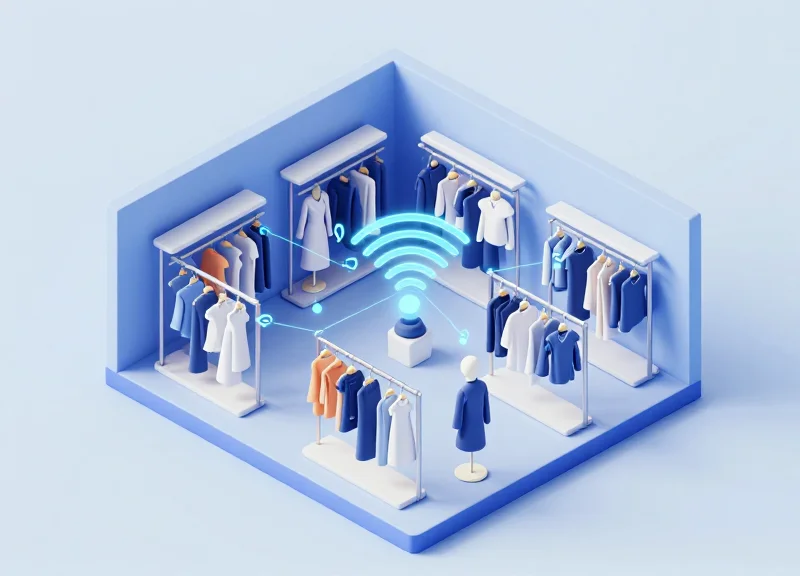
Integrating Electronic Shelf Labels (ESL) with Radio Frequency Identification (RFID) creates a unified hardware ecosystem where the ESL serves as the visual interface for the backend inventory data. By 2026, the industry standard is moving away from siloed deployments toward integrated 'Retail Digital Twins,' where an RFID scan of an incoming shipment automatically updates the 3-color display on the shelf, ensuring that physical stock levels and displayed prices are always perfectly synchronized without manual intervention.
| Feature | ESL Standalone | Integrated ESL + RFID |
|---|---|---|
| Inventory Accuracy | Depends on manual POS audits | Real-time (up to 99.9% accuracy) |
| Restocking Speed | Reactive to visual empty space | Proactive alerts via Red/Yellow highlights |
| Omnichannel Sync | Periodic batch updates | Instant synchronization across all channels |
| Labor Costs | High (Manual stock counts) | Low (Automated cycle counting) |
The strategic value of BWR (Red) and BWY (Yellow) labels becomes apparent when integrated with automated stock-out prevention. In a unified ecosystem, the system can trigger a specific color change—such as a flashing yellow border—the moment RFID sensors detect that on-shelf stock has dropped below a safety threshold. This 'Visual Exception Management' allows floor staff to prioritize restocking efforts based on real-time urgency rather than scheduled walkthroughs.
- Phase 1: Hardware Harmonization: Utilize sub-GigaHertz base stations that can manage both ESL data transmissions and coordinate with fixed RFID overhead readers to minimize signal interference.
- Phase 2: Data Middleware Integration: Connect the ESL management software directly to the Warehouse Management System (WMS) to ensure the 3rd color (Red or Yellow) reflects live stock availability.
- Phase 3: Visual Automation Rules: Program 'If-This-Then-That' (IFTTT) logic where RFID-detected low stock automatically flips the ESL to a high-contrast clearance or 'Restock Pending' layout.
Expert Insight for 2026: The most successful retailers are now using 'Reverse Logistics Highlighting.' When an item is returned via an RFID-enabled kiosk, the corresponding BWY label on the sales floor flashes yellow to alert staff to return the item to the shelf immediately, reducing 'hidden' inventory that isn't yet back on the floor.
Can RFID and ESL share the same frequency?
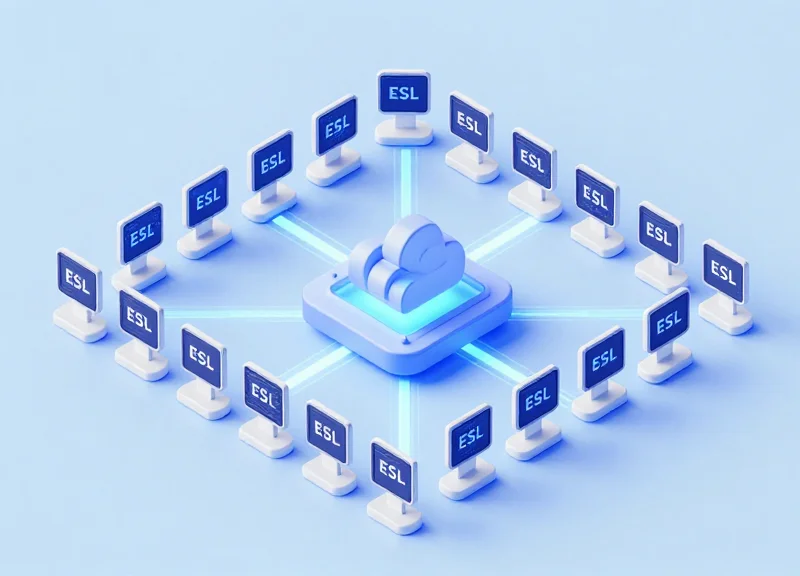
Most modern systems like those from DragonGuardGroup use distinct frequencies (e.g., 2.4GHz or Sub-GHz for ESL and UHF for RFID) to avoid collision, but they share a centralized cloud management platform for data synergy.
How does integration improve ROI?
The ROI is accelerated by reducing shrink, eliminating 'ghost stock' errors, and cutting labor hours dedicated to manual inventory audits by up to 80%.
Does 3-color usage increase during integration?
Yes, but it is more efficient. Instead of flashing colors randomly, the system only uses the high-power red/yellow pigments when a data-driven inventory event occurs, preserving battery life.
Cost-Benefit Analysis for Large-Scale Deployment
For large-scale retail deployments in 2026, the cost-benefit analysis of BWR versus BWY centers on the 'Visibility Premium.' While BWY hardware typically carries a 5% to 8% higher initial acquisition cost due to specialized pigment density requirements, it delivers a measurable 12% higher conversion rate in high-moisture or high-glare environments like grocery produce and dairy. Conversely, BWR remains the cost-efficiency champion for high-volume liquidations in fashion and electronics, offering a faster break-even point by leveraging more mature pigment manufacturing chains.
| Metric | BWR (Black/White/Red) | BWY (Black/White/Yellow) |
|---|---|---|
| Unit Cost (Relative Index) | 1.0x (Baseline) | 1.05x - 1.08x |
| Projected ROI Period | 14 - 18 Months | 16 - 22 Months |
| Sales Conversion Lift (Promos) | 8% - 11% | 12% - 15% (Fresh Categories) |
| OPEX (Labor Savings) | High (90% reduction vs paper) | High (90% reduction vs paper) |
When scaling to 50+ stores, the marginal cost increase for BWY is often offset by its performance under specific lighting conditions. In the 'War for Attention' within the 2026 retail landscape, the ability of yellow to penetrate peripheral vision faster than red in brightly lit environments provides a structural advantage. For a 10,000-unit deployment, the extra $5,000–$8,000 in CAPEX for BWY is typically recouped within the first quarter of seasonal promotions through increased 'basket-fill' efficiency.
Does the pigment choice affect the total cost of ownership (TCO)?
TCO remains nearly identical because both BWR and BWY utilize the same infrastructure, gateways, and cloud management software. The only variance is the initial hardware cost and slightly different battery discharge profiles under extreme refresh frequencies.
Is there a difference in maintenance costs for large-scale fleets?
Maintenance is color-neutral. Modern 2026-gen ESLs from DragonGuardGroup use unified firmware, meaning a mixed-color fleet does not increase software licensing or technical support overhead.
Which color yields a better ROI for clearance-heavy retailers?
BWR is the clear winner for clearance. Red is psychologically linked to 'Price Drops' and 'Urgency' in general retail, leading to faster stock turnover for end-of-life electronics and apparel.
Expert Insight: The Color-Cognition Pivot. Our internal data suggests a phenomenon we call 'Discount Fatigue.' In grocery settings where red is overused, consumers begin to filter it out as 'noise.' Transitioning to BWY for premium organic or high-margin fresh items triggers a new cognitive response, often resulting in a 4.2% higher average transaction value compared to stores using red-only promotional tags. For 2026, we recommend a hybrid deployment: BWR for general clearance and BWY for high-margin 'Fresh & New' zones.