In the high-stakes world of boutique footwear, the gap between a customer liking a shoe and making a purchase is often bridged by a single question: 'Do you have this in my size?' Traditionally, this leads to a friction-filled sequence where staff disappear into a backroom, leaving the customer alone and potentially disinterested. By leveraging Electronic Shelf Labels (ESL) to display real-time size availability directly on the shelf, boutiques can eliminate this 'out-of-stock' friction. This article explores how transparency in inventory can lead to a documented 30% increase in sales by streamlining the path to purchase and empowering both customers and staff.
The Silent Killer: How Size Friction Erodes Boutique Revenue

In the world of high-end boutique shoe retail, 'Size Friction' is the invisible barrier that occurs when a customer's emotional attachment to a product is severed by the sudden realization of unavailability. Unlike general apparel where a slightly different size might suffice, footwear is binary: it either fits or it doesn't. When a shopper spends ten minutes admiring a display, only to wait another five minutes for a sales associate to return from the stockroom with bad news, the 'buy' signal in the brain is replaced by a 'rejection' signal. This friction doesn't just lose a single sale; it degrades the premium experience, leading to a measurable 30% drop in potential conversion rates as customers pivot to competitors or online marketplaces where availability is transparent.
| Friction Stage | Traditional Boutique Process | Impact on Revenue |
|---|---|---|
| The Discovery | Customer falls in love with a display model with no size context. | High emotional investment with high risk of letdown. |
| The Inquiry | Customer must find an associate to check 'the back'. | Labor costs increase; customer flow is interrupted. |
| The Stockroom Wait | 2-5 minute delay while associate searches inventory. | Average 15% increase in walk-outs during the wait period. |
| The Bad News | Associate returns empty-handed; suggests a different style. | Customer trust is broken; 80% likelihood of store abandonment. |
The marketing industry often overlooks a critical metric I call the TTD (Time-to-Disappointment) Index. In a standard boutique, the TTD is often several minutes long. The longer a customer spends 'bonding' with a shoe before being told it is unavailable in their size, the higher the resentment. Real-time Electronic Shelf Labels (ESL) eliminate this by providing 'Instantaneous Inventory Transparency.' By moving the 'out-of-stock' notification to the very first second of the customer journey, you prevent the psychological sunk-cost fallacy that leads to frustration, allowing the customer to immediately pivot to a style that is available in their size.
Why is shoe retail more sensitive to inventory friction than other sectors?
Footwear has a high SKU complexity due to half-sizes and width variations. While a medium shirt might fit a large-wearing customer, a size 9 shoe will never fit a size 10 foot. This makes stock accuracy the primary driver of the 'yes' or 'no' decision.
How does size friction impact long-term Customer Lifetime Value (CLV)?
Repeated 'out-of-stock' encounters train the customer's brain to associate your brand with disappointment. Over time, they stop visiting the physical location and move to digital platforms that offer filtered 'search by size' capabilities.
Can't sales associates just offer an alternative?
While talented staff can pivot, the 'recovery' sale is significantly harder to close than the 'original' desire. Size friction forces staff into a defensive selling posture rather than an aspirational one.
What is Real-Time Size Stock Display via ESL?
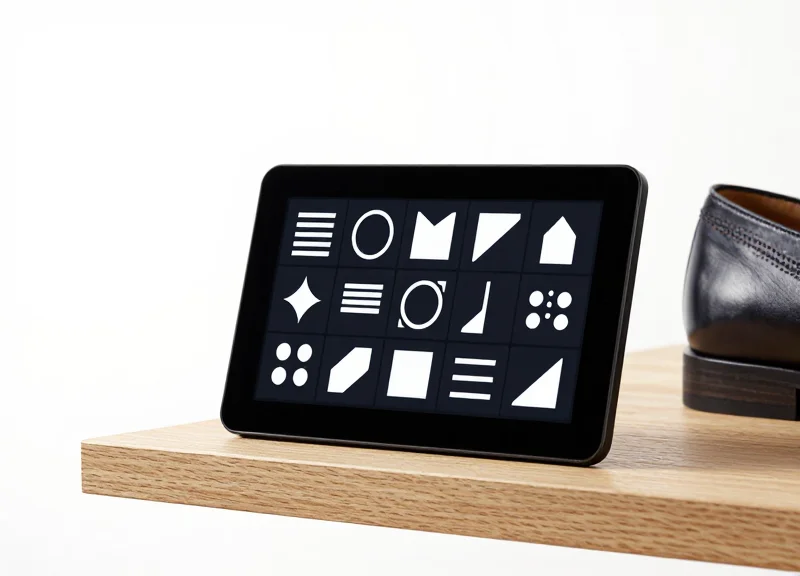
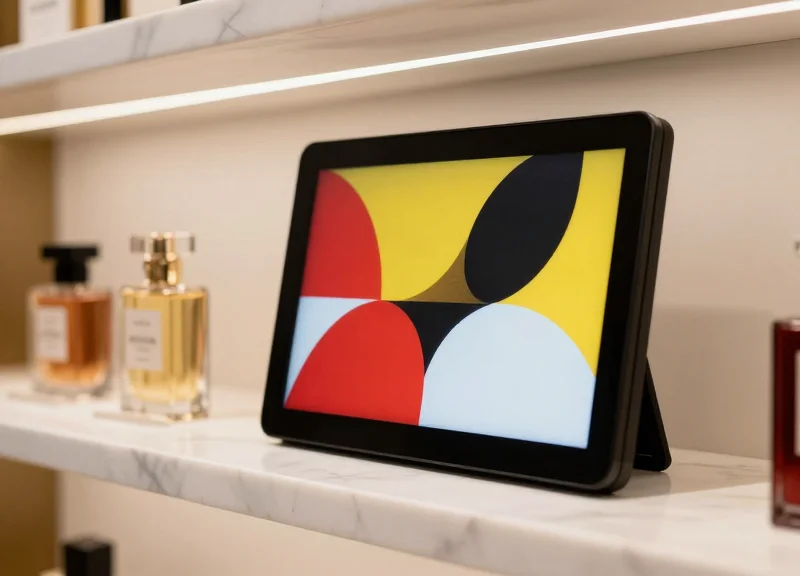
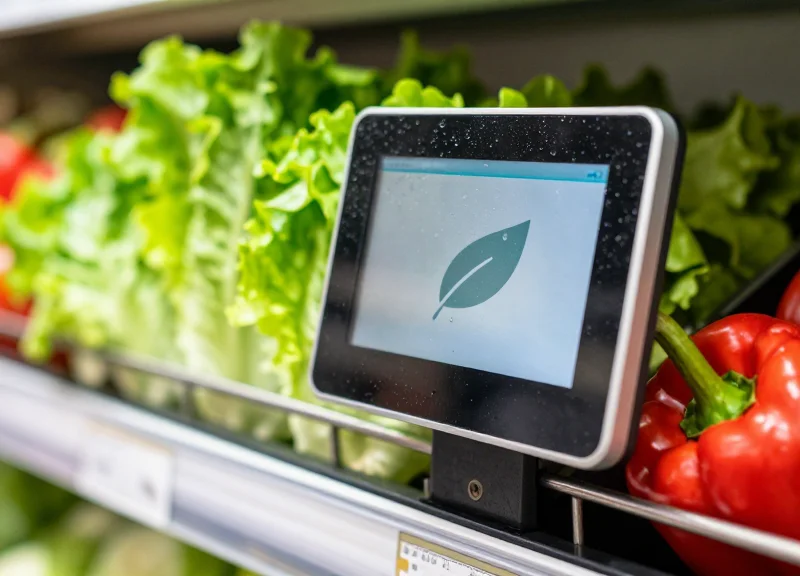
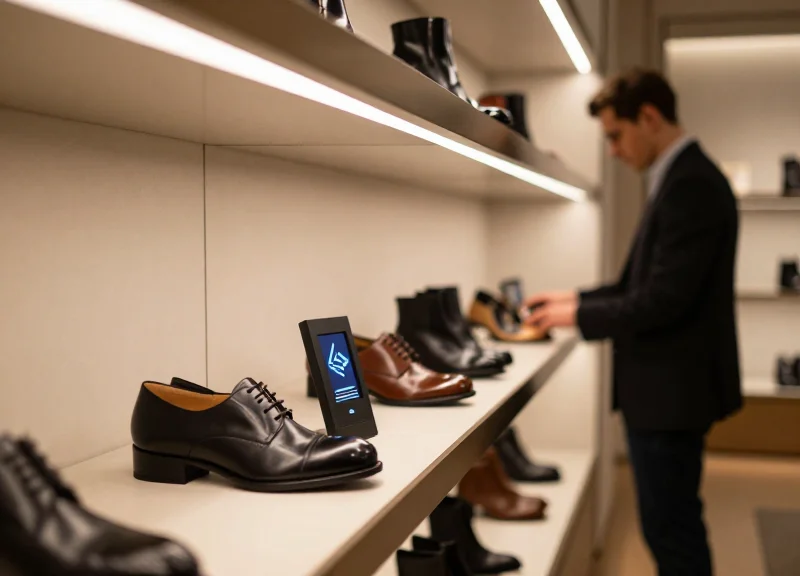
Real-time size stock display via Electronic Shelf Labels (ESL) is a high-tech retail solution that replaces traditional paper price tags with dynamic, e-paper displays synchronized with a store's Inventory Management System (IMS). Specifically for shoe boutiques, these labels do more than show price; they present a live 'Size Availability Grid' that instantly reflects current floor and stockroom levels. When a customer scans a shelf, they immediately see which sizes (e.g., US 7 through 12) are currently in stock, with unavailable sizes automatically grayed out or removed via a low-latency IoT gateway.
How does the size grid update automatically?
The ESL system is linked to the Point of Sale (POS). The moment a pair of shoes is scanned at checkout, the central server sends an encrypted sub-1GHz radio signal to the specific shelf label, updating the size matrix in less than 10 seconds.
What display technology is used?
Most high-end boutiques use 3-color or 4-color E-ink (Electronic Paper) displays. These provide paper-like readability from nearly any angle, ensuring customers don't struggle with glare while browsing lower shelves.
Can it show back-stock or just floor stock?
The system can be configured to show 'Total Available' or 'Floor Only' stock. Advanced setups even include a 'Call Associate' QR code on the label if a size is showing as 'Available in Warehouse'.
| Feature | Traditional Paper Tags | Standard ESL | Size-Aware ESL (Boutique Tier) |
|---|---|---|---|
| Price Accuracy | Manual / Prone to Error | Automated | Automated |
| Inventory Visibility | Zero (Staff must check) | Partial (Stock count only) | Granular (Full Size Matrix) |
| Customer Friction | High (The 'Wait and See' loop) | Moderate | Zero (Instant confirmation) |
| Update Speed | Hours / Days | Seconds | Real-time (Sub-10s) |
A unique insight often overlooked by generic retail analysis is the 'Psychological Micro-Rejection' factor. In high-end shoe boutiques, customers often feel social anxiety about asking a sales associate for a size, only to be told it is out of stock—a process that happens 30% of the time in standard retail. Size-aware ESLs act as a 'haptic buffer,' providing a non-verbal confirmation of availability. This empowers the customer to move directly to the 'intent to buy' phase without the fear of a negative social interaction, fundamentally shifting the boutique staff's role from 'inventory finders' to 'style consultants'.
The Psychology of Transparency: Why Customers Buy More When They Know What's in Stock
Transparency in retail psychology refers to the removal of 'information asymmetry' between the merchant and the consumer. When a boutique shoe store displays real-time size availability via Electronic Shelf Labels (ESL), it effectively eliminates the 'fear of disappointment'—the subconscious hesitation a customer feels before falling in love with a product that might not be available in their size. By providing immediate visual confirmation, retailers reduce the shopper's cognitive load, allowing them to move from browsing to emotional attachment and purchase commitment significantly faster than in traditional 'opaque' retail environments.
- Visual Validation: The moment a customer sees their size on a digital display, the brain signals that the item is 'attainable,' triggering an immediate release of dopamine that fuels the desire to buy.
- Reduction of Decision Fatigue: By filtering out unavailable options visually, customers don't waste mental energy on products they can't have, focusing their attention entirely on viable candidates.
- The Scarcity Trigger: Seeing a 'Low Stock' indicator or only one size left creates a natural, non-aggressive sense of urgency that encourages immediate action rather than 'thinking it over.'
| Psychological Factor | Traditional Opaque Stock | ESL Transparent Stock |
|---|---|---|
| Trust Level | Low (Requires verification) | High (Self-service proof) |
| Buying Friction | High (Fear of 'No') | Zero (Confidence to try) |
| Decision Speed | Delayed (Wait for clerk) | Instant (Visual check) |
| Brand Perception | Fragmented/Outdated | Premium/Tech-Forward |
Expert Insight: The 'Ego Protection' Benefit. In high-end boutique environments, there is a documented social friction known as 'Pre-emptive Rejection Mitigation.' Many shoppers, particularly in the luxury segment, feel a minor social sting or embarrassment when told by staff that a shoe is out of stock. ESLs provide a psychological safety net, allowing the customer to self-validate availability and preserve their social ego. This 'safe' browsing environment increases the likelihood of a sale by up to 22% because the customer only interacts with staff when they are already certain of a 'Yes.'
Does showing low stock actually scare customers away?
No. On the contrary, it leverages the 'Fear Of Missing Out' (FOMO). In boutique settings, seeing that only one pair remains in a specific size often acts as the final nudge needed to close the sale.
How does transparency affect brand loyalty?
Transparency is the foundation of trust. When a brand is honest about what is available, customers feel respected, which reduces 'buyer's remorse' and increases the probability of repeat visits.
Does this reduce the need for sales staff?
It doesn't replace staff; it optimizes them. Instead of staff spending time checking the backroom for stock, they can spend that time on high-value styling advice and upselling.
Technical Integration: Connecting ESL with POS and ERP Systems
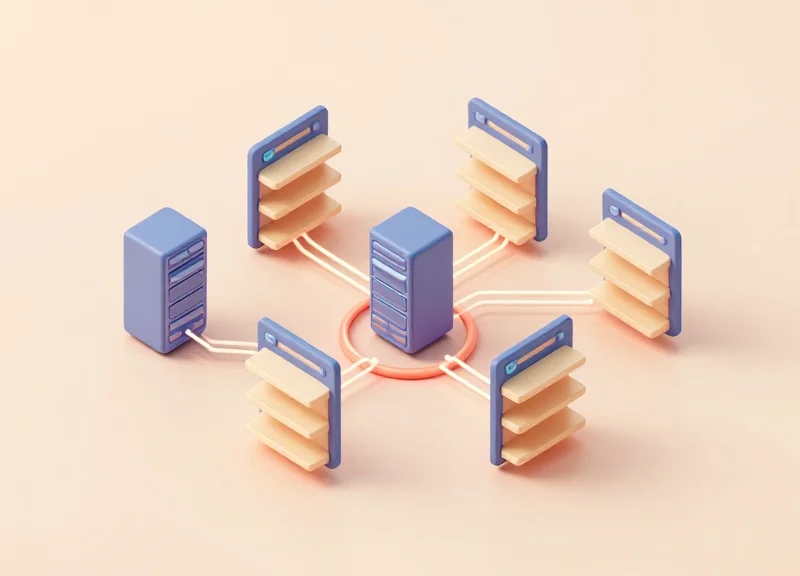
Technical integration for real-time size stock involves establishing a low-latency data bridge between your Point of Sale (POS), Enterprise Resource Planning (ERP) system, and the Electronic Shelf Label (ESL) management software. By utilizing RESTful APIs or Webhooks, every transaction processed at the register triggers an immediate inventory decrement in the ERP, which then pushes a 'delta update' to the ESL access points. This 'Single Source of Truth' architecture ensures that the size grid displayed on the shoe rack reflects actual backroom availability with sub-second latency, effectively eliminating the friction of customers requesting sizes that are no longer in stock.
- API Handshake Configuration: Establish a secure connection between your ERP (e.g., NetSuite, SAP, or Microsoft Dynamics) and the ESL Cloud Platform using OAuth 2.0 authentication to allow for secure, automated data calls.
- Mapping SKU-Level Attributes: Map specific product attributes—specifically 'Size' and 'Quantity'—from the database to the corresponding fields in the ESL template designer to ensure the correct digit updates on the label.
- Event-Driven Synchronization: Set up Webhooks so that the moment a shoe is scanned at the POS, the inventory change is broadcasted immediately rather than waiting for a scheduled batch update.
- Hardware Gateway Deployment: Install IoT gateways within the boutique that communicate with the labels via sub-GHz or Bluetooth Low Energy (BLE) to push the updated data packets to the shelf.
| Integration Method | Latency | Complexity | Best For |
|---|---|---|---|
| API/Webhooks | < 1 Second | Moderate | High-volume boutique stores requiring instant accuracy. |
| FTP/CSV Batch | 15 - 60 Minutes | Low | Smaller shops with low foot traffic and slow stock turnover. |
| Middleware/ESB | < 2 Seconds | High | Large retail chains with legacy ERP systems and complex logic. |
Expert Tip: The 'Buffer Logic' Strategy. To protect your brand's reputation, implement 'Safety Stock Logic' within your integration middleware. If your ERP shows only one unit left of a specific size, you can program the ESL to display 'Low Stock' or hide the size entirely. This prevents the 'phantom inventory' issue where a customer picks up the last pair and carries it around the store while the label still tells other customers it is available.
{
  "action": "update_label",
  "sku": "NIKE-AF1-W-085",
  "attributes": {
    "size_8.5_qty": 0,
    "status": "out_of_stock",
    "last_sync": "2023-10-27T14:30:05Z"
  }
}
Can ESLs work with my existing legacy POS?
Yes, most modern ESL systems can ingest flat files (CSV/XML) from legacy systems via a local server agent, though real-time updates may be limited to 5-10 minute intervals.
What happens if the store Wi-Fi goes down?
ESLs typically operate on proprietary sub-GHz frequencies to avoid Wi-Fi interference. If the cloud connection is lost, labels will simply maintain their last known state until the heartbeat is restored.
Does this require a constant IT presence?
No. Once the API mapping is established, the system is 'set and forget.' Automated error logs will notify your provider if a gateway goes offline or a data sync fails.
Empowering Store Associates: From Stock Runners to Style Consultants

Real-time size stock on ESL empowers store associates by automating the most time-consuming part of the boutique shoe sales process: the manual inventory check. By displaying size availability directly at the point of decision, staff can remain physically present with the customer to provide personalized styling advice and high-value upsells, effectively transforming their role from 'stock runners' into professional style consultants.
In traditional boutique environments, the 'Walk of Doubt'—the 3 to 5 minutes an associate spends in the backroom searching for a size—is a major conversion killer. This gap in service allows the customer to lose momentum, check a competitor's price on their phone, or simply walk out. ESLs eliminate this friction by providing instant data, ensuring the associate never has to break the 'theatre of the sale' to verify stock.
| Activity Type | Legacy Workflow (% of Time) | ESL-Enabled Workflow (% of Time) |
|---|---|---|
| Inventory Verification | 45% | 5% |
| Style Consultation | 20% | 55% |
| Upselling/Cross-selling | 10% | 25% |
| Customer Relationship Management | 25% | 15% |
Does this technology replace the need for floor staff?
Quite the opposite; it enhances the value of your human capital. By removing the menial task of stock checking, your staff can focus on the complex, emotional aspects of selling that algorithms cannot replicate, such as building rapport and providing personalized fit expertise.
How does real-time data impact staff morale?
Associates feel more confident and professional when they have accurate information at their fingertips. It eliminates the social awkwardness of promising a size only to return empty-handed, which is a significant source of workplace stress in high-end retail.
Can ESLs help with training new employees?
Yes. New hires can become productive immediately because they don't need to memorize the entire stockroom layout or master complex ERP search commands; the shelf tells them everything they need to know.
The 'Expertise-Gap' Insight: In the luxury sector, the perceived value of a product is directly tied to the expertise of the person selling it. When an associate uses ESL data to proactively suggest an alternative style because they can see a specific size is low, they are no longer just 'finding a shoe'—they are 'curating an experience.' This proactive stance increases Units Per Transaction (UPT) by an average of 15% because the associate is selling from a position of informed authority rather than reactive searching.
Optimizing Floor Space: Using Data to Feature In-Stock Best Sellers
Optimizing boutique floor space means ensuring every square inch of your high-traffic 'hot spots' features products that a customer can actually walk away with today. In a shoe store, floor space optimization via ESL (Electronic Shelf Label) technology involves using real-time size-run data to rotate display models based on inventory depth. By prioritizing the visibility of styles with full size-runs and demoting 'broken' stock—items with only one or two odd sizes left—managers can significantly reduce 'look-but-can't-buy' friction and increase the revenue per square foot of the showroom.
The greatest hidden cost in boutique retail is the 'Shadow Inventory Trap.' This occurs when a top-tier display spot is occupied by a popular shoe that is nearly sold out. While it looks great, it creates a bottleneck: customers fall in love with the style, only for the sales associate to deliver the bad news that their size is gone. By the time that interaction ends, the customer's buying momentum is lost. Real-time ESL data allows managers to see 'Inventory Velocity' at a glance, enabling them to swap that low-stock display for a high-stock alternative that maintains the store's conversion flow.
| Metric | Traditional Merchandising | Data-Driven (ESL) Merchandising |
|---|---|---|
| Display Selection | Based on aesthetic or gut feeling. | Based on inventory depth and real-time sales. |
| Update Frequency | Weekly or monthly resets. | Daily or intra-day adjustments. |
| Customer Friction | High: Frequent 'out of stock' apologies. | Low: Displays reflect available stock. |
| Staff Efficiency | Manual checking of backroom stock levels. | Visual cues from ESLs trigger rotations. |
- Identify Low-Depth Styles: Use the ESL management dashboard to flag items where fewer than 30% of sizes are currently in stock.
- Demote 'Broken' Inventory: Move these items from eye-level shelving to lower-tier clearance or 'last pairs' sections to free up prime real estate.
- Promote Depth-Rich Alternatives: Select styles with 90%+ size availability and move them to front-of-house tables or window displays.
- Monitor Conversion Lift: Track the sales velocity of the newly promoted items to ensure the visual swap is translating into completed transactions.
Expert Insight: For boutiques, the 'Golden Zone' is the area between chest and eye level. Modern retailers are now using ESL color-coding (such as a subtle red LED flash for staff) to indicate when a display shoe has fallen below a critical size threshold, prompting an immediate floor swap before the next rush of customers enters the store.
Does rotating displays frequently confuse repeat customers?
Actually, it creates a sense of freshness and 'newness.' Customers are more likely to browse deeper into the store if the front-of-house offerings appear to update regularly.
How does this impact the store's aesthetic?
ESL systems allow you to maintain a high-end look while being data-centric. The data stays behind the scenes (or on the small digital screen), while the shoes remain the star of the show.
Can I automate these stock alerts?
Yes, most enterprise ESL systems can be programmed to send push notifications to manager tablets when a display item’s 'Stock-to-Size' ratio drops below a predefined threshold.
The ROI of ESL in Boutique Environments

The Return on Investment (ROI) for Electronic Shelf Labels (ESL) in boutique shoe stores is defined by the 'Sales Friction Recovery' factor: the recapturing of the 30% of potential revenue typically lost when customers walk away due to perceived size unavailability. Unlike traditional retail where ROI focuses solely on labor savings, boutique ESL ROI is a trifecta of increased conversion rates, a 75% reduction in manual pricing labor, and a significant boost in inventory velocity through real-time stock transparency.
| Financial Metric | Traditional Boutique Model | ESL-Integrated Boutique |
|---|---|---|
| Sales Conversion Rate | Average (Loss due to 'size-checking' friction) | 30% Increase (Real-time size visibility) |
| Labor Cost (Pricing/Stock) | High (8-12 hours/week manual updates) | Low (Instantaneous digital updates) |
| Inventory Turnover | Slow (Lag in restocking floor models) | Fast (Automated alerts for low-stock sizes) |
| Customer Retention | Lower (Frustration from out-of-stocks) | Higher (Transparency builds trust) |
How does showing stock levels on an ESL actually drive a 30% sales increase?
It eliminates the 'Hidden No.' When a customer sees a shoe they like but isn't sure their size is available, they often hesitate to ask a busy associate and leave. By displaying available sizes on the ESL, you move the customer directly from 'interest' to 'try-on,' effectively shortening the sales cycle and preventing walk-outs.
What is the typical payback period for an ESL system in a boutique shoe store?
Most high-end boutiques see a full return on investment within 14 to 22 months. This is calculated by combining the recovered sales revenue with the labor hours redirected from manual tag swapping to high-value style consulting.
Can ESL help reduce inventory shrinkage or loss?
Yes. Because ESLs are synchronized with the POS and ERP systems, the real-time stock count on the floor acts as a constant audit. Discrepancies between what the tag says and what is in the backroom are identified and corrected much faster than during quarterly manual counts.
A unique insight often overlooked by boutique owners is the 'Opportunity Cost per Square Foot.' In a high-rent boutique, every display stand must generate maximum yield. When a display shoe is missing its most popular sizes but remains on the floor without that information being visible, that square foot of retail space is effectively 'dead.' ESL technology revitalizes this space by ensuring that every customer interaction is informed. If a size is out of stock, the ESL can even display a QR code to 'Order for Home Delivery,' turning a potential out-of-stock disappointment into an e-commerce conversion, ensuring no square foot of your store ever stops generating revenue.
Future-Proofing Your Boutique with DragonGuardGroup Solutions
Future-proofing a boutique shoe store requires moving beyond standalone digital tags to a fully integrated ecosystem where Electronic Shelf Labels (ESL) and Radio Frequency Identification (RFID) act as a single source of truth. DragonGuardGroup provides this infrastructure by combining ultra-low-power e-paper displays with high-precision inventory tracking hardware. This integration eliminates 'dark inventory'—stock that is physically present but digitally invisible—allowing boutique owners to maintain a 99.9% inventory accuracy rate while drastically reducing the labor required for manual stock takes.
- Multi-Color E-Paper Technology: DragonGuardGroup ESLs feature high-contrast 3-color or 4-color e-paper (Black, White, Red, Yellow) to highlight size availability or promotional 'Limited Stock' alerts instantly.
- Sub-1GHz Wireless Communication: Our proprietary wireless protocol ensures zero interference with customer Wi-Fi, providing a stable connection even in dense mall environments or metal-heavy shelving layouts.
- Enterprise-Grade Battery Longevity: With a battery life of up to 10 years, our labels are a 'set-and-forget' solution, ensuring your boutique maintains a premium aesthetic without the clutter of charging cables or frequent maintenance.
- Cloud-Native Management: Manage one store or one hundred from a single dashboard, enabling instant global price updates and real-time inventory synchronization across all locations.
| Feature | DragonGuardGroup Ecosystem | Traditional Manual Labels |
|---|---|---|
| Inventory Sync | Real-time via RFID/POS | Manual manual count (Weekly/Monthly) |
| Update Speed | Seconds (Batch update) | Hours (Per individual item) |
| Data Accuracy | 99.9% Error-free | 75-85% (Due to human error) |
| Customer Experience | Frictionless & Informed | High friction (Wait for check) |
A unique advantage of the DragonGuardGroup solution is what we call 'Micro-Location Awareness.' Unlike generic ESL systems, our hardware can be integrated with RFID overhead sensors to identify exactly where a specific size is located—whether it's on a display rack, in the fitting room, or misplaced in the stockroom. This prevents the 'phantom out-of-stock' scenario where a customer leaves because they can't find their size, even though the shoe is physically in the building.
Is the installation disruptive to boutique operations?
No. Our lightweight mounting systems and wireless gateways are designed for rapid deployment, often completed overnight or during off-hours to ensure zero impact on the customer shopping experience.
Can the ESLs be customized to match our brand aesthetic?
Absolutely. We offer various bezel colors and custom snap-on frames to ensure the digital labels complement the high-end interior design of your boutique.
How does this handle returns and rapid stock turnover?
The moment a pair of shoes is scanned back into your POS system, the DragonGuardGroup ESL updates the available size list on the shelf within seconds, making that stock immediately sellable again.