As we approach 2026, the transition from traditional paper-based patient records to fully integrated smart hospital ecosystems is no longer a luxury—it is a necessity for patient safety and operational efficiency. The digital bed card, often powered by advanced Electronic Shelf Label (ESL) technology, sits at the heart of this transformation. In an era where data accuracy can be a matter of life and death, selecting a system that offers more than just a digital screen is critical. This guide explores the foundational features that healthcare administrators must prioritize to future-proof their wards and empower their medical staff.
The Evolution of Patient Information Management
The evolution of patient information management represents a shift from static, fragmented documentation to a dynamic 'Living Data' ecosystem. In the 2026 Smart Hospital model, this evolution is characterized by the replacement of manual bedside clipboards with intelligent digital bed card systems that synchronize instantly with Electronic Health Records (EHR), ensuring that every stakeholder—from surgeons to janitorial staff—is operating on a single version of the truth to eliminate preventable medical errors.
Historically, patient tracking was a manual, labor-intensive process prone to latency. As healthcare moves toward 'Smart' infrastructure, the demand for real-time visibility has turned the humble bed card into a critical IoT node. This transition is not merely about digitizing text; it is about context-aware automation where the display changes based on the proximity of a clinician or the critical nature of a lab result.
| Feature | The Paper Era (Pre-2010) | The Digital Transition (2010-2022) | 2026 Smart Hospital Standard |
|---|---|---|---|
| Data Accuracy | Manual/Delayed | Delayed (Manual Data Entry) | Real-time (Auto-sync via HL7 FHIR) |
| Visibility | Bedside Only | Local Network Terminals | Ubiquitous (Mobile, Cloud, AI-ready) |
| Update Frequency | Daily/Per Shift | Hourly/Event-driven | Instantaneous/Sub-second |
| Interactivity | None | View-only | Bi-directional IoT Integration |
Why is real-time data visibility non-negotiable for 2026?
With the rise of precision medicine and acute care staffing shortages, hospitals cannot afford the 'data lag' of 20th-century systems. Real-time visibility ensures that critical alerts like 'NPO' (Nothing by Mouth) or 'Fall Risk' are updated the millisecond the order is placed, preventing high-cost adverse events.
How does this evolution impact nursing workflows?
Modern digital bed cards reduce the cognitive load on nurses by automating the display of routine information, allowing staff to focus on patient care rather than administrative data entry or verifying the accuracy of a paper sign.
Expert Insight: The 'Cognitive Load' Pivot. My two decades in Silicon Valley health-tech have shown that the best systems in 2026 won't just display more data; they will display less. We are entering the era of 'Cognitive Filtering' where the digital bed card uses AI to prioritize information based on the viewer’s role. For example, a nurse sees vital signs, while a food service worker sees only dietary restrictions. This role-based visibility is the hallmark of a truly evolved patient management system.
Feature 1: Seamless HIS and EMR Synchronization
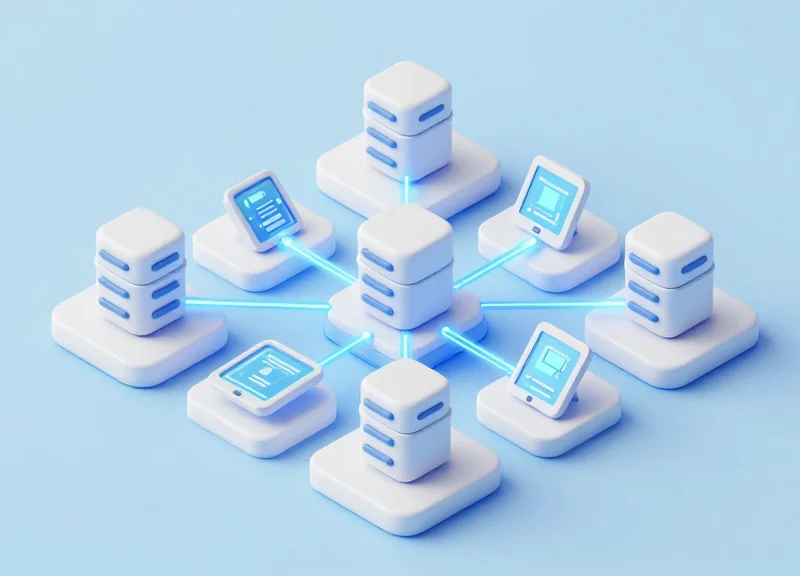
In the 2026 smart hospital ecosystem, seamless HIS (Hospital Information System) and EMR (Electronic Medical Record) synchronization refers to the automated, real-time exchange of patient data between the core clinical database and bedside digital displays. This integration ensures that vital information—such as allergies, code status, and attending physicians—is updated instantly across all platforms without manual intervention, serving as the primary fail-safe against information silos and medical errors.
Beyond simple data mirroring, a non-negotiable requirement for next-generation systems is bi-directional communication. While legacy systems often pull data on a delay, modern digital bed cards must leverage HL7 FHIR (Fast Healthcare Interoperability Resources) standards to push updates back to the EMR. For instance, if a nurse updates a patient's 'NPO' (Nothing by Mouth) status via the bedside interface, that change should immediately propagate to the hospital's dietary and nursing station modules, eliminating the 'double-documentation' burden that fuels clinician burnout.
| Feature | Legacy Synchronization (Pre-2024) | Smart 2026 Synchronization |
|---|---|---|
| Data Flow | One-way / Pull-only | Bi-directional / Push-Pull |
| Update Frequency | Scheduled (15-60 min intervals) | Real-time (Webhooks/FHIR Events) |
| Interoperability | Proprietary / Custom APIs | Standardized HL7 FHIR v4+ |
| Clinical Risk | High (Latency leads to errors) | Minimal (Single source of truth) |
Why is FHIR compliance essential for 2026 systems?
FHIR allows for modular, scalable data exchange that supports modern mobile apps and AI diagnostics, ensuring your bed cards remain compatible with future clinical microservices.
Can these systems operate if the hospital Wi-Fi fluctuates?
Top-tier systems utilize edge caching to ensure the 'last known' patient data remains visible even during network interruptions, with an auto-sync trigger the moment connectivity is restored.
Does synchronization impact EMR database performance?
No. Modern architectures use 'event-driven' synchronization rather than heavy polling, meaning the bed card system only receives data when a change occurs, minimizing server load.
Expert Insight: The 'Sync-Audit' Safety Net. The most overlooked risk in digital bedside displays is 'Information Stale-ness.' My recommendation for 2026 procurement is to mandate a 'Last Sync' timestamp on the UI. While real-time is the goal, providing clinicians with a visible indicator of when the data was last verified against the EMR provides a critical psychological and clinical safety net, ensuring no decision is made based on outdated records during an unexpected system lag.
Feature 2: Ultra-Low Power E-Ink Display Technology
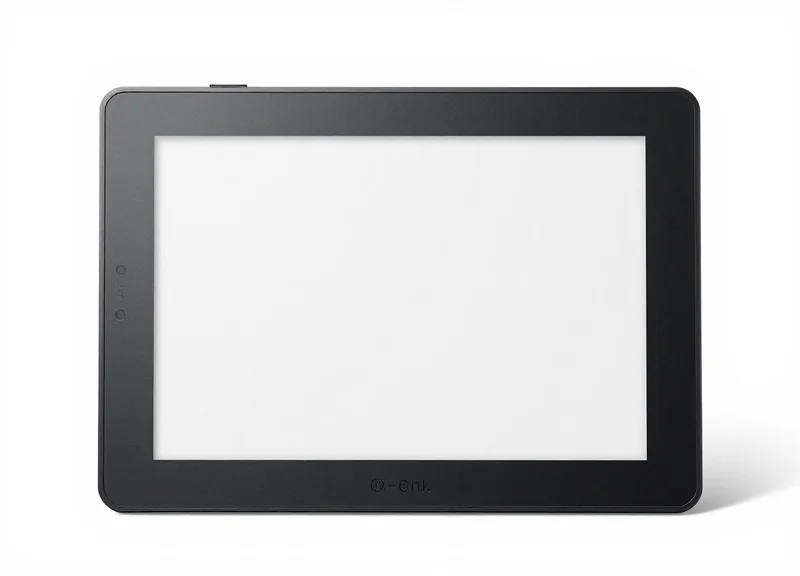
In the context of 2026 smart hospitals, Ultra-Low Power E-Ink (Electronic Ink) display technology is a bistable imaging medium that mimics the appearance of ordinary ink on paper, requiring power only when the information on the screen changes. Unlike traditional LCD or LED tablets, E-Ink bed cards provide 180-degree viewing angles, zero blue-light emission, and the ability to maintain content indefinitely without a power source, making them the most sustainable and clinician-friendly choice for high-frequency patient environments.
| Feature | E-Ink (E-Paper) Bed Cards | Traditional LCD/Tablet Displays |
|---|---|---|
| Power Consumption | Near-zero (Battery lasts 3-5 years) | High (Requires daily charging/cabling) |
| Visual Comfort | Reflective (No glare, eye-friendly) | Emissive (High blue light, eye strain) |
| Viewing Angle | 180° (Readable from any position) | Limited (Contrast drops at angles) |
| Installation Cost | Minimal (Wireless, no cabling needed) | High (Requires electrical wiring/conduit) |
- Bi-Stable Efficiency: Content remains visible even if the system loses power or the battery is removed, ensuring critical patient data like 'NPO' or 'Fall Risk' is never lost during outages.
- Paper-Like Readability: By utilizing ambient light rather than backlighting, E-Ink eliminates the 'screen fatigue' common among nursing staff and ensures clarity under harsh hospital fluorescent lighting.
- Infrastructure-Light Deployment: Because these devices can run for years on standard coin-cell or lithium batteries, hospitals can avoid the massive costs and infection-control risks associated with drilling into walls for electrical cabling.
Expert Insight: The 'Infection Control' Advantage of Passive Displays. One often overlooked ROI factor is that E-Ink displays operate at room temperature. Traditional LCD tablets generate heat, which can create localized convection currents that circulate dust and pathogens. By staying cool and requiring no ventilation gaps, E-Ink bed cards are significantly easier to disinfect and support more stringent sterile field protocols required in modern smart wards.
Can E-Ink displays show color for urgent alerts?
Yes, by 2026, Advanced Color ePaper (ACeP) allows for multi-color highlights (Red, Yellow, Green) to clearly denote allergy warnings or isolation status without sacrificing battery life.
How does the system update if it is not plugged in?
Updates are sent via low-power wireless protocols like BLE (Bluetooth Low Energy) or Sub-GHz frequencies, which trigger the display to refresh only when new HIS data is pushed.
Is the screen readable in total darkness?
Modern digital bed cards often include a 'front-light' option that can be triggered by a nurse or motion sensor, providing visibility at night without the harsh glare that disturbs patient sleep.
Feature 3: Multi-Color Alert Systems for Immediate Clinical Awareness
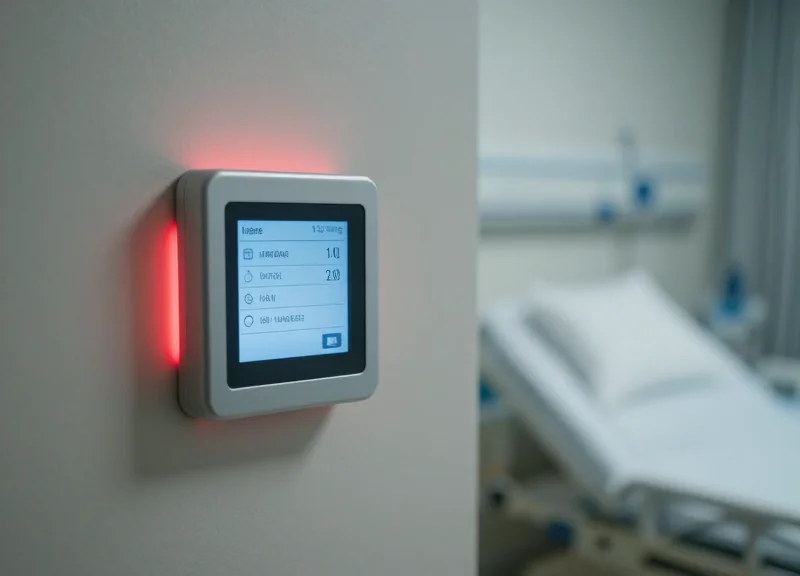
A multi-color alert system in a digital bed card is a visual communication protocol that utilizes standardized, high-contrast color indicators to broadcast critical patient risks—such as severe allergies, fall hazards, or specific isolation requirements—at a glance. By 2026, the best systems will move beyond simple monochrome displays to offer multi-color e-paper (like E Ink Spectra 6) or LED-enhanced frames that allow clinical staff to perform a 'visual triage' before they even touch a patient or check an EMR terminal.
| Color Indicator | Clinical Meaning | Immediate Action Required |
|---|---|---|
| Bright Red | Critical Allergy / High Risk | Verify wristband and EMR before administering any medication. |
| Amber / Yellow | High Fall Risk | Ensure bed rails are up and mobility assistance is ready. |
| Purple | DNR / DNI Status | Refer to advance directives immediately in emergency scenarios. |
| Green | Discharge Ready | Initiate room turnover and transport protocols. |
The strategic value of color-coding lies in its ability to bypass 'cognitive tunneling.' In high-stress hospital environments, clinicians are often overloaded with data. A digital bed card that flashes a specific color for a 'Latex Allergy' or 'NPO' (Nothing by Mouth) status serves as a cognitive fail-safe. This feature is particularly vital for transient staff, such as traveling nurses or phlebotomists, who may not have time to review a patient's full digital history before beginning a bedside procedure.
How do multi-color alerts reduce 'Alarm Fatigue'?
Unlike audible alarms that add to the noisy hospital environment, color-coded bed cards provide 'passive awareness.' They communicate urgency without contributing to the sensory overload that often leads to staff burnout.
Can these colors be customized per facility?
Yes. While there are industry standards (like yellow for fall risks), top-tier systems allow hospitals to map specific EMR data triggers to custom colors that align with their existing safety protocols.
Does color-coded e-ink affect battery life?
Modern multi-color e-paper displays are highly efficient. They only consume power when the alert status changes, maintaining a battery life of several years even with frequent color updates.
Expert Tip: The 10-Foot Rule. When evaluating a system, test for what I call 'The 10-Foot Rule.' A nurse standing at the doorway of a room should be able to identify the patient's primary risk factor within two seconds based solely on the color indicator of the digital bed card. If the color is too faint or the icon too small to be seen from the threshold, the system fails to meet the safety requirements of a 2026 smart hospital.
Feature 4: Robust Security and RFID Integration
In the 2026 smart hospital ecosystem, the digital bed card is more than just a display—it is a secure endpoint within the hospital's Internet of Medical Things (IoMT). Robust security and RFID integration ensure that sensitive patient data remains protected from unauthorized eyes while allowing clinicians to update information instantly without the friction of manual logins. This feature acts as the 'physical firewall' for the patient's bedside, bridging the gap between digital data integrity and physical access control.
- Role-Based Access Control (RBAC): The system must distinguish between a nurse, a doctor, and a cleaning staff member, showing only the information relevant to their specific role upon authentication.
- NFC/RFID Quick-Sync: Clinicians can tap their existing employee ID badges against the bed card to 'unlock' the interface, enabling one-touch updates or detailed view modes.
- AES-256 Encryption: All data transmitted from the Hospital Information System (HIS) to the e-paper display must be encrypted at rest and in transit to meet global HIPAA and GDPR standards.
- Automatic Privacy Masking: When no authorized staff are nearby, the screen can automatically hide sensitive clinical data, displaying only non-PHI (Protected Health Information) markers.
| Feature | Legacy Paper/Manual | Standard Digital Card | 2026 RFID-Integrated System |
|---|---|---|---|
| Access Control | None (Publicly visible) | Username/Password | RFID/NFC Tap-to-Unlock |
| Data Privacy | Zero | Partial | Full Encryption & Masking |
| Update Speed | Slow/Manual | Manual Login Required | Instant via Proximity |
| Audit Trail | None | Inconsistent | 100% Verified Logins |
Expert Insight: The 'Zero Trust' Bedside. As an industry veteran, I’ve seen hospitals focus heavily on network firewalls while leaving the physical bedside completely vulnerable. The next generation of bed cards introduces the 'Zero Trust Bedside' concept. In this model, the device treats every individual in the room as an unauthorized viewer by default. Using proximity-aware RFID, the display only decrypts and renders specific clinical alerts—such as fall risks or allergy warnings—when a verified staff member is within a 1.5-meter radius. This ensures that even if a visitor is standing right next to the screen, the patient's most sensitive data remains invisible.
Does RFID integration require new staff badges?
No. Most modern digital bed card systems are designed to be frequency-agnostic, meaning they can be configured to read the 125kHz or 13.56MHz badges your hospital already uses.
What happens if a bed card is stolen?
Because the cards do not store data locally and require server-side authentication, a stolen device is essentially a 'brick' with no accessible patient information.
Does RFID scanning drain the battery?
Top-tier systems use passive RFID or ultra-low-power NFC 'wake-up' triggers that only consume power during the split second of the scan, preserving the 3-5 year battery life of the E-ink display.
Feature 5: Centralized Remote Management and Scalability
In the 2026 smart hospital ecosystem, the digital bed card system is not merely a collection of screens but a sophisticated IoT network that requires a 'single pane of glass' management strategy. Centralized remote management refers to the ability of IT administrators to oversee the health, connectivity, and content of every device across multiple floors or hospital branches from one central workstation. Without this, the labor cost of maintaining high-density deployments would negate the efficiency gains of the hardware itself. True scalability hinges on 'Zero-Touch Provisioning,' where new devices automatically pull configurations and patient data the moment they are connected to the hospital network.
| Capability | Legacy Managed Systems | 2026 Centralized Platforms |
|---|---|---|
| Firmware Updates | Manual / Per Device | Over-the-Air (OTA) Batch Updates |
| Health Monitoring | Reactive (Wait for failure) | Proactive (Heartbeat monitoring) |
| Configuration | On-site Serial Connection | Cloud-based / Template Driven |
| Scaling Limit | Dozens of devices | Unlimited (Multi-site support) |
Expert Insight: The Shift to Predictive Maintenance. As a Silicon Valley veteran, I've seen that the most successful IoT deployments utilize 'Digital Twin' logic. In 2026, the best digital bed card systems won't just tell you a device is offline; they will use telemetry data to predict battery depletion or signal degradation weeks before it happens. This allows facilities teams to replace batteries or adjust routers during scheduled downtime rather than reacting to a 'blank screen' during a critical patient intake.
- Device Discovery and Auto-Enrollment: Plug-and-play functionality where the system recognizes new hardware IDs and assigns them to specific rooms based on pre-set logic.
- Group-Based Policy Management: The ability to push specific display layouts or alert protocols to entire departments (e.g., ICU vs. Maternity) simultaneously.
- Real-time Telemetry Dashboard: A visual interface showing signal strength, battery life, and synchronization status for every bed card in the network.
Can the system handle multi-campus deployments?
Yes, high-end 2026 systems utilize a hierarchy-based architecture that allows a central HQ to manage global settings while giving local IT control over specific building nodes.
What happens if the central management server goes offline?
Resilient systems feature 'Edge Persistence,' meaning bed cards continue to display the last known valid EMR data even if the connection to the management console is temporarily severed.
Is a specialized IT team required to run the platform?
No. Modern interfaces are designed with UX-centric dashboards that allow clinical floor managers to handle basic assignments, while deep technical configurations remain restricted to IT.
Durability and Hygiene: Meeting Medical-Grade Standards
In a 2026 smart hospital environment, medical-grade durability for digital bed cards is defined by the hardware's ability to maintain structural integrity and functional performance while undergoing constant exposure to high-level disinfectants (HLDs) and physical impacts. Unlike consumer-grade tablets, medical-grade digital bed cards utilize antimicrobial-infused plastics and sealed, fanless chassis (IP67 or higher) to prevent the ingress of pathogens and liquids, ensuring the device remains a clinical asset rather than a vector for healthcare-associated infections (HAIs).
| Feature | Consumer-Grade Device | 2026 Medical-Grade Standard |
|---|---|---|
| Ingress Protection | IP52 (Dust/Drip resistant) | IP67 (Fully waterproof & dust-tight) |
| Chemical Resistance | Alcohol-sensitive; cracks over time | Resistance to Bleach, Quat, and Hydrogen Peroxide |
| Surface Material | Standard ABS Plastic | Antimicrobial-embedded polymers |
| Longevity | 2-3 year lifecycle | 7-10 year clinical lifecycle |
The Expert Insight: The Silent Killer of Hardware—Environmental Stress Cracking (ESC). Most IT buyers overlook ESC, where frequent cleaning with hospital-grade wipes causes micro-fractures in non-medical plastics. These cracks harbor bacteria that standard cleaning cannot reach. When selecting your 2026 system, demand hardware that has passed the ISO 22196 test for antimicrobial activity and utilizes 'High-Impact Medical-Grade Polycarbonate' to prevent chemical brittleness.
Can these devices withstand UV-C sterilization?
Yes, next-generation digital bed cards are built with UV-stabilized resins. This prevents the yellowing and material degradation often seen when devices are exposed to UV-C disinfection robots frequently used in modern patient rooms.
What cleaning agents are compatible with these screens?
Standardized systems for 2026 are tested against the 'Big Three': Chlorine bleach (5.25%), 70% Isopropyl Alcohol, and Hydrogen Peroxide (3.0%). The screen surface must be chemically strengthened glass to avoid clouding from these agents.
Why is a fanless design non-negotiable?
Fans circulate airborne pathogens and create internal dust reservoirs that are impossible to clean. A fanless, sealed design uses passive cooling, which eliminates internal contamination risks and reduces mechanical failure points.
- Check the IP Rating: Ensure the device is at least IP65 (water jets) or IP67 (immersion) to allow for thorough spray-and-wipe protocols without internal moisture damage.
- Verify Chemical Compatibility Lists: Ask the vendor for a comprehensive list of tested cleaning agents to ensure your facility's specific EPA-registered disinfectants won't void the warranty.
- Assess Mechanical Mounting: Durability also applies to the mount. Ensure the system uses medical-grade VESA or bespoke locking mounts that can withstand patient tampering and frequent bedside movement.
Analyzing the ROI of Digital Bed Card Systems

The Return on Investment (ROI) for a Digital Bed Card system is measured by the delta between Total Cost of Ownership (TCO) and the elimination of 'Information Latency.' While traditional ROI focuses on hard costs like paper and toner, the true value for 2026 smart hospitals lies in reclaiming clinical labor hours and mitigating the high-cost risks of manual data entry errors. For a standard 500-bed facility, an e-paper based system typically achieves a break-even point within 14 to 20 months by automating updates that previously required 5-10 minutes of nursing time per patient, per shift.
| Cost Category | Traditional Paper System (Annual) | Digital Bed Card System (Annual) | Net Savings Impact |
|---|---|---|---|
| Consumables | $18,500 - $25,000 | $0 (E-paper) | 100% Elimination |
| Nursing Labor | $145,000 - $190,000 | $5,000 (System Monitoring) | 97% Reduction |
| IT/Maintenance | $2,000 (Printers) | $8,000 (SaaS/Support) | -$6,000 (Increased Cost) |
| Total Estimates | $165,500+ | $13,000 | ~$152,500/Year |
Unique Insight: The Information Latency Tax. Most ROI models fail to account for the 'Latency Tax'—the financial risk of the 15-to-30-minute window between a medical order change (e.g., 'NPO' for surgery) and the physical update of a paper bed card. Digital systems eliminate this window entirely via HL7/FHIR integration. By preventing even one adverse event or a delayed surgery due to outdated signage, the system pays for its entire department-wide deployment in a single day.
Does the system reduce nurse burnout?
Yes. By automating administrative tasks, nurses can focus on top-of-license clinical care. Reducing 'friction tasks' is a primary driver in retaining staff, which saves an average of $52,000 per nurse in recruitment and training costs.
How does E-paper compare to LCD in terms of TCO?
E-paper has a significantly lower TCO due to 5-10 year battery life and zero wiring costs. LCD systems require expensive electrical retrofitting and have higher failure rates due to heat generation and constant power draw.
What is the impact on bed turnover rates?
Digital systems can integrate with environmental services (EVS) to show real-time cleaning status. Faster visual communication can decrease 'bed-empty' time by 15-20%, increasing the hospital's daily revenue capacity.