In the world of high-end beauty boutiques, every detail matters—from the curated scent in the air to the precision of the lighting. Traditional paper tags often disrupt this carefully crafted atmosphere, appearing cluttered or outdated. Electronic Shelf Labels (ESL) offer a sophisticated alternative, but for luxury retailers, the challenge is finding a system that provides technological efficiency without compromising on visual elegance. This guide explores how to select ESL solutions that achieve perfect aesthetic harmony while streamlining your premium retail operations.
The Evolution of Beauty Retail: Why High-End Boutiques are Moving to ESL
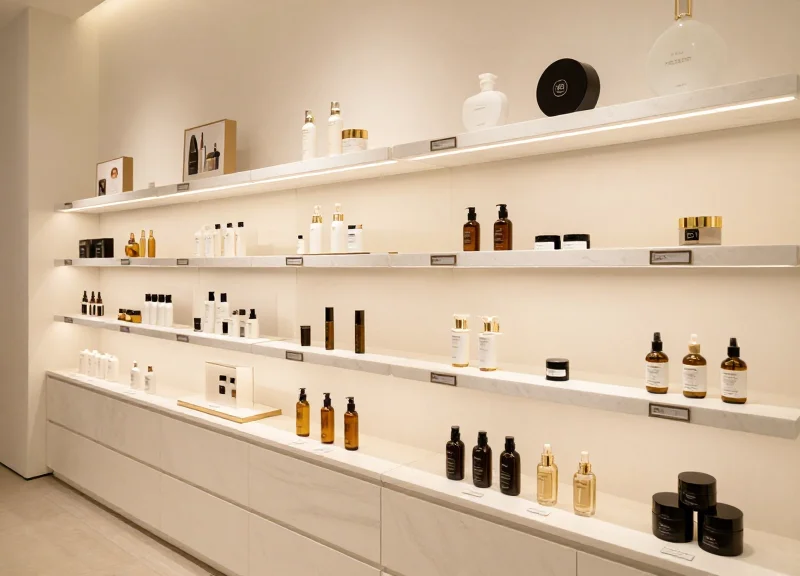
High-end beauty retail is undergoing a digital renaissance where the physical shelf edge is no longer a static boundary but a dynamic interface. Electronic Shelf Labels (ESL) have transitioned from utilitarian supermarket tools into sophisticated e-paper displays that allow luxury boutiques to synchronize online and offline pricing instantly. This shift is driven by the need to maintain a premium visual brand narrative while managing the complexities of omnichannel retail, ensuring that the physical shopping environment reflects the same high-speed precision found in digital flagship stores.
For many luxury brands, the primary driver for this evolution is the elimination of 'Aesthetic Debt.' In a high-consequence environment like a prestige beauty boutique, a single dog-eared paper tag or a misaligned price sticker can subconsciously signal a lack of attention to detail, eroding the brand's perceived value. ESLs remove this risk by providing perfectly uniform, high-contrast typography that remains crisp under boutique lighting, effectively digitizing the retail floor without sacrificing the tactile elegance of the space.
| Feature | Traditional Paper Tags | High-End ESL Systems |
|---|---|---|
| Pricing Agility | Manual (Hours to Days) | Instant (Seconds) |
| Visual Consistency | Variable/Prone to wear | Perfect/High-Resolution |
| Information Depth | Limited to price/name | NFC-enabled/QR Rich Content |
| Sustainability | High waste (Constant printing) | Low (5-10 year battery life) |
| Labor Efficiency | High manual maintenance | Zero maintenance post-install |
Do Electronic Shelf Labels compromise the minimalist luxury aesthetic?
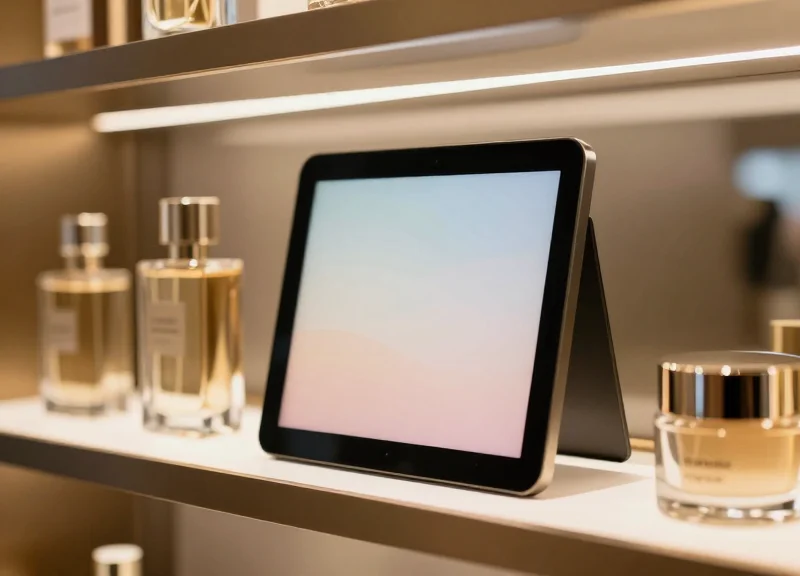
Quite the opposite. Modern ESLs for luxury retail feature ultra-thin profiles, customizable bezels (including metallic and matte finishes), and E-ink technology that mimics the appearance of high-quality printed cardstock rather than a digital screen.
How do ESLs improve the customer experience in beauty boutiques?
They provide immediate access to 'Clean Beauty' credentials, ingredient lists, and tutorial videos via NFC or QR code integration, allowing for a self-guided discovery process that complements the service provided by beauty consultants.
Can ESLs handle complex promotional cycles typical in cosmetics?
Yes, they allow boutiques to run 'Happy Hour' promotions or flash sales synchronized with social media trends instantly across all physical locations without any manual intervention.
A unique insight often overlooked by generic retail guides is the concept of the 'Silent Concierge.' In a prestige environment, customers often feel pressure during one-on-one consultations. ESLs serve as a non-intrusive digital layer, providing the transparency and data-rich environment that Gen Z and Millennial luxury shoppers demand—such as real-time stock levels of specific shades or cruelty-free certifications—without the friction of an interrupted personal interaction. By moving to ESL, boutiques aren't just changing a price tag; they are installing a sophisticated data touchpoint that honors the customer's autonomy.
Aesthetic Harmony: The Core Criterion for Luxury ESL Selection
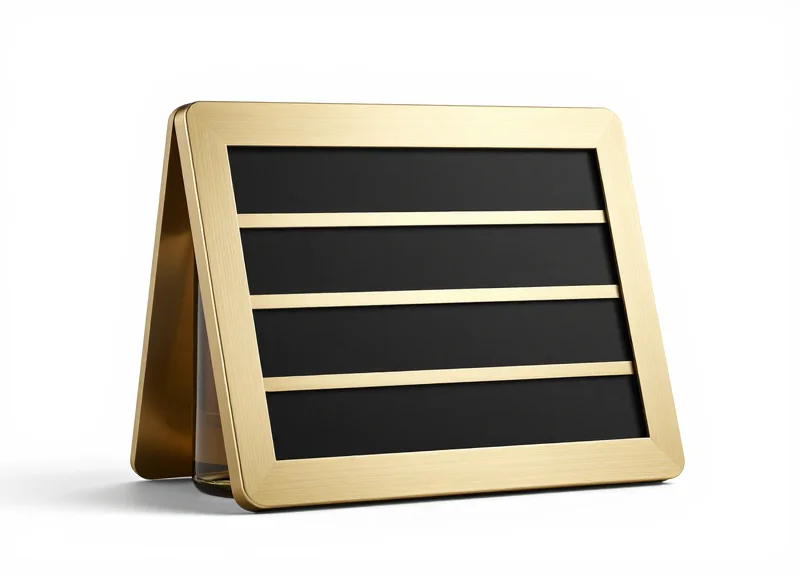
Aesthetic harmony in luxury ESL selection refers to the strategic integration of digital labeling technology that mirrors a boutique’s architectural language through minimalist, bezel-less, and ultra-thin form factors. In high-end beauty retail, the label must function as an extension of the brand's visual identity, ensuring that the technology enhances the product's perceived value rather than serving as a digital distraction. For luxury boutiques, the goal is 'invisible tech'—where the device provides critical information while disappearing into the curated decor.
When selecting ESLs for a premium environment, the design philosophy should shift from 'utilitarian' to 'ornamental.' Traditional ESLs often feature thick plastic borders and bulky battery compartments that clash with glass shelving and soft ambient lighting. Luxury-tier ESLs, however, prioritize a 'Screen-to-Body Ratio' that maximizes display area while minimizing the physical footprint. This allows the labels to be embedded directly into custom millwork or placed on minimalist brass pedestals without looking like an afterthought.
| Feature | Standard Retail ESL | Luxury Beauty ESL |
|---|---|---|
| Frame Design | Thick plastic bezels (5mm+) | Bezel-less or ultra-slim metallic finish |
| Profile Thickness | 10mm - 15mm (clunky) | Sub-5mm ultra-thin profiles |
| Display Surface | Standard glossy plastic | Anti-glare, etched matte glass |
| Mounting | Universal plastic clips | Magnetic, bespoke, or flush-mount options |
Expert Insight: The 'Optical Bond' Secret. One detail often overlooked by generalist buyers is the optical bonding between the E-ink film and the protective lens. In luxury beauty, where overhead spotlights are intense, standard ESLs create a 'ghosting' effect or distracting internal reflections. Premium units utilize full optical bonding and anti-reflective (AR) coatings, ensuring the price and product details look as if they are printed directly on the glass surface, mimicking the high-quality look of professional calligraphy or luxury cardstock.
How do bezel-less ESLs improve customer experience?
Bezel-less designs reduce visual noise, allowing the customer's eye to focus entirely on the product and its benefits rather than the hardware framing the price.
Can ESL colors be customized for boutique branding?
Yes, high-end manufacturers offer customized casing colors—such as champagne gold, brushed aluminum, or matte white—to match the boutique’s specific interior design palette.
Why is thinness critical for beauty displays?
Beauty products are often small (serums, lipsticks). A thin ESL can be placed in front of these items without blocking the product silhouette or the brand's primary packaging design.
Color Accuracy and Display Quality: Representing Brand Identity

Color accuracy and display quality in ESLs for beauty boutiques represent the digital extension of a brand's physical packaging. For high-end retailers, this means utilizing high-resolution e-paper displays (typically 184 DPI or higher) and multi-color E-ink technology—supporting Black, White, Red, and Yellow—to ensure that every promotional price, product name, and logo aligns perfectly with the brand's established visual identity and aesthetic expectations.
Expert Insight: The 'Visual Noise' Threshold. In luxury environments, shoppers subconsciously associate display graininess with lower product quality. To maintain brand prestige, beauty boutiques must select ESLs with advanced 'Active Matrix' drivers. Unlike standard retail tags, these high-end modules eliminate ghosting—the faint remnants of previous images—ensuring that the background remains a pristine, paper-like white that allows product photography and premium typography to pop as if they were professionally printed on cardstock.
| Display Feature | Standard Retail ESL | High-End Beauty Requirement |
|---|---|---|
| Resolution Density | 100-110 DPI (Visible pixels) | 184-212+ DPI (Print-quality sharpness) |
| Color Capability | Monochrome or 3-Color | 4-Color (B/W/R/Y) for rich gold/red accents |
| Viewing Angle | Narrow (120-140°) | Ultra-Wide 180° (Zero color shift) |
| Surface Finish | Reflective/Glossy Plastic | Hard-Coated Anti-Glare Matte |
How does 4-color e-paper enhance brand messaging in beauty?
The inclusion of yellow is transformative for beauty retail; it allows for the simulation of gold tones and warm highlights essential for luxury cosmetic branding, which 3-color (Red/Black/White) systems cannot accurately replicate.
Does high resolution impact the update speed of the labels?
While high-density displays process more data, premium ESL controllers use partial refresh technology to update specific price zones instantly without refreshing the entire screen, maintaining a seamless customer experience.
Why is 'true white' background color so important?
Beauty products often feature minimalist packaging. A greyish or 'muddy' e-paper background can make the entire shelf look dim. High-end ESLs prioritize a high contrast ratio to ensure the display looks like clean, expensive paper.
Beyond mere pixels, the rendering of typography is where luxury ESLs truly excel. In the beauty sector, the use of thin-weight fonts (like Optima or Bodoni) is common. Only high-resolution e-paper can render these delicate serifs without 'stair-stepping' or blurring. This precision ensures that even the smallest 1.5-inch tag used for a lipstick or eyeliner maintains the same typographic integrity as a full-sized window display, creating a cohesive and uncompromising brand narrative across the entire boutique floor.
Seamless Integration: Mounting and Placement Strategies
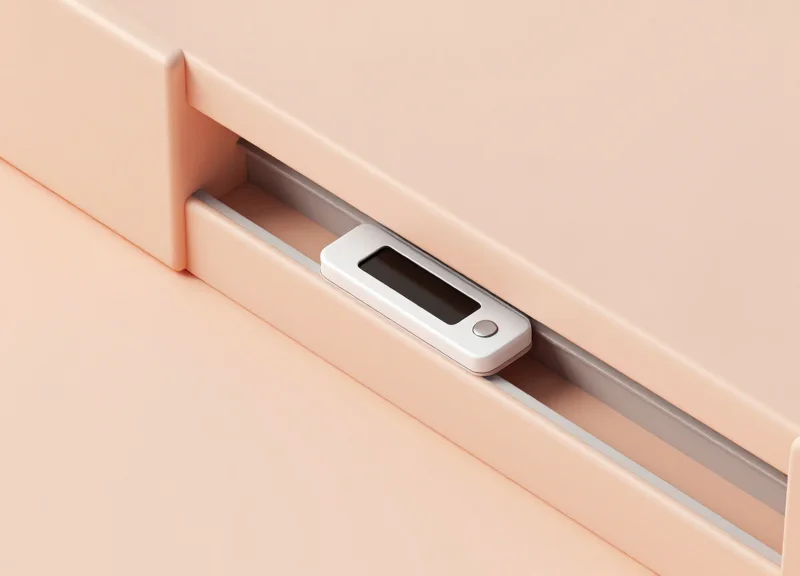
Seamless integration in a luxury beauty environment is defined by the ability to deploy Electronic Shelf Labels (ESLs) using low-profile, surface-specific hardware that aligns perfectly with the boutique's architectural lines. Unlike mass-market retail where plastic rails dominate, high-end boutiques require non-destructive, 'invisible' mounting solutions for materials like Carrara marble, bespoke oak, and tempered glass. The goal is to create a 'floating' aesthetic where the digital display feels like an organic extension of the furniture rather than an after-market addition, preserving the tactile and visual integrity of the store design.
| Surface Material | Recommended Mounting Strategy | Aesthetic Result |
|---|---|---|
| Marble / Natural Stone | Ultra-thin magnetic base plates with felt backing | Zero-damage, 'floating' labels that slide effortlessly for cleaning. |
| Glass Shelving / Pedestals | UV-cured transparent acrylic clips or optical-clear adhesives | 360-degree visibility with no visible hardware from behind. |
| Bespoke Wood Veneer | Low-profile recessed channels or wood-grain matched rails | Integration into the cabinetry that looks built-in and flush. |
| Metal / Industrial Finishes | Direct magnetic attachment with rubberized scratch-guards | Minimalist, industrial-chic look with instant repositioning. |
- Visual Line-of-Sight Alignment: Position labels at the leading edge of the shelf, ensuring they are perfectly parallel to the floor or angled at exactly 15 degrees for lower shelves to accommodate the shopper's natural gaze.
- Shadow Gap Implementation: Utilize 2mm offset spacers to create a subtle shadow behind the tag. This 'shadow gap' makes the ESL appear to hover, a common trick in high-end architecture to hide minor surface imperfections.
- Cable Management and Infrastructure: For powered ESL variants or lighting-integrated units, ensure all wiring is routed through internal furniture cavities or disguised using metallic conduits that match the store's hardware finish.
Expert Tip: The 'Ghost Mounting' Technique. In Silicon Valley's most advanced retail labs, we recommend using a matte-finish vinyl wrap on the back of glass shelves that matches the ESL bezel. When the tag is mounted, the hardware disappears entirely into the reflection, creating a 'ghost' effect where only the digital ink is visible to the customer. This removes the 'tech-clutter' often associated with digital transformations.
Will adhesives damage expensive stone or treated wood?
No, if you use pH-neutral, high-bond removable silicones specifically designed for museum-grade displays. Always avoid standard industrial cyanoacrylates which can leach oils into porous stone.
How do we handle labels on island displays with no back wall?
Use double-sided ESLs or 'back-to-back' mounting plates with a sleek aluminum divider. This ensures customers see branding or pricing from every angle without seeing the internal battery compartment.
Are there rail-free options for minimalist shelving?
Absolutely. High-end boutiques should opt for individual 'puck' mounts or magnetic dots. These allow each label to be placed independently, breaking the 'long line' of traditional retail rails that can look too clinical.
Behind the Scenes: Battery Longevity and System Reliability
In the world of high-end beauty retail, technical failures are more than just an inconvenience—they are a breach of the brand promise. For an ESL (Electronic Shelf Label) system to be truly 'luxury-grade,' it must offer a 'set it and forget it' experience. This is achieved through ultra-low-power e-paper technology and specialized high-density batteries that typically last between 5 and 10 years. Reliability is further guaranteed by robust communication protocols, such as Sub-GHz or Bluetooth Low Energy (BLE), which ensure that price updates and promotional changes occur instantly and without interference from the store's guest Wi-Fi or heavy mall traffic.
| Update Frequency | Typical Battery Life | Reliability Factor |
|---|---|---|
| 1-2 Updates Per Day | 8 - 10 Years | Maximum - Ideal for boutique collections |
| 5+ Updates Per Day | 4 - 6 Years | High - Suitable for flash sales or dynamic pricing |
| Real-time Inventory Sync | 3 - 5 Years | Moderate - Requires high-capacity cell optimization |
How does the system handle interference in crowded shopping centers?
Premium ESL systems use proprietary frequency hopping and Sub-GHz bands that bypass the congested 2.4GHz spectrum used by consumer Wi-Fi, ensuring 99.9% transmission success even in dense environments.
What happens when a battery eventually dies?
Centralized management software provides predictive alerts, notifying staff months in advance. The ESLs are designed with modular battery compartments for quick, discreet swaps that don't require removing the tag from the shelf.
Does high-intensity boutique lighting affect display reliability?
No. E-paper is reflective, meaning it actually becomes clearer under bright spotlights. Internally, high-end tags include UV-stable coatings to prevent the screen from yellowing or ghosting over time.
Expert Insight: The 'Thermal Compensation' Secret. A common point of failure for standard ESLs in luxury boutiques is the heat generated by high-intensity LED track lighting. Premium ESL hardware utilizes specialized 'Thermal Compensation' algorithms. These sensors monitor the ambient temperature at the shelf level and adjust the voltage of the e-paper refresh cycle in real-time. This prevents the 'ghosting' effect where old images remain faintly visible, ensuring that your digital labels remain as crisp and pristine as your product packaging, regardless of the heat emitted by your display spotlights.
Elevating the Customer Journey: Interactive QR Codes and Digital Storytelling

In the luxury beauty sector, Electronic Shelf Labels (ESLs) transcend their role as mere price tags to become interactive portals that connect physical merchandise with a brand's digital ecosystem. By integrating high-resolution QR codes and NFC technology, ESLs allow boutiques to provide immediate access to ingredient transparency, application tutorials, and personalized loyalty rewards, effectively transforming a static shelf into a dynamic storytelling platform that enriches the customer journey without cluttering the aesthetic environment.
For high-end boutiques, the challenge is often balancing the desire for deep product education with the need for a minimalist, uncluttered floor design. Modern ESLs solve this by acting as a 'Digital Concierge.' Instead of bulky brochures or oversized signage, a discreet 2.6-inch display can house a gateway to a complete brand narrative. When a client scans a code, they aren't just seeing a price; they are entering a curated experience tailored to their specific skin concerns or aesthetic preferences.
- Clean Beauty Transparency: Link directly to full EWG ratings or detailed 'Sourcing Stories' for organic ingredients, building trust through instant verifiability.
- Augmented Reality (AR) Bridges: Use QR codes to launch 'Virtual Try-On' tools, allowing customers to see how a specific lipstick shade looks on their skin tone via their smartphone.
- Instant Tutorial Access: Provide 30-second masterclass videos showing the specific application techniques for high-end serums or contouring palettes.
- Real-Time Stock & Exclusivity: Display 'Only 3 units left in this boutique' or 'Boutique Exclusive' to create a soft sense of urgency that aligns with luxury scarcity.
Expert Insight: The 'Hyper-Local Social Proof' Strategy. A unique way to leverage ESL storytelling is by displaying real-time popularity metrics specifically for that boutique location. Instead of generic global ratings, use the ESL to show 'Top Pick in Soho this Week' or 'Preferred by 85% of Local Members.' This creates a sense of community and local relevance that generic e-commerce platforms cannot replicate, reinforcing the value of the physical boutique experience.
| Feature | Standard Retail ESL | Luxury Beauty ESL (Storytelling-Ready) |
|---|---|---|
| QR Code Density | Low-res, hard to scan | High-DPI for instant mobile recognition |
| NFC Integration | Optional/Rare | Built-in for 'Tap-to-Join' loyalty enrollment |
| Page Linking | Static URL | Dynamic deep-linking based on CRM data |
| Visual Polish | Functional/Industrial | Anti-glare, paper-like texture for premium feel |
Does adding a QR code ruin the minimalist look of a high-end display?
Not if executed correctly. Modern ESL software allows for 'Aesthetic QR' design—integrating the code into the brand's color palette or placing it subtly in the corner of a high-resolution e-paper screen to maintain visual harmony.
Can ESLs help with luxury loyalty program sign-ups?
Yes. By using NFC-enabled ESLs, customers can simply tap their phone to the shelf label to instantly join a VIP program or credit their purchase to an existing account, removing the friction of manual data entry at the POS.
How do digital stories improve conversion rates in-store?
Digital storytelling reduces 'choice paralysis.' By providing video proof of results or social validation directly at the point of decision, brands see a marked increase in 'shelf-to-basket' conversion for high-price-point items.
Operational Agility: Real-Time Updates for Limited Edition Launches
Operational agility in the high-end beauty sector is defined by the capacity to synchronize product information and pricing across global boutique networks in milliseconds. For limited edition launches—where demand is high and inventory is volatile—Electronic Shelf Labels (ESLs) eliminate the 'lag time' associated with manual price tagging. By integrating the ESL central management system with the boutique's ERP or POS, retailers can trigger instantaneous updates that reflect flash sale pricing, 'Sold Out' status, or promotional messaging, ensuring that the physical shelf always mirrors the digital storefront.
| Feature | Traditional Paper Labels | Modern ESL Systems |
|---|---|---|
| Update Speed | 2-4 hours per store | < 60 seconds globally |
| Error Rate | High (human error during rushes) | Zero (direct POS sync) |
| Labor Cost | Significant (staff diverted from sales) | Negligible (automated background task) |
| Dynamic Pricing | Impossible for short-term windows | Fully supported for hourly events |
In luxury retail, the staff's primary value is brand storytelling and white-glove service, not administrative maintenance. When a new collaboration or seasonal collection drops, the boutique environment can become chaotic. ESLs act as a silent operational partner, managing the technical details of the launch so that the floor team can focus exclusively on client engagement and conversion.
- Phase 1: Pre-Launch Staging: Schedule price changes and promotional graphics in the cloud dashboard days in advance, set to push live the exact second the embargo lifts.
- Phase 2: Live Inventory Sync: As stock dwindles, the ESL can automatically display 'Low Stock' or 'Last Few Remaining' to create authentic urgency without appearing aggressive.
- Phase 3: Post-Event Reversion: Automatically revert to standard pricing or display 'Coming Soon' graphics for the next collection once the limited run concludes.
Expert Insight: The 'Scarcity Sync' Strategy. A unique advantage for high-end boutiques is using ESLs to drive 'Omnichannel FOMO.' By programming the ESL to display a real-time countdown of units remaining in-store that matches the online inventory, you bridge the gap between digital urgency and physical luxury. This data-driven transparency builds immense trust with high-net-worth clients who value exclusivity and accuracy.
Can ESLs handle thousands of updates at once during a major sale?
Yes. Modern sub-GHz wireless protocols are designed for massive throughput, allowing thousands of labels to update simultaneously without interfering with the boutique's Wi-Fi or guest networks.
What happens if a price update fails during a high-traffic launch?
Advanced systems feature two-way communication. The base station receives an acknowledgement from each label; if a label fails to update, the system alerts the manager instantly via a mobile app for immediate correction.
Does frequent updating drain the battery during seasonal events?
While frequent updates use more power than static displays, the energy draw of e-paper is so low that even a high-frequency launch month will typically only reduce total battery life by a few weeks over a 5-10 year lifespan.
Calculating ROI: Beyond the Price Tag for Premium Retailers

Return on Investment (ROI) for premium beauty boutiques is measured by the preservation of brand integrity and the liberation of highly trained beauty consultants from administrative tasks. While the initial capital expenditure for Electronic Shelf Labels (ESL) is higher than paper, the 'break-even' point is typically reached within 14 to 18 months through a combination of labor reallocation, eliminated printing waste, and the prevention of high-value pricing discrepancies that erode luxury profit margins.
| ROI Factor | Traditional Paper Labels | Digital ESL Systems |
|---|---|---|
| Labor Allocation | 8-12 hours/week on manual updates | Near-zero; automated sync with POS |
| Pricing Accuracy | 1-3% error rate (human oversight) | 100% synchronization accuracy |
| Staff Utilization | Administrative & clerical focus | High-touch consultation & sales focus |
| Agility | 24-48 hour lag for promo changes | Instantaneous global or local updates |
The Expert Opportunity Cost: In a high-end beauty environment, your greatest asset is the expertise of your staff. If a consultant earning $35/hour spends two hours per week updating paper tags, the boutique loses $3,640 annually per employee in direct labor. However, the real loss is the opportunity cost: those same two hours dedicated to personalized skincare consultations could generate upwards of $15,000 in additional annual revenue per consultant. ESL systems effectively pay for themselves by converting 'clerical time' into 'conversion time.'
How does ESL protect high-end profit margins specifically?
Premium products often have volatile ingredient costs or exchange-rate sensitivities. ESL allows for 'Micro-Adjustments'—subtle pricing shifts that protect margins without the jarring visual cue of a staff member physically changing tags in front of a customer.
What is the 'Brand Equity Insurance' factor?
In luxury retail, a pricing error (e.g., a $400 serum marked at $40) is more than a financial loss; it is a brand crisis. If the boutique refuses to honor the price, customer trust evaporates. If they do honor it, they lose thousands. ESL provides 'Brand Equity Insurance' by ensuring the digital price always matches the premium experience.
Are there hidden savings in waste reduction?
Yes. Beyond paper and toner, luxury boutiques often use expensive cardstock or custom-cut holders for their labels. ESL eliminates the recurring procurement and disposal costs of these specialized materials, contributing to both the bottom line and the boutique's sustainability profile.
Expert Tip: When calculating your ROI, don't just look at 'Time Saved.' Look at 'Average Transaction Value (ATV)' growth. Boutiques that implement ESL often see a 5-8% lift in ATV because consultants are present on the floor during peak hours to upsell, rather than being tucked away in the backroom preparing the next day's price tags.
Conclusion: The Future of Luxury Beauty is Digitally Harmonious
The future of luxury beauty retail is defined by the 'Digitally Harmonious' boutique—a space where the friction of manual operations is replaced by invisible, high-precision technology. For high-end retailers, choosing the right ESL partner is not merely a hardware upgrade; it is a strategic commitment to brand integrity. By bridging the gap between digital data and physical elegance, ESLs ensure that pricing, storytelling, and inventory management occur in real-time without ever compromising the visual sanctity of the shopping environment. In an era where prestige is measured by both service and sophistication, the digital label is the silent steward of the modern luxury experience.
| Feature | Legacy Boutique Model | Digitally Harmonious Model |
|---|---|---|
| Price Updates | Manual, error-prone paper swaps | Instant, centralized, and 100% accurate |
| Customer Engagement | Limited to static on-shelf info | Interactive via QR codes and rich media |
| Store Aesthetic | Cluttered by mismatched signage | Clean, minimalist, and brand-consistent |
| Staff Productivity | Hours spent on administrative tasks | Focus redirected to high-touch consulting |
Expert Insight: After two decades observing retail transformations in Silicon Valley, I’ve identified the 'Aesthetic Tech Paradox.' This principle suggests that in a luxury setting, the most advanced technology is the technology that disappears. For beauty boutiques, this means choosing ESLs with ultra-thin bezels and high-contrast e-paper that mimics high-quality cardstock. The goal is to provide the speed of an algorithm with the tactile feel of a bespoke invitation. Brands that master this paradox will secure a significant competitive advantage over those clinging to the inefficiencies of the past.
Does implementing ESL technology alienate traditional luxury shoppers?
Quite the opposite. High-end shoppers increasingly expect the same level of transparency and information depth they find online. ESLs provide this through QR-linked tutorials and ingredient lists while maintaining the boutique's premium look, actually enhancing the 'omnichannel' trust.
Is the ROI immediate for a small, independent high-end boutique?
While the initial investment is higher than paper, the ROI manifests within 12-18 months through eliminated printing costs, reduced labor hours, and the prevention of 'pricing lag' during high-volatility product launches.
What is the most critical factor when selecting an ESL vendor for beauty?
Customization capability. A generic retail tag will look out of place next to a $500 serum. Look for vendors offering bespoke casing, custom font rendering, and seamless API integration with your existing Luxury POS system.
Ultimately, the transition to ESL technology is about more than just efficiency; it is about future-proofing the soul of your brand. As the beauty industry continues to evolve toward personalization and rapid product cycles, the ability to pivot your physical space at the touch of a button becomes your most valuable asset. Investing in aesthetic digital harmony today ensures your boutique remains a relevant, enchanting destination for the discerning customers of tomorrow.