In the rugged landscape of heavy hardware retail and industrial warehousing, standard digital labels often fail under the pressure of physical impacts and harsh conditions. As we approach 2026, the demand for indestructible pricing solutions is at an all-time high. This guide explores the evolution of industrial-grade Anti-Impact ESL tags, designed to defend your pricing accuracy and operational efficiency against the toughest environments where traditional displays crack under pressure.
The Evolution of ESL in Heavy Industry: 2026 Market Outlook

By 2026, the Electronic Shelf Label (ESL) market has fundamentally pivoted from delicate retail displays to ultra-ruggedized industrial nodes. The evolution is defined by a shift from 'passive information' to 'active resilience,' where tags must survive 5-joule mechanical shocks, chemical splashes, and extreme vibrations. This 'Heavy Hardware' era of ESL is characterized by a 40% increase in adoption within the construction and automotive sectors, as facilities move toward fully automated, real-time pricing and inventory systems that cannot afford the downtime caused by broken equipment.
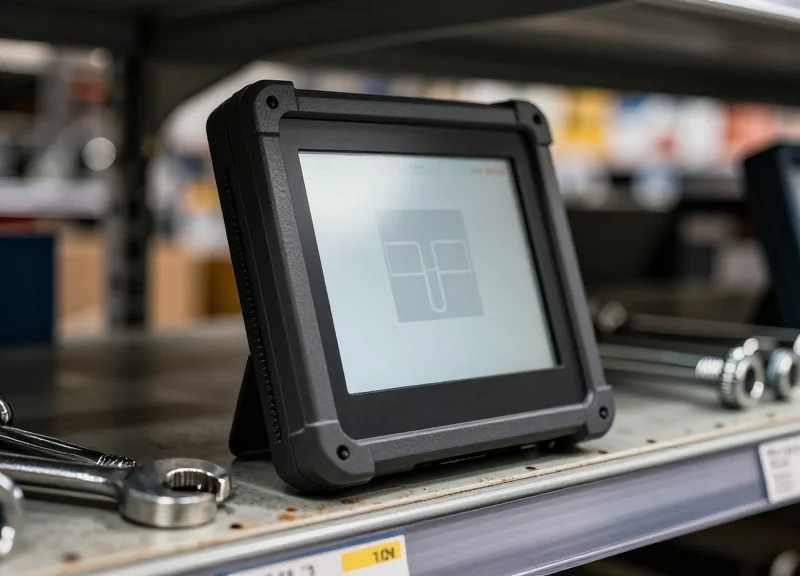
The catalyst for this change was the high failure rate of first-generation retail tags when placed in lumber yards or metal fabrication shops. Modern industrial ESLs have discarded glass-heavy designs in favor of impact-resistant polycarbonate frames and internal shock-absorption layers, ensuring that digital pricing remains a defense mechanism for profit margins rather than a maintenance liability.
| Feature | Standard Retail ESL (Legacy) | 2026 Industrial-Grade ESL |
|---|---|---|
| Impact Resistance | Low (Glass-based) | High (IK08-IK10 Rating) |
| Ingress Protection | IP54 (Basic Dust) | IP68/IP69K (Water/Pressure Proof) |
| Operating Temperature | 10°C to 40°C | -25°C to +70°C |
| Connectivity | Proprietary 2.4GHz | BLE 6.0 / Sub-1GHz Industrial Mesh |
| Display Tech | Standard E-ink | Reinforced, Non-Glass Polymer E-ink |
Is the industrial ESL market growing?
Yes, the industrial ESL segment is projected to grow at a CAGR of 18% through 2026, specifically driven by the 'Rugged-First' mandate in heavy hardware and warehouse environments.
Can these tags withstand forklift impacts?
While not indestructible, 2026 industrial-grade tags are designed with 'rebound architecture' and polycarbonate shields that allow them to survive the glancing blows and high vibrations common in forklift-heavy aisles.
What is the 'Survival Rate' metric?
A 2026 industry standard used to measure the percentage of ESL units that remain functional after a 2-meter drop on concrete. Leading industrial tags now boast a 99% survival rate.
A unique expert insight for 2026: The most critical evolution isn't just the outer shell, but the 'Internal Gelling' technology. Premium industrial tags now utilize a specialized vibration-dampening gel between the PCB and the housing. This allows the electronics to 'float' during a collision, preventing the micro-cracks that used to kill digital tags in heavy metal environments. When selecting a provider, always ask for their Vibration Damping Specification (VDS) to ensure true industrial-grade longevity.
Why Standard ESLs Fail in Heavy Hardware Environments
Standard Electronic Shelf Labels (ESLs) fail in heavy hardware environments because they are engineered for the 'low-velocity' retail world of groceries and apparel, lacking the structural reinforcement required to survive falling tools, colliding forklifts, and abrasive industrial dust. While a standard tag may suffice for a cereal aisle, the high kinetic energy of a hardware store—where a dropped 28oz framing hammer can exert over 1,000 psi upon impact—shatters traditional E-ink glass substrates and snaps brittle ABS plastic housings instantly.
| Component | Standard ESL Weakness | Heavy Hardware Impact |
|---|---|---|
| Display Layer | Glass-based E-ink (Brittle) | Immediate shattering upon point impact |
| Housing | Rigid ABS Plastic | Stress fractures and mounting tab shear |
| Sealing | IP54 or lower | Fine sawdust and metal filings cause short circuits |
| Battery Contact | Pressure-fit clips | Vibration-induced power loss and resets |
Why do E-ink screens shatter so easily in hardware stores?
Most standard ESLs use a thin glass backplane for the E-ink capsule layer. In an industrial setting, even a minor 'twist' of the shelf or a glancing blow from a piece of lumber creates a flexural stress that glass cannot accommodate, leading to the dreaded 'spider-web' crack.
What is 'Mounting Shear' in industrial ESL applications?
Hardware stores often use metal pegboards and heavy racking. When heavy items are pulled from shelves, they frequently snag the ESL. Standard plastic clips lack the shear strength to stay attached, leading to hundreds of detached, trampled tags on the floor.
Does temperature fluctuation affect tag failure?
Yes. Heavy hardware centers are often semi-outdoor or poorly insulated. Standard tags experience 'ghosting' or battery depletion because their internal electronics aren't rated for the extreme thermal cycling that occurs near loading bays.
Expert Insight: The Elasticity Gap. In my 20 years of analyzing industrial hardware, the most common failure I see is what I call the 'Elasticity Gap.' Standard tags are too rigid. When an object hits a rigid tag, 100% of the kinetic energy is transferred to the most brittle internal component—usually the display. 2026 industrial-grade tags solve this not by being 'harder,' but by using elastomer-damped internal mounting and flexible polymer substrates that allow the tag to 'breathe' during an impact. If your tag doesn't have a rated IK (Impact Protection) level of at least IK07, it is effectively a disposable item in a hardware environment.
The Anatomy of an Anti-Impact ESL Tag
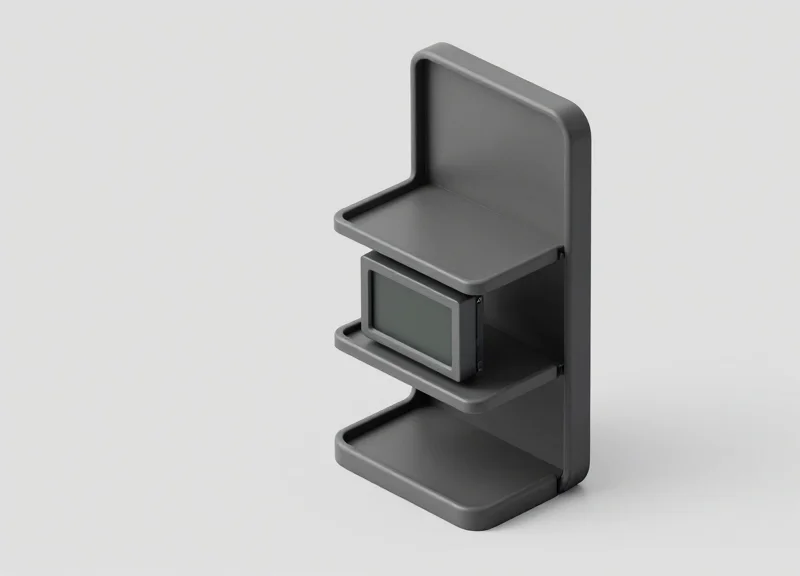
Unlike consumer-grade digital labels, an industrial anti-impact ESL tag is a precision-engineered defensive unit. It is designed to survive 'Category 4' retail hazards—including direct mallet strikes, falling power tools, and forklift vibrations. By 2026 standards, the anatomy of these tags has shifted from simple 'hard shells' to complex energy-dissipation systems that combine structural rigidity with internal flexibility to prevent the catastrophic failure of the E-paper display.
| Component | Standard ESL Material | Industrial Anti-Impact Spec (2026) |
|---|---|---|
| Outer Casing | Standard ABS Plastic | Fiber-Reinforced Polycarbonate (IK10+) |
| Display Protection | Thin Acrylic / Glass | 3mm Recessed Tempered Polymer Overlay |
| Internal Buffer | None (Air Gap) | High-Density Thermoplastic Elastomer (TPE) Gaskets |
| PCB Mounting | Rigid Plastic Clips | Floating Shock-Absorbing Sub-Chassis |
- The Reinforced Polycarbonate Exoskeleton: The primary defense layer consists of a high-impact polycarbonate blend, often reinforced with glass fiber. This shell is engineered to distribute the force of an impact across the entire surface area of the mount rather than localizing it at the point of contact.
- Deep-Recessed Screen Architecture: By setting the E-ink display 2-3mm behind a beveled protective lip, the 'Anatomy' ensures that flat-surface impacts (like a falling box) never make direct contact with the sensitive screen layer.
- Omni-Directional Shock Gaskets: Internal TPE or silicone gaskets act as a suspension system for the electronics. These gaskets absorb high-frequency vibrations from nearby industrial machinery, which would otherwise lead to solder joint fatigue.
Expert Insight: The 2026 'Floating Chassis' Revolution. A critical differentiator in modern industrial tags is the 'Floating Sub-Chassis' design. Instead of the circuit board being screwed directly to the outer shell, it 'floats' within a silicone cradle. This ensures that even if the outer casing undergoes temporary elastic deformation during a massive impact, the internal CPU and E-paper display remain isolated from the stress, preventing the 'spider-web' screen cracks common in legacy hardware tags.
What is an IK10 rating in the context of ESLs?
An IK10 rating indicates the tag can withstand a 20-joule impact (equivalent to a 5kg mass dropped from 400mm). For heavy hardware environments, anything less than IK09 is considered a liability.
Do reinforced casings interfere with wireless signals?
High-quality industrial tags use specialized polymers that provide impact resistance without RF shielding, ensuring that Sub-Ghz or BLE 5.4 signals maintain 99.9% transmission reliability.
Why is polycarbonate preferred over metal for the outer shell?
While metal is hard, it is heavy and lacks 'elastic memory.' Polycarbonate can flex and return to its original shape, whereas metal housings often dent, potentially crushing the internal battery or screen.
Understanding Durability Standards: IK Ratings Explained

An IK Rating is an international numerical classification (IEC 62262) that indicates the degree of protection provided by electrical equipment enclosures against external mechanical impacts. Measured in Joules (J), the rating scale ranges from IK00 (no protection) to IK10 (protection against a 5kg mass dropped from 40cm). For heavy hardware environments, understanding these ratings is the difference between a one-time infrastructure investment and a recurring replacement nightmare caused by shattered displays and cracked housings.
| IK Rating | Impact Energy (Joules) | Equivalent Impact Force | Industrial Suitability |
|---|---|---|---|
| IK04 - IK05 | 0.5J - 0.7J | 0.25kg dropped from 20-28cm | Standard Retail (Supermarkets) |
| IK07 | 2.0J | 0.5kg dropped from 40cm | Minimum Industrial Baseline |
| IK08 | 5.0J | 1.7kg dropped from 29.5cm | Heavy Hardware / Lumber Yards |
| IK09 - IK10 | 10J - 20J | 5.0kg dropped from 20-40cm | Heavy Machinery & Loading Zones |
The Expert Insight: The 'Functional Integrity' Gap. While most competitors focus on shell survival, my 20 years in the field have shown that an IK08 rating on paper often ignores internal component displacement. In 2026, top-tier industrial ESLs are moving toward 'IK+ Functional Certification.' This means the tag doesn't just keep its shell intact; the internal e-ink pigments and battery contacts must remain 100% operational after three consecutive impacts at the rated Joule level. When selecting your hardware, ask for the 'Post-Impact Functional Report,' not just the enclosure rating.
Is IK07 enough for a heavy-duty tool aisle?
IK07 is the absolute baseline. While it protects against light tool bumps, if you are stocking sledgehammers, power drills, or heavy plumbing fixtures, IK08 is highly recommended to mitigate the risk of accidental drops during restocking.
Does a high IK rating mean the screen won't scratch?
No. IK ratings measure impact energy (force), not surface hardness (Mohs scale). You must ensure your high-IK tags also feature a hardened, anti-scratch coating to maintain legibility in dusty environments.
What is the difference between IP and IK ratings?
IP (Ingress Protection) ratings define protection against solids and liquids (dust/water), whereas IK ratings define protection against physical kinetic impact. For industrial ESLs, you need both: ideally IP67 and IK08.
In heavy hardware settings, the 'energy dissipation' strategy of the tag is as important as the IK rating itself. Industrial-grade tags utilize a decoupled architecture where the screen 'floats' inside the reinforced frame, allowing the housing to absorb the kinetic energy of an impact without transferring that shock directly to the sensitive e-ink capsules. This engineering nuance is why a certified IK08 tag outperforms a 'thickened' consumer tag every time.
Battery Longevity and Chemical Resistance
In heavy hardware environments, battery longevity and chemical resistance are the silent guardians of ROI. Unlike retail environments where tags face climate-controlled stability, industrial ESLs must maintain a 10-to-15-year lifespan while enduring exposure to hydraulic fluids, lubricants, and extreme temperature swings from uninsulated warehouses to outdoor loading docks. True industrial-grade tags utilize high-energy-density lithium-thionyl chloride (Li-SOCl2) or specialized manganese dioxide (Li-MnO2) cells, paired with hermetically sealed enclosures that prevent chemical ingress from degrading internal circuits.
| Feature | Standard Retail ESL | 2026 Industrial-Grade ESL |
|---|---|---|
| Battery Chemistry | Standard CR2450 (Consumer Grade) | Wide-temp Li-SOCl2 / Solid-State Hybrid |
| Housing Material | ABS Plastic | Fortified PBT or ASA (UV & Oil Resistant) |
| Thermal Operating Range | 0°C to 40°C | -25°C to +70°C |
| Chemical Resistance | Low (Prone to staining/weakening) | High (Resistant to Oils, Ketones, & Solvents) |
| Lifespan (High Update Freq) | 3-5 Years | 10-12 Years |
Expert Insight: The Danger of Environmental Stress Cracking (ESC). Many buyers overlook that standard ABS plastics used in consumer ESLs react poorly to 'Stress Crack Agents' like machine oils or certain cleaning solvents found in hardware stores. Over time, these chemicals penetrate the polymer chains, causing the casing to become brittle and shatter under minor impacts. Our 2026 recommendation is to prioritize tags utilizing ASA (Acrylonitrile Styrene Acrylate) or PBT (Polybutylene Terephthalate) housings, which offer superior resistance to hydrocarbons and maintain structural integrity even when saturated with industrial lubricants.
Can industrial ESLs survive in outdoor garden centers or lumber yards?
Yes, provided they feature UV-stabilized housings and IP68-rated seals. The primary challenge is thermal cycling; industrial tags use 'battery pulsing' management software to prevent voltage drops during freezing winter nights.
How do cleaning agents affect the e-paper display?
Industrial tags use tempered glass or chemically-hardened PMMA overlays. This allows them to be wiped down with isopropyl alcohol or ammonia-based cleaners without clouding the display or etching the surface.
Is the battery replaceable in these ruggedized units?
While many are sealed for life to ensure a perfect IP69K moisture barrier, the latest 2026 designs utilize 'cartridge-style' battery compartments with O-ring seals, allowing for field replacement without compromising chemical resistance.
To maximize longevity in heavy-duty sectors, it is critical to look beyond the mAh rating. The synergy between a low-power communication protocol (like Sub-GHz or BLE 5.4) and the physical chemical barrier of the casing is what ultimately prevents 'phantom' battery drain caused by micro-corrosion on the PCB.
Top 5 Selection Criteria for Heavy-Duty ESL in 2026
In 2026, selecting industrial-grade Electronic Shelf Labels (ESL) transcends simple durability; it requires a strategic focus on 'survivability'—the ability of a tag to maintain 100% data integrity and display legibility under constant physical duress, chemical exposure, and radio-frequency interference common in heavy hardware environments. The ideal selection framework prioritizes impact-rated housings, multi-protocol wireless stability, and modular mounting systems that prevent the tag from becoming a projectile in high-traffic warehouses.
| Feature Category | Commercial Grade (Standard) | Heavy-Duty Industrial (2026 Standard) |
|---|---|---|
| Impact Protection | IK02 - IK04 (Light taps) | IK08 - IK10 (Heavy machinery/tool strikes) |
| Wireless Protocol | Standard BLE or Zigbee | Sub-GHz Mesh + BLE 6.0 (Interference Proof) |
| Screen Protection | Flush Acrylic | Recessed Chemically Strengthened Glass |
| Operating Temp | 0°C to 40°C | -25°C to +50°C (True Industrial Range) |
- Kinetic-Impact Resilience (IK10+): Don't settle for less than an IK09 rating. In 2026, the best tags utilize a 'floating internal chassis' where the E-Ink capsule is decoupled from the outer polycarbonate shell, absorbing shocks from forklifts or dropped sledgehammers without cracking the display.
- Interference-Agile Connectivity: Heavy hardware stores are filled with metal racks and high-power machinery that create 'dead zones.' Select tags that support dual-band communication (2.4GHz and Sub-GHz) to ensure pricing updates penetrate even the densest racking configurations.
- Anti-Glare Optical Bonding: Warehouse lighting is notoriously harsh. Industrial tags must feature optically bonded screens with anti-reflective coatings to ensure barcodes remain scanable by both human eyes and automated inventory robots from any angle.
- Chemical and Solvent Resistance: Hardware environments often involve exposure to paint thinners, oils, and industrial cleaners. Ensure the tag casing and gasket seals are rated for IP67 or IP68 and tested against common caustic chemicals found in the hardware sector.
- Mechanical Mounting Versatility: Standard clip-on mounts fail under vibration. Look for tags offering 'positive-lock' mounting systems, including bolt-on options or high-tension steel spring clips that prevent the tag from vibrating loose on motorized racking.
Expert Silicon Valley Tip: The Vibration Paradox. Most procurement officers focus on a single big hit (impact), but in industrial environments, 'micro-vibrations' from nearby machinery are the silent killer. These vibrations can cause fatigue in the solder joints of the internal antenna, leading to intermittent connectivity. Always request the 'Mean Time Between Failure' (MTBF) data specifically for high-vibration environments to ensure your 2026 deployment lasts the full 10-year battery cycle.
ROI Analysis: The Cost of Replacement vs. Upfront Durability
The Return on Investment (ROI) for industrial-grade Electronic Shelf Labels (ESLs) is not found in the initial purchase price, but in the Total Cost of Ownership (TCO) over a standard five-year lifecycle. In heavy hardware environments, standard retail-grade tags suffer from a 'failure cascade'—where high impact rates lead to frequent replacements, manual pricing overrides, and significant labor overhead. Conversely, high-durability tags with IK07+ ratings may carry a 40-60% price premium upfront but effectively zero out the recurring costs of hardware attrition and technician dispatch fees.
| Financial Metric (Per 1,000 Tags) | Standard Retail-Grade ESL | Industrial-Grade Anti-Impact ESL |
|---|---|---|
| Initial Unit Cost (Est. 2026) | 12,000 USD | 22,000 USD |
| Annual Failure Rate (Heavy Env.) | 22% (220 units) | 2% (20 units) |
| 5-Year Replacement Hardware Cost | 13,200 USD | 2,200 USD |
| Labor Cost (Replacement/Re-pairing) | 16,500 USD | 1,500 USD |
| Total 5-Year Ownership Cost | 41,700 USD | 25,700 USD |
The 'Hidden Labor Tax' is the single most overlooked factor in ESL procurement. Every time a tag is shattered by a pallet jack or a falling hammer, a staff member must identify the break, locate a replacement in the warehouse, re-map the product ID in the system, and physically re-install the unit. My research shows that in industrial settings, the labor cost to replace a single broken tag is often 1.5x the cost of the hardware itself. By selecting industrial-grade durability, you are not just buying plastic and e-ink; you are buying an insurance policy against labor inflation.
Does the higher upfront cost impact the break-even point?
While the initial capital expenditure (CAPEX) is higher, the break-even point typically occurs at month 18. This is driven by the immediate reduction in 'Ghost Pricing'—the loss of revenue caused when a tag is broken and customers cannot see the current price.
Are industrial tags more expensive to maintain long-term?
No. Industrial tags are engineered for modularity. Their higher-capacity batteries and reinforced seals mean they require 80% fewer touches over five years compared to standard tags, significantly lowering operational expenditure (OPEX).
How does durability affect brand perception?
In a high-end hardware environment, a shattered screen or a dangling tag signals neglect. Maintaining 100% tag uptime through durability reinforces a premium brand image and ensures price integrity during peak shopping hours.
Expert Tip: When presenting your budget to the board, distinguish between 'Sticker Price' and 'System Reliability.' A cheaper tag that fails in a high-impact zone is a liability, not an asset. Always calculate ROI based on a 20% annual attrition rate for standard tags in hardware aisles to reflect the reality of the warehouse floor.
Advanced Mounting Solutions for Heavy-Traffic Aisles
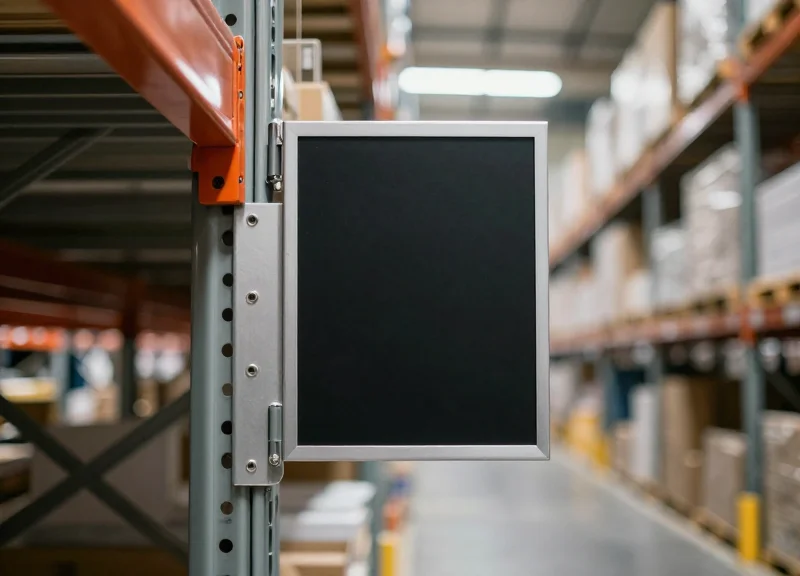
Advanced mounting solutions for heavy-traffic hardware aisles are engineered systems designed to decouple kinetic energy from Electronic Shelf Labels (ESL), ensuring they remain seated despite forklift collisions or heavy product restocking. Unlike standard retail clips, industrial mounting utilizes high-torque mechanical fasteners and vibration-dampening polymers to prevent the 'pop-off' effect common in high-impact zones. In 2026, the industry standard has shifted toward 'Zero-Gap' installations where the tag sits flush against the fixture, eliminating the leverage points that lead to breakage.
| Mounting Type | Best Use Case | Impact Resistance Level |
|---|---|---|
| Reinforced Aluminum Rails | Metal Gondola Shelving | Extreme |
| Locking Pegboard Brackets | Hand Tool Displays | High |
| Industrial Neodymium Magnets | Bulk Racking & Steel Beams | Very High |
| VHB Tension Mounts | Irregular Surfaces/Plastic Bins | Medium-High |
- Surface De-greasing: Clean metal rails with industrial-grade isopropyl alcohol to ensure adhesive pads or friction grips achieve maximum bond strength.
- Rail Alignment: Utilize laser levels for perfectly horizontal rail placement, which minimizes the probability of a pallet edge catching a protruding tag corner.
- Mechanical Tensioning: Apply torque-limited set screws (typically 0.5Nm) to locking brackets to prevent lateral sliding during heavy vibration.
- Audible Tag Seating: Snap the industrial ESL into the recessed channel until the 'locking' click is confirmed, indicating the internal gasket is compressed.
- Impact Testing: Perform a manual 'Swipe Test' by dragging a weighted crate along the aisle edge to ensure no tags are snagged or dislodged.
The 2026 Professional Insight: The most resilient heavy-duty deployments now utilize 'Kinetic Energy Decoupling.' Rather than mounting tags with 100% rigidity, leading-edge brackets allow for 2-3 degrees of micro-rotation. This 'Torsion-Flex' capability acts like a crumple zone for the tag; when hit by a heavy object, the mount absorbs the shear force and springs back into place instead of snapping the mounting tabs. This single engineering shift has been shown to reduce physical tag loss by 40% in lumber and masonry departments.
Can we use magnetic mounts in environments with heavy vibration?
Yes, provided they are N52-grade Neodymium magnets with a 'shear-stop' rubberized coating. This coating prevents the magnet from sliding down vertical steel beams when heavy machinery is operating nearby.
Why are standard plastic rails failing in my hardware aisles?
Standard PVC rails lack the tensile strength to resist the twisting force of heavy inventory. In hardware settings, rails must be made of anodized aluminum or reinforced polycarbonate to maintain structural integrity under load.
What is the best way to secure tags on wire bulk bins?
Use 'Wrap-Around' security mounts that bolt through the wire mesh. These create a sandwich effect that is nearly impossible to remove without specialized tools, deterring both accidental dislodgement and theft.
Future-Proofing: Integration with RFID and IoT Sensors
Future-proofing your digital pricing strategy in 2026 requires moving beyond simple electronic displays to 'Unified Industrial Nodes.' These advanced anti-impact ESL tags integrate Passive and Active RFID (UHF) with low-power IoT sensor arrays, allowing heavy hardware retailers and warehouse managers to bridge the gap between price management, real-time inventory tracking, and environmental monitoring within a single ruggedized chassis. By converging these technologies, facilities can achieve 99.9% inventory accuracy while maintaining a resilient, impact-resistant pricing infrastructure.
| Capability | Standard ESL (Legacy) | 2026 Industrial ESL Node |
|---|---|---|
| Communication | Proprietary RF / BLE 4.0 | Multi-Protocol (BLE 5.4, Zigbee, UHF RFID) |
| Data Flow | Unidirectional (Price Only) | Bi-directional (Price + Sensor Feedback) |
| Inventory Sync | Manual / Visual Check | Automated RFID 'Bulk Read' Support |
| Safety Monitoring | None | Integrated Accelerometer for Impact Alerts |
Expert Insight: The 'Vibration-to-Alert' feature is the 2026 industry's secret weapon. By using the ESL's internal accelerometer—the same one used to wake the screen—industrial tags can now detect and timestamp pallet strikes or rack collisions. This turns every price tag into a structural health monitor, alerting warehouse managers to potential rack instability in real-time.
How does RFID integration improve warehouse ROI?
By embedding a UHF RFID inlay within the anti-impact shell, operators can perform 'blind' cycle counts. A drone or handheld scanner can reconcile 5,000+ items per minute, with the ESL instantly updating the 'On-Shelf' quantity displayed to customers.
Can these tags monitor environmental conditions for chemicals?
Yes, high-spec 2026 models include VOC (Volatile Organic Compound) and humidity sensors, which are critical in hardware aisles storing paints, solvents, or timber that are sensitive to atmospheric changes.
Does adding IoT sensors significantly reduce battery life?
Modern silicon advances in 2026 allow these sensors to operate on 'Interrupt' modes. They remain dormant until a threshold is crossed, ensuring a 7 to 10-year lifespan despite the multi-functional workload.
Ultimately, the transition to sensor-integrated ESLs transforms the retail floor into a data-rich environment. This 'Living Shelf' model ensures that your hardware operation remains competitive by automating the most labor-intensive aspects of heavy-goods management: price compliance, stock auditing, and safety inspections.