
In the hyper-competitive telecommunications market, service providers frequently adjust tariff plans, data bundles, and promotional offers to stay ahead. For retail managers, the traditional process of printing and manually replacing paper labels is not just slow; it is a significant source of operational friction and human error. Inaccurate pricing leads to customer frustration and potential regulatory fines. This article delves into how leading telecom retailers are leveraging Electronic Shelf Labels (ESL) to automate tariff updates, reclaiming up to 40% of their staff's productive time and ensuring total pricing integrity across all store locations.
The Hidden Costs of Manual Tariff Updates in Telecom Retail

The hidden costs of manual tariff updates represent a 'friction tax' on telecom retail operations, extending far beyond the price of paper and ink. These costs manifest as hundreds of wasted labor hours per month, significant margin leakage due to pricing discrepancies, and a measurable decrease in customer trust when shelf-edge data fails to match the Point of Sale (POS) system. For a standard telecom branch, the cumulative impact of these inefficiencies can reduce overall store profitability by as much as 15% annually.
| Cost Category | Manual Process Impact | Financial Consequence |
|---|---|---|
| Direct Labor | 15-20 hours per week spent on printing and labeling. | High OpEx spent on admin rather than sales. |
| Material Waste | Constant disposal of paper, plastic, and toner. | $3,000 - $5,000 annual spend per store. |
| Margin Leakage | 3-5% error rate in shelf-edge pricing accuracy. | Lost revenue from underpricing or legal fines. |
| Opportunity Cost | Staff diverted from high-value consultative selling. | Decreased conversion rates for premium data plans. |
Expert Insight: The Compliance Gap. A unique and often overlooked cost is the 'Compliance Gap'—the timeframe between a central headquarters pushing a new promotional tariff and the local store actually implementing the physical update. In a manual environment, this gap averages 48 to 72 hours. During this window, the retailer is effectively running two different businesses: one on the server and one on the shelf. This leads to 'Price Protection' payouts where managers must override system prices to match the shelf, directly eating into the store's net margin.
How does manual updating affect employee retention?
Repetitive, low-value administrative tasks like re-labeling hundreds of tariff cards lead to 'task fatigue.' In high-pressure telecom environments, this contributes to staff burnout and higher turnover rates, increasing recruitment and training costs.
What is the legal risk of inaccurate manual pricing?
Many jurisdictions enforce strict consumer protection laws regarding 'bait and switch' or inaccurate pricing. Manual errors can lead to heavy regulatory fines and mandatory audits that disrupt business continuity.
Does manual updating impact omnichannel consistency?
Yes. If your website reflects a flash sale but your physical store hasn't updated its tags, you create a disjointed customer experience. This friction often results in 'showrooming,' where customers use your store for a demo but buy elsewhere to secure the advertised price.
Bridging the Gap: The Role of Automation in Modern Retail

Automation in modern telecom retail is the systematic integration of software-driven workflows to eliminate the 'execution gap' between a back-office decision and its physical implementation on the shop floor. For mobile carriers and retailers, automation acts as a digital bridge, ensuring that complex tariff plan changes, promotional bundles, and hardware pricing are synchronized instantly across thousands of Electronic Shelf Labels (ESLs) without requiring a single minute of manual labor.
In high-frequency retail environments like telecom, businesses often face the Velocity-Accuracy Paradox: the faster you attempt to update prices manually to stay competitive, the higher the probability of human error. Automation breaks this trade-off by decoupling the update frequency from the labor required. Instead of a linear increase in cost and risk as updates become more frequent, automation allows for infinite scalability at a fixed operational cost, ensuring that the 'Golden Record'—the price in the central database—is always identical to the price on the shelf.
| Feature | Legacy Manual Workflow | Automated Bridge |
|---|---|---|
| Update Latency | Hours to Days (Printing/Sorting/Clipping) | Seconds (Near Real-Time Synchronization) |
| Staff Utilization | Focused on administrative tasks | Focused on high-value customer service |
| Error Rate | 5-10% (Misplacement/Missed Tags) | Sub-0.1% (Software-to-Hardware Validation) |
| Campaign Agility | Limited by physical capacity | Unlimited; allows for 'Flash' promotions |
A unique insight from decades in the industry: the most overlooked value of automation isn't just cost savings—it is Employee Sentiment and Retention. In a high-churn industry like retail, forcing talented sales associates to spend 20% of their shift doing 'menial admin' like swapping paper tags leads to burnout. By automating the tariff update process, you reclaim their expertise for consultative selling, directly impacting the average transaction value (ATV).
Does automation require a total infrastructure overhaul?
No. Modern automation solutions integrate via API with existing POS and ERP systems, acting as a middleware layer that pushes data to display end-points without replacing your core stack.
How does automation improve the customer experience?
It eliminates 'price friction'—the frustration a customer feels when a shelf price doesn't match the register. Consistent, accurate pricing builds brand trust and speeds up the checkout process.
What is the primary driver of the 40% efficiency boost?
The 40% gain is primarily achieved through the total elimination of the 'Verification Loop'—the time managers spend checking if staff actually updated labels correctly.
How ESL Technology Achieves a 40% Efficiency Boost
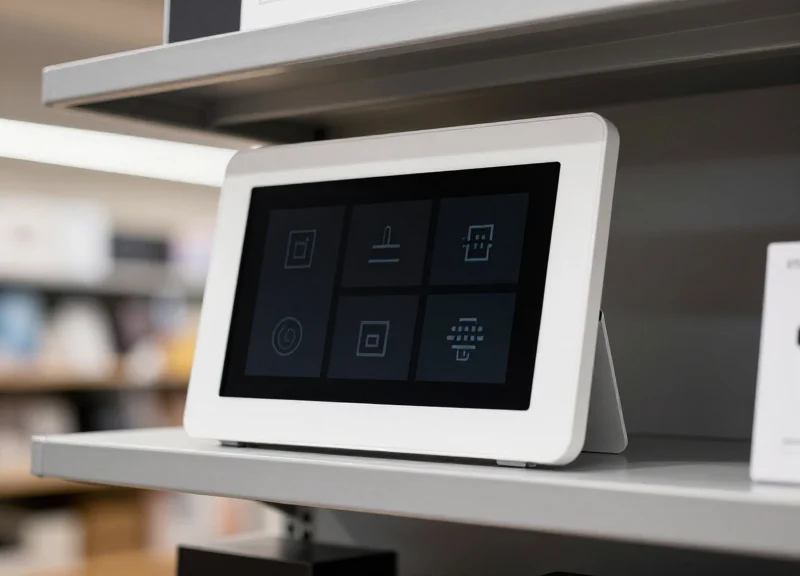
Electronic Shelf Label (ESL) technology achieves a 40% efficiency boost by replacing the multi-step manual update process—printing, cutting, sorting, and physically placing paper tags—with a centralized, cloud-based system that updates thousands of displays in real-time. By automating these repetitive tasks, telecom retailers reclaim significant operational bandwidth, allowing store associates to transition from administrative support roles to revenue-generating sales positions. This shift doesn't just save time; it fundamentally transforms the store's economic model from high-overhead maintenance to high-velocity sales.
| Operational Task | Manual Workflow Time | ESL Automated Workflow |
|---|---|---|
| Single Plan Update | 5 - 8 Minutes | Sub-Second Execution |
| Full Store Re-pricing | 4 - 6 Hours | 3 Minutes (Central Push) |
| Compliance Auditing | Constant Visual Checks | Automated Digital Reports |
| Staff Availability | Back-room focused | 100% Floor-focused |
- Centralized API Integration: ESL systems connect directly to the retailer's ERP or POS system. When a pricing manager at headquarters changes a tariff plan, the update is pushed via a secure IoT gateway to every relevant screen in the network simultaneously.
- Visual Confirmation and Feedback: Unlike paper, ESLs provide two-way communication. The system confirms when a price change has been successfully displayed, eliminating the need for 'floor walks' to verify if staff actually placed the new labels.
- Dynamic Content Rotation: Automated tags can rotate between price, data limits, and QR codes for detailed specs. This reduces the time staff spend explaining basic plan details, as the customer can self-serve through the digital interface.
One unique insight from high-performing telecom environments is the 'Sales Velocity Trap.' When retailers rely on manual updates, they often delay promotional launches to weekends when extra staff are available. Automated ESLs remove this bottleneck, allowing for 'Flash Sales' or 'Competitive Response Pricing' on any Tuesday morning at 10 AM without requiring a single minute of overtime. This agility premium accounts for a significant portion of the ROI beyond simple labor savings.
Does ESL technology require a specific store layout?
No, modern ESL systems are wireless (using IR or Sub-Ghz frequencies) and can be mounted on existing shelving, glass displays, or even standalone pedestals, making them adaptable to any telecom store design.
How does this impact employee morale?
By removing the 'busy work' of labeling, staff reported a 25% increase in job satisfaction in several pilot studies, as they could focus on their core competency: helping customers and closing deals.
What happens if the Wi-Fi goes down?
Top-tier ESL systems store the current price locally on the tag. Even during a network outage, the correct price remains displayed, and updates queue automatically for when connectivity is restored.
Centralized Management: Synchronizing Regional and National Promotions
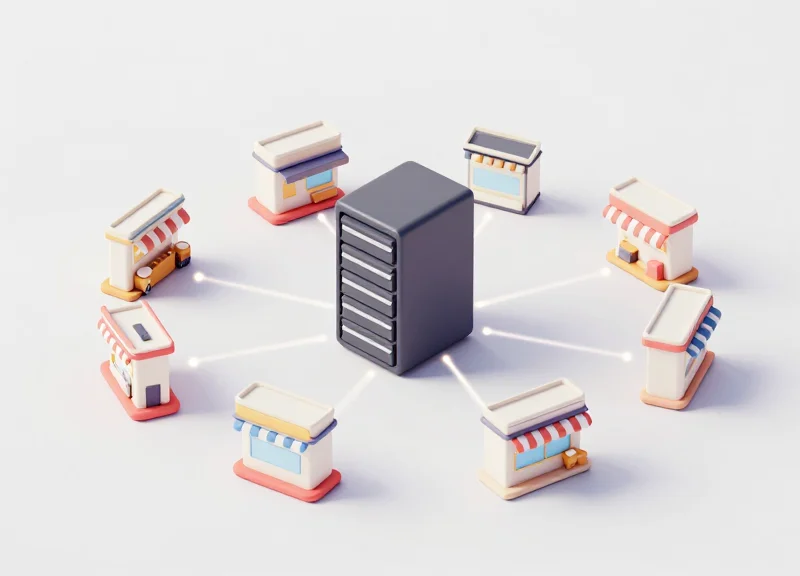
Centralized management in telecom retail refers to a cloud-integrated architectural approach where pricing, plan details, and promotional data are pushed from a central headquarters to thousands of Electronic Shelf Labels (ESLs) across a nationwide network simultaneously. This system ensures that national flagship offers and regional specific 'sweeteners' are synchronized in real-time, removing the 24-48 hour lag typically seen in manual paper-based updates. By utilizing a unified software dashboard, operators can maintain 100% pricing accuracy across diverse geographic locations, ensuring that the customer experience remains consistent whether they are in a flagship urban store or a rural franchise.
| Feature | Fragmented Manual Management | Centralized Automated Management |
|---|---|---|
| Update Speed | Days/Weeks per rollout | Seconds (Near real-time) |
| Compliance | Variable (Subject to staff error) | Guaranteed 100% Uniformity |
| Regional Overlays | Difficult to track and manage | Dynamic layering via software |
| Audit Trail | Non-existent/Manual logs | Digital timestamps and logs |
The true power of centralized management lies in its ability to handle 'Promotional Inheritance.' In the telecom world, pricing is rarely flat. A national 5G plan might have a standard price, but specific competitive markets may require an additional regional discount or a hardware bundle. A centralized system allows HQ to set the 'Global' price while permitting regional managers to apply approved 'Local' overlays that automatically expire at a set time, preventing revenue leakage from forgotten discount tags.
- Data Ingestion: The system pulls the latest tariff and promotional data directly from the corporate ERP or CRM, ensuring the 'Source of Truth' is never manually re-typed.
- Hierarchical Logic Application: The software applies regional rules, such as state-specific taxes or local competitive pricing, to the national base offer.
- Visual Preview and Validation: Marketing teams can preview exactly how the plan details will appear on various screen sizes (e.g., 2.9-inch vs. 5.8-inch ESLs) before pushing live.
- One-Click Execution: With a single command, the encrypted update is sent via sub-GHz radio frequencies to all designated access points and end-devices.
- Closed-Loop Confirmation: The system receives a 'Success' signal from every individual tag, providing an automated audit report that the promotion is live everywhere.
Expert Insight: One often overlooked benefit of centralized management is the 'Omnichannel Price Parity.' In the modern customer journey, a buyer often checks a price online while standing in the physical store. If the digital price tag hasn't been updated to match a new web promotion launched an hour ago, trust is instantly eroded. Automation bridges the gap between web-ops and store-ops, creating a seamless 'phygital' experience that is essential for high-ticket items like premium smartphone contracts.
What happens if a store's internet goes down during an update?
The centralized system uses an 'Eventual Consistency' model. Once the store's local access point regains connectivity, it automatically fetches the latest queued updates from the cloud to ensure the store is back in sync without manual intervention.
Can we run different promotions for different store formats?
Yes. Centralized management allows for 'Tagging and Grouping.' You can target updates specifically to 'Flagship Stores,' 'Mall Kiosks,' or 'Authorized Retailers' with different visual layouts and pricing structures simultaneously.
Does this require a heavy IT infrastructure at each branch?
No. Modern ESL systems are designed for 'Light-Branch' deployment, requiring only a small plug-and-play gateway that communicates directly with the centralized cloud server.
Improving the Customer Experience through Price Integrity
Price integrity in telecom retail is the seamless synchronization between the advertised tariff on the shelf and the final price triggered at the Point of Sale (POS). For consumers, it represents a brand's commitment to transparency; for retailers, it is the bedrock of customer retention. In an industry where complex data plans, device subsidies, and limited-time promotions create frequent price fluctuations, automated systems like Electronic Shelf Labels (ESLs) ensure that what a customer sees is exactly what they pay, eliminating the 'checkout friction' that often leads to abandoned sales and eroded brand equity.
From a psychological perspective, telecom customers are hyper-sensitive to price discrepancies because mobile contracts represent a long-term financial commitment. When a customer discovers a mismatch at the register—even if it is a minor difference—it triggers a cognitive bias known as 'negative reciprocity.' This perceived lack of honesty doesn't just lose a single sale; it damages the 'Trust Capital' required to upsell premium services or data add-ons.
| Customer Touchpoint | Impact of Manual Errors | Result with Automated Integrity |
|---|---|---|
| In-Store Discovery | Confusion over expired or mislabeled tariff plans. | High confidence in latest 5G and data offers. |
| Staff Interaction | Time wasted verifying prices in the backend system. | Staff can focus on consultative selling and features. |
| The Checkout | Disputes and 'Price Shocks' leading to cart abandonment. | Instant validation and smooth transaction flow. |
| Post-Purchase | Negative reviews and potential regulatory complaints. | Higher Net Promoter Scores (NPS) and brand loyalty. |
- The 'Competence Halo Effect': A unique insight from retail psychology: Customers subconsciously link a store's administrative accuracy with their technical reliability. If a telecom retailer cannot maintain accurate price tags, customers are 30% less likely to trust the retailer's advice on complex network coverage or technical device specifications.
- Eliminating 'Ghost Promotions': Automation prevents the fallout from 'ghost promotions'—expired deals still visible on paper tags. By removing these, retailers avoid the awkward 'manager override' process that slows down queues and makes the brand look disorganized.
Why is price integrity more critical in telecom than general retail?
Unlike groceries, telecom products involve multi-year contracts and complex bundles. A price error isn't just a one-off mistake; it signals potential billing issues for the next 24 months, causing high levels of consumer anxiety.
How does automation impact the 'Showrooming' effect?
When customers see dynamic, accurate digital pricing that matches online rates, they are less likely to leave the store to check a competitor's website. Real-time integrity builds immediate 'buying momentum'.
Integrating ESL with POS and ERP Systems

Integrating Electronic Shelf Labels (ESL) with existing Point of Sale (POS) and Enterprise Resource Planning (ERP) systems is the critical architectural step that transforms a hardware gadget into a strategic operational asset. In a telecom environment, where tariff plans, handset subsidies, and bundle discounts change frequently, this integration ensures that the 'Price at the Edge' (on the shelf) is always identical to the 'Price at the Core' (the billing system). This 'tripartite synchronization' removes the human element from the data transmission chain, effectively eliminating the risk of checkout price mismatches that lead to customer frustration and regulatory fines.
| Integration Component | Role in Telecom Retail | Data Exchanged |
|---|---|---|
| ERP System | The Single Source of Truth | Product SKU, Master Price, Tariff Details |
| ESL Management Software | The Middleware Orchestrator | Label Layouts, Update Schedules, Signal Strength |
| POS System | The Transactional Anchor | Real-time Price Validation at Checkout |
| IoT Gateway/Base Station | The Physical Bridge | Encrypted RF Signals to Individual Tags |
- Data Trigger: A pricing manager updates a tariff plan or handset price in the central ERP system.
- API Handshake: The ERP pushes the update to the ESL Cloud/Server via RESTful APIs or Webhooks, identifying specific Store IDs.
- Delta Identification: The system identifies only the labels that require changes (Delta-updates) to preserve battery life and reduce network latency.
- Wireless Transmission: The ESL server sends the packet to local store base stations, which transmit the new image to the E-ink tags via Sub-Giga or BLE protocols.
- Verification Loop: The tag sends an acknowledgement (ACK) back to the system, confirming the update was successful.
Expert Tip: To truly differentiate your operational efficiency, implement a 'Closed-Loop Reconciliation' logic. Most retailers simply send data and assume it arrived. A veteran approach involves the ESL system reporting a 'Success' status back to the ERP. If a tag fails to update due to a blocked signal or dead battery, the system should automatically flag a task in the store manager's mobile app to check that specific shelf. This level of granular visibility is what drives the 40% efficiency gain by replacing manual audits with exception-based management.
How does integration handle offline scenarios?
High-tier ESL systems utilize local caching. If the internet goes down, the POS and ESL continue to display the last synchronized data, ensuring local consistency until the connection is restored.
Is it better to use Cloud-based or On-Premise ESL servers?
For telecom retailers with multiple branches, a Cloud-based server is superior as it allows for centralized management and easier API integration with modern SaaS ERP platforms.
Can we integrate legacy POS systems that lack APIs?
Yes, through middleware that monitors database changes or by using automated file exports (CSV/XML) deposited into a secure FTP folder that the ESL system monitors.
Beyond Price: Displaying Rich Product Information on Digital Labels
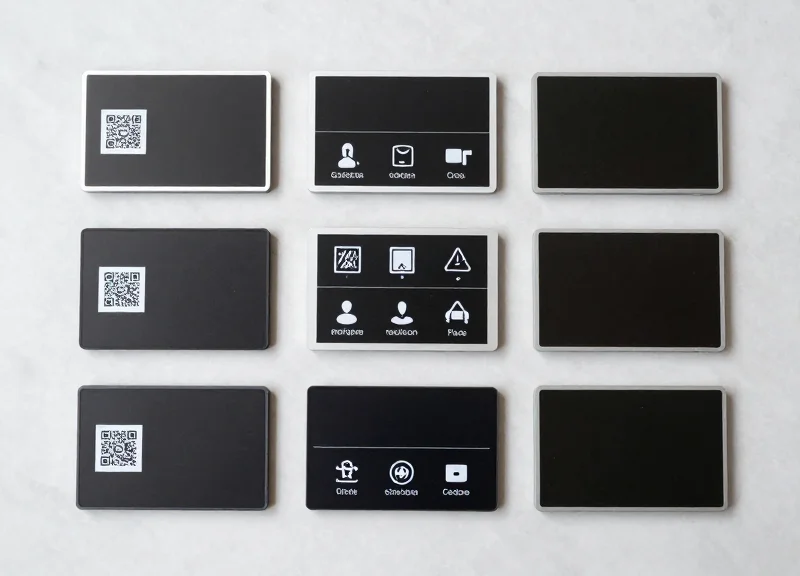
In the modern telecom retail environment, Electronic Shelf Labels (ESL) have evolved from simple price displays into powerful 'phygital' touchpoints. By leveraging high-resolution e-paper technology, retailers can now present rich product metadata—including 5G compatibility, contract fine print, and data allowances—directly at the shelf edge. This eliminates the 'information gap' between online research and in-store shopping, allowing customers to access comprehensive plan details via QR codes or NFC triggers that link instantly to personalized landing pages or comparison tools.
- Interactive QR Codes: Directly link customers to detailed T&Cs, video reviews of handsets, or digital sign-up forms, reducing friction in the sales funnel.
- Real-Time Inventory Status: Display 'Low Stock' or 'Available for Next-Day Delivery' alerts to create urgency and manage customer expectations without staff intervention.
- Dynamic Plan Comparisons: Utilize multi-page toggling or secondary screens to show cost-per-GB or bundling savings alongside the hardware price.
- Regulatory Compliance: Automatically update mandatory legal disclaimers and 'Truth in Billing' information across all store locations instantly.
| Feature | Traditional Paper Labels | Rich Digital Labels (ESL) |
|---|---|---|
| Product Specs | Static, limited to 2-3 lines. | Dynamic, multi-page, or QR-linked. |
| Inventory Sync | None; requires manual check. | Live stock levels from ERP/WMS. |
| Contract Details | Printed in tiny, illegible font. | Transparent, expandable via mobile link. |
| Customer Engagement | Passive; price-only focus. | Active; encourages smartphone interaction. |
Expert Insight: The 'Silent Salesman' Strategy. While competitors focus on efficiency, the real value of rich digital labels lies in reducing 'choice paralysis.' In telecom, where plans are notoriously complex, using the label to highlight a 'Top Recommended Plan' based on real-time trending data can increase conversion rates by up to 15%. This transforms the label from a cost-saving tool into a proactive conversion engine that guides the customer through the decision-making process before a human associate even approaches.
Can digital labels display color-coded plan tiers?
Yes, modern 3-color or 4-color ESLs allow retailers to use red, yellow, or black to highlight specific promotions or premium 'unlimited' tiers.
Does the QR code work in low-light store conditions?
High-contrast e-paper displays are designed for maximum readability, ensuring QR codes are easily scannable even under harsh or dim retail lighting.
How often can the 'Rich Information' be updated?
Information can be updated as frequently as your central database changes—whether that is every minute for stock levels or once a day for new marketing content.
Calculating ROI: The Payback Period for Telecom ESL Investment
The Return on Investment (ROI) for Electronic Shelf Labels (ESL) in a telecom retail environment is the measurement of financial gain relative to the cost of implementation, typically achieved through the total elimination of manual pricing labor and the reduction of audit-related losses. For a standard telecom branch managing complex tariff updates and high-value accessories, the typical payback period ranges between 12 to 22 months, depending on the frequency of promotional cycles and local labor costs. By automating tariff plan updates, retailers recapture approximately 40% of their floor staff's time, pivoting from administrative tasks to high-value sales consultations.
| Metric | Manual Paper Labeling | Automated ESL System |
|---|---|---|
| Time per Label Update | 3 - 5 Minutes | Near Instantaneous (<10s) |
| Monthly Labor Hours (per 500 labels) | 25 - 40 Hours | < 1 Hour |
| Price Error Rate | 2% - 5% Avg. | 0% (POS Synced) |
| Material Waste Cost | High (Paper/Ink/Plastic) | Zero (5-10 Year Battery) |
- Direct Labor Savings: The most immediate ROI driver is the reclamation of staff hours. In telecom, where plan details change frequently, staff often spend hours printing, cutting, and placing paper tags. Automation transfers these costs directly back to the bottom line.
- Elimination of Compliance Penalties: In many jurisdictions, displaying an incorrect (lower) price than the one charged at the POS can lead to heavy fines or forced price matching. ESL ensures 100% price integrity, protecting gross margins.
- Increased Sales Conversion: With real-time updates, stores can launch 'Flash Sales' or match competitor pricing instantly. This agility often leads to a 2-3% uplift in overall store revenue, significantly accelerating the payback period.
Unique Expert Insight: The 'Opportunity Cost of Lag' Factor. While most retailers focus on labor savings, the true competitive advantage in telecom is the elimination of 'pricing lag.' In a manual store, a national promotion announced at 9:00 AM might not be reflected on the shelves until 2:00 PM. That five-hour window represents lost sales to more agile competitors. ESL eliminates this lag entirely, allowing for 'Synchronized Agility' where regional managers can trigger global updates in seconds, ensuring the store is always optimized for the current market moment.
What is the average payback period for a medium-sized telecom store?
Most retailers see a full return on their initial investment within 14 to 18 months, though high-traffic urban locations with frequent plan changes can reach break-even in as little as 10 months.
Do ESL batteries affect the long-term ROI?
Modern ESLs use e-paper technology with ultra-low power consumption. Batteries typically last 5-10 years, meaning the maintenance cost is negligible for the first decade of operation.
Does the ROI include software integration costs?
Yes, a comprehensive ROI calculation should include the initial API integration with your POS/ERP systems. However, once integrated, the marginal cost of updating an additional store is virtually zero.
Choosing the Right ESL Partner for Your Telecom Brand
Choosing the right Electronic Shelf Label (ESL) partner for a telecom brand involves evaluating three core pillars: hardware endurance (typically 10+ year battery life), display sophistication (high-contrast e-ink for complex QR codes), and system scalability (centralized cloud management for thousands of SKUs). For telecom retailers, the partner must provide a solution that handles rapid-fire tariff adjustments and multi-layered promotional data without lag, ensuring that the digital display is as reliable as the network services being sold.
| Selection Criterion | Critical Telecom Requirement | Business Impact |
|---|---|---|
| Battery Longevity | 10-15 Years with daily updates | Drastically reduces Total Cost of Ownership (TCO) and maintenance labor. |
| Display Clarity | High-resolution e-paper with 3-4 colors | Ensures legibility of fine print in contracts and scan-rate of QR codes. |
| System Latency | Sub-minute nationwide updates | Allows for 'Flash Sales' and immediate response to competitor price drops. |
| Security | AES-128 Encryption | Prevents unauthorized price tampering or signal interference in-store. |
- Audit Integration Capabilities: Ensure the partner's software can natively communicate with your existing POS and ERP systems via robust APIs to prevent data silos.
- Verify Physical Durability: Telecom stores often have high foot traffic; labels should have high impact resistance and secure mounting options.
- Assess Scalability Architecture: The solution must support a 'Centralized Management' model, allowing a single marketing team to update prices across 500+ locations simultaneously.
- Test Under Retail Lighting: Validate that the e-ink technology offers wide viewing angles and anti-glare properties to maintain readability under bright showroom lights.
DragonGuardGroup distinguishes itself by offering 'Active Heartbeat Monitoring' for every tag. While most vendors focus on the initial hardware sale, DragonGuard provides a diagnostic dashboard that alerts retail managers to low battery levels or connectivity issues before they impact the customer experience. This proactive approach is vital for telecom brands where compliance with displayed tariff prices is a legal necessity.
Can ESLs display complex QR codes for data plans?
Yes, high-resolution ESLs from partners like DragonGuardGroup are specifically designed to render high-density QR codes that lead customers directly to digital sign-up pages or full contract terms.
What happens if the store Wi-Fi goes down?
The best ESL partners use a dedicated sub-GHz or Zigbee frequency that operates independently of store Wi-Fi, ensuring price updates continue even if the local network is interrupted.
Is the software user-friendly for floor staff?
A top-tier partner provides a mobile app interface, allowing staff to 'bind' a new product to a label simply by scanning the barcode, reducing setup time by 90%.