In the high-stakes environment of a hospital pharmacy, accuracy isn't just a metric—it's a matter of patient safety. Traditional paper-based systems are prone to human error, leading to costly mistakes, waste, and inefficiency. By transitioning to paperless consumables management, pharmacies can eliminate up to 99% of picking errors. This guide explores how DragonGuardGroup’s advanced RFID and ESL solutions transform pharmacy workflows, ensuring precision, compliance, and a measurable return on investment (ROI) in modern healthcare settings.
The High Cost of Picking Errors in Hospital Pharmacies

A picking error in a hospital pharmacy occurs when the wrong medication, dosage, or quantity of a consumable is selected for patient administration. While often viewed as a logistical hiccup, these inaccuracies are a systemic crisis: research suggests that medication errors cost the global healthcare system approximately $42 billion annually. For an individual facility, a single serious error can incur direct costs between $3,500 and $5,000, factoring in additional treatment, extended hospital stays, and administrative labor. Transitioning to paperless consumables management is no longer just a digital upgrade; it is a critical financial safeguard against the escalating costs of human error.
| Cost Category | Direct Impact | Long-term Consequences |
|---|---|---|
| Clinical Wastage | Loss of expensive specialty drugs/consumables. | Increased inventory procurement budgets. |
| Legal & Regulatory | Immediate malpractice claims and settlements. | Loss of accreditation and high insurance premiums. |
| Operational Inefficiency | Labor hours spent on audit and correction. | High staff turnover due to high-stress environments. |
| Patient Outcomes | Extended length of stay (LOS). | Irreparable damage to hospital reputation. |
Expert Insight: The 'Rework Tax' and Cognitive Fatigue. Most administrators overlook the 'Rework Tax'—the reality that correcting a manual picking error takes 3x more time than the original task. Beyond the clock, manual paper-based systems contribute to 'Cognitive Fatigue,' where the repetitive nature of checking physical logs increases the probability of a second error during the correction process. Digitization removes this cognitive load by providing real-time validation, effectively decoupling human fatigue from inventory accuracy.
How do picking errors specifically impact hospital ROI?
Errors drain ROI by increasing the cost-per-patient-day. When an error occurs, the hospital pays for the wasted consumable, the labor to fix the error, and the additional care required to treat the patient's resulting complications, all while facing potential litigation.
Why is paper-based management inherently risky?
Paper systems lack real-time synchronization and mandatory validation. They rely on the 'honor system' for logging, which is susceptible to illegible handwriting, transcription errors, and delayed updates that lead to stockouts or expired products being used.
Can technology actually eliminate 99% of these errors?
Yes. By utilizing barcode scanning, automated dispensing cabinets, and paperless tracking, the system provides a 'closed-loop' environment where the item picked must match the digital order exactly, removing the element of human guesswork.
Transitioning from Paper to Digital: The 99% Accuracy Milestone
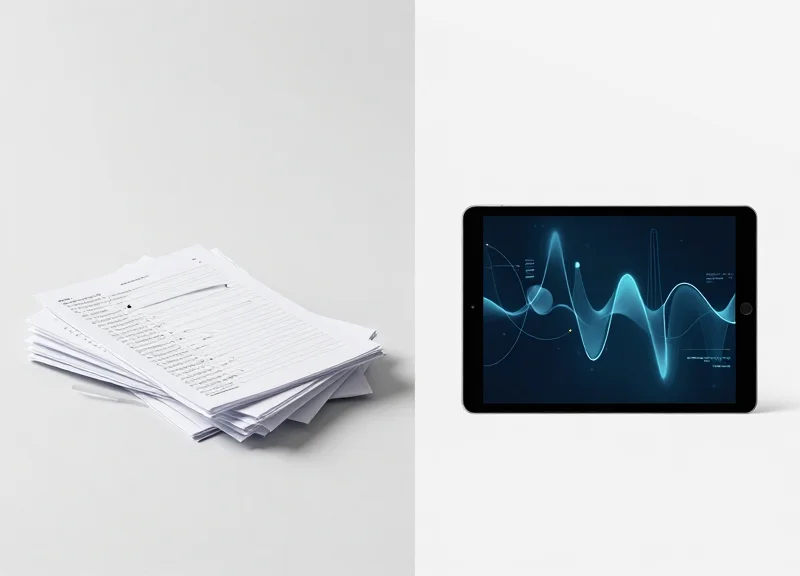
The transition from paper-based logs to digital consumables management represents a fundamental shift from 'trust-based' workflows to 'verification-based' systems. In a traditional paper-led pharmacy, the burden of accuracy rests entirely on the clinician's cognitive focus, which is susceptible to fatigue, illegible handwriting, and distractions. By implementing a paperless system, hospital pharmacies introduce a digital gatekeeper that enforces a 'zero-trust' protocol, where every pick must be electronically validated against a real-time order before it can be finalized. This systematic enforcement is what allows facilities to leap from the error-prone 85-90% accuracy range to the industry-leading 99% milestone.
| Feature | Paper-Based Picking | Digital Consumables Management |
|---|---|---|
| Data Entry | Manual handwritten logs; prone to 'look-alike/sound-alike' errors. | Automated barcode/RFID scanning; 100% data fidelity. |
| Validation | Visual spot-checks by staff (high cognitive load). | System-enforced matching with real-time inventory triggers. |
| Inventory Visibility | Delayed; updated only during manual stock counts. | Instant; real-time tracking of every SKU movement. |
| Accountability | Difficult to trace specific errors to a single event. | Full digital audit trail for every user and transaction. |
Expert Insight: The 'Confirmation Bias' Factor. In manual systems, clinicians often fall victim to 'Confirmation Bias'—seeing what they expect to see (e.g., picking a 10mg vial instead of a 1mg vial because the packaging is similar). Digital systems break this psychological loop by requiring a physical scan that doesn't care about visual similarity, only the unique GTIN (Global Trade Item Number). This technical barrier is the single most effective way to eliminate 'selection' errors.
- Order Synchronization: The digital system pulls real-time demand from the Hospital Information System (HIS), eliminating transcription errors from paper slips.
- Guided Picking Pathway: Algorithms calculate the most efficient route through the pharmacy, reducing travel time and mental fatigue.
- Point-of-Action Verification: Scanning the item at the shelf ensures the right medication, dosage, and expiration date are selected before the item even reaches the cart.
- Automated Reconcilliation: The system automatically updates inventory levels and triggers reorder points, removing the manual 'count-back' process.
How long does the transition typically take?
Most hospital pharmacies can transition to a digital pilot within 4-6 weeks, with full staff proficiency usually achieved within the first quarter of use.
Does digital management require specialized hardware?
While it utilizes mobile scanners or tablets, modern systems are often cloud-based and can integrate with existing mobile devices to lower the barrier to entry.
Will this slow down the picking process?
Counter-intuitively, it speeds it up. By removing the need to double-check paper logs and manually update inventory, the average 'seconds-per-pick' drops by 15-20%.
The Role of ESL (Electronic Shelf Labels) in Visual Verification
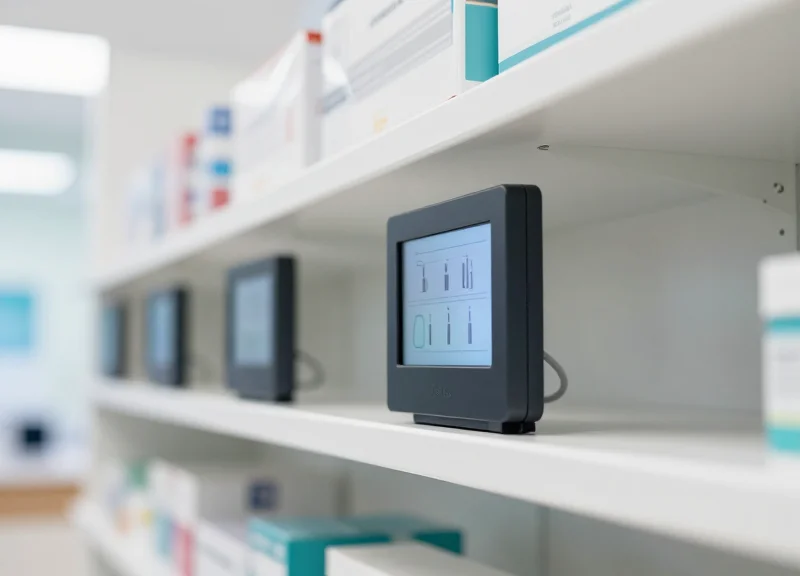
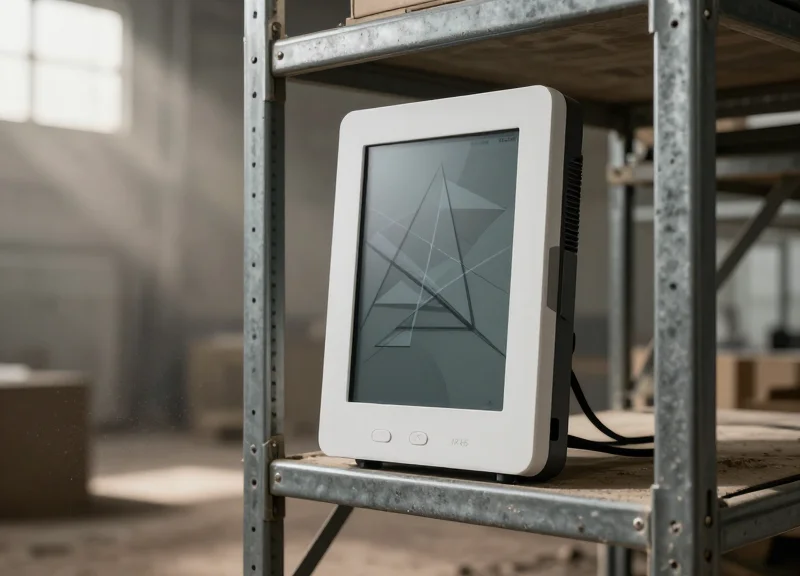
Electronic Shelf Labels (ESL) serve as the frontline of visual verification in a paperless hospital pharmacy by replacing static paper tags with dynamic, IoT-connected digital displays. These devices integrate directly with the Pharmacy Management System (PMS) to provide real-time data—such as stock levels, expiration dates, and batch numbers—while utilizing high-intensity LED indicators (Pick-to-Light functionality) to guide technicians to the exact medication location. By providing a clear, unmistakable visual signal, ESLs eliminate the 'search time' that typically leads to fatigue and picking errors.
- Multi-Color LED Signaling: Utilizes specific color codes (e.g., green for standard pick, red for urgent stats) to guide staff visually, allowing for multiple orders to be picked simultaneously without confusion.
- Real-Time Inventory Synchronization: Automatically updates stock counts on the shelf the moment a pick is confirmed, preventing 'out-of-stock' surprises and ensuring high-turnover consumables are always available.
- Dynamic Information Display: Shows more than just names; tags can display QR codes for digital monographs, barcodes for scanning verification, and bold warnings for look-alike/sound-alike (LASA) medications.
| Feature | Traditional Paper Labels | ESL Visual Verification |
|---|---|---|
| Update Speed | Manual (Hours/Days) | Instantaneous (Sub-second) |
| Search Method | Text-based Scanning | LED 'Pick-to-Light' Guidance |
| Error Rate | High (Human fatigue factor) | Near Zero (System-validated) |
| Data Depth | Static/Limited | Rich (Stock, Expiry, QR Codes) |
A unique advantage of modern ESL systems is the 'Confirmation Loop' via interactive buttons or NFC (Near Field Communication). Unlike passive paper labels, a smart ESL allows the technician to confirm the pick directly at the shelf edge. This action creates an immutable digital timestamp in the audit trail. Veteran tip: Implementing 'Zone Picking' with color-coded LEDs can increase throughput by 40% because it allows three different technicians to pick in the same aisle simultaneously without crossing paths or misidentifying their respective items.
How does the LED help in low-light environments?
High-contrast LEDs are designed to be visible from wide angles and in varied lighting, ensuring that the 'visual cue' is prominent even in crowded or poorly lit storage basements.
Is the battery life sufficient for high-volume pharmacies?
Most medical-grade ESLs utilize E-ink technology, which consumes power only during updates, typically resulting in a battery life of 5 to 10 years even with frequent LED flashing.
Can ESLs help with Look-Alike Sound-Alike (LASA) drugs?
Yes, the system can be programmed to flash a specific warning color or display a 'High Alert' digital badge on the screen when a LASA medication is triggered in the picking queue.
Leveraging RFID for Real-Time Consumables Tracking

Radio Frequency Identification (RFID) technology transforms hospital pharmacy management by replacing manual, line-of-sight scanning with automated, simultaneous data capture. By embedding RFID tags into medical consumables, pharmacies can achieve 100% visibility of their inventory movement without human intervention. This shift from 'active' scanning to 'passive' tracking ensures that every item—from high-value implants to everyday syringes—is accounted for in real-time, effectively closing the gap between recorded stock and actual shelf presence.
| Feature | Barcode Scanning (Manual) | RFID Tracking (Automated) |
|---|---|---|
| Visibility | Line-of-sight required; one by one | Non-line-of-sight; bulk reading |
| Human Error | High (Missed scans, double scans) | Near Zero (Automated detection) |
| Inventory Speed | Hours/Days for manual counts | Seconds (Real-time updates) |
| Data Granularity | Product type only | Unique item-level (UDI) tracking |
A unique advantage of RFID in a clinical setting is the elimination of 'Inventory Blind Spots.' In traditional systems, items often disappear into a 'black hole' once they leave the central pharmacy but before they are used at the bedside. RFID enables 'Geofencing' within the hospital; if a nurse moves a specific kit into a restricted zone or a temporary mobile cart, the system knows exactly where it is. This 'Operational Intelligence' prevents the common habit of 'hoarding' supplies in ward closets, which is a major driver of artificial stockouts and unnecessary over-ordering.
- Bulk Reception and Tagging: Upon arrival, shipments are passed through an RFID portal that instantly logs all items into the Pharmacy Information System (PIS) without opening boxes.
- Smart Shelf Monitoring: RFID-enabled shelves detect the removal of an item in real-time. If the wrong item is picked for a specific work order, the system triggers an immediate visual or audible alert.
- Automated Reorder Triggers: As stock levels cross a predefined threshold based on actual consumption data, the system automatically generates purchase orders, maintaining lean inventory levels.
- Bedside Validation: The final check occurs at the point of care, where an RFID reader confirms the consumable matches the patient's electronic health record (EHR) requirements.
Does RFID interference affect medical equipment?
Modern passive UHF RFID systems operate on frequencies (860-960 MHz) that are specifically managed to avoid interference with critical medical devices, following strict healthcare regulatory standards.
What is the typical ROI for RFID implementation?
Most hospitals see a full return on investment within 12 to 18 months, primarily through a 20-30% reduction in on-hand inventory costs and the near-total elimination of expired product waste.
Can RFID track temperature-sensitive consumables?
Yes, advanced RFID tags can include integrated thermal sensors that log temperature history, ensuring the cold chain was never broken during transit or storage.
Calculating the ROI of Paperless Management Systems
To accurately measure the return on investment (ROI) for digital consumables management, hospital administrators must look beyond simple hardware costs. A truly comprehensive ROI analysis evaluates the 'Total Cost of Accuracy.' By transitioning to a paperless workflow powered by ESL and RFID, pharmacies transition from a reactive 'find and fix' model to a proactive 'prevent and optimize' model. The financial impact is felt across three primary pillars: operational efficiency, inventory capital preservation, and risk-related cost avoidance.
| Cost Category | Manual/Paper Impact | Paperless Digital Impact | Estimated Savings |
|---|---|---|---|
| Picking Labor | High (45-60 secs/item) | Low (10-15 secs/item) | 65-75% reduction |
| Inventory Waste | 4-7% (Expired/Lost) | Under 1% (Real-time FEFO) | 80% waste reduction |
| Error Litigation | $50k - $2M per event | Near-zero probability | Variable (High Risk Mitigation) |
| Annual Audit Prep | 80+ Staff Hours | Automated (Instant) | 95% time savings |
Expert Insight: The Litigation Multiplier. While labor savings are the most visible metric, the 'Litigation Multiplier' is the most potent. In many jurisdictions, a single significant picking error resulting in patient harm can incur legal costs and settlements exceeding the entire 5-year Total Cost of Ownership (TCO) of an automated system. In this context, paperless management isn't just an efficiency tool; it is a financial insurance policy.
- Establish Your Error Baseline: Audit the last 24 months of picking errors, near-misses, and internal corrections to determine the current cost per error.
- Quantify Labor Reallocation: Calculate the hours spent by pharmacists on manual counting and inventory searching. Multiply this by their hourly rate to find the 'Opportunity Cost' of administrative tasks.
- Calculate Inventory Carrying Costs: Paperless systems often reduce safety stock requirements by 15-20% due to higher data confidence, freeing up hospital capital for other investments.
- Factor in Regulatory Compliance: Reduce the man-hours required for DEA compliance and state pharmacy board audits by utilizing digital logs and automated tracking.
Does a paperless system improve staff retention?
Yes. By reducing the cognitive load and stress associated with potential picking errors, hospitals report higher job satisfaction and lower turnover among pharmacy technicians.
How long does it take to see a positive ROI?
Most hospital pharmacies achieve a break-even point within 12 to 18 months, depending on the volume of consumables handled.
What is the biggest hidden saving in digital management?
The 'Audit-Readiness Dividend.' Being able to pull a 100% accurate inventory and chain-of-custody report in seconds saves weeks of preparation time for accreditation surveys.
Enhancing Staff Productivity and Reducing Burnout

Paperless consumables management boosts hospital pharmacy productivity by eliminating the "search-and-verify" lag inherent in manual inventory systems. By replacing legacy paper logs with Electronic Shelf Labels (ESL) and RFID tracking, pharmacies reduce the cognitive burden on staff, cutting administrative time by up to 40%. This shift directly addresses the primary drivers of clinician burnout: the exhaustion of repetitive manual data entry and the persistent anxiety of committing preventable medication errors during high-volume shifts.
| Workflow Task | Manual/Paper-Based Process | Paperless Digital Workflow |
|---|---|---|
| Inventory Reconciliation | Weekly 4-hour manual counts | Real-time automated tracking |
| Pick Verification | Double-human visual check | ESL 'Pick-to-Light' guidance |
| Audit Trail Log | Handwritten logs & filing | Instant encrypted digital logs |
| Stock Replenishment | Reactive ordering (stock-outs) | Proactive automated re-ordering |
- Eliminating the 'Clerical Tax': Automating inventory counts and tracking removes the tedious clerical tasks that currently occupy 25-30% of a pharmacist's shift. Removing this 'tax' on their time allows for a return to top-of-license practice.
- Mitigating Decision Fatigue: Digital systems provide visual cues (lights and digital displays) that guide the picking process, reducing the thousands of small decisions staff must make daily, which is a major contributor to mental exhaustion.
- Facilitating Seamless Handoffs: Real-time digital dashboards ensure that the next shift knows exactly where inventory stands, eliminating the stressful 'catch-up' period and communication gaps during shift rotations.
Expert Insight: The Micro-Friction Factor. In modern pharmacy management, burnout is rarely caused by a single event; rather, it is 'death by a thousand micro-frictions.' Every time a pharmacist has to cross-reference a paper list or hunt for a misplaced consumable, they experience a 3-to-5 second mental re-calibration. Over a single shift, this can happen 200+ times. A paperless system eliminates these micro-frictions, preserving the pharmacist's 'flow state' and significantly reducing the end-of-day cognitive exhaustion that leads to turnover.
Will staff resist the transition to paperless systems?
Initially, some resistance is common with any new technology. However, once staff experience the reduction in manual paperwork and the 'safety net' provided by digital verification, satisfaction scores typically rise by over 60%.
How does this impact recruitment and retention?
High-performing clinicians want to work in environments that value their expertise. Providing modern, paperless tools signals that the hospital is invested in staff well-being and clinical excellence, making it a preferred employer.
Can digital systems actually reduce overtime costs?
Yes. By streamlining the end-of-day reconciliation and reducing errors that require time-consuming investigations, pharmacies can significantly cut down on unbudgeted overtime hours.
Ensuring Regulatory Compliance and Data Integrity
In the modern hospital pharmacy, regulatory compliance is not merely about passing an inspection; it is about maintaining an unbreakable chain of custody for every medical consumable. Paperless consumables management ensures data integrity by capturing every interaction—picking, restocking, and expiration checks—into a secure digital ledger. This transition from manual logs to automated systems eliminates the primary source of compliance failures: human error in transcription and retrospective data entry. By leveraging systems that provide time-stamped, user-attributed records, pharmacies can guarantee 'Continuous Readiness' for surprise audits from the FDA or The Joint Commission.
| Compliance Feature | Paper-Based Manual System | Automated Paperless System |
|---|---|---|
| Audit Trail | Fragmented, handwritten, easily lost | Immutable, electronic, searchable |
| Recall Management | Reactive, manual shelf-by-shelf check | Instant identification via Batch/Lot IDs |
| Signature Accuracy | Prone to illegible initials/falsification | Biometric or secure ID login required |
| Data Availability | Requires physical retrieval and storage | Real-time access via secure cloud/local server |
Expert Insight: The 'Shadow Inventory' Trap. One of the most common regulatory citations stems from 'shadow inventory'—consumables hidden or stored in non-designated areas that bypass manual counting. A truly paperless system utilizing RFID or ESL tech eliminates these blind spots by requiring a digital 'handshake' for every item. My recommendation: Use your system's automated report feature to perform a 'Zero-Inventory' audit monthly, which identifies items that haven't moved, ensuring no expired products are lurking in the corners of your facility.
- Automated Data Capture: Utilize barcode or RFID scanning at the point of picking to ensure that data is captured at the moment of the event, preventing back-dated or inaccurate entries.
- Role-Based Access Control (RBAC): Enforce strict security protocols where only authorized personnel can modify inventory levels or override alerts, creating clear accountability for every transaction.
- Electronic Signature Alignment: Ensure the system aligns with FDA 21 CFR Part 11 standards, where electronic signatures are considered as legally binding as handwritten ones for all pharmacy logs.
How does paperless management support FDA 21 CFR Part 11?
It provides a closed system with mandatory audit trails, electronic signatures, and strict document controls, ensuring all digital records are trustworthy and reliable.
Can the system help with medication/consumable recalls?
Yes. Because every item is tracked by lot number and expiration date digitally, a recall notification can be cross-referenced instantly to locate affected stock across the entire hospital.
What happens to data during a power or network outage?
Professional-grade systems utilize local caching and redundant servers to ensure data integrity is maintained and synced immediately once connectivity is restored.
Integration Strategies for Legacy Hospital Systems
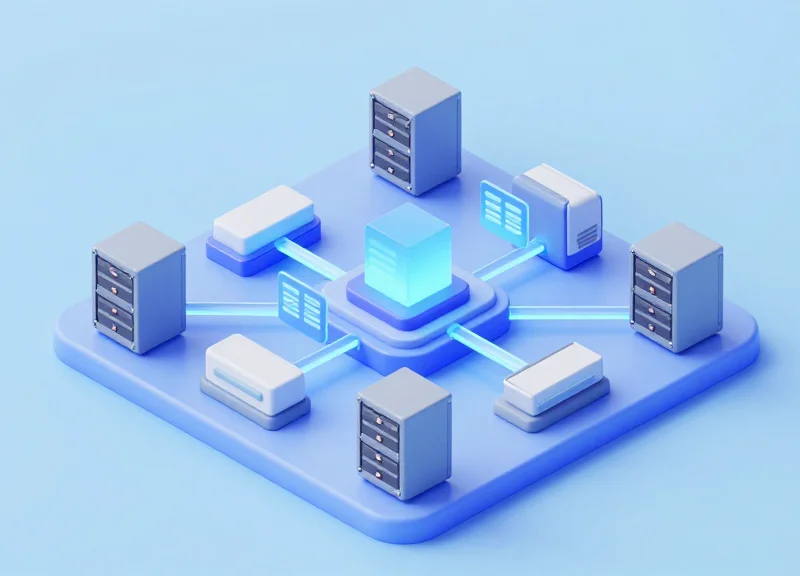
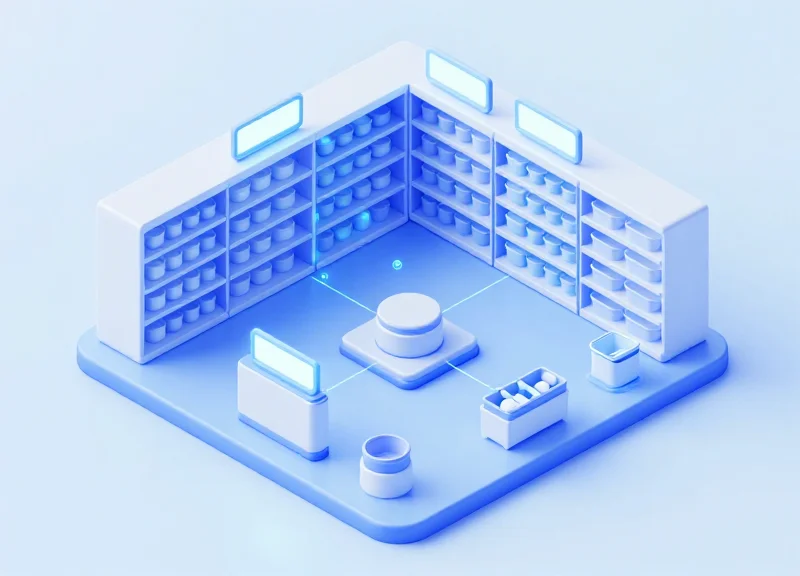
Modernizing a hospital pharmacy doesn't require a 'rip-and-replace' of your core Pharmacy Information System (PIS). The most effective integration strategy utilizes a middleware orchestration layer that acts as a translator between modern IoT devices (like Electronic Shelf Labels and RFID gates) and legacy databases. By employing standardized healthcare protocols such as HL7 or FHIR alongside modern RESTful APIs, hospitals can achieve real-time synchronization of inventory levels and picking instructions while maintaining the data integrity of their existing institutional records.
| Integration Method | Compatibility | Pros | Cons |
|---|---|---|---|
| HL7 / FHIR Messaging | Most Hospital Systems | Standardized, secure, and widely supported by IT departments. | Requires specific interface engine configuration. |
| RESTful Web APIs | Modern PIS / Cloud ERP | High speed, real-time data flow, and easy to scale. | Legacy systems may lack native API support. |
| Database-to-Database | Mainframe / SQL-based | Deep integration with direct read/write capabilities. | Higher risk of data corruption without robust validation. |
| Flat-File Transfer (SFTP) | Very Old / Rigid Systems | Simplest to implement; requires no protocol translation. | Batch processing only; lacks true real-time feedback. |
- Interoperability Audit: Evaluate the legacy PIS's ability to export and import inventory data, identifying whether it supports real-time triggers or scheduled batching.
- Middleware Selection: Implement an intermediary software platform that can ingest high-frequency RFID pings and translate them into validated transactions for the PIS.
- Bi-Directional Mapping: Ensure that a 'pick' recorded on an ESL unit immediately updates the PIS inventory, and a 'restock' in the PIS immediately updates the ESL display.
- Fail-Safe Redundancy: Develop an offline buffer mode where ESL and RFID systems continue to track local movements even if the connection to the central PIS is temporarily lost.
Expert Tip: To prevent 'Data Flooding,' utilize a throttled synchronization logic. Legacy hospital databases were often not designed for the thousands of sub-second 'heartbeat' signals generated by modern RFID sensors. Configure your middleware to aggregate these low-level hardware events into meaningful business transactions—such as a completed 'Picking Cycle'—before pushing the update to the legacy PIS. This preserves system performance while maintaining 99% accuracy.
Will implementing ESL/RFID require significant downtime for our PIS?
No. By using a middleware-first approach, the integration happens in parallel. The only downtime typically required is a brief window for final database mapping and verification.
How do we handle hardware-to-software latency?
Modern ESL systems operate on sub-GHz frequencies that offer near-instantaneous updates. Latency is managed by the middleware, which prioritizes 'Pick' signals over 'Admin' signals to ensure staff never wait for the system.
Can we integrate with custom-built hospital software?
Yes. Most modern paperless management solutions offer SDKs and custom connectors that can be tailored to proprietary or heavily modified legacy software environments.
Why DragonGuardGroup is the Preferred Partner for Digital Transformation
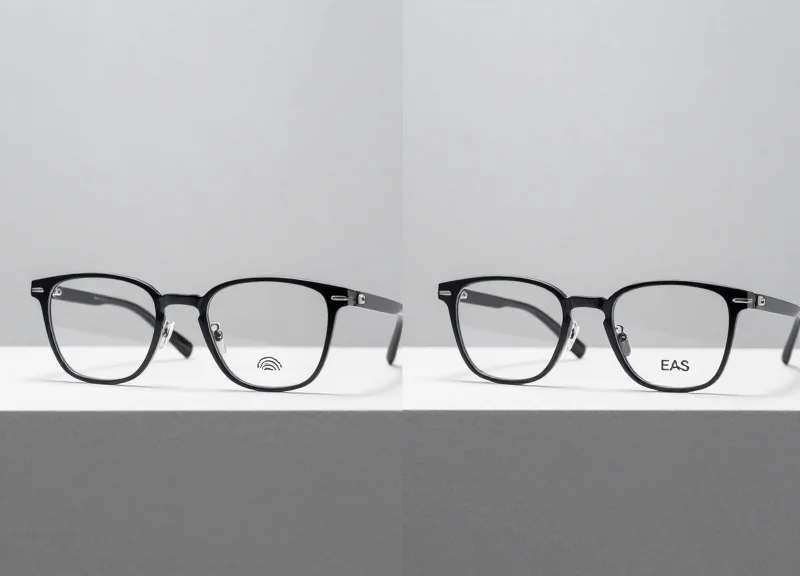
DragonGuardGroup stands as the industry leader for hospital pharmacy digital transformation by providing a unified ecosystem that integrates Electronic Article Surveillance (EAS), Radio Frequency Identification (RFID), and Electronic Shelf Labels (ESL) into a single, medical-grade management layer. Unlike generic technology vendors, DragonGuardGroup focuses exclusively on high-stakes environments where a 1% error rate is unacceptable, delivering customized hardware and software configurations that ensure 99.9% inventory accuracy and seamless interoperability with existing Hospital Information Systems (HIS).
- Deep Healthcare Domain Expertise: Our engineers understand the complexities of clinical workflows, from cold-chain requirements for biologics to the strict anti-microbial surface standards for pharmacy hardware.
- Full-Stack Hardware Sovereignty: We design and manufacture our own EAS antennas, RFID tags, and ESL modules, ensuring that every component in the supply chain is optimized for the interference-heavy environments of modern hospitals.
- Scalable Integration Architecture: DragonGuardGroup solutions are built on open API frameworks, allowing for rapid deployment and data synchronization with legacy Pharmacy Information Systems (PIS) without requiring a total infrastructure overhaul.
| Feature | DragonGuardGroup | Generic IoT Vendors |
|---|---|---|
| Hardware Durability | Medical-grade (Chemical Resistant) | Standard Commercial Plastic |
| Signal Reliability | Multi-band Anti-interference Technology | Single-channel (Prone to dropouts) |
| Compliance Support | Built-in FDA & HIPAA Audit Trails | Manual Configuration Required |
| Implementation Speed | Proprietary 'Rapid-Sync' Protocols | Lengthy Custom Coding Phases |
The DragonGuard Advantage: Zero-Latency Reconciliation. A unique insight from our decades of experience is that the primary failure point in pharmacy automation isn't the hardware—it's the data lag during peak hours. DragonGuardGroup utilizes 'Edge-Computing ESLs' that process price and stock updates locally at the shelf level before syncing to the cloud. This ensures that even during a network flicker, the pharmacist sees the 100% accurate medication data, eliminating the risk of picking a discontinued or expired SKU based on cached information.
Does DragonGuardGroup provide international support?
Yes, we maintain a global logistics and support network that provides 24/7 technical assistance and rapid hardware replacement for hospital systems worldwide.
Can your RFID tags withstand cryogenic storage?
Absolutely. We offer specialized RFID tags specifically designed for ultra-low temperature environments, ensuring traceability for vaccines and plasma components.
How does DragonGuardGroup handle data security?
Security is paramount. Our systems use end-to-end AES-256 encryption for all data transmissions between the IoT devices and the central pharmacy server, ensuring complete patient confidentiality.