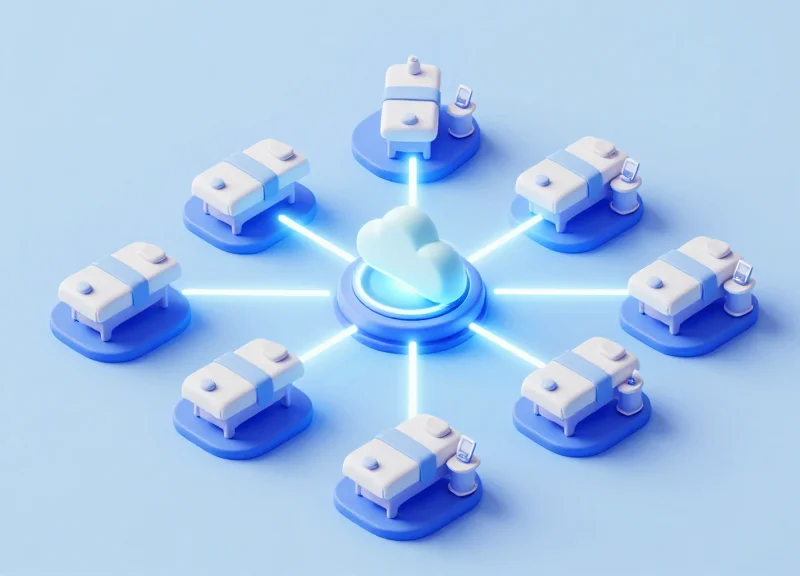
In the high-end wellness and SPA industry, brand consistency is the foundation of customer trust. However, managing service price lists across multiple locations often becomes a logistical bottleneck. Traditional paper-based systems are prone to human error, resulting in price discrepancies that frustrate customers and complicate accounting. What if you could eliminate these manual errors and synchronize every single price tag across your entire network in just two seconds? Leveraging Electronic Shelf Label (ESL) technology transforms this challenge into a competitive advantage, ensuring your operations remain agile, accurate, and professional.
The Hidden Costs of Manual Pricing Errors in SPA Management
Manual pricing errors occur when spa operators rely on human entry to update service menus across multiple branches, resulting in inconsistent data that triggers revenue leakage, administrative overhead, and customer distrust. For a multi-location spa enterprise, a single discrepancy—such as an outdated $10 discount or a forgotten weekend surcharge—doesn't just impact one transaction; it scales across hundreds of appointments, leading to thousands of dollars in lost annual revenue and hundreds of hours wasted in manual financial reconciliation.
| Impact Category | Immediate Consequence | Long-term Business Risk |
|---|---|---|
| Financial | Direct revenue leakage and under-billing. | Complex tax audits and commission calculation errors. |
| Customer Trust | Confusion and friction at the checkout desk. | Permanent loss of client lifetime value (LTV) and negative reviews. |
| Operations | Front-desk staff spends hours on manual overrides. | High staff turnover due to constant conflict management. |
Expert Insight: In my 20 years of consulting for high-growth wellness brands, I’ve observed the '1:10:100 Rule' in full effect. It costs $1 to prevent a pricing error through automated sync, $10 to correct a mistake once it is in your POS, and $100 or more in lost reputation and legal risk if a customer discovers the inconsistency before you do. In a multi-location environment, manual entry isn't just a slow process—it is a compounding financial liability that erodes your profit margins silently.
How does pricing inconsistency affect brand equity?
Consistency is the bedrock of luxury service. When a client pays $120 for a massage at Location A but is charged $135 at Location B for the same service without prior notice, it shatters the 'seamless' brand promise, making the business appear unorganized or predatory.
What is 'The Emotional Tax' on spa staff?
Manual errors force front-desk coordinators to become 'apology managers.' Constant price disputes lead to burnout and high turnover, which is often more expensive than the software needed to fix the problem.
Does manual entry impact reporting accuracy?
Absolutely. When prices are overridden manually to fix errors, your backend analytics become 'dirty.' You can no longer accurately track which services are truly profitable versus which are being discounted to appease frustrated clients.
Why Traditional Paper Price Lists Fail Multi-Location Chains
Traditional paper price lists fail multi-location chains because they introduce a 'Latency Gap'—the critical period between a corporate pricing decision and its physical implementation at the branch level. This lag time results in immediate revenue leakage and brand erosion as branches operate on outdated data. While a single-location spa might manage manual updates, a chain with five or more locations faces an exponential increase in logistical friction, making physical signage the single biggest obstacle to agile revenue management.
| Metric | Paper-Based Systems | Cloud-Synced Digital Lists |
|---|---|---|
| Update Velocity | 3-7 Business Days (Print + Ship) | < 2 Seconds (Instant Push) |
| Marginal Cost per Update | High (Design, Ink, Paper, Courier) | Zero ($0) |
| Version Integrity | Fragmented (Old lists often remain) | Absolute (Global Overwrite) |
| Staff Compliance | Manual Verification Required | Automated Enforcement |
How does paper pricing impact multi-site brand trust?
Inconsistency is the enemy of brand loyalty. If a customer pays $120 for a massage at your Downtown location but is quoted $110 at the Uptown branch because the manager forgot to swap the menu insert, it creates a perception of unreliability and unprofessionalism.
What are the 'invisible' logistics costs of manual updates?
Beyond printing, you must account for 'Managerial Labor Hours.' If a regional manager spends 2 hours per month per location ensuring paper lists are updated, a 10-location chain loses 240 high-value hours per year on basic clerical tasks.
Can physical menus handle dynamic promotions?
No. Paper lists are static. They cannot easily accommodate 'Happy Hour' pricing or flash weekend sales, forcing spas to rely on messy chalkboard signs or verbal explanations that are often missed by customers.
The 'Compliance Friction' Insight: An often overlooked failure point is staff psychological fatigue. When pricing updates require physical effort—printing, laminating, and distributing—staff often deprioritize these tasks during busy shifts. This leads to 'Rogue Pricing,' where front-desk employees continue using old, familiar rates found in nearby brochures simply because the new ones haven't been 'officially' placed in their specific workstation yet. Digital synchronization removes this human variable entirely by updating the interface they are already looking at.
What is ESL Technology and How Does It Work for Services?
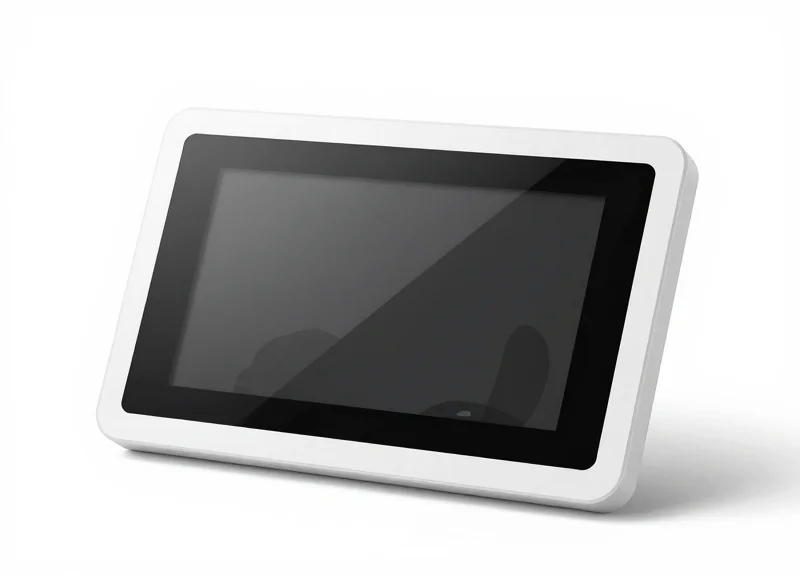
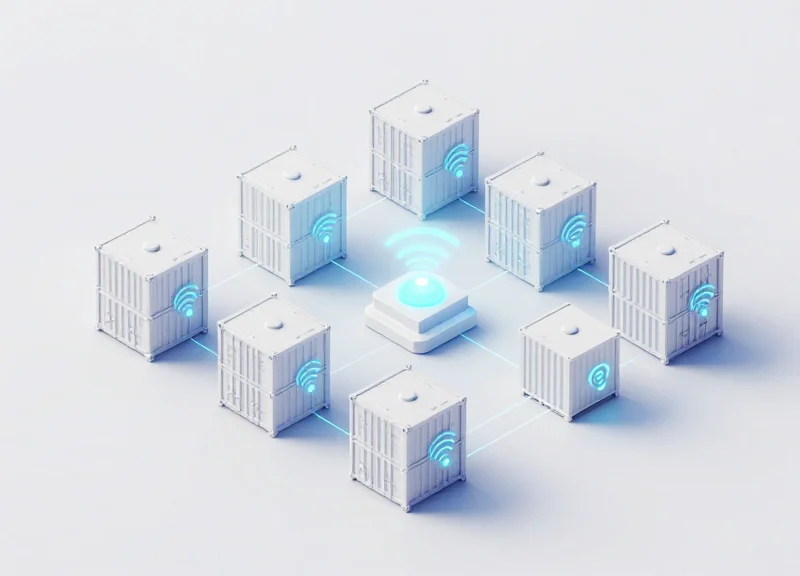
Electronic Shelf Label (ESL) technology is a digital ecosystem that replaces traditional paper signage with battery-powered, wireless e-paper displays. While historically rooted in retail, modern ESL for services utilizes a centralized cloud management platform to push data updates via an IoT gateway (Access Point) to specific displays. This allows businesses to update pricing, service descriptions, or therapist availability across hundreds of locations simultaneously, ensuring 100% pricing accuracy in a matter of seconds.
Unlike consumer tablets, ESLs utilize E-ink technology (similar to a Kindle), which requires zero power to maintain an image. Power is only consumed during a 'refresh'—the moment a new price or service detail is pushed from the headquarters. This technical architecture is what makes the technology sustainable for high-traffic SPA environments where aesthetics and battery longevity are paramount.
| Feature | Traditional Paper Lists | ESL for Services |
|---|---|---|
| Update Speed | Hours/Days (Manual) | Sub-2 Seconds (Automated) |
| Data Accuracy | High Error Margin | Single Source of Truth |
| Visual Quality | Degrades over time | High-contrast E-paper |
| Operational Cost | Recurring (Print/Labor) | Low (Initial CapEx + Minimal OpEx) |
- The Cloud Push: An administrator updates the Service Price List in the central ERP or management software. The cloud server validates the changes and transmits the data packets.
- Gateway Distribution: Local IoT gateways (Access Points) at each SPA location receive the encrypted data via Wi-Fi or Ethernet and broadcast it using ultra-low-power radio frequencies (typically 2.4GHz or Sub-G).
- Display Refresh: The specific ESL tags assigned to that service receive the signal, wake up from sleep mode, and update their E-ink display to reflect the new price or promotion.
Expert Insight: The 'Ghost Sync' Advantage. Most competitors focus on the price change itself, but the true Silicon Valley-grade innovation in modern ESL is the two-way communication protocol. It doesn't just send information; the tag sends a confirmation back to your HQ. If a tag is damaged or out of range, the system alerts you immediately. This 'heartbeat' monitoring creates a fail-safe environment that paper or standalone digital screens simply cannot match.
Does ESL require a constant Wi-Fi connection for every tag?
No. The tags communicate with a central Gateway using low-energy protocols. Only the Gateway needs a persistent internet connection to communicate with your central server.
How long do the batteries actually last?
In a typical service environment with one update per day, high-quality ESL batteries can last between 5 to 10 years, making them a 'set and forget' infrastructure piece.
Can ESLs display QR codes for booking?
Absolutely. Modern 3-color or 4-color ESLs can generate dynamic QR codes that lead customers directly to a booking page for the specific service being viewed.
The 2-Second Sync: Centralized Management via Cloud Systems
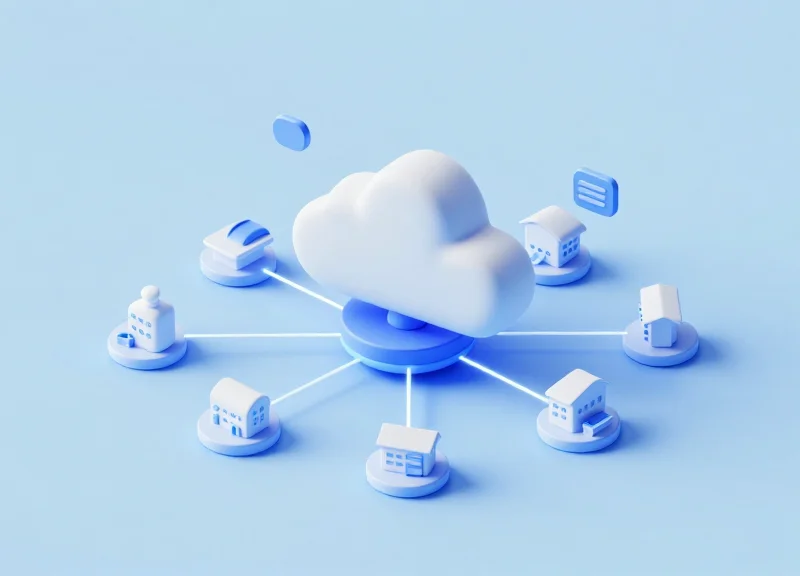
The '2-second sync' is achieved through a centralized Cloud Management System (CMS) that functions as a single source of truth, utilizing high-speed API protocols to broadcast pricing updates across a global network of Electronic Shelf Labels (ESL). By moving away from local database management to a cloud-native 'hub-and-spoke' architecture, SPA operators can trigger a price change at the corporate level that propagates to every digital display in every branch simultaneously, eliminating the need for local manual intervention or branch-specific server updates.
| Feature | Traditional Manual Method | Centralized Cloud Sync |
|---|---|---|
| Update Speed | Hours to Days per location | < 2 Seconds globally |
| Data Integrity | High risk of human error | 100% Consistency (Single Source) |
| Staff Labor | Intensive manual relabeling | Zero (Fully automated) |
| Audit Trail | Difficult/None | Full digital logs for every change |
Expert Insight: The 'Differential Push' Advantage. Most competitors talk about 'updating data,' but the secret to the 2-second speed is Differential Delta Syncing. Instead of sending the entire price list, the cloud system identifies only the specific characters that changed (e.g., $95 to $99) and pushes only that tiny packet of data. This minimizes bandwidth consumption and ensures that even locations with subpar internet connectivity receive updates in near-real-time without lag.
- Update Initiation: The manager logs into the central dashboard and modifies the service price in the master list.
- Cloud Validation: The CMS validates the change against active promotions and membership tiers.
- Global Broadcast: The system pushes an encrypted data packet via WebSockets to every linked access point in the field.
- Edge Execution: Local access points communicate with the ESL tags via sub-GHz radio frequencies to update the display.
- Acknowledgment Loop: The tag sends a 'Success' signal back to the cloud, confirming the update is live for the manager to see.
Can I update pricing for just one region?
Yes. Advanced cloud systems allow for 'Geographic Tagging,' where you can apply price changes to specific cities, states, or even individual high-traffic branches while keeping others at baseline rates.
What happens if a location's Wi-Fi goes down?
The system uses a 'Queue and Retry' mechanism. As soon as the connection is restored, the local access point fetches the latest cloud state, ensuring the location is never out of sync for long.
Is the cloud system secure from pricing hacks?
Enterprise-grade SPA systems use AES-128 encryption for all data transmissions, ensuring that only authorized corporate users can modify the displayed service rates.
Eliminating Human Error Through Automated Data Integration
Automated data integration eliminates human error by creating a direct, real-time link between a central Point of Sale (POS) or ERP system and Electronic Shelf Labels (ESL). In a multi-location SPA environment, this 'Single Source of Truth' ensures that any pricing adjustment made at the corporate level is instantly pushed to the digital displays on the wall. By removing the manual 're-keying' of data by local staff, businesses solve the 'Integrity Gap'—the common discrepancy between what is advertised on signage and what is charged at the register.
| Feature | Manual Data Entry | Automated ESL Integration |
|---|---|---|
| Data Source | Multiple spreadsheets/post-its | Centralized POS/ERP Database |
| Sync Speed | Hours or days per location | Under 2 seconds globally |
| Accuracy Rate | 92-95% (prone to typos) | 99.9% (bit-for-bit parity) |
| Staff Effort | High (Printing, cutting, hanging) | Zero (Full automation) |
The hidden danger of manual updates isn't just a typo; it is the cognitive load placed on SPA managers. When a manager has to worry about whether the 'Deep Tissue Massage' price was updated on both the website and the physical lobby board, their focus shifts away from guest experience. Automated integration utilizes API-first architecture to ensure that the moment a price is changed in the cloud, an encrypted command is sent to every ESL gateway in your network. This creates a 'Closed-Loop' system where the display confirms back to the server that the update was successful, providing a level of auditability that paper signage can never match.
{
  "action": "UPDATE_PRICE",
  "service_id": "SPA-DT-001",
  "new_price": "125.00",
  "currency": "USD",
  "target_locations": ["all"],
  "verification_required": true
}
How does integration handle 'Dynamic Pricing' for happy hours?
The system can be programmed to automatically trigger price changes based on time-of-day or day-of-week settings in your POS, updating the ESLs without a single click from your staff.
What happens if the local SPA Wi-Fi goes down?
Modern ESL systems use sub-GHz radio frequencies (not Wi-Fi) for the labels themselves. Even if the internet drops, the labels maintain the last updated price until the connection is restored and a new 'handshake' is made with the server.
Can we show more than just price through this integration?
Yes. Integration allows you to pull data like 'Therapist Availability' or 'Member-Only Specials' directly from your booking software onto the digital display in real-time.
Expert Tip: To truly future-proof your multi-location SPA, look for 'Bi-directional Integration.' This allows the ESL hardware to report its own battery status and signal strength back to your central dashboard, ensuring that your automated pricing system is not just fast, but also self-monitoring and maintenance-aware.
Enhancing the Luxury Guest Experience with Digital Clarity
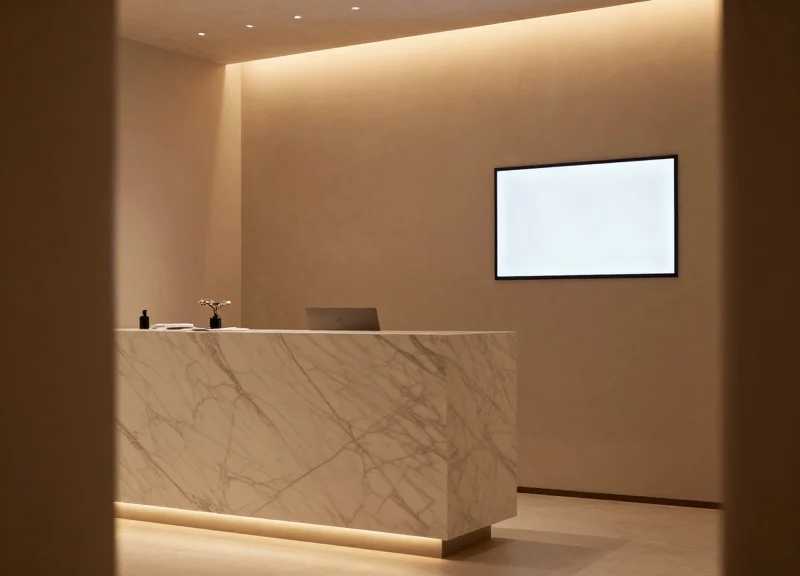
In a luxury SPA environment, the guest experience is defined by an uncompromising attention to detail where every visual element must exude professionalism and tranquility. Digital clarity refers to the use of high-definition Electronic Shelf Labels (ESL) and digital displays to provide clear, accurate, and aesthetically harmonious pricing information that eliminates the 'visual noise' of manual corrections. By integrating these systems, premium wellness brands replace weathered paper tags and ink-smeared plexiglass with crisp E-ink technology that mirrors the sophistication of their high-end service offerings.
The transition from physical to digital signage is not merely a logistical upgrade; it is a psychological one. When a guest encounters a paper price list with hand-written corrections or peeling edges, it creates a subtle 'trust gap'—a subconscious doubt regarding the SPA's operational standards. Digital clarity closes this gap by ensuring that the premium price the guest pays is reflected in a premium presentation, reinforcing the brand's position as a modern leader in the wellness industry.
| Feature | Traditional Paper Signage | ESL Digital Clarity |
|---|---|---|
| Visual Appeal | Prone to yellowing, tearing, and fading. | High-contrast E-ink; always looks brand new. |
| Guest Perception | Dated, potentially disorganized. | Cutting-edge, professional, and transparent. |
| Information Accuracy | Often lags behind central price updates. | 100% synchronized with the POS in real-time. |
| Environmental Impact | High waste from constant reprinting. | Sustainable; battery life lasts 5-10 years. |
How does digital signage improve guest trust?
It eliminates pricing discrepancies between the display and the checkout counter. Guests feel more secure when the price they see on the wall is exactly what is charged, removing the 'awkward correction' at the front desk.
Can digital labels match a SPA’s high-end aesthetic?
Yes. Modern ESLs come in various finishes, including wood-grain and metallic frames, and the E-ink displays provide a paper-like quality that looks sophisticated rather than 'gadgety'.
Does this technology distract from the 'Zen' atmosphere?
On the contrary, it enhances it. By removing the need for staff to manually swap tags or place 'sale' stickers, the atmosphere remains calm and uninterrupted.
Expert Insight: The 'Halo Effect' of Digital Precision. In my two decades of observing market transitions, I've seen that luxury consumers equate digital precision with service quality. When your pricing displays are flawlessly synced and visually crisp, guests subconsciously apply that same standard of perfection to their massage or facial treatments. This is known as the 'Halo Effect'—where one high-quality touchpoint elevates the perceived value of the entire service portfolio. For multi-location chains, this provides a 'Visual Identity Insurance' that ensures your $500 treatment in Manhattan looks just as prestigious as it does in your Miami location.
Operational Efficiency: Freeing Your Staff for Premium Care
Operational efficiency in the luxury SPA sector is defined by the strategic optimization of labor to ensure every payroll hour directly enhances the guest journey. By implementing a 2-second automated sync across multiple locations, businesses eliminate the hidden 'labor leak' where receptionists and facility managers spend dozens of hours monthly printing, cutting, and manually replacing physical service menus. This transition converts non-value-added administrative time into high-value hospitality time, allowing your team to focus on personalized consultations, upselling premium treatments, and maintaining the serene environment guests expect.
| Task Category | Manual Process (10 Locations) | Automated Sync (10 Locations) | Annual Hours Saved |
|---|---|---|---|
| Price Update Execution | 20 - 30 Hours | 2 Seconds | Approx. 300 Hours |
| Consistency Auditing | 10 Hours / Month | 0 Hours (Real-time) | 120 Hours |
| Error Correction | 5 Hours / Month | 0 Hours (Auto-match) | 60 Hours |
| Total Admin Overhead | High | Negligible | 480+ Hours |
Beyond the raw data, the shift in staff morale is profound. When employees are unburdened from repetitive, low-impact tasks, their 'Cognitive Load'—the mental effort used in working memory—is significantly reduced. In a high-end SPA environment, a staff member with a lower cognitive load is scientifically more likely to display empathy, notice subtle guest needs, and maintain the 'flow state' required for premium service delivery.
- Identify the Admin Drain: Audit your current front-desk workflow to quantify how many minutes per day are lost to 'tag maintenance' and price verification.
- Deploy Centralized Synchronization: Install ESL (Electronic Shelf Label) hardware and cloud software to handle the heavy lifting of data distribution.
- Reinvest Saved Labor: Train staff to use the recovered hours for 'Guest Success' initiatives, such as post-treatment follow-ups or personalized loyalty program enrollment.
- Measure the NPS Impact: Monitor your Net Promoter Score (NPS) to correlate the increase in staff-to-guest face time with overall customer satisfaction.
Does automation lead to staff downsizing?
In the luxury SPA industry, automation is rarely about headcount reduction. Instead, it is about labor reallocation—moving staff from 'back-office' clerical roles to 'front-of-house' revenue-generating roles.
How does this affect therapist performance?
Therapists can focus entirely on their craft rather than worrying if the promotional signage in the hallway matches the current POS pricing, leading to a more seamless treatment experience.
What is the ROI on recovered time?
If a manager saves 40 hours a month across a chain, that is a full work week of executive time that can be spent on marketing, staff training, or expansion strategy.
Expert Insight: The most successful SPA chains view automation not just as a cost-cutting tool, but as an 'Experience Multiplier.' By removing the friction of manual updates, you are essentially buying back the emotional energy of your staff. This energy is the 'secret sauce' that differentiates a standard service from a five-star luxury experience.
ROI Analysis: The Long-Term Financial Benefits of ESL Adoption

The Return on Investment (ROI) for Electronic Shelf Label (ESL) adoption in a multi-location SPA environment is defined by the intersection of 'Hard Cost Displacement'—such as the total removal of paper, ink, and manual labor—and 'Revenue Optimization'—the ability to implement dynamic pricing and flash promotions instantly. For a standard 5-location SPA network, the break-even point typically occurs within 12 to 18 months, after which the system functions as a high-margin operational asset that scales without increasing overhead.
| Expense Category | Traditional Manual Method | ESL Cloud-Sync System |
|---|---|---|
| Material Costs | High (Premium cardstock, ink, frames) | Zero (One-time hardware investment) |
| Labor Requirement | 15-30 mins per location/update | 2 seconds (Global push) |
| Price Accuracy | Subject to 3-5% human error rate | 100% (POS-Synchronized) |
| Promotional Agility | Requires 48h lead time | Instantaneous activation |
Expert Insight: The 'Agility Premium' Value. Beyond simple cost-cutting, the true 'Silicon Valley' perspective on ROI involves Yield Management. In the luxury SPA sector, being able to adjust prices for 'Last Minute' bookings or 'Happy Hour' discounts during low-occupancy windows can increase your Revenue Per Available Room (RevPAR) or per-treatment-room by 15-20% annually. This 'Agility Premium' often outweighs the labor savings, turning your price list from a static document into a dynamic revenue engine.
- Audit Annual Printing & Logistics: Calculate the total cost of design, printing, and shipping physical price menus to all locations. For high-end SPAs, this often exceeds $2,000 per location annually.
- Quantify Reclaimed Labor Hours: Multiply the number of price updates per year by the staff hourly rate. Redirecting this time toward guest upselling or retention creates a force multiplier for revenue.
- Measure Error-Related Leakage: Account for 'price mismatch' losses where guests are charged a lower legacy price because the display wasn't updated. This 'leakage' often accounts for 1-2% of total service revenue.
- Analyze Dynamic Pricing Uplift: Estimate the revenue gained by running 2-second seasonal or demand-based promotions that would have been impossible to execute manually.
What is the typical lifespan of an ESL tag?
Most modern ESL tags use e-paper technology with battery lives exceeding 5-10 years, ensuring that your initial ROI continues to compound for a decade.
How does ESL impact brand equity financially?
By providing a modern, digital interface, you reduce the 'perceived friction' of manual price changes, supporting a premium brand image that justifies higher service rates.
Choosing the Right Hardware: Why DragonGuardGroup is the Preferred Partner
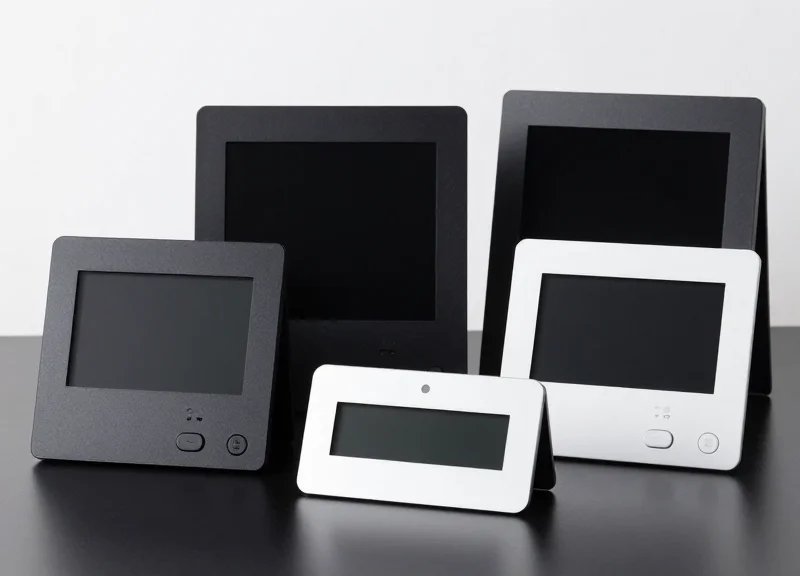
DragonGuardGroup is the preferred hardware partner for the wellness industry because their Electronic Shelf Labels (ESL) provide a unique combination of 10-year battery longevity, IP67-rated moisture resistance, and sub-second synchronization speeds. Unlike generic retail displays, these devices are engineered to function reliably in high-humidity SPA environments while maintaining a sleek, minimalist aesthetic that complements luxury interiors.
| Feature | Generic ESL Hardware | DragonGuardGroup SPA Series |
|---|---|---|
| Battery Life | 3-5 Years | Up to 10 Years |
| Durability | Indoor Standard | IP67 Vapor-Resistant |
| Refresh Speed | 5-10 Seconds | < 2 Seconds (Global Sync) |
| Display Tech | B&W E-Ink | 4-Color E-Paper (Red/Yellow/Black/White) |
| Integration | Manual CSV Uploads | Native API & Real-time POS Cloud Sync |
- Optimized Battery Management: Utilizing proprietary ultra-low-power Bluetooth protocols, our tags minimize energy drain during idle periods, ensuring a decade of maintenance-free operation.
- Architectural Integration: Available in various sizes with customizable bezels, the hardware blends into the SPA’s decor rather than looking like a retail price tag.
- High-Speed Data Transmission: The infrastructure supports massive data throughput, allowing a central manager to update 50+ locations simultaneously in roughly two seconds.
Expert Tip: While most ESL systems are designed for temperature-controlled grocery stores, the SPA environment introduces airborne essential oils and high humidity. DragonGuardGroup utilizes an industrial-grade 'Hydro-Seal' coating on internal circuit boards. This prevents the micro-corrosion that often causes screen flickering or dead pixels in wellness centers, effectively doubling the lifespan of your hardware investment compared to consumer-grade alternatives.
Can these tags withstand steam room environments?
While the IP67-rated tags are vapor-resistant and ideal for reception and treatment rooms, they are not designed for continuous submersion or high-heat saunas exceeding 60°C.
How complex is the installation across multiple cities?
Our hardware is 'Plug-and-Play.' Once the local access point is connected to the internet, it automatically discovers and pairs with the local tags via our centralized cloud platform.
Is the display readable in dim ambient lighting?
Yes, the high-contrast E-paper technology reflects ambient light, providing 180-degree visibility that is easier on the eyes than glowing LED screens in a relaxing SPA setting.