In the fast-paced world of modern logistics, the margin for error in warehouse fulfillment is thinner than ever. Traditional paper-based systems or static labels often lead to costly picking errors and inventory discrepancies. This technical guide explores how next-generation Electronic Shelf Labels (ESL) are revolutionizing pick-to-light (PTL) operations, providing a dynamic, real-time solution for precise part number matching that ensures speed, accuracy, and scalability for any industrial setting.
The Evolution of Pick-to-Light Technology
The evolution of Pick-to-Light (PTL) technology represents a shift from simple visual signaling to complex, data-driven workflow orchestration. Originally developed as a method to reduce search time in high-density fulfillment centers, traditional PTL systems utilized hard-wired LED modules to guide operators to specific bins. Today, the industry is witnessing a paradigm shift toward wireless Electronic Shelf Labels (ESL) that leverage sub-GHz radio frequencies and E-ink displays to provide real-time, bi-directional communication between the warehouse management system (WMS) and the physical picker.
| Feature | Legacy Wired PTL | Wireless RF PTL | Next-Gen ESL PTL |
|---|---|---|---|
| Installation | Fixed wiring; high labor cost | Battery-powered; low labor | Magnetic/Clip-on; zero-wire |
| Display Type | 7-segment LED (Numbers only) | Simple LED/LCD | High-res E-paper (Graphics/QR) |
| Flexibility | Low; requires re-wiring | Moderate; RF range limits | High; dynamic SKU remapping |
| Data Feedback | Unidirectional (Light on/off) | Simple Acknowledgment | Full Bi-directional IoT sensor data |
While the 1.0 era of PTL focused on 'where' to pick, the current ESL-driven era focuses on 'what' and 'how.' Legacy systems were plagued by the 'Rigidity Trap'—any change in warehouse layout required significant electrical work. Modern ESL solutions utilize a centralized gateway architecture, allowing managers to update thousands of part numbers, barcodes, and picking instructions across a million-square-foot facility in seconds. This move from hardware-centric to software-defined infrastructure is the cornerstone of the modern agile warehouse.
- Why did hard-wired systems fall out of favor?: Hard-wired systems lacked the scalability required for modern e-commerce. The infrastructure cost of running miles of cable and the inability to easily move bins made them a liability in dynamic environments where SKU velocity changes weekly.
- Expert Insight: The 'Latency Paradox' in PTL: A common misconception is that all wireless systems are equal. In my 20 years in the industry, I've seen 'Next-Gen' systems fail because they used standard Wi-Fi, which suffers from congestion. The true leaders use proprietary sub-1GHz protocols that maintain sub-second latency even when 50,000+ labels are active simultaneously.
- What role does E-ink play in this evolution?: Beyond power savings, E-ink allows for 'Paper-White' readability under harsh warehouse lighting and supports high-density data like QR codes for instant serial number verification, which was impossible with 7-segment LED displays.
Why Precise Part Number Matching is a Fulfillment Game-Changer
Precise part number matching is the bridge between digital inventory accuracy and physical fulfillment success. By utilizing Next-Gen Electronic Shelf Labels (ESL) as pick-to-light indicators, warehouses can display real-time, high-resolution alphanumeric part numbers, barcodes, and QR codes directly at the point of pick. This eliminates the 'verification gap'—the dangerous moment when a worker sees a light but must guess if the physical item matches the digital order—thereby reducing picking errors to near-zero and significantly increasing throughput.
| Feature | Legacy Pick-to-Light (LED) | Next-Gen ESL (Dynamic Display) |
|---|---|---|
| Information Density | Binary (On/Off/Color) | Rich Text, Barcodes, Images |
| Verification Method | Location-based only | Visual Part-Number Matching |
| Cognitive Load | High (Requires cross-referencing) | Low (Direct visual confirmation) |
| Error Rate | Moderate (Mispicks due to proximity) | Negligible (Double-verified ID) |
Expert Insight: The 100-Millisecond Rule. In high-velocity fulfillment, the 'visual search' phase is the primary bottleneck. Traditional LEDs tell a worker 'where,' but not 'what.' This forces the brain to perform a micro-second context switch to verify the SKU. Next-Gen ESLs utilize 'Cognitive Offloading'—by presenting the part number in the same focal plane as the light, you remove the mental validation step. Saving just 100ms of visual search time per pick across a facility performing 50,000 picks a day equates to nearly 1.5 hours of recovered labor productivity every single day.
How does dynamic part matching reduce worker fatigue?
By displaying the exact SKU and quantity in large, high-contrast e-ink, workers no longer need to squint at small manufacturer labels or memorize sequences, reducing the mental strain that leads to late-shift errors.
Can ESLs handle rapid inventory turnover?
Yes. Unlike printed labels or fixed LEDs, ESLs update via sub-ghz radio frequencies in seconds, allowing the bin to change its identity (and the part number it displays) instantly as stock rotates.
Does this system support 'Pick-to-Picture' workflows?
Absolutely. High-resolution ESLs can display simplified bitmaps of the part itself, providing a secondary visual cue that is far more intuitive for temporary or seasonal staff than alphanumeric strings alone.
The Technical Backbone: ESL System Architecture
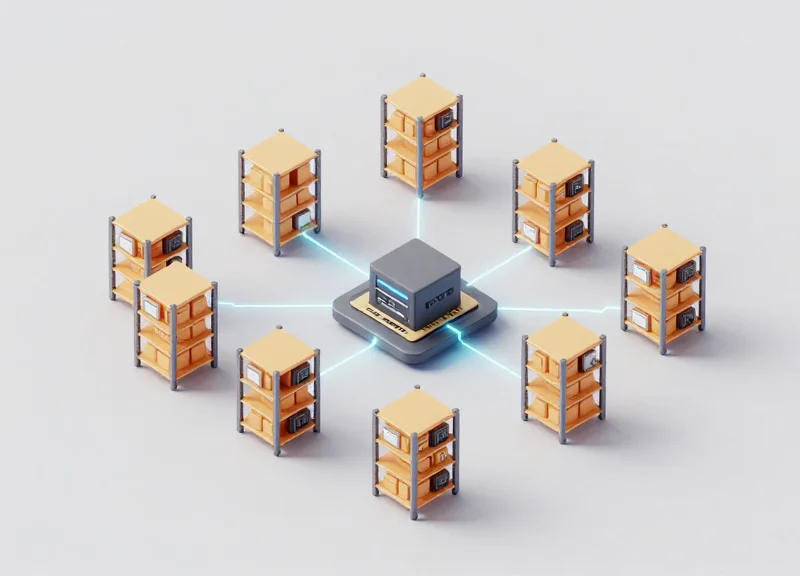
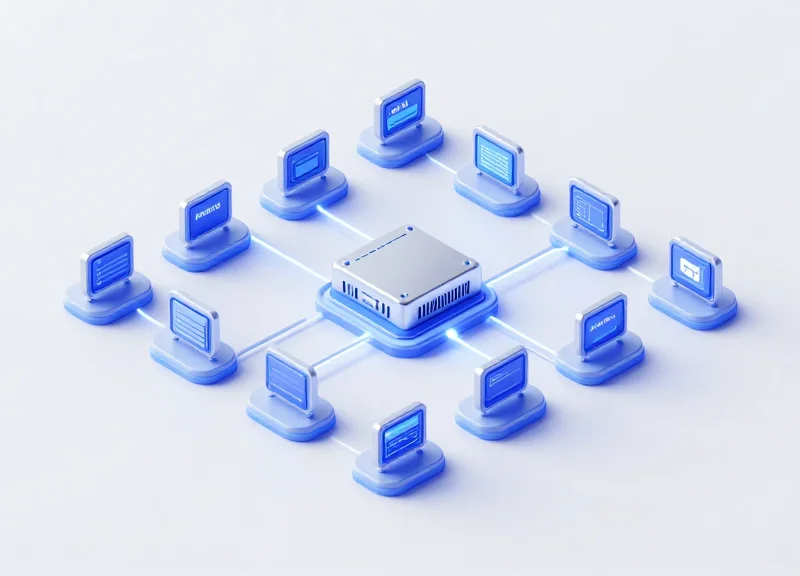
Modern ESL-based pick-to-light architecture is a distributed system designed to synchronize physical inventory labels with a digital Warehouse Management System (WMS) in near real-time. Unlike legacy hard-wired systems, next-gen ESL architecture relies on three primary layers: the Edge Device layer (E-ink labels), the Communication layer (Proprietary RF or BLE gateways), and the Software Integration layer (API-driven middleware). This decoupled structure allows for massive scalability, enabling warehouses to manage over 50,000 unique part numbers with sub-second latency updates across a single mesh network.
| Component | Technical Role | Key Specification |
|---|---|---|
| ESL Tag | Visual data rendering & user feedback | Sub-1s refresh rate; IP67 rating |
| IoT Gateway | Protocol translation (Ethernet to RF) | Coverage up to 30-50m radius |
| ESL Controller | Device management & image generation | Restful API / MQTT support |
| WMS Interface | Source of truth for order & SKU data | Websocket for real-time triggers |
The true innovation lies in the 'Edge-Push' data flow. When an order is generated in the WMS, a payload containing the SKU, part number, and pick quantity is sent to the ESL middleware. The middleware converts this text into a 1-bit or 3-bit compressed bitmap and transmits it via the gateway using a low-power wireless protocol. The label acknowledges receipt, ensuring 99.9% data integrity—a critical requirement for part number matching in high-stakes environments like automotive or pharmaceutical logistics.
- Order Ingestion: The WMS identifies the bin location and triggers an API call to the ESL controller with the specific Part ID.
- Dynamic Image Rendering: The controller renders a customized visual containing the part number, barcode, and pick quantity based on pre-defined templates.
- Wireless Broadcast: The gateway utilizes frequency-hopping spread spectrum (FHSS) to transmit the image to the specific label ID without interference from warehouse Wi-Fi.
- Feedback Loop: The worker confirms the pick via a button on the label, which sends an upstream signal back to the WMS to update inventory levels instantly.
Expert Insight: The 'Differential Update' Advantage. A common bottleneck in ESL systems is bandwidth during mass updates. Next-gen architectures utilize 'Differential Image Updates,' where the system identifies and transmits only the changed pixels—such as a part number suffix—rather than the entire screen. This reduces radio-on time by up to 70%, significantly extending the label's battery life to 10+ years while maintaining peak responsiveness during high-volume shifts.
How does the system handle signal interference in metal-heavy warehouses?
Next-gen ESLs typically operate on the Sub-GHz band (868MHz/915MHz) or utilize specialized BLE channels that bypass the congested 2.4GHz Wi-Fi spectrum, ensuring stable connectivity through racks and machinery.
Can the architecture support multiple pickers at one location?
Yes, through multi-color LED indicators (e.g., 7-color LEDs). The architecture allows the WMS to assign a specific color to each picker, enabling simultaneous operations at the same rack without confusion.
What is the typical latency between a WMS trigger and the label update?
In an optimized enterprise environment, the end-to-end latency is generally between 200ms and 800ms, depending on the network load and the number of active gateways.
Dynamic Visual Cues: Using Multi-Color LEDs for Multi-Order Picking
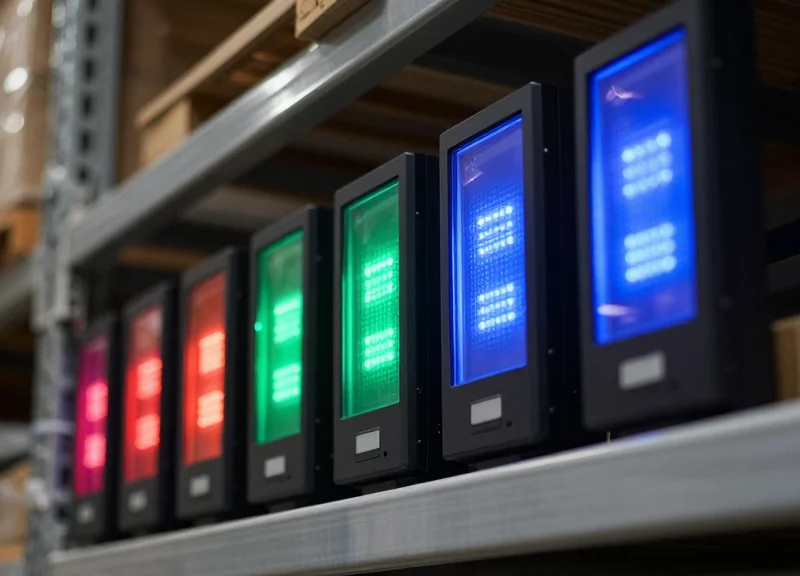
Dynamic visual cues represent the leap from static light-guided systems to true parallel workflow optimization. By utilizing high-intensity RGB LEDs integrated into Electronic Shelf Labels (ESLs), warehouses can assign unique color signatures—such as blue, green, or amber—to different pickers or specific high-priority order batches. This functionality allows multiple operators to work within the same aisle or zone simultaneously without interference, as each picker only responds to the specific color assigned to their active session by the Warehouse Management System (WMS).
| LED Color | Operational Assignment | Strategic Benefit |
|---|---|---|
| Steady Blue | Picker A (Standard Order) | Reduces search time for primary operator. |
| Steady Green | Picker B (Standard Order) | Enables non-conflicting parallel picking in the same aisle. |
| Flashing Red | Stock Out / Exception Alert | Triggers immediate replenishment or manager intervention. |
| Steady Yellow | Priority/Expedited Batch | Visualizes 'Hot' orders to ensure SLA compliance. |
Expert Insight: Implementing Chroma-Flicker Modulation. A common pitfall in high-density warehouses is 'color overlap' in peripheral vision. Next-gen ESL systems overcome this through Chroma-Flicker Modulation—using specific flash frequencies (e.g., 2Hz for standard picks versus 5Hz for the final item in a batch). This technical layer leverages human peripheral motion sensitivity to guide the picker to their next location 12% faster than static color alone, effectively 'priming' the worker's movement before the current pick is even finalized.
How does the system handle color-blind operators?
Modern ESL picking software allows for 'Pattern Assignment' alongside color. For example, a color-blind operator can be assigned a unique blinking cadence (e.g., long-short-long) that distinguishes their tasks from others regardless of the LED hue.
Does the use of RGB LEDs significantly impact ESL battery life?
While RGB LEDs consume more power than the e-paper display, battery impact is minimized via 'Pick-Pulse' protocols. The LED is only activated during a narrow 3-to-5 second window triggered by the WMS, allowing for a 5+ year lifespan even in high-velocity environments.
What is the maximum number of concurrent pickers supported per zone?
While technically limited only by the RGB color gamut (typically 7 distinct high-visibility colors), operational throughput usually peaks at 3-4 concurrent pickers per aisle to prevent physical congestion and 'bottlenecking' in narrow passage ways.
Implementation Strategy: Integrating ESL into Your Workflow
Integrating Electronic Shelf Labels (ESL) into a pick-to-light workflow is a strategic process of synchronizing your Warehouse Management System (WMS) with a digital display network through a robust API or middleware bridge. Unlike traditional fixed systems, an effective implementation relies on creating a dynamic 'binding' between a Part Number (SKU) and a unique ESL Hardware ID (MAC address), allowing for real-time data updates, inventory count adjustments, and multi-color LED triggers that guide pickers with sub-second latency.
- Database Synchronization and Mapping: The first step involves establishing a handshake between your ERP/WMS and the ESL management software. You must map the SKU/Part Number field to the specific Label ID. This allows any change in the master product database to reflect instantly on the warehouse floor.
- Middleware API Configuration: Utilize RESTful APIs or MQTT protocols to push pick-lists to the ESL Gateway. The gateway then broadcasts these signals to the relevant labels using sub-GHz frequencies, ensuring the correct LED color illuminates for the corresponding order.
- Physical Binding and Verification: Using a handheld PDA or mobile app, warehouse staff scan the bin location, the product barcode, and the ESL's unique ID. This three-way binding ensures that 'Part A' is always associated with 'Label B' at 'Location C'.
- Data Refresh Rate Optimization: Configure your gateway polling intervals. For pick-to-light operations, a low-latency 'Wake-on-Radio' setting is essential to ensure that when a picker enters a zone, the labels react in less than 500ms.
| Data Field | Source System | ESL Display Element | Update Frequency |
|---|---|---|---|
| Part Number | WMS / ERP | Large Text / Barcode | Static (Once per bind) |
| Pick Quantity | Active Pick List | Inverted Bold Font | Event-driven (Dynamic) |
| Picker ID Color | WMS Logic | RGB LED Indicator | Real-time (Triggered) |
| Battery Status | ESL Firmware | Small Icon / Admin Dashboard | Daily (Low Priority) |
Expert Insight: The 'Lazy-Refresh' Strategy for Battery Longevity. While it is tempting to set all labels to real-time polling, this can drain batteries in months rather than years. Silicon Valley logistics leaders use a 'Triggered-Wakeup' architecture: labels stay in a low-power deep sleep until a specific 'pick session' is activated for a zone, at which point the gateway sends a broadcast wake-up signal only to the relevant segment of the warehouse. This balances sub-second responsiveness with a 5-year battery lifecycle.
Can ESLs be integrated with legacy WMS that lack modern APIs?
Yes, through middleware 'scraping' or CSV-drop methods. The middleware monitors a specific folder for export files from the legacy WMS and converts them into the necessary JSON or XML format for the ESL gateway.
What happens if a label loses connection during a pick?
Next-gen ESLs feature 'Offline Persistence.' The label will continue to display the last known good data. Furthermore, the ESL management software should trigger an 'Inventory Blind' alert to the supervisor if a heartbeat signal is missed for more than a set interval.
How many labels can a single gateway handle?
Modern sub-GHz gateways can typically manage between 2,000 and 5,000 labels within a 30-50 meter radius, depending on the shelving density and warehouse interference levels.
Power and Connectivity: Ensuring 99.9% System Uptime
In the context of next-gen Electronic Shelf Label (ESL) systems, 99.9% system uptime is defined by the seamless synchronization between the WMS and the physical display without lag or packet loss. This industrial-grade reliability is achieved through the use of proprietary Sub-GHz wireless protocols that penetrate dense metal racking and high-density battery management systems (BMS) that allow labels to operate for up to a decade without manual intervention. Success depends on selecting a protocol that survives the harsh RF environment of a modern automated warehouse.
| Connectivity Metric | Sub-GHz (868/915 MHz) | BLE (2.4 GHz) | Wi-Fi (2.4/5 GHz) |
|---|---|---|---|
| Signal Penetration | Superior (Steel Penetrating) | Moderate (Line of Sight) | Poor (Reflective Interference) |
| Power Consumption | Ultra-Low (Micro-Amps) | Low (Milli-Amps) | High (Constant Draw) |
| Interference Risk | Minimal (Isolated Band) | High (Crowded Spectrum) | Critical (Shared with Scanners) |
| Reliable Range | Up to 100m Indoor | 10-25m Indoor | Variable by AP Density |
The primary technical hurdle in warehouse connectivity is the 'Faraday Cage Effect' created by floor-to-ceiling steel shelving. While consumer-grade 2.4 GHz signals bounce and degrade in these environments, Sub-GHz frequencies offer superior diffraction capabilities, effectively 'bending' around steel uprights to reach deeply recessed part numbers. Furthermore, to reach the 99.9% uptime threshold, engineers must implement Dynamic Frequency Hopping (DFH), allowing the system to automatically pivot away from congested channels if localized interference is detected.
- Active Deep-Sleep Cycles: ESL hardware remains in a deep-sleep state (drawing only nano-amps) until a micro-second scheduled wake-up window, ensuring five to ten years of battery life.
- Delta-Update Transmission: Rather than pushing a full-screen image, the system only transmits changed pixels (e.g., a price or part number update), minimizing radio 'on-time' and conserving energy.
- Predictive Power Analytics: The central ESL controller monitors the internal resistance and voltage curves of every tag, alerting maintenance teams months before a battery reaches a critical failure point.
How do ESL batteries perform in cold-chain environments?
Standard Lithium-ion fails in the cold; next-gen ESL use Li-SOCl2 (Lithium Thionyl Chloride) batteries which maintain stable voltage even at -30°C by preventing the chemical passivation that usually occurs in sub-zero storage.
Can the system handle 10,000+ tags simultaneously?
Yes, by using TDMA (Time Division Multiple Access) scheduling, the system prevents packet collisions by assigning specific time slots to each label, ensuring every part number update is acknowledged.
What is the 'Golden Rule' for ESL battery longevity?
Expert Tip: Always minimize 'Polling Frequency.' In a pick-to-light environment, pushing updates only when the WMS triggers a change is 10x more efficient than having labels ping the gateway every minute.
Quantifying the ROI: Metrics That Matter
Return on Investment (ROI) for next-gen Electronic Shelf Label (ESL) integration in pick-to-light operations is calculated by the intersection of labor throughput, inventory accuracy, and overhead reduction. Unlike traditional systems that offer binary feedback, ESL-driven pick-to-light provides granular data visibility that allows warehouse managers to move from reactive troubleshooting to proactive optimization. The two primary pillars of this financial justification are the acceleration of Units-Per-Hour (UPH) and the aggressive mitigation of Return Materials Authorization (RMA) costs.
| Key Performance Indicator (KPI) | Traditional Pick-to-Light | Next-Gen ESL Enabled |
|---|---|---|
| Units-Per-Hour (UPH) | 150 - 250 units | 350 - 500+ units |
| Pick Error Rate | 0.5% - 2.0% | < 0.01% |
| Training Time | 12 - 24 Hours | < 2 Hours |
| RMA Processing Costs | High (Manual Audit Required) | Minimal (Automated Validation) |
The most immediate impact is seen in Units-Per-Hour (UPH). By utilizing multi-color LED cues and dynamic part number matching, pickers eliminate the 'search and verify' lag that plagues paper-based or static-display warehouses. In high-density environments, reducing the verification time by just 3 seconds per pick can translate into an extra 40-50 units per hour per worker. Furthermore, the RMA Reduction factor is a massive cost-saver. In Silicon Valley logistics, the cost of a single mis-pick—including reverse logistics, restocking fees, and customer dissatisfaction—often exceeds $50 to $100 per incident. Digital part-number matching at the shelf edge ensures the picker is grabbing the correct SKU 99.9% of the time, effectively zeroing out the 'hidden tax' of shipping errors.
How does ESL impact the 'Cost of Labor' beyond simple picking speed?
ESL significantly reduces the 'onboarding curve.' Because the system is intuitive (follow the color, match the code), seasonal or temporary staff become as productive as veterans within hours rather than days, reducing training overhead.
What is the typical 'Payback Period' for an ESL pick-to-light system?
Depending on order volume and SKU complexity, most enterprises see a full capital expenditure (CapEx) recovery within 12 to 18 months, driven primarily by labor savings and error reduction.
Does the system help with inventory 'Dead Stock'?
Yes. By providing real-time inventory levels on the label itself, managers can identify slow-moving parts faster and adjust picking paths to prevent stock-outs or overstocking of obsolete part numbers.
Expert Insight: The 'False-Pick Friction' Metric. Most managers overlook the cost of 'near-misses'—when a picker realizes they have the wrong part before shipping. While this doesn't lead to an RMA, it creates 'False-Pick Friction' that destroys UPH. Next-gen ESLs eliminate this by using 1D/2D barcode confirmation at the point of pick. Our data suggests that eliminating these 5-second 're-think' pauses can reclaim up to 15% of a picker's daily productive capacity.
Case Studies: Success Stories in ESL-Enhanced Logistics
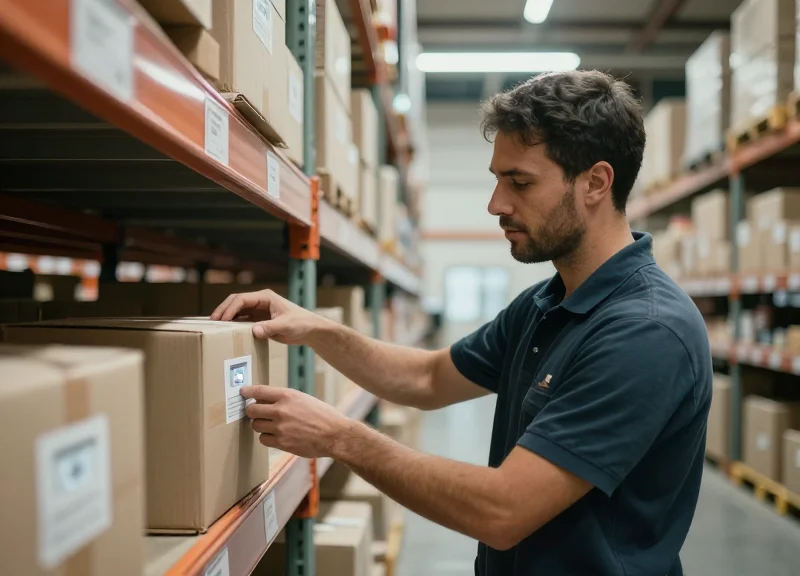
Case studies of ESL-enhanced logistics reveal that replacing static labels with dynamic, wireless pick-to-light systems eliminates the cognitive load on warehouse staff, resulting in near-zero pick errors and a 30–50% increase in operational efficiency. By leveraging sub-second latency and multi-color LED indicators, next-gen Electronic Shelf Labels (ESLs) allow for high-velocity, simultaneous multi-order picking in complex environments where traditional paper-based methods or fixed-light systems fail to scale.
In the automotive sector, a Tier-1 parts distributor faced significant challenges with SKU proliferation, managing over 22,000 distinct part numbers. Their legacy paper-picking system resulted in a 3.5% error rate, primarily due to 'visual fatigue' where pickers confused similar alphanumeric part sequences. By implementing an ESL-driven pick-to-light solution integrated with their SAP WMS, they deployed 7-color LED cues. This allowed the facility to implement 'Zone Picking,' where three different pickers could work the same aisle simultaneously, each following their designated color. Within six months, the facility reported a 99.9% accuracy rate and a 40% reduction in training time for new hires.
| Metric | Legacy Manual Picking | Next-Gen ESL Implementation |
|---|---|---|
| Average Picking Speed (UPH) | 85 Units/Hour | 145 Units/Hour |
| Pick Error Rate | 2.8% - 4.1% | 0.02% - 0.05% |
| Re-Slotting Time | 48 Hours (Manual Relabeling) | Instant (Software Update) |
| Order Fulfillment Cycle | 4.2 Hours | 1.8 Hours |
Expert Insight: The 'Elastic Picking Density' Advantage. A unique benefit discovered in high-density electronics fulfillment is the ability to virtually re-slot a warehouse without physical intervention. In traditional systems, changing a part location requires printing and adhesive removal. With ESL, the WMS can reassign part numbers to different shelf locations during peak seasons to optimize travel paths, and the labels update instantly. This 'Elastic Picking' capability allows warehouses to maintain peak efficiency even as inventory mix changes weekly, a feat impossible with fixed pick-to-light hardware.
Can ESL systems integrate with legacy WMS software?
Yes. Most next-gen ESL controllers communicate via REST APIs or MQTT, allowing them to act as a lightweight middleware that bridges the gap between modern wireless hardware and 10-20 year old legacy warehouse databases.
What is the typical ROI period for an ESL pick-to-light upgrade?
Depending on SKU volume and error costs, most enterprises see a full Return on Investment within 12 to 18 months, primarily driven by the elimination of RMA costs and labor optimization.
How do these systems handle signal interference in metal-heavy environments?
Industrial ESLs utilize proprietary sub-GHz or zigbee-based protocols that are specifically hardened against the multipath interference common in warehouses filled with metal racking and heavy machinery.
The Future of ESL: Incorporating AI and Sensor Fusion
The future of Electronic Shelf Labels (ESL) lies in their evolution from passive display units into active 'edge-intelligence' nodes. By integrating Artificial Intelligence (AI) and sensor fusion—the simultaneous processing of data from multiple sources like Time-of-Flight (ToF) sensors, weight scales, and infrared—ESL systems are moving toward a 'Spatial Intelligence' model. In this ecosystem, the labels do more than light up; they autonomously verify picks, optimize picker routes in real-time based on warehouse traffic, and perform 'invisible audits' that eliminate the need for manual cycle counting.
- Edge AI for Dynamic Re-slotting: On-device AI algorithms analyze pick frequency and velocity to suggest dynamic re-slotting, moving high-demand items to the most ergonomic 'golden zone' locations automatically.
- Computer Vision Integration: Future ESL modules will interface with overhead camera arrays to provide 3D spatial awareness, ensuring the picker's hand is reaching for the exact coordinates of the illuminated label.
- Haptic and Acoustic Feedback: Beyond visual cues, next-gen labels will incorporate directed audio or haptic triggers to guide pickers in high-noise environments where visual saturation is a risk.
| Feature | Standard Next-Gen ESL | Future AI-Enhanced ESL |
|---|---|---|
| Validation Method | Manual barcode scan or button press | Autonomous sensor-based verification |
| Inventory Tracking | Triggered by WMS updates | Real-time via integrated weight/ToF sensors |
| Path Optimization | Static sequence based on bin order | Dynamic AI routing based on congestion |
| Maintenance | Scheduled battery checks | Predictive AI-driven health monitoring |
One original perspective often overlooked is the concept of 'Predictive Mesh Health.' In an AI-driven environment, the ESL system doesn't just manage inventory; it manages itself. By analyzing signal interference patterns and latency shifts across the mesh network, the AI can predict a localized hardware failure or battery depletion before it occurs, allowing for preemptive maintenance that ensures 100% system availability during peak seasonal surges.
How does sensor fusion prevent 'mis-picks' better than current systems?
While current systems rely on the human to confirm the pick, sensor fusion uses weight sensors or light curtains to detect the physical removal of an item. If the weight change doesn't match the expected SKU profile, the ESL immediately flashes a red 'Error' state, stopping the mistake before the item even hits the tote.
Will AI-driven ESL replace the Warehouse Management System (WMS)?
No, it acts as the 'sensory nervous system' for the WMS. The AI at the shelf edge processes micro-data that is too granular for a central WMS to handle, feeding back high-level actionable insights to the core database.
Is the power consumption of AI-ESL sustainable?
Through the use of ultra-low-power AI accelerators and energy harvesting (drawing power from warehouse ambient lighting), future labels can maintain intelligence without significantly shortening the 5-10 year battery life cycle.