In the competitive landscape of retail horticulture, keeping plant care instructions accurate and up-to-date is a monumental task. Traditional paper-based systems require constant manual intervention, leading to high labor expenditures and frequent human error. This article explores the transformative power of Electronic Shelf Labels (ESL) and automation, detailing how these technologies can reduce operational labor costs by 40% while simultaneously improving plant health and customer satisfaction.
The Hidden Costs of Manual Plant Care Management
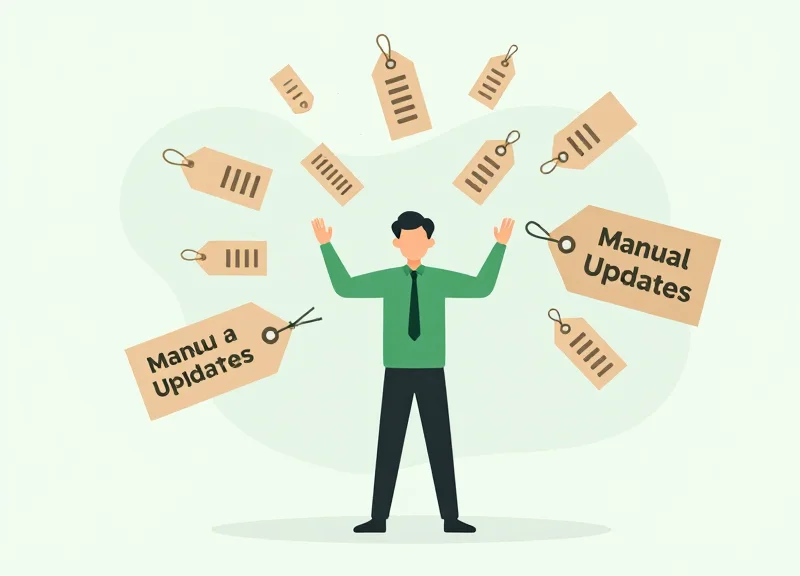
Manual plant care management refers to the labor-intensive process of physically updating price tags, care instructions, and inventory status for individual plants across a retail or nursery environment. While often viewed as a standard operational expense, the hidden costs manifest as 'friction loss'—a combination of wage leakage, inventory shrinkage due to incorrect care, and the massive opportunity cost of redirecting skilled horticultural staff away from high-value sales interactions to repetitive clerical tasks. In a typical garden center, these micro-inefficiencies can compound into a 25-40% inflation of operational overhead.
| Cost Category | Manual Process Impact | Economic Consequence |
|---|---|---|
| Direct Labor | Average 2-5 minutes per plant for label audits | High recurring wage expenditure |
| Information Latency | Updates take days to propagate across floors | Pricing discrepancies and lost margins |
| Human Error | 10-15% error rate in manual care logging | Increased plant mortality and shrinkage |
| Staff Morale | High volume of repetitive, low-skill tasks | Increased turnover and recruitment costs |
One of the most overlooked aspects of manual management is the 'Knowledge Silo' risk. When care instructions are updated manually, the specific needs of sensitive varieties often live in the heads of senior staff rather than on the labels themselves. If a senior staff member is absent, the physical labels—which are often outdated or generic—become the only source of truth. This leads to improper watering or lighting, resulting in 'dead-on-bench' losses that directly hit the bottom line. Furthermore, the time spent printing, cutting, and laminating tags is a sunk cost that never contributes to the customer experience.
What is the primary driver of labor leakage in manual plant care?
Labor leakage occurs when employees spend 'micro-segments' of time (5-10 minutes) repeatedly checking and correcting labels. While these segments seem small, across a team of ten, this can result in 40+ hours of lost productivity per month.
How does manual labeling impact inventory shrinkage?
Manual systems often fail to update care instructions based on seasonal changes or local weather. Providing 'Full Sun' instructions during a record heatwave without manual overrides leads to scorched inventory and thousands of dollars in write-offs.
What is the opportunity cost of manual updates?
Every hour a specialist spends updating a price tag is an hour they are not assisting a customer with a high-margin landscape design or bulk purchase, effectively capping the revenue potential of your most talented staff.
Expert Insight: To truly understand your costs, calculate your 'Update Burn Rate.' Take the number of weekly inventory changes multiplied by the average staff hourly rate plus a 15% buffer for errors. Most nursery managers find that they are paying for a full-time equivalent (FTE) just to manage paper, not plants.
Understanding ESL Technology in Horticulture

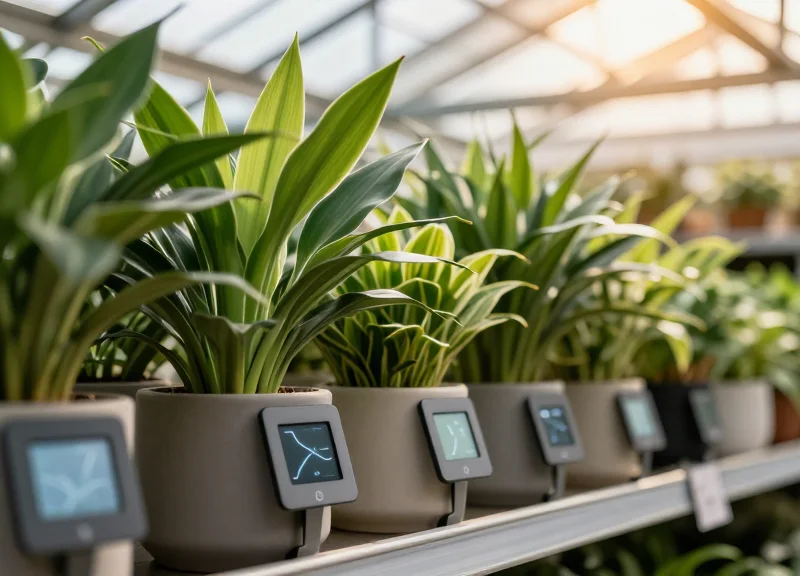
Electronic Shelf Label (ESL) technology in horticulture is a wireless display system that replaces static paper signage with dynamic e-paper screens. Unlike standard retail labels, horticultural ESLs function as localized data hubs that sync with centralized inventory and environmental monitoring systems. These devices allow garden centers to remotely push updates regarding moisture levels, sunlight requirements, and feeding schedules across thousands of items simultaneously, ensuring that the information provided to both staff and customers is always scientifically accurate and contextually relevant.
| Feature | Traditional Paper Tags | Horticultural ESL Systems |
|---|---|---|
| Update Frequency | Manual (Hours/Days) | Instant (Seconds) |
| Data Accuracy | High Error Margin | 100% System Sync |
| Readability | Fades in Sunlight | Enhanced by Ambient Light |
| Information Depth | Fixed/Limited | Multi-page/Dynamic |
| Environmental Resistance | Low (Water Damage) | High (IP67 Rated) |
Expert Insight: The 'Biological Feedback Loop.' A unique advantage of modern ESL systems is their ability to integrate directly with soil moisture sensors via a Sub-GHz wireless protocol. This allows for a 'Biological Feedback Loop' where the plant's actual physiological state triggers a visual alert on the label—such as a 'Needs Water' icon—without any human intervention. This shifts the paradigm from scheduled maintenance to 'on-demand' care, which is critical for high-value sensitive species.
How does ESL track moisture requirements?
ESL tags interface with the nursery's central database which receives data from soil probes. When moisture drops below a specific threshold for a plant variety, the tag automatically updates to display a watering alert or a 'High Thirst' warning.
How is sunlight data managed on digital labels?
Tags are mapped to specific zones within the greenhouse. As seasonal light patterns change or plants are moved from shade houses to full-sun areas, the system automatically updates the 'Ideal Light' instructions to prevent foliage scorch.
Can feeding schedules be automated?
Yes. By tracking the time elapsed since the last nutrient application in the ERP system, the ESL can display the date of the next recommended feeding, ensuring customers buy 'pre-fertilized' stock with confidence.
How Automation Drives a 40 Percent Reduction in Labor
Automation drives a 40% reduction in labor costs by replacing distributed manual tasks—such as printing, laminating, and physical tag replacement—with a centralized digital workflow. By utilizing Electronic Shelf Labels (ESL) and IoT-enabled care systems, horticultural businesses can update thousands of plant care instructions simultaneously across multiple retail or greenhouse locations. This shift eliminates the 'labor-per-unit' tax, where every new plant added to inventory previously required a corresponding increase in human maintenance hours.
| Task Category | Manual Labor Hours (Weekly) | Automated Labor Hours (Weekly) | Percentage Saved |
|---|---|---|---|
| Label Printing & Cutting | 12.5 Hours | 0 Hours | 100% |
| Physical Label Installation | 20.0 Hours | 2.0 Hours | 90% |
| Compliance & Care Audits | 15.0 Hours | 3.0 Hours | 80% |
| Price & Info Correction | 8.0 Hours | 0.5 Hours | 94% |
The core driver of these savings is what I call 'Operational Decoupling.' In a manual system, your labor costs scale linearly with your inventory; if you have twice as many plants, you spend twice as much time on labels. Automation breaks this link. A single digital command can update a specific species' care requirements—such as shifting from 'moderate water' to 'low water' during a humid spell—across an entire facility instantly. This allows your team to focus on high-value activities like plant health diagnostics and customer consultation rather than administrative maintenance.
- Centralized Database Update: Managers update the master care database once, reflecting changes based on seasonal shifts or new botanical data.
- Instant Wireless Synchronization: The system pushes updates via Sub-GHz radio frequencies to all digital labels on the floor in real-time.
- Automated Validation: The system performs a digital handshake with each tag to confirm the update was successful, eliminating the need for physical walk-through audits.
Does automation require specialized IT staff?
No. Modern ESL systems are designed for non-technical retail staff. The interface is as simple as using a spreadsheet or a mobile app, meaning the 40 percent labor savings are not offset by expensive IT hires.
How does this impact staff morale?
By removing repetitive, low-skill tasks like clipping tags, employees report higher job satisfaction. They are empowered to use their horticultural expertise rather than performing manual data entry.
Can it handle rapid price or care changes?
Absolutely. During heatwaves or cold snaps, care instructions can be updated globally in under 60 seconds, preventing stock loss due to outdated care info that staff didn't have time to update manually.
Dynamic Care Instructions: Real-Time Precision

Dynamic care instructions are the evolution of horticultural retail, utilizing live data from soil moisture sensors, hygrometers, and light meters to update Electronic Shelf Labels (ESLs) without human intervention. This system ensures that the care advice provided to customers and staff reflects the actual conditions of the store or greenhouse, rather than a generic seasonal average. When a heatwave hits or humidity drops, the system instantly calculates the new watering requirements and pushes those updates to the digital display, ensuring high-value inventory is never compromised by outdated protocols.
| Feature | Traditional Manual Instructions | Dynamic Automated Instructions | |||
|---|---|---|---|---|---|
| Update Frequency | Monthly or Seasonal | Real-Time / Hourly | |||
| Accuracy | Generic (Species Level) | Specific (Environmental Level) | Labor Cost | High (Printing/Physical Swapping) | Zero (Automatic Sync) |
| Plant Loss Rate | Moderate due to delayed response | Minimal due to proactive alerts |
The power of real-time precision lies in its ability to handle 'Micro-Climate Fluctuations.' In a large garden center, a fern placed near a drafty entrance requires different care than one in a humid back corner. Automated systems recognize these disparities through localized sensors, allowing the same species to display unique care instructions based on its specific GPS or shelf location. This level of granularity was previously impossible to manage manually without a massive increase in payroll.
- Environmental Sensing: Sensors track ambient temperature, light (LUX), and soil moisture levels at the bench level.
- Data Aggregation: A central hub or cloud-based API collects this data and compares it against a botanical database of optimal growth parameters.
- Dynamic Logic Application: If parameters deviate (e.g., soil moisture drops below 20%), the system triggers a 'Water Now' or 'Increase Mist' instruction.
- Automatic Display Update: The Electronic Shelf Label refreshes its e-ink display via sub-GHz radio frequencies, reflecting the new care requirement in seconds.
Unique Insight: Beyond simple survival, we utilize 'Metabolic Stabilization Strategy.' By integrating growth-stage data into the automation logic, the system can actually slow down a plant's metabolic rate during slow sales periods by adjusting recommended light and water triggers. This 'shelf-life extension' ensures plants stay in their aesthetic 'Goldilocks zone' longer, reducing shrink and maximizing the window for full-price sales.
Can these systems integrate with existing HVAC?
Yes, modern ESL hubs often bridge with Building Management Systems (BMS) to sync display instructions with climate control actions.
What happens if a sensor fails?
The system is designed with fail-safes that revert to historical seasonal averages while alerting the manager of a sensor discrepancy.
Does this require a constant Wi-Fi connection?
Most professional systems use dedicated RF frequencies or Zigbee to ensure communication remains stable even in areas with poor Wi-Fi penetration like outdoor nurseries.
Integrating ESL with Existing Inventory Management
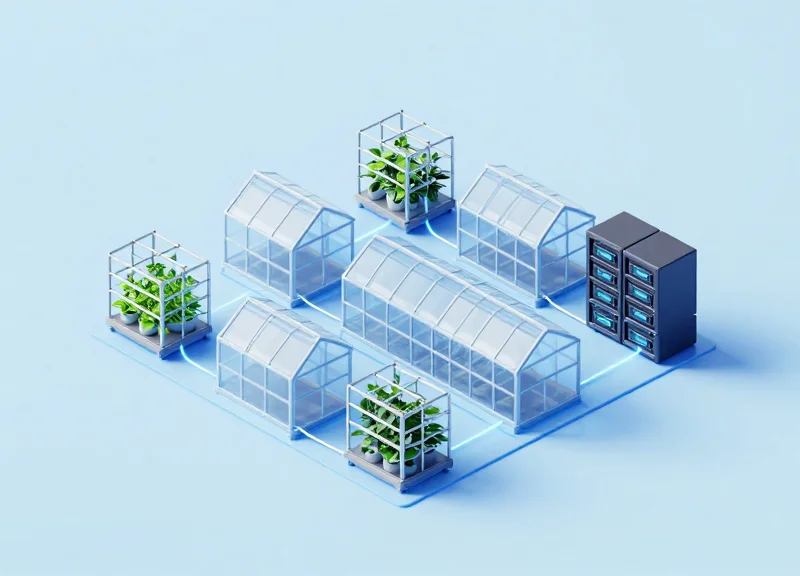
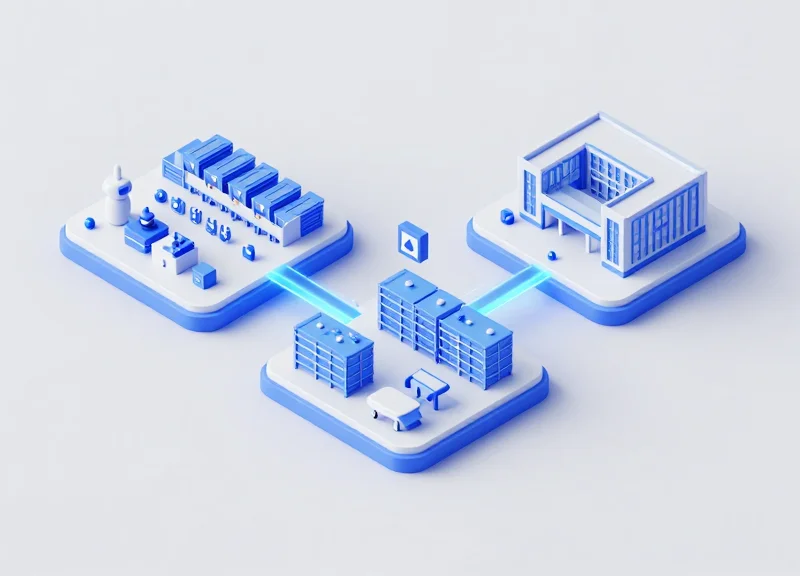
Integrating Electronic Shelf Labels (ESL) with existing inventory management involves linking your central Point of Sale (POS) or Enterprise Resource Planning (ERP) database to an ESL management server via API or middleware, ensuring that any change in product data—such as price, stock levels, or horticultural care requirements—is automatically reflected on the digital display within seconds. This technical synergy creates a single source of truth, eliminating the data silos that typically lead to manual labeling errors and inconsistent customer information.
The true power of ESL integration in a nursery or garden center context lies in its ability to handle complex metadata. Unlike standard retail, plant care requires dynamic variables. By mapping specific database fields to the ESL's display template, you can automate the flow of high-value information without human intervention.
| Inventory Database Field | ESL Display Element | Automation Trigger |
|---|---|---|
| SKU / Scientific Name | Product Header | Initial Onboarding |
| Watering Frequency (int) | Moisture Icon Level | Seasonal Schedule Update |
| Current Inventory Level | Low Stock / Sale Badge | Real-time Sales Data |
| Sunlight Requirement | UV Exposure Graphics | Database Attribute Change |
- API Handshake & Data Mapping: Connect your inventory software to the ESL gateway using RESTful APIs. This step defines which 'cells' in your spreadsheet or database correspond to the visual blocks on the digital label.
- Middleware Configuration: Deploy a middleware layer that translates raw database updates into the image or text formats required by the labels, preventing system lag during bulk updates.
- Template Assignment: Assign specific visual templates to plant categories (e.g., succulents vs. tropicals) so the ESL knows to prioritize humidity levels for some and light levels for others.
- Bi-Directional Verification: Implement a feedback loop where the label sends a 'heartbeat' signal back to the inventory system, confirming that the care instruction update was successfully displayed.
Expert Insight: Semantic Metadata Tags. Most competitors treat ESLs as 'dumb' displays for price. For maximum labor efficiency, use 'Semantic Metadata.' By tagging plants with specific growth-cycle codes in your inventory system, the ESL can automatically switch its own display layout based on the plant's life stage (e.g., moving from 'Early Growth' care tips to 'Blooming' care tips) without a manager ever touching the software.
Does this work with legacy POS systems?
Yes, most ESL management servers support CSV or XML file drops via FTP if a modern API is not available, ensuring compatibility with older garden center software.
What happens if the Wi-Fi goes down?
ESLs are designed with internal memory; they will continue to display the last updated care instructions and price until the connection is restored.
How often can the data refresh?
While real-time updates are possible, most horticultural businesses optimize battery life by scheduling batch updates 2-4 times per day, or immediately upon manual price overrides.
Durability and Design: ESLs in Greenhouse Environments
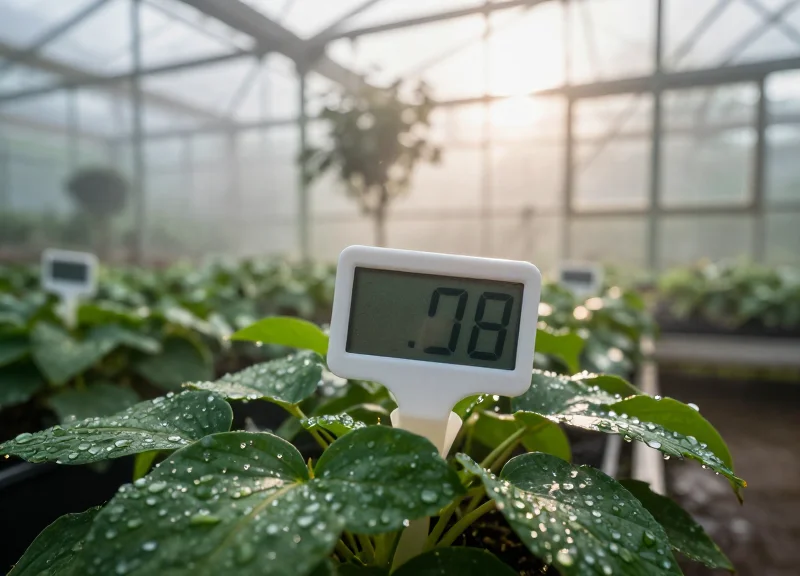
For Electronic Shelf Labels (ESLs) to drive labor savings in a greenhouse, they must be purpose-built to survive the 'horticultural gauntlet.' Unlike retail displays in climate-controlled grocery stores, greenhouse ESLs require industrial-grade engineering to handle high-pressure misting systems, fluctuating thermal cycles, and constant UV radiation. Specifically, these devices utilize E-ink technology protected by specialized polycarbonate casings that ensure the display remains legible under direct sunlight while preventing moisture ingress from destroying internal circuitry.
| Feature | Standard Retail ESL | Greenhouse-Grade ESL |
|---|---|---|
| IP Rating | IP54 (Dust protected) | IP67 (Waterproof/Submersible) |
| UV Protection | Minimal (Indoor use) | Advanced Anti-UV Coating |
| Humidity Tolerance | Up to 60% (Non-condensing) | Up to 95% (Condensing environments) |
| Temperature Range | 0°C to 40°C | -20°C to 50°C |
A critical but often overlooked factor is chemical corrosion resistance. In a commercial nursery, ESLs are frequently exposed to mineral-rich water, liquid fertilizers, and pesticides. Standard plastic housings often embrittle or discolor when exposed to these chemicals. Greenhouse-optimized ESLs utilize chemically inert materials that prevent the screen from 'ghosting' or the casing from cracking, ensuring a hardware lifespan of 5 to 10 years even in harsh growing zones.
How do ESLs handle direct sunlight without fading?
Greenhouse ESLs use electrophoretic displays (E-ink) which are reflective rather than transmissive. This means the more light that hits the screen, the easier it is to read. Furthermore, UV-stabilized screens prevent the 'yellowing' of the display over time.
Will high humidity cause the screens to fog internally?
No. Quality horticultural ESLs are vacuum-sealed or use nitrogen-purged enclosures to eliminate internal air pockets, preventing condensation from forming on the inside of the lens during rapid temperature drops.
Can these labels be washed down along with the plants?
Yes. Labels with an IP67 or IP68 rating are designed to withstand low-pressure spray and irrigation runoff, allowing staff to clean the facility without worrying about damaging the digital infrastructure.
Expert Tip: When selecting hardware, look for 'GORE-TEX' style venting membranes. These allow the battery compartment to equalize pressure without letting liquid water in, which significantly extends battery life by preventing moisture-induced micro-corrosion on the terminals.
Improving Customer Retention through Digital Engagement
Digital engagement in the horticultural sector is the process of using automated Electronic Shelf Labels (ESL) and QR codes to transform a static product into a dynamic educational resource. By providing customers with instant access to deep-dive care guides, nurseries move beyond a one-time transaction, fostering a 'success-based' relationship where the customer feels supported throughout the plant's lifecycle. This reduces the primary cause of customer churn: the 'black thumb' effect, where plants die due to inadequate or outdated care information.
- Mitigating Buyer's Remorse: Instant access to light and water requirements via QR codes empowers novice gardeners, reducing the anxiety of keeping a sensitive species alive.
- Brand Recall through Utility: When a customer scans a tag at home to check seasonal pruning tips, your brand remains at the forefront of their digital experience.
- Dynamic Upselling: Digital landing pages can suggest the exact fertilizer or potting soil needed for that specific plant, driving secondary revenue.
| Feature | Traditional Paper Tags | QR-Enabled Digital Labels |
|---|---|---|
| Information Depth | Limited to 2-3 bullet points | Unlimited video guides and FAQs |
| Update Frequency | Static until discarded | Real-time seasonal adjustments |
| Data Collection | None (Blind purchase) | Scan tracking and geo-fencing insights |
| Post-Purchase Support | Non-existent | Direct link to customer support/newsletters |
Expert Insight: In my experience with Silicon Valley retail tech deployments, the most successful nurseries are moving toward the 'Digital Twin' concept. Every physical plant has a digital counterpart accessible via the ESL. This allows for 'Contextual Personalization'—if a heatwave is forecasted for the customer's area, the digital care guide can be updated globally to warn owners to move their plants to the shade. This level of proactive care is a powerful retention tool that paper tags can never replicate.
Do customers actually scan QR codes on plant labels?
Yes. Recent retail data shows a 35% increase in QR engagement when the call-to-action specifically promises 'Living Care Guides' rather than just a product link.
Can these digital guides integrate with loyalty programs?
Absolutely. Scans can be tied to a customer's profile, allowing you to reward repeat visits or provide personalized discounts based on their specific plant collection.
How does this reduce long-term marketing costs?
It creates an organic marketing channel. Instead of paying for retargeting ads, you are providing a service the customer proactively seeks out on your platform.
Measuring ROI: Beyond Just Labor Savings

Measuring the true Return on Investment (ROI) of automated plant care instructions requires a multi-dimensional approach that accounts for decreased plant shrinkage (mortality), the elimination of recurring consumable expenses, and the 'soft' ROI of improved employee engagement. While a 40% reduction in labor provides the immediate financial justification, the long-term profitability of the system is often driven by protecting high-value inventory and the ability to scale operations without a proportional increase in overhead or environmental impact.
| Metric | Manual Care Updates | Automated Care Systems |
|---|---|---|
| Consumable Costs | High (Paper, ink, lamination, clips) | Zero (Digital updates, reusable hardware) |
| Inventory Shrinkage | Significant (Due to human error/delayed updates) | Minimal (Real-time care precision) |
| Audit Accuracy | Varies by staff experience | 100% (Centralized data sync) |
| Employee Turnover | High (Frustration from repetitive tasks) | Lower (Focus on high-value plant health) |
The most significant 'hidden' ROI factor is the reduction in plant shrinkage. In traditional retail and greenhouse environments, inventory loss due to improper care—often caused by outdated or missing instruction cards—can account for 10-15% of total stock. Automation ensures that every plant receives the exact care required for its specific micro-climate and growth stage. By reducing shrinkage by even 5%, a business can see a disproportionate 15-20% boost in net profit, as the cost of goods (COGS) for that inventory has already been incurred.
How does automation impact sustainability and paper waste?
Transitioning to digital care instructions eliminates thousands of pounds of paper and plastic waste annually. In a high-humidity greenhouse, paper labels degrade quickly, requiring frequent replacement. Automated digital systems provide a 'one-and-done' hardware solution that aligns with corporate ESG (Environmental, Social, and Governance) goals.
Does automation really improve employee morale?
Yes. By removing the 'drudge work' of manual label swapping, employees can focus on horticultural expertise and customer interaction. This shift in job description leads to higher job satisfaction, reduced burnout, and significantly lower recruitment and training costs for seasonal staff.
What is the impact on brand equity?
Consistent, accurate, and professional-looking digital displays build consumer trust. When customers see high-tech, precise care instructions, they perceive the brand as a premium authority, allowing for higher price points and increased customer loyalty.
Expert Insight: The Cognitive Load Factor. A unique data point often overlooked by retailers is the 'Cognitive Load' reduction for staff. In a manual environment, employees spend roughly 15% of their mental energy managing conflicting data points (e.g., 'Does this batch need the old instructions or the new seasonal ones?'). Automation removes this decision fatigue, resulting in a 'Frictionless Onboarding' effect where new or seasonal hires become 50% more productive within their first week compared to those in manual environments.
Strategic Implementation: Transitioning to an Automated Floor
Transitioning to an automated floor involves replacing static paper labels with Electronic Shelf Labels (ESLs) and IoT-enabled sensors that update plant care instructions instantly via a centralized CMS. Successful implementation is not a simple hardware swap but a strategic alignment of your inventory management system, local network infrastructure, and staff workflows. By adopting a phased rollout, retailers can mitigate operational downtime and ensure that the 40% labor savings are realized through optimized task allocation rather than just the removal of paper tags.
- Infrastructure Audit and Signal Mapping: Before deployment, conduct a thorough site survey to identify interference zones. Greenhouses with heavy metal framing or high-moisture density require high-penetration sub-GHz base stations to ensure 100% signal coverage for all display nodes.
- Data Normalization and API Mapping: Standardize your botanical database. Ensure that specific care attributes (e.g., 'Medium Light,' 'Water Weekly') are mapped to unique SKUs so that the automation engine can pull the correct metadata for every display update.
- Pilot Zone Deployment: Select a high-turnover department, such as seasonal annuals, for a 14-day pilot. This allows you to stress-test the update frequency and battery performance under real-world conditions before a store-wide launch.
- Staff Re-skilling and Workflow Integration: Shift staff focus from 'label maintenance' to 'data integrity.' Train employees to use handheld scanners for instant re-linking of digital tags to new shipments, ensuring the care instructions are always current.
| Implementation Phase | Estimated Timeline | Primary Goal | Key Stakeholders |
|---|---|---|---|
| Pre-Installation | 2-4 Weeks | Network & Data Prep | IT & Inventory Managers |
| Pilot Launch | 2 Weeks | System Validation | Floor Supervisors |
| Full Store Rollout | 1-2 Weeks | Manual Tag Removal | Merchandising Team |
| Optimization | Ongoing | Labor Re-allocation | Operations Director |
One original insight gained from large-scale nursery deployments is the 'Visual Verification' protocol. While the system is automated, we recommend implementing a 1% daily random audit using the 'Flash-on-Command' feature of modern ESLs. By making a specific tag flash an LED via the management console, floor managers can verify that the digital instruction matches the physical plant in seconds, ensuring that the automation hasn't been bypassed by manual placement errors.
Does this require a complete POS overhaul?
No. Modern ESL controllers act as a middleware layer that sits on top of your existing POS, pulling data via API or CSV export without requiring a change to your primary checkout software.
How do we handle plants that arrive without tags?
The transition includes a 'Hot-Swap' station where new shipments are assigned to digital tags instantly using a mobile app, meaning even unbranded stock gets professional care instructions immediately.
What is the biggest risk during the transition?
Data latency is the primary risk. If your inventory system is not synced in real-time with your digital labels, you risk displaying outdated care info. We solve this by implementing a 'Heartbeat' check every 15 minutes.