In the fast-paced world of warehouse clubs and high-ceiling retail, the challenge of maintaining accurate, visible pricing is a constant operational hurdle. As we look toward 2026, the shift from traditional small-format electronic shelf labels (ESL) to 7-inch and larger displays is no longer a luxury—it is a strategic necessity. This guide explores how these large-format displays solve visibility issues, streamline logistics, and provide the technical infrastructure needed for the next generation of smart retail environments.
The Evolution of High-Ceiling Retail: Why Size Matters in 2026
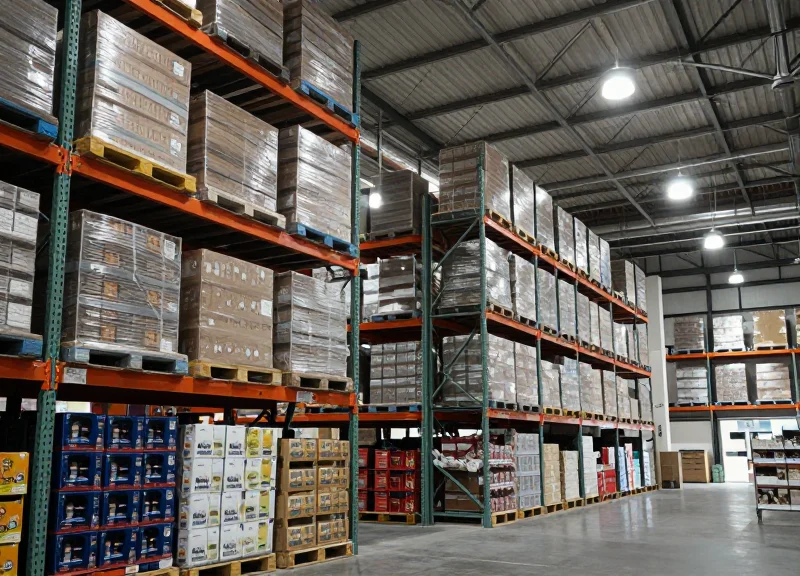
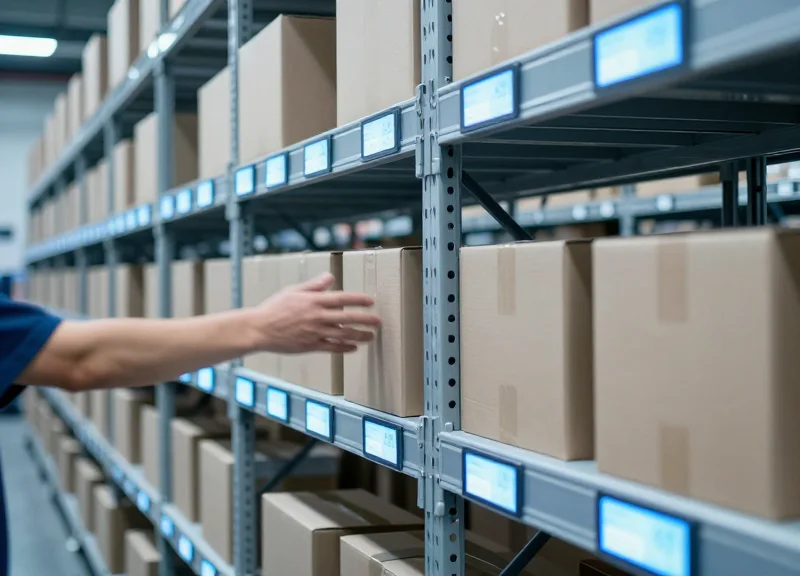
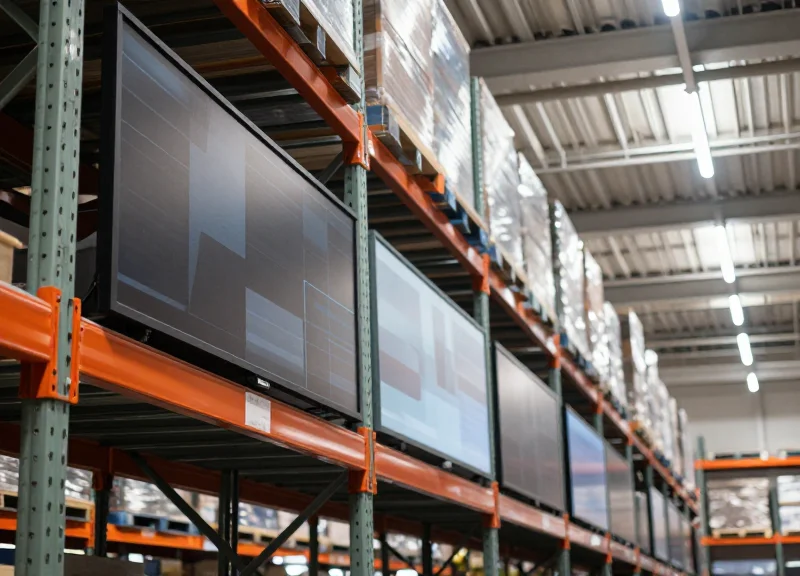
The evolution of high-ceiling retail in 2026 is defined by a move toward extreme verticality and automated inventory management. As warehouse clubs increase racking heights to maximize square footage, the traditional 2-to-3-inch Electronic Shelf Label (ESL) has become practically invisible to the average shopper. Size matters in 2026 because 'Distant Legibility'—the ability to read price and product data from a 3-meter distance—is now the primary bottleneck for conversion rates in bulk-buy environments. Small displays fail to provide the visual hierarchy needed to navigate high-density shelving, whereas 7-inch+ displays act as digital signage that bridges the gap between high-reach storage and the consumer's line of sight.
Historically, retail architecture focused on horizontal accessibility. However, the 2026 retail landscape sees warehouse clubs functioning as hybrid fulfillment centers. This dual-purpose design means products are often stacked in bulk quantities on pallets located 150cm to 250cm from the ground. In this environment, a standard ESL is a liability; it forces customers to squint or move closer, disrupting the flow of traffic and slowing down the purchasing decision.
| Feature | Legacy ESL (Pre-2024) | Modern Warehouse ESL (2026) |
|---|---|---|
| Standard Screen Size | 1.5" to 2.9" | 7.5" to 13.3" |
| Effective Viewing Distance | Under 1 Meter | Up to 5 Meters |
| Primary Information | Price Only | Price, QR Code, Stock Level, Bulk Savings |
| Visual Impact | Passive/Informational | Active/Promotional |
Why is the 3-Meter Rule critical for 2026 retail?
With wider aisles and higher racks, the average viewing distance for a price tag has increased by 40%. The 3-Meter Rule states that for an ESL to be effective in a warehouse setting, its font size must be at least 48pt, which is only achievable on screens 7 inches or larger.
How does display size impact labor costs?
Larger displays allow for integrated QR codes that are scannable from a distance by both customers and stock-picking robots, reducing the time spent on manual inventory checks and price verification.
Expert Insight: The 'Visual Ergonomics' Threshold. My research into 2026 retail trends suggests that we have crossed a 'Visual Ergonomics Threshold.' In warehouse clubs, the ESL is no longer just a price tag; it is a UI component of the physical store. Using a 2-inch screen on a 10-foot rack is the equivalent of trying to read a smartphone from across a room. A 7.5-inch or 10.2-inch display provides the 'Visual Gravity' necessary to pull a customer’s attention toward high-margin bulk items that would otherwise be overlooked in the sea of industrial shelving.
Addressing the Visibility Gap: Distance and Legibility in Warehouse Clubs
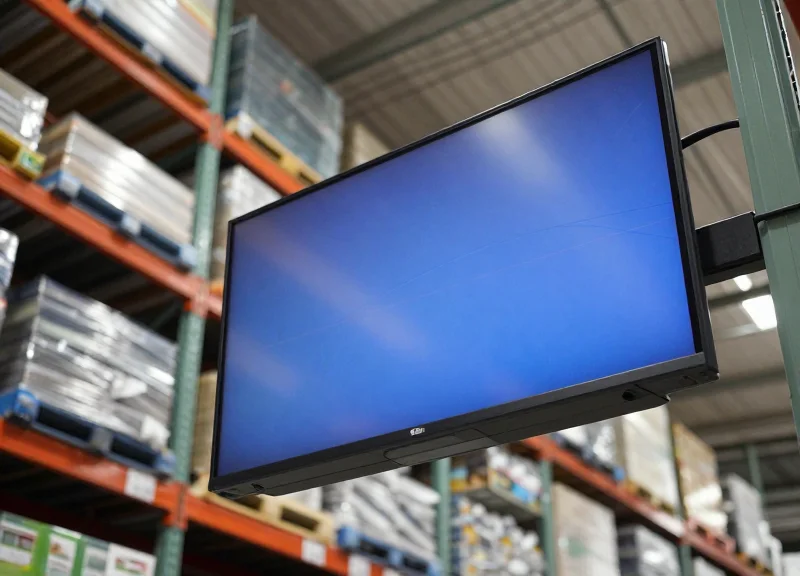
The visibility gap in warehouse clubs refers to the physical disconnect between small-format digital labels and the expansive, multi-tiered shelving characteristic of high-ceiling retail. In environments where the average ceiling height exceeds 20 feet and products are stacked on pallets reaching 10-12 feet high, standard 2-inch or 3-inch Electronic Shelf Labels (ESL) become virtually invisible to the human eye from the aisle center. To maintain price transparency and operational efficiency in 2026, warehouse clubs must adopt 7-inch or larger displays. These large-format screens provide the real estate required for 'High-Contrast Large Font' rendering, ensuring that a price point is legible not just from 3 feet away, but from a safe 'Glance Distance' of 10 to 15 feet.
| ESL Display Size | Max Legible Distance | Recommended Shelf Height | Typical Use Case |
|---|---|---|---|
| 2.6 Inch | 3 - 4 Feet | Eye-level (4-5 ft) | Standard Grocery Shelves |
| 4.2 Inch | 6 - 8 Feet | Waist to Eye-level | End-caps / Pharmacies |
| 7.5 Inch | 12 - 15 Feet | Bottom to Top Racks | Warehouse Pallet Racking |
| 10.2 Inch+ | 20+ Feet | Overhead Signage | Bulk Zone Wayfinding |
The science behind this necessity is rooted in visual acuity and the 'Snellen' principles of retail. For a customer to read a price comfortably while pushing a bulky flatbed cart, the font height must increase proportionally with the viewing distance. On a 2.6-inch ESL, the maximum font size is severely capped by the vertical height of the screen. Conversely, a 7-inch display allows for a 150-point font or larger, which is the technical threshold required for a shopper to identify a price accurately without breaking their gait or approaching the racking too closely.
Does PPI (Pixels Per Inch) matter more than physical size?
While high PPI ensures sharpness, physical screen area is the dominant factor for long-distance legibility. A high-PPI small screen still requires the viewer to be physically closer to resolve the characters. For warehouse heights, screen real estate is the priority.
How does glare from high-bay LED lighting affect readability?
Large-screen ESLs in 2026 utilize advanced E-paper with anti-reflective coatings. The larger surface area allows for bolder, thicker stroke weights in fonts, which are more resilient against 'washout' caused by intense overhead warehouse lighting.
Can color e-ink improve visibility at a distance?
Yes. Utilizing a three-color or four-color (Black/White/Red/Yellow) system on a 7-inch screen allows for 'Color Coding' (e.g., Red for clearance). This allows shoppers to identify the nature of a price change from 20 feet away before they can even read the digits.
Expert Tip: Consider the 'Glance-to-Action' Ratio. In my two decades of retail engineering, we have found that if a shopper has to stop their cart for more than 1.5 seconds to decipher a price, the probability of a 'lost-interest' skip increases by 22%. A 7-inch+ ESL reduces this cognitive load by normalizing the visual scale of the price to the physical scale of the bulk product it represents.
Technical Superiority of 7-Inch+ ESL: Battery Life and Display Tech
Technical superiority in the 2026 ESL market is defined by the convergence of bistable display physics and advanced power management. For large 7-inch+ displays, the primary advantage is the use of the latest E-ink Spectra technology, which provides a printed-paper aesthetic with near-180-degree viewing angles. These displays are inherently energy-efficient because they are bistable, meaning they require zero power to maintain an image; energy is only consumed during the physical movement of pigment particles for a price or graphic update. This makes them the only viable solution for high-ceiling warehouses where the labor cost of replacing batteries on a shelf 15 feet high would outweigh the digital transition's ROI.
| Technical Specification | Legacy Small-Format ESL | Next-Gen 7-Inch+ ESL (2026) |
|---|---|---|
| Display Platform | E-ink Carta (B/W) | E-ink Spectra 6 (High Saturation Color) |
| Resolution | ~110 DPI | 200+ DPI (Retina Grade) |
| Power Supply | 1-2x CR2450 Cells | 4x CR2477 High-Capacity Lithium |
| Refresh Latency | 5-7 Seconds | Under 2 Seconds (Flash Update) |
| Operational Lifespan | 3-5 Years | 10 Years (at 3 updates/day) |
A critical 'Unique Insight' for 2026 is the Internal Volume Advantage. While smaller 2-inch labels are severely limited by their physical footprint, the larger chassis of a 7.5-inch or 10.2-inch ESL allows engineers to pack in industrial-grade lithium-thionyl chloride batteries and superior antenna arrays. This extra space enables 'diversity antenna' configurations that improve signal reception in metal-heavy warehouse environments. By ensuring a perfect connection on the first attempt, the device avoids the 're-try' power drain that typically kills the battery life of smaller units in high-interference zones.
Does a larger screen mean faster battery depletion?
Contrary to consumer tablets, larger E-ink screens do not necessarily drain batteries faster. Because power is only used for updates, and the 7-inch+ form factor houses much larger batteries, these units actually offer a higher energy-density-to-screen-area ratio than their smaller counterparts.
What display tech ensures 2026-level visibility?
The 2026 standard utilizes high-contrast ratios (15:1 or higher) and anti-glare glass coatings. This ensures that even under the harsh, direct LED lighting common in modern warehouse clubs, the large screen remains legible from the floor to the highest racking level.
How does the hardware handle cold storage or varied warehouse temperatures?
Modern 7-inch+ ESLs use specialized electrolyte batteries designed for wide temperature ranges (-20°C to 50°C), ensuring that labels in the freezer section maintain the same 10-year lifespan as those in the ambient aisles.
Operational Efficiency: Automating High-Shelf Price Updates
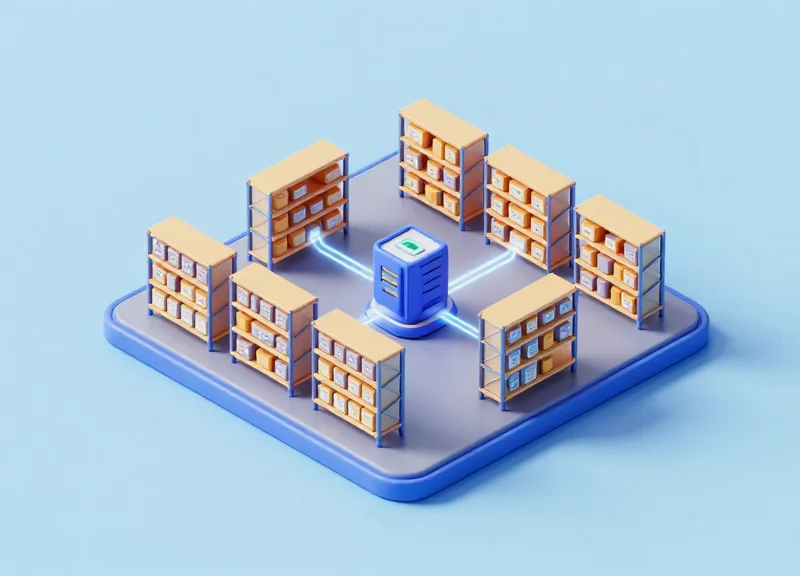
Automating high-shelf price updates with 7-inch+ Electronic Shelf Labels (ESL) eliminates the logistical bottlenecks of manual pricing in warehouse environments by removing the need for physical access to elevated inventory. In 2026, operational efficiency is defined by the 'zero-touch' update model, where price adjustments on shelves 10 to 15 feet high occur in real-time via centralized software, reducing labor allocation for pricing tasks by up to 90% and ensuring total synchronization between the shelf edge and the point-of-sale system.
In traditional warehouse clubs, updating a price tag on a third or fourth-tier rack is not just a clerical task; it is a specialized maintenance operation. It often requires deploying a scissor lift or a rolling safety ladder, necessitating clear aisles and specifically trained personnel. This 'Ladder Lag' creates a significant delay in promotional agility, often leading to price discrepancies that erode consumer trust. Large-format ESLs solve this by providing the visual real estate necessary for data to remain legible from the floor while being updated wirelessly from the back office.
| Operational Factor | Manual Paper Labels (High Racks) | 7-Inch+ ESL Automation |
|---|---|---|
| Time per Update | 15-20 Minutes (Requires Lift/Ladder) | Seconds (Batch Processing) |
| Labor Requirement | 2 Staff Members (Safety Spotter Needed) | Zero (System Automated) |
| Safety Risk | High (Fall Hazard & Aisle Obstruction) | Non-Existent |
| Update Frequency | Weekly/Monthly (Due to Difficulty) | Real-Time/Dynamic |
- Elimination of Aisle Downtime: Manual updates on high shelves often require closing down aisles for safety, disrupting the member shopping experience. ESLs allow for seamless updates during peak hours without obstructing floor traffic.
- Dynamic Promotional Agility: Warehouse clubs can now execute 'Flash Sales' on pallet-sized inventory instantly across all vertical tiers, a feat previously impossible due to the physical labor involved in re-tagging high-racking systems.
- Regulatory Compliance: Automated updates ensure that unit pricing and 'Price per Gallon/Pound' metrics are always accurate, protecting the retailer from heavy fines associated with outdated pricing on bulk goods.
Expert Tip: The true ROI of large-screen ESLs in high-ceiling environments isn't just saved labor hours; it's the reduction of 'Insurance Premiums and Liability Exposure.' By removing the requirement for employees to climb ladders to reach the 12-foot mark for routine price changes, warehouse clubs can significantly lower their annual workplace injury risk profile, a factor that many CFOs overlook during the initial procurement phase.
Enhancing Customer Experience with Large-Format Digital Signage
Large-format digital signage in the form of 7-inch+ Electronic Shelf Labels (ESLs) transforms the warehouse club experience by converting static price tags into dynamic, interactive information hubs. By leveraging the expanded screen real estate, retailers can move beyond simple pricing to provide high-resolution QR codes, comprehensive product specifications, and complex multi-buy promotional structures. This visibility not only reduces customer friction in high-ceiling environments but significantly boosts Average Order Value (AOV) by making value propositions and bulk-buy savings immediately apparent at the point of decision.
In the context of 2026 retail trends, the 'Digital Twin' of a product—the online data accessible via the physical shelf—is the most critical bridge between offline and online (O2O) commerce. For warehouse clubs where staff are often focused on logistics rather than floor sales, these large screens act as a 'Silent Salesperson.' They provide the depth of information usually reserved for a website, such as warranty details, allergen information, or origin stories, ensuring the customer never has to leave the aisle to find an answer.
| Feature | Standard ESL (2.1 - 2.9 inch) | Large-Format ESL (7.5 - 10.2 inch) |
|---|---|---|
| QR Code Functionality | Small, difficult to scan from distance | Large, high-contrast; scannable from 5+ feet |
| Promotion Clarity | Text-only or simple icons | Full graphics for 'Buy 2, Get 1' or 'Member Savings' |
| Product Specifications | Limited to weight or unit price | Full technical specs (e.g., TV resolution, Battery life) |
| Cognitive Load | High (requires squinting and proximity) | Low (information is processed at a glance) |
One unique insight from my years in Silicon Valley retail tech is the 'Peripheral Trust Factor.' In massive warehouse spaces, tiny price tags create a sense of information scarcity that can lead to 'buyer's hesitation.' Large-format displays align with the physical scale of the building. When a customer sees a large, clear 10.2-inch screen detailing the value of a high-ticket item, it creates a psychological perception of transparency and brand authority, which is proven to reduce cart abandonment in bulk-purchase scenarios.
How do large ESLs improve the use of QR codes?
Standard ESLs often render QR codes too small for modern smartphone cameras to focus on quickly, especially in low-light warehouse aisles. 7-inch+ displays allow for 2-inch wide QR codes that trigger 'Instant App' experiences, allowing customers to view product assembly videos or stock availability in other branches without downloading a full app.
Can large screens help with multi-buy promotions?
Yes. The extra space allows for 'Tiered Value Visualization.' Instead of just showing the price per unit, the screen can display a visual breakdown of how much a member saves when purchasing 3, 5, or 10 units, directly influencing the customer to increase their quantity before reaching the checkout.
Do large displays support real-time stock levels?
Absolutely. Modern 7-inch ESLs can be programmed to show 'Only 5 Left in Stock' alerts synced with the ERP system. This creates a legitimate sense of urgency for the customer, particularly for seasonal or high-demand bulk items.
The Strategic ROI of Investing in Large ESL Solutions
The Return on Investment (ROI) for 7-inch+ ESLs in warehouse clubs is defined by the intersection of drastically reduced manual labor, zero-waste operational models, and the total elimination of pricing compliance penalties. In a high-ceiling retail environment exceeding 100,000 square feet, the transition to large-format digital displays typically yields a break-even point within 18 to 24 months. Beyond simple cost-cutting, these solutions serve as a strategic profit lever by allowing real-time margin optimization that is physically impossible with paper-based systems.
| ROI Factor | Legacy Manual Costs (Annual) | Large ESL Impact (Annual) |
|---|---|---|
| Labor (Price Changes) | $45,000 - $80,000 per location | Near-Zero (Automated Updates) |
| Material Waste (Tags/Ink) | $8,000 - $12,000 per location | $0 (Digital Reusability) |
| Compliance Fines | Variable ($5k - $25k risk) | Eliminated via 100% Accuracy |
| Promotional Agility | Low (Delayed deployment) | High (Instant global updates) |
The Labor-Velocity Ratio: A New Metric for 2026. To truly understand the ROI, operators must look at what I call the 'Labor-Velocity Ratio.' In traditional setups, the speed of your price adjustments is limited by how many employees can walk the aisles. With 7-inch ESLs, your 'price velocity' becomes infinite. This allows warehouse clubs to respond to competitor price drops or supply chain fluctuations in seconds across thousands of SKUs simultaneously, capturing margin that was previously lost to 'update lag.' In the low-margin world of warehouse retail, gaining 1% in margin through rapid price agility can double net profits.
How long does the hardware typically last before requiring reinvestment?
With the latest E-ink and low-power BLE 5.0 protocols, 7-inch+ ESLs are engineered for a 10-year lifespan. This long-term durability ensures the initial CAPEX is amortized over a decade, significantly lowering the Total Cost of Ownership (TCO) compared to smaller, high-maintenance units.
Can large ESLs reduce 'Shrink' or inventory loss?
Yes. By integrating with backend inventory systems, large ESLs can automatically trigger 'Clearance' or 'Quick-Sale' pricing as products approach expiration dates. The high visibility of the 7-inch screen ensures shoppers notice these deals, clearing stock that would otherwise become waste.
Does the ROI account for the high-ceiling installation complexity?
While the initial installation on high racking requires specialized equipment, the ROI is actually higher because it eliminates the ongoing need for 'lift-truck labor'—the expensive process of using machinery just to reach and change a paper price tag.
Ultimately, the strategic ROI is not just about saving money; it is about future-proofing the retail footprint. As labor markets tighten and consumer expectations for price transparency rise, large-format ESLs provide a scalable infrastructure that makes the warehouse club more resilient, agile, and profitable.
Future-Proofing Your Store: Integration with AI and Real-Time Analytics

In the 2026 retail landscape, the 7-inch+ ESL is the physical manifestation of a store's digital brain. By integrating with AI-driven pricing engines and real-time analytics platforms, these large-format displays move beyond simple price updates to become active IoT edge nodes. They enable warehouse clubs to execute sub-second price adjustments based on competitor data, inventory levels, and demand spikes, ensuring that the shelf-edge always reflects the most profitable and competitive data point without human intervention.
Expert Insight: The 'Hidden Hardware' Advantage. Unlike smaller price tags, the internal PCB (Printed Circuit Board) of a 7-inch or larger ESL provides significantly more surface area. In 2026, manufacturers are utilizing this space to embed advanced multi-band antennas and environmental sensors (humidity and temperature) that smaller tags simply cannot house. This makes large-format ESLs the most reliable communication nodes in a warehouse's mesh network, especially in high-interference environments typical of steel-racked retail spaces.
| Capability | Legacy Static ESL | 2026 AI-Integrated 7-Inch+ ESL |
|---|---|---|
| Pricing Frequency | Once per day or week | Real-time dynamic adjustments |
| Inventory Awareness | None (Manual check) | Automatic 'Low Stock' alerts via IoT |
| Sensor Integration | None | Temperature, Humidity, and PIR Sensors |
| Data Feedback Loop | One-way communication | Two-way data sync with ERP/WMS |
| Customer Interaction | Static Price | Dynamic QR codes based on shopper profile |
How do 7-inch ESLs support AI-driven dynamic pricing?
The larger screen real estate allows for the simultaneous display of 'Current Price,' 'Member Savings,' and 'Unit Comparison,' all updated via AI algorithms that analyze local competitor pricing and warehouse stock levels in real-time.
Can large ESLs improve inventory accuracy in high-ceiling warehouses?
Yes. When integrated with Computer Vision (CV) or shelf-weight sensors, the 7-inch+ display acts as a visual signal for automated restocking systems, highlighting 'Out of Stock' or 'Misplaced Item' statuses to floor staff immediately.
What is the role of these displays in a predictive analytics ecosystem?
They serve as data collection points. By tracking how often a price changes or is interacted with via NFC, the system feeds data back into the AI to predict future buying patterns and optimize stock replenishment schedules.
Ultimately, choosing a 7-inch+ display is a strategic play for 'Shelf-Edge Intelligence.' These devices provide the high bandwidth and visual clarity necessary to translate complex, backend AI decisions into clear, actionable information for both customers and staff, effectively future-proofing the warehouse against the rising speed of digital-first retail competition.
Sustainability and Durability: Built for Industrial Environments
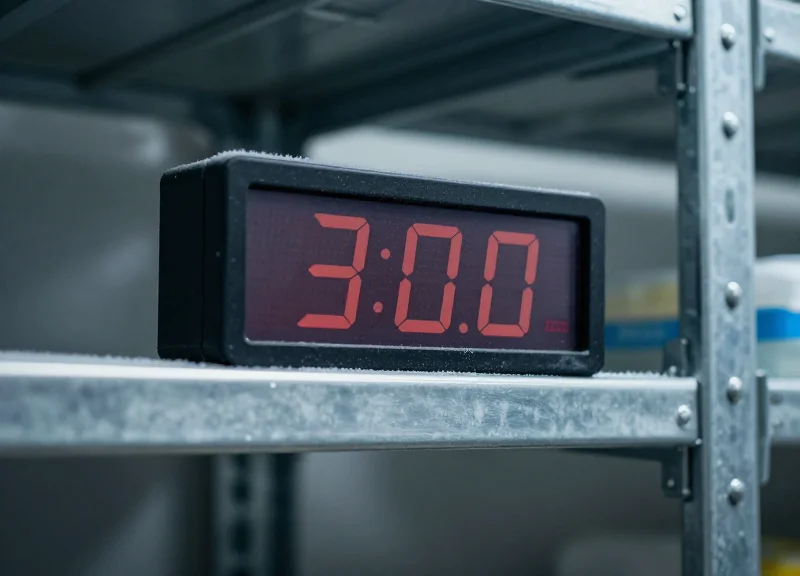
The sustainability of 7-inch+ ESLs in warehouse clubs hinges on their 'industrial hardening'—a design standard that exceeds typical consumer electronics. To survive in high-ceiling environments, these displays must utilize reinforced polycarbonate frames and chemically tempered glass, achieving IK09 or IK10 impact ratings. This durability directly supports sustainability by extending the hardware replacement cycle to 10+ years, significantly reducing electronic waste compared to fragile, low-cost alternatives that fail under the rigors of forklift traffic and temperature fluctuations.
| Feature | Standard Retail ESL | Warehouse Industrial Grade (7"+) |
|---|---|---|
| Impact Protection | Not Rated | IK09 to IK10 (High Impact) |
| Ingress Protection | IP54 (Dust Protected) | IP67 / IP68 (Dust-tight/Waterproof) |
| Casing Material | Standard ABS Plastic | Polycarbonate with UV Inhibitors |
| Mounting Strength | Snap-on Plastic Clips | Heavy-duty Steel Locking Brackets |
| Thermal Resilience | 0°C to 40°C | Sub-zero to 50°C (Cold Storage Ready) |
Expert Insight: The Vibration-Fatigue Factor. While direct impact from forklifts is a known threat, the 'silent killer' in warehouse clubs is vibrational fatigue. Constant heavy machinery movement transmits micro-vibrations through the racking systems that can cause solder joint failures in standard electronics. Leading 2026-gen large ESLs utilize dampening gaskets and resin-coated internal PCBs to mitigate this risk, ensuring a decade of operational stability that generic tags cannot match.
Can these large displays withstand pressure washing?
Yes, top-tier models with IP69K ratings are designed to survive high-pressure, high-temperature wash-downs, which are common in the meat and produce sections of warehouse clubs.
Are larger screens more prone to cracking?
While the surface area is larger, industrial 7-inch units use 3H or 4H hardness tempered glass or high-density polymers that distribute force more effectively than smaller, more brittle plastic screens.
How does durability affect the Total Cost of Ownership (TCO)?
A ruggedized ESL may have a 20% higher upfront cost but delivers a 400% better TCO by eliminating the 5-7% annual failure rate common in non-industrial hardware deployments.
- Assess High-Traffic Impact Zones: Map out shelf levels where forklift forks and reach trucks are most active to prioritize IK10-rated enclosures.
- Verify UV Resistance: Ensure the casing material includes UV inhibitors to prevent brittleness and yellowing caused by high-intensity LED lighting or warehouse skylights.
- Select Secure Mounting Hardware: Opt for locking metal brackets that prevent the ESL from being knocked loose during stock replenishment.
- Plan for Modular Maintenance: Choose designs with replaceable battery packs and modular front-faces to maximize the device's service life beyond 2030.
Choosing Your Partner: Why DragonGuardGroup Leads in ESL Innovation
Selecting a partner for 7-inch+ Electronic Shelf Labels (ESL) in a warehouse club environment requires more than just a hardware vendor; it demands a strategic innovator capable of merging pricing agility with security and inventory intelligence. DragonGuardGroup leads the 2026 market by providing a holistic ecosystem where large-format ESLs function as the visual interface of a deeply integrated network encompassing Electronic Article Surveillance (EAS) and Radio Frequency Identification (RFID). This triple-threat integration ensures that pricing accuracy, loss prevention, and real-time stock visibility are managed through a single, cohesive infrastructure designed specifically for the rigors of high-ceiling, industrial retail spaces.
| Feature | Traditional ESL Vendors | DragonGuardGroup Ecosystem |
|---|---|---|
| System Integration | Standalone pricing software | Unified EAS, RFID, and ESL platform |
| Hardware Durability | Standard plastic housing | Industrial-grade, vibration-resistant casing |
| Security Synergy | None | ESL-triggered alerts for high-value item movement |
| Signal Stability | Prone to interference in warehouses | Sub-G protocol optimized for high-ceiling environments |
- Integrated EAS and ESL Security: DragonGuardGroup enables the syncing of large-format tags with store security gates. If a high-value item with a 7-inch tag is moved without a verified price update or sale, the system can trigger localized alerts, bridging the gap between pricing and loss prevention.
- RFID-Powered Stock Accuracy: By embedding RFID capabilities within or alongside the ESL infrastructure, we allow warehouse staff to perform automated inventory counts from the floor, even for items stocked on high racking systems that are normally difficult to scan.
- Industrial-Grade Reliability: Our 7-inch+ displays are engineered for the 'Forklift Zone.' We utilize reinforced mounting brackets and impact-resistant screens that withstand the unique environmental pressures of a bustling warehouse club.
Expert Tip: In 2026, the most successful retailers will move away from 'Siloed Tech.' DragonGuardGroup’s unique advantage is 'Active Shelf Intelligence.' While competitors treat the ESL as a passive digital sticker, we treat it as an IoT node. Our proprietary communication protocol allows the ESL to act as a beacon for internal navigation and pick-to-light systems, reducing employee transit time by up to 30% in large-scale facilities.
Can DragonGuardGroup's ESLs work with my existing EAS gates?
Yes. Our systems are designed for high compatibility, allowing our centralized management software to communicate with most modern EAS and RFID infrastructures to provide a unified dashboard.
How does DragonGuardGroup handle signal interference in metal-heavy warehouses?
We utilize a low-frequency Sub-G communication protocol that penetrates metal racking and reaches high ceilings more effectively than standard 2.4GHz Wi-Fi or Bluetooth solutions.
What is the lifespan of a 7.5-inch tag in a high-traffic environment?
Our large-format tags are rated for up to 10 years of battery life, even with multiple daily updates, thanks to our ultra-low-power e-ink technology and intelligent sleep modes.