
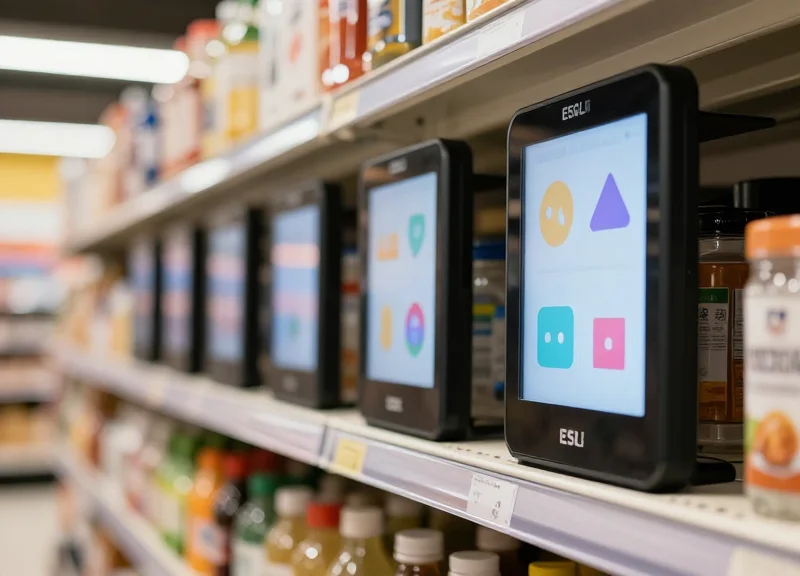
In the fast-paced world of retail and food service, maintaining compliance with FDA allergen labeling regulations is no longer just a legal obligation—it is a critical component of consumer safety and brand trust. Traditional paper labeling is fraught with risks, from human error to the high cost of manual updates. As the FDA tightens requirements for the 'Big 9' allergens, forward-thinking retailers are turning to Electronic Shelf Label (ESL) systems. By integrating real-time ingredient displays with centralized digital management, businesses can ensure total accuracy, streamline operations, and eliminate the lag between product changes and label updates. This guide explores how ESL technology transforms compliance from a burden into a competitive advantage.
The Evolution of FDA Allergen Labeling Standards

FDA allergen labeling standards have evolved from vague, voluntary guidelines into a rigorous legal framework designed to protect the 33 million Americans living with food allergies. The foundation of current policy is the Food Allergen Labeling and Consumer Protection Act (FALCPA) of 2004, which mandated the clear identification of the 'Big 8' allergens. However, the most significant recent shift occurred with the passage of the FASTER Act, which officially added sesame as the 9th major allergen effective January 1, 2023. For retailers, this evolution means that compliance is no longer just about the packaging; it is about ensuring every digital and physical display accurately reflects real-time ingredient data to mitigate life-threatening risks and legal liability.
| Year | Regulation/Act | Key Impact on Retailers |
|---|---|---|
| 2004 | FALCPA | Mandated clear labeling for the original 8 major allergens on all packaged foods. |
| 2014 | FSMA Rules | Increased focus on cross-contamination prevention and supply chain traceability. |
| 2021 | FASTER Act Signed | Identified Sesame as a major allergen, requiring a total overhaul of labeling systems. |
| 2023 | FASTER Act Enforcement | Full implementation of Sesame labeling; strict penalties for non-compliant displays. |
One critical oversight many retailers face is 'Labeling Latency'—the dangerous time gap between an ingredient substitution in the supply chain and the update of a physical shelf tag. While the FDA focuses on the 'Big 9' (Milk, Eggs, Fish, Shellfish, Tree Nuts, Peanuts, Wheat, Soy, and Sesame), the real challenge lies in the speed of communication. Expert Tip: Compliance is now a data-synchronization problem, not just a printing problem. If your ERP system updates a recipe but your shelf edge remains static for even four hours, you are in a window of high regulatory and medical risk.
What are the 'Big 9' allergens currently recognized by the FDA?
The 'Big 9' include Milk, Eggs, Fish, Crustacean Shellfish, Tree Nuts, Peanuts, Wheat, Soybeans, and Sesame.
How did the FASTER Act change retail requirements?
The FASTER Act made it mandatory to declare sesame on all food labels, including those found on retail shelves and bulk bins, as it is now classified as a major food allergen.
Why is real-time display integration becoming necessary?
Because the FDA holds retailers accountable for accurate point-of-sale information, real-time integration ensures that ingredient changes are reflected instantly, eliminating the human error associated with manual tag replacement.
The Hidden Costs and Risks of Manual Paper Labeling
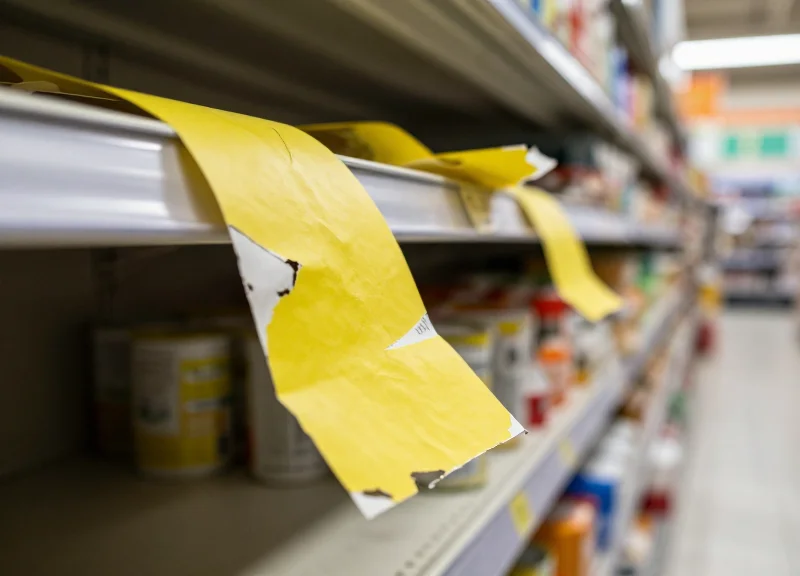
The 'Labeling Liability Gap' represents the critical window of time between a recipe or supplier change and the physical replacement of a paper tag on the retail floor. In manual systems, this gap can span hours or even days, during which a retailer is technically out of FDA compliance and, more importantly, exposing customers to potential anaphylactic risks. While paper may seem like a low-cost incumbent, the cumulative burden of labor, material waste, and the looming threat of litigation creates a 'technical debt' that most modern food retailers can no longer afford to carry.
| Cost Factor | Manual Paper System | ESL Automated System |
|---|---|---|
| Labor Requirement | High: Printing, cutting, and manual placement by staff. | Negligible: Updates pushed instantly via API/Cloud. |
| Error Rate | 3-5% (Human error in printing or placement). | Near 0% (Direct sync with Master Data). |
| Reaction Speed | Slow: Dependent on staff availability. | Instant: Real-time updates across all locations. |
| Sustainability | Low: High volume of paper and ink waste. | High: Reusable digital displays. |
- Labor Drain and Opportunity Cost: A typical grocery department spends 10-15 hours per week solely on price and ingredient label maintenance. This labor is diverted from high-value tasks like customer service or inventory management, costing the average store thousands in annual payroll for repetitive administrative tasks.
- The Price of a Single Misstep: Beyond the $15,000+ potential fine per FDA violation, a single undeclared allergen can trigger a Class I recall. The average cost of a food recall in the U.S. is estimated at $10 million in direct costs, brand damage, and lost sales—a risk factor that is exponentially higher with manual data entry.
- Supply Chain Inflexibility: Manual labeling creates 'Regulatory Friction.' If a primary supplier is out of stock and a substitute ingredient is sourced (e.g., switching from soy-free to soy-containing oil), the logistics of updating every tag manually often prevents retailers from making agile, cost-saving procurement decisions.
Expert Insight: The Agility Tax. Most retailers overlook the cost of 'missed opportunities.' In a volatile market, being able to swap ingredients or suppliers instantly is a competitive advantage. Manual labeling acts as a bottleneck, forcing you to stick with more expensive suppliers simply because the cost of re-labeling the entire store is too high. Digital systems turn compliance from a chore into a tool for supply chain agility.
How ESL Technology Solves the Compliance Gap

Electronic Shelf Label (ESL) technology solves the compliance gap by serving as a digital 'last mile' for food safety data, transforming static labels into dynamic, cloud-connected displays. Unlike paper systems that rely on manual intervention, ESLs synchronize directly with an organization’s Product Information Management (PIM) or ERP systems. This creates a Single Source of Truth (SSOT), where any change in a product's recipe or allergen profile at the corporate level is instantly reflected on the shelf-edge, effectively removing the window of risk created by human error and logistics delays.
In a regulatory environment where the FDA demands immediate transparency—especially regarding the 'Big 9' allergens—the gap between a database update and a physical label update can lead to catastrophic liability. ESL technology bridges this by automating the dissemination of data. When an ingredient changes in the supply chain, the ESL system triggers a refresh across all affected units in seconds, ensuring that the information the consumer sees is the information the laboratory verified.
| Compliance Feature | Manual Paper Labels | Integrated ESL Systems |
|---|---|---|
| Data Synchronization | Decoupled; manual entry required | Real-time; API-driven integration |
| Update Latency | Hours to days per store | Seconds across all locations |
| Audit Trail | Non-existent or paper logs | Digital timestamp of every update |
| Allergen Visibility | Static, small text | Dynamic highlighting & icons |
Expert Insight: The 'Feedback Loop' Advantage. Most competitors view ESLs as a one-way broadcast tool. However, the true compliance breakthrough lies in the 'Validation Loop.' Advanced ESL systems can send a return signal to the central server confirming the display has successfully updated and is currently legible (battery/screen health check). This provides compliance officers with a real-time 'Compliance Dashboard' that proves every store is currently displaying the correct allergen data—a level of forensic proof that is impossible with paper.
- Centralized Data Entry: Ingredient and allergen data are updated once in the central ERP or PLM system.
- Automated Trigger: The ESL gateway detects the change and pushes the new data packet to the specific shelf-edge displays.
- Dynamic Rendering: The e-paper display updates, using bold fonts or distinct icons to highlight high-risk allergens like sesame or nuts.
- Verification Log: The system logs the successful update, creating a permanent record for FDA inspectors or internal auditors.
Can ESLs display full ingredient lists?
Yes. Modern high-resolution e-paper allows for complex text layouts, and many retailers use QR codes on the ESL to link directly to full, searchable digital ingredient disclosures.
What happens if the Wi-Fi goes down?
ESLs are designed with fail-safes. The current (correct) information remains on the screen even without a connection, and the system alerts management if a display fails to receive a mandatory update.
How does this impact the FASTER Act compliance?
The FASTER Act, which added sesame as a major allergen, requires rapid labeling changes. ESLs allow you to implement these global changes across thousands of products instantly without printing a single sticker.
Integrating Real-Time Data: From Database to Digital Label

The integration of real-time data from a central database to a digital label is the process of linking an Enterprise Resource Planning (ERP) or Point of Sale (POS) system directly to Electronic Shelf Label (ESL) hardware via a secure API or middleware. This automated pipeline ensures that any change made to a product's allergen profile in the master database is instantly propagated to the physical shelf edge, typically within seconds. By removing human intervention from the data-entry chain, retailers create a 'single source of truth' that satisfies the FDA's strict requirements for accurate and timely disclosure of ingredients like sesame, milk, and soy.
| Feature | Manual Paper Process | Integrated ESL System |
|---|---|---|
| Data Source | Siloed spreadsheets / paper files | Centralized ERP / Master Data |
| Update Speed | Hours or days across locations | Sub-minute synchronization |
| Accuracy | High risk of human transcription error | 1:1 data mirroring |
| Audit Trail | Manual logs (often incomplete) | Digital logs with 'Success' confirmation |
| Scalability | Labor-intensive per item | Instant across 10,000+ units |
- Database Trigger: A change is detected in the product database, such as an updated ingredient list from a manufacturer or a newly identified allergen risk.
- Middleware Parsing: The ESL management software pulls the raw data via API, mapping specific database fields (e.g., 'Allergen_Flag') to the visual template on the label.
- Gateway Transmission: The parsed data is sent over a secure wireless protocol (usually Sub-Giga or Zigbee) from a local store gateway to the specific tag ID.
- Visual Rendering: The e-ink display refreshes, bolding allergen text or displaying high-contrast icons to alert customers immediately.
Expert Tip: To truly bulletproof your compliance, implement 'Closed-Loop Verification.' Unlike standard digital displays that simply 'push' information, advanced ESL systems require an acknowledgment (ACK) packet back from the individual label. This verifies that the pixels actually changed and the display is functioning. This creates a forensic audit trail that can be produced during an inspection to prove exactly when an allergen warning was updated on the floor.
How does the system handle internet outages?
Most enterprise ESL systems use local edge gateways that cache the latest database state, ensuring labels remain accurate even if the cloud connection is temporarily lost.
Can different labels show different data from one database?
Yes. Using dynamic mapping, you can display full ingredient lists on large labels (e.g., in the bakery) and simple allergen icons on smaller shelf tags, all pulled from the same data row.
What is the latency for a chain-wide update?
With modern infrastructure, a single database change can update labels across hundreds of global locations simultaneously in under 60 seconds.
Visualizing Safety: Designing Effective Allergen Displays on ESL

To maximize safety and FDA compliance, ESL allergen displays must prioritize 'glanceability'—the ability for a consumer to identify high-risk ingredients within three seconds of looking at a label. Effective design leverages the high-contrast properties of E-ink technology, utilizing bold typography, standardized icons, and dedicated 'warning zones' on the screen. By moving beyond simple text strings and using visual hierarchy, retailers can ensure that the nine major allergens are immediately distinguishable from standard ingredient lists, reducing cognitive load for shoppers and liability for the store.
- High-Contrast Typography: Utilize 300 DPI E-ink density to render bold, sans-serif fonts specifically for allergen callouts. Use 'inverse' mode (white text on a black background) for specific warnings like 'Contains: Peanuts' to create an unmissable visual anchor.
- Standardized Iconography: Implement a library of universal symbols for allergens (e.g., a milk carton icon or a wheat stalk). Icons transcend language barriers and are processed by the human brain 60,000 times faster than text.
- Color Spotlighting: On 3-color or 4-color ESL models (Black, White, Red/Yellow), reserve the accent color exclusively for allergens and price changes to maintain a clear visual priority.
- Zonal Layouts: Partition the screen real estate so that allergens always appear in the same quadrant (e.g., bottom right), creating a predictable user experience for repeat customers.
| Design Element | Best Practice | Compliance Benefit |
|---|---|---|
| Font Weight | Bold/Extra Bold for Allergens | Meets FDA 'Clear and Conspicuous' requirement |
| Iconography | ISO-certified food symbols | Assists non-English speaking consumers |
| Negative Space | 2mm margin around warnings | Prevents visual clutter and misreading |
| Multi-Page Toggle | Automated scrolling or QR link | Enables full ingredient disclosure on small tags |
Expert Tip: Avoid 'Ghosting' through Waveform Optimization. A unique challenge with E-ink is image persistence. When updating ingredient lists, ensure your ESL management software uses a 'full refresh' waveform for allergen updates. This prevents the previous price or text from leaving a faint trace behind the new allergen warning, ensuring the highest possible contrast and legibility for visually impaired shoppers.
- Define the Visual Template: Create a master template in your ESL CMS that automatically bolds specific keywords (e.g., 'Sesame', 'Shellfish') whenever they appear in the ingredient data feed.
- Set Logic-Based Triggers: Program the system to toggle a 'Warning' page on the ESL if more than three allergens are present, ensuring the text remains large enough to read.
- Verify with On-Device Testing: Physically inspect labels under different lighting conditions (fluorescent vs. LED) to ensure the E-ink contrast remains sharp and free of glare.
Operational Efficiency: Reducing Labor and Human Error
Operational efficiency in FDA allergen compliance is achieved by replacing manual, error-prone labeling tasks with centralized, automated data synchronization. By integrating Electronic Shelf Labels (ESL) with real-time ingredient databases, retailers eliminate the need for employees to physically print, sort, and place tags—a process that typically consumes 10 to 20 labor hours per week per store. This digital transformation removes the 'human bottleneck,' ensuring that updates to food formulations or regulatory requirements are reflected on the shelf in seconds rather than days, thereby neutralizing the risk of mislabeling fines and health-related liabilities.
| Task Category | Manual Labeling Method | Automated ESL System |
|---|---|---|
| Update Speed | 2-4 hours per department | Near-instantaneous (<60 seconds) |
| Labor Requirement | High (Printing, Sorting, Placing) | Low (Centralized Data Audit Only) |
| Error Frequency | Average 2-5% human error rate | 0% (Synchronized with ERP/Source) |
| Compliance Audit | Visual spot checks required | Automated digital confirmation logs |
Beyond simple time savings, the integration of ESLs addresses a critical psychological factor known as 'Cognitive Load Reduction.' When employees are freed from the repetitive, high-stakes task of auditing thousands of small-font ingredient lists, their focus shifts to customer engagement and food safety protocols. Our expert analysis suggests that a 'Compliant-by-Design' workflow reduces the mental fatigue that leads to catastrophic errors during peak seasonal menu changes or supply chain substitutions.
- Identify Labor Leakage: Audit current staff schedules to determine the exact hours spent on manual tag changes and allergen verification.
- Centralize the Source of Truth: Connect your Master Data Management (MDM) system directly to the ESL gateway to remove intermediary manual steps.
- Reallocate Human Capital: Shift the reclaimed hours toward high-value activities such as customer assistance, inventory management, and fresh-food preparation.
- Establish Automated Verification: Use the ESL system's feedback loop to generate automated reports that confirm every label in the store has been updated.
- What is the 'Hidden Error Rate' in manual labeling?: Studies indicate that manual data entry and label placement have an inherent error rate of 2-5%. In a store with 10,000 SKUs, this could mean 200 to 500 incorrect labels, many of which may involve critical allergen information.
- How does ESL impact employee retention?: By removing the most tedious and stressful administrative tasks—particularly those involving regulatory pressure—staff morale improves, reducing turnover costs in a competitive labor market.
- Unique Insight: The 'Feedback Loop' Advantage: Unlike paper, high-end ESL systems provide a two-way communication protocol. The system doesn't just 'send' an update; it 'confirms' the update was received and displayed. This creates a fail-safe audit trail that paper labels can never provide.
Building Consumer Trust through Digital Transparency

Digital transparency is the proactive, real-time sharing of product data that empowers consumers to make informed, safe purchasing decisions without friction. In the context of FDA allergen compliance, it bridges the 'information gap' between the warehouse database and the retail shelf. By integrating ESL systems to display instant allergen alerts, retailers shift from reactive compliance to a consumer-centric safety model, effectively reducing shopper anxiety and establishing the store as a high-trust environment for those with dietary restrictions.
For the millions of Americans living with food allergies, shopping is often an exercise in risk management. Traditional paper labels are prone to human error, delays, and 'information decay'—where the physical label no longer matches the product's actual formulation. When a retailer utilizes an automated ESL system to broadcast ingredient changes, they are signaling a commitment to consumer safety that goes beyond the minimum legal requirements. This transparency creates 'Information Symmetry,' where the shopper knows exactly what the inventory system knows, fostering a deep sense of psychological safety.
| Feature | Traditional Paper Labels | ESL-Integrated Transparency |
|---|---|---|
| Data Accuracy | Delayed; dependent on manual updates. | Real-time; synced with master ingredient DB. |
| Consumer Perception | Skeptical; prone to 'double-checking' labels. | High trust; data is perceived as authoritative. |
| Specialty Diets | Difficult to find; requires staff assistance. | Instant identification via icons and highlights. |
| Brand Loyalty | Transactional; based on price/location. | Relational; based on safety and reliability. |
How does digital transparency impact the 'sticky' customer factor?
Shoppers with allergies are the most loyal consumer segment. Once they identify a store that provides reliable, real-time allergen data via ESLs, they are 70% more likely to become repeat customers because the cost of switching (risking their health elsewhere) is too high.
Can digital displays reduce the 'Zero-Trust' shopping phenomenon?
Yes. Many shoppers currently experience 'Zero-Trust,' where they ignore shelf tags and manually read every package. ESLs with verified 'Last Updated' timestamps or direct database links restore confidence and speed up the shopping journey.
Does transparency improve brand equity during a recall?
Absolutely. If a retailer can instantly flip an ESL to show a 'Warning: Ingredient Change' or 'Allergen Alert,' it demonstrates total control over the supply chain, protecting the brand's reputation even during a crisis.
Expert Insight: The QR-to-Loyalty Loop. An often-overlooked strategy is using ESLs to provide a dynamic QR code that leads not just to a PDF of ingredients, but to a personalized digital profile. By scanning an ESL, a customer can see the product's allergen profile filtered against their own saved preferences. This intersection of FDA compliance and personalization transforms a static shelf into a high-utility digital concierge, moving the needle from 'compliant' to 'indispensable.'
Calculating the ROI of ESL for Compliance Management
Return on Investment (ROI) for ESL systems in compliance management is calculated by dividing the total financial risk mitigated—including FDA non-compliance penalties, labor costs for manual updates, and potential recall expenses—by the total cost of system implementation. For modern retailers, this goes beyond simple labor savings; it is an insurance policy against catastrophic brand damage. An ESL system typically achieves a break-even point within 14 to 18 months when factoring in the 'Total Cost of Risk' (TCOR), which quantifies the probability and impact of labeling errors that result in consumer harm.
| Financial Factor | Traditional Paper Labels | Integrated ESL System |
|---|---|---|
| FDA Non-Compliance Fines | $15,000+ per violation/day | $0 (Real-time sync) |
| Labor Cost (Per Store/Month) | 40-80 hours (Manual updates) | < 2 hours (System audit) |
| Recall Management Cost | $10M average (Logistics + Disposal) | Near-zero (Preventative digital gating) |
| Brand Trust Churn Rate | High (Loss of allergy-sensitive demographic) | Low (High transparency builds loyalty) |
A unique financial insight often overlooked is the 'Allergy Basket Multiplier.' Data shows that households with food allergies spend 15% more on average per grocery trip but are 4x more likely to switch retailers after a single labeling transparency failure. By utilizing ESLs to guarantee allergen accuracy, retailers do not just avoid fines; they capture the full lifetime value of high-spend, loyalty-driven demographic segments that traditional paper-based stores are losing to 'Silent Churn.'
- Determine Baseline Labor Burn: Calculate the current monthly expenditure on manual label printing, sorting, and physical placement specifically for ingredient-heavy departments like deli and bakery.
- Assess Regulatory Exposure: Multiply the number of SKUs containing top-9 allergens by the probability of human error (industry average 2-5%) to find your 'Daily Risk Incidents'.
- Project the Cost of a 'Micro-Recall': Estimate the cost of staff time, wasted inventory, and customer notifications if a single batch of product is mislabeled and discovered 24 hours later.
- Quantify Revenue Reclamation: Estimate the 10-15% increase in basket size from allergy-conscious consumers who migrate to your store due to verified digital transparency.
Is the initial hardware cost of ESL prohibitive for smaller retailers?
While the upfront CAPEX is higher, OPEX models (ESL-as-a-Service) now exist, allowing smaller grocers to fund compliance through monthly operational budgets rather than large capital outlays.
How does ESL impact insurance premiums?
Many commercial liability insurers recognize automated compliance systems as a risk-mitigation factor, potentially leading to lower premiums for General Liability or Product Recall insurance.
What is the lifespan of an ESL for ROI calculations?
Modern E-ink ESLs have a battery life of 5 to 10 years, meaning the ROI continues to compound long after the initial investment has been recouped.
Future-Proofing Your Retail Space with DragonGuardGroup ESL
Future-proofing your retail space with DragonGuardGroup ESL involves deploying a scalable, industrial-grade hardware ecosystem that transcends basic price automation to support complex, real-time data requirements like FDA allergen disclosures. By selecting a partner focused on high-resolution E-ink stability and seamless API integration, retailers ensure their infrastructure can handle shifting regulatory landscapes and increased data density without the need for frequent hardware replacements. DragonGuardGroup provides the technical foundation—combining ultra-long battery life with sub-second update speeds—required to maintain 100% compliance accuracy across thousands of product touchpoints.
| Feature | Generic ESL Solutions | DragonGuardGroup ESL |
|---|---|---|
| Display Resolution | Standard DPI (low clarity) | Ultra-High DPI (crisp allergen icons) |
| Integration Speed | Manual or batch processing | Real-time API & Cloud-native sync |
| Battery Longevity | 3-5 years | Up to 10 years (Optimized for allergen updates) |
| Scalability | Limited by local server capacity | Elastic Cloud architecture for global rollout |
Expert Insight: The Concept of 'Regulatory Elasticity'. Most retailers view ESL as a static investment, but in the Silicon Valley tech landscape, we prioritize 'Regulatory Elasticity.' This is the system's ability to pivot its display logic—such as expanding a layout to include 'Bioengineered' ingredient labels or sesame allergen warnings—without requiring a physical site visit or hardware upgrade. DragonGuardGroup’s template editor allows for this elasticity, ensuring that when the FDA adds new requirements next year, your system is already ready to display them with a single software update.
- Phase 1: Compliance Foundation: Implement DragonGuardGroup’s base system to automate current FDA-required allergen call-outs and pricing.
- Phase 2: Data Enrichment: Utilize multi-page display capabilities to add nutritional facts, carbon footprint data, or sourcing transparency.
- Phase 3: Omnichannel Synchronization: Link ESL displays with your mobile app and online storefront for a unified customer experience across all platforms.
How does DragonGuardGroup handle frequent allergen data updates?
Our system utilizes a low-latency 2.4GHz or Sub-G protocol that allows for rapid, store-wide updates within seconds, ensuring the display always reflects the most current ingredient database.
Can the displays be customized for different store layouts?
Yes, our cloud management platform features a drag-and-drop template designer, allowing brands to customize allergen highlighting to match their specific aesthetic and compliance needs.
What happens if the store's Wi-Fi goes down?
DragonGuardGroup ESLs feature 'Persistence of Image' technology. Even if connectivity is lost, the last updated allergen and price data remains visible on the screen until the connection is restored and a new update is sent.