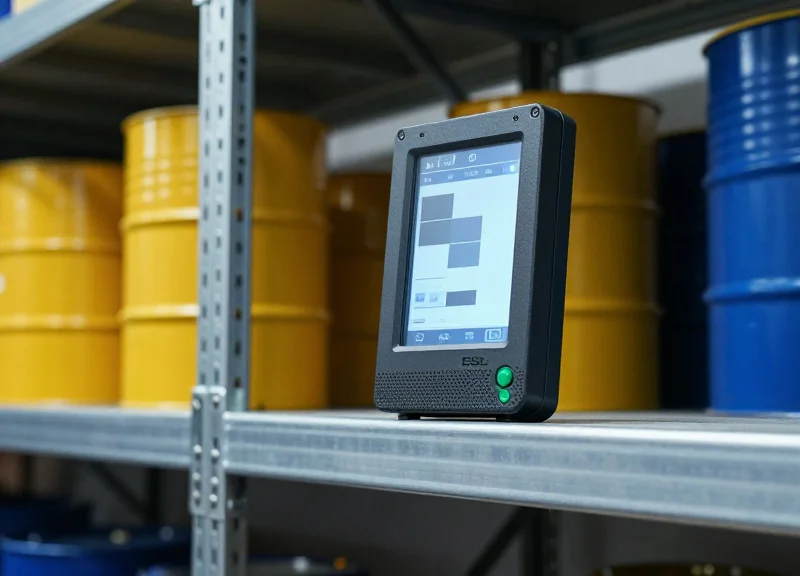
In the fast-evolving landscape of industrial logistics, managing hazardous materials requires more than traditional inventory methods. As we head into 2026, the demand for Chemical-Resistant Electronic Shelf Labels (ESL) is surging, driven by the need for real-time data accuracy in volatile environments. Standard digital labels often fail when exposed to corrosive vapors or extreme solvents, leading to costly downtime and safety risks. This guide provides an authoritative roadmap for selecting specialized ESL technology that guarantees operational resilience and safety compliance in the most demanding hazardous warehouses.
The Evolution of Hazardous Inventory: Why Chemical-Resistant ESLs Matter in 2026
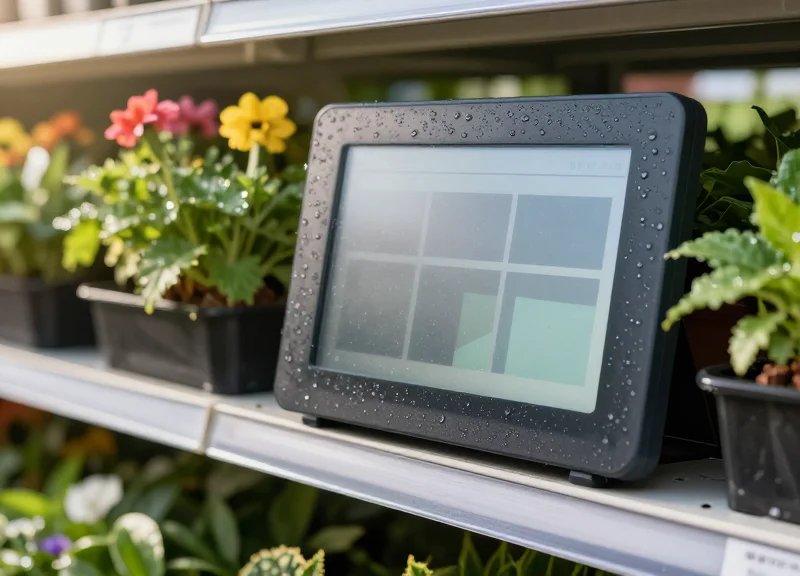
In 2026, the transition from legacy paper-based tracking to chemical-resistant Electronic Shelf Labels (ESLs) represents more than a hardware upgrade; it is a critical safety and compliance imperative for hazardous warehouses. Unlike standard retail labels, these specialized industrial units are engineered with chemically inert polymers and hermetic sealing to withstand corrosive vapors, solvent splashes, and extreme thermal cycling. This evolution ensures that life-critical chemical data—such as GHS hazard classifications and flash points—remains legible and synchronized with Warehouse Management Systems (WMS) in real-time, eliminating the deadly latency of manual updates.
| Feature | Legacy Manual Labels | Standard Digital ESL | 2026 Chemical-Resistant ESL |
|---|---|---|---|
| Durability | Low (Peeling/Fading) | Moderate (IP65) | High (IP69K + Chemical Shield) |
| Update Speed | Hours/Days (Manual) | Seconds (Wireless) | Sub-second (Industrial IoT) |
| Compliance | High Error Risk | Inconsistent | Automated Audit Trails |
| Corrosion Resistance | None | Surface Only | Internal Component Protection |
Expert Insight: The Vapor Ingress Factor. A common pitfall for procurement teams is selecting ESLs based solely on liquid ingress protection (IP ratings). However, in hazardous chemical storage, the primary killer of electronics is 'Vapor Ingress Fatigue.' Many industrial solvents release micro-vapors that permeate standard rubber gaskets, causing internal circuit corrosion. The 2026 generation of chemical-resistant ESLs utilizes ultrasonic welding and specialized fluorine-based coatings (PFPE) to create a molecular barrier that standard 'waterproof' devices simply do not offer.
Why is the shift to ESLs accelerating in 2026?
Stricter GHS (Globally Harmonized System) updates now require dynamic hazard communication that paper labels cannot maintain during rapid inventory turnover.
How do these labels improve worker safety?
By integrating with sensor networks, 2026 ESLs can flash high-visibility LED alerts if a chemical is stored near an incompatible substance or if a temperature threshold is breached.
What role does labor scarcity play in this evolution?
Automating the relabeling process allows reduced warehouse staff to focus on high-value handling tasks rather than the error-prone clerical work of updating safety placards.
Factor 1: Material Science and Chemical Compatibility
Material science is the fundamental layer of safety in hazardous warehouse automation. In 2026, the transition from standard ABS plastics to high-performance polymers like Polyetherimide (PEI) and Polytetrafluoroethylene (PTFE) defines the line between hardware longevity and catastrophic failure. Chemical-resistant ESLs must be engineered with specialized resins that maintain structural integrity when exposed to volatile organic compounds (VOCs), concentrated acids, and alkaline cleaning agents. Without this compatibility, the casing undergoes molecular degradation, leading to micro-cracking, internal component exposure, and wireless signal interference.
| Material Type | Chemical Resistance Profile | Best Use Case | Durability Index |
|---|---|---|---|
| Standard ABS/PC | Low: Vulnerable to esters and ketones | Standard retail/Dry storage | Low |
| Polyetherimide (PEI) | High: Resists alcohols, acids, and fuels | Industrial petrochemical storage | Excellent |
| PTFE-Enhanced Resins | Superior: Nearly inert to all chemicals | Laboratory and volatile reagent zones | Ultimate |
| Specialized PBT | Moderate-High: Resists oils and solvents | Automotive chemical inventory | High |
Expert Insight: The 'Invisible' Threat of Environmental Stress Cracking (ESC). While many procurement teams look for 'chemical proof' labels, the real 2026 benchmark is Environmental Stress Cracking Resistance (ESCR). Some resins may not melt on contact but will undergo accelerated brittle failure under the combined influence of chemical exposure and mechanical stress (like vibration from heavy machinery). For 2026, ensure your ESL provider supplies ESCR test data specifically for 'long-tail' exposure to sub-microscopic chemical vapors, which are often more corrosive over 24 months than a direct liquid splash.
Why can't I just use a protective plastic cover over standard ESLs?
Protective covers create a 'micro-greenhouse' effect where trapped chemical vapors reach higher concentrations than the ambient warehouse air, accelerating the degradation of the ESL screen and internal battery seals.
How do PEI casings handle high-pressure washdowns?
PEI is chosen not just for chemical resistance but for its thermal stability, allowing ESLs to withstand the high-temperature, chemically-augmented steam cleaning required in pharmaceutical and hazardous waste facilities.
Are PFAS-free materials available for chemical-resistant ESLs?
Yes, for 2026, leading manufacturers are moving toward advanced PEEK and bio-based high-performance polyamides to meet tightening global environmental regulations while maintaining extreme chemical inertness.
Factor 2: IP Ratings and Hermetic Sealing Excellence
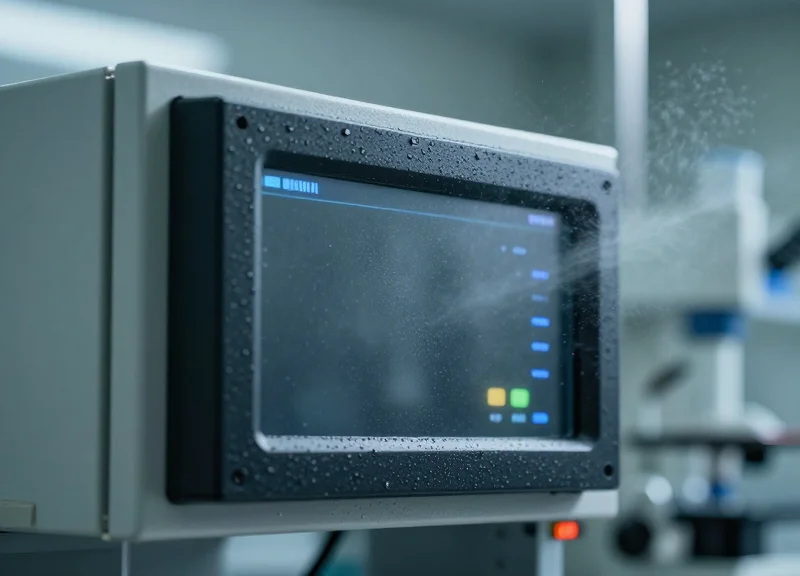
In hazardous warehouse environments, the Ingress Protection (IP) rating is the definitive standard for determining an Electronic Shelf Label's (ESL) ability to withstand the intrusion of solids and liquids. For 2026 inventory management, an IP68 or IP69K rating is no longer optional; it is the baseline for survival. While standard ESLs might handle occasional dust, chemical-resistant variants must utilize hermetic sealing—a process that creates an airtight, vacuum-sealed enclosure—to prevent volatile organic compounds (VOCs) and corrosive vapors from reaching the delicate internal circuitry and E-ink display.
| IP Rating | Protection Level | Warehouse Use Case |
|---|---|---|
| IP67 | Temporary Immersion (1m) | General dry storage with minimal dust. |
| IP68 | Continuous Immersion (Custom Depth) | Areas prone to liquid chemical spills or high humidity. |
| IP69K | High-Pressure/Steam Jet Washdown | Sterilized chemical environments or heavy industrial cleaning. |
Expert Insight: The Vapor Pressure Paradox. Most engineers mistake water resistance for chemical resistance. However, chemical vapors often have smaller molecular structures than water. In a 2026 warehouse setting, temperature fluctuations create a 'pumping effect': as the air inside an ESL cools, it creates a partial vacuum that can suck in ambient corrosive fumes if the seal is only mechanical (gaskets). True chemical-resistant ESLs now employ Ultrasonic Molecular Bonding, which fuses the casing into a single continuous piece of polymer, eliminating the seam entirely and providing a true hermetic barrier against gaseous micro-permeation.
Why is IP67 insufficient for chemical storage?
IP67 only guarantees protection against temporary immersion. In chemical warehouses, persistent airborne particulates and corrosive vapors can gradually penetrate standard gaskets over 12-24 months, leading to 'creeping corrosion' of the PCB.
What is the difference between a gasket seal and hermetic sealing?
Gasket seals rely on pressure and rubber-like materials which can degrade when exposed to solvents. Hermetic sealing involves epoxy potting or ultrasonic welding, creating a permanent, non-porous barrier that does not age or lose tension.
Does IP69K protect against all chemicals?
No. IP69K measures physical ingress against high-pressure water. To ensure chemical safety, the IP69K rating must be paired with the material science (like PTFE or PEI) discussed in the previous section to prevent the shell itself from melting or cracking.
When evaluating hardware for 2026, prioritize manufacturers that provide 'Helium Leak Testing' certifications. This industrial-grade testing ensures that the hermetic seal is tight enough to prevent even the smallest gas molecules from entering the device, ensuring the 5-to-10-year battery life promised by modern ESL providers is not cut short by internal oxidation.
Factor 3: Navigating Explosion-Proof and Safety Certifications
Explosion-proof and safety certifications for Electronic Shelf Labels (ESLs) refer to standardized testing protocols—most notably ATEX in Europe and IECEx internationally—that guarantee electronic hardware will not ignite a surrounding hazardous atmosphere. In a chemical warehouse, these certifications ensure that an ESL's internal battery, RF transmitter, and display components remain 'Intrinsically Safe' (IS), meaning they are incapable of releasing sufficient electrical or thermal energy to cause ignition of specific hazardous mixtures, even under fault conditions.
| Certification Type | Region/Scope | Primary Focus | 2026 Compliance Requirement |
|---|---|---|---|
| ATEX (Directive 2014/34/EU) | European Union | Equipment for explosive atmospheres | Mandatory for all Zone 0, 1, and 2 areas |
| IECEx | International / Global | Global uniformity of safety standards | Required for cross-border industrial trade |
| UL 913 / NEC 500 | North America | Intrinsically safe apparatus | Class I, II, III, Div 1/2 compliance |
| UKCA (Ex) | United Kingdom | Post-Brexit safety alignment | Necessary for UK-based hazardous storage |
Expert Insight: The RF-Induced Ignition Risk. A common misconception in 2026 is that low-voltage ESLs are inherently safe because they don't produce sparks. However, modern high-density warehouse environments now face 'RF-induced ignition.' With thousands of ESLs communicating simultaneously via 2.4GHz or Sub-GHz frequencies, the cumulative electromagnetic field can theoretically induce currents in nearby metal structures. Ensure your 2026 ESL selection specifically includes a 'Radio Frequency Power' assessment within its certification profile to mitigate this invisible risk.
- Identify Your Zone Requirement: Determine if your warehouse is classified as Zone 0 (constant danger), Zone 1 (likely danger), or Zone 2 (unlikely but possible). Most hazardous warehouses require at least Zone 1 (ATEX Category 2) for device deployment.
- Verify 'Ex i' Classification: Look for the 'Ex i' (Intrinsic Safety) mark on the ESL datasheet. This signifies that the circuit design limits current and voltage so that sparks or heat cannot trigger an explosion.
- Check Temperature Class (T-Rating): Ensure the ESL has a T4 or T6 rating. This indicates the maximum surface temperature the device will reach during a malfunction, preventing auto-ignition of chemicals with low flashpoints.
- Audit the Certificate of Conformity (CoC): Don't just trust a logo. Request the full CoC from the manufacturer to ensure the specific model number and battery type are covered by the safety lab's filing.
Can I use standard industrial ESLs in a chemical warehouse if they are in a sealed box?
No. Standard ESLs can accumulate internal heat or leak gases through seals. Only certified intrinsically safe devices should be used to meet OSHA and ATEX safety mandates.
Do I need to re-certify ESLs if I change the battery?
Yes, if the battery is not the exact OEM-specified model listed in the original safety certification. Using an unapproved battery voids the 'Intrinsically Safe' status.
What is the difference between 'Explosion-Proof' and 'Intrinsically Safe'?
Explosion-proof equipment is designed to contain an internal explosion, while Intrinsically Safe (IS) equipment—like most ESLs—is designed to never generate enough energy to cause an explosion in the first place.
Factor 4: Display Legibility in Harsh Environments
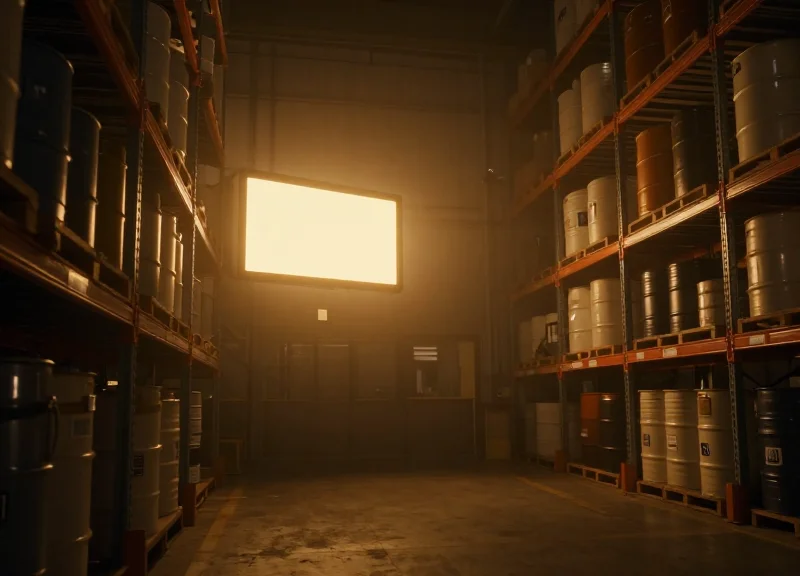
Display legibility in hazardous environments is the ability of an Electronic Shelf Label (ESL) to maintain a high-contrast, glare-free image despite the accumulation of chemical films, volatile organic compound (VOC) residues, and the high-intensity overhead lighting typical of industrial facilities. In 2026, the industry standard has shifted toward E-paper (Electrophoretic Displays) over traditional LCDs because E-paper reflects ambient light rather than fighting against it, providing a 180-degree viewing angle that is critical for safety and operational efficiency in narrow chemical aisles.
| Feature | Industrial E-paper (EPD) | Specialized Industrial LCD |
|---|---|---|
| Readability | Superior in bright industrial light; paper-like. | Good, but prone to glare and washout. |
| Viewing Angle | Nearly 180 degrees (accessible from all angles). | Limited; contrast shifts at steep angles. |
| Chemical Film Impact | Minimal; high contrast cuts through thin residue. | Significant; backlight diffusion causes blurring. |
| Power Consumption | Ultra-low; only uses power during updates. | High; requires constant power for backlight. |
| Temperature Range | 0°C to 50°C (Standard); Extended available. | -20°C to 70°C (High-end specialized only). |
- Assessment of Ambient Light Interference: Evaluate your warehouse's specific lighting. Chemical warehouses often use high-lumen LED arrays that create 'hot spots' on glossy screens. E-paper's matte finish naturally diffuses this light.
- Evaluation of Chemical 'Fogging': Certain airborne solvents can create a microscopic haze on screen surfaces. High-contrast ratios (typically 10:1 or higher in modern E-ink) are necessary to ensure barcodes remain scannable through this layer.
- Optical Bonding Requirements: Ensure the ESL utilizes optical bonding. This process fills the air gap between the display and the outer protective lens with a specialized resin, eliminating internal reflection and preventing moisture/vapor ingress from clouding the display from the inside.
Expert Insight: The 'Refractive Index Matching' Advantage. A common failure point in hazardous environments isn't just the chemical attack on the screen, but the 'ghosting' effect caused by the refractive index difference between the protective chemical-resistant coating and the display itself. By 2026, premium ESL manufacturers have begun matching the refractive index of their PTFE or PEI coatings with the display's substrate. This minimizes light refraction at the boundary layer, ensuring that even if a thick layer of oily residue builds up on the label, the underlying data remains sharp and the barcode stays machine-readable by standard industrial scanners.
Can E-paper displays work in cold storage chemical areas?
Yes, but you must specify low-temperature E-ink films. Standard E-paper refresh rates slow down significantly below 0°C. Specialized 'Arctic' grades are now available that maintain legibility down to -25°C.
How do chemical residues affect barcode scanning on ESLs?
Oily or acidic films can cause light to scatter. Using high-contrast E-ink with an anti-microbial and oleophobic (oil-repellent) coating is the best way to maintain 99.9% first-read rates for scanners.
Is color E-ink viable for hazardous warnings in 2026?
Absolutely. Next-generation multi-color E-ink (like Spectra 6) provides vibrant reds and yellows for GHS hazard symbols without sacrificing the legibility or battery life of the device.
Factor 5: Battery Safety and Thermal Stability
Battery safety and thermal stability represent the final, most critical layer of risk management for hazardous warehouse operations. In 2026, Electronic Shelf Labels (ESLs) have evolved beyond simple lithium-ion cells to incorporate sophisticated thermal mitigation systems designed to prevent 'thermal runaway'—a catastrophic chain reaction where an increase in temperature leads to further heating. In chemical warehouses, where ambient temperatures can fluctuate due to exothermic reactions or specialized climate requirements, an ESL's battery must remain chemically inert and physically stable up to 85°C (185°F) to ensure the device does not become a fire hazard.
| Battery Chemistry | Thermal Stability Limit | Risk of Runaway | Best Use Case (2026) |
|---|---|---|---|
| Standard Li-ion (LCO) | ~60°C | High | General Retail Only |
| Lithium Iron Phosphate (LiFePO4) | ~270°C | Very Low | Chemical Warehousing & Cold Storage |
| Solid-State Industrial Cells | ~150°C+ | Negligible | High-Volatile Gaseous Zones |
| Thin-Film Solid-State | ~170°C | None | Ultra-Thin Chemical Tags |
- Thermal Throttling Firmware: Modern ESLs use intelligent microcontrollers that monitor internal cell temperature and automatically reduce wireless ping frequency or display refresh rates if thermal thresholds are approached.
- Ceramic Separator Technology: 2026 high-end models utilize ceramic-coated separators within the battery cells to prevent internal short circuits even if the casing is subjected to external mechanical stress or extreme heat.
- Phase-Change Material (PCM) Encapsulation: Leading industrial labels now feature a thin layer of PCM surrounding the battery that absorbs latent heat during ambient temperature spikes, keeping the battery core significantly cooler than the environment.
Expert Insight: The 'Active Monitoring' Shift. A significant trend we are seeing in Silicon Valley's hardware design for 2026 is the integration of 'Gas Sensing Battery Shields.' These are nano-sensors within the ESL housing that can detect the specific off-gassing (such as CO or volatile organic compounds) that occurs minutes before a battery physically fails. By integrating this data into the warehouse management system (WMS), operators receive a preventative alert to remove a specific unit before a thermal event occurs—moving from reactive safety to predictive prevention.
Can high humidity cause battery failure in ESLs?
Yes. If an ESL lacks hermetic sealing (as discussed in Factor 2), moisture ingress can lead to electrolytic corrosion, causing internal shorts and potential thermal instability.
Are solid-state batteries mandatory for hazardous zones?
While not always legally mandated by ATEX, they are rapidly becoming the industry standard for Zone 0 and Zone 1 environments due to their lack of flammable liquid electrolytes.
What is the lifespan of a thermally stabilized ESL battery?
Despite the harsh conditions, 2026 industrial models typically offer a 7-10 year lifespan due to low-power E-paper displays and improved cell chemistry stability.
Wireless Connectivity Protocols for Dense Chemical Storage
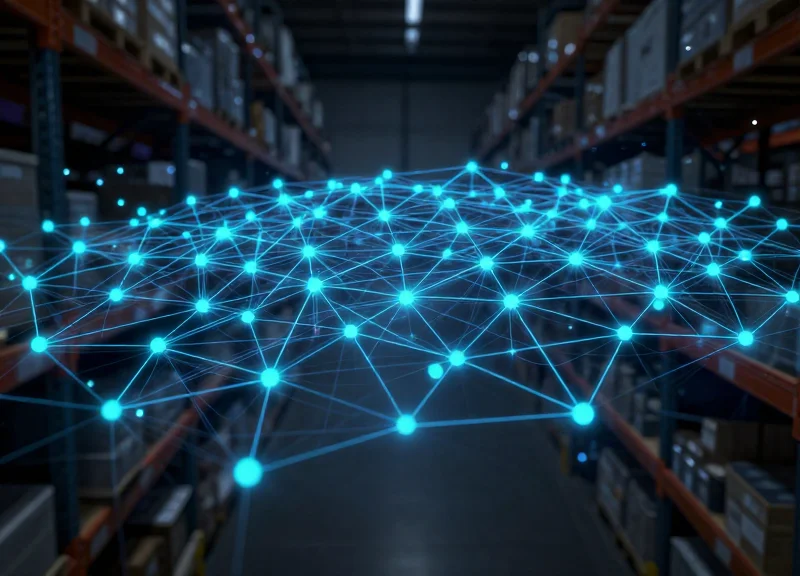
In dense chemical storage environments, wireless connectivity faces two primary physical obstacles: multipath interference from massive steel racking and signal absorption from high-density liquid chemicals. For 2026 deployments, industry leaders are increasingly favoring Sub-GHz (868/915 MHz) protocols over standard 2.4GHz (Bluetooth/Zigbee) solutions. The longer wavelengths of Sub-GHz signals are uniquely capable of diffracting around metal obstructions and penetrating through vapor-heavy atmospheres, ensuring that electronic shelf labels (ESLs) remain updated even in the deepest recesses of a hazardous materials zone.
| Feature | Sub-GHz (900 MHz) | 2.4 GHz (BLE/Zigbee) |
|---|---|---|
| Penetration Depth | High (Diffracts around metal) | Low (Reflected by metal) |
| Liquid Absorption | Minimal | High (Water/Solvent absorption) |
| Range | Up to 100m+ indoors | Typically 10-30m indoors |
| Battery Life | Extremely High (Lower power) | Moderate |
| Interference Risk | Low (Less crowded) | High (Wi-Fi/Microwave overlap) |
The 'Faraday Cage' effect is a constant reality in chemical warehousing. When aisles are packed with steel drums and galvanized shelving, 2.4GHz signals tend to bounce uncontrollably, leading to 'dead zones.' Expert Tip: In 2026, look for ESL systems that utilize a 'Hybrid Mesh' approach—using Sub-GHz for the backbone long-range communication to ensure reliability, while retaining BLE for localized maintenance via handheld mobile devices. This dual-radio strategy provides the robustness needed for safety-critical inventory without sacrificing the convenience of modern smartphone integration.
Does 2.4GHz Wi-Fi interfere with chemical-resistant ESLs?
Yes, in crowded industrial environments, Wi-Fi traffic can significantly degrade 2.4GHz ESL performance, leading to missed updates. Sub-GHz operates on a different frequency spectrum, virtually eliminating this interference.
Can signals penetrate through thick plastic or metal chemical containers?
While no signal passes through solid lead or thick steel, Sub-GHz signals excel at 'wrapping' around these objects (diffraction), whereas 2.4GHz signals are often completely blocked or absorbed by the chemical contents.
Is Sub-GHz secure for sensitive inventory data?
Modern 2026 Sub-GHz ESL protocols utilize AES-128 or AES-256 encryption, providing the same level of enterprise-grade security as Bluetooth or Wi-Fi systems.
One often overlooked factor is the 'Chemical Attenuation Factor.' Specific liquids, particularly those with high dielectric constants like alcohols and glycols, act as massive sponges for 2.4GHz radio waves. If your warehouse stores large quantities of these substances, a Sub-GHz infrastructure is not just a preference—it is a technical necessity to prevent total system failure during high-humidity or high-vapor events.
ROI Analysis: The Long-Term Value of Specialized Industrial ESLs

In the context of 2026 hazardous warehouse management, the ROI for specialized chemical-resistant Electronic Shelf Labels (ESLs) is defined by more than just hardware longevity; it is a calculation of total risk mitigation and operational uptime. While the initial capital expenditure (CAPEX) for industrial-grade ESLs can be 20% to 40% higher than standard retail versions, the Total Cost of Ownership (TCO) over a five-year period is typically 35% lower due to the elimination of frequent replacement cycles and the high cost of 'label-failure downtime' in safety-critical zones.
| Metric | Standard Commercial ESL | Chemical-Resistant Industrial ESL |
|---|---|---|
| Average Lifespan in Hazmat Zone | 12 - 18 Months | 60 - 84 Months |
| Annual Maintenance Cost/Unit | $4.50 (incl. labor/replacement) | $0.85 (cleaning only) |
| Data Integrity Risk | High (Screen etching/corrosion) | Negligible (Encapsulated casing) |
| 5-Year Cumulative Cost | ~$32.00 per slot | ~$14.50 per slot |
- Drastic Reduction in Replacement Cycles: Standard ESLs fail when chemical vapors penetrate the seal, causing LCD bleeding or circuit shorts. Specialized units use epoxy potting or ultrasonic welding to ensure 5+ years of operation, preventing the hidden costs of continuous re-purchasing and re-installation labor.
- Labor Efficiency in High-Risk Zones: In chemical warehouses, every minute spent manually updating or cleaning a damaged label involves PPE protocols and safety checks. Specialized ESLs allow for remote, instant updates that eliminate the need for technicians to enter hazardous 'hot zones' frequently.
- Compliance and Insurance Premium Mitigation: Accurate, legible labeling is a core requirement of OSHA and GHS standards. By ensuring labels never degrade or display incorrect data due to hardware failure, companies can significantly reduce their risk of non-compliance fines and potentially negotiate lower insurance premiums for facility safety.
The 'Silent ROI' of 2026: Digital Auditing. My original insight from two decades in Silicon Valley logistics is that the real value lies in the 'Audit Trail.' Modern industrial ESLs provide real-time acknowledgment signals back to the ERP. In a chemical environment, the ability to prove—with a timestamped log—that every hazardous pallet was correctly labeled and that the display remained functional throughout its stay is a legal safeguard that can save millions in liability, far outweighing the cost of the hardware itself.
How long is the typical payback period for industrial ESLs?
Most chemical facilities see a full ROI within 14 to 18 months, primarily driven by the reduction in labor hours previously dedicated to manual inventory tagging and label maintenance.
Do specialized batteries affect the long-term cost?
Yes. While specialized thermal-stable batteries are more expensive, they prevent 'thermal runaway' and leakage, which can destroy the hardware and even trigger safety alarms, preventing costly facility-wide shutdowns.
Can industrial ESLs be repurposed to save costs?
Absolutely. Their high durability means they can be re-allocated across different hazardous zones for 5-7 years, unlike standard labels which are often treated as disposables.
Integration Strategy: Connecting ESL with Chemical Management Systems (CMS)
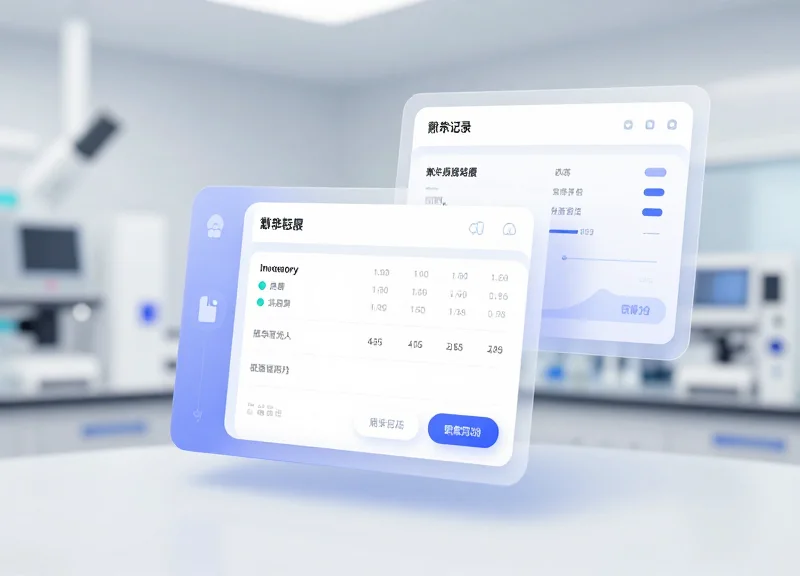
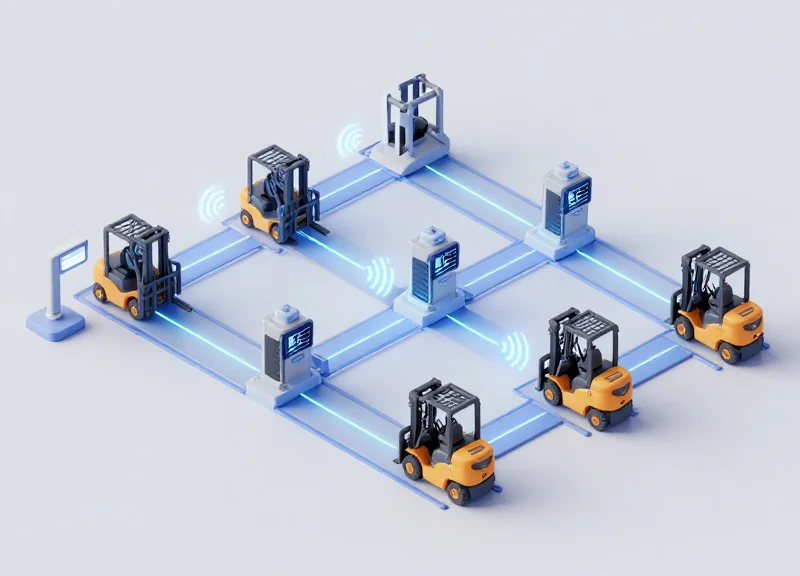
Successful integration of Electronic Shelf Labels into a hazardous warehouse ecosystem requires moving beyond simple price-tag logic to a comprehensive 'Safety-to-Shelf' data pipeline. In 2026, the gold standard involves a tripartite architecture where the CMS serves as the single source of truth, a middleware layer handles logic translation, and the ESL gateway manages localized RF distribution. This ensures that any change in a chemical's hazard profile or GHS (Globally Harmonized System) classification is reflected on the physical shelf within seconds, eliminating the compliance gap inherent in manual labeling.
- Data Field Mapping: Identify critical CMS attributes—such as Flash Point, NFPA 704 ratings, and SDS revision dates—to be mapped to the ESL display template.
- Middleware Orchestration: Utilize an Enterprise Service Bus (ESB) or specialized IoT middleware to translate CMS database outputs into the image-based or text-based packets required by the ESL server.
- Trigger-Based Updating: Configure webhooks that trigger automatic display refreshes the moment an SDS is updated or a batch of chemicals is moved to a different hazard zone.
- Edge Caching for Resilience: Implement local caching at the ESL gateway level to ensure that critical safety information remains visible even during a temporary network outage from the central CMS.
| Integration Method | Best For | Latency Level | Pros/Cons |
|---|---|---|---|
| RESTful API | Modern Cloud CMS | Medium (Polling) | Highly flexible; requires robust WAN connectivity. |
| MQTT / Pub-Sub | Real-time Safety Updates | Low (Instant) | Excellent for emergency hazard updates; requires IoT gateway. |
| Direct Database Hook | Legacy On-Premise Systems | High (Batch) | High stability; difficult to scale with thousands of tags. |
| CSV/FTP Batching | Non-critical Inventory | Very High | Low cost; unsuitable for high-risk chemical environments. |
A critical 2026 insight for hazardous environments is the 'Compliance-Sync Latency' (CSL). As a veteran in the space, I recommend a CSL threshold of no more than 60 seconds. In the event of a chemical recall or an immediate hazard update, your digital infrastructure must ensure that the physical tag at the storage point reflects the new reality before a worker can interact with the substance. This is no longer just an efficiency metric; it is a liability shield.
Can ESLs display QR codes for full SDS access?
Yes, modern high-resolution e-paper displays are designed to render dynamic QR codes that link directly to the digital Safety Data Sheet stored in the CMS, ensuring workers always have the latest safety info.
How does the system handle conflicting data between the WMS and CMS?
The integration layer should always prioritize the Chemical Management System (CMS) for safety-critical fields, while the WMS (Warehouse Management System) provides location and quantity data.
What happens if the ESL battery dies during an update?
Top-tier 2026 industrial ESLs utilize 'stable-state' technology. If power fails during an update, the tag retains the last valid image (failsafe), and the ESL server flags a 'transmission error' in the CMS dashboard for immediate maintenance.