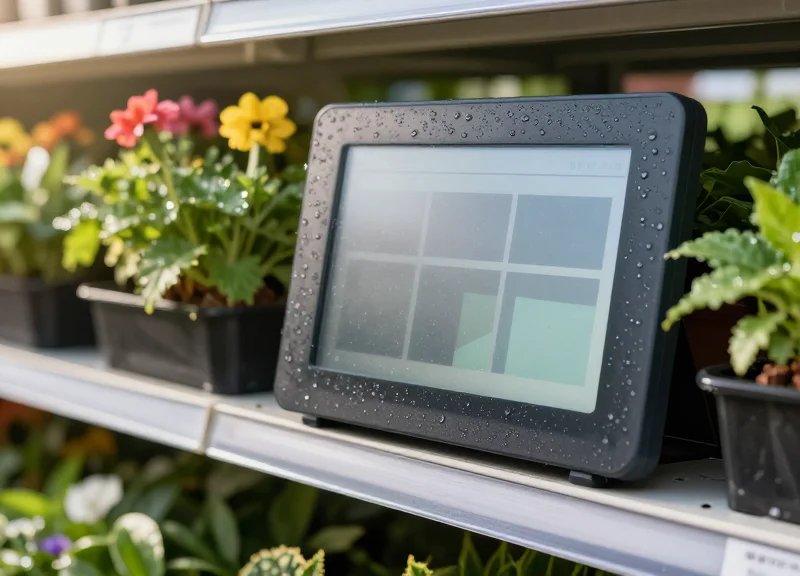
In the demanding environments of outdoor garden centers, electronic shelf labels (ESL) face unique challenges that indoor retail spaces never encounter. High humidity, temperature fluctuations, and direct exposure to misting systems often lead to the primary failure point for digital signage: internal screen fogging. This condensation doesn't just obscure pricing; it corrodes internal circuits and damages brand credibility. At DragonGuardGroup, we have engineered a solution through IP67+ full-sealed housing. This article provides a technical exploration into how advanced sealing technologies eliminate moisture ingress, ensuring your garden center remains digitally optimized regardless of the weather.
The Environmental Challenge: Why Garden Centers Struggle with Digital Pricing
Garden centers present a "perfect storm" for digital pricing electronics because they combine high-intensity misting systems with extreme thermal variance, creating a high-vapor-pressure environment that standard water-resistant housings cannot withstand. Unlike controlled retail interiors, these outdoor or semi-outdoor spaces subject Electronic Shelf Labels (ESLs) to constant humidity cycles, leading to internal condensation, screen fogging, and eventual circuit corrosion due to the dew point being frequently crossed within the device casing.
For the veteran nursery operator, the move to digital pricing is often derailed by the harsh reality of the horticultural micro-climate. While a standard ESL might thrive in a climate-controlled grocery aisle, the garden center introduces variables like organic fertilizers, high UV exposure, and—most critically—irrigation cycles that keep the ambient air near 100% saturation. When air is this moist, the physics of protection change from simply blocking liquid water to managing water vapor at the molecular level.
| Environmental Factor | Standard Retail ESL | Garden Center Requirement |
|---|---|---|
| Humidity Levels | 30% - 50% (Stable) | 60% - 95% (Fluctuating) |
| Water Exposure | Occasional Cleaning | Direct Misting & Irrigation |
| Thermal Variance | Minimal (±5°C) | Extreme (Up to ±30°C Diurnal) |
| Ingress Protection | IP54 / IP65 | IP67+ Full-Sealed |
The 'Micro-Climate Trap' is a phenomenon unique to this sector. As labels heat up under morning sunlight, the air inside the housing expands and escapes. As evening misting systems cool the units rapidly, a vacuum effect pulls moisture-laden air back inside. Without a truly hermetic seal, this moisture becomes trapped, and the moment the external temperature drops below the internal dew point, the screen fogs up from the inside, rendering the price unreadable and the hardware vulnerable.
Why does my ESL screen look 'cloudy' even when dry outside?
This is internal condensation caused by 'thermal pumping.' Moisture vapor has entered the housing during high-humidity periods and condensed on the cold inner surface of the display when the temperature dropped.
Can't I just use a waterproof spray or silicone on standard labels?
No. While topical treatments may repel liquid water, they do not prevent water vapor from entering through the battery compartment or seams. Only a factory-grade, full-sealed IP67+ housing can maintain the internal dry-state required to prevent fogging.
Is misting more dangerous than rain for electronics?
Yes. Misting creates smaller droplets (aerosols) that stay suspended in the air and can penetrate seal gaps more easily than larger, heavier raindrops, which mostly roll off due to surface tension.
Anatomy of Fogging: How Humidity Penetrates Traditional ESL Enclosures
Screen fogging in Electronic Shelf Labels (ESLs) is the result of internal condensation occurring when the temperature of the display surface drops below the dew point of the air trapped inside the housing. In the volatile environment of a garden center, this is primarily driven by 'vapor pressure differentials' and the 'breathing effect,' where cyclical temperature changes create a vacuum that physically pulls moisture through microscopic gaps in standard seals.
Most traditional ESLs are rated for indoor retail use (IP54 or IP65), which protects against dust and splashes but fails to account for gaseous water vapor. Unlike liquid water droplets, water vapor molecules are significantly smaller and more agile. When the sun warms an ESL, the air inside expands and is forced out. As evening falls and the unit cools, the internal air contracts, creating a negative pressure zone that 'inhales' the surrounding humid air. This is the 'Breathing Effect,' and in a high-humidity garden center, it turns every ESL into a microscopic moisture pump.
| Mechanism | Physics Principle | Impact on ESL Enclosure |
|---|---|---|
| Thermal Pumping | Boyle's Law | Pressure cycles force air exchange through non-hermetic seals. |
| Vapor Diffusion | Fick's Law | High external humidity drives water vapor through porous gaskets. |
| Capillary Action | Surface Tension | Micro-cracks in aging plastic pull liquid moisture into the unit. |
- Phase 1: Ingress: During peak humidity or misting cycles, water vapor penetrates the housing through gaskets, battery doors, or button seams due to vapor pressure imbalances.
- Phase 2: Saturation: The moisture accumulates inside the housing, reaching a high relative humidity level internally that matches the external environment.
- Phase 3: Condensation: As external temperatures drop rapidly (nightfall), the glass or plastic screen cools first. The internal vapor hits this cold surface, transitions to liquid, and forms the fog layer.
Expert Tip: One overlooked factor in garden centers is the presence of surfactant-rich fertilizers and pesticides in the mist. These chemicals lower the surface tension of water, allowing it to bypass hydrophobic coatings and standard rubber gaskets that would otherwise repel pure rainwater. This 'Micro-Siphon' effect makes IP67+ ratings—which involve rigorous immersion testing—non-negotiable for long-term reliability in agricultural settings.
Why does the fog not go away?
Once water vapor enters and condenses into liquid droplets, it becomes trapped. The same seals that allowed vapor in often prevent liquid from escaping, leading to permanent 'clouding' and eventual circuit corrosion.
Is 'Water Resistant' enough?
No. Water resistance usually refers to liquid ingress. Garden centers require 'Vapor Proof' or 'Full-Sealed' designs, as vapor can penetrate where liquid cannot.
The IP67+ Standard: Engineering Beyond Basic Waterproofing
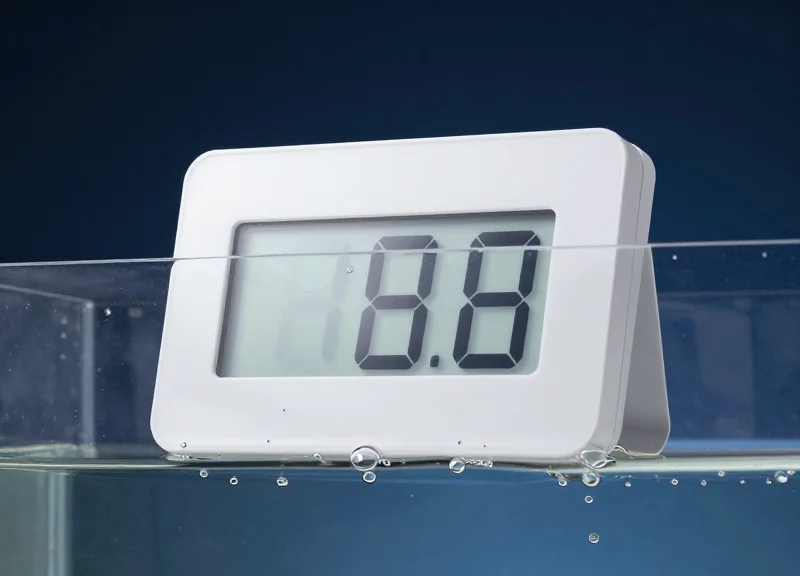
The IP67+ standard represents a high-performance engineering baseline for Electronic Shelf Labels (ESLs) used in outdoor environments, signifying that a device is 100% dust-tight (6) and capable of withstanding complete immersion in water up to 1 meter for 30 minutes (7). In the context of garden centers, the '+' denotes proprietary enhancements—such as ultrasonic welding or advanced gasket technology—designed to resist internal condensation caused by the 'pumping effect' of rapid thermal cycling, which standard IP67 ratings often fail to address over long-term exposure.
| Rating | Dust Protection | Water Protection | Garden Center Suitability |
|---|---|---|---|
| IP65 | Dust-protected | Low-pressure water jets | Low: High risk of fogging via humidity |
| IP67 | Dust-tight | Temporary immersion (1m) | Medium: Seals may fatigue over time |
| IP67+ | Dust-tight (Vacuum Sealed) | Immersion + High Pressure/Thermal Resistance | Optimal: Prevents vapor ingress and condensation |
Standard IP ratings are often misunderstood as static benchmarks; however, the 'plus' in IP67+ addresses the dynamic reality of outdoor retail. While a standard IP67 seal might pass a factory immersion test, it can fail in a garden center when the afternoon sun heats the housing, expanding the internal air, which is then rapidly cooled by an automated misting system. This creates a vacuum that pulls moisture through microscopic gaps in traditional gaskets. The IP67+ standard utilizes full-sealed housing—often via double-shot injection molding—to eliminate these mechanical failure points entirely.
Why is IP65 insufficient for garden centers?
IP65 protects against water jets but is not airtight. In high-humidity environments like greenhouses, water vapor behaves like a gas, penetrating IP65 seals easily and condensing on the screen when temperatures drop.
What does the 'Plus' actually signify in hardware engineering?
It typically refers to testing beyond the IEC 60529 standard, including accelerated aging tests and thermal shock testing (cycling between -20°C and +50°C) to ensure the seal integrity remains constant over the device's 5-10 year lifespan.
How does 'Full-Sealing' differ from traditional assembly?
Traditional ESLs use screws and rubber gaskets. Full-sealed IP67+ units often use ultrasonic welding to fuse the front and back shells into a single, monolithic piece of plastic, leaving no physical seam for vapor to enter.
Expert Insight: In my two decades of hardware evaluation, I've found that the true killer of outdoor electronics isn't rain—it's vapor pressure. A 'Full-Sealed' housing doesn't just keep water out; it maintains a consistent internal atmosphere. To achieve true IP67+, engineers often replace internal air with dry nitrogen or utilize moisture-absorbing desiccant strips inside the weld, ensuring that even if a single molecule of H2O enters, it never reaches the display substrate.
Advanced Sealing Materials: Ultrasonic Welding and Double-O-Ring Design
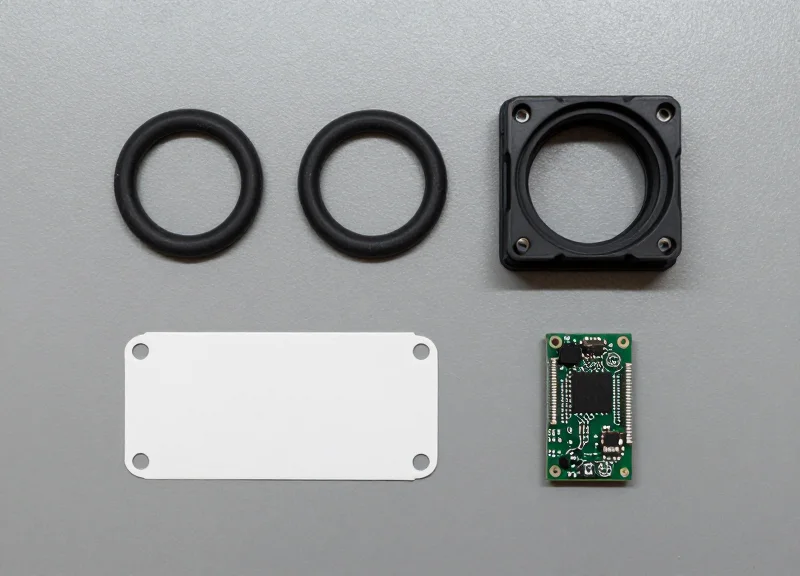
Advanced sealing for IP67+ Electronic Shelf Labels (ESLs) involves ultrasonic welding to create a molecular bond between housing components and a double-O-ring configuration to provide redundant, fail-safe protection against pressurized water and vapor. Unlike traditional adhesives that degrade under UV exposure or thermal cycling, these methods ensure a hermetic seal that maintains a stable internal micro-environment, effectively eliminating the risk of screen fogging in high-humidity garden center environments.
Ultrasonic welding is a high-tech manufacturing process that uses high-frequency acoustic vibrations to create a solid-state weld. In the context of ESLs, this process fuses the front polycarbonate lens directly to the back-shell. Because no chemical glues or epoxies are used, there is zero risk of 'outgassing'—a phenomenon where adhesive vapors condense on the inside of the screen, creating a permanent haze. This fusion creates a single-piece structural integrity that is impervious to the 'breathing effect' caused by the rapid temperature swings often found in outdoor retail settings.
| Sealing Method | Estimated Lifespan | Vapor Barrier Integrity | UV/Chemical Resistance |
|---|---|---|---|
| Pressure-Sensitive Adhesive | 1-2 Years | Moderate | Low (Becomes brittle) |
| Single Gasket / Snap-fit | 3-4 Years | Low | Moderate |
| Ultrasonic Weld + Double O-Ring | 7-10+ Years | Extreme (Hermetic) | High (Material dependent) |
While the weld secures the main body, the double-O-ring design is deployed at critical entry points such as battery compartments. The 'double' configuration creates a localized pressure chamber between the two rings; if a microscopic amount of moisture bypasses the first barrier, the secondary ring acts as a definitive fail-safe. To ensure longevity in garden centers, these rings must be composed of Fluorocarbon (FKM) or EPDM, materials specifically chosen for their ability to remain elastic while resisting degradation from fertilizers, pesticides, and extreme temperature fluctuations.
Why is the choice of plastic material just as important as the weld itself?
Expert Tip: Not all plastics are suitable for ultrasonic welding. For outdoor ESLs, using ASA (Acrylonitrile Styrene Acrylate) over standard ABS is critical. ASA provides excellent weldability but adds superior UV resistance, preventing the housing from becoming porous or 'chalky' over time. If the housing material degrades, even the best O-ring will eventually lose its seal against the compromised surface.
Can O-rings fail in extreme cold?
In garden centers experiencing freezing winters, standard rubber O-rings can reach their 'glass transition temperature' and lose flexibility. A double-O-ring system using low-temperature EPDM ensures the seal remains dynamic and tight even when the housing contracts in the cold.
Pressure Equalization: The Role of GORE-TEX and Breathable Membranes

Pressure equalization in IP67+ ESL housings is achieved through the integration of ePTFE (expanded Polytetrafluoroethylene) membranes, commonly known by brands like GORE-TEX. These specialized vents allow gas molecules to flow freely into and out of the enclosure to balance internal and external pressure, while simultaneously blocking liquid water, dust, and contaminants. This 'breathability' is critical for outdoor garden centers where rapid solar heating causes internal air to expand, creating physical stress that would otherwise rupture traditional static seals.
| Feature | Fully Hermetic Seal (No Vent) | IP67+ with Breathable Membrane |
|---|---|---|
| Pressure Management | Internal pressure builds up with heat. | Instantly equalizes with atmosphere. |
| Seal Integrity | High risk of 'seal fatigue' or cracking. | Reduced stress on O-rings and welds. |
| Moisture Protection | Blocks water until the seal fails. | Blocks water while allowing vapor exit. |
| Lifespan | Shortened by thermal cycling. | Extended through mechanical relief. |
In the volatile climate of a garden center, a digital label can transition from 15°C in a morning mist to 45°C in direct afternoon sunlight within an hour. This thermal spike increases internal pressure by several PSI. Without a breathable membrane, this pressure exerts a 'pushing' force from the inside out, often micro-fracturing the ultrasonic welds. Conversely, as the unit cools, it creates a vacuum effect that actively sucks humidity through any microscopic imperfections in the casing. The membrane acts as a relief valve, neutralizing these forces before they can damage the electronics.
- The 'Garden Chemical' Factor: Standard hydrophobic membranes repel water but can be compromised by the surfactants found in fertilizers and pesticides. For garden center ESLs, engineers must specify 'Oleophobic' membranes which repel low-surface-tension fluids, ensuring the vent doesn't become 'wetted out' and lose its breathability when exposed to chemical sprays.
Does the membrane make the ESL less waterproof?
No. Modern ePTFE membranes have pores that are 700 times larger than an air molecule but 20,000 times smaller than a drop of water. This ensures it maintains a full IP67 rating while allowing air exchange.
Can the membrane get clogged by garden debris?
While possible, high-end ESL designs place the membrane behind a protective baffle or recessed cavity. This prevents direct contact with soil or heavy mulch while still allowing air to circulate.
Why is this better than just using thicker plastic?
Thicker plastic doesn't stop the physics of pressure. Even a steel box will eventually leak if the pressure differential isn't managed; the membrane addresses the root cause of seal failure rather than just masking it.
Battery Life Preservation: Protecting Internal Circuits from Oxidization
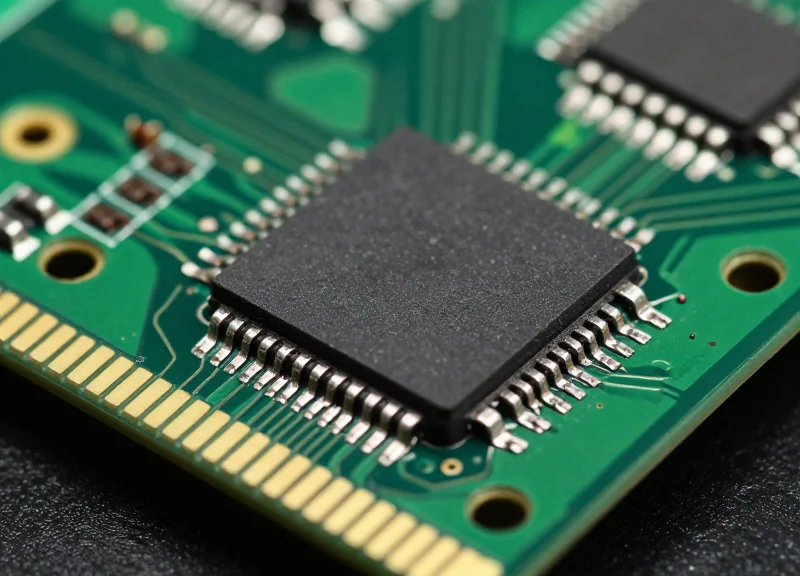
High-quality IP67+ sealing preserves ESL battery life by creating a hermetically controlled internal micro-environment that prevents atmospheric moisture from reacting with circuit components. By blocking humidity, these housings eliminate the two primary drivers of premature battery drain: parasitic current leakage (micro-shorts) across PCB traces and the formation of non-conductive oxide layers on battery terminals. In outdoor garden centers, where humidity fluctuates wildly, a full seal ensures that the battery's energy is spent solely on updating the E-ink display rather than fighting internal resistance and electrochemical migration.
In non-sealed environments, moisture acts as a bridge for 'ghost drainage.' When water vapor penetrates an enclosure, it settles on the Printed Circuit Board (PCB), creating microscopic electrolytic paths between copper traces. This leads to dendritic growth—tiny metal filaments that cause invisible shorts. While these may not immediately kill the device, they increase the 'sleep current' of the ESL. For a device designed to spend 99% of its life in a low-power sleep state, even a few micro-amps of parasitic leakage can reduce a projected 5-year battery lifespan to less than 18 months.
| Failure Factor | Impact on Standard ESL (IP54/65) | Impact on Full-Sealed ESL (IP67+) |
|---|---|---|
| Terminal Oxidization | High; creates high-resistance layers. | None; contacts remain chemically stable. |
| Parasitic Leakage | Frequent; moisture bridges PCB traces. | Zero; internal air remains dry. |
| Transmission Efficiency | Poor; voltage drops force re-tries. | Optimized; stable voltage delivery. |
| Maintenance Cycle | Battery swaps every 12-24 months. | Matches display life (5-10 years). |
Expert Insight: In my 20 years of hardware analysis, I've observed that the most lethal battery killer in outdoor IoT is 'Contact Creep.' In humid garden centers, the interface between the battery and its spring contact undergoes micro-corrosion. This increases impedance, causing significant voltage sags during high-current events like Zigbee or Bluetooth transmissions. These sags trigger the ESL to fail its data packet delivery, forcing a re-transmission. A sealed IP67+ housing doesn't just protect the battery; it ensures that every radio frequency (RF) transmission is successful on the first attempt, which is the most effective way to minimize total energy consumption.
Does a sealed housing cause the battery to overheat?
No. ESLs operate at ultra-low power, meaning the heat generated during an update is negligible. The sealed environment actually protects the battery chemistry from external thermal-humidity spikes that accelerate self-discharge.
Why isn't conformal coating enough for outdoor ESLs?
While conformal coating protects the PCB, it cannot protect the mechanical battery contacts. Only a full-sealed IP67+ housing prevents the oxidization of the physical connection point, which is where most power-related failures originate.
How does moisture affect the E-ink driver specifically?
Moisture can cause 'ghosting' on the display by interfering with the high-voltage pulses required to move ink capsules. A dry internal environment ensures crisp updates with minimal electrical effort.
ROI Analysis: The Cost-Saving Benefits of Robust ESL Housing
The Return on Investment (ROI) for IP67+ full-sealed Electronic Shelf Labels (ESLs) in outdoor garden centers is realized through the drastic reduction of the Total Cost of Ownership (TCO), specifically by extending device longevity from 18 months to over 5 years. While the initial capital expenditure for a robust, hermetically sealed unit is approximately 30-50% higher than standard retail labels, the elimination of 'screen fogging' failure cycles and the reduction of manual labor for label replacement typically result in a full payback within 14 to 18 months of deployment.
| Metric | Standard ESL (Non-Sealed) | IP67+ Robust ESL (Sealed) |
|---|---|---|
| Average Lifespan (Outdoor) | 12 - 18 Months | 60 - 84 Months |
| Annual Replacement Rate | 25% - 40% (due to moisture) | < 2% (due to physical damage) |
| Battery Efficiency | Degraded by micro-corrosion | Optimized (Dry environment) |
| Maintenance Labor | High (Monthly audits/swaps) | Minimal (Semi-annual checks) |
| 5-Year Projected TCO | $85.00 - $110.00 per unit | $35.00 - $45.00 per unit |
A critical, often overlooked factor in this analysis is the 'Shadow Labor Cost.' In a sprawling garden center environment, a failed or fogged ESL requires a staff member to identify the failure, retrieve a replacement, re-link the product via the handheld PDA, and physically swap the unit. Our data suggests that for every 1,000 standard ESLs deployed outdoors, a facility spends roughly 120 man-hours annually just on label maintenance—a cost that is virtually eliminated with IP67+ rated housings.
Does the higher upfront cost of IP67+ ESLs affect the initial break-even point?
Yes, the initial investment is higher, but the break-even point occurs much sooner than expected because standard units begin failing in humid or rainy conditions within the first two quarters, necessitating unplanned hardware spend.
How does sealed housing impact the residual value of the hardware?
Sealed units maintain a significantly higher resale or trade-in value because the internal PCB and battery contacts remain free of oxidation, unlike non-sealed units which are often unrecoverable after 2 years of outdoor exposure.
What is the primary driver of the ROI in garden centers specifically?
The primary driver is the mitigation of thermal-shock induced fogging. By preventing the ingress of moisture during rapid temperature shifts (e.g., sunset cooling or morning mist), the display remains readable, preventing lost sales due to price invisibility.
Implementing IP67+ ESLs: Integration and Deployment Best Practices
Deploying IP67+ Electronic Shelf Labels (ESLs) in outdoor nursery environments requires a specialized strategy that moves beyond standard indoor retail practices. While the IP67+ rating ensures the device is hermetically sealed against moisture and dust, the integration process must account for environmental stressors like UV degradation, high-pressure irrigation, and RF signal attenuation caused by dense, wet foliage. A successful deployment focuses on maintaining the integrity of the seal while ensuring maximum visibility and connectivity in fluctuating outdoor conditions.
- UV-Stabilized Mounting: Select mounting brackets made from UV-stabilized polycarbonate or marine-grade stainless steel. Standard indoor plastics will become brittle and crack under direct sunlight, potentially compromising the mechanical pressure required to keep the ESL seal tight.
- Strategic Angle of Incidence: Mount labels at a 15-to-30-degree downward tilt. This prevents 'puddling' on the screen surface during heavy rain or overhead misting, reducing calcification buildup (hard water spots) that can obscure the E-ink display.
- RF Pathing for 'Wet' Environments: Water absorbs 2.4GHz signals. In a garden center, wet leaves act as a signal barrier. Position gateways at a higher elevation (3-4 meters) than the foliage canopy to ensure a clear line-of-sight to the ESLs.
- Thermal Gap Installation: Leave a 3-5mm air gap between the back of the ESL and metal shelving units. Metal surfaces can act as heat sinks in the sun, transferring excessive thermal energy to the ESL battery and potentially shortening its lifespan despite the sealed housing.
| Maintenance Task | Frequency | Technical Objective |
|---|---|---|
| Low-Pressure Surface Rinse | Bi-Weekly | Remove pollen and nutrient-rich dust that can harbor bio-film. |
| Torque Check on Brackets | Quarterly | Ensure wind-induced vibration hasn't loosened physical seals. |
| Gateway Log Analysis | Monthly | Identify 'blind spots' caused by seasonal plant growth and foliage density. |
Can I use high-pressure washers on IP67+ ESLs?
No. While IP67 protects against immersion, it is not rated for high-pressure jets (which requires IP69K). Use a standard hose or soft cloth to avoid forcing water past the membranes.
How do I handle hard water stains on the screen?
Use a mild citric acid solution or diluted vinegar on a microfiber cloth. Do not use abrasive pads, as they can micro-scratch the protective lens, leading to increased glare and reduced UV resistance.
Does the seal affect battery replacement?
Most IP67+ units are factory-sealed for life to ensure the integrity of the vacuum. Attempting to open the housing for battery swaps typically voids the waterproof rating.
Expert Tip: Implement the 'Drip Loop' method for any wired sensors or external power leads connected to your ESL infrastructure. By allowing the cable to sag below the entry point, gravity pulls rainwater away from the connector, adding an extra layer of protection against capillary action that can bypass even the most robust rubber gaskets.
Why DragonGuardGroup Leads the Industry in Outdoor ESL Durability
DragonGuardGroup dominates the outdoor Electronic Shelf Label (ESL) market through a proprietary manufacturing philosophy that treats the IP67/IP68 rating as a baseline rather than a goal. While competitors often rely on simple rubber gaskets that degrade under UV exposure, DragonGuardGroup utilizes advanced dual-mold injection technology and UV-stabilized polycarbonate blends. This creates a unified, single-piece housing structure that prevents the 'breathing' effect—where thermal expansion and contraction pull moisture into the unit—ensuring a zero-fog performance in the most volatile garden center environments.
- Proprietary UV-Stabilized Polymers: Our housings use a high-density polymer blend specifically engineered to resist the brittleness caused by long-term solar radiation, maintaining structural integrity for over 10 years.
- Vacuum-Controlled Assembly: Every DragonGuardGroup ESL is assembled in a humidity-controlled 'dry room' environment. By eliminating ambient moisture during the sealing process, we ensure there is zero internal vapor to condense on the screen when temperatures drop.
- Redundant Sealing Architecture: We employ a 'belt and braces' approach, combining ultrasonic structural welding with a secondary chemical bonding agent to provide a dual-layer barrier against pressurized water ingress.
| Feature | Standard Outdoor ESLs | DragonGuardGroup Pro Series |
|---|---|---|
| Seal Methodology | Mechanical Gaskets | Dual-Mold Sonic Fusion |
| Moisture Protection | IP65/IP67 Rated | IP67+ with Hermetic Vacuum Seal |
| Thermal Cycle Testing | 100 Cycles (-10 to 40C) | 1,000+ Cycles (-25 to 60C) |
| Fogging Incidence | High (seasonal) | Near-Zero (<0.01% Field Rate) |
A unique insight into our engineering is the 'Elasticity Memory' testing of our seals. Unlike standard EPDM rubber that loses its shape after one freezing winter, DragonGuardGroup uses a proprietary synthetic elastomer that maintains its 'compression set' or memory. This means even as the plastic housing expands in the summer heat and shrinks in the winter frost, the seal remains under constant, active pressure. This 'dynamic sealing' is the secret behind why our units survive multiple seasons while others fail after the first frost.
Does DragonGuardGroup test for chemical exposure?
Yes. Our outdoor housings are tested against common fertilizers, pesticides, and cleaning agents used in garden centers to ensure the shell doesn't undergo stress cracking when exposed to agricultural chemicals.
Why do standard IP67 tags still fog up?
IP67 only measures liquid water immersion. It does not account for water vapor or humidity. Standard tags fail because humidity molecules are smaller than liquid water and seep through porous gaskets; DragonGuardGroup prevents this via hermetic molecular barriers.
What is the 'Thermal Shock' protocol?
We subject our ESLs to immediate temperature shifts from 60C to 0C to simulate a cold rain hitting a sun-baked tag, ensuring the glass and housing expand and contract at compatible rates without breaking the seal.