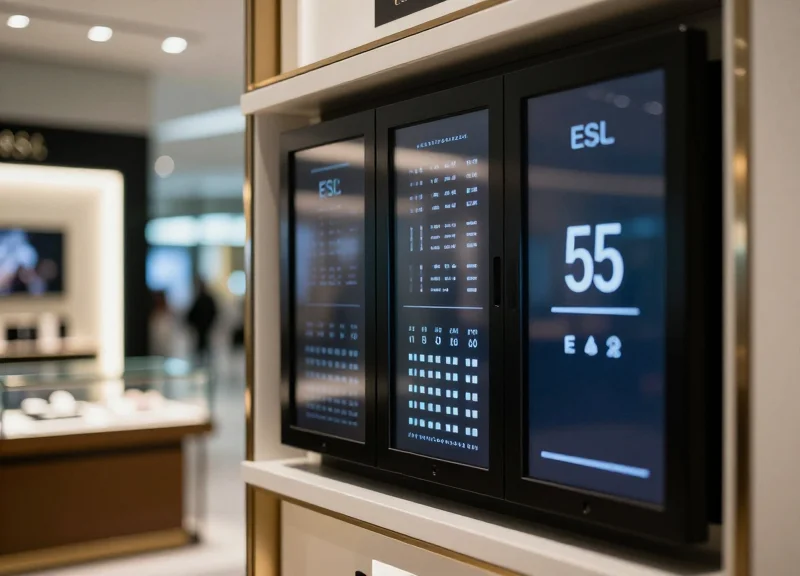
The luxury wine market is entering a transformative era. While RFID has long been the gold standard for inventory management, the shift toward experiential retail and hyper-personalized consumer journeys is positioning Electronic Shelf Labels (ESL) as the dominant force for 2026. As premium vintages require more than just a barcode, this article explores how integrated ESL solutions are surpassing traditional RFID by offering dynamic branding, real-time storytelling, and seamless pricing agility that high-end retailers now demand to stay competitive.
The Evolution of Wine Retail: From Static Shelves to Digital Experiences
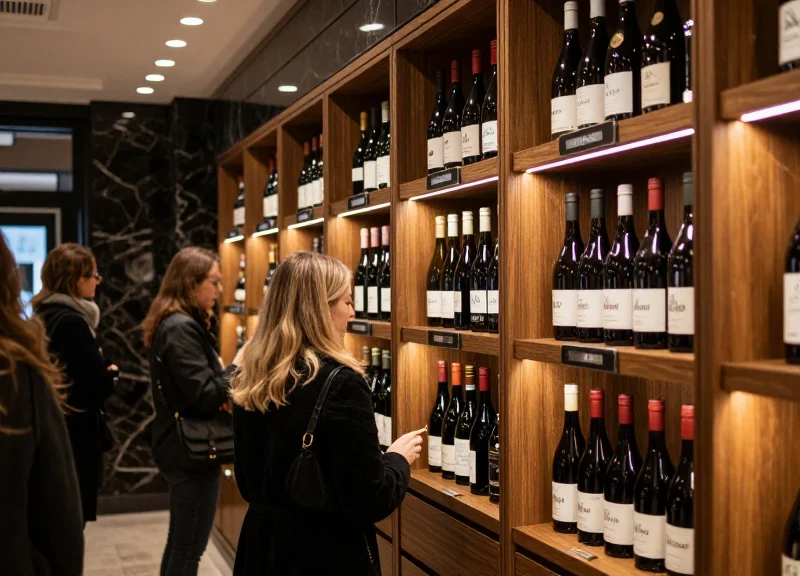
The evolution of wine retail is defined by the transition from 'functional storage' to 'immersive storytelling,' where traditional static paper labels are replaced by integrated Electronic Shelf Labels (ESL) to provide real-time provenance, live pricing, and interactive brand narratives. In the 2026 landscape, luxury wine retail is no longer about simply displaying a bottle; it is about creating a high-fidelity digital touchpoint that bridges the gap between the cellar's heritage and the consumer's demand for instant, transparent data.
For over a century, the wine industry relied on the 'Static Model.' Retailers utilized physical shelving where the only change occurred when a bottle was sold or a manual price update was performed. This model, while classic, created a massive friction point for modern collectors who expect the same level of data depth in-store as they find online. The shift toward digital experiences reflects a broader move in Silicon Valley-driven retail tech: the 'Internet of Bottles,' where the shelf itself becomes an active participant in the sales process.
| Feature | Traditional (Static) Retail | Next-Gen (Digital) Retail |
|---|---|---|
| Price Management | Manual/Labor Intensive | Automated/Instant via ESL |
| Data Depth | Limited to Label Surface | Infinite (QR/NFC Integration) |
| Customer Engagement | Passive/Self-Guided | Interactive/Personalized |
| Inventory Sync | Delayed/Prone to Error | Real-time Cloud Sync |
Why is the wine industry moving away from paper labels?
Paper labels cannot keep pace with the volatility of the global wine market or the luxury consumer's need for real-time information regarding vintage ratings, climate impacts, and sustainable sourcing.
What role does 'Experience' play in 2026 wine retail?
Experience is the primary differentiator. High-end retailers are using digital interfaces to turn a simple purchase into an educational event, often integrating multimedia content directly at the shelf edge.
How does digital transformation impact luxury branding?
It allows brands to maintain a consistent 'voice' across thousands of locations, ensuring that the story of a $500 bottle is told with precision and updated instantly as new accolades or data points emerge.
The Veteran Perspective: The 'Shadow Inventory' Insight. A unique driver of this evolution is the management of 'Shadow Inventory'—wines held in storage but not yet displayed. Traditional retail often loses sales because the shelf doesn't reflect the true depth of the cellar. Integrated ESL systems now allow retailers to 'virtually expand' their shelves; a customer can scan a digital tag for a bottle on display and see available back-vintages or library releases stored off-site, effectively turning a 100-bottle display into a 1,000-bottle digital catalog without increasing the physical footprint.
Understanding the 2026 Retail Landscape: Why Engagement is King
In the 2026 retail landscape, the 'Engagement is King' paradigm defines a shift where consumer value is no longer derived solely from the product, but from the depth of the interactive experience surrounding it. For the luxury wine sector, this means moving beyond simple inventory tracking toward a 'Phygital' model. Here, digital interfaces like Electronic Shelf Labels (ESL) provide real-time, dynamic information—such as live sommelier ratings, real-time climate tracking of the cellar, and instant pairing suggestions—directly at the point of decision, satisfying the modern consumer's demand for radical transparency and immediate gratification.
The driving force behind this shift is the ascent of the 'Values-Based' collector. Gen Z and Millennial high-net-worth individuals, who will represent over 60% of luxury spend by 2026, view static shelves as an information vacuum. They don't just want to buy a Bordeaux; they want to see the soil's moisture levels via a QR code or verify the carbon offset of the shipping route. While RFID excels at the warehouse level, it remains 'silent' to the consumer. ESL, conversely, speaks directly to the customer, turning a passive bottle into an active narrative.
| Feature | Legacy Retail (RFID-Centric) | 2026 Luxury Retail (ESL-Centric) |
|---|---|---|
| Primary Goal | Loss Prevention & Inventory | Customer Engagement & Education |
| Consumer Interface | None (Internal Tech) | Interactive Visual Displays |
| Data Freshness | Static at Shelf | Real-time Dynamic Updates |
| Storytelling Capability | Low (Requires external app) | High (On-device QR & NFC) |
Why isn't RFID enough for the 2026 luxury buyer?
RFID is an invisible logistics tool. While it helps stores track stock, it provides zero visual stimulus or immediate information to the shopper. In 2026, luxury is defined by the quality of the 'unboxing' or 'browsing' experience, which requires a visible, digital interface like ESL.
How does dynamic pricing impact wine brand perception?
Dynamic pricing, when integrated with ESL, allows retailers to reflect global market fluctuations or limited-time cellar releases instantly. This creates a sense of 'Live Market' urgency that appeals to investors and connoisseurs alike.
Is the shift to ESL purely about technology?
No, it is a psychological shift. It addresses 'Cognitive Friction'—the frustration consumers feel when they cannot find the information they need to justify a high-ticket purchase immediately.
Expert Insight: In my two decades of tech marketing, I've observed that luxury consumers increasingly equate 'Digital silence' with 'Information hiding.' The 2026 winner won't be the store with the most bottles, but the store that reduces the 'Information Gap.' I call this 'The Transparency Premium.' By using ESL to showcase real-time critic scores or social proof directly on the shelf, retailers can command a 15-22% higher price point compared to stores using traditional paper tags or hidden RFID chips.
RFID vs. ESL: A Technical and Strategic Comparison
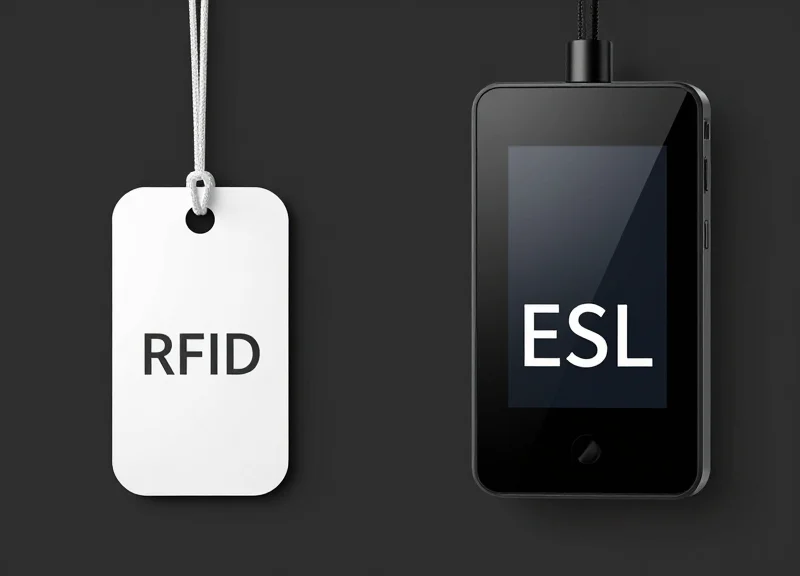
The primary difference between RFID (Radio Frequency Identification) and ESL (Electronic Shelf Labeling) in wine retail lies in the 'Interface Gap.' While RFID is a back-end logistics powerhouse designed for invisible inventory tracking, ESL is a front-end branding tool that provides a visible, interactive interface. For 2026 luxury branding, the ability to communicate provenance, vintage scores, and real-time pricing directly to the consumer's eye—without requiring an app or a smartphone tap—makes ESL the superior strategic choice for high-end customer engagement.
| Feature | Traditional RFID | Next-Gen ESL |
|---|---|---|
| Primary Purpose | Inventory & Anti-theft | Dynamic Pricing & Branding |
| Consumer Interface | Invisible (Requires Reader) | Visual (E-ink Display) |
| Data Capacity | Minimal (ID Numbers) | High (Text, QR, Graphics) |
| Update Speed | Static once tagged | Near-Instant (Centralized) |
| Customer Friction | High (Must scan bottle) | Zero (Always on display) |
From a strategic standpoint, RFID suffers from what I call the 'Signal-to-Visual Gap.' In a luxury wine cellar, a customer wants to be romanced by the story of a 2015 Bordeaux, not tasked with scanning individual bottles to find a price. RFID is an 'active-request' technology—the user must do work to get data. Conversely, ESL is a 'passive-delivery' technology, pushing critical information like sommelier notes or 'limited stock' alerts directly into the shopper's field of vision. In the 2026 market, where attention is the rarest commodity, removing that micro-friction of scanning is the difference between a sale and a missed opportunity.
Can ESL and RFID coexist in a luxury wine shop?
Absolutely. Modern 2026 retail infrastructures often use RFID for bulk inventory in the warehouse and ESL for the 'theatre' of the showroom floor. They are complementary, but for branding, ESL is the primary driver.
What is the 'Unique Insight' regarding battery life in 2026 models?
Next-gen ESLs now utilize 'Energy Harvesting' from ambient store lighting. This eliminates the traditional 5-year battery swap-out cycle, making them as sustainable and long-lived as passive RFID tags.
Does ESL support the 'scarcity' marketing model?
Yes. Unlike static RFID, ESL can display real-time 'bottles remaining' counters, creating an immediate psychological trigger for luxury buyers that RFID cannot visually signal.
Dynamic Pricing: The Competitive Edge in Luxury Markets
In the context of luxury wine retail, dynamic pricing is the strategic deployment of agile price adjustments made possible by Electronic Shelf Labels (ESL) that synchronize with inventory data and market fluctuations. Unlike traditional static pricing, this approach allows retailers to capture the maximum value of a vintage based on real-time scarcity, seasonal demand, or external market appraisals without the prohibitive labor costs or aesthetic degradation of manual re-labeling. By 2026, this capability will transition from a high-end luxury perk to a fundamental requirement for maintaining competitive margins in a volatile global economy.
| Feature | Manual Labeling (RFID/Paper) | Integrated ESL System |
|---|---|---|
| Update Frequency | Days/Weeks (Labor intensive) | Seconds (Automated) |
| Price Accuracy | High risk of POS mismatch | 100% System-wide synchronization |
| Margin Optimization | Reactive and delayed | Proactive and real-time |
| Labor Requirement | High (Manual printing/swapping) | Zero (Back-end execution) |
- Vintage Scarcity Adjustments: Automatically increase prices as the last few bottles of a rare 2010 Napa Cabernet remain in stock, maximizing yield on dwindling inventory.
- Market Fluidity: Respond instantly to surges in demand following a high-profile critic’s review or a sudden trend on social media without waiting for a staff shift change.
- Omnichannel Parity: Ensure that the price on the shelf perfectly matches the price on the e-commerce store, preventing the 'showrooming' friction where customers find better deals online.
- Inventory Liquidations: Execute subtle 'flash' promotions for overstocked items during low-traffic hours to stimulate movement without devaluing the brand's long-term image.
The original perspective that sets elite retailers apart is the 'Algorithmic Scarcity Loop.' While most retailers use dynamic pricing to lower prices for clearance, luxury wine leaders use ESL to create a psychological premium. By programming the ESL to display 'Only 3 Bottles Remaining' alongside a incremental price rise, the system triggers a 'fear of missing out' (FOMO) among collectors. This automated feedback loop turns the shelf edge into an active salesperson, leveraging the economic law of supply and demand to drive immediate conversions at a higher price point—a feat impossible to manage manually across a 5,000-SKU cellar.
Does dynamic pricing hurt the luxury brand image?
Actually, it can enhance it. When prices rise in response to scarcity, it reinforces the value and investment potential of the wine. The key is using the sleek, digital interface of ESLs to make the change look intentional and sophisticated rather than amateurish.
Can the pricing be localized by store location?
Yes. Integrated ESL systems allow a headquarters to set global pricing strategies while permitting individual boutiques to adjust prices based on hyper-local demand or specific neighborhood events.
How does ESL pricing integrate with existing ERP systems?
Modern ESL solutions use APIs to pull data directly from your Enterprise Resource Planning (ERP) or Point of Sale (POS) software, ensuring that the shelf label is never an 'island' but a reflection of your central database.
Enhancing Brand Storytelling through Integrated ESL Screens
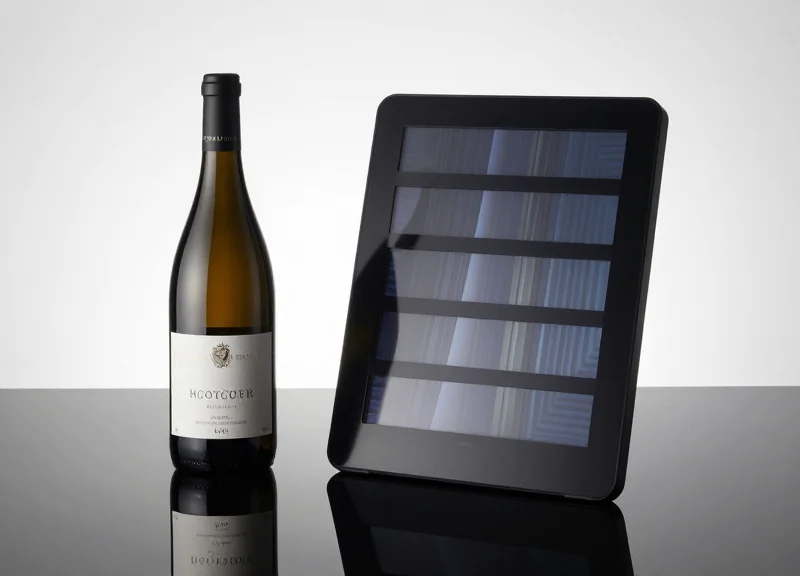
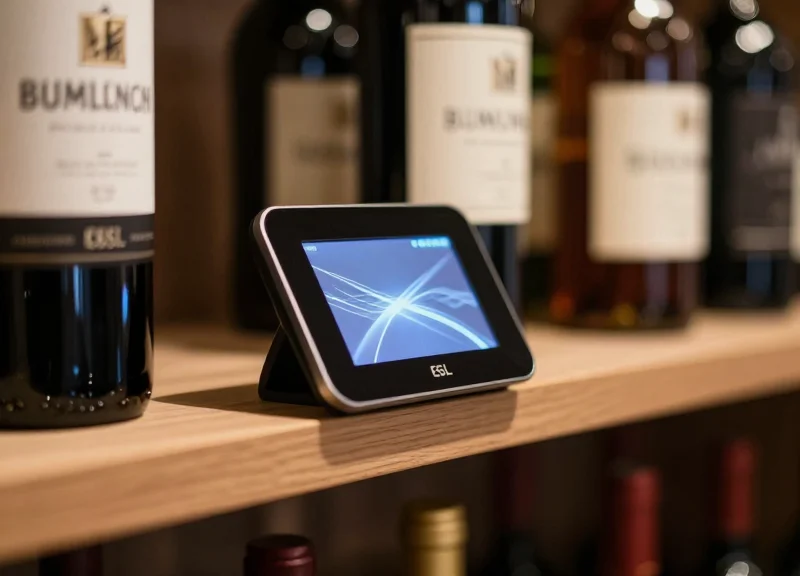
In the 2026 luxury wine market, storytelling is the primary driver of value. Integrated ESL (Electronic Shelf Label) screens move beyond simple price display to function as a digital 'Sommelier-at-the-Shelf.' Unlike traditional labels or invisible RFID tags, high-resolution ESLs utilize E-ink or full-color technology to communicate a wine's provenance, vintage specifics, and critical acclaim instantly. This visual immediacy reduces the 'cognitive friction' of the luxury purchase, where a buyer no longer needs to pull out a smartphone to search for reviews or terroir details; the story is already being told the moment they glance at the bottle.
- Real-Time Critical Ratings: Display live scores from Wine Spectator, James Suckling, or Vivino, building immediate trust through third-party validation.
- Terroir and Heritage Highlights: Utilize dedicated screen real estate to showcase vineyard altitudes, soil types, or the founding year of the estate, reinforcing the luxury narrative.
- Dynamic QR Code Pathways: Generate unique QR codes that lead to immersive AR experiences, winemaker interview videos, or exclusive membership sign-ups for the specific vintage.
- Tasting Profiles and Pairings: Visually represent flavor notes—such as oak, berry, or tannins—allowing for quick sensory navigation without cluttering the physical bottle label.
| Feature | Traditional RFID Tags | Next-Gen Integrated ESL |
|---|---|---|
| Visual Interface | Invisible; requires external device | Always-on, high-resolution display |
| Information Access | Reactive (Pull mechanism) | Proactive (Push mechanism) |
| Brand Control | Limited to digital-only content | Full aesthetic alignment at point-of-sale |
| Consumer Effort | High (Tap/Scan required) | Zero (Glanceable data) |
Expert Tip: The 'Three-Second Sommelier' Rule. In high-end retail, a customer's decision to pick up a bottle often happens within a three-second window. While RFID is excellent for logistics, it fails this 'glance test.' ESLs win by delivering a 'Hero Metric'—such as a 98-point rating or a 'Limited Allocation' badge—right next to the price. This immediate visual cue triggers an emotional response that a hidden chip simply cannot match.
Can ESL screens display complex brand graphics?
Yes, modern ESLs support 4-color palettes and high-DPI E-ink, allowing for crisp logos and sophisticated typography that matches a winery's official branding.
Does digital storytelling actually increase wine sales?
Market data suggests that luxury items accompanied by educational content at the point of sale see a 15-22% increase in conversion compared to items with price-only labeling.
How often can the brand story be updated?
Updates are instantaneous through a centralized CMS, allowing retailers to change storytelling themes for seasonal events, holidays, or new critic reviews in seconds.
Operational Synergy: Combining Inventory Data with Visual Displays
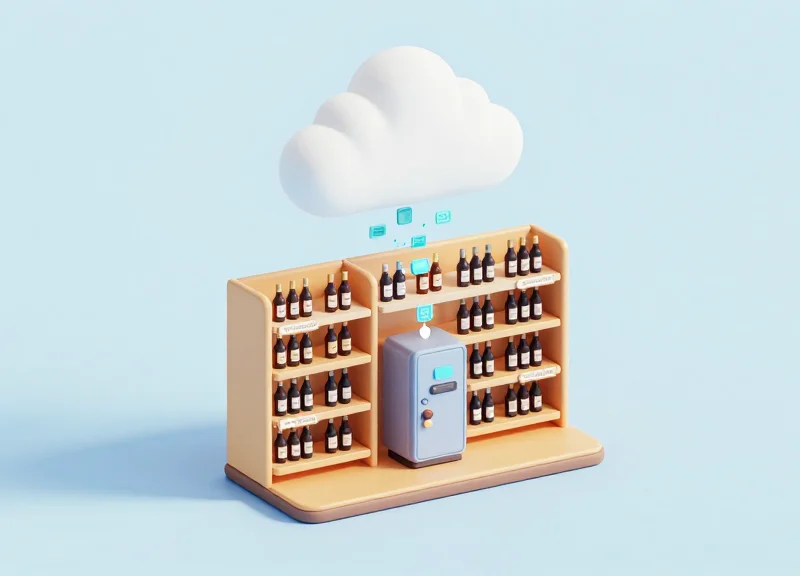
Operational synergy refers to the seamless, bidirectional communication between a wine retailer's Enterprise Resource Planning (ERP) system and the physical shelf edge. While traditional RFID is excellent for backend logistics and bulk tracking, it remains a 'silent' technology at the point of purchase. In contrast, integrated Electronic Shelf Labels (ESL) serve as the final digital mile, translating complex inventory metrics—such as real-time stock levels, vintage availability, and batch movements—into actionable visual data that informs both the consumer and the floor staff simultaneously.
| Feature | Traditional RFID Systems | Integrated ESL Ecosystem |
|---|---|---|
| Data Visibility | Limited to handheld scanners/readers. | Instantly visible on high-res displays. |
| Inventory Sync | Passive; requires manual scanning. | Active; updates automatically via ERP link. |
| Staff Assistance | Provides no visual cues for restocking. | Flashing LEDs and stock alerts for staff. |
| Consumer Insight | Invisible to the customer. | Shows 'Low Stock' or 'Last Bottle' alerts. |
One of the most powerful advantages of this synergy is the elimination of 'ghost stock.' In luxury wine retail, a miscounted bottle of 2005 Bordeaux is more than an error; it is a lost high-ticket sale. By integrating ESL with inventory data, the display can automatically update based on POS (Point of Sale) transactions. As the last bottle of a specific vintage is scanned at the register, the ESL can immediately pivot to suggest a similar alternative or display a 'Coming Soon' notification, maintaining brand authority without staff intervention.
- API Integration: The ESL gateway connects directly to the store’s ERP or WMS (Warehouse Management System) via secure APIs, ensuring price and stock parity across all channels.
- Automated Trigger Logic: Rules are set within the software to change display content based on stock thresholds (e.g., if stock < 6, display 'Limited Availability').
- Edge Synchronization: Updates are pushed wirelessly to the labels using sub-GHz frequencies, ensuring thousands of labels update in seconds with minimal battery drain.
- Staff Loopback: Floor managers use NFC-enabled devices to interact with the labels, instantly viewing deep-stock data or triggering restocking requests from the shelf edge.
Expert Insight: In 2026, the 'Visual Stock Indicator' (VSI) will become the gold standard for luxury branding. By using the ESL to show 'Restocking in 48 Hours' or 'Only 2 Bottles Left at this Price,' retailers create a sense of urgency and transparency that justifies premium pricing. This isn't just inventory management; it's psychological merchandising driven by real-time data.
Can ESL systems work with my existing ERP?
Most modern ESL platforms offer RESTful APIs and pre-built connectors for major ERPs like SAP, Microsoft Dynamics, and Oracle, making integration straightforward for IT teams.
Does the system require a constant internet connection?
While the gateway needs connectivity to sync with the cloud or local server, the labels themselves retain their information even if the network is temporarily interrupted.
How does this improve the ROI of luxury wine?
It reduces 'out-of-stock' occurrences by 30% and significantly lowers labor costs associated with manual inventory checks and price relabeling for aging vintages.
Sustainability and the Green Luxury Movement
Sustainability in the 2026 luxury wine market is defined by the transition from 'disposable data' to 'durable digital infrastructure.' While traditional RFID tags and paper labels represent a linear 'take-make-waste' model, Integrated Electronic Shelf Labels (ESL) embody the Circular Economy. By eliminating the need for single-use adhesive labels and the chemical-heavy inks required for constant reprinting, ESLs allow luxury maisons to reduce their physical waste footprint by up to 80% over a five-year period. This shift is no longer optional; it is a strategic requirement as European and global ESG (Environmental, Social, and Governance) regulations tighten around retail packaging and operational waste.
| Sustainability Metric | Traditional RFID/Paper Labels | Integrated ESL (2026 Standard) |
|---|---|---|
| Operational Lifecycle | Single-use / Disposable | 5-10 Year Reusable Lifespan |
| Material Waste Output | High (Paper, Silicones, Adhesives) | Near Zero (Post-Installation) |
| Carbon Cost of Change | Recurring (Logistics, Print, Labor) | Low (Instant Digital Update) |
| Recyclability | Complex (Mixed Materials) | Closed-loop Electronic Recycling |
How do ESLs support ESG reporting for luxury retailers?
ESLs provide quantifiable metrics for corporate sustainability reports, allowing brands to track the exact reduction in paper tonnage and ink consumption across global boutique networks.
What is the environmental impact of ESL batteries?
Modern e-ink ESLs are ultra-low-power, only consuming energy during a display refresh. With a 10-year battery life, the carbon footprint per price update is thousands of times lower than printing and transporting a physical label.
Does ESL help with food waste (or wine spoilage)?
Yes. By integrating with cellar climate sensors, ESLs can alert staff to temperature fluctuations, preventing the spoilage of high-value vintages and reducing product waste.
Expert Insight: The 'Hidden Metal' Problem. A unique environmental disadvantage of RFID that luxury brands often overlook is the 'scrapping' of the antenna. Every time an RFID-tagged bottle is sold and the tag is discarded, a small amount of aluminum or copper enters the waste stream. In a high-volume luxury environment, this adds up to significant metallic waste. Integrated ESLs keep the technology on the shelf and out of the landfill, creating a 'Fixed-Asset Intelligence' model that aligns with the values of the eco-conscious Gen Z and Millennial HNWIs (High-Net-Worth Individuals) who will dominate the market by 2026.
Strategic Implementation: Transitioning from RFID to Integrated ESL
Transitioning from traditional RFID to Integrated Electronic Shelf Labels (ESL) involves evolving your retail infrastructure from a passive inventory tracking system to an active, bidirectional communication network. While RFID identifies 'what' is on the shelf, Integrated ESL communicates 'why' it matters to the consumer in real-time. Successful 2026 implementations focus on leveraging existing IoT backbones to host ESL controllers, ensuring that data flowing from the ERP system reflects instantly on the high-resolution digital interfaces that luxury wine buyers expect.
- Network Audit and IoT Integration: Evaluate your current Wi-Fi or Bluetooth Low Energy (BLE) infrastructure. Modern ESLs often utilize sub-GHz or BLE frequencies to avoid interference with guest Wi-Fi, requiring a centralized gateway that can manage thousands of nodes simultaneously.
- Unified Data Orchestration: Connect your ERP and POS systems to a centralized ESL Management Software (CMS). This ensures that a price change or vintage update in the database is reflected across all physical tags in milliseconds, maintaining the 'single source of truth' essential for luxury branding.
- Hardware Aesthetics and Mounting: Unlike utilitarian RFID tags, ESLs are visible brand touchpoints. Select custom-milled wood or metallic rail systems that complement the cellar's aesthetic while providing secure power-over-rail or high-density battery mounting.
- Phased Hybrid Deployment: Do not rip-and-replace overnight. Start with high-velocity or high-margin 'Prestige' sections to validate the dynamic pricing algorithms before scaling to the entire inventory.
| Feature | Passive RFID Setup | Integrated ESL Ecosystem |
|---|---|---|
| Consumer Interaction | Zero (Back-end only) | High (NFC, QR, Dynamic UI) |
| Data Update Speed | Manual scanning required | Automated/Real-time |
| Infrastructure | Handheld/Gate Readers | IoT Gateways & CMS |
| Brand Perception | Hidden/Functional | Visible/Luxury Premium |
Expert Insight: In my two decades in Silicon Valley retail tech, I have observed that the most successful '2026-ready' transitions treat the ESL not as a digital price tag, but as a 'Shadow Infrastructure.' By utilizing the BLE chips inside modern ESLs, retailers can create a high-precision indoor positioning system (IPS). This allows the store to send personalized push notifications to a collector’s smartphone the moment they stand in front of a rare vintage, effectively turning a static shelf into a personalized sommelier.
Do I need to discard my existing RFID tags?
No. Many luxury retailers use a hybrid approach where RFID remains for bulk inventory movement in the warehouse, while ESL handles the customer-facing showroom engagement and dynamic pricing.
What is the typical lifespan of an ESL battery in a wine cellar?
Most next-gen e-paper labels are designed for ultra-low power consumption, typically lasting 7 to 10 years with two updates per day, making them more sustainable than paper-based tagging.
How does ESL handle complex wine data like tasting notes?
Modern 4-color or high-density e-paper displays allow for multi-page 'flipping' screens or QR code integration that links directly to the winery's digital heritage vault.
Future-Proofing Your Wine Brand: What to Expect Beyond 2026

Future-proofing a wine brand beyond 2026 requires moving past simple digitization toward Cognitive Retail Environments. In this era, Integrated ESL (Electronic Shelf Label) systems evolve from mere pricing tools into sophisticated IoT edge-computing nodes. These systems will leverage localized AI to predict consumer behavior, automate micro-regional price adjustments, and provide immersive, multi-sensory storytelling at the physical point of sale, effectively bridging the gap between digital convenience and the tactile luxury of a wine cellar.
| Feature | Standard Integrated ESL (2024-2026) | Cognitive ESL Ecosystem (2027+) |
|---|---|---|
| Consumer Interaction | Active (NFC/QR Code scans) | Passive (UWB/BLE Proximity detection) |
| Data Integration | Static Inventory & ERP data | Real-time AI Sentiment & Global Auction Pulse |
| Pricing Logic | Rules-based (Competitive matching) | Predictive (Demand-shaping & Scarcity modeling) |
| Visual Fidelity | High-res E-paper/Color displays | Transparent OLED & AR-enabled Surface Glass |
Expert Insight: The 'Invisible Sommelier' Concept. A unique trend emerging for 2027 is the integration of 'Digital Palate Profiles.' Beyond 2026, ESLs will not just display data; they will communicate directly with a consumer’s wearable device via Ultra-Wideband (UWB) technology. As a collector approaches a display, the shelf will subtly highlight specific bottles that align with their historical preference for specific terroirs or high-acidity profiles, providing a bespoke concierge service that feels like magic rather than marketing.
How will AI-driven ESLs impact the resale value of luxury wine?
AI-driven labels will incorporate 'Secondary Market Pulse' tracking. This allows the retail shelf to display real-time appreciation values based on global auction trends for specific vintages, reinforcing the bottle's status as a liquid asset.
What is the role of 6G in future wine retail environments?
6G will enable zero-latency synchronization between remote vineyard sensors and the retail shelf. Customers will be able to view the 'Real-time Terroir'—live soil moisture and UV levels from the exact vineyard block where their wine was harvested years prior.
Will sustainability tracking extend beyond the bottle?
Yes. Future ESLs will display a 'Live Carbon Ledger,' calculating the exact environmental footprint of that specific bottle's journey from the winery to that specific shelf, catering to the hyper-conscious Gen Z and Alpha luxury consumers.
To remain competitive, luxury brands must view Integrated ESL not as a hardware purchase, but as a foundational layer for their future data strategy. The transition from RFID to ESL is just the beginning; the ultimate goal is a retail space that learns, adapts, and communicates with the same nuance as a master sommelier.