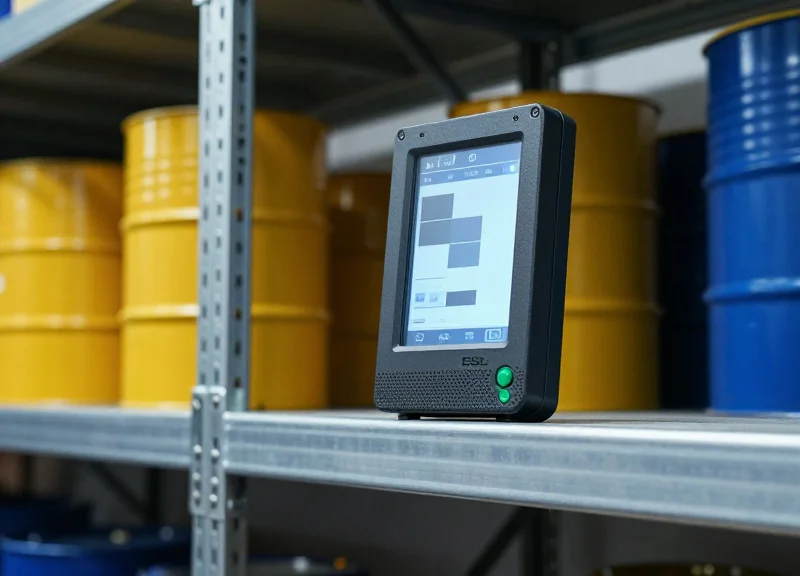
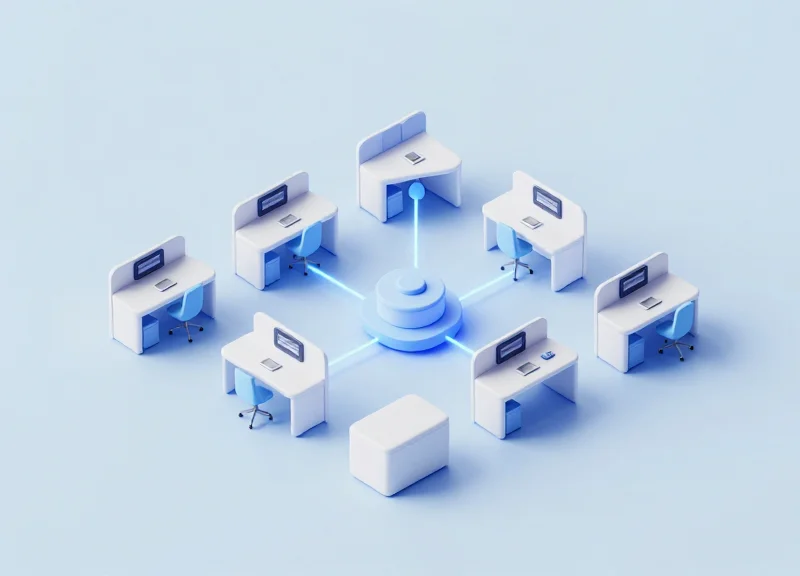
In an era where commercial real estate costs represent a massive chunk of corporate liabilities, the shift toward hybrid work has left many offices half-empty and inefficient. Traditional fixed-seating models are draining resources and inflating maintenance costs. Electronic Shelf Label (ESL) desk booking systems emerge as a game-changing solution, merging IoT hardware with smart software to bridge the gap between employee flexibility and operational cost-efficiency, ultimately delivering a significant reduction in waste.
The Real Estate Paradox: Managing Modern Office Costs
The "Real Estate Paradox" is a modern corporate phenomenon where enterprises maintain 100% of their legacy lease obligations and facilities costs while experiencing peak daily physical occupancy of only 30% to 50%. This disconnect creates "ghost space"—expensive, climate-controlled square footage that sits dormant, effectively doubling or tripling the actual cost per active employee. In an era of high interest rates and compressed margins, bridging this gap through dynamic space management is no longer optional; it is a financial imperative for survival.
Traditionally, real estate was considered a static fixed cost. CFOs would calculate the headcount, add a 10% buffer for growth, and sign a 10-year lease. However, the rise of the hybrid work model has fundamentally broken this linear relationship. Companies are now finding that their second-largest expense—after payroll—is being utilized at a fraction of its capacity, leading to a massive drain on liquidity that could otherwise be diverted to R&D or talent acquisition.
| Metric | Legacy Fixed Model | Modern Hybrid Model |
|---|---|---|
| Desk-to-Employee Ratio | 1:1 | 1:2.5 or 1:3 |
| Average Daily Occupancy | 85%+ | 30% - 55% |
| Cost Per Actual Occupant | Baseline | 2x - 3x Baseline |
| Flexibility | Low (Rigid) | High (Elastic) |
The Expert Perspective: Shifting to 'Utility-Grade' Real Estate. Having spent two decades observing Silicon Valley's infrastructure shifts, I see a clear trend: the most efficient firms are treating office space like cloud computing. Just as AWS replaced static on-premise servers with scalable, pay-as-you-go capacity, ESL-integrated booking systems allow real estate to become 'elastic.' This unique insight suggests that the goal isn't just to 'have an office,' but to maintain a high-density, high-engagement environment that can be scaled down or subleased based on real-time data rather than guesswork.
What is the primary cause of office overhead waste?
The primary cause is 'Static Allocation,' where desks and rooms are assigned permanently to individuals who are only physically present 2-3 days a week, leaving the space unmonetized and unproductive during their absence.
Why can't companies just downsize immediately?
Long-term lease cycles often prevent immediate downsizing. Therefore, the immediate solution is optimizing the existing footprint to increase density, which allows for eventual consolidation or subletting of unused floors.
How does technology bridge the cost gap?
By using IoT and ESL (Electronic Shelf Label) desk booking systems, management gains precise data on utilization patterns, allowing them to close underused wings or floors on low-traffic days like Mondays and Fridays to save on operational costs.
Demystifying ESL Desk Booking Technology
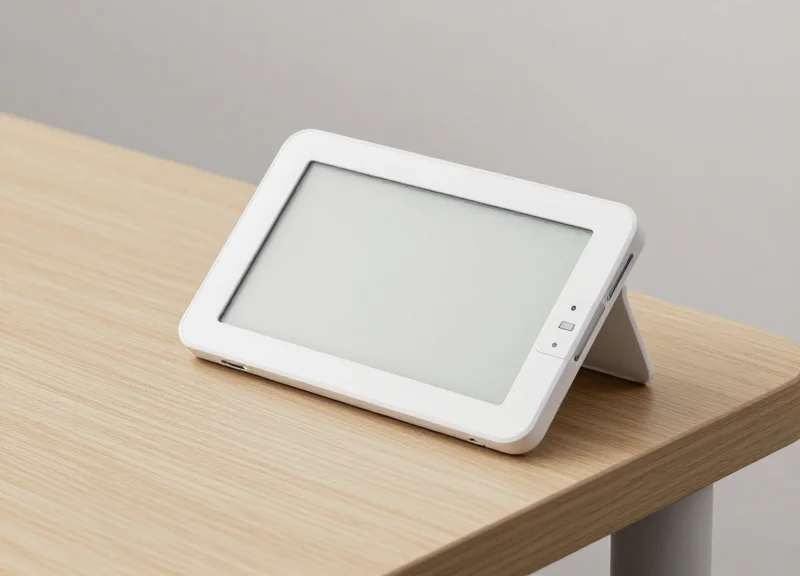
At its core, ESL (Electronic Shelf Label) Desk Booking Technology is a wireless ecosystem that replaces static nameplates with high-contrast, E-ink displays integrated into a centralized office management platform. Originally developed to automate pricing in global retail chains, this technology has been re-engineered for the corporate sector to provide instantaneous visual confirmation of workspace availability. By utilizing bi-directional wireless communication, these battery-powered tags receive updates from a central cloud server, ensuring that a desk's physical status (e.g., 'Booked by Sarah J.' or 'Available') perfectly mirrors the digital reservation system without the need for manual intervention or power cabling.
| Feature | Paper & QR Codes | LCD Tablets/Pads | ESL (E-ink) Systems |
|---|---|---|---|
| Update Frequency | Manual/None | Instant | Near-Instant |
| Power Requirement | None | Hardwired (PoE) | Battery (5-10 Years) |
| Visibility | Low | Backlit (Distracting) | High (Paper-like) |
| Installation Cost | Low | Very High | Medium |
- The E-ink Display: Uses electrophoretic ink that consumes zero power to maintain an image. It only draws energy during a 'state change' (e.g., switching from Available to Booked).
- Wireless Gateways: Small hubs typically installed in the ceiling that communicate with hundreds of tags simultaneously using proprietary Sub-GHz or BLE protocols to avoid Wi-Fi interference.
- Centralized Management Software: The 'brain' of the system that integrates with Microsoft Outlook, Google Workspace, or proprietary HR platforms to synchronize schedules.
Expert Insight: The Sub-GHz Advantage. While many consumer IoT devices crowd the 2.4GHz Wi-Fi spectrum, professional-grade ESL systems often utilize Sub-GHz frequencies (such as 868MHz or 915MHz). This is critical in modern office environments because it provides superior wall penetration and eliminates signal 'noise' from employees' laptops and smartphones, ensuring 99.9% update reliability—a metric where standard Bluetooth-based solutions often fail.
Do ESL tags require Wi-Fi?
No. ESL tags communicate with a dedicated gateway via low-power radio protocols, meaning they do not put additional strain on your corporate Wi-Fi network or create security vulnerabilities.
What happens if the system goes offline?
Because E-ink is bistable, the last update remains visible on the screen indefinitely. Once the connection is restored, the tag automatically refreshes to the current status.
Can the displays be customized?
Yes. Most systems allow for dynamic templates that can include QR codes for instant scanning, company logos, and specific employee details or department colors.
The 30% Efficiency Metric: Breaking Down the Savings

The 30% efficiency metric represents the aggregate reduction in total occupancy costs realized when organizations transition from fixed-seating models to data-driven dynamic environments powered by Electronic Shelf Label (ESL) booking systems. This savings target is achieved by synthesizing two primary financial levers: a 20% reduction in physical real estate footprint (rent/lease) and a 10% reduction in variable operational expenditures (utilities, maintenance, and administrative overhead) through precise, real-time occupancy data.
| Expense Category | Legacy Fixed Model Cost | ESL-Optimized Model Cost | Savings Impact |
|---|---|---|---|
| Real Estate Lease | 100% (Full Capacity) | 75% - 80% (Dynamic) | 20% - 25% Reduction |
| Utility & HVAC | Fixed Schedule | Zonal Demand-Based | 15% Efficiency Gain |
| Janitorial Services | Daily Full Floor | Usage-Triggered | 10% Service Savings |
| Admin/FM Labor | Manual Audits | Automated Reporting | 40% Time Recovery |
One unique insight often overlooked by facility managers is the concept of 'Ghost Space' vs. 'Active Space.' While traditional sensors detect movement, ESL systems provide intent-based data. By knowing who has booked a space and for how long, companies can implement 'Demand-Driven HVAC'—automatically lowering environmental controls in zones where no ESL labels are active. This moves beyond mere motion sensing to predictive energy management, cutting the 'vampire load' of empty office wings that still draw significant power.
How does ESL data influence lease negotiations?
Detailed occupancy heatmaps generated by ESL check-ins provide CFOs with empirical evidence to negotiate smaller renewals or sublease redundant floors with confidence, rather than relying on anecdotal evidence of office vacancy.
Can these systems reduce cleaning costs?
Yes. By integrating ESL usage logs with facility management software, janitorial teams can skip zones that were never checked into, focusing resources only on high-traffic areas and reducing chemical and labor waste.
What is the typical ROI period for an ESL system?
Most enterprise-scale implementations see a full return on investment within 8 to 14 months, primarily driven by the immediate ability to consolidate floors or exit expensive short-term leases.
Ultimately, the 30% metric isn't just a theoretical target; it is a byproduct of high-fidelity data. When every desk is an IoT node, the office ceases to be a fixed liability and becomes a flexible asset that scales in real-time with the actual needs of the workforce.
Streamlining Operations through Automated Check-ins
Automated check-ins in a modern office environment leverage IoT-enabled Electronic Shelf Labels (ESL) to synchronize physical desk status with digital booking platforms instantly. By utilizing NFC, QR code scanning, or proximity sensors, these systems remove the need for manual facility audits, reducing administrative workload by an average of 20-25% while ensuring that workspace availability is 100% accurate in real-time. This automation transforms the desk from a static piece of furniture into a dynamic, self-managing asset.
| Feature | Traditional Manual Booking | ESL Automated Check-in |
|---|---|---|
| Verification | Manual floor walks by HR/Admin | Instant IoT-triggered status update |
| No-Show Handling | Desks stay 'booked' but empty | Auto-release after 15 mins of inactivity |
| Visual Cues | None or paper signs | E-ink display (Red/Green/Yellow) |
| Data Accuracy | High margin of human error | Precise, timestamped usage logs |
The operational efficiency gained here isn't just about saving time for the facilities team; it's about the psychological friction removed for the employee. When a staff member walks into a zone, the ESL display provides an immediate visual confirmation of their reservation. If a desk is 'ghosted'—booked but not occupied—the system automatically updates the central database and the physical label to 'Available,' reclaiming lost real estate in real-time.
- Reservation & Sync: User books a desk via a mobile app; the ESL hardware at the desk updates via Sub-1GHz or Bluetooth Low Energy (BLE) to display the user's name or a 'Reserved' status.
- Proximity Validation: Upon arrival, the user taps their phone (NFC) or scans the QR code on the ESL to confirm occupancy, instantly notifying the management system.
- Dynamic Feedback Loop: If no check-in is detected within a predefined window, the system triggers an 'Auto-Release' protocol, clearing the desk for other users and updating the office heatmap.
The 'Phantom Desk' Insight: In my two decades observing Silicon Valley office trends, the biggest silent killer of efficiency isn't lack of space—it's 'Phantom Occupancy.' This occurs when employees leave personal items at a desk while attending four hours of meetings elsewhere. Sophisticated ESL systems now integrate with PIR (Passive Infrared) sensors to distinguish between 'Reserved' (temporarily away) and 'Occupied' (actually present), allowing facilities managers to distinguish between active work and simple storage, a nuance that traditional software-only solutions completely miss.
What happens if the Wi-Fi goes down?
Most enterprise-grade ESL systems operate on a dedicated gateway frequency (like 2.4GHz proprietary or Zigbee) separate from employee Wi-Fi, ensuring the displays remain accurate even during network outages.
Does this require constant battery replacements?
No. Because E-ink technology only consumes power when the image changes, a single coin-cell battery typically lasts 5 to 10 years, making the maintenance overhead negligible.
Can it integrate with Slack or Microsoft Teams?
Yes. Top-tier systems sync automated check-in data with communication tools to update an employee's status to 'At Desk' automatically, further streamlining internal operations.
The Human Element: Improving Workplace Agility and Morale

Workplace agility is defined by an employee's ability to seamlessly transition between different work modes without administrative friction. ESL desk booking systems enhance this agility by providing an 'at-a-glance' physical interface that bridges the gap between digital reservations and the physical office. By removing the cognitive load associated with 'desk hunting' and eliminating the anxiety of space uncertainty, these systems empower employees to claim ownership of their environment, directly correlating to higher job satisfaction and retention in hybrid work models.
While previous sections focused on the bottom-line savings of 30%, the true ROI of ESL technology lies in the reduction of 'micro-frustrations.' In many agile offices, employees suffer from 'desk ghosting'—where a desk appears available but is secretly reserved, or vice versa. ESL tags provide a real-time source of truth at the point of use. This visual transparency prevents interpersonal conflicts and ensures that the transition from a home office to a corporate hub is frictionless and welcoming.
| Feature | Software-Only Booking | ESL-Integrated Booking |
|---|---|---|
| Visual Confirmation | Requires checking a mobile app | Instant visibility on the desk surface |
| Check-in Friction | Manual app login or QR scan | Automatic NFC tap or button press |
| Space Certainty | Low (Ghosting is common) | High (Physical display prevents poaching) |
| Psychological Safety | Detached and clinical | Personalized (Displays name/status) |
How does ESL technology reduce 'return-to-office' resistance?
Employees are often resistant to returning to the office if they fear the logistics will be difficult. ESL systems provide a 'frictionless landing' experience where their name is already on their desk upon arrival, making them feel expected and valued rather than like a transient visitor.
Can these systems improve team collaboration?
Yes. By using the dynamic display to show team zones or 'neighborhoods,' employees can easily locate colleagues without navigating complex digital maps, fostering the spontaneous 'watercooler' moments that hybrid work often lacks.
Does the technology feel invasive to staff?
On the contrary, employees typically report that physical labels feel less like 'surveillance' and more like a 'service.' It provides them with a tool to manage their own day rather than a tracking device for management.
Expert Insight: The Visual Social Contract. Most workplace tech focuses on the manager's data, but ESL desk booking focuses on the worker's social environment. An ESL tag acts as a 'Visual Social Contract'—it signals to the rest of the office that a space is occupied, even if the person is temporarily in a meeting. This prevents the 'squatter' phenomenon and allows employees to move freely around the office without the fear of losing their home base for the day. This psychological security is the hidden engine behind sustained workplace productivity.
Technical Integration: Synergizing with RFID and ESL Ecosystems
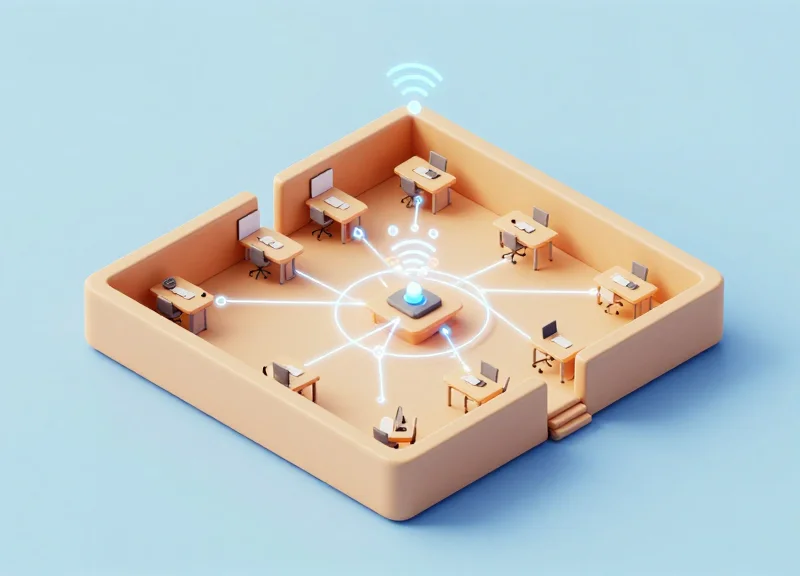
The true power of an Electronic Shelf Label (ESL) desk booking system lies in its technical synergy with existing enterprise infrastructure, specifically Radio Frequency Identification (RFID). By bridging the gap between physical access control and digital workspace management, organizations create a 'Single Source of Truth' for office occupancy. This integration allows an employee's existing corporate ID badge to act as the authentication key, instantly updating the ultra-low-power ESL display at the desk and syncing that status across the global cloud network. At DragonGuardGroup, we leverage our deep heritage in Electronic Article Surveillance (EAS) and RFID to ensure these disparate systems communicate with 99.9% uptime, effectively turning furniture into intelligent, secure assets.
| Feature | RFID Integration | ESL Display Unit | Cloud Middleware |
|---|---|---|---|
| Primary Function | User Authentication & Access | Visual Status & Dynamic Pricing | Data Aggregation & API Bridge |
| Connectivity | HF/UHF (13.56MHz) | Sub-1GHz or BLE 5.0 | RESTful APIs / MQTT |
| Power Source | Passive (No Battery Required) | CR-Series Battery (5+ Years) | Server-side / SaaS |
| Security Layer | AES-128 Encryption | Proprietary RF Protocols | TLS 1.3 / OAuth 2.0 |
Expert Insight: Solving the 'Ghost Booking' Problem. A unique advantage of technical synergy is the elimination of 'ghost bookings'—desks that are reserved in an app but remain unoccupied. By integrating ESL displays with the building's RFID turnstiles or localized NFC sensors, the system can automatically release a reservation if a physical 'tap' or badge-in is not detected within a 15-minute window. This 'Hardware-Validated Occupancy' is the secret sauce to achieving that 30% overhead reduction, as it ensures real estate is never wasted on paper-only reservations.
- Unified Credentialing: Map existing employee RFID/NFC badges to the desk booking software, removing the need for new hardware or employee login friction.
- Bi-Directional Communication: Ensure the ESL hardware communicates back to the central server via an IoT gateway, confirming the display has updated and the desk is officially 'engaged'.
- EAS Security Overlay: Utilize EAS-inspired sensing to alert facilities if hardware is tampered with or removed from its designated zone, protecting your IoT investment.
- Analytics Integration: Feed the combined data from RFID check-ins and ESL status updates into BI tools (like PowerBI or Tableau) to visualize real-time heatmaps of office usage.
Can ESL systems work with my existing HID or Mifare badges?
Yes. Most enterprise-grade ESL gateways are designed to be badge-agnostic, supporting standard 13.56 MHz (NFC/Mifare) and 125 kHz (Proximity) frequencies through integrated readers or software-level API hooks.
Does this system interfere with office Wi-Fi?
No. Leading ESL systems operate on Sub-1GHz frequencies or specialized Bluetooth Low Energy (BLE) channels that are specifically selected to avoid interference with standard 2.4GHz or 5GHz corporate Wi-Fi networks.
What happens if the power or internet goes out?
The ESL displays are bistable, meaning they require zero power to maintain an image. If the system goes offline, the last known status remains visible on the desk, preventing total operational chaos during outages.
Measuring Success: KPI Tracking for Facility Managers
Measuring the success of an ESL desk booking implementation goes beyond simply observing a cleaner office layout; it requires a rigorous, data-driven framework that translates IoT sensor data and display updates into financial outcomes. For facility managers, success is defined by the delta between traditional fixed-cost real estate and a dynamic, high-utilization environment where every square foot is justified by active usage. By leveraging the granular data generated by Electronic Shelf Labels, organizations can move from anecdotal management to precision engineering of their workspace.
| Key Performance Indicator (KPI) | Description | Target Benchmark |
|---|---|---|
| Peak Concurrent Utilization | The maximum percentage of desks occupied at any single moment during the week. | 75% - 85% |
| Ghost Booking Rate | The percentage of desks reserved via the system but never physically occupied. | < 5% |
| Real Estate Cost Per Head | Total facility expenditure divided by the number of unique employees supported. | 20-30% Reduction |
| ESL Battery Longevity | The operational lifespan of the display modules before maintenance is required. | 5+ Years |
| Desk Turnover Time | The duration between a user checking out and the desk being ready/visible for the next user. | < 2 Minutes |
Unique Insight: The 'Latency of Intent' Metric. While most facility managers focus on total occupancy, top-tier Silicon Valley firms track the 'Latency of Intent'—the time gap between an employee deciding they need a space and the ESL reflecting an available spot. High latency in traditional systems leads to 'office friction' and lost productivity. ESL systems excel here because their ultra-low-power e-paper displays provide an always-on visual confirmation that reduces cognitive load for employees, directly correlating to higher workplace agility scores that software-only solutions cannot match.
- Establish a Baseline: Before deploying ESL hardware, use passive sensors or manual audits for 30 days to determine your current unmanaged occupancy rates.
- Monitor the 'Check-in' Compliance: Track how often employees use the RFID/NFC functionality on the ESL to confirm their arrival, as this data is crucial for identifying 'ghost bookings'.
- Calculate Square Footage Recovery: Identify underutilized zones revealed by the data and calculate the potential savings from subletting or terminating leases on that specific acreage.
- Analyze Employee Sentiment: Correlate desk availability data with quarterly employee satisfaction surveys to ensure efficiency gains aren't coming at the cost of morale.
How does ESL data differ from standard Wi-Fi tracking?
Wi-Fi tracking is often imprecise, showing someone 'near' a desk. ESL booking provides definitive proof of intent and occupancy, as it requires a specific interaction (booking/check-in) that ties a user to a precise coordinate.
Can we track the ROI of the hardware specifically?
Yes, by comparing the 'Maintenance Overhead' of ESL (which lasts years on a single battery) against tablet-based displays that require constant charging, wiring, and IT troubleshooting.
What is the most critical metric for immediate savings?
The 'Peak Utilization' metric. If your peak is consistently below 60%, you have immediate evidence that you can reduce your real estate footprint by at least 25% without impacting operations.
Strategic Deployment: A Step-by-Step Implementation Guide
Strategic deployment of an Electronic Shelf Label (ESL) desk booking system involves transitioning from static office management to a dynamic, IoT-enabled environment using a phased rollout that minimizes friction. Unlike software-only solutions, an ESL implementation requires the synchronization of physical hardware, network infrastructure, and change management to ensure that the 30% overhead reduction is realized without compromising employee productivity during the transition.
- Site Audit and Infrastructure Mapping: Conduct a comprehensive RF (Radio Frequency) survey to identify potential dead zones. Since ESLs operate on sub-GHz or 2.4GHz bands, mapping the placement of base stations (gateways) is critical to ensure 100% signal coverage across every floor.
- Software Integration and Middleware Setup: Connect the ESL management platform with your existing enterprise calendar (Outlook/Google Workspace) and HRIS. This ensures that when a desk is booked digitally, the physical tag updates its E-ink display in real-time.
- The Pilot Floor Protocol: Select a high-traffic department to serve as the 'beta' group. This 2-week phase allows facility managers to observe user behavior and refine the booking rules—such as 'no-show' release times—before a full-scale launch.
- Rapid Physical Installation: Deploy the hardware during off-peak hours. Using universal mounting brackets, ESL tags can be snapped onto desks in seconds. DragonGuardGroup recommends a 'Zone-by-Zone' approach to prevent large-scale confusion.
- Employee Onboarding and Activation: Launch a communication campaign highlighting the benefits (e.g., guaranteed seating). Use QR codes on the ESL tags to provide an instant 'Scan-to-Book' tutorial for first-time users.
| Phase | Key Milestone | Target Duration |
|---|---|---|
| Preparation | IT Network & API Integration | 2-3 Weeks |
| Pilot | Single Floor Validation | 1-2 Weeks |
| Mass Rollout | Hardware Installation per 500 Desks | 48 Hours |
| Optimization | Data Analysis & Desk Re-allocation | Ongoing |
Expert Insight: The 'Shadow Sync' Period. A common mistake is going live the moment the hardware is mounted. We recommend a 72-hour 'Shadow Sync' period where the ESL tags display real-time data from the booking system, but the booking functionality is not yet mandatory. This allows the system to calibrate its battery-saving wake-up intervals against actual building traffic patterns, ensuring long-term hardware reliability.
How do we handle global deployments across different time zones?
Our centralized management cloud allows you to push firmware updates and display templates globally, while localized gateways handle the real-time communication for each specific office time zone.
What happens if the office Wi-Fi goes down?
ESL tags are designed with local persistence. They will continue to display the last known booking state even if the network is interrupted, preventing double-booking during outages.
Is special training required for facility staff?
Minimal training is needed. The management dashboard is designed for drag-and-drop desk reassignment, and hardware maintenance is limited to battery changes every 5-10 years.
Sustainability and the Smart Office of the Future
Sustainability in the smart office of the future is defined by the symbiotic relationship between real-time spatial data and resource conservation. Electronic Shelf Label (ESL) desk booking systems serve as the critical sensory layer that allows enterprises to reduce their corporate carbon footprint by up to 25% through the elimination of 'ghost energy' waste and the optimization of physical real estate portfolios.
| Environmental Metric | Traditional Office Model | ESL-Enabled Smart Office |
|---|---|---|
| Energy Consumption | 100% (HVAC/Lighting on all floors) | Adaptive (Zonal shutdowns based on occupancy) |
| Carbon Footprint | High (Large unoptimized real estate) | Low (Consolidated, high-density usage) |
| Hardware Waste | Static signage and paper labels | Reusable, low-power digital displays |
| Space Efficiency | Fixed desks; 40-50% vacancy | Flexible desks; 85-90% utilization |
A unique strategic advantage of using ESL technology for sustainability is the concept of 'Zonal Utility Throttling.' Unlike traditional PIR sensors that may experience latency, an ESL-integrated booking system provides a deterministic view of intended occupancy. Facility managers can leverage this data to feed Building Management Systems (BMS), allowing them to proactively 'power down' entire wings or floors that have no bookings for the day. This proactive energy management prevents the cooling or heating of empty rooms, a common inefficiency that accounts for nearly 20% of commercial building energy waste.
How do ESL systems contribute to ESG reporting?
ESL systems provide granular, verifiable data on space utilization and energy savings, which is essential for Environmental, Social, and Governance (ESG) disclosures and achieving LEED or WELL building certifications.
Can digital desk booking reduce physical waste?
Yes, by moving to a digital ecosystem, companies eliminate the need for printed nameplates, paper-based reservation sheets, and plastic signage, significantly reducing office-wide consumable waste.
What is the battery life impact of ESL sustainability?
Most ESL devices operate on ultra-low power E-ink technology, with batteries lasting 5 to 10 years, ensuring that the hardware's own environmental impact remains negligible compared to the energy savings it facilitates.
Expert Tip: To maximize your sustainability ROI, integrate your ESL desk booking API directly with your smart lighting and HVAC controls. By automating the environment based on real-time check-in data rather than rigid schedules, you can achieve a 'Zero-Waste Workspace' where resources are only consumed where human activity is present.