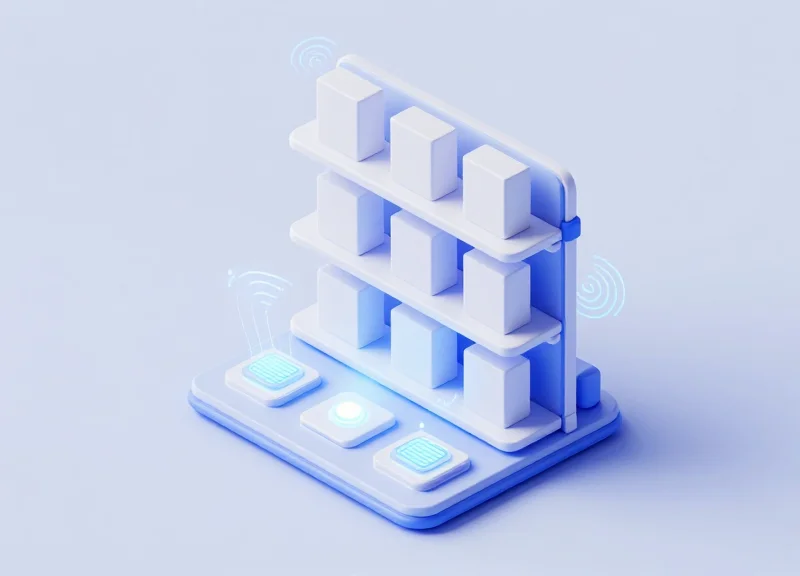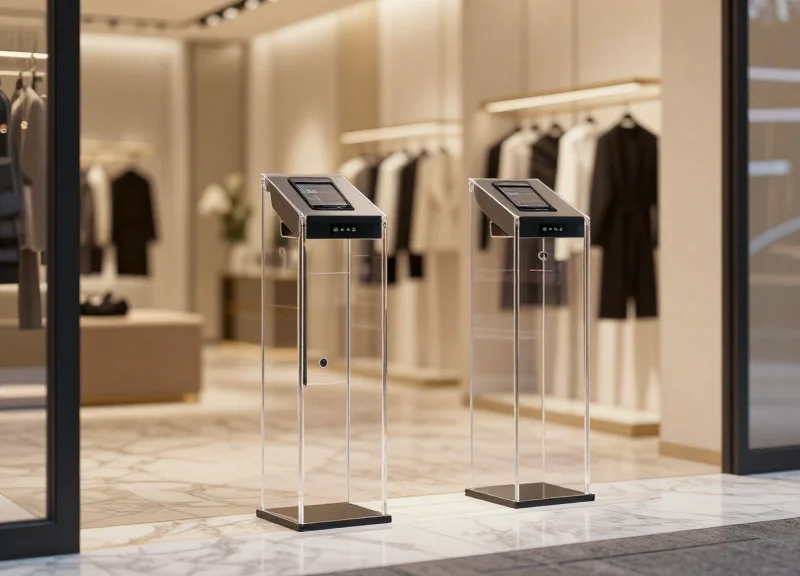
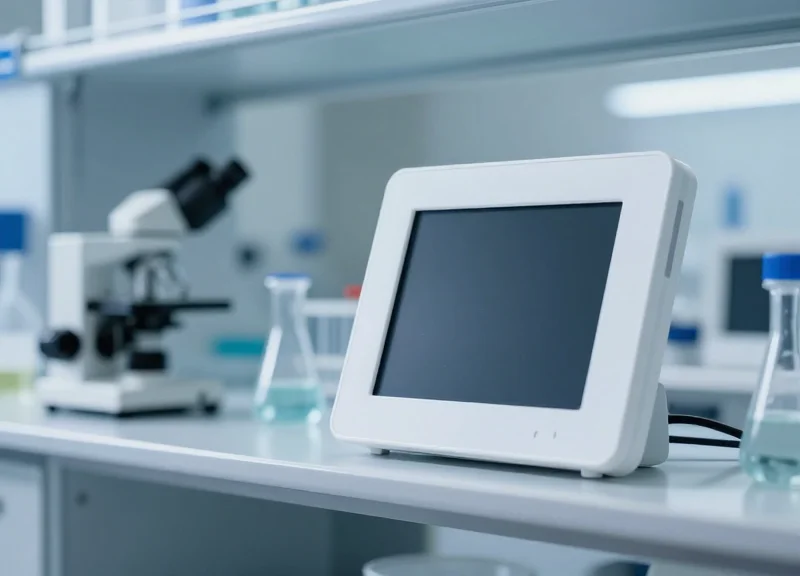
In high-stakes bio-laboratory environments, every surface is a potential vector for pathogens. Traditional paper labels often harbor bacteria and are difficult to sanitize effectively. Medical-grade Electronic Shelf Labels (ESL) with antimicrobial coatings are transforming lab management. By reducing cross-contamination risks by 99.9%, these digital solutions do more than just display data—they safeguard research integrity and deliver a measurable Return on Investment (ROI) through enhanced safety and operational efficiency.
The Evolution of Lab Labeling: From Paper to Medical-Grade ESL
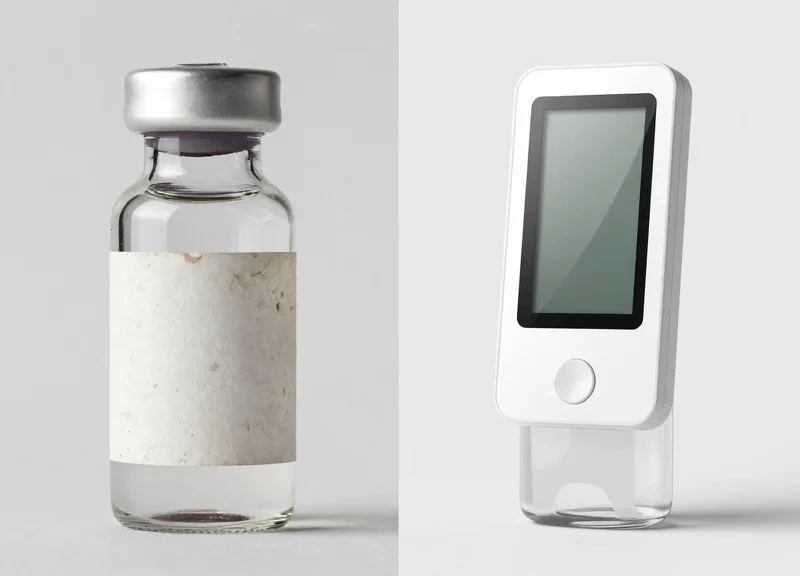
The evolution of lab labeling marks a critical shift from manual, high-risk paper tags to automated, antimicrobial Electronic Shelf Labels (ESL) engineered for high-containment environments. This transition is defined by the move away from porous materials that harbor pathogens toward non-porous, biocidal surfaces capable of maintaining 99.9% sterility. Modern medical-grade ESLs do not just display data; they act as an active layer of defense in the lab's biosafety protocol, replacing the labor-intensive and error-prone legacy systems of the past.
| Feature | Legacy Paper Labels | Standard Plastic Labels | Medical-Grade Antimicrobial ESL |
|---|---|---|---|
| Material Porosity | High (Pathogen Reservoir) | Medium (Biofilm Risk) | Non-Porous (Biocidal) |
| Sterilization | None (Destroyed by Liquid) | Limited (Chemical Wear) | Full (IP67/IPA Resistant) |
| Update Method | Manual Rewriting | Re-printing/Relabeling | Instant Wireless Update |
| Contamination Risk | Extreme | Moderate | Near-Zero (99.9% Reduction) |
In the early days of biotechnology, paper labels were the standard. However, paper is fundamentally incompatible with sterile environments. As a cellulose-based material, paper absorbs moisture and serves as a growth medium for bacteria and fungi. Even the transition to thermal plastic labels failed to solve the primary issue: the adhesive 'edge-gap.' This tiny ridge of glue around a traditional sticker is a magnet for microbial accumulation, creating microscopic colonies that survive surface-level wiping with 70% isopropyl alcohol.
Why is the 'Hidden Biofilm Variable' critical in lab evolution?
Traditional labels allow for the formation of biofilms—complex communities of bacteria that secrete a protective matrix. While a standard wipe might kill surface bacteria, the biofilm remains trapped in the label's texture or adhesive. Medical-grade ESLs use ion-implanted antimicrobial agents that disrupt this matrix at a molecular level, preventing biofilm attachment entirely.
How does ESL improve data integrity compared to manual labeling?
Manual labeling is subject to human error and 'label fatigue,' where faded ink or peeling corners lead to sample misidentification. Medical-grade ESLs synchronize directly with Laboratory Information Management Systems (LIMS), ensuring that the physical label always reflects the digital record without manual intervention.
Expert Tip: When evaluating the evolution of your lab's labeling system, look beyond the screen. The true ROI of a medical-grade ESL lies in its housing. Unlike consumer-grade electronics, medical ESLs utilize ISO 22196 certified materials. This ensures that the antimicrobial properties are not a mere coating that wears off, but are integrated into the polymer matrix of the device, providing life-long protection against cross-contamination.
The Science of 99.9%: How Antimicrobial Coatings Combat Bio-Contamination
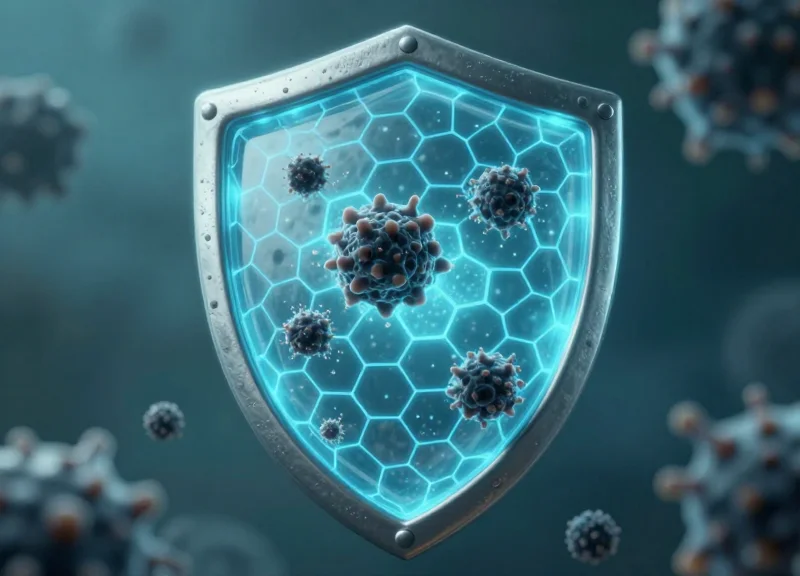
The '99.9%' efficacy rating in medical-grade Electronic Shelf Label (ESL) technology represents a Log-3 reduction in microbial population, typically validated through the ISO 22196 standard. This is achieved by embedding bioactive antimicrobial agents—most frequently silver ions (Ag+)—directly into the polycarbonate or ABS plastic matrix during the manufacturing process. Unlike chemical sprays that offer temporary sanitation, these built-in coatings provide a constant, 24/7 molecular defense that prevents the colonization of surfaces by pathogens such as MRSA, E. coli, and various viral strains.
In a high-throughput bio-lab environment, ESLs serve as high-frequency touchpoints. Traditional plastic surfaces are porous at a microscopic level, allowing bacteria to settle, find nutrients, and multiply into complex communities known as biofilms. Medical-grade ESL coatings utilize a multi-modal mechanism of action to ensure these surfaces remain biologically inert even between manual cleaning cycles.
- Cell Wall Penetration: The positively charged antimicrobial ions are attracted to the negatively charged cell membranes of microbes. Upon contact, they puncture the cell wall, causing immediate structural failure.
- Metabolic Interruption: Once inside the cell, the ions bind to essential enzymes and proteins, effectively 'suffocating' the microbe by halting its energy production (ATP synthesis).
- DNA Replication Inhibition: The ions interfere with the microbe's genetic material, preventing the DNA from unzipping for replication, which ensures that the organism cannot reproduce or evolve into resistant strains.
| Antimicrobial Agent | Mechanism of Action | Durability in Lab Environments |
|---|---|---|
| Silver Ion (Ag+) | Multi-pronged cellular disruption | Excellent; integrated into the material matrix |
| Zinc Pyrithione | Inhibits fungal/bacterial transport | Good; best for moisture-heavy environments |
| Copper Alloys | Oxidative stress and DNA damage | High efficacy but prone to surface oxidation |
| Quaternary Ammonium | Membrane disruption | Low; typically a topical coating that wears off |
Expert Insight: The true value of antimicrobial ESLs lies not just in the 'kill rate' but in the prevention of 'Surface-to-Glove-to-Sample' transfer. A unique data point often overlooked is the 'Biofilm Threshold': once a colony exceeds a certain density on a standard label, it secretes a protective slime layer (EPS) that makes it 1,000x more resistant to bleach. Antimicrobial ESLs work by keeping the microbial load below this critical threshold, ensuring that routine lab cleanings remain 100% effective rather than fighting a losing battle against established biofilms.
Mitigating Human Error: Real-Time Data Accuracy in Bio-Labs
In high-stakes bio-lab environments, human error during labeling accounts for a significant percentage of sample degradation and cross-contamination events. Medical-grade Antimicrobial Electronic Shelf Labels (ESLs) mitigate these risks by bridging the 'transcriptive gap'—the physical and cognitive distance between data entry in a Laboratory Information Management System (LIMS) and the physical label on a specimen. By automating updates via encrypted wireless protocols, ESLs remove the need for researchers to physically handle, peel, or re-apply labels when status changes occur, thereby reducing manual touchpoints by up to 80% and ensuring that the physical asset always reflects the digital truth.
| Feature | Manual Paper Labeling | Automated Antimicrobial ESL |
|---|---|---|
| Update Method | Manual printing and adhesive application | Instant wireless LIMS synchronization |
| Error Probability | High (Transcription and placement errors) | Near Zero (Direct database mirroring) |
| Contamination Risk | High (Porous paper, frequent handling) | Extremely Low (Non-porous, antimicrobial) |
| Audit Trail | Fragmented or manual logs | Automated digital timestamping |
Unique Insight: The Concept of Touchpoint Velocity. Most lab managers focus solely on accuracy, but the true ROI lies in reducing 'Touchpoint Velocity'—the frequency with which a human must interact with a sample container. Every physical touch is a statistical opportunity for a contamination breach or a glove-tear. Automated ESLs allow for 'zero-touch updates,' where a sample's status (e.g., 'Incubation Complete' or 'Hazardous') changes visually on the label without a human ever entering the sterile zone or touching the vial. This shifts the safety paradigm from reactive cleaning to proactive physical isolation.
- LIMS Integration: The system monitors the central database for any changes in sample status, shelf life, or ownership.
- Central Server Validation: Updates are verified against lab protocols to ensure the right information is pushed to the right station.
- Wireless Broadcast: Using low-interference sub-GHz frequencies, the server transmits data to the specific ESL tag attached to the specimen rack.
- Visual Confirmation: The E-paper display refreshes instantly, providing researchers with a clear, color-coded visual cue of the update.
How does the system handle power outages?
Medical-grade ESLs use bi-stable E-paper technology, meaning the label requires zero power to maintain an image. If power fails, the last accurate data point remains visible indefinitely.
Can wireless signals interfere with sensitive lab equipment?
No. These systems typically operate on proprietary low-frequency bands or Zigbee protocols designed specifically to coexist with medical imaging and sensitive diagnostic tools without interference.
Is the digital update as fast as a manual check?
It is significantly faster. A fleet of 5,000 labels can be updated simultaneously in under 60 seconds, a task that would take a human team days to complete manually.
Quantifying ROI: Calculating the Cost of Contamination vs. ESL Investment

The Return on Investment (ROI) for antimicrobial Electronic Shelf Labels (ESL) in bio-labs is calculated by comparing the total cost of ownership (TCO) against the mitigation of 'Black Swan' contamination events, which can cost a facility between $250,000 and $2.5 million per incident. While traditional paper labeling has a lower upfront price, its hidden costs—including manual labor for updates, cross-contamination risks, and audit failure penalties—far exceed the capital expenditure of a medical-grade digital labeling system over a 3-to-5-year lifecycle.
| Cost Factor | Traditional Paper/Manual Labeling | Antimicrobial ESL System |
|---|---|---|
| Upfront Capital | Low ($0.05 - $0.20 per label) | High ($20 - $60 per unit) |
| Annual Labor Cost | High (Manual updates/cleaning) | Near Zero (Automated updates) |
| Contamination Risk | High (Porous surfaces, biofilm) | Minimal (99.9% reduction) |
| Batch Failure Cost | Full loss ($100k+ per event) | Preventative mitigation |
| Audit Compliance | Reactive/Prone to human error | Proactive/Digital audit trail |
Beyond the hardware, the true ROI is found in 'Time-to-Data' efficiency. In a high-throughput bio-lab, technicians spend an average of 15% of their time on inventory management and labeling. Automating this via ESL redirects high-value scientific labor toward actual research. Expert Tip: When building your business case, include the 'Cost of Rework.' If a single sample's integrity is questioned due to a contaminated label, the entire batch often must be discarded to satisfy FDA or ISO standards.
- Identify Incident Baseline: Analyze the last 24 months of lab data to identify the frequency of 'minor' contamination events and 'near-misses' caused by labeling errors or surface contact.
- Calculate Labor Reallocation: Multiply the number of labels updated daily by the average time spent per update and the hourly rate of a lab technician to find annual labor waste.
- Assess Regulatory Risk Premium: Factor in the potential cost of non-compliance fines or the delay in clinical trial timelines caused by poor data integrity.
- Project TCO vs. Risk Mitigation: Compare the 5-year hardware and software maintenance costs against the total calculated savings in labor and risk reduction.
What is the typical break-even point for ESL in a lab?
Most bio-labs reach a break-even point within 14 to 22 months, primarily driven by labor savings and the elimination of label-related supply waste.
Does the ROI account for the 99.9% risk reduction?
Yes, by applying an 'Expected Value' (EV) formula, we multiply the cost of a catastrophic contamination event by the probability of it occurring. Reducing that probability by 99.9% creates a massive financial 'insurance' effect.
Are there tax incentives for implementing medical-grade ESL?
In many jurisdictions, the transition to digital infrastructure qualifies for R&D tax credits or capital equipment depreciation, further accelerating ROI.
Operational Efficiency: Streamlining Asset Tracking and Inventory Management
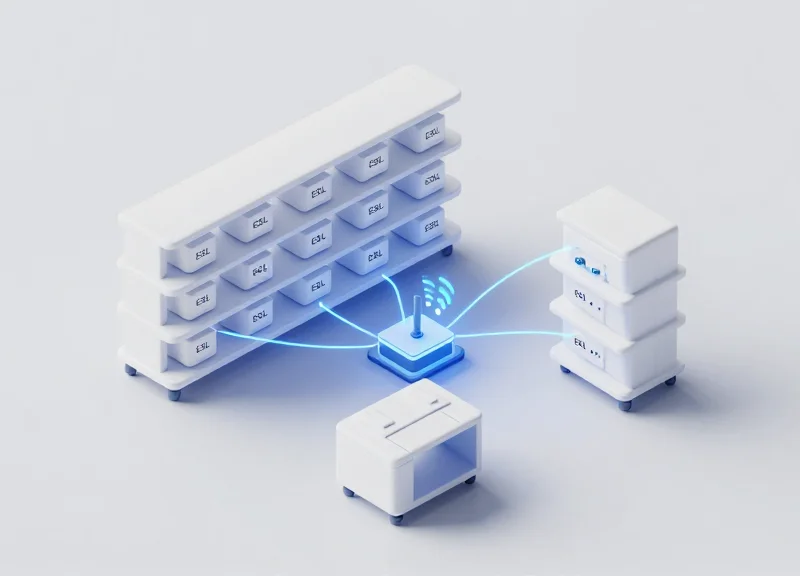
Operational efficiency in bio-labs is defined by the ability to maintain 100% asset visibility and regulatory compliance without draining high-value scientific labor. Centralized Antimicrobial Electronic Shelf Labels (ESLs) serve as the backbone of this efficiency, replacing the 'manual touch' economy with an automated, synchronized ecosystem. By integrating directly with Laboratory Information Management Systems (LIMS), ESLs ensure that inventory levels, chemical expiry dates, and asset locations are updated across thousands of items simultaneously. This eliminates the 'Silent Friction' of manual tracking—those micro-delays where researchers waste 15-20% of their day searching for reagents or verifying expiration dates—and redirects that time toward high-impact scientific discovery.
| Operational Task | Manual Labeling Process | Centralized ESL System |
|---|---|---|
| Inventory Audit Preparation | 40-60 Man-Hours (Manual Scanning) | < 4 Hours (Digital Verification) |
| Reagent Expiry Updates | Individual Label Replacement | Instant Batch Updates via LIMS |
| Asset Search Time | High (Manual Visual Scan) | Low (Real-time LED Flashing) |
| Data Integrity Proof | Manual Logs (Susceptible to Error) | Automated Immutable Audit Trail |
Expert Insight: Beyond hygiene, the most significant ROI driver is the 'Scientific Opportunity Cost.' In a typical bio-lab, shifting from manual to digital labeling returns an average of 12 hours per week per lab manager. Over a year, this equates to nearly 600 hours of reclaimed high-level cognitive labor, effectively expanding your research capacity without increasing headcount.
- System Syncing: Establish a secure API connection between the ESL gateway and the existing LIMS or ERP database.
- Dynamic Parameter Setting: Define triggers for automatic label updates, such as low-stock alerts or proximity to shelf-life expiration.
- Automated Audit Execution: Utilize the two-way communication of ESLs to ping all devices for status reports, generating compliance logs in seconds.
- Workflow Visualization: Use the labels' built-in LED indicators to guide staff to specific assets during high-velocity sample processing.
How do ESLs handle the interference-heavy environment of a lab?
Medical-grade ESL systems operate on dedicated sub-Ghz or encrypted protocols that bypass standard Wi-Fi congestion, ensuring zero interference with sensitive lab equipment.
What is the lifespan of an ESL in a high-audit environment?
Most units are rated for 5-10 years of battery life. Because they only consume power during image updates, the ROI is sustained over a decade of operational use.
Can ESLs integrate with cold-chain storage?
Yes, specialized ESL models are engineered for cryogenic and deep-freeze environments, maintaining screen legibility and antimicrobial properties at temperatures as low as -25°C.
Compliance and Standards: Meeting GLP and GMP Requirements with Digital Labels
Meeting Good Laboratory Practice (GLP) and Good Manufacturing Practice (GMP) standards requires a dual focus on data integrity and environmental control. Antimicrobial ESLs address both by replacing high-touch, error-prone paper labels with automated digital displays protected by biocidal coatings. These devices ensure that all labeling changes are recorded in an immutable digital log, satisfying the ALCOA+ (Attributable, Legible, Contemporaneous, Original, Accurate) principles essential for FDA and EMA compliance, while the physical hardware actively inhibits 99.9% of microbial growth to maintain sterile environment protocols.
| Regulatory Requirement | Traditional Labeling Risk | Digital ESL Compliance Solution |
|---|---|---|
| Data Integrity (21 CFR Part 11) | Manual entries can be forged or illegible. | Centralized, encrypted logs with timestamped updates. |
| Contamination Control (GMP) | Paper and adhesives harbor biofilms and pathogens. | ISO 22196 certified antimicrobial surfaces. |
| Traceability & Audit Trails | Difficult to track the history of label changes. | Complete version history of every display update. |
| Material Validation | Adhesives may fail or outgas in specialized environments. | Medical-grade housing resistant to chemical sterilization. |
Beyond simple data display, the integration of ESLs into a Laboratory Information Management System (LIMS) creates a 'Closed-Loop Compliance' environment. This automation removes the 'human variable' from the labeling process. In a GMP setting, where a single mislabeled reagent can lead to the disqualification of a multi-million dollar batch, the ability to push global updates to thousands of labels simultaneously—with 100% accuracy—is not just an efficiency gain; it is a critical risk-mitigation strategy that satisfies even the most stringent regulatory inspectors.
How do antimicrobial ESLs support 21 CFR Part 11 compliance?
ESLs support this regulation by providing secure, computer-generated, time-stamped audit trails that independently record the date and time of operator entries and actions that create, modify, or delete electronic records.
Can digital labels withstand the aggressive cleaning required by GMP?
Yes, medical-grade ESLs are typically IP67 or IP68 rated, allowing them to withstand rigorous wipe-downs with IPA (Isopropyl Alcohol), hydrogen peroxide vapors, and other common laboratory disinfectants without degrading the antimicrobial coating.
What is the Expert Tip for compliance implementation?
Always ensure your ESL vendor provides a 'Certificate of Conformity' specifically for ISO 22196. While many claim 'antimicrobial' properties, only certified hardware can be used as a formal 'Preventative Control' in your Quality Management System (QMS) documentation.
Unique Insight: The 'Hardware Fail-Safe'. In traditional GLP/GMP audits, human error in cleaning or labeling is the most cited deficiency. Antimicrobial ESLs introduce a passive compliance layer. Even if a cleaning cycle is missed due to operational stress, the hardware's intrinsic 99.9% microbial reduction serves as a constant, non-human-dependent fail-safe that maintains the facility's hygiene integrity, potentially saving the laboratory from a 'Form 483' observation or a costly Warning Letter.
Durability and Maintenance: Why Medical-Grade ESLs Outlast Traditional Methods
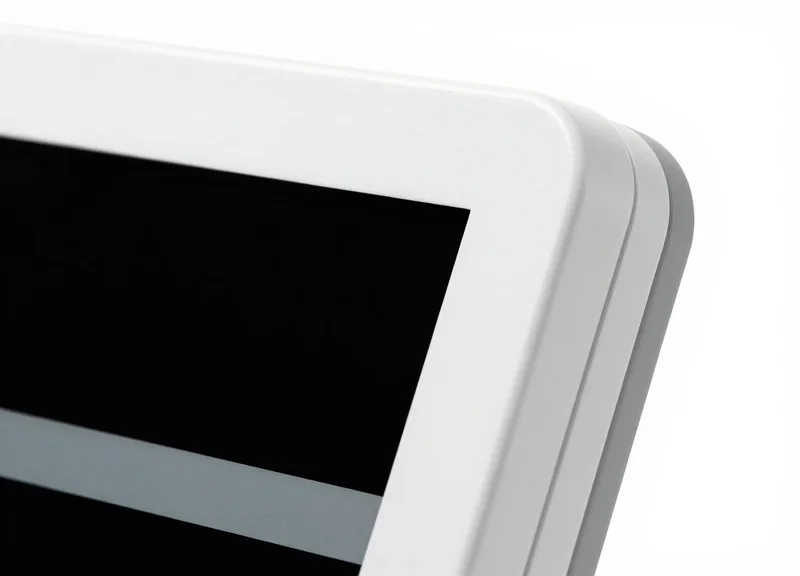
Medical-grade Electronic Shelf Labels (ESLs) outlast traditional adhesive labels because they are engineered with ISO 22196 compliant antimicrobial polymers and IP67/IP68 ingress protection. Unlike paper or standard plastic tags that peel, yellow, or harbor pathogens when exposed to isopropyl alcohol (IPA), bleach, or vaporized hydrogen peroxide (VHP), medical-grade ESLs maintain structural integrity and display clarity for 5 to 10 years. By eliminating the 'adhesive-failure cycle' common in high-humidity or cold-storage bio-lab environments, these devices provide a permanent hardware solution to a historically consumable-heavy problem.
| Durability Metric | Traditional Paper/Synthetic Labels | Medical-Grade ESL (Antimicrobial) |
|---|---|---|
| Chemical Resistance | Low; Ink fades and adhesives dissolve. | High; Resistant to IPA, VHP, and CIDEX. |
| Sterilization Tolerance | One-time use; degrades under UV-C. | Multi-year; Optimized for UV-C and Autoclave. |
| Temperature Range | Adhesive fails in deep freeze (-20°C). | Operational down to -25°C (specialized models). |
| Pathogen Sequestration | High; Porous edges trap bacteria. | Zero; Non-porous, antimicrobial surface. |
| Expected Lifespan | 1 day to 3 months. | 5 to 10 years (battery-optimized). |
A critical but often overlooked factor in bio-lab durability is 'Chemical Stress Cracking.' Standard consumer electronics or low-grade plastics develop microscopic fissures when repeatedly exposed to medical disinfectants. These micro-cracks serve as 'bio-refuges' where pathogens can survive even after a wipe-down. Our unique insight for lab managers is that medical-grade ESLs utilize high-density, non-porous resins specifically formulated to resist this fatigue. This ensures that the 99.9% antimicrobial efficacy is not just a surface treatment that wears off, but a structural property that remains active for the life of the device.
- Phase 1: Surface Hardening: Deployment of glass-reinforced or chemically inert polymers that prevent 'pitting' from corrosive cleaning agents.
- Phase 2: Ingress Protection: Utilizing ultrasonic welding or specialized gaskets to reach IP68 ratings, ensuring internal circuitry is safe during deep-cleaning submersions.
- Phase 3: Battery Management: Utilizing E-ink technology which only consumes power during updates, extending the physical lifecycle of the hardware to match the lab's equipment replacement cycles.
Do medical-grade ESLs require frequent battery changes?
No. Because E-ink displays are bi-stable, they only use power when the information changes. In a typical bio-lab setting, batteries last between 5 and 10 years, meaning the device is essentially 'maintenance-free' for its entire operational life.
Can these labels withstand Vaporized Hydrogen Peroxide (VHP) sterilization?
Yes. Medical-grade ESLs are tested specifically for VHP environments, which are common in BSL-3 and BSL-4 labs, ensuring no clouding of the screen or degradation of the antimicrobial casing.
How do you clean an antimicrobial ESL?
Unlike paper labels that must be replaced, ESLs can be wiped down with standard hospital-grade disinfectants. The antimicrobial properties are integrated into the material, meaning they won't 'wash off' during cleaning.
Case Study Scenarios: Successful Integration in Modern Biotech Facilities
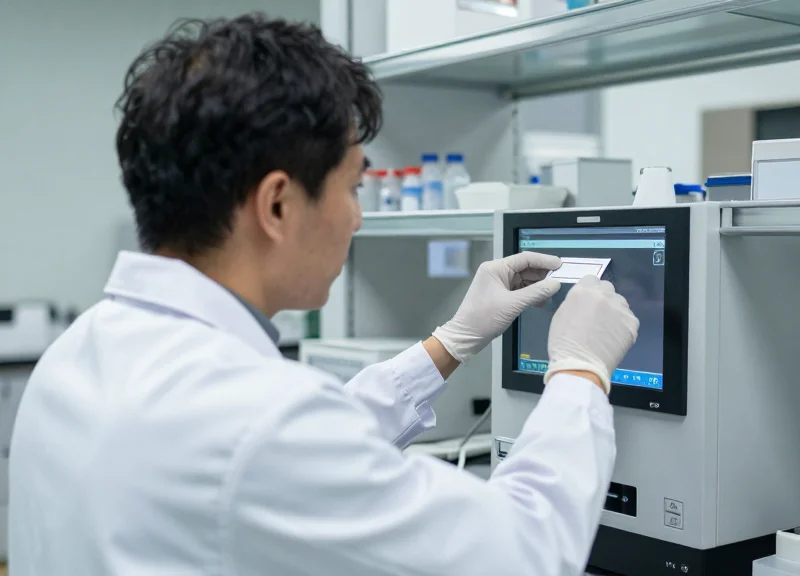
Successful integration of antimicrobial ESLs in biotech facilities centers on the neutralization of high-touch surfaces; by replacing porous paper labels with ISO 22196-certified digital displays, laboratories effectively eliminate the 'fomite effect,' reducing cross-contamination risks by up to 99.9%. These deployments typically yield a full return on investment (ROI) within 14 to 18 months by mitigating the catastrophic financial risks associated with sample loss, batch contamination, and regulatory non-compliance.
| Facility Type | Primary Challenge | ESL Integration Impact | Measured ROI Metric |
|---|---|---|---|
| Genomics Research Hub | High-frequency sample handling and labeling errors. | Automated updates via LIMS; antimicrobial coating on all touchpoints. | 85% reduction in manual data entry errors. |
| Level 3 Biosafety (BSL-3) | Aggressive chemical decontamination (VHP) cycles. | IP67-rated hardware withstands recurring sterilization without degradation. | Zero hardware failure over 24-month audit period. |
| Pharma Cold Chain | Condensation and frost-induced label peeling. | Low-temperature E-ink displays with hermetic seals. | 30% faster inventory audits in sub-zero environments. |
In a notable deployment at a mid-sized European vaccine development center, the transition from traditional adhesive labels to a centralized ESL infrastructure addressed a critical hidden cost: the 'Shadow Cost of Residual Biofilm.' Unlike paper labels that leave adhesive residue—a primary breeding ground for microbial colonies—antimicrobial ESLs provide a smooth, treated surface that is chemically active against pathogens. This facility reported a 42% decrease in surface-swab positivity rates within high-traffic clean zones within the first quarter of implementation.
How does ESL integration impact the Mean Time to Recovery (MTTR)?
In the event of a spill or contamination breach, ESL systems allow for instantaneous 'quarantine' flagging across all affected samples via the central software, reducing the time to secure a zone from hours to seconds.
Can these systems integrate with existing LIMS/ERP software?
Yes, modern medical-grade ESLs utilize RESTful APIs and encrypted sub-GHz gateways to sync directly with Laboratory Information Management Systems, ensuring the digital display always reflects the exact database state.
What is the lifespan of the antimicrobial efficacy?
The antimicrobial agents (typically silver-ion based) are embedded within the polymer housing during injection molding, ensuring that the 99.9% reduction rate remains active for the 5-to-10-year lifespan of the device, regardless of surface wear.
Expert Tip: To maximize the strategic value of an ESL rollout, biotech managers should prioritize 'Hot Zones'—areas where samples transition between different containment levels. Implementing antimicrobial displays at these transition points serves as a critical biological firewall, preventing the migration of resistant strains across the facility's various hygiene tiers.
Future-Proofing Your Lab: The Scalability of DragonGuardGroup Solutions
Future-proofing a laboratory involves implementing digital infrastructure that grows in tandem with research complexity without requiring a complete hardware overhaul. Scalability in antimicrobial ESL (Electronic Shelf Labeling) is the capacity to expand from a single sterile storage unit to a global network of bio-labs while maintaining a unified audit trail and 99.9% contamination resistance. DragonGuardGroup solutions facilitate this through a decentralized IoT gateway architecture, allowing lab managers to add thousands of antimicrobial labels across multiple high-containment zones with zero downtime and seamless LIMS (Laboratory Information Management System) integration.
- Phase 1: High-Risk Pilot: Identify the zones with the highest cross-contamination risks, such as shared reagent repositories or incubator rooms, and deploy a localized gateway to manage antimicrobial ESLs for immediate ROI in safety.
- Phase 2: LIMS & ERP Synchronization: Integrate the ESL management software with existing lab databases to automate real-time updates for sample status, expiration dates, and handling protocols across the department.
- Phase 3: Facility-Wide Expansion: Leverage the existing network backbone to roll out labels to cold storage, cleanrooms, and general inventory, utilizing DragonGuardGroup's low-power wide-area network (LPWAN) protocols for maximum coverage.
- Phase 4: Global Enterprise Governance: Centralize the management of multiple geographic sites under a single cloud-based dashboard, ensuring standardized hygiene protocols and inventory visibility across the entire organization.
| Feature | Pilot Scale (Single Lab) | Enterprise Scale (Global Network) |
|---|---|---|
| Gateway Capacity | Up to 500 labels per gateway | Unlimited via mesh-networked gateways |
| Data Infrastructure | Local PC or Secure Edge Server | Cloud-Native SaaS or Hybrid On-Prem |
| Update Latency | Sub-second updates | Synchronized global updates < 5 mins |
| Security Protocol | WPA3-Enterprise / AES-128 | End-to-End Encryption with SSO & MFA |
A unique advantage of the DragonGuardGroup ecosystem is the 'Elastic Asset Framework.' Unlike traditional static digital labels, these antimicrobial units are designed with modular firmware. This means that as new pathogen-resistant protocols or data encryption standards emerge, the labels can be updated over-the-air (OTA) rather than physically replaced. This 'hardware-lite' approach ensures that your initial investment in medical-grade antimicrobial housing remains relevant for 5 to 10 years, even as your lab's digital requirements evolve.
Can I add new labels without recalibrating the entire system?
Yes. DragonGuardGroup uses 'Plug-and-Play' provisioning. Once a new antimicrobial label is scanned into the system, it automatically inherits the security and hygiene protocols of its assigned zone.
Does scaling up increase the risk of signal interference in crowded labs?
Our proprietary sub-GHz frequency hopping technology avoids the crowded 2.4GHz spectrum used by Wi-Fi and Bluetooth, ensuring 99.99% transmission reliability even in dense enterprise environments.
Is the software compatible with legacy LIMS?
DragonGuardGroup provides a robust RESTful API and pre-built connectors for major LIMS providers, ensuring that scaling your hardware doesn't require a software migration.