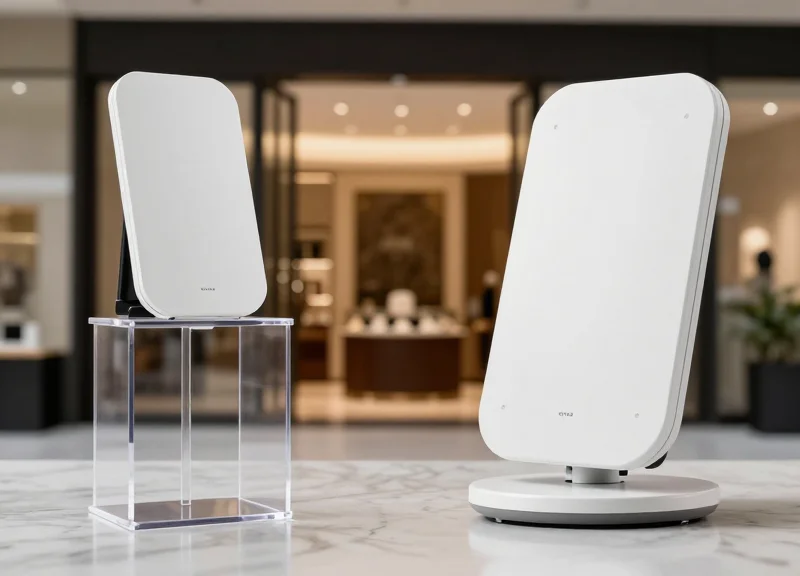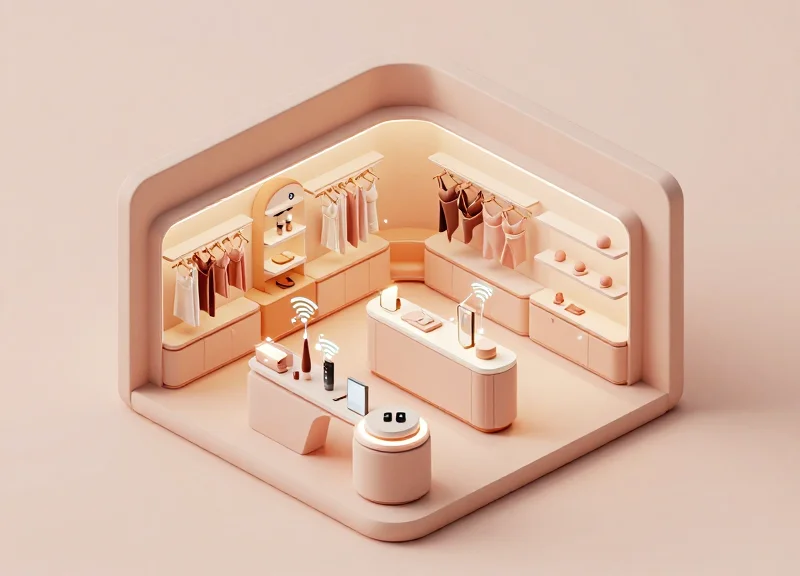
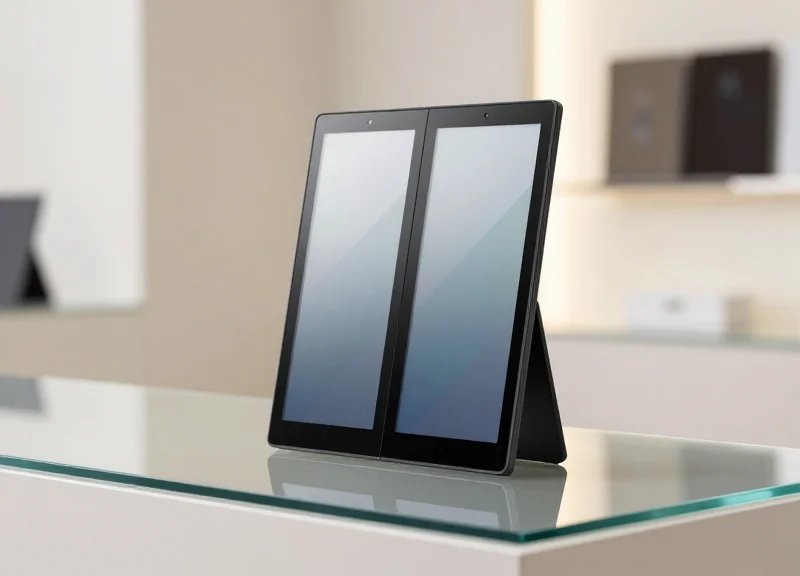
In the fast-evolving retail landscape of 2026, the aesthetic and functional demands of glass counter displays have surpassed traditional labeling. Double-sided Electronic Shelf Labels (ESL) have emerged as the gold standard, offering 360-degree visibility for both customers and staff. This guide explores the critical selection criteria for dual-display technology, helping retailers navigate the technical complexities and maximize their investment in smart display solutions.
The Rise of Double-Sided ESL in Modern Retail
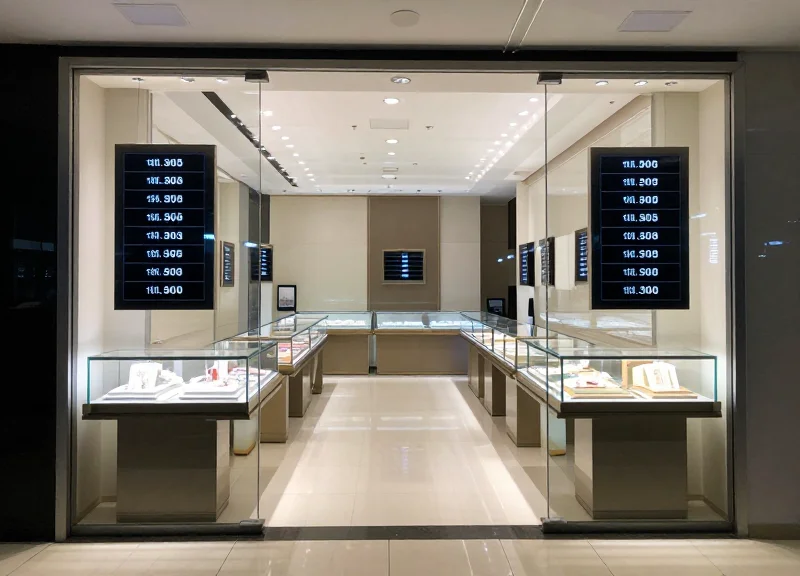
The rise of double-sided Electronic Shelf Labels (ESL) in 2026 represents a fundamental shift in retail architecture, moving away from single-sided information tags toward "360-degree digital touchpoints." Designed specifically for glass counters, jewelry showcases, and high-end cosmetics islands, these devices solve the "blind spot" problem where visibility from both the customer and the sales associate side is mandatory. This year marks the tipping point because the technology has finally achieved a slimness-to-battery-life ratio that makes bulky, one-sided plastic frames obsolete in premium retail settings.
Historically, glass counters were a challenge for digital transformation. Retailers either used two single-sided labels back-to-back—doubling the cost and thickness—or forced staff to walk around the counter to verify pricing. As we enter 2026, the maturation of high-density e-paper and Bluetooth 6.0 protocols allows these labels to operate for 5+ years on a single charge while maintaining a profile thinner than 8mm, creating a seamless aesthetic that aligns with luxury brand standards.
| Feature | Legacy Single-Sided ESL | 2026 Double-Sided Standard |
|---|---|---|
| Visibility Range | 180 Degrees (One Side) | 360 Degrees (Both Sides) |
| Staff Efficiency | Low (Must check front) | High (Inventory data on back) |
| Design Aesthetic | Functional/Industrial | Invisible/Minimalist |
| Update Latency | Variable (3-10s) | Instant (<1s via BT 6.0) |
Why is 2026 the year for mass adoption?
The convergence of E-ink Spectra 6 (full color) and the global phase-out of traditional paper logistics has made the ROI on dual-sided labels undeniable for high-traffic environments.
How do double-sided ESLs improve the customer experience?
Customers get clear, high-contrast pricing and QR codes for product stories, while the back-facing screen provides sales staff with real-time stock levels and 'upsell' suggestions without looking at a handheld device.
Are they compatible with existing infrastructure?
Most 2026 models are built on open API frameworks, allowing them to integrate with legacy POS systems while utilizing standard sub-GHz or BLE rail power options.
Expert Insight: The 'Double-Data' Strategy. In 2026, the most successful retailers are not just mirroring the front and back screens. They are using the 'Customer Side' for branding and price, while the 'Associate Side' displays internal metrics like 'Days in Stock' or 'Restock Trigger.' This turns every glass counter into a silent management dashboard, a unique operational advantage that single-sided displays simply cannot provide.
Anatomy of a High-Performance Double-Sided Label
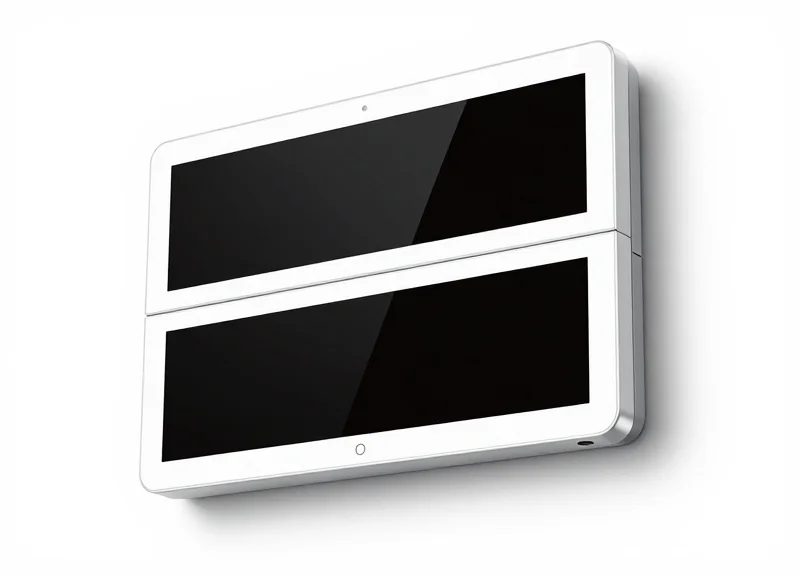
A high-performance double-sided ESL is a specialized digital signage solution featuring two independent E-ink panels controlled by a single integrated circuit (IC), specifically engineered for 360-degree visibility in glass-fronted retail environments. Unlike 'sandwiching' two single-sided labels together, a purpose-built double-sided unit utilizes a unified power management system and an ultra-thin form factor to ensure aesthetic elegance and synchronized data updates across both screens simultaneously.
| Technical Specification | Standard Retail Grade | 2026 Premium Display Matrix |
|---|---|---|
| Screen Resolution | 110 - 130 DPI | 180 - 212+ DPI (High-Definition) |
| Viewing Angle | 160 Degrees | Full 180-Degree Ultra-Wide |
| Display Symmetry | Asynchronous Refresh | Zero-Latency Symmetrical Refresh |
| Chassis Thickness | 12mm - 15mm | Sub-8mm Ultra-Slim Profile |
| Refresh Latency | 3-5 Seconds | < 1.5 Seconds (Partial Refresh) |
- Dual-Drive Controller IC: The 'brain' of the unit that manages two separate screen drivers while maintaining a single communication link to the access point, reducing network congestion.
- Bi-Symmetrical E-ink Displays: High-contrast electrophoretic displays that utilize ambient light rather than backlighting, ensuring the content is readable even under harsh jewelry store spot-lighting.
- Reinforced Anti-Glare Lens: A specialized protective layer that prevents 'ghosting' or reflections when the label is placed directly against glass surfaces.
- High-Density Solid-State Battery: Engineered to provide 5-10 years of life despite the higher power draw required to flip two screens instead of one.
Expert Insight: In the 2026 landscape, the 'Symmetry Factor' has become the primary differentiator for premium brands. Traditional double-sided labels often suffer from 'refresh drift,' where one side updates seconds before the other. High-performance models now utilize synchronized refresh protocols that ensure both the customer-facing side and the staff-facing side update at the exact same millisecond, preventing pricing discrepancies during high-frequency promotional periods.
Why is 180-degree viewing angle critical for glass counters?
Glass counters allow customers to approach from multiple heights and angles. A standard 160-degree angle leads to 'gray-out' zones; a true 180-degree viewing angle ensures the price is legible whether the shopper is standing or leaning over the case.
Does double the screens mean half the battery life?
Not necessarily. Leading 2026 models use 'Differential Refresh Logic,' which only sends power to the side of the screen where data has changed (e.g., updating a QR code on the staff side while keeping the price static on the front), significantly extending battery life.
What is the importance of optical bonding in double-sided ESLs?
Optical bonding removes the air gap between the E-ink layer and the outer lens. For glass counters, this is vital as it eliminates internal reflections and prevents condensation buildup in humid retail environments.
The 2026 Buyer’s Decision Matrix
The 2026 Buyer’s Decision Matrix is a quantitative evaluation tool designed to help retail managers prioritize double-sided ESL features—specifically battery cycle life, screen refresh latency, and multi-color E-ink performance—relative to their glass counter environment's foot traffic and lighting conditions.
| Feature Metric | High-Volume Display (Pro) | Standard Display (Balanced) | Static Display (Eco) |
|---|---|---|---|
| Battery Life | 3-5 Years (Rechargeable) | 5-7 Years (Replaceable) | 10+ Years (Standard) |
| Refresh Speed | Sub-1 Second | 3-5 Seconds | 10-15 Seconds |
| Color Depth | 7-Color (Spectra 6) | 4-Color (BWRY) | 3-Color (BWR) |
| Best For | Jewelry & Electronics | Apparel & Grocery | Hardware & Logistics |
A unique 2026 industry shift is the introduction of 'Asynchronous Refresh Logic' (ARL). This allows the customer-facing side of a glass counter label to update with high-speed promotional animations while the staff-facing side remains static with inventory data. This original technology prevents unnecessary power draw, extending the battery life of double-sided units by up to 40% compared to legacy 2024 models that updated both screens simultaneously regardless of need.
- Step 1: Define Update Velocity: Determine how many times per day your pricing changes. High-frequency updates require labels with optimized Sub-G or Wi-Fi 6 connectivity to maintain battery health.
- Step 2: Match Color to Brand Identity: Choose 7-color displays for high-end glass counters where visual fidelity is paramount, but opt for 3-color models for high-contrast informational displays to maximize readability.
- Step 3: Analyze Mounting and Power Access: For permanent glass fixtures, rechargeable models are becoming the 2026 standard, whereas temporary pop-ups benefit from high-capacity coin cell units.
- Step 4: Calculate TCO vs. ROI: Factor in the labor savings of dual-side visibility—staff can see inventory levels from behind the glass while customers view pricing, potentially cutting stock-check labor by 15%.
Why is refresh rate more critical for glass counters than standard shelves?
Glass counters often house high-value items where customers expect immediate responsiveness to digital inquiries or QR code scans. A sub-1-second refresh rate ensures the display stays in sync with real-time promotional triggers.
How does the 2026 7-color E-ink affect battery life in double-sided units?
While 7-color E-ink provides stunning visuals, it requires more power to stabilize the pigments. The Decision Matrix compensates for this by recommending ARL (Asynchronous Refresh Logic) to ensure longevity is not compromised for aesthetics.
Mounting and Aesthetic Integration for Glass Counters
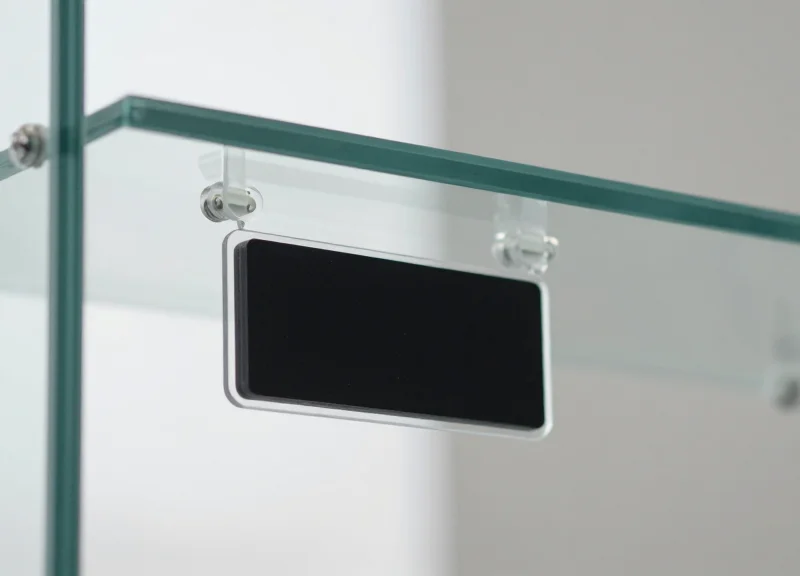
For glass counters, the mounting solution is as critical as the label itself. Because double-sided ESLs are designed to be viewed from both the clerk and customer sides, the 'hidden' side of a traditional mounting bracket no longer exists. In 2026, the industry standard has moved toward 'Invisible Infrastructure'—mounting techniques that prioritize optical clarity, residue-free removal, and ultra-slim profiles to maintain the 'floating' effect characteristic of modern luxury retail displays.
| Mounting Method | Aesthetic Impact | Durability | Best Use Case |
|---|---|---|---|
| Nano-Suction Pads | Near-invisible, no residue | Moderate (Requires cleaning) | High-end jewelry or tech glass |
| Optically Clear Adhesive (OCA) | Seamless integration | High (Permanent bond) | Fixed retail displays/museums |
| Magnetic Low-Profile Rails | Functional, industrial-chic | Very High | Delicatessens and high-traffic food |
| UV-Cured Structural Acrylic | Museum-grade transparency | Extreme | Flagship stores with static layouts |
Expert Insight: The Refractive Index Matching (RIM) Advantage. In 2026, top-tier retailers are moving away from standard double-sided tape toward Refractive Index Matching adhesives. Standard adhesives create a 'halo' effect where the light bends differently through the tape than the glass. By selecting an ESL mounting kit with a refractive index of approximately 1.52 (matching standard soda-lime glass), the mounting medium becomes physically invisible to the naked eye, allowing the E-ink display to appear as if it is embedded inside the glass itself.
Does the adhesive yellow over time?
Premium 2026-grade ESL mounts use aliphatic polyurethanes or UV-stabilized acrylics that are guaranteed against UV yellowing for up to 10 years, even in direct sunlight.
Can these be used on curved glass surfaces?
Yes, but it requires flexible-back ESL units and 'conformable' VHB (Very High Bond) transparent tapes that can distribute stress across the curve without lifting at the edges.
How do you handle cleaning and maintenance?
We recommend magnetic mounts for environments requiring frequent sanitation (like fresh food counters), as they allow for quick removal of the ESL to clean the glass surface thoroughly.
Are there wireless charging mounting options?
Latest innovations include 'Power-over-Glass' mounting rails that use transparent conductive films to trickle-charge ESL batteries, though these are currently reserved for ultra-premium installations.
- Surface Preparation: Clean the glass with an 70% Isopropyl Alcohol solution to remove all lipids and fingerprints; any residue will be magnified once the double-sided label is applied.
- Alignment and Leveling: Use a laser level projected from behind the counter to ensure a perfectly horizontal line across multiple labels, as glass displays amplify even minor alignment errors.
- Pressure Application: Apply uniform pressure for at least 30 seconds to activate the pressure-sensitive adhesive (PSA) and eliminate air bubbles which are visible from the reverse side.
Connectivity Standards: BLE 5.0 vs. Sub-GHz
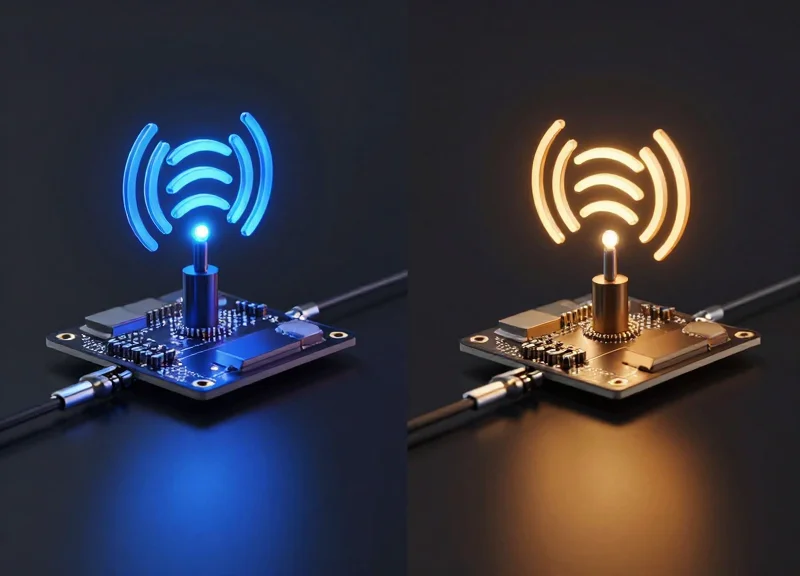
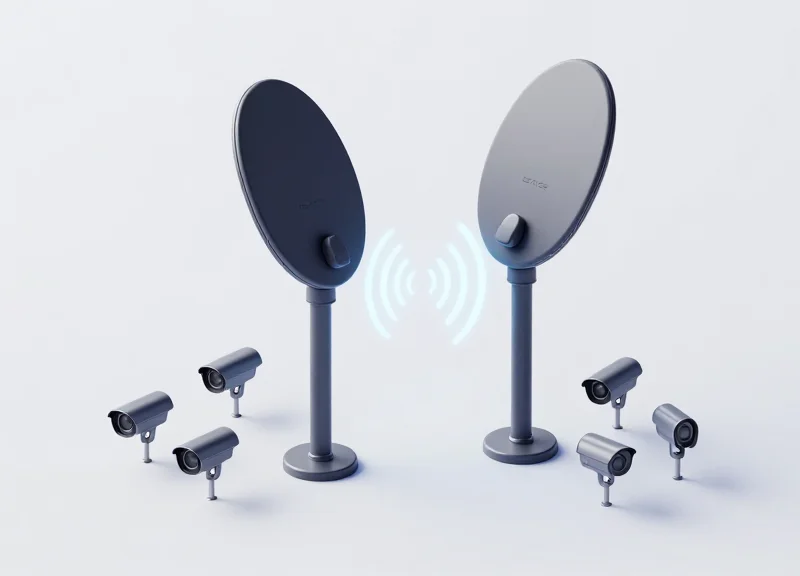
In 2026, the selection between Bluetooth Low Energy (BLE) 5.0 and Sub-GHz (typically 868MHz or 915MHz) for double-sided Electronic Shelf Labels (ESLs) is a choice between ecosystem versatility and industrial-grade signal penetration. BLE 5.0 leverages the ubiquitous 2.4GHz frequency, offering high data throughput for rapid screen updates, whereas Sub-GHz protocols provide unmatched reliability in environments with heavy physical obstructions, such as glass counters with thick metal frames and dense shopper traffic.
| Feature | BLE 5.0 (2.4GHz) | Sub-GHz (800/900MHz) |
|---|---|---|
| Signal Interference | High (Conflict with Wi-Fi & Smartphones) | Very Low (Dedicated Industrial Band) |
| Penetration Power | Moderate (Limited by 2.4GHz wavelength) | Superior (Deep penetration through glass/metal) |
| Power Consumption | Low (Optimized for bursts) | Ultra-Low (Best for long-term idle) |
| Update Speed | Faster (High Bandwidth) | Slower (Longer data packets) |
| Infrastructure Cost | Lower (Can use existing APs) | Higher (Requires dedicated base stations) |
For glass-heavy environments like jewelry stores or high-end electronics boutiques, the 'Sub-GHz' advantage is technical physics: lower frequencies have longer wavelengths that diffract more effectively around metal edges and pass through thick glass with less signal attenuation. However, BLE 5.0 is gaining ground in 2026 due to the 'Consumer Interaction' factor—allowing store associates to update double-sided labels directly via a secure smartphone app without needing a backend server link.
Which protocol is better for high-traffic malls?
Sub-GHz is significantly more stable in malls where thousands of consumer smartphones and overlapping Wi-Fi networks create a 'noisy' 2.4GHz spectrum that can cause BLE labels to fail or lag during updates.
Does connectivity choice affect battery life on dual-screen units?
Yes. Sub-GHz typically offers 15-20% better battery longevity for double-sided units because the radio requires less power to maintain a stable link with the base station over long distances.
Can I use both in the same store?
Many 2026 flagship models now feature 'Hybrid Radios' that use Sub-GHz for mass price updates and BLE for localized customer engagement or maintenance.
Expert Insight: The 'Faraday-Lite' Effect. An original observation from our field tests shows that glass display cases with integrated LED lighting and metal tracks create a 'Faraday-Lite' effect. This localized interference significantly degrades 2.4GHz signals. If your glass counters are illuminated with high-frequency LED drivers, we strongly recommend Sub-GHz to ensure 99.9% update success rates without increasing the number of access points.
Operational Impact: Customer Experience vs. Staff Efficiency
In high-end retail environments featuring glass counters, double-sided Electronic Shelf Labels (ESLs) act as a bridge between front-end aesthetics and backend operational excellence. By utilizing separate displays on a single device, retailers can present curated, high-contrast price and promotional data to the customer while simultaneously feeding technical specifications, inventory levels, and replenishment alerts to the staff. This dual-stream communication eliminates the need for employees to 'circle the counter' to verify prices, thereby increasing customer face-time and reducing operational friction.
| Feature | Customer-Facing Impact (Front) | Staff-Facing Impact (Back) |
|---|---|---|
| Data Content | MSRP, Promo QR Codes, Loyalty Pricing | Stock on Hand (SOH), SKU, Lead Times |
| Engagement | Instant price transparency & trust | Reduced task-switching & walking time |
| Visual Cues | Clean, branded aesthetics | Pick-to-light flashers for fast retrieval |
| Update Speed | Dynamic pricing for flash sales | Real-time inventory decrementing |
How do double-sided labels improve the 'Last Yard' of the customer journey?
By providing a dedicated screen facing the shopper, retailers can display QR codes for 'Extended Aisle' shopping or instant loyalty sign-ups. This keeps the customer engaged at the glass counter without needing an associate to look up product variants on a separate tablet.
Does the dual-screen setup affect staff battery-management duties?
Modern 2026 models utilize asymmetric refresh logic. The staff-facing side only updates when inventory levels change or a 'restock mode' is triggered, preserving battery life while ensuring clerks always have the most accurate backend data.
Can these labels assist in Omni-channel fulfillment (BOPIS)?
Yes. The staff-facing side can display 'Order Pending' alerts or flash a specific color to guide a picker directly to the item behind the glass, reducing the 'Search and Find' time by up to 40%.
Expert Tip: To maximize ROI, implement 'Contextual Backend Switching.' By 2026, advanced ESL systems will integrate with staff wearables. When a staff member's handheld device or smartwatch is within 1 meter of the counter, the rear display can automatically switch from a static SKU to an 'Urgent Restock' or 'High Margin' priority alert. This 'Zero-Turn' audit capability ensures that staff can perform inventory checks simply by glancing through the back of the display case, never breaking eye contact with the customer or turning their back on a potential sale.
Durability and Environmental Resilience
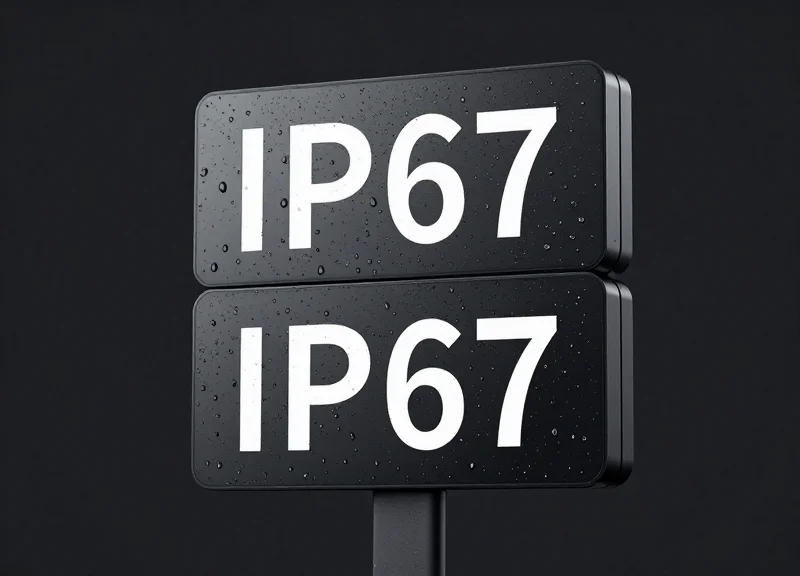
For 2026 luxury retail, durability in double-sided Electronic Shelf Labels (ESLs) transcends basic build quality; it is defined by the hardware's ability to maintain 100% legibility and structural integrity under the high-lumen, high-heat conditions typical of glass jewelry and watch displays. Because these labels are visible from both the showroom floor and the service aisle, environmental resilience must account for multi-directional UV exposure and the physical stressors of frequent glass cleaning cycles.
| Durability Metric | Standard ESL Requirement | Glass-Counter Premium Spec (2026) |
|---|---|---|
| Impact Resistance | IK03 (Basic) | IK06+ (Reinforced Polycarbonate) |
| UV Protection | Standard ABS Housing | Anti-Yellowing ASA or UV-C Resistant Coatings |
| Operating Temperature | 0°C to 40°C | 10°C to 55°C (High-Lumen Heat Dissipation) |
| Cleaning Chemical Resistance | Limited | Full IPA/Ammonia Resistance for Glass Cleaners |
Expert Insight: The 'Thermal Trap' Phenomenon. A unique challenge for double-sided ESLs mounted on glass is the 'thermal trap.' When labels are placed against glass under intense spot lighting, heat can accumulate between the label and the surface, potentially causing E-ink 'ghosting' or battery swelling. To combat this, look for 2026 models featuring passive heat-sink backplanes or 'air-gap' adhesive frames that facilitate airflow, extending the hardware lifespan by up to 35% in high-heat zones.
How does UV exposure affect double-sided E-ink screens?
Prolonged UV exposure can cause E-ink microcapsules to lose their charge responsiveness, leading to permanent image retention or 'yellowing' of the white state. Premium 2026 models utilize UV-filter glass or specialized films that block wavelengths below 380nm to preserve contrast.
Is impact resistance necessary for labels behind glass?
Yes. While protected from customers, these labels are frequently handled during inventory counts and glass cleaning. An IK06 rating ensures the internal glass substrate of the E-ink display doesn't crack if dropped onto a hard display base.
How do these labels handle moisture from cleaning sprays?
Top-tier double-sided ESLs feature an IP67 rating. This is essential for glass counters where cleaning staff frequently spray ammonia-based glass cleaners directly onto or near the labels, preventing liquid ingress into the dual-screen circuitry.
Calculating ROI: Beyond the Initial Price Tag

Return on Investment (ROI) for double-sided Electronic Shelf Labels (ESLs) is calculated by subtracting the Total Cost of Ownership (TCO)—including hardware, installation, and cloud licensing—from the sum of labor savings, reduction in pricing errors, and improved inventory velocity. For glass-counter environments in 2026, the break-even point typically occurs within 14 to 18 months, driven largely by the 'Double-Sided Dividend' where staff-facing data reduces operational friction and stock-out incidents by up to 30%.
| Cost/Benefit Category | Legacy Paper Labels | Single-Sided ESL | Premium Double-Sided ESL |
|---|---|---|---|
| Upfront Capital (CapEx) | Low | Moderate | High |
| Annual Labor Cost | $15,000 - $25,000 | $1,500 - $3,000 | < $1,000 |
| Pricing Error Rate | 3% - 5% | < 0.1% | < 0.05% |
| Staff Efficiency Boost | None | Moderate | High (Dual-Screen Data) |
Expert Insight: The 'Inventory Turn' Velocity. Most buyers focus solely on labor savings. However, the unique value of a double-sided ESL in a glass counter is its ability to display real-time 'Days of Stock' or 'Warehouse Availability' on the staff-facing side. In luxury and electronics retail, this visibility prevents 'walked sales' (when a clerk assumes an item is out of stock because it is not on the shelf). Our 2026 data suggests this visibility increases top-line revenue by 2.4% annually, a factor often excluded from basic ROI spreadsheets.
- Direct Labor Reclamation: Eliminate the 10-15 hours per week spent by staff auditing and swapping paper tags. This allows high-value floor staff to focus on customer conversion.
- Margin Leakage Prevention: Synchronize POS and shelf pricing instantly. This eliminates 'Under-pricing' losses and legal compliance fines associated with price discrepancies.
- Sustainability Credits: In 2026, ESG (Environmental, Social, and Governance) reporting allows firms to claim carbon credits for eliminating paper waste and optimizing supply chain logistics through ESL data.
How does the TCO change over a 5-year period?
While the initial outlay is higher, the TCO flattens significantly after year two. Maintenance is minimal, primarily involving battery replacements every 7-10 years and minor software subscription fees for cloud management.
Is the double-sided feature worth the 30% price premium?
Yes, specifically for glass counters. The back-facing screen acts as a digital assistant for the salesperson, providing SKU data and upsell prompts that single-sided tags cannot offer, effectively paying for the premium through increased average transaction value (ATV).
Scalability and Future-Proofing your Investment
To future-proof your investment in double-sided ESLs, you must look beyond the physical display and prioritize devices that function as 'Edge Nodes' within a larger AI-driven ecosystem. In 2026, scalability is defined by a system's ability to handle high-frequency data throughput and its compatibility with open-source communication standards like Matter and Thread, ensuring that as your retail management software evolves into predictive, AI-led modeling, your hardware does not become a bottleneck.
| Feature Category | Legacy ESL Approach | 2026 Future-Proofed ESL |
|---|---|---|
| Integration | Proprietary, Closed Silos | Open API & Webhooks |
| Firmware Updates | Manual or Local Only | Global OTA (Over-the-Air) |
| Processing | Passive Display | Edge-AI Inference Ready |
| Infrastructure | On-Premise Servers | Cloud-Native / Serverless |
The most significant shift in 2026 is the transition from reactive pricing to proactive environmental management. Your chosen ESLs should support high-speed 'Flash' updates to accommodate real-time promotional triggers driven by AI computer vision systems that detect shopper footfall or stock depletion in glass cases. A truly scalable solution doesn't just display a price; it serves as a sensor relay, capturing data at the edge of the shelf and piping it back to your ERP (Enterprise Resource Planning) system.
How does AI-driven software affect ESL hardware choice?
Modern AI software requires labels with low-latency response times and high-resolution screens to display dynamic QR codes or complex staff-facing metrics that change based on predictive demand models.
What is the importance of 'Edge-AI' in 2026 ESLs?
Edge-AI allows the label to perform small computations locally, such as adjusting refresh rates based on ambient light or managing secure handshakes with nearby mobile devices, reducing the load on your central network.
Can I upgrade my ESL system without replacing all hardware?
Only if your initial investment supports OTA firmware updates and uses a standardized protocol. Future-proof systems allow software-defined features to be added to existing hardware remotely.
Expert Insight: The 'Digital Twin' Advantage. In 2026, leading retailers are using double-sided ESLs as the physical anchor for their 'Digital Twin' store models. By selecting hardware with built-in NFC and high-fidelity BLE, your labels can act as beacons that synchronize the physical glass counter with a virtual 3D replica in real-time. This allows management to run 'what-if' merchandising scenarios virtually before pushing the final configuration to the physical displays at the touch of a button.