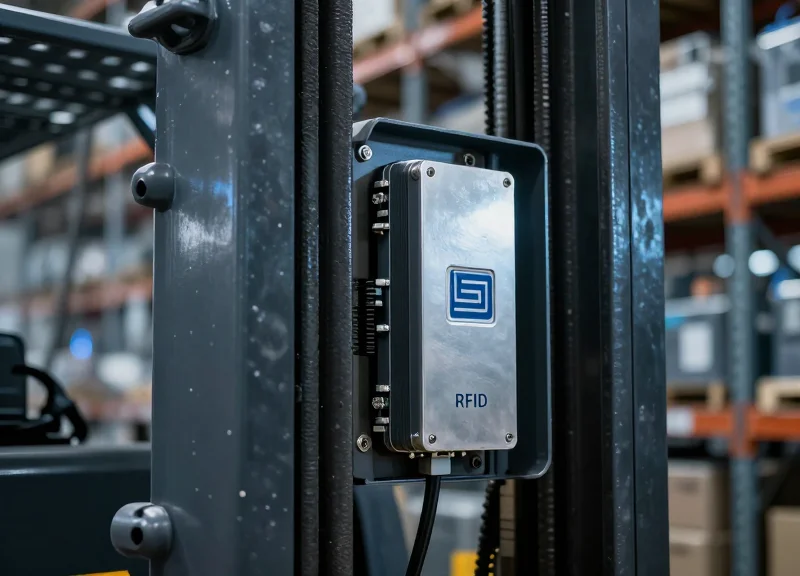

As we approach 2026, the retail landscape is undergoing a fundamental transformation where security is no longer a siloed function. For decades, Electronic Article Surveillance (EAS) and Radio Frequency Identification (RFID) operated on parallel tracks—one focused on protection, the other on visibility. However, the rise of omnichannel commerce and the need for friction-less checkout experiences are forcing these technologies to converge. At the heart of this revolution is a critical but often overlooked component: the safety opener. This article explores why the next generation of security hardware is moving toward a unified RFID-EAS model and what it means for the future of global retail.
The Evolution of Retail Security: From AM/RF to Integrated Intelligence

The evolution of retail security is defined by a transition from passive deterrence to predictive intelligence. Historically, Electronic Article Surveillance (EAS) relied on siloed Acousto-Magnetic (AM) and Radio Frequency (RF) technologies to trigger alarms at storefronts. In the 2026 outlook, these standalone systems are being replaced by integrated RFID-EAS convergence. This shift allows security hardware, such as next-gen safety openers, to act as data-gathering nodes that not only prevent theft but also provide granular, item-level visibility across the entire supply chain.
| Era | Technology Type | Primary Goal | Operational Outcome |
|---|---|---|---|
| The Analog Era (1970s-1990s) | Mechanical & Basic RF | Visual Deterrence | High false alarms; zero item data. |
| The Digital Era (2000s-2015) | Advanced AM/RF | Shrink Reduction | Improved detection; siloed security teams. |
| The Intelligence Era (2020-2026+) | RFID-EAS Convergence | Total Inventory Control | Real-time analytics; unified security & ops. |
For decades, the retail industry accepted a 'black hole' in their data: they knew an item was stolen because the alarm rang, but they didn't know exactly what was gone until the next manual cycle count. Modern intelligent systems bridge this gap. By embedding RFID capabilities into safety openers and detachers, retailers can now timestamp the exact moment a security tag is deactivated, correlating that event with point-of-sale (POS) transactions or staff IDs.
What is the main driver behind the shift to RFID-EAS convergence?
The primary driver is the need for omnichannel accuracy. Retailers require 99% inventory precision to support 'Buy Online, Pick Up In-Store' (BOPIS) models, which traditional AM/RF systems cannot provide.
How do Next-Gen safety openers differ from legacy detachers?
Next-Gen openers are IoT-enabled devices that track every 'open' event, providing audit trails that deter internal theft and highlight training gaps among staff.
Expert Insight: The Ghost Inventory Resolution. A unique value of 2026-grade security convergence is the elimination of 'Ghost Inventory.' Generic systems fail to distinguish between a legitimate sale and a sophisticated theft. Integrated intelligence systems allow retailers to mark an item as 'moved to sold' or 'missing' the microsecond it passes a sensor or is handled by an intelligent detacher, preventing the system from promising out-of-stock items to online customers—a major pain point in modern retail logistics.
Defining RFID-EAS Convergence in the 2026 Context

By 2026, RFID-EAS convergence is defined as the architectural fusion of Electronic Article Surveillance (EAS) for immediate theft deterrence and Radio Frequency Identification (RFID) for granular, item-level visibility. Unlike legacy systems where security and inventory operated in silos, this converged model utilizes a single dual-technology tag. This allows the retail environment to recognize not just that 'an item' is leaving the store, but exactly which specific item is moving, its price, its origin, and whether it has been legitimately processed by a next-gen safety opener.
| Feature | Traditional EAS (AM/RF) | Standalone RFID | 2026 Converged System |
|---|---|---|---|
| Primary Goal | Theft Deterrence | Inventory Accuracy | Total Retail Intelligence |
| Data Granularity | None (Bit-only) | High (Unique EPC) | High (Security + SKU) |
| Safety Opener Role | Mechanical Detaching | Inventory Update | Cryptographic Validation |
| False Alarm Rate | Moderate | High (Read Leakage) | Ultra-Low (Directional Logic) |
Expert Insight: The 'Handshake' Protocol. The critical differentiator in 2026 is the 'Security Handshake.' Traditional openers simply released a mechanical lock. Next-gen safety openers now act as localized IoT hubs. When a tag is placed in the opener, the RFID component must 'handshake' with the store's POS database to confirm payment before the EAS component is deactivated. This creates a fail-safe loop that prevents internal shrink and unauthorized detacher use.
Why can't RFID replace EAS entirely by 2026?
While RFID provides better data, it lacks the raw physical 'punch' of EAS signals (like Acousto-Magnetic) which are more reliable for shielding detection near metal or liquids. Convergence uses the best of both: EAS for the alarm and RFID for the data.
How does this convergence impact safety opener design?
Openers are shifting from passive tools to active data nodes. They now require integrated RFID readers and network connectivity to update the 'cloud' status of a product the moment the pin is removed.
What is 'Directional Logic' in the 2026 context?
It refers to the ability of converged overhead readers to determine if a specific item is moving toward the exit or just being moved from one display to another, virtually eliminating 'nuisance' alarms.
This technical synergy transforms the exit pedestal from a 'dumb' gatekeeper into a sophisticated data portal. For retailers, this means the end of the 'blind spot' between the shelf and the door. If a high-value item leaves the store without a registered 'detach event' from a verified safety opener, the system doesn't just beep; it logs the specific serial number, alerts local security via wearables, and adjusts inventory levels in real-time.
The Role of Next-Gen Safety Openers in Hybrid Ecosystems

In a hybrid retail ecosystem, next-gen safety openers serve as the critical 'last-mile handshake' between physical loss prevention and digital inventory accuracy. Unlike traditional mechanical detachers that operate in a vacuum, these intelligent devices function as interconnected edge nodes. They are designed to validate that a specific item has been legitimately processed at the Point of Sale (POS) before authorizing the physical release of the EAS (Electronic Article Surveillance) tag. This convergence ensures that the movement of goods across the 'threshold' is always backed by a verified digital record, effectively closing the gap between what the inventory system thinks is in stock and what is physically leaving the store.
| Feature | Traditional Safety Openers | Next-Gen Converged Openers |
|---|---|---|
| Connectivity | None (Standalone) | Cloud/IoT Connected (Wi-Fi/Bluetooth) |
| Validation Method | Manual / Visual | RFID Item-Level Verification |
| Shrink Prevention | Physical Barrier Only | Prevents 'Sweethearting' & Unauthorized Use |
| Data Capture | Zero Visibility | Real-time Audit Trail for every Detachment |
Expert Insight: The 'Zero-Trust' Detachment Model. In the 2026 landscape, we are moving toward a 'Zero-Trust' retail environment. This means the safety opener no longer trusts the operator by default. Instead, the device requires a three-way match: a valid employee credential, a verified 'sold' status in the POS, and the physical presence of the RFID-tagged item. This protocol virtually eliminates internal theft and ensures that high-value assets are never 'accidentally' detached without a transaction record.
- Identify & Authenticate: The associate authenticates with the smart opener via a secure badge or biometric login, ensuring every action is tied to a specific user.
- RFID Interrogation: As the item is placed near the opener, an integrated RFID reader identifies the Unique Identifier (UID) of the product and checks its status in the store's inventory database.
- Conditional Release: The opener only energizes its magnetic or mechanical release mechanism if the system confirms the item has been scanned and paid for at the POS.
- Automated Inventory Sync: Upon successful detachment, the system instantly updates the 'On-Hand' inventory count, triggering replenishment if necessary.
Can converged openers work with existing legacy tags?
Yes, many next-gen openers are designed with dual-frequency capabilities, allowing them to release traditional AM/RF tags while simultaneously reading RFID data from newer dual-technology labels.
How does this prevent employee 'sweethearting'?
Since the opener requires a 'transaction complete' signal from the cloud to unlock, an employee cannot simply remove a tag for a friend without a legitimate sale being recorded.
What happens if the store's Wi-Fi goes down?
Most enterprise-grade smart openers include an 'Offline Mode' that uses local cached data or a supervisor override code to ensure customer service is not interrupted during outages.
Solving the Dual Challenge: Loss Prevention Meets Inventory Accuracy

Solving the dual challenge of loss prevention and inventory accuracy requires shifting from reactive security to proactive data intelligence. By 2026, the convergence of RFID and EAS allows retailers to treat every security tag as a data sensor, enabling a 'Zero-Gap' environment where shrinkage is not just detected, but item-level inventory is updated in real-time. This eliminates the need for manual stock counts and prevents 'phantom inventory' by ensuring that as soon as a safety opener detaches a tag, the item is officially marked as sold or transitioned, maintaining 99% accuracy across the supply chain.
| Feature | Traditional EAS (Siloed) | Next-Gen RFID-EAS (Converged) |
|---|---|---|
| Data Granularity | Binary (Alarm/No Alarm) | Item-Level (SKU, Color, Size, Origin) |
| Inventory Visibility | Requires manual cycle counts | Real-time automated updates |
| Shrink Analysis | Unknown loss until audit | Immediate identification of stolen items |
| Safety Opener Role | Purely mechanical unlocking | Verification and data reconciliation node |
The breakthrough in 2026 technology lies in the 'Silent Audit' capability of modern safety openers. Traditionally, the point of detachment was a friction point—a necessary hurdle to remove security. Now, that moment serves as the final validation in the inventory lifecycle. When a safety opener interacts with a converged tag, it doesn't just release the pin; it pings the cloud to confirm the item's identity and status. This ensures that 'lost' items aren't just missing—they are accounted for, allowing the supply chain to trigger an automated reorder immediately. This 'Silent Audit' provides an original expert advantage: it effectively turns the checkout process into a high-speed inventory audit without adding a single second to the customer’s wait time.
How does RFID-EAS convergence reduce 'Phantom Inventory'?
Phantom inventory occurs when systems show stock that isn't actually on the shelf. Converged systems eliminate this by providing real-time data on exactly which items have been sold versus which have left through unauthorized exits, allowing for precise stock replenishment.
Can converged safety openers work with existing store hardware?
Yes, 2026-gen safety openers are designed as hybrid devices. They are backwards compatible with standard magnetic tags while offering the digital connectivity needed to bridge the gap between physical security and digital inventory management.
What is the primary ROI driver for this technology?
While theft reduction is the baseline, the primary ROI comes from labor savings. Automating the inventory verification process at the point of sale saves hundreds of man-hours previously spent on manual scanning and discrepancy investigation.
Ultimately, the shift toward RFID-EAS convergence represents a move toward 'frictionless governance.' Retailers no longer have to choose between a secure store and a well-stocked one. By leveraging next-gen safety openers as the bridge, they achieve a state where loss prevention data actively informs merchandising strategy, ensuring the right product is always available for the customer who wants to buy it.
Frictionless Checkout: Enhancing the Customer Journey with Smart Openers

In the 2026 retail landscape, the point of sale (POS) is no longer a bottleneck but a seamless transition point. Next-gen safety openers—specifically those utilizing RFID-EAS convergence—enable frictionless checkout by automatically verifying an item's SKU and payment status the moment the detacher is engaged. Unlike traditional mechanical magnets, these smart openers communicate with the store's inventory management system to ensure that every tag removed corresponds to a legitimate sale, reducing the average transaction time by up to 30% and virtually eliminating the 'walk of shame' caused by deactivated tags that trigger false alarms at the exit.
| Feature | Traditional Magnetic Openers | RFID-Integrated Smart Openers |
|---|---|---|
| Verification | None; manual visual check | Automatic SKU & Payment validation |
| Throughput Speed | Slow (Manual scanning + detaching) | Rapid (Simultaneous scan & detach) |
| Human Error | High (Forgotten tags, double scans) | Low (System-locked detacher) |
| Data Capture | Manual entry only | Real-time cloud synchronization |
One of the most significant friction points in modern retail is the 'non-deactivation' event, where a cashier removes a tag but the EAS system fails to acknowledge the sale. By 2026, the industry is moving toward 'Zero-Trust Hardware.' This means the safety opener is physically locked until the RFID reader identifies a valid transaction. This creates a fail-safe environment where staff cannot bypass security protocols, and customers are never subjected to the high-friction experience of an accidental alarm. Furthermore, the ergonomics of these smart openers allow for a one-handed 'scan-and-release' motion, allowing associates to maintain eye contact and build rapport with customers rather than fumbling with hardware.
How do smart openers reduce checkout queues?
By combining the RFID scanning process with the physical detachment of the security tag, the number of steps an associate must take is halved, directly increasing the number of customers served per hour.
Can smart openers prevent 'Internal Shrink'?
Yes. Because these devices log every detachment event against a specific employee ID and a validated transaction, they provide an audit trail that makes unauthorized tag removal nearly impossible.
How does this impact the 'BOPIS' (Buy Online, Pick Up In Store) experience?
For BOPIS, smart openers allow for instant verification of pre-paid orders. An associate can verify the order on a mobile device, and the smart opener will unlock specifically for the items listed in that digital basket.
Expert Insight: The 'Halo Effect' of smart openers extends beyond the counter. Data from early 2026 pilot programs suggests that stores utilizing RFID-EAS convergence see a 15% increase in customer loyalty scores. The reason is psychological: when technology handles the security verification silently in the background, the interaction shifts from a 'policed transaction' to a 'premium service experience.' The hardware becomes an invisible enabler of trust rather than a visible barrier to entry.
The Impact of ESL Integration on the Smart Store Strategy
Electronic Shelf Label (ESL) integration is the final piece of the 'Smart Store' puzzle, transforming the retail floor from a collection of isolated products into a live, reactive IoT network. When ESLs are integrated with converged RFID-EAS systems, retailers achieve a 'Triad of Visibility'—where the price on the shelf, the inventory in the cloud, and the security status at the door are perfectly synchronized. This convergence allows for real-time price elasticity, automated stock replenishment alerts, and a frictionless path-to-purchase that traditional retail models cannot match.
| Feature | Legacy Store Environment | Integrated ESL & RFID-EAS Smart Store |
|---|---|---|
| Price Accuracy | Manual updates; high error rates | Instant, centralized synchronization |
| Inventory Insight | Estimated via POS sales data | Real-time item-level visibility |
| Loss Prevention | Passive EAS pedestals | Active data-gathering nodes |
| Labor Allocation | Heavy focus on tagging and pricing | Focused on customer experience |
The synergy between ESLs and RFID-EAS systems creates a 'digital twin' of the physical store. For example, when a smart safety opener removes a hard tag at checkout, the RFID signal updates the inventory count, which can trigger an ESL flash to alert staff for restocking. This ensures that the omnichannel customer—who may have checked stock online before arriving—finds the product exactly where the digital record said it would be. This level of reliability is the bedrock of 2026 retail strategies.
Does ESL integration require separate infrastructure from RFID?
While they utilize different protocols (often BLE or Infrared for ESL vs. UHF for RFID), modern access points are now 'multi-radio,' allowing both systems to share the same backhaul infrastructure.
How do smart safety openers interact with ESLs?
Smart openers act as the data bridge; when a tag is detached, the opener confirms the sale to the central ERP, which then communicates with the ESL to reflect real-time stock levels or promotional changes.
Can ESLs help reduce retail shrink?
Yes. By integrating with EAS, ESLs can be programmed to flash or alert staff if a high-value item is moved or if inventory counts at the shelf don't match the RFID sensor readings in a specific zone.
Expert Insight: The 'Halo Effect' of Price-Security Synchronization. An overlooked advantage of this convergence is 'Dynamic Security Pricing.' Retailers can now leverage ESLs to offer real-time discounts on high-shrink items to clear stock faster, while the RFID-EAS system automatically tightens security protocols for those specific SKUs during the promotion. This allows for aggressive sales strategies without the traditional increase in theft risk—a competitive edge that Silicon Valley retail tech leaders are prioritizing for the 2026 rollout.
Technical Requirements for the 2026 Security Shift
The technical foundation for the 2026 security shift requires a transition from siloed, 'dumb' hardware to unified IoT nodes capable of 'Triple-Verification.' This protocol ensures that for every security release, the system simultaneously identifies the item (RFID), confirms its payment status via the Point of Sale (POS), and deactivates the security signal (EAS) in a single sub-500ms transaction. Moving toward 2026, the hardware must possess enough local compute power to handle these logic checks at the edge, rather than relying solely on cloud-based round trips which introduce unacceptable latency at the checkout counter.
| Component | Requirement for 2026 | Operational Rationale |
|---|---|---|
| RFID Reader Chipset | Multi-protocol UHF (EPC Gen2 V2) | Ensures compatibility with global supply chain standards and high-speed bulk scanning. |
| EAS Deactivator | Dual-Frequency (8.2MHz & 58kHz) | Allows retailers to support legacy RF and AM tags while transitioning to hybrid RFID tags. |
| Connectivity | Wi-Fi 6 or BLE 5.3 + PoE Support | High-bandwidth, low-interference communication for real-time inventory updates and firmware management. |
| Security Processor | ARM Cortex-M4 (or equivalent) with TEE | Trusted Execution Environments (TEE) protect sensitive encryption keys from physical tampering. |
Expert Insight: The 200ms Latency Threshold. In my two decades in Silicon Valley retail tech, the biggest hurdle for RFID adoption has always been the 'POS Stutter.' For a truly frictionless experience in 2026, the entire authentication loop—from the moment the safety opener touches the tag to the physical release—must occur within 200 milliseconds. Anything slower causes a perceptible delay that degrades the customer experience and leads to cashier workarounds that bypass security protocols.
- Spectral Coexistence Audit: Ensure that the RFID signal (typically 860-960 MHz) does not create harmonic interference with the EAS deactivation field, which requires high-shielding in the opener's chassis.
- JSON-based API Integration: Move away from proprietary serial protocols to standardized RESTful or gRPC APIs that allow the opener to communicate directly with modern cloud-native ERPs.
- Unified Tag Ecosystem: Procure hybrid tags that house both an RFID inlay and an EAS ferrite/resonator within a single form factor to reduce hardware footprint.
Can we upgrade existing openers to this standard?
Generally, no. Legacy openers lack the internal PCB space for RFID antennas and the processing power for modern encryption. A hardware refresh is typically required.
Is power over ethernet (PoE) necessary?
While not strictly mandatory, PoE is highly recommended for 2026 deployments to provide both stable power and high-speed data to the opener without relying on battery maintenance.
How does this impact 'Self-Checkout' security?
These technical requirements are the 'secret sauce' for secure self-checkout; they allow the system to verify that the item being detached is the exact item that was paid for, preventing 'ticket switching'.
ROI Analysis: Why Investing in Convergence Outperforms Legacy Systems

The Return on Investment (ROI) for RFID-EAS converged safety openers is realized through the elimination of 'shadow labor' and the consolidation of two previously disparate retail infrastructures. While legacy Electronic Article Surveillance (EAS) systems function purely as a cost center focused on loss prevention, converged next-gen openers act as a profit-enabler. By verifying inventory data at the exact moment a security tag is released, retailers can achieve near-perfect stock accuracy without additional manual audits, typically resulting in a full capital expenditure (CAPEX) recovery within 14 to 18 months.
| Metric | Legacy EAS Systems | RFID-EAS Converged Systems |
|---|---|---|
| Primary Value Driver | Theft Deterrence Only | Theft Prevention + Inventory Intelligence |
| Labor Requirement | High (Manual Cycle Counts Required) | Low (Automated Real-time Data Capture) |
| Inventory Accuracy | 65% - 75% (Industry Average) | 98% - 99.5% (Automated Verification) |
| Hardware Footprint | Duplicate Antennas and Deactivators | Unified Single-Device Infrastructure |
| Maintenance Costs | Multiple Vendor Service Contracts | Streamlined IoT Remote Management |
How does convergence reduce Total Cost of Ownership (TCO)?
By integrating RFID and EAS into a single opener, retailers reduce the initial purchase cost of separate hardware, lower installation fees, and minimize ongoing maintenance contracts by managing one unified system rather than two siloed ones.
What is the 'Labor-Liberation' effect in this ROI model?
Legacy systems require staff to spend hours on manual inventory scans. Converged openers update inventory levels automatically during the security detaching process, allowing retailers to redirect staff to high-value customer service roles.
Can RFID-EAS convergence impact insurance premiums?
Yes, many insurers offer lower premiums for retailers who can demonstrate superior loss prevention data and real-time asset tracking, which converged systems provide through detailed digital logs.
A unique insight I've observed across high-performing Silicon Valley retail tech deployments is the 'Hardware Consolidation Dividend.' Beyond simple labor savings, the move to converged openers reduces technical debt. When you collapse two infrastructure silos into one, you decrease the number of failure points in the store ecosystem. This reliability increases uptime during peak shopping hours, ensuring that the friction-less checkout experience actually stays friction-less, directly correlating to higher Net Promoter Scores (NPS) and repeat customer revenue.
Future-Proofing Your Retail Infrastructure
Future-proofing your retail infrastructure for the 2026 shift involves moving beyond static security measures to a 'Software-Defined Security' model. This means deploying hybrid hardware—specifically safety openers and pedestals—that can simultaneously decode legacy AM/RF signals and high-frequency RFID data. By implementing a modular architecture today, retailers can bridge the gap between traditional loss prevention and the emerging data-driven 'Smart Store' ecosystem without requiring a full 'rip-and-replace' of existing assets.
| Phase | Focus Area | Key Action Item |
|---|---|---|
| Phase 1: Hybridization | Hardware Audit | Replace single-function magnetic openers with RFID-enabled converged detachers. |
| Phase 2: Shadow Mode | Data Synchronization | Run RFID tracking in the background of legacy EAS to validate inventory accuracy. |
| Phase 3: Convergence | System Cutover | Transition to 100% RFID-based alarms and item-level inventory visibility. |
Expert Insight: The 'Shadow-Mode' Strategy. In Silicon Valley, we often deploy new infrastructure in 'shadow mode' before going live. For retail, this means installing converged safety openers that record RFID tag IDs during the detaching process even if your security gates are still using legacy AM/RF technology. This allows you to build a 90-day baseline of inventory data and employee performance metrics before you officially switch off your legacy systems, ensuring there are no surprises during the final 2026 cutover.
- Prioritize Dual-Protocol Hardware: Select safety openers that support both 58kHz/8.2MHz legacy tags and UHF RFID. This ensures that current stock remains protected while you phase in new RFID-tagged merchandise.
- Implement API-First Middleware: Ensure your security hardware can communicate with your ERP and WMS via open APIs. Infrastructure that cannot export data in real-time will become a legacy bottleneck by 2026.
- Upskill the Frontline: The shift to converged systems changes the checkout workflow. Train staff to view safety openers not just as tools for tag removal, but as data-entry points that update global stock levels.
Will I need to replace all my existing tags at once?
No. A converged infrastructure allows for a 'graceful migration' where you can continue using existing hard tags on high-risk items while introducing RFID labels for inventory tracking.
How does this impact checkout speed?
Next-gen converged openers actually increase speed by combining tag removal and inventory status updates into a single mechanical motion, reducing 'double-handling' by staff.
What is the biggest risk during the transition?
Data silos. Ensure your converged hardware is integrated with your POS; otherwise, the RFID data remains trapped at the pedestal level and provides no value to inventory management.