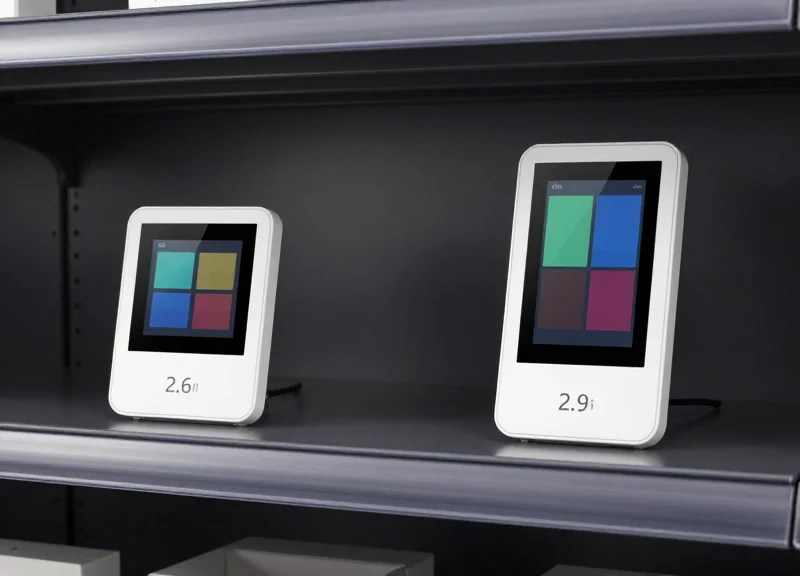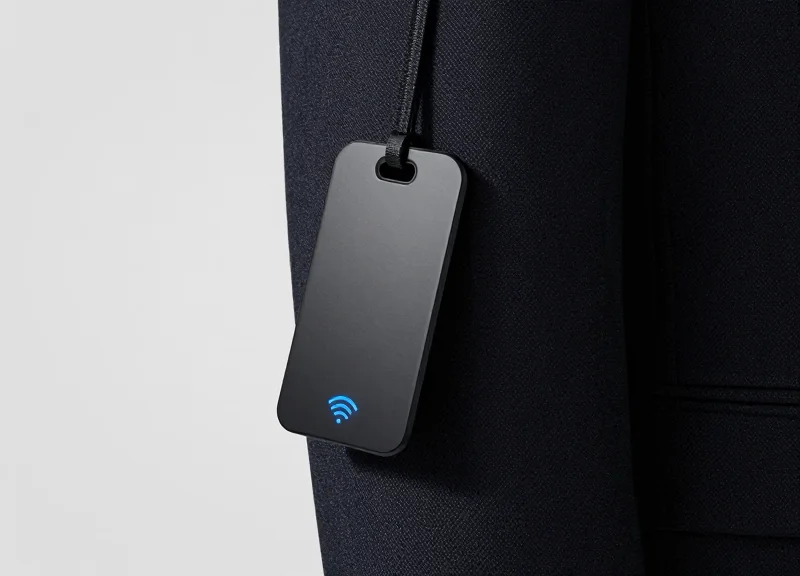
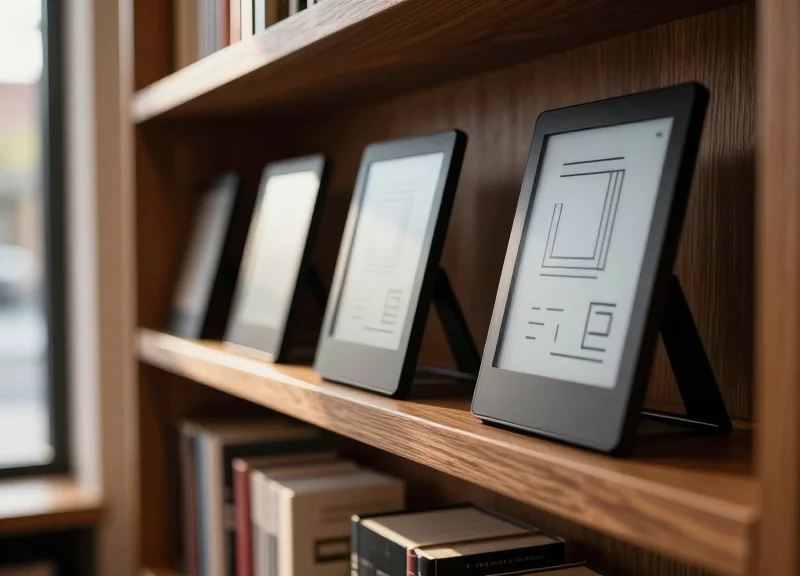
In the world of independent and niche bookstores, atmosphere is everything. However, as we approach 2026, the challenge lies in balancing that old-world charm with modern operational efficiency. Electronic Shelf Labels (ESL) are no longer just for big-box retailers; they are becoming a staple for aesthetic retail spaces. This guide explores the five non-negotiable features your bookstore needs to stay competitive and visually stunning while maintaining the cozy, curated vibe your customers love.
The Evolution of Bookstore Retail: Why 2026 Demands Digital Agility
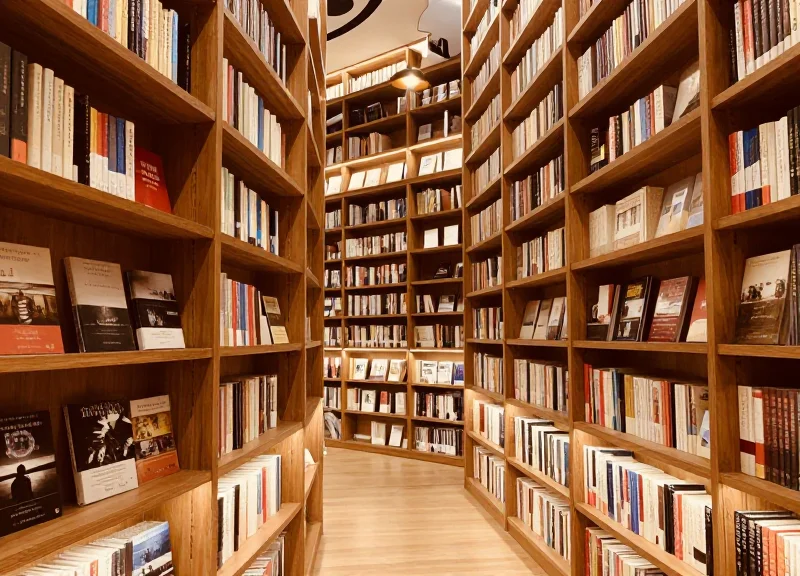
By 2026, the evolution of bookstore retail will be defined by 'Digital Agility'—the ability to integrate real-time data, dynamic pricing, and interactive inventory management without sacrificing the tactile, cozy atmosphere that defines niche shops. Electronic Shelf Labels (ESL) serve as the vital bridge in this transformation, replacing labor-intensive paper tags with high-resolution e-paper displays that synchronize online and offline data instantly. This shift allows independent booksellers to remain competitive against algorithmic giants while preserving the 'slow retail' charm their customers crave.
We are witnessing the emergence of the 'Curator's Paradox': as niche bookstores become more specialized, the operational overhead of managing fragmented supply chains and volatile pricing increases. In the past, high-tech interventions were seen as a threat to bookstore aesthetics; however, for 2026, agility is the new currency of survival. Consumers now expect a 'phygital' experience where they can see live stock levels, scan for peer reviews, and benefit from promotional parity between a store’s website and its physical shelves.
| Feature | Legacy Bookstore (2020) | Agile Aesthetic Bookstore (2026) |
|---|---|---|
| Pricing Strategy | Static / Manual Sticker Updates | Dynamic / Real-time ESL Sync |
| Staff Focus | Operational Maintenance (Tagging) | Customer Curation & Community |
| Data Integration | Siloed Inventory Systems | Omnichannel Real-time Updates |
| Customer Experience | Transactional / Physical Only | Interactive / Phygital Journey |
The original insight for 2026 retail is the 'Aesthetic Efficiency' mandate. Modern bookstore owners no longer have to choose between a 'tech-heavy' look and manual charm. Modern ESLs are designed to mimic the texture of high-grade paper, allowing for a seamless blend into curated displays. This allows stores to implement 'Flash Sales' or 'Book-of-the-Hour' promotions that were previously impossible to coordinate across physical labels.
Why is 'Digital Agility' important for small bookstores?
Digital agility allows small retailers to react to market trends, such as viral social media 'BookTok' hits, by updating prices and highlighting stock in seconds rather than days.
Does implementing ESL technology ruin the 'vibe' of a niche shop?
No. The 2026 generation of ESLs uses advanced E-ink technology that mimics paper and offers customizable frames (wood, matte, metal) to complement any interior design.
How does ESL improve the customer journey?
Customers can access deep-dive information—such as staff recommendations or digital waitlists—via integrated QR codes on the digital tag, bridging the gap between physical browsing and digital convenience.
Feature 1: High-Resolution E-Paper Display for Paper-Like Aesthetics
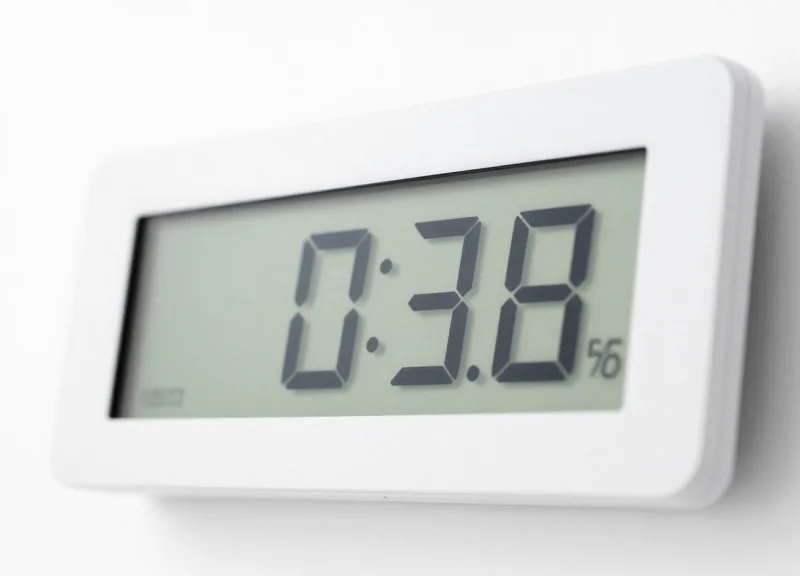
In the world of aesthetic retail, a high-resolution E-paper display is a non-emissive screen technology that utilizes electrophoretic ink to mimic the appearance of ordinary ink on paper. Unlike standard digital screens, these displays reflect ambient light rather than emitting it, providing a 180-degree viewing angle and zero glare. For niche bookstores in 2026, the 'non-negotiable' standard is a minimum of 300 DPI (dots per inch), which ensures that serif fonts and intricate book cover art rendered on the Electronic Shelf Label (ESL) are indistinguishable from the printed pages surrounding them.
For a bookstore, the atmosphere is its most valuable product. Introducing traditional LCD or LED screens into a space designed for quiet contemplation can shatter the 'analog' magic that customers seek. High-resolution E-paper preserves this atmospheric integrity. By using bi-stable technology, the display only consumes power when the image changes, allowing the price tag to remain static and flicker-free for years, just like a physical card. This 'silent' visual presence is what separates a high-end literary boutique from a generic electronics warehouse.
| Feature | Traditional LCD/LED | 2026 High-Res E-Paper |
|---|---|---|
| Visual Impact | Emissive light, causes eye strain | Reflective light, mimics paper |
| Resolution Standard | 72 - 120 DPI | 300+ DPI (Retina Grade) |
| Viewing Angle | Limited, shifts colors | Full 180°, no distortion |
| Aesthetic Fit | Industrial/High-Tech | Organic/Literary |
Expert Insight: The 'Serif-Clarity' Benchmark. In 20-plus years of retail tech, I've seen bookstores fail their digital transition by choosing low-resolution ESLs that blur the 'serifs' of classic fonts like Garamond or Baskerville. In 2026, premium bookstores must prioritize 'Typography Fidelity.' If your ESL cannot cleanly render a 6pt serif font, it will look like a cheap gadget rather than a curated label. High-res E-paper allows you to use the same brand typography on your shelves that publishers use in the books themselves, creating a seamless psychological bridge between the product and the price.
Does E-paper work well in low-light 'moody' bookstores?
Yes. Because E-paper is reflective, it performs exactly like a physical book. If a customer can read the book title under your store's lighting, they can read the high-res ESL perfectly.
Why is 300 DPI specifically recommended?
300 DPI is the industry standard for professional printing. At this density, the human eye can no longer see individual pixels from a standard reading distance, making the digital tag look 'printed'.
Can these displays show book cover art?
Modern 3-color or 4-color high-res E-paper can render dithering patterns that effectively simulate book cover gradients without the harsh glow of a tablet.
Feature 2: Seamless Integration with Inventory Management Systems (IMS)

Seamless integration with Inventory Management Systems (IMS) allows Electronic Shelf Labels (ESLs) to act as a live terminal for your bookstore’s database, ensuring that price changes, stock levels, and promotional metadata are synchronized instantly across the physical shelf and the digital backend. By 2026, this 'single source of truth' architecture will be the industry standard, removing the operational friction that leads to pricing errors and customer dissatisfaction.
| Feature | Legacy Manual Tagging | Integrated ESL (2026 Standard) |
|---|---|---|
| Update Speed | Hours per category | Seconds globally |
| Price Accuracy | 92-95% (Human error risk) | 100% (Database mirrored) |
| Stock Visibility | Back-office only | Real-time on-label display |
| Omnichannel Sync | Delayed / Disconnected | Instant (Web/In-store parity) |
For niche bookstores, managing limited-edition stock or rare first editions requires extreme precision. When a rare item sells online, the ESL on the physical shelf must update immediately to reflect 'Out of Stock' or 'Reserved' status. This prevents the awkward 'double-sale' scenario that can damage the reputation of a boutique brand.
- API-First Connectivity: Ensure the ESL provider offers robust RESTful APIs that allow your existing POS or IMS (like Shopify, Square, or specialized book platforms) to push data to labels without custom-coded middleware.
- Bidirectional Data Flow: The system should not only receive price data but also send 'status heartbeats' back to the IMS, confirming that the label has successfully updated and is currently readable by customers.
- Batch Update Logic: For large collection refreshes, the system must support 'pre-loading' updates that trigger at a specific time (e.g., at store opening) to ensure a consistent experience.
Expert Insight: The 'Scarcity Trigger' Strategy. One often overlooked advantage for niche retailers is using ESL-IMS integration to implement dynamic 'Scarcity Signaling.' You can program your ESLs to automatically display a 'Last 2 Copies' badge when stock hits a certain threshold in your IMS. This subtly encourages a purchase through social proof and urgency without the garish 'Sales' signs that ruin a bookstore's aesthetic.
Will I need to replace my current POS to use integrated ESLs?
Not necessarily. Most modern ESL systems use cloud-based gateways that can bridge with popular POS systems via standard API hooks or even simple CSV exports.
What happens if the Wi-Fi goes down?
ESLs are designed to be 'persistent.' They will continue to display the last received data indefinitely. Once connectivity is restored, they automatically sync any pending updates from the IMS queue.
Can I display stock levels for my staff's benefit?
Yes. Many niche bookstores use a 'hidden' data toggle or QR code on the ESL that, when scanned by staff, reveals precise stock counts or upcoming delivery dates directly from the IMS.
Feature 3: Ultra-Long Battery Life and Eco-Friendly Sustainability
For niche bookstores, sustainability is not a marketing buzzword; it is a core brand pillar. The 'Feature 3' non-negotiable for 2026 is an Electronic Shelf Label (ESL) system that offers a 10-year battery lifespan powered by ultra-low-energy bistable E-ink technology. Unlike traditional tablets or LCD screens that require constant charging, modern ESLs only consume power during a price or content update. Once the image is set, it remains visible indefinitely without drawing a single micro-watt of electricity. This 'set-and-forget' reliability ensures that your curated aesthetic is never interrupted by a dead screen or a messy charging cable.
| Sustainability Metric | Legacy Digital Signage | 2026 Eco-ESL Standard |
|---|---|---|
| Average Battery Life | 12 - 24 Hours | 8 - 10 Years |
| Energy Consumption | High (Continuous) | Near-Zero (Bistable) |
| Waste Generation | High E-waste (Cables/Adapters) | Minimal (Replaceable Coin Cells) |
| Carbon Footprint | Significant (Grid Dependent) | Neutral (Efficiency Driven) |
- Bistable Display Efficiency: The display only draws power when the 'ink' particles move. For a bookstore updating prices once a week, the energy draw is statistically negligible.
- Modular Design for Longevity: Look for ESLs with user-replaceable batteries and snap-on frames. This extends the hardware lifecycle to 15+ years, preventing premature e-waste.
- Recycled Material Housing: Top-tier 2026 models utilize PCR (Post-Consumer Recycled) plastics or bio-based resins to match the organic feel of a paper-heavy environment.
Expert Insight: The 'Ambient Reliability' Quotient. In my two decades in Silicon Valley retail tech, I’ve seen that the true ROI of long-life ESLs isn't just the electricity bill—it's the 'Ambient Reliability.' For a niche bookstore, the labor cost of changing 5,000 batteries every two years is prohibitive. By 2026, the gold standard is a battery that outlasts the shop's lease. This allows staff to focus on curation and community building rather than technical maintenance, preserving the 'analog' magic that customers expect from a boutique bookshop.
Does cold weather in my storefront affect battery life?
While extreme cold can affect lithium chemistry, 2026-spec bookstore ESLs are optimized for indoor environments (10°C to 30°C) where discharge rates remain extremely stable.
What happens to the display if the battery finally dies?
Because of bistable technology, the last image sent to the screen remains perfectly visible even if the battery is removed, ensuring no 'blank' shelves ever occur.
How do these contribute to a 'Green' certification for my shop?
Switching to ESLs eliminates the thousands of tons of chemically-treated thermal paper and adhesive waste generated by traditional price tags annually.
Feature 4: Multi-Color Support for Curated Promotions and Staff Recommendations
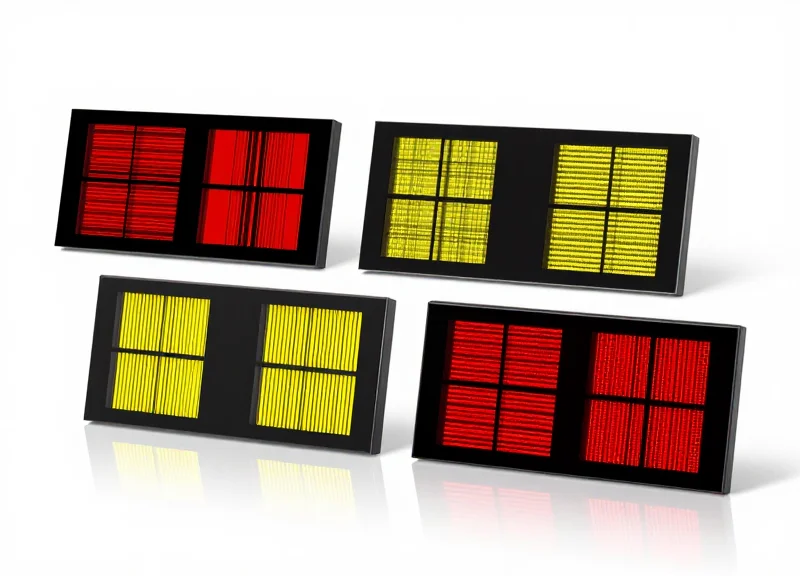
In the 2026 aesthetic retail landscape, multi-color Electronic Shelf Labels (ESL) serve as a sophisticated merchandising bridge, moving beyond basic price display to act as dynamic storytelling tools. By utilizing advanced 4-color (Black, White, Red, Yellow) or 7-color Spectra displays, niche bookstores can instantly apply visual hierarchy to their shelves. This allows for the high-contrast highlighting of 'Staff Picks,' 'Rare Finds,' or 'New Releases' using a digital palette that mimics the matte, non-glare quality of traditional book design, ensuring that technology enhances rather than disrupts the store's atmospheric charm.
| Display Type | Best Use Case | Visual Impact |
|---|---|---|
| 3-Color (B/W/Red) | Clearance & Seasonal Sales | High urgency; draws immediate attention to price drops. |
| 4-Color (B/W/R/Yellow) | Staff Recommendations & Genre Tags | Warm, curated feel; excellent for highlighting 'Staff Favorites'. |
| 7-Color (Multichromatic) | Art Books & Limited Editions | Premium, artistic fidelity; replicates the look of custom-printed labels. |
The true power of multi-color ESLs lies in their ability to facilitate 'Emotional Merchandising.' In niche bookstores, the purchase journey is often driven by discovery and the personal connection between the reader and the curator. By using specific color accents—for instance, a soft gold highlight for award winners or a deep crimson for 'Book Club Selections'—retailers can guide the customer's eye across the shelf without the friction of messy paper stickers or plastic talkers that often peel or fade.
- The 80/20 Rule of Chromatic Clutter: Expert Tip: To maintain a premium aesthetic, apply color to no more than 20% of your shelf labels. Using color sparingly creates a 'fountain pen' effect—mimicking the hand-inked notes of a librarian—which increases the perceived value of the curated selection.
- Automated Genre Color-Coding: Program your ESL system to automatically switch border colors based on the genre metadata in your IMS, such as a subtle green for 'Sustainability & Nature' or a midnight blue for 'Mystery & Noir'.
- Digital 'Staff Pick' Signatures: Use the high-resolution color space to include digitized versions of staff signatures or small icons (like a coffee cup for 'Morning Reads'), adding a layer of human touch to the digital display.
Does using more colors drain the battery faster?
While multi-color updates require slightly more energy than simple black-and-white flips, modern E-ink technology remains bistable. This means energy is only consumed during the 'refresh' phase, and the colors stay on screen indefinitely without power.
Can the colors be matched to our bookstore's specific branding?
Most 2026-gen ESLs offer a fixed palette. However, by layering dithering techniques and choosing the right hardware vendor, you can approximate your brand colors to ensure the digital labels feel like a native part of your interior design.
Feature 5: Elegant Mounting and Custom Frame Options
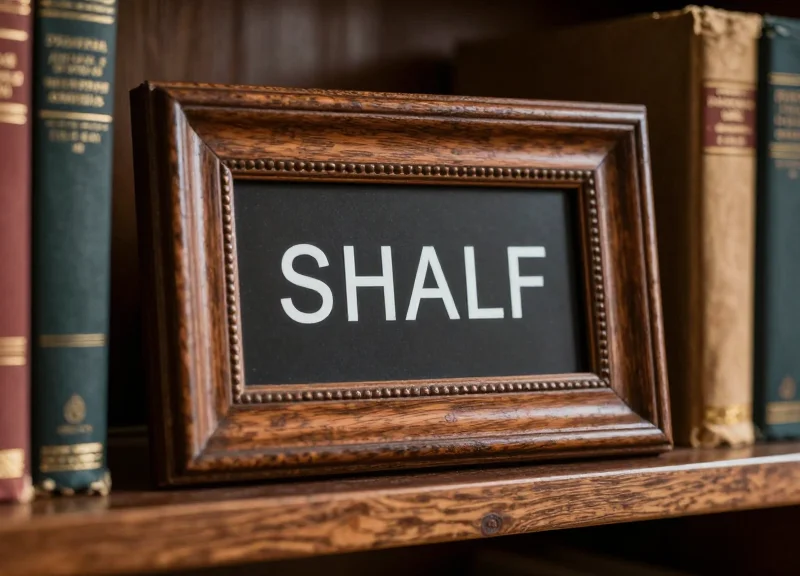
For niche bookstores, the 'plasticity' of standard retail technology often creates a visual disconnect with warm, wooden shelving and curated vintage aesthetics. In 2026, the non-negotiable standard for aesthetic retail is the ability to camouflage digital hardware through custom frames and sophisticated mounting solutions. This involves moving beyond generic shelf-edge clips to architectural-grade finishes like brushed brass, matte wood veneers, or even bespoke 3D-printed housings that match a store's specific interior design language. The goal is 'invisible technology'—where the customer notices the book and the price, but never the gadgetry behind it.
| Mounting Material | Aesthetic Impact | Best Use Case | Durability |
|---|---|---|---|
| Walnut/Oak Veneer | Warm, organic, traditional | Classic literature sections, wooden shelving | Medium - Requires indoor climate control |
| Anodized Aluminum | Modern, minimalist, sleek | Graphic novels, art books, industrial interiors | High - Scratch and fingerprint resistant |
| Antique Brass Frames | Vintage, luxury, high-end | Rare books, collector editions, dark wood | High - Develops a natural patina over time |
| Magnetic Concealed | Floating, clean, tech-forward | Metal display tables, rotating endcaps | High - Allows for quick layout changes |
Expert Insight: In the Silicon Valley retail tech space, we are seeing a shift toward 'Modular Aesthetic Kits.' Rather than replacing the ESL unit, bookstores should invest in a system that allows for snap-on faceplates. This allows a shop to transition from a bright, airy spring aesthetic to a cozy, dark-academia winter vibe simply by swapping the frame shells. My top recommendation for 2026 is to prioritize 'Angle-Adjustable' mounts; bookstore lighting is often mood-centric and softer than grocery stores, so the ability to tilt a label toward the customer's eye line is crucial for legibility without increasing screen brightness.
Will custom frames interfere with the ESL signal?
As long as the frames are not made of solid, ungrounded heavy metals that create a Faraday cage, modern sub-GHz or BLE signals penetrate wood and plastic veneers easily. Always test custom metallic paints for RF interference.
How do I mount ESLs on antique or sensitive shelving?
Use non-destructive adhesive strips or magnetic tape. For historical preservation, custom 'book-end' style mounts can be used where the ESL is integrated into a free-standing weighted block rather than being attached to the shelf.
Are custom frames expensive to scale?
While bespoke wood is premium, high-quality 3D printing with 'wood-fill' filaments offers a cost-effective way to achieve an artisanal look at scale for mid-sized independent shops.
- Audit Your Shelving: Identify the primary materials in your store (e.g., mahogany, pine, industrial steel) to determine the base frame material.
- Select a Mounting Profile: Choose between flat-mount for eye-level shelves or angled-mount for lower displays to ensure ergonomic readability.
- Prototype a Signature Frame: Work with an ESL provider that offers 'Open Frame' designs, allowing you to wrap the tech in a custom-designed shell unique to your brand.
Enhancing the Customer Experience with QR Code Integration
In the 2026 retail landscape, the bookstore has evolved into a 'phygital' hub where QR code integration on Electronic Shelf Labels (ESLs) serves as the primary portal between the physical tactile experience and the digital content ecosystem. By embedding dynamic, high-resolution scannable codes directly onto the e-paper display, niche bookstores can offer instant access to Goodreads ratings, 'BookTok' trending discussions, or exclusive author interviews without the visual clutter of traditional printed signage. This integration allows retailers to maintain a minimalist, high-end aesthetic while satisfying the modern reader's demand for real-time social proof and deep-dive metadata.
| Digital Destination | Customer Experience Benefit | Strategic Retail Value |
|---|---|---|
| Curated Multimedia | Access to author interviews and audio book samples. | Increases time-in-store and emotional resonance. |
| Dynamic Social Proof | Real-time display of community reviews and ratings. | Builds trust and accelerates the 'discovery-to-purchase' cycle. |
| The Digital Waitlist | One-scan sign-up for out-of-stock niche titles. | Captures lost sales and grows the customer CRM database. |
The Veteran Perspective: The 'Curated Loop' Strategy. A unique insight for 2026 is the shift from generic links to 'Geofenced Content' via ESL QRs. Instead of just sending a user to a website, the QR code can trigger a localized digital experience—such as a 'Staff Recommendation' video that only plays when scanned within that specific store. This creates an exclusive, 'secret' layer to the shopping experience that rewards physical visitation, effectively turning your bookstore into an interactive gallery.
Does the QR code change when the price updates?
No. The QR code's destination is managed via a centralized CMS, meaning the physical code on the ESL stays the same even if you update the backend content, price, or promotion details.
Will QR codes distract from the bookstore's 'vintage' feel?
Modern ESLs allow for 'Aesthetic Embedding,' where QR codes are rendered in high-contrast monochrome that mimics the look of a printed colophon, blending seamlessly into the design language of the tag.
Can these codes track customer behavior?
Yes. Each scan provides granular data on which genres or specific titles are generating the most interest, allowing you to optimize your inventory based on 'intent to buy' rather than just final sales.
The ROI of ESL in Niche Bookstores: More Than Just Price Tags
The ROI of Electronic Shelf Labels (ESL) for niche bookstores is calculated by combining direct labor savings—often reducing pricing maintenance by 80%—with indirect gains in 'Curation Velocity,' which allows retailers to synchronize physical inventory with digital trends in real-time. In the 2026 aesthetic retail environment, the true ROI manifests as the conversion of static shelf space into a dynamic marketing channel that increases Average Transaction Value (ATV) by up to 15% through integrated digital metadata, instant promotional agility, and the elimination of pricing discrepancies that erode customer trust.
| ROI Factor | Traditional Paper Labels | ESL System (2026 Standard) |
|---|---|---|
| Labor Cost | High (8-12 hours/week for updates) | Near Zero (Automated updates) |
| Update Latency | 24-48 hours (Design to Print to Shelf) | Seconds (Instant Sync with POS) |
| Error Rate | 3-5% (Human error in placement) | 0.01% (Direct Database Link) |
| Marketing Depth | Limited (Price only) | Infinite (QR codes to reviews/videos) |
Beyond simple labor metrics, the most significant 'hidden' ROI for niche bookstores is the Curation Velocity. In a world where a book can go viral on TikTok in three hours, the ability to instantly update a price, add a 'Viral' badge, or link to a live review via ESL allows small retailers to capture 'heat' that would otherwise be lost to major online marketplaces. This agility transforms the bookstore from a passive warehouse into an active, responsive environment that mirrors the speed of digital commerce while maintaining a physical, high-end aesthetic.
What is the typical payback period for a niche bookstore ESL installation?
For a mid-sized niche bookstore, the break-even point typically occurs within 14 to 18 months. This accounts for the reduction in printing costs, labor hours reclaimed for customer service, and the prevention of 'margin leakage' caused by outdated promotional tags.
Does the digital nature of ESL detract from the 'analog' feel of a bookstore?
When using 2026-spec e-ink technology with custom wood-grain frames, the ROI actually includes 'Brand Equity Preservation.' Unlike bright LED screens, e-ink mimics paper texture, enhancing the premium feel while providing modern functionality.
How does ESL impact inventory turnover?
ESLs improve turnover by allowing for 'Smart Markdowns.' Retailers can implement automated, incremental discounts on slow-moving stock (e.g., -5% every week) without the manual labor of re-labeling, ensuring capital is never trapped in stagnant inventory.
Selecting the Right Partner: Why Expertise Matters in 2026
In 2026, the right Electronic Shelf Label (ESL) partner for a niche bookstore is one that prioritizes 'Atmospheric Integration'—the ability to blend high-tech inventory management with high-touch physical environments without compromising the store’s brand identity. As aesthetic retail becomes more competitive, the difference between a successful implementation and a failed digital transition often rests on the vendor's ability to provide tailored software APIs, sustainable hardware options, and a design-first mindset that understands why a 2.1-inch wood-framed display matters more than a generic plastic tag.
| Evaluation Criterion | Generic Tech Vendor | Aesthetic Retail Specialist (e.g. DragonGuardGroup) |
|---|---|---|
| Design Philosophy | Industrial/Warehouse utility | Curated, minimalist, and brand-adaptive |
| Integration Support | DIY API documentation only | High-touch boutique POS integration |
| Lifecycle Management | Hardware-only focus | Software updates for 2026 sustainability standards |
| Customization | Standard white/black plastic | Custom bezels, wood-grain finishes, and anti-glare glass |
The Phantom Integration Insight: A unique challenge for niche bookstores is 'visual noise.' Generic ESL vendors often use high-frequency blinking LEDs for stock alerts, which can destroy the tranquil atmosphere of a reading nook. An expert partner like DragonGuardGroup understands how to configure 'Silent Alerts'—operational data that is visible only via staff handhelds or behind-the-scenes dashboards—keeping the customer's visual field focused entirely on the books.
- Portfolio Aesthetic Audit: Review the vendor's previous work specifically within luxury or niche environments. If their portfolio is 90% supermarkets, they may struggle with the delicate spatial requirements of a bookstore.
- Local Cloud vs. Edge Versatility: Ensure the partner offers flexible hosting. For niche stores, an edge-computing solution ensures that even if the store's Wi-Fi dips, your pricing and 'Staff Pick' displays remain accurate and online.
- Sustainability Certification: In 2026, shoppers demand circular economy compliance. Choose a partner that offers battery recycling programs and uses low-energy e-paper modules with a 10-year lifespan.
Why can't I just buy cheap ESL tags online?
Off-the-shelf tags lack the specialized software gateways needed to sync with complex bookstore inventory systems. Without professional partnership, you risk 'ghost pricing' where the shelf and the register don't match.
What should I ask about API integration?
Ask if the vendor supports 'Webhooks' for real-time updates. This allows your ESLs to update the second a book is sold online or marked as 'Reserved' by a local customer.
Do I need a partner with local support?
Yes. Aesthetic retail relies on 100% uptime. A partner with a regional presence or robust remote diagnostic tools can fix display glitches before they disrupt the customer experience.