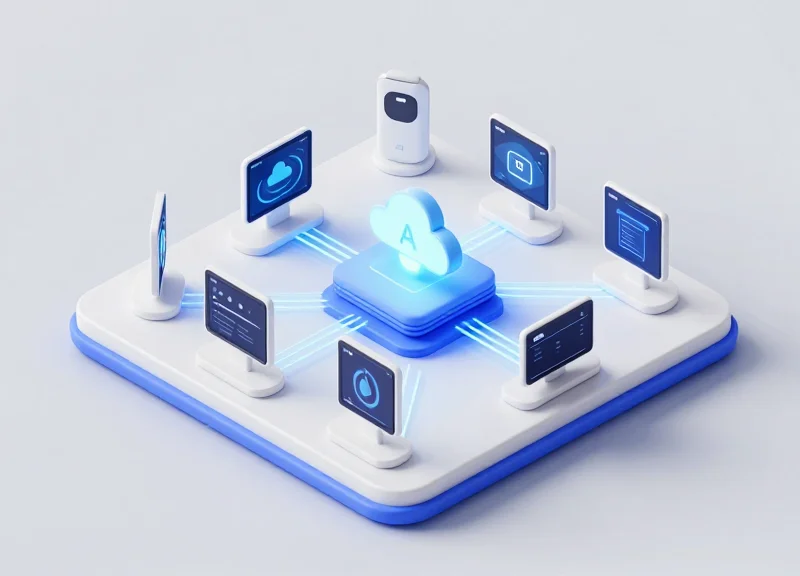
The retail landscape for outdoor gear is shifting toward real-time agility. As we approach 2026, standard Electronic Shelf Labels (ESL) often fail under the harsh realities of UV exposure, humidity, and temperature swings. For retailers specializing in camping, marine, or sports equipment, choosing the right digital labeling system is no longer just about price—it's about environmental resilience and operational intelligence. This guide explores the seven non-negotiable performance parameters to ensure your ESL investment thrives in the great outdoors.
The Evolution of ESL in Outdoor Retail: Trends for 2026
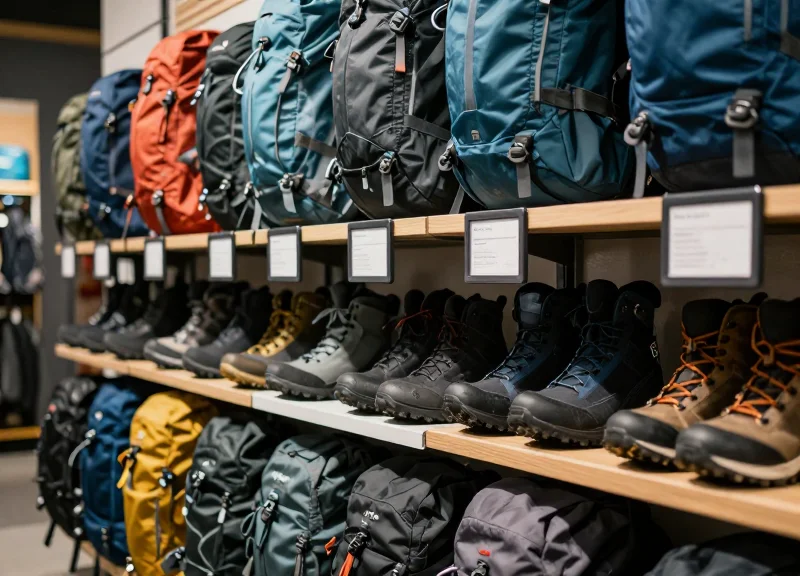
As we approach 2026, Electronic Shelf Labels (ESL) in outdoor retail are undergoing a fundamental transformation, shifting from simple digital price tags to high-performance IoT touchpoints. Unlike standard grocery retail, the outdoor gear market requires hardware that can withstand extreme temperature fluctuations, high-intensity lighting, and moisture. The 2026 standard for ESL represents a convergence of ruggedized hardware and ultra-low-power communication protocols, ensuring that digital transformation finally reaches the most demanding showroom environments—from specialized climbing shops to vast outdoor equipment depots.
| Feature | 2020 Standard | 2026 Forecast |
|---|---|---|
| Durability | Standard Indoor (IP54) | Ruggedized / UV-Proof (IP67+) |
| Connectivity | Proprietary Sub-GHz | Bluetooth 6.0 / Matter-over-Thread |
| Battery Life | 3-5 Years | 8-12 Years (Energy Harvesting) |
| Display Tech | B/W E-Paper | 4-Color / High-Contrast Spectra |
The shift toward 2026 is driven by the 'Rugged Edge' philosophy. Modern outdoor consumers demand deep technical specifications at the point of sale—such as hydrostatic head ratings for tents or weight-to-warmth ratios for sleeping bags. ESLs are evolving to facilitate this by integrating Near Field Communication (NFC) and dynamic QR codes that bridge the physical product to immersive digital experiences.
Will 2026 ESLs support real-time stock for bulky gear?
Yes, the 2026 generation of ESLs utilizes Thread-based networking to provide near-instant synchronization with Warehouse Management Systems (WMS), allowing retailers to show real-time availability of large-scale items like kayaks or bikes that may not be on the floor.
How do these labels handle the high UV exposure in outdoor showrooms?
New standards require automotive-grade UV filters on the e-ink film to prevent 'ghosting' and yellowing, a common failure point in previous digital tags used near large windows or under high-output LEDs.
Is energy harvesting a reality for 2026 gear labels?
Strategic implementations will feature 'Ambient Light Harvesting,' allowing ESLs to recharge via showroom lighting, theoretically extending hardware lifespan to match the 10+ year replacement cycle of high-end outdoor equipment.
Expert Insight: The Thermal Stability Benchmark. A critical 2026 trend often overlooked is 'Cold-Chain Display Stability.' Standard ESLs often suffer from slow refresh rates or screen 'freezing' when temperatures drop below 5°C. The next generation of outdoor-specific ESLs utilizes specialized electrolyte fluids in the e-ink microcapsules, ensuring that price and spec updates remain fluid even in unheated winter gear warehouses or high-altitude retail locations.
Parameter 1: UV Resistance and Display Longevity
UV resistance in Outdoor ESLs (Electronic Shelf Labels) is the measure of a display's ability to withstand high-energy ultraviolet radiation without compromising the clarity of the e-ink microcapsules or the structural integrity of the protective lens. For 2026, the benchmark for outdoor gear retail is defined by a 99.9% UV-cut rating between 300nm and 400nm wavelengths, coupled with anti-yellowing substrates that prevent 'solar burn'—a common failure where the screen becomes illegible under direct sunlight within 12-18 months of deployment.
| Material Type | UV Blocking Efficiency | Yellowing Resistance (Delta E) | Expected Life (Outdoor) |
|---|---|---|---|
| Standard PET Film | 65-75% | > 4.0 (High) | 1-2 Years |
| Hard-Coated PMMA | 85-92% | 2.5 (Moderate) | 3-5 Years |
| Fluoropolymer (2026 Std) | 99.9% | < 1.0 (Negligible) | 7-10 Years |
As we move into 2026, the industry is shifting away from simple topical coatings toward 'Integrated Matrix Protection.' This involves embedding UV absorbers directly into the polymer lattice of the display's top layer. This prevents the delamination common in older models where the UV-resistant film would peel away due to thermal expansion and contraction cycles in outdoor environments. Furthermore, advanced 'Low-Haze' anti-reflective coatings are being paired with these barriers to ensure that even under the harshest midday sun, the contrast ratio of the e-ink remains above 7:1.
How does UV light affect the internal 'ink' of an ESL?
UV radiation causes the charged particles inside the microcapsules to lose their polarity over time. This leads to 'ghosting' or permanent fading, where the black and white states become indistinguishable shades of gray.
What is the 'Yellowing Index' and why should buyers care?
The Yellowing Index (YI) measures the degradation of the plastic lens. A high YI not only looks aesthetically unappealing but also reduces the light transmission required for the display to be visible from wide angles.
Is 'Outdoor-Ready' the same as 'UV-Resistant'?
No. Many labels marketed as outdoor-ready only feature IP67 waterproofing. True 2026-spec outdoor labels must specifically certify their UV-cut rating and high-temperature tolerance to prevent liquid crystal or microcapsule expansion.
Expert Insight (The 'Edge-Seal' Factor): While most manufacturers focus on the screen surface, the most critical failure point in 2026 hardware is actually the UV-induced degradation of the edge adhesive. If the adhesive seal fails due to UV exposure, moisture enters the display, causing 'creeping fog' or total hardware failure. When selecting a vendor, always ask for the UV-stabilization data of the edge-sealant, not just the front panel. A high-quality fluoropolymer-based sealant is now mandatory for gear that will be placed in high-altitude or coastal environments where UV indices are consistently extreme.
Parameter 2: IP Rating and Waterproofing for Extreme Weather
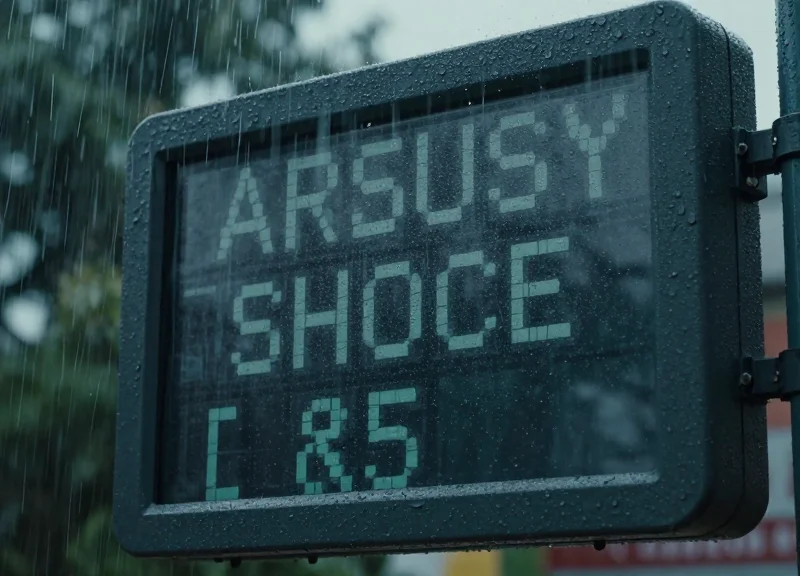
In the context of outdoor retail—from garden centers to marine supply docks—the IP (Ingress Protection) rating is the definitive standard for measuring a device's resistance to environmental hazards. For 2026, the industry standard for outdoor ESLs has shifted from 'splash-proof' to 'fully submersible.' An IP67 or IP68 rating ensures that the internal circuitry is hermetically sealed against high-pressure water jets and prolonged submersion, preventing the terminal corrosion that traditionally plagues outdoor electronics.
| IP Rating | Dust Protection | Water Protection | Best Use Case |
|---|---|---|---|
| IP65 | Dust-tight | Resistant to low-pressure water jets | Sheltered outdoor kiosks or covered patios. |
| IP67 | Dust-tight | Resists immersion up to 1m for 30 mins | Standard garden centers and uncovered display racks. |
| IP68 | Dust-tight | Continuous immersion (usually >1m depth) | Marine shops, boat docks, and irrigation zones. |
The Expert Insight: The 'Micro-Condensation' Trap. While many ESLs claim IP67 protection, the real threat in 2026 isn't just liquid rain; it's the humidity cycle. Rapid temperature drops at night cause internal air volume to contract, sucking moisture through even the smallest seal imperfections. Leading 2026 hardware now utilizes hydrophobic breather membranes or vacuum-sealed injection molding. This technology allows pressure equalization without letting water vapor in, preventing the 'foggy screen' syndrome that renders low-quality ESLs unreadable after a single season.
- Garden Centers & Nurseries: Requires IP67 at minimum to withstand daily overhead irrigation systems and the high acidity found in liquid fertilizers.
- Marine & Coastal Retail: Demands IP68 and salt-spray testing. Saltwater is more conductive than freshwater, meaning even a tiny leak causes immediate board failure.
- Construction & Lumber Yards: Focuses on the first digit of the IP rating (Dust) to ensure fine sawdust and grit do not jam the battery compartment or affect the display transition.
Is IP68 always better than IP67 for outdoor gear?
Generally, yes. However, for most retail applications, IP67 is the 'sweet spot' for cost and performance. IP68 is only strictly necessary if the ESL will be exposed to high-pressure cleaning or potential flooding.
Does waterproofing affect battery replacement?
Yes. Highly waterproof ESLs often use ultrasonic welding rather than screws and gaskets. This makes them 'disposable' or requires professional refurbishment to maintain the seal integrity after a battery swap.
How does humidity impact ESL longevity?
High humidity can cause electrical leakage on the PCB. In 2026 models, look for 'conformal coating' on the internal electronics as a secondary defense layer if the outer seal is ever compromised.
Parameter 3: Wide Temperature Operating Range
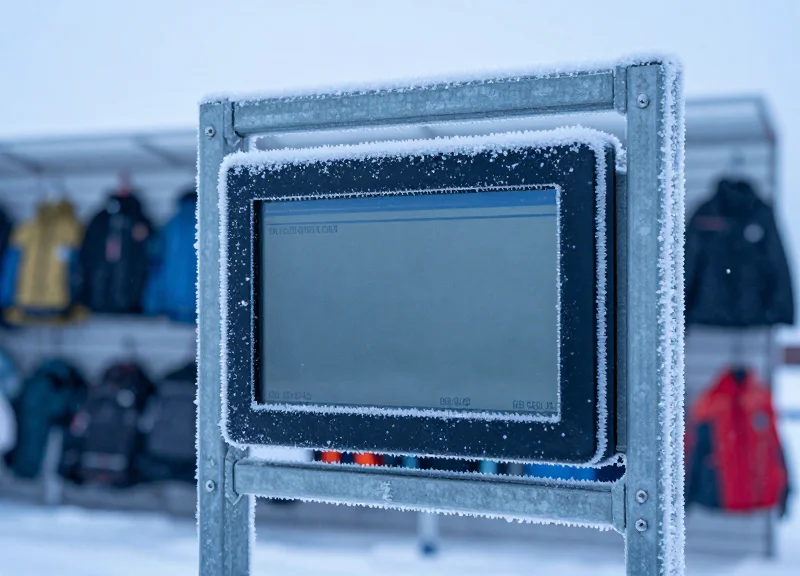
For 2026 outdoor gear retail, the standard operating temperature range for high-performance Electronic Shelf Labels (ESL) has shifted to -25°C to +60°C (-13°F to 140°F). Unlike indoor labels that fail when electrolytes freeze or housings warp, specialized outdoor ESLs utilize wide-temperature battery chemistries and low-viscosity electrophoretic fluids to ensure display updates remain crisp during midnight freezes and high-noon heat waves. This parameter is the single most important factor for preventing 'screen ghosting' and battery depletion in external displays.
The primary failure point in traditional ESLs exposed to the elements is the internal resistance of the battery. In sub-zero temperatures, standard Lithium Manganese Dioxide (Li-MnO2) cells experience a voltage drop that prevents the e-ink capsules from flipping, leading to failed price updates. Conversely, excessive heat can cause electrolyte outgassing, leading to 'pillowing' or permanent casing rupture. For 2026, the industry is pivoting toward specialized Lithium Thionyl Chloride (Li-SOCl2) and solid-state electrolytes to maintain a flat discharge curve regardless of the ambient thermal environment.
| Feature | Standard Indoor ESL | 2026 Outdoor-Spec ESL |
|---|---|---|
| Operating Range | 0°C to 40°C | -25°C to 60°C |
| Battery Chemistry | Li-MnO2 (Coin Cell) | Extended-Temp Li-SOCl2 / Solid-State |
| Display Fluid | Standard Viscosity | Low-Viscosity Polarized Fluid |
| Refresh Latency at -10°C | Fail or >30 Seconds | <5 Seconds |
Expert Tip: The 'Thermal Lag' Insight. One factor often overlooked by procurement teams is the viscosity of the electronic ink itself. As temperatures drop, the fluid inside the microcapsules becomes more viscous. By 2026, premium outdoor ESLs will incorporate 'over-drive' voltage algorithms that detect ambient temperature via built-in thermistors and automatically adjust the electrical pulse duration to ensure the display remains legible and ghost-free without wasting battery life.
Can I use standard freezer-grade ESLs for outdoor summer displays?
No. While freezer ESLs handle cold well, they are not designed for the high-end thermal expansion found in direct sunlight, which can exceed 50°C. You need a bi-modal wide-temp label.
Does extreme cold permanently damage the ESL display?
Typically, the damage is temporary (sluggish updates), but if the battery's internal seal shrinks due to cold, it may allow moisture ingress, leading to permanent circuit corrosion once it thaws.
How often should I expect to change batteries in extreme environments?
With 2026-spec high-capacity chemistries, you should still achieve a 5-7 year lifespan, provided the label uses a sub-GHz communication protocol which is less power-intensive than Wi-Fi in extreme temps.
Parameter 4: Battery Efficiency and Energy Management Systems
In the context of 2026 outdoor retail standards, battery efficiency for Electronic Shelf Labels (ESL) is defined as the ability to maintain 100% operational uptime for 5 to 10 years without manual intervention. This is achieved through a combination of high-energy-density battery chemistries, such as Lithium Thionyl Chloride (Li-SOCl2), and sophisticated Energy Management Systems (EMS) that regulate power consumption based on transmission frequency and environmental triggers. For outdoor gear retailers, the cost of labor to replace thousands of batteries in a garden center or equipment yard is prohibitive, making ultra-low-power architecture the most critical factor for a positive ROI.
The backbone of modern outdoor ESL efficiency lies in the transition from legacy 2.4GHz protocols to more efficient Low-Power Wide-Area (LPWA) technologies. Protocols like Bluetooth 5.4 PAwR (Periodic Advertising with Response) and Sub-1GHz LoRaWAN allow for massive device density with minimal energy overhead. These systems enable 'bidirectional' communication where the label stays in a deep-sleep state until a specific sync window occurs, drastically reducing the 'idle current' that typically drains batteries in cheaper, consumer-grade hardware.
| Protocol Type | Typical Power Consumption | Estimated Lifespan (1 Update/Day) | Key Advantage |
|---|---|---|---|
| Bluetooth 5.4 (PAwR) | Ultra-Low (Micro-Amps) | 7-10 Years | High data throughput with low latency |
| Sub-1GHz (Proprietary) | Low | 8-12 Years | Superior penetration through outdoor obstacles |
| Legacy 2.4GHz Zigbee | Moderate | 3-5 Years | Widespread compatibility but high interference |
Expert Tip: Look for systems featuring 'Predictive Power Throttling.' In my decades of experience in the Valley, I have seen that the smartest hardware doesn't just use low power; it adapts. In 2026, leading ESLs use on-board sensors to detect environmental stress. If the temperature drops to a level where battery internal resistance increases (as discussed in Parameter 3), the EMS will automatically decrease the frequency of non-essential heartbeat check-ins to preserve the remaining charge, ensuring the display remains active even in sub-optimal conditions.
Why is Li-SOCl2 chemistry preferred over standard CR2450 coins?
Li-SOCl2 batteries offer nearly double the energy density and a significantly lower self-discharge rate (less than 1% per year), which is essential for surviving the decade-long lifespan required in outdoor industrial use.
Does frequent price updating kill the battery?
While updates consume more power than idling, modern LPWA protocols are so efficient that even 5 updates per day will generally still allow for a 5+ year lifespan on a single charge.
Can the Energy Management System be updated remotely?
Yes, high-end 2026 ESL models support Over-The-Air (OTA) firmware updates that can refine power-saving algorithms as new efficiencies are discovered, future-proofing your hardware investment.
Parameter 5: Sunlight Readability and Anti-Glare Technology
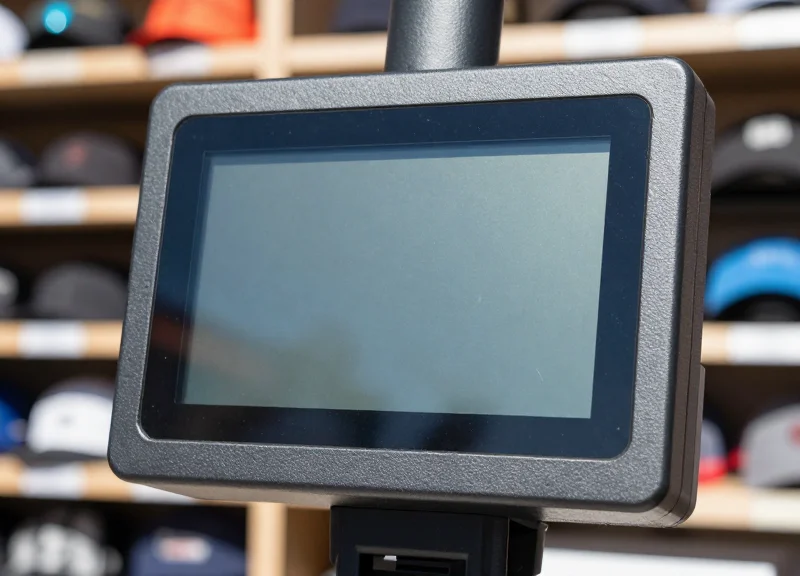
Sunlight readability in Electronic Shelf Labels (ESLs) is defined by the display's ability to maintain high contrast under intense ambient light, typically exceeding 50,000 lux. Unlike traditional LCDs that fight the sun with power-hungry backlights, outdoor-grade ESLs leverage the reflective nature of electrophoretic ink (E-ink). In 2026, the industry standard for outdoor gear has shifted from simple matte finishes to multi-layer Anti-Reflective (AR) and Anti-Glare (AG) stacks that maintain a contrast ratio of at least 12:1 even in direct noon-day sun, ensuring that price points and QR codes remain scannable by both human eyes and mobile cameras.
| Feature | Standard Indoor ESL | 2026 Outdoor-Grade ESL |
|---|---|---|
| Typical Contrast Ratio | 7:1 to 10:1 | 12:1 to 15:1 |
| Surface Treatment | Standard PET Film | Nano-Etched AG + Multi-layer AR |
| Specular Reflection | High (Mirror-like) | Low (<0.5%) |
| Optical Bonding | Air Gap | Full Resin Bonding (OCR) |
A critical 2026 innovation for outdoor retail is the transition from air-gap construction to 'Full Optical Bonding.' In legacy ESLs, the air gap between the protective lens and the E-ink module creates two extra reflective surfaces, which causes light to bounce internally and wash out the display. Modern outdoor gear uses Optical Clear Resin (OCR) to fuse the layers, effectively eliminating the internal reflection. This technology, combined with a 'Haze Factor' optimized between 25% and 35%, allows for wide-angle viewing without the 'milky' look often associated with cheap matte screens.
Why is E-ink inherently better for sunlight than LCD?
E-ink is a reflective technology; the more ambient light available, the brighter the 'white' state becomes. LCDs are transmissive and require high-intensity backlighting to compete with the sun, leading to massive battery drain and heat issues.
What is the difference between Anti-Glare and Anti-Reflective coatings?
Anti-Glare (AG) uses a microscopic rough surface to scatter reflected light, reducing mirror-like reflections. Anti-Reflective (AR) uses destructive interference of light waves to actually cancel out reflections. 2026 outdoor ESLs use a hybrid 'AR-over-AG' approach for maximum clarity.
Do UV inhibitors affect readability?
Yes, high-quality UV inhibitors must be integrated into the AR coating. Cheaper UV films can add a yellowish tint that reduces the perceived contrast of the white background, so high-end 2026 models use 'Neutral-Density' UV blockers.
Expert Tip for 2026: When evaluating hardware, ask for the 'Specular Reflection' percentage. For true outdoor performance in garden centers or automotive displays, you should look for a value below 0.5%. Anything higher will result in 'hot spots' on the screen that make QR codes unreadable for automated inventory robots and customer smartphones.
Parameter 6: Robust Connectivity and Signal Penetration
In outdoor ESL deployments, robust connectivity refers to the system's ability to maintain a 100% data transmission success rate across expansive areas—often exceeding 50,000 square feet—while overcoming physical interference from metal racking, dense foliage, and atmospheric conditions. For 2026, the industry standard has shifted toward prioritizing Sub-GHz frequencies for the communication backbone due to their superior wavelength characteristics, which allow signals to 'bend' around obstacles that would typically block higher-frequency signals like standard Wi-Fi or Bluetooth.
| Feature | 2.4 GHz (BLE / Zigbee) | Sub-GHz (868/915 MHz) | 2026 Hybrid Systems |
|---|---|---|---|
| Effective Outdoor Range | 30 - 50 Meters | 300 - 500+ Meters | Dynamic Range Scaling |
| Obstacle Penetration | Low (Reflects off metal/concrete) | High (Diffracts around obstacles) | Protocol-optimized |
| Interference Risk | High (Shared with Wi-Fi/Microwaves) | Minimal (Dedicated industrial bands) | AI-driven Channel Hopping |
| Primary Use Case | Indoor retail / Customer Interaction | Outdoor Yards / Heavy Industrial | Enterprise-wide synchronization |
A critical technical consideration for outdoor gear retailers is the 'Fresnel Zone'—the elliptical area around the line of sight between the Access Point and the ESL. In outdoor lumber yards or automotive lots, ground reflections and stacked inventory can cause multipath fading. Sub-GHz protocols are inherently more resilient to these reflections. However, the most advanced 2026 systems utilize a 'Dual-Phased' approach: Sub-GHz for the high-reliability price updates and 2.4 GHz (Bluetooth Low Energy) for localized customer engagement, such as 'Pick-to-Light' or mobile product information retrieval.
Why does heavy rain or snow affect ESL connectivity?
High-frequency signals like 2.4GHz are close to the resonant frequency of water molecules, meaning heavy precipitation can cause 'rain fade' or signal attenuation. Sub-GHz frequencies have longer wavelengths that pass through rain and snow with negligible loss.
How many Access Points (APs) are typically needed for an outdoor lot?
While an indoor environment might need an AP every 20-30 meters, a Sub-GHz outdoor system can often cover a 300-meter radius with a single industrial-grade AP, provided it is mounted at an optimal height to clear the first Fresnel zone.
What is the impact of metal shelving on signal reliability?
Metal is the primary enemy of wireless signals. In garden centers or construction supply yards, metal racks create 'Faraday cages.' Sub-GHz signals use diffraction to reach labels tucked inside these racks, whereas 2.4GHz signals often require a significantly denser mesh of routers to avoid dead zones.
Expert Tip: for 2026: When selecting an outdoor ESL vendor, ask for a 'Link Budget' analysis. A robust outdoor system should offer a link budget of at least 120dB to ensure that even as batteries age and environmental conditions fluctuate, the signal remains strong enough to trigger updates during the peak 'Golden Hour' of sunlight when interference and thermal noise are at their highest.
Parameter 7: Impact Resistance and Physical Durability
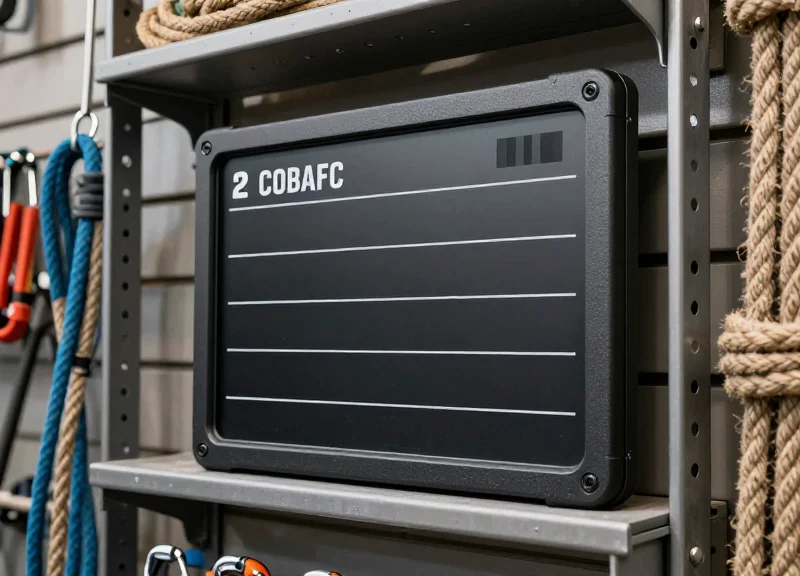
Impact resistance in Electronic Shelf Labels (ESLs) refers to the device's ability to withstand mechanical energy without functional failure or chassis compromise. In the outdoor gear sector—where labels are exposed to heavy-duty equipment like mountain bikes, kayaks, and gardening machinery—durability is measured primarily through the IK Rating (International Protection Marking per IEC 62262). For 2026, the industry standard has shifted: while IK05 was once sufficient for indoor retail, outdoor environments now demand a minimum of IK08 to ensure a sustainable ROI and prevent frequent hardware replacements.
| IK Rating | Impact Energy (Joules) | Standard Equivalent | Recommended Outdoor Use Case |
|---|---|---|---|
| IK07 | 2.0 J | 0.5kg dropped from 40cm | General apparel and lightweight gear displays. |
| IK08 | 5.0 J | 1.7kg dropped from 30cm | Standard hardware, camping gear, and bike racks. |
| IK09 | 10.0 J | 5.0kg dropped from 20cm | Heavy machinery, construction tools, and high-traffic zones. |
| IK10 | 20.0 J | 5.0kg dropped from 40cm | Vandal-prone areas or heavy equipment rental lots. |
Beyond the external shell, physical durability in 2026 hinges on 'Internal Shock Decoupling.' This is a specialized engineering approach where the fragile E-ink backplane is suspended within the housing using a silicone gasket or foam buffer. This ensures that even if the outer polycarbonate casing receives a localized hit, the kinetic energy is dissipated before it can crack the glass layers of the display. When selecting a vendor, prioritize those using UV-stabilized polycarbonate blends over standard ABS plastics, as the latter become brittle and prone to cracking after prolonged exposure to sunlight.
Why is IK rating more important than a warranty?
A warranty covers manufacturing defects but rarely covers 'accidental damage' from customer impact. High IK-rated units prevent the downtime and labor costs associated with replacing shattered screens, which are the most common failure point in outdoor retail.
What role does the mounting system play in durability?
A rigid mount can actually increase the risk of damage by transferring all impact energy directly to the label. Use flexible or spring-loaded mounting brackets for items like heavy bikes or kayaks to allow the label to 'give' slightly upon contact.
Can anti-glare coatings affect physical durability?
Yes. Modern 2026 ESLs use chemically strengthened cover glass (similar to smartphone screens) with integrated anti-glare properties. This is superior to plastic overlays, which scratch easily and cloud over time in dusty outdoor environments.
Expert Tip: To truly future-proof your 2026 deployment, request 'Torsion Testing' data from your manufacturer. While IK ratings cover direct frontal impacts, labels on swinging outdoor racks often face twisting forces (torsion) that can snap cheap mounting lugs. A label with reinforced ultrasonic welding along the seams will survive these lateral stresses where standard glued housings will fail.
Integration with Existing Inventory and ESL Software
Integration is the digital nervous system of an Electronic Shelf Label (ESL) ecosystem. For outdoor gear retailers, it represents the seamless interoperability between physical tags exposed to the elements and the centralized Enterprise Resource Planning (ERP) or Warehouse Management System (WMS). In 2026, the gold standard for integration is no longer just one-way data pushing; it is a bi-directional 'closed-loop' system where the tag confirms its visual update back to the server, ensuring that a price change for a high-end kayak or a mountain bike is reflected accurately across both the physical lot and the digital storefront simultaneously.
| Integration Method | Best For | Pros | Cons |
|---|---|---|---|
| RESTful/GraphQL API | Modern Omnichannel Retail | Real-time updates, highly scalable, flexible data mapping. | Requires active developer support for initial setup. |
| Cloud-to-Cloud Middleware | Multi-location Outdoor Chains | Centralized management; minimal on-premise hardware. | Dependent on consistent internet backhaul connectivity. |
| Flat File Sync (CSV/XML) | Legacy ERP Systems | Simple to implement with older inventory software. | High latency; prone to 'sync-drift' between store and web. |
- Audit Data Architecture: Before deployment, ensure your current ERP can output data in a format digestible by the ESL station (Base Station/Gateway). Map critical fields like SKU, Price, Promotional Text, and Inventory Status.
- Establish the Middleware Layer: Implement a software bridge that translates inventory changes into ESL commands. This layer should handle 'retry' logic if a tag in a remote corner of the yard is momentarily unreachable.
- Implement Bi-directional Verification: Configure the system to require an 'Acknowledge' (ACK) signal from the tag. This ensures that the pricing displayed on the outdoor lot is 100% compliant with the legal price in the database.
- Synchronize Omnichannel Rules: Set up automated triggers so that online flash sales instantly update the rugged tags outdoors, preventing customer friction at the point of sale.
Expert Insight: The 'Edge-to-Cloud Handshake' and Latency Buffering. A common pitfall in outdoor gear ESL deployments is ignoring signal latency caused by physical obstructions like metal sheds or heavy machinery. I recommend a 'Latency Buffer' strategy: the ESL software should utilize edge computing at the base station level to cache updates locally. This ensures that if the main store network hiccups, the outdoor tags remain functional and continue to display the last verified data rather than defaulting to an error screen or an empty display.
Can I integrate ESLs with my existing Shopify or Magento store?
Yes, most modern ESL software providers offer native connectors or APIs that sync your e-commerce pricing directly to physical tags in real-time.
What happens if the power goes out during a price sync?
Because E-ink is bistable, the tag will continue to show the last successfully written image indefinitely without power. The software will flag the update as 'pending' until the system is restored.
Does the software support multi-language displays for international outdoor gear hubs?
Top-tier ESL software allows for dynamic template switching based on the 'Location' attribute in your inventory data, enabling instant language or currency changes.
Why DragonGuardGroup is Your Strategic Partner for Outdoor ESL
DragonGuardGroup transcends the role of a traditional hardware vendor by serving as a strategic integrator that bridges the gap between digital pricing, inventory intelligence, and loss prevention. In the demanding outdoor gear sector—where assets are exposed to both environmental stress and high theft risks—our partnership model ensures that your Electronic Shelf Labels (ESL) are not just static displays, but active components of a unified security and operational ecosystem. By leveraging our deep-rooted expertise in EAS and RFID, we provide the only 'Tri-Tech' framework in the industry specifically engineered for the 2026 retail landscape.
- Integrated EAS-ESL Security: Unlike standalone ESL systems, DragonGuardGroup labels can be integrated with EAS (Electronic Article Surveillance) technology, preventing price-tag tampering and unauthorized removal of high-ticket outdoor items like kayaks or power tools.
- RFID-Enhanced Inventory Accuracy: We embed dual-frequency capabilities (ESL + RFID) within a single ruggedized housing, allowing retailers to perform lightning-fast cycle counts in large outdoor yards while simultaneously updating omnichannel pricing.
- Climate-Hardened Engineering: Our labels are born from years of securing assets in extreme environments, featuring specialized UV-resistant polymers and condensation-proof seals that exceed standard IP67 ratings.
| Feature | Standard ESL Vendors | DragonGuardGroup Strategy |
|---|---|---|
| Primary Focus | Price Display Only | Integrated Security & Tracking |
| Environmental Protection | Generic Weather-proofing | Military-Grade IK10 & UV-Blockers |
| System Connectivity | Proprietary Silos | Open API for ERP/RFID Integration |
| Theft Prevention | None | Active EAS Alarm Integration |
Expert Tip for 2026: As labor costs rise, look beyond the unit price of the label. The real ROI lies in 'The Converged Perimeter Strategy'—using a single digital anchor (the ESL) to manage pricing, inventory, and theft. DragonGuardGroup is the first to master this convergence, reducing your total cost of ownership by up to 30% through hardware consolidation.
How does DragonGuardGroup support legacy systems?
We provide middleware solutions that allow our rugged ESLs to communicate with your existing ERP and POS systems, ensuring a seamless transition without needing a total infrastructure overhaul.
Can your ESLs handle extreme sub-zero temperatures?
Yes, our outdoor-specific line utilizes specialized low-temperature E-ink films and high-density lithium batteries designed to maintain refresh rates even at -25°C.
What makes your security integration unique?
We are one of the few global manufacturers with a 20-year pedigree in both EAS and RFID, allowing us to build security into the ESL hardware rather than treating it as an afterthought.