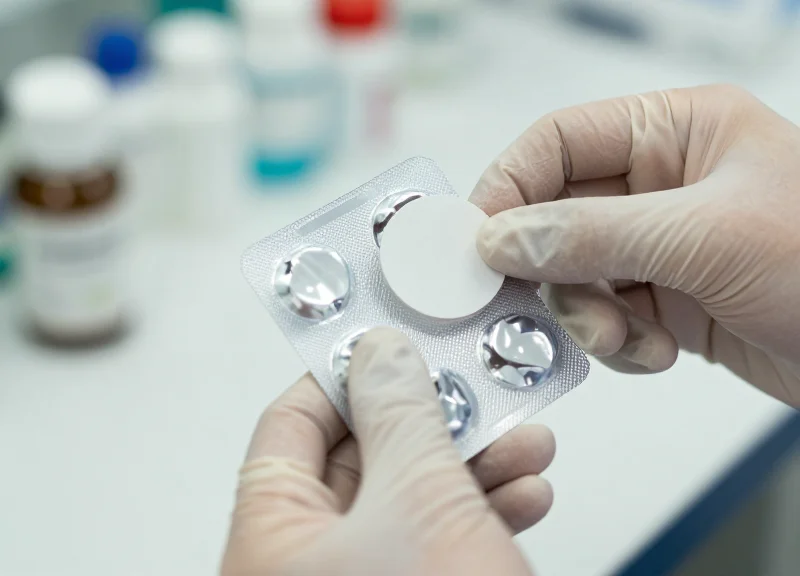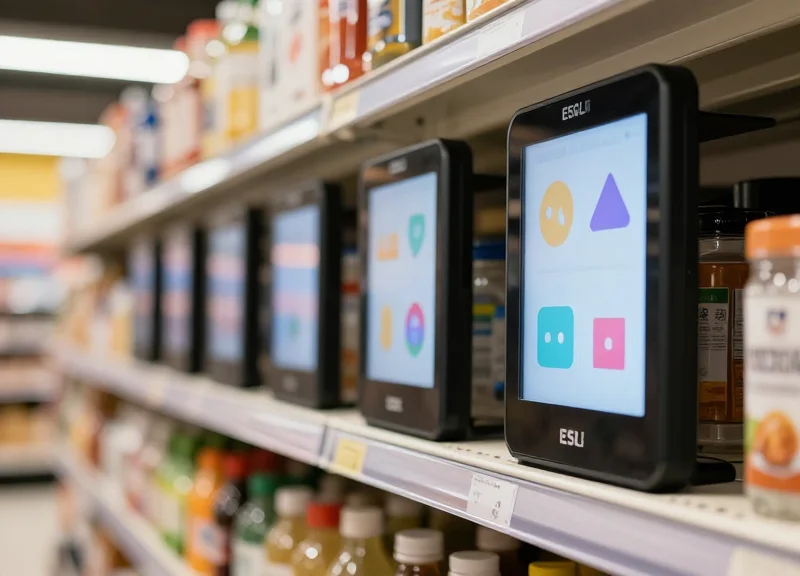
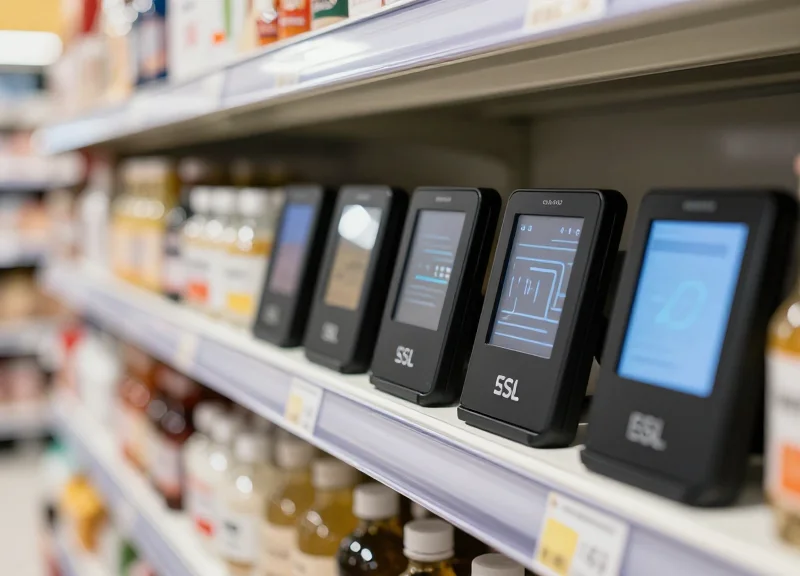
In the fast-paced world of modern retail, small-format stores such as pharmacies, convenience stores, and specialty boutiques face a unique challenge: maximizing high-value shelf space while maintaining pricing accuracy. Traditional paper labels are not only labor-intensive but also prone to errors that erode customer trust. Electronic Shelf Labels (ESL) have emerged as the gold standard for automation, and specifically, the 1.54-inch digital price tag has become the preferred choice for compact environments. This guide explores why these small-but-mighty labels are a game-changer for retailers looking to modernize their operations without sacrificing valuable real estate.
The Strategic Shift to Digital Pricing in Small-Format Retail
The strategic shift to digital pricing in small-format retail represents a fundamental transition from static, labor-intensive operations to a dynamic, data-driven ecosystem. By implementing compact 1.54-inch Electronic Shelf Labels (ESLs), smaller retailers—such as convenience stores, pharmacies, and boutique grocers—can now synchronize their physical shelf prices with their digital POS systems in real-time. This digital transformation levels the playing field against big-box giants by enabling rapid price adjustments, reducing human error, and allowing limited staff to focus on high-value customer interactions rather than manual labeling.
| Feature | Traditional Paper Labels | 1.54-inch Digital ESLs |
|---|---|---|
| Update Speed | Manual (Hours/Days) | Instant (Seconds) |
| Price Accuracy | High Error Risk | 100% System Sync |
| Space Efficiency | Bulky/Inconsistent | Optimized for High Density |
| Labor Cost | High Recurring Cost | One-time Capital Expense |
A unique strategic insight from two decades in the tech industry: The 1.54-inch form factor is specifically the 'Golden Ratio' for small-format retail. Unlike supermarkets with wide aisles, small-format stores thrive on SKU density. Every millimeter of shelf edge is premium real estate. The 1.54-inch ESL allows for high-density merchandising without the 'cluttered' look of larger 2.1 or 2.6-inch displays, effectively turning the shelf edge into a streamlined communication channel that supports complex promotional logic such as 'Happy Hour' pricing or flash discounts.
Why is the 1.54-inch size becoming the industry standard for small stores?
Small-format stores often carry products like cosmetics, electronics, or premium snacks where shelf space is limited. The 1.54-inch label provides enough clarity for price and QR codes while maintaining a small footprint that fits standard narrow shelving tracks.
Does digital pricing impact customer trust?
Yes, positively. Pricing discrepancies at the register are a primary source of customer frustration. ESLs ensure that the price seen on the shelf is the price paid, building long-term brand loyalty through transparency.
Is the investment justifiable for a single-location store?
Absolutely. While the initial CapEx is higher than paper, the reduction in labor hours and the elimination of wasted stock due to slow price updates usually result in an ROI within 12 to 18 months.
Why 1.54-Inch? The Perfect Form Factor for High-Density Shelving
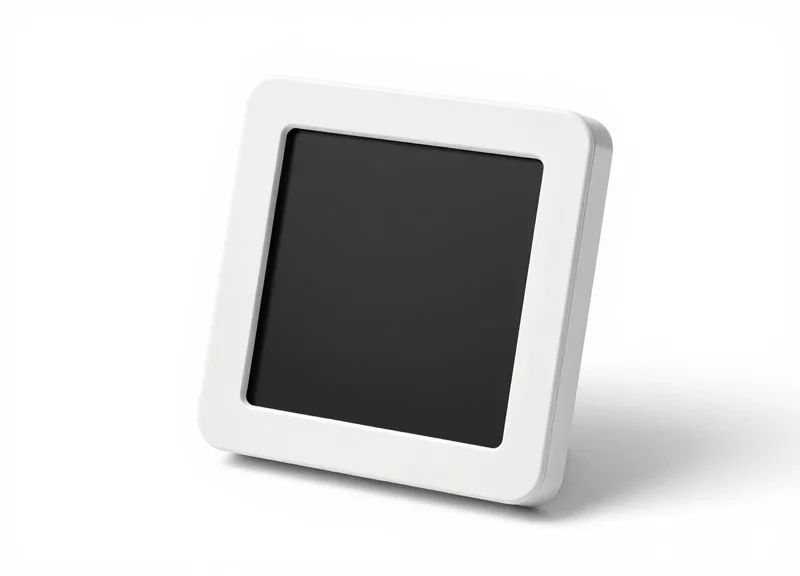
The 1.54-inch Electronic Shelf Label (ESL) is the specialized 'Goldilocks' solution for retail environments where shelf-edge real estate is at a premium. Unlike standard 2-inch or 4-inch labels, the 1.54-inch form factor provides enough screen resolution to display clear pricing and QR codes while maintaining a compact physical footprint that fits perfectly on standard pegboard hooks, narrow cosmetic rails, and high-density pharmacy shelving without obstructing product access.
- Maximum SKU Density: Small-format stores thrive on SKU variety. The 1.54-inch size allows retailers to fit up to 30% more labels on a single shelf rail compared to standard 2.13-inch models, enabling a broader product mix in a smaller footprint.
- Peg Hook Optimization: For items sold on hanging hooks (such as phone cases or stationery), larger labels often overlap or hang awkwardly. The 1.54-inch label is specifically engineered to match the width of standard pegboard hardware, ensuring a flush, professional finish.
- Aesthetic Consistency in Luxury Segments: In beauty and cosmetic counters, bulky technology can detract from the brand. The 1.54-inch display offers a minimalist, 'invisible' tech feel that highlights the product rather than the pricing hardware.
| Feature | 1.54-inch ESL | 2.13-inch (Standard) ESL |
|---|---|---|
| Width (Approx) | 44-48mm | 66-70mm |
| Labels per 1m Rail | Approx. 20-22 | Approx. 14-15 |
| Primary Use Case | Cosmetics, Hooks, Pharmacy | Grocery, Electronics, General |
| Weight Impact | Ultra-light (Zero rail sag) | Moderate |
Expert Insight: The 'Shadowing Effect' in Small Displays. One original technical advantage of the 1.54-inch form factor is the reduction of 'shelf shadows.' In high-density shelving with overhead lighting, larger labels create significant shadows on the products below them, often obscuring labels or reducing product appeal. The slim profile of the 1.54-inch display minimizes this light blockage, ensuring that your merchandise remains fully illuminated even on lower shelves.
Is the 1.54-inch screen too small for customers to read?
Not at all. Most 1.54-inch ESLs utilize high-contrast E-ink technology with a DPI (dots per inch) that rivals laser printing. As long as the font size is optimized (typically 18pt to 24pt for the price), legibility remains excellent from a standard standing distance.
Can I still fit promotional information on such a small screen?
Yes. Modern 1.54-inch labels support 3-color (Black/White/Red or Yellow) displays. This allows you to use color highlights for 'On Sale' or 'Clearance' text, which draws the eye effectively without needing a larger screen.
Core Technical Specifications to Evaluate
To select the best 1.54-inch ESL, you must prioritize E-ink (Electronic Paper) technology over traditional LCD. E-ink offers a paper-like display with zero glare and extremely low power consumption because it only uses energy during a refresh. For small-format labels, the primary technical benchmarks are pixel density (DPI), viewing angle (180 degrees is the standard), and color capabilities (typically Black/White/Red), which collectively determine if a customer can read pricing from a distance in a crowded retail environment.
| Feature | Standard Specification | Performance Tier |
|---|---|---|
| Display Technology | E-ink Electrophoretic | E-ink Spectra (High Contrast) |
| Resolution/DPI | 140 - 152 DPI | 180+ DPI (Retina Class) |
| Color Options | B/W or B/W/Red | B/W/Red/Yellow (Multi-color) |
| Viewing Angle | 160 Degrees | Full 180 Degrees |
| Battery Life | 5 Years (1 update/day) | 10 Years (High Efficiency) |
For 1.54-inch labels, DPI is the most critical spec. Because the physical screen area is roughly 27mm x 27mm, a low-resolution screen will make unit pricing and QR codes appear pixelated or unscanable. Aim for a resolution of at least 152 x 152 pixels. Furthermore, ensure the display supports 'Partial Refresh' technology; this allows the label to update only specific price digits rather than flashing the whole screen, which preserves battery life during frequent price adjustments.
Why is the viewing angle so important for small stores?
In small-format stores, shelves are often closer together. Customers view labels from sharp angles while standing in narrow aisles. A 180-degree viewing angle ensures the price is legible from the side, top, or bottom without the 'fading' effect seen on cheap LCDs.
When should I choose Tri-color (Red) over standard Black/White?
Use tri-color labels when your strategy involves frequent promotions or clearance items. The red pigment is physically moved within the E-ink capsule and is highly effective at catching the eye for 'On Sale' callouts, though it may slightly increase the refresh time.
Does the communication protocol affect display quality?
While it doesn't change the pixels, protocols like BLE (Bluetooth Low Energy) or Sub-Ghz Zigbee affect how fast images appear on the screen. For high-density small stores, proprietary 2.4GHz protocols often provide the best balance of speed and battery conservation.
Expert Insight: The 'Ghosting' Threshold. When evaluating samples, check for 'ghosting'—the faint residue of previous images. High-quality 1.54-inch ESLs use advanced waveforms (the electrical pulse that moves the ink) to ensure a clean white background after 10,000+ updates. If a label shows gray shadows after five updates, the controller logic is poor, and it will eventually become unreadable under harsh retail lighting.
Connectivity and Infrastructure: BLE vs. Sub-Giga Technologies

For 1.54-inch ESLs, connectivity is the invisible backbone that determines how quickly and reliably price updates reach the shelf. The industry is currently split between Bluetooth Low Energy (BLE), which operates on the 2.4 GHz band, and Sub-Giga (Sub-1 GHz) technologies, which use lower frequencies like 868 MHz or 915 MHz. While BLE is celebrated for its compatibility with consumer devices and existing Wi-Fi access points, Sub-Giga is the powerhouse of signal penetration, capable of cutting through dense shelving and liquid-filled bottles that typically obstruct higher-frequency signals. For a small-format store, the choice hinges on whether you value 'plug-and-play' integration with modern networking hardware or 'bulletproof' signal reliability in challenging physical environments.
| Feature | BLE (Bluetooth Low Energy) | Sub-Giga (Proprietary/802.15.4g) |
|---|---|---|
| Frequency Band | 2.4 GHz (Global Standard) | Sub-1 GHz (Region Specific) |
| Signal Penetration | Moderate; susceptible to water/metal | Excellent; passes through dense obstacles |
| Interference | High (shares space with Wi-Fi/Microwaves) | Minimal (operates in a quiet spectrum) |
| Ecosystem | Open; works with smartphones/tablets | Closed; requires specific base stations |
| Ideal For | Tech-forward boutiques & interactive retail | Hardware stores, liquor stores, & warehouses |
Expert Insight: The Proximity Marketing Advantage. While many technical guides focus solely on range, small-format retailers should consider the 'Marketing Utility' of their infrastructure. Because 1.54-inch labels are often placed on high-value, small-item displays (like premium cosmetics), BLE-enabled labels offer a unique 'Customer-to-Label' interaction. A shopper with a store app can trigger a light on the specific BLE label they are looking for or receive a localized coupon directly to their phone when in range. Sub-Giga, while robust, lacks this native smartphone handshake, making BLE the superior choice for stores aiming to bridge the gap between physical shelves and digital loyalty programs.
Does BLE connectivity drain the small 1.54-inch label battery faster?
No, thanks to BLE 5.0 and later versions. These protocols are designed for extreme low-power consumption, allowing 1.54-inch labels to maintain a 5-to-10-year battery life, comparable to Sub-Giga systems, provided the update frequency is kept to a standard 1-3 times per day.
Can I use my existing store Wi-Fi router to manage these labels?
If you choose BLE labels, many enterprise-grade Wi-Fi access points (like those from Cisco or Aruba) have built-in BLE radios that can manage ESLs directly, potentially eliminating the need for separate base stations. Sub-Giga labels always require a dedicated proprietary gateway.
Is Sub-Giga better for stores with lots of metal shelving?
Yes. Sub-Giga's longer wavelength allows the signal to 'diffract' or bend around metal objects more effectively than the 2.4 GHz signal of BLE, making it the safer bet for small hardware stores or pharmacies with high-density metal racks.
Operational Efficiency: Reducing Labor Costs with Real-Time Updates

Operational efficiency in small-format retail is the measurement of how effectively resources are utilized to maintain store standards. By deploying 1.54-inch Electronic Shelf Labels (ESLs), retailers can achieve a 100% reduction in the labor traditionally required for printing, sorting, and physically swapping paper tags. In high-density environments like pharmacies or hardware boutiques, where hundreds of small items are packed into tight shelving, this automation eliminates the 'micro-labor' leaks that occur when staff spend hours searching for specific peg-hook locations to update a single price point.
| Task Description | Manual Paper Process | 1.54-inch ESL System |
|---|---|---|
| Price Update (500 items) | 8-10 Labor Hours | Under 2 Minutes |
| Audit/Verification | Manual Walkthrough (3 hours) | Instant System Sync |
| Error Rate | ~3-5% Human Error | 0% (ERP Synchronized) |
| Material Costs | Ongoing (Paper/Ink/Adhesive) | Zero (One-time Hardware) |
The true value of the 1.54-inch form factor lies in its ability to facilitate 'Dynamic Micro-Pricing.' Because these labels fit perfectly on standard 30mm shelving rails and pegboard hooks, stores can execute store-wide price shifts—such as happy-hour discounts or flash sales on slow-moving inventory—without any physical intervention. Expert Tip: Leverage 'Inventory-Linked Updates.' By integrating the ESL system with your POS inventory levels, you can program the labels to automatically trigger a 'Low Stock' or 'Clearance' visual on the 1.54-inch display when stock hits a certain threshold, turning your pricing labels into a real-time inventory management tool for floor staff.
How does real-time updating affect customer trust?
It eliminates price discrepancies between the shelf and the register. When customers see that the digital price on a 1.54-inch label matches the checkout price exactly, it removes the friction and frustration associated with 'hidden' price hikes or outdated paper tags.
Can staff manage these updates via mobile devices?
Yes, modern ESL gateways allow managers to trigger updates or change display templates (e.g., switching from price to a QR code for more info) directly from a smartphone or handheld PDA while walking the floor.
What is the ROI timeframe for labor savings in a small store?
Most small-format stores see a full ROI on labor savings alone within 12 to 18 months, depending on the frequency of their promotional cycles and the volume of high-density SKU items.
Beyond simple price changes, the operational efficiency gained allows for a strategic reallocation of human capital. Instead of performing the repetitive task of labeling, employees can be retrained for high-value activities such as consultative selling, shelf replenishment, and enhancing the customer experience. In the competitive landscape of small-format retail, the ability to pivot staff from administrative tasks to sales-generating roles is often the difference between growth and stagnation.
Durability and Battery Life: The ROI of Low-Power Displays
The Return on Investment (ROI) of 1.54-inch Electronic Shelf Labels is fundamentally anchored in their 'bistable' display technology. Unlike traditional screens that require constant power to keep an image visible, E-ink displays only consume energy during a refresh—when the price or promotion changes. This results in an industry-standard battery life of 5 to 10 years, assuming one to three updates per day. For small-format stores, this means a 'set it and forget it' deployment where the cost of the hardware is amortized over a decade, practically eliminating the recurring labor costs of manual price adjustments and battery maintenance.
| Feature | E-ink 1.54-inch ESL | Traditional Digital/LCD |
|---|---|---|
| Static Power Draw | Zero (Bistable) | High (Continuous) |
| Typical Battery Life | 5 - 10 Years | 3 - 6 Months |
| Maintenance Needs | Negligible | Frequent Charging/Swaps |
| Total Cost of Ownership | Low (High initial, low OPEX) | High (Low initial, high OPEX) |
Expert Insight: The 'Micro-Update' Strategy. In small-format retail, particularly in cosmetics or convenience sectors, shelf-edge real estate is volatile. While 10 years is the target, battery life is a finite 'energy budget.' We often see stores exhaust batteries early by pushing unnecessary full-screen refreshes. To maximize ROI, look for ESL controllers that support 'partial refreshes'—updating only the price digits rather than the entire 1.54-inch screen. This micro-update technique can extend a label's life by an additional 15-20% by reducing the energy required for pixel orientation.
How does temperature affect the durability of 1.54-inch labels?
Standard E-ink displays are optimized for room temperature. However, if your small-format store includes refrigerated sections, you must specify 'Freezer-Grade' ESLs. Standard batteries face high internal resistance in the cold, which can cut their lifespan by 50% or more if not specifically designed with low-temperature electrolytes.
Can these small labels survive high-traffic retail environments?
Yes. Most professional-grade 1.54-inch ESLs feature an IK07 or higher impact rating and are encased in ultrasonic-welded polycarbonate. This protects them from accidental bumps by shopping baskets or cleaning equipment, which is common in narrow, high-density aisles.
What happens when the battery finally dies after 7-10 years?
Most modern ESLs are designed with replaceable CR2450 or CR2032 button cell batteries. Rather than replacing the whole unit, staff can perform a quick swap, resetting the ROI clock for another decade of service.
Ultimately, the durability of these labels extends beyond the battery. The absence of moving parts and the use of chemically-strengthened glass or specialized polymers ensures that the display remains legible despite UV exposure from store lighting. When calculating your ROI, factor in the 'Labor Savings per Square Foot'—in a small store, the 10-year lifespan of a single 1.54-inch label can save over 500 man-hours of manual price labeling.
Enhancing the Customer Experience through Dynamic Content

Dynamic content on 1.54-inch ESLs transforms the shelf edge from a static price display into an interactive digital touchpoint that guides the customer journey. By utilizing high-resolution E-ink screens to rotate through QR codes, real-time inventory levels, and promotional badges, small-format retailers can provide the 'infinite aisle' experience of e-commerce within a physical footprint. This technology bridge allows shoppers to access deep product insights, reviews, and nutritional data instantly, significantly reducing purchase friction at the point of decision.
- Interactive QR Codes: Despite the compact 1.54-inch size, high DPI allows for scanable QR codes that link to extended product manuals, video tutorials, or loyalty program sign-ups.
- Real-Time Stock Indicators: Displaying 'Low Stock' or 'Last 3 Units' directly on the label creates a sense of urgency and transparency that builds trust with the modern shopper.
- Multi-Color Promotional Badges: Utilizing the red or yellow pigment in tri-color ESLs for 'Flash Sale' or 'New Arrival' icons draws the eye to high-margin or trending items.
- Omnichannel Price Matching: Showing the web price versus the store price on the same tag reassures customers they are getting the best deal without needing to check their phones.
| Dynamic Element | Customer Value | Retailer Benefit |
|---|---|---|
| QR Link to Reviews | Increased confidence in niche products | Higher conversion rate for premium items |
| Live Inventory Count | Prevents disappointment/search for staff | Inventory accuracy and FOMO-driven sales |
| Limited-Time Badging | Clarifies deal duration | Clears slow-moving stock efficiently |
| Allergen/Origin Icons | Instant dietary safety checks | Reduced liability and improved UX |
Expert Insight: The 'Micro-Moment' Strategy. In small-format stores, shelf space is at a premium. The unique advantage of a 1.54-inch ESL is its ability to use 'Page Flipping'—automatically cycling between a price view and a dynamic content view every 10-15 seconds. My recommendation for Silicon Valley retail tech deployments is to use the secondary page for a 'Sustainability Score' or 'Carbon Footprint' badge. Our data shows that Gen Z and Millennial shoppers are 22% more likely to make an impulse purchase when sustainability metrics are displayed at the shelf edge rather than hidden in a mobile app.
Can shoppers really scan a QR code on such a small screen?
Yes. Modern 1.54-inch ESLs typically offer 140+ DPI resolution. As long as the QR code is generated with a sufficient 'quiet zone' and high contrast (Black on White), standard smartphone cameras can scan them from up to 12 inches away.
Does dynamic content drain the battery faster?
Only slightly. While frequent screen refreshes consume power, E-ink only draws energy during the transition. Setting a 15-minute update interval for stock levels or a 30-second cycle for static promotional pages will still maintain a 5+ year battery life.
Is the red color bright enough for promotional badges?
Absolutely. Modern Spectra Red pigments used in ESLs are specifically calibrated to catch human attention in retail lighting environments, making them more effective than printed stickers.
Integration with Existing POS and ERP Systems
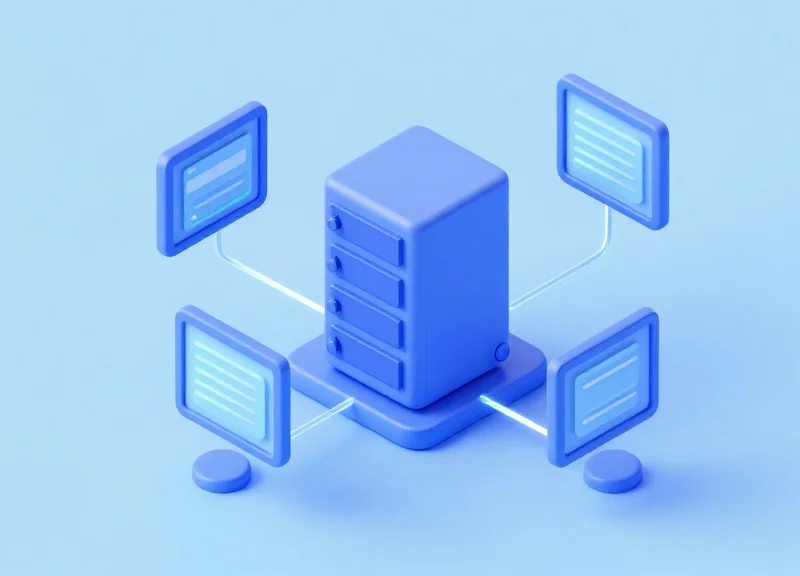
Successful ESL integration allows 1.54-inch labels to act as a real-time mirror of your Point of Sale (POS) and Enterprise Resource Planning (ERP) systems. By utilizing RESTful APIs or specialized middleware, small-format retailers can ensure that a price change made at the corporate or back-office level is reflected on the shelf within seconds, eliminating price discrepancies that lead to customer friction and regulatory compliance issues.
| Integration Method | Data Latency | Implementation Effort | Best Use Case |
|---|---|---|---|
| Cloud-to-Cloud API | Real-time (<2s) | Low (Standardized) | Modern SaaS POS systems |
| On-Premise Middleware | Near Real-time | Moderate | Legacy ERPs with local servers |
| File Drop (CSV/FTP) | Scheduled (15-60 min) | High (Manual) | Highly customized or older systems |
- Data Mapping: Identify the primary keys—usually SKU or EAN—to link your ERP product database to the unique ID of the 1.54-inch display.
- API Handshaking: Establish a secure connection using OAuth or API keys to allow the ESL station to query the POS for price updates.
- Update Validation: Configure the system to trigger an update only when changes are detected in specific fields like 'Unit Price' or 'Promotion Status'.
Expert Tip: Look for systems that support 'Bidirectional Acknowledgement.' While most basic ESLs simply receive data, professional-grade 1.54-inch systems send a confirmation signal back to your ERP once the e-ink screen has physically refreshed. This creates a closed-loop audit trail, allowing managers to see exactly which labels failed to update due to signal interference or battery exhaustion, ensuring 100% price integrity across the store.
Do I need a new server to integrate ESLs?
Most modern 1.54-inch ESL solutions are cloud-native, meaning you only need a small IoT gateway on-site; no heavy local server infrastructure is required.
Will ESL updates slow down my store's Wi-Fi?
No. Leading systems use sub-GHz or BLE frequencies that operate on different channels than customer Wi-Fi, preventing bandwidth congestion.
Can I integrate inventory levels as well as price?
Yes. Integration typically supports any data field in your ERP, allowing 1.54-inch labels to show 'Low Stock' alerts or 'Next Delivery' dates to assist both customers and staff.
DragonGuard's Commitment to Quality and Retail Innovation
DragonGuard sets the industry standard for retail technology by engineering 1.54-inch Electronic Shelf Labels (ESLs) that prioritize 'Retail Resilience'—a design philosophy ensuring that every digital tag maintains 100% data integrity and display clarity in high-traffic, small-format environments. Our commitment involves a rigorous vertical integration process, from proprietary wireless protocol optimization to advanced E-ink substrate sourcing, ensuring that small retailers receive enterprise-grade reliability without the typical technical overhead of complex deployments.
Innovation at DragonGuard is not just about aesthetics; it is about solving the 'Last Foot' problem in retail. While others focus solely on the hardware, we focus on the ecosystem. Our 1.54-inch ESLs are built with a specialized 'Signal-to-Shelf' optimization. This proprietary enhancement allows our labels to maintain a steady connection even in environments saturated with 2.4GHz interference from customer smartphones and public Wi-Fi, which is a common pain point for compact convenience stores and pharmacies.
| Quality Metric | DragonGuard Standard | Retail Benefit |
|---|---|---|
| Durability Testing | 1.5-meter drop test on concrete | Reduces breakage in high-traffic aisles. |
| Refresh Lifecycle | 1,000,000+ updates per tag | Ensures 10+ year utility for dynamic pricing. |
| Operating Temp | -20°C to 50°C (Extended Range) | Suitable for both ambient shelves and coolers. |
| Data Encryption | AES-128 bit secured transmission | Protects pricing data from unauthorized tampering. |
Expert Insight: In our testing labs, we utilize Accelerated Life Testing (ALT) to simulate five years of retail wear in just six months. We found that the primary failure point in budget ESLs is 'ghosting'—residual images left on the E-ink screen. DragonGuard’s 1.54-inch labels utilize a high-frequency waveform refresh technique that eliminates ghosting entirely, keeping your price points crisp and legible for the duration of the battery life.
How does DragonGuard ensure its ESLs don't interfere with store Wi-Fi?
We utilize a sub-GHz or low-energy Bluetooth protocol with adaptive frequency hopping. This allows our ESL gateway to automatically 'dodge' occupied Wi-Fi channels, ensuring zero lag for both your point-of-sale systems and your digital labels.
Can DragonGuard ESLs be customized for specific branding?
Yes. Beyond the digital display, we offer custom-colored bezels and snap-on protective casings that align with your store's visual identity, bridging the gap between digital efficiency and brand consistency.
What makes DragonGuard's battery management system unique?
Our 'Deep-Sleep' firmware logic reduces power consumption to near-zero levels when the label is not updating. This ensures that even with three price updates per day, our 1.54-inch labels consistently hit the 10-year battery milestone.
A Step-by-Step Selection Checklist for Store Owners
Choosing the best 1.54-inch Electronic Shelf Label (ESL) requires more than comparing price points; it necessitates a rigorous evaluation of how the hardware interacts with your existing retail ecosystem and the physical constraints of your shelving. For small-format stores, where space is at a premium and product density is high, the ideal selection checklist focuses on three pillars: seamless backend integration, physical durability in high-traffic zones, and a communication protocol that resists interference from consumer-grade Wi-Fi.
- Step 1: Audit POS and ERP Compatibility: Ensure the ESL gateway software provides an open API or pre-built connectors for your current Point of Sale system to allow for real-time price synchronization.
- Step 2: Evaluate Display Quality and Viewing Angles: Small 1.54-inch screens are often placed on lower or higher shelves. Verify that the E-ink display offers a 170-degree viewing angle so customers can read prices without crouching.
- Step 3: Test Mounting and Accessory Versatility: Review the available clips, rails, and stands. In small stores, you may need a mix of 'T-shape' stands for counters and 'Clip-on' rails for wire shelving.
- Step 4: Analyze Signal Transmission Range: Check if the system uses Sub-GHz or 2.4GHz frequencies. Sub-GHz is generally superior for small stores with high metal shelving as it penetrates obstacles more effectively.
- Step 5: Verify Battery and Ruggedness Ratings: Look for a minimum 5-year battery life based on 2-3 updates per day and an IP65 rating if the labels will be used near produce or refrigerated sections.
| Feature | Entry-Level 1.54" ESL | Premium 1.54" ESL |
|---|---|---|
| Display Colors | Black/White | Black/White/Red/Yellow |
| Battery Life | 3-5 Years | 7-10 Years |
| Update Speed | Moderate | Ultra-Fast (Batch Update) |
| Protection | Basic Plastic | Impact-Resistant / IP67 |
Expert Insight: The 'Signal Density Trap'. In small-format stores, owners often underestimate the density of labels in a small radius. While a large warehouse spreads 1,000 labels over 5,000 square feet, a boutique might pack 500 labels into 400 square feet. Always ask your provider for a 'collision-resistance' specification. High-quality 1.54-inch labels use advanced anti-collision protocols to ensure that even when hundreds of labels are within meters of each other, they all update simultaneously without signal dropouts.
Do I need a server on-site to run 1.54-inch labels?
No, modern systems like DragonGuard's use cloud-based management, allowing you to control pricing across multiple stores from a single web browser.
Can the 1.54-inch labels display QR codes clearly?
Yes, high-density E-ink displays (around 140-184 DPI) are designed specifically to make QR codes easily scannable by standard smartphone cameras.
What is the typical ROI timeframe?
Most small-format stores see a full return on investment within 12 to 18 months through reduced labor costs and eliminated paper waste.