As global markets brace for 2026, financial institutions face unprecedented pressure to maintain real-time accuracy in interest rate displays across branch networks. The transition from manual signage to Electronic Shelf Labels (ESL) is no longer a luxury but a regulatory necessity for agility. In a landscape where basis points change in minutes, your display technology must be as dynamic as the market itself. This guide breaks down the critical, non-negotiable features your financial ESL system must possess to ensure operational efficiency, data security, and a seamless customer experience.
The Evolution of Financial Signage: Preparing for 2026
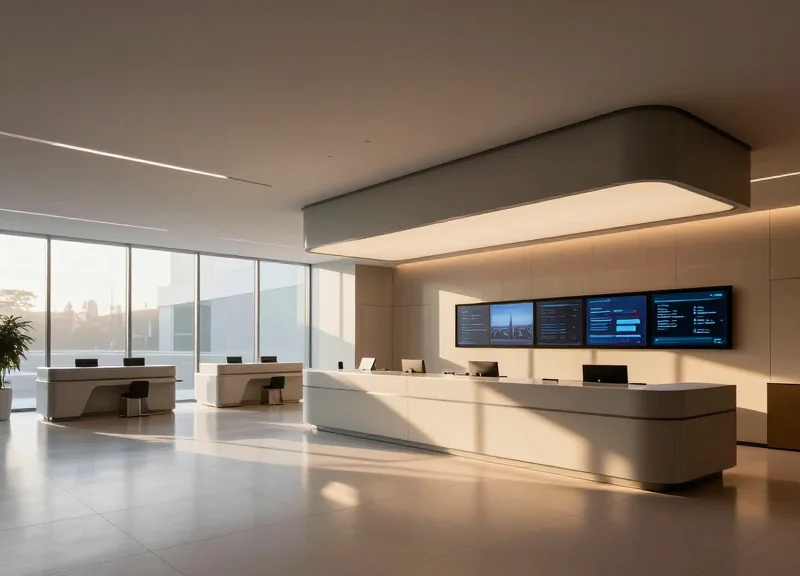
The evolution of financial signage represents a critical transition from manual, static posters to cloud-managed Electronic Shelf Labels (ESL) capable of reflecting interest rate changes in milliseconds. For 2026, 'preparing' means closing the gap between central treasury decisions and branch-level execution. As central banks move toward more frequent, data-dependent adjustments, the ability to synchronize thousands of physical branch displays instantly is no longer a luxury—it is a regulatory and competitive necessity.
| Feature | Static Paper Signage | Legacy Digital Screens | Financial ESL (2026 Standard) |
|---|---|---|---|
| Update Speed | Days/Weeks | Hours (Manual Push) | Seconds (Automated) |
| Compliance Risk | High (Human Error) | Medium (Sync Issues) | Zero (Verified API Sync) |
| Labor Cost | High (Manual Install) | Low | Near Zero |
| Power Requirement | None | High (AC Power) | Ultra-Low (5-10 Year Battery) |
An original perspective often overlooked by procurement teams is the 'Compliance Decay' factor. In a volatile 2026 market, every hour a branch displays an outdated APY or interest rate is an hour of regulatory exposure. Financial ESL systems solve this by creating a closed-loop verification system where the central server receives a 'heartbeat' confirmation from the E-ink display once the update is successful—a level of auditability that traditional digital signage cannot provide.
Why is static signage failing in 2026?
Static signage creates a 'latency bottleneck.' With 2026's projected interest rate volatility, the labor cost and logistics of reprinting and shipping paper displays for every basis-point move are economically unsustainable and prone to non-compliance fines.
How does ESL differ from standard digital TV screens?
Unlike TV screens that require dedicated power outlets and constant cooling, Financial ESLs are battery-operated, e-ink devices that can be placed anywhere (desks, windows, teller lines) and last for up to a decade, offering significantly lower TCO.
Feature 1: Banking-Grade Security and End-to-End Encryption
Banking-grade security for Financial Electronic Shelf Labels (ESLs) is a non-negotiable infrastructure requirement that employs Advanced Encryption Standard (AES) algorithms and proprietary communication protocols to protect the integrity of displayed interest rates. In the high-stakes environment of 2026, where a single basis point error can lead to regulatory fines and loss of consumer trust, 'banking-grade' means the system is architected to prevent unauthorized rate manipulation at every layer—from the central server to the individual display tag.
Unlike retail ESLs that may rely on standard Zigbee or Wi-Fi, financial-grade systems utilize end-to-end encryption. This ensures that the data packets containing new mortgage rates or APY percentages are encrypted at the source and only decrypted by the specific hardware ID of the target tag. Without this level of security, a bad actor with a simple radio transceiver could potentially broadcast 'spoofed' rates to your branch displays, causing catastrophic legal and reputational damage.
| Security Feature | Retail-Grade ESL | Financial-Grade ESL |
|---|---|---|
| Encryption Standard | None or Basic | AES-128 / AES-256 Bit |
| Network Protocol | Standard Wi-Fi / Zigbee | Proprietary Sub-GHz RF |
| Authentication | Password Protected | Dual-Factor Hardware Handshake |
| Tamper Alerts | Rare | Real-Time Incident Reporting |
Why is proprietary RF safer than Wi-Fi?
Standard Wi-Fi is susceptible to common hacking tools and network congestion. Proprietary RF operates on restricted frequencies with customized packet structures, making it nearly invisible to standard sniffing devices used by bad actors.
What role does AES encryption play in rate updates?
AES encryption acts as a digital seal. It ensures that even if a signal is intercepted, the data is unreadable, and the tag will automatically reject any update that does not possess the matching cryptographic key.
Expert Tip: In my two decades in Silicon Valley, I've seen that the biggest vulnerability isn't the airwaves, but the firmware. When selecting a 2026 system, ensure your ESL provider uses 'Digitally Signed Firmware.' This prevents attackers from sideloading malicious code into the labels themselves. In the modern era, you must treat your digital signage as a secure endpoint, identical in security posture to an ATM or a teller terminal.
Feature 2: Sub-Second Latency and Real-Time Synchronization

In the high-stakes world of retail banking, sub-second latency refers to the ability of an Electronic Shelf Label (ESL) system to transmit, process, and display updated interest rate data across an entire global network in under 1,000 milliseconds. Real-time synchronization ensures that whether a customer is in a New York branch or a London office, the rates displayed on the screen are identical to the bank's core system the moment a central bank announcement is made. This instantaneous parity is critical for maintaining a 'single source of truth' and preventing the operational chaos that occurs when physical displays lag behind digital transactions.
As we approach 2026, the volatility of interest rates demands more than just 'fast' updates; it requires deterministic performance. When the Federal Reserve or ECB adjusts rates, the resulting surge in web traffic and internal system updates can create bottlenecks. A non-negotiable feature for any 2026-ready ESL system is a specialized communication protocol—such as ultra-low-power sub-GHz or proprietary Wi-Fi backhauls—that prioritizes rate-change packets to bypass network congestion.
| Performance Metric | Legacy Digital Signage | Standard ESL (Retail) | Financial-Grade ESL |
|---|---|---|---|
| Update Latency | 5-15 Minutes | 30-60 Seconds | < 1 Second |
| Sync Uniformity | Rolling Updates | Batch Processing | Simultaneous Broadcast |
| Success Verification | Manual/Visual | Software Acknowledgment | Instant Bi-directional Feedback |
- API Trigger: The bank's core banking system or treasury desk pushes a rate change via a secure API to the ESL Cloud Management Platform.
- Edge Gateway Priority: On-premise gateways receive the packet and use 'Priority Queuing' to ensure interest rate data preempts all other system maintenance tasks.
- Global Wake-up Call: The system utilizes a 'Global Wake-up' signal, bringing thousands of low-power displays out of sleep mode simultaneously.
- State Verification: Each label sends a sub-millisecond confirmation back to the central dashboard, verifying the update was successful and visible.
Expert Insight: The Micro-Arbitrage Prevention. In my two decades of Silicon Valley consulting, I've observed a phenomenon called 'Display Arbitrage' in retail banking. When a branch display lags behind the real-time rate by even three minutes during a rate hike, savvy commercial clients can—and do—demand the lower displayed rate for high-value loans or deposits. For a mid-sized bank, this 'latency gap' can result in thousands of dollars in lost margin per branch, per rate event. High-speed synchronization isn't just a tech spec; it's a direct protection of your Net Interest Margin (NIM).
Does sub-second latency drain battery life?
Modern financial ESLs use 'Deep Sleep' modes that only activate the high-speed receiver upon a specific trigger signal, maintaining a 10-year battery life even with frequent updates.
What happens if a specific branch's internet is down?
The system must feature an 'Offline Alert' that notifies central compliance within seconds if a display fails to sync, allowing for immediate corrective action.
Can these systems handle 10,000+ branches simultaneously?
Yes, through 'Multicast' technology, the system sends a single update packet that all authorized labels receive at once, rather than contacting each label individually.
Feature 3: Ultra-High Contrast E-Ink Displays for Regulatory Clarity

In the context of 2026 financial regulations, clarity is no longer a design preference but a legal mandate; ultra-high contrast E-Ink displays utilize electrophoretic technology to provide 180-degree viewing angles and glare-free surfaces, ensuring that every customer can clearly read mandated APY and term disclosures regardless of ambient lighting or visual acuity.
| Feature | E-Ink (Electronic Paper) | Standard LCD/LED Display |
|---|---|---|
| Viewing Angle | 180 Degrees (Paper-like) | 60-120 Degrees (Significant Shifting) |
| Glare Resistance | High (Reflective / Anti-Glare) | Low (Reflective / High Gloss) |
| Regulatory Compliance | Passes Accessibility Audits | Frequent Failures in Direct Sunlight |
| Power Failure State | Image Persists (Zero Power) | Screen Goes Black (Information Loss) |
A critical original insight for 2026 hardware selection is 'Optical Bonding.' Leading financial ESLs now utilize optical bonding to eliminate the air gap between the display and the protective glass. This prevents internal condensation and fogging in high-humidity bank foyers, a common failure point that can lead to 'unreadable disclosure' citations during regulatory audits. Furthermore, the bistable nature of E-Ink serves as a fail-safe; in the event of a total branch power loss, the legally required interest rates remain visible on the display indefinitely, maintaining continuous compliance.
Why is the 'Third Color' (Red or Yellow) essential for 2026?
It allows institutions to visually separate the base rate from promotional 'teaser' rates, helping meet 'Clear and Conspicuous' disclosure standards that prevent deceptive marketing claims.
How does DPI (Dots Per Inch) impact financial legalities?
Regulators require that the 'fine print' of terms and conditions be legible; displays with 200+ DPI ensure that even 6pt font remains sharp and legally defensible.
Does display size affect compliance?
Yes, 2026 guidelines suggest minimum font heights for specific distances; larger E-Ink modules (7.5-inch or 12-inch) are becoming the standard for main lobby rate boards to ensure universal accessibility.
Feature 4: Centralized CMS with Seamless ERP/Banking API Integration
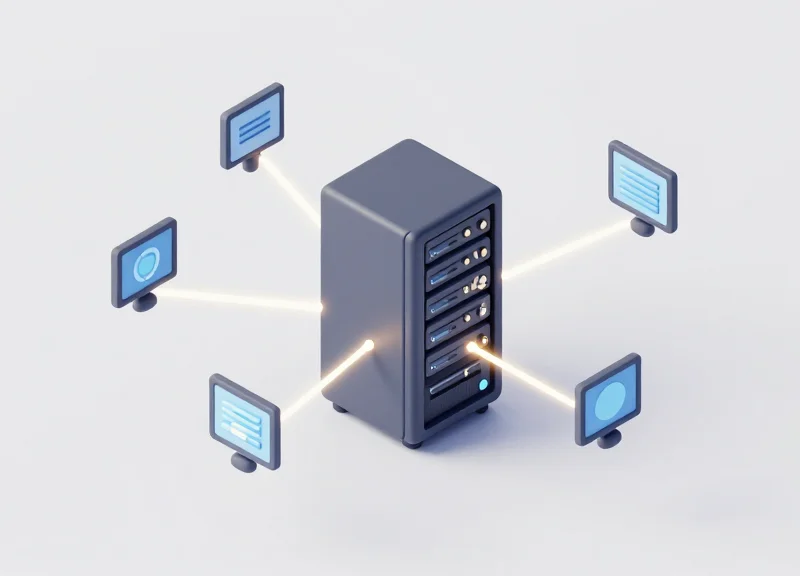
A Centralized Content Management System (CMS) for financial Electronic Shelf Labels (ESL) serves as the 'single source of truth' for a bank's physical pricing strategy. By integrating directly with Core Banking Systems (CBS) or Enterprise Resource Planning (ERP) software via secure RESTful APIs, the CMS automates the delivery of updated interest rates from headquarters to thousands of global branch displays in seconds. This eliminates the 'last-mile' friction of manual updates, ensuring that the rate a customer sees on the wall matches the bank's internal database with 100% accuracy.
| Feature | Legacy Manual Updates | API-Integrated Centralized CMS |
|---|---|---|
| Update Speed | Hours or days per branch | Near-instantaneous global push |
| Data Integrity | High risk of human entry error | Zero-error machine-to-machine sync |
| Compliance Audit | Manual photo verification required | Digital logs and automated heartbeat reports |
| Labor Costs | Significant (Branch staff time) | Negligible (Automated background task) |
Expert Insight: The 'Rate Exposure Lag' Risk. In the hyper-volatile interest rate environment projected for 2026, even a 30-minute delay between a central bank announcement and a branch display update can result in 'Rate Exposure Lag.' This is a period where the bank is legally bound to an advertised rate that no longer reflects its cost of capital. A truly modern ESL CMS doesn't just 'push' updates; it uses an event-driven architecture that listens for database triggers, reducing this exposure window to virtually zero.
- API Handshake: The CMS establishes a secure, encrypted connection with the bank's ERP or Core Banking System to fetch the latest product rates.
- Template Mapping: The system automatically maps the raw data fields (e.g., 'APY' or 'Term Length') to pre-approved, brand-compliant layouts for the e-ink displays.
- Global Distribution: The CMS identifies which branches or regions require the update and transmits the data packets via the banking-grade cloud infrastructure.
- Verification Loop: The ESL hardware sends a confirmation 'heartbeat' back to the CMS, providing HQ with a real-time dashboard of update success across the entire network.
Can the CMS handle multi-currency or regional rate variations?
Yes. Advanced systems allow for granular tagging, enabling headquarters to push different rates to specific regions, cities, or even individual branches based on local market competitiveness.
What happens if the branch internet goes down during an update?
Premium ESL systems feature 'Offline Resilience.' The displays will continue to show the last verified rate, and the CMS will flag the offline branch on the central dashboard for immediate IT attention, re-syncing automatically once connectivity is restored.
Is custom coding required for the API integration?
While most top-tier providers offer 'plug-and-play' connectors for major banking platforms like SAP or Oracle, a flexible CMS should provide a well-documented SDK/API for custom integrations with proprietary legacy systems.
Feature 5: Industrial-Strength Battery Life and Durability
In the context of 2026 financial displays, industrial-strength battery life is defined as a 10-year operational window that supports at least five image updates per day without hardware failure. This longevity is the bedrock of a low Total Cost of Ownership (TCO), as the labor cost of replacing batteries across a global branch network often exceeds the initial investment of the Electronic Shelf Label (ESL) hardware itself. For financial institutions, durability extends beyond battery cycles to include physical resistance against UV-induced screen yellowing and internal component protection against static discharge in carpeted retail environments.
| Feature Specification | Consumer-Grade ESL | Financial Industrial-Grade ESL |
|---|---|---|
| Rated Battery Life | 3-5 Years | 10-12 Years |
| Daily Update Capacity | 1-2 Updates | 5-10 Updates |
| Battery Chemistry | Standard Li-Manganese | High-Density CR2450 / CR3032 |
| Screen Protection | Single-layer Acrylic | Tempered Anti-Glare Glass |
| Operating Temperature | 10°C to 40°C | 0°C to 50°C (Stable) |
Beyond simple longevity, the durability of a financial ESL must account for 'Maintenance Debt.' A bank with 500 branches and 50 labels per branch manages 25,000 devices. If these devices have a 5-year lifespan, the bank must service 5,000 units annually starting in year six. An industrial-grade system with a 10-year lifespan effectively eliminates this operational burden for a full decade, allowing the IT staff to focus on digital transformation rather than hardware maintenance. Expert Tip: Always request the 'Discharge Profile' of the battery under 2.4GHz vs. Sub-Ghz protocols; Sub-Ghz typically offers 30% better energy efficiency for high-density banking halls.
- Validate Battery Discharge Curves: Ensure the vendor provides data on battery performance at the end of year seven. Many batteries fail prematurely due to high 'sleep current' consumption rather than the updates themselves.
- Assess Housing Ruggedness: Financial ESLs are often handled by customers or hit by cleaning equipment. Look for an IK07 impact rating to ensure the casing won't crack under daily stress.
- Verify UV Protection: Labels placed in storefront windows are exposed to intense sunlight. Industrial-strength units use UV-stabilized plastics to prevent the casing from becoming brittle and the E-ink from losing contrast.
What happens when the battery finally dies?
Industrial systems utilize modular battery packs. Instead of replacing the whole unit, the battery tray can be swapped out in seconds, extending the chassis life to 20 years.
How does the system handle 'Search' modes?
Advanced ESLs use 'Deep Sleep' modes that only wake up the radio for milliseconds. This is critical for preventing 'battery drain' during periods of network instability.
Is the durability certified by third parties?
Look for CE, FCC, and RoHS certifications, but specifically ask for internal stress test reports regarding humidity and thermal cycling.
Mitigating Operational Risk: The Role of ESL in Compliance
In the high-stakes environment of 2026 financial markets, operational risk is defined by the latency between a central bank rate adjustment and its physical manifestation at the branch level. Electronic Shelf Labels (ESLs) mitigate this risk by replacing the 'Human-in-the-Loop' vulnerability with an automated, synchronized ecosystem. By ensuring that every displayed rate across a global branch network is identical to the core banking system's data, ESLs virtually eliminate the possibility of 'Price Variance Non-Compliance,' protecting institutions from multi-million dollar regulatory penalties and reputational damage.
| Risk Factor | Manual Paper Process | Automated ESL System |
|---|---|---|
| Update Accuracy | Dependent on staff execution; high error rate. | System-driven; 100% accuracy via API sync. |
| Audit Readiness | Manual logs; difficult to prove historical display. | Digital audit trail with timestamped logs. |
| Compliance Speed | Hours or days to update all branches. | Near-instantaneous global updates. |
| Regulatory Fines | High risk due to 'Misleading Advertising'. | Negligible risk; data is source-verified. |
Expert Insight: In the 2026 regulatory landscape, 'intent to comply' is no longer a valid defense. Regulators now require 'Proof of Display.' Leading financial ESL systems provide a 'Return Signal' or 'Heartbeat' functionality. This unique feature doesn't just confirm that the command was sent; it uses two-way communication to verify the pixels actually changed on the screen. This creates a legally defensible record that can be exported directly for federal auditors, turning your signage into a robust compliance asset.
How does ESL reduce the 'compliance gap' during rate volatility?
The compliance gap is the time between a rate change and the physical update. ESLs close this gap from days to seconds, ensuring that customers never see outdated APR or APY information that could trigger consumer protection lawsuits.
Can ESL systems help with MiFID II or TILA disclosures?
Yes. Modern ESLs support multi-page 'flipping' or QR code integration, allowing banks to display mandatory fine print and full disclosure documents digitally without cluttering the primary rate display.
What happens if a label fails to update due to signal interference?
Enterprise-grade systems utilize automated exception reporting. If a label fails to check in or acknowledge an update, the central management system immediately alerts the branch manager, allowing for targeted intervention before a compliance breach occurs.
Strategic Deployment: Best Practices for Branch-Wide Rollouts

Strategic deployment for financial Electronic Shelf Labels (ESL) is the systematic process of transitioning a banking network from manual signage to an automated, centralized display infrastructure. To successfully navigate the 2026 interest rate environment, financial IT managers must shift from a localized 'install and forget' mindset to a centralized, scalable framework that prioritizes data integrity, network security, and zero-touch updates across hundreds of geographic locations simultaneously.
| Deployment Phase | Primary Objective | Key Deliverable |
|---|---|---|
| Phase 1: Discovery & Audit | Identify network constraints and site-specific hardware needs. | Network Readiness Report |
| Phase 2: The 'Canary' Pilot | Test API latency and display accuracy in 3-5 high-traffic branches. | Validation Protocol Sign-off |
| Phase 3: Automated Provisioning | Rapid, script-based onboarding of labels across the region. | Centralized Device Registry |
| Phase 4: Optimization | Fine-tune refresh intervals and battery management profiles. | TCO Performance Dashboard |
- Establish a Secure API Sandbox: Before any hardware touches the branch floor, create a dedicated environment where the ESL CMS interacts with your core banking system. Ensure all interest rate feeds are encrypted via TLS 1.3 and validated for 2026 compliance standards.
- Execute a Zero-Touch Provisioning (ZTP) Model: Modern ESL systems should support ZTP, where labels automatically sync to the nearest access point upon power-up. This reduces the need for expensive on-site IT technicians, allowing branch staff to simply 'click and clip' the hardware.
- Implement 'Shadow Sync' Verification: Run the ESL system in a 'shadow' mode for 72 hours alongside legacy displays. This ensures that when the 2026 rate changes hit the API, the digital displays reflect the data perfectly before the paper signage is retired.
Expert Insight: The 'Reverse Compliance' Buffer. While most firms focus on update speed, a veteran strategy involves building a 'Reverse Compliance' buffer into the rollout. This is a failsafe mechanism that automatically reverts displays to a pre-set 'Safe State' or a QR code linking to the official rate sheet if the cloud connection is lost for more than 15 minutes, ensuring you are never out of compliance during a network outage.
How do we handle network security during the rollout?
Isolate the ESL IoT traffic on a separate VLAN with a dedicated WPA3-Enterprise SSID. This prevents the display network from becoming an entry point into the core banking backend.
What is the biggest cause of deployment delays?
Inconsistent shelving hardware across branches often stalls physical installation. Conduct a digital photo audit of every branch's display fixtures before ordering mounting brackets.
How long does a typical 50-branch rollout take?
With a centralized CMS and ZTP-enabled hardware, a 50-branch network can be fully operational within 4 to 6 weeks, provided the API integration is completed during the pilot phase.
Future-Proofing Your Investment: Beyond 2026
Future-proofing your investment in Electronic Shelf Label (ESL) technology means selecting a platform that transcends simple rate displays to become a multi-functional IoT edge node. As we move beyond the 2026 regulatory milestones, the most successful financial institutions will be those using modular systems capable of supporting Over-the-Air (OTA) firmware updates, Bluetooth Low Energy (BLE) 5.0+ protocols, and near-field communication (NFC) to pivot from passive compliance to active customer engagement.
| Feature Capability | 2026 Standard (Compliance) | 2030 Vision (Engagement) |
|---|---|---|
| Data Interaction | One-way push from CMS | Bi-directional NFC/Mobile Sync |
| Analytics | Update confirmation logs | AI-driven heatmaps & dwell time |
| Content Type | Static Interest Rates | Personalized Dynamic Offers |
| Power Management | Fixed battery life | Energy harvesting / Modular Power |
- NFC-Enabled Customer Journeys: Select hardware that allows customers to 'tap' the display with their smartphone to instantly open a pre-filled loan application or download a personalized wealth management prospectus.
- AI-Driven Personalization: Ensure your ESL backend can integrate with customer data platforms (CDPs) to adjust localized screen content based on real-time branch traffic patterns and demographic shifts analyzed by AI.
- Modular Connectivity Hardware: Prioritize systems with 'plug-and-play' sensor capabilities, allowing you to add environmental sensors or camera modules to the ESL rail without replacing the entire display infrastructure.
Expert Insight: From my two decades in Silicon Valley, I have seen that the cost of 'hardware debt' often exceeds the initial CAPEX. To avoid this, demand a 'Decoupled Architecture.' This means the hardware's display logic is separated from its communication protocol, allowing you to update how the tag 'talks' to your network as 6G or advanced Wi-Fi standards emerge, without physically removing the units from your branch walls.
Will 2026-compliant ESLs be obsolete by 2030?
Not if they support OTA updates. Ensure your vendor provides a clear roadmap for software-defined features that can be pushed remotely to existing hardware.
How does AI integration impact battery life?
By utilizing 'Edge Intelligence,' the tags only wake up for relevant data changes, which can actually extend battery life compared to older systems that 'poll' the server constantly.
Is NFC really necessary for banking?
Yes. As physical branches evolve into 'experience centers,' the ability to bridge the gap between a physical display and a secure mobile banking app is the key to conversion.