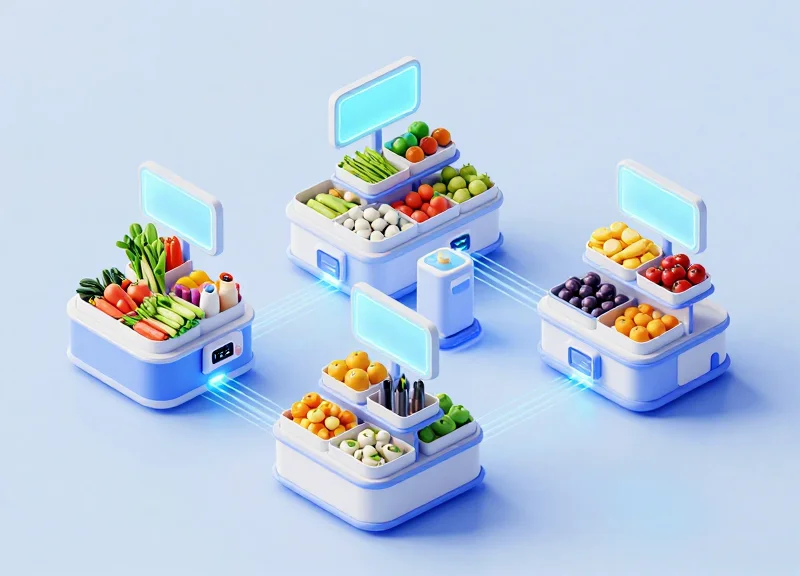
Traditional wet markets are undergoing a massive digital transformation. As we look toward 2026, the integration of Electronic Shelf Labels (ESL) and RFID technology is shifting these hubs from manual operations to data-driven ecosystems. This evolution solves the critical challenges of price volatility and compliance, ensuring consumers get fair pricing while vendors meet stringent regulatory standards automatically. In this guide, we explore the core technologies redefining transparency and reporting in the fresh food sector.
The Evolution of Wet Markets in the Digital Era
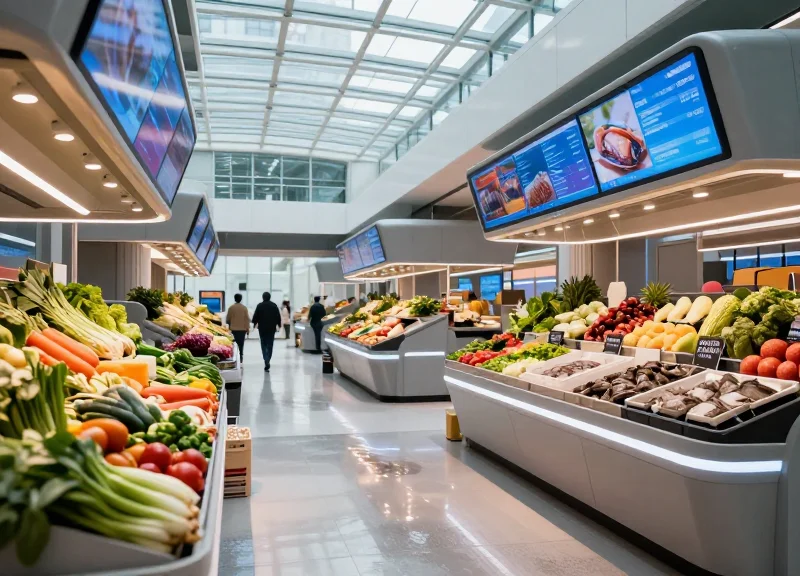
The evolution of wet markets in the digital era represents a radical shift from fragmented, cash-based commerce to integrated, data-driven ecosystems. By 2026, the 'Next-Gen Wet Market' will no longer rely on manual price chalking or ledger-based compliance. Instead, these traditional hubs are adopting Internet of Things (IoT) sensors, blockchain-enabled provenance tracking, and automated regulatory reporting to meet rising consumer demands for food safety and price transparency, effectively blending the tactile appeal of fresh markets with the precision of modern logistics.
| Feature | Traditional Wet Market (Pre-2020) | Next-Gen Wet Market (2026 Profile) |
|---|---|---|
| Price Discovery | Variable/Verbal negotiation | Dynamic AI-driven pricing displays |
| Regulatory Compliance | Manual inspections & paper logs | Automated real-time sensor reporting |
| Data Infrastructure | Fragmented or Non-existent | Edge computing & Cloud-synced scales |
| Consumer Trust | Based on personal relationships | Based on QR-scannable provenance |
This transformation is driven by three primary catalysts: the urbanization of emerging markets, stringent post-pandemic food safety mandates, and the arrival of Gen Z consumers who value source-traceability as much as freshness. As regulators push for 'Automated Regulatory Reporting,' stallholders are moving away from the burden of manual filing. By 2026, smart-scale systems will automatically relay weight, turnover, and pricing data to municipal authorities, reducing the audit gap and ensuring market-wide stability.
How does real-time price transparency benefit the vendor?
It allows vendors to adjust prices dynamically based on localized supply surges or perishability windows, maximizing yield and reducing food waste by up to 30%.
Will automation replace the traditional market experience?
No; the goal is to digitize the 'back-office' of the stall. Vendors focus on customer interaction while the tech handles inventory tracking and regulatory filing in the background.
What role does 5G play in these markets?
5G enables massive machine-type communication (mMTC), allowing thousands of low-power IoT sensors in a single market to report humidity, temperature, and price data without latency.
Expert Insight: The Rise of 'Micro-Fulfillment Wet Hubs'. A trend often overlooked is the conversion of wet market stalls into decentralized micro-fulfillment centers. In 2026, we predict that next-gen wet markets will not just serve walk-in traffic but will act as the primary nodes for 'hyper-local' grocery delivery apps. By utilizing automated inventory reporting, these markets can sync their real-time stock with third-party delivery platforms, allowing them to out-compete large-scale supermarkets on 'farm-to-table' speed and carbon footprint metrics.
Real-Time Price Transparency: Meeting Consumer Expectations
In the 2026 landscape, real-time price transparency in wet markets refers to the seamless, instantaneous synchronization of commodity pricing across digital signage, mobile applications, and point-of-sale (POS) systems. This technological shift moves beyond static chalkboards to automated systems that reflect market fluctuations, supply chain costs, and hyper-local demand in seconds. For consumers, this ensures that the 'freshness' of the price matches the freshness of the produce, eliminating the traditional 'bargaining friction' and replacing it with data-driven confidence.
The modern consumer, particularly Gen Z and Millennials, views transparency as a non-negotiable component of brand loyalty. In wet markets, where price volatility is high due to the perishable nature of goods, providing a live 'ticker' of prices provides a sense of fair play. By 2026, we anticipate that markets lacking this digital visibility will see a significant migration of customers toward tech-integrated 'Smart Stalls' that utilize Electronic Shelf Labels (ESLs) to communicate value clearly and consistently.
| Feature | Traditional Static Pricing | Next-Gen Real-Time Pricing |
|---|---|---|
| Price Accuracy | High risk of manual errors | 100% synchronized across all channels |
| Consumer Trust | Low; perceived as arbitrary | High; backed by real-time market data |
| Update Speed | Hours (Manual updates) | Seconds (Automated via API/IoT) |
| Waste Reduction | Minimal; static prices cause stagnation | Maximum; dynamic markdown for aging stock |
Unique Insight: The 'Trust-as-a-Service' Paradigm. Most analysts view price transparency merely as a utility. However, the true 2026 differentiator is treating transparency as a service. By integrating QR codes on digital labels that show the 7-day price trend of a specific vegetable, vendors are not just selling produce; they are selling market intelligence. This 'Price History' transparency prevents 'sticker shock' and validates the vendor's integrity during periods of inflation or supply shortages.
Does real-time pricing lead to higher costs for consumers?
Actually, it often leads to lower costs during off-peak hours. Dynamic pricing algorithms can automatically trigger 'happy hour' discounts for perishable items to ensure stock turnover, benefiting the budget-conscious shopper.
How do vendors handle price fluctuations during a single shopping trip?
Best practices for 2026 involve a 'Price Lock' feature within the market's app. Once a consumer adds an item to their digital basket or scans a tag, the price is guaranteed for a 30-minute window, ensuring fairness regardless of mid-trip updates.
Is this technology too expensive for small-scale wet market vendors?
The democratization of IoT has reduced the cost of ESLs by 60% since 2022. Shared market infrastructure—where the market management provides the network and software—allows individual vendors to subscribe to 'Transparency-as-a-Service' for a minimal monthly fee.
The Strategic Role of Electronic Shelf Labels (ESL)

Electronic Shelf Labels (ESL) are the critical infrastructure for 2026 wet markets, serving as IoT-connected digital displays that eliminate pricing discrepancies and manual labor costs. By utilizing high-contrast E-ink technology and encrypted wireless protocols like BLE or Sub-1GHz, ESLs allow market operators to synchronize prices for thousands of volatile SKUs—such as seasonal seafood or daily produce—from a centralized dashboard in seconds. This ensures that the 'truth on the shelf' is always identical to the 'truth in the POS system,' removing the friction of manual price tag swaps and human error.
| Feature | Manual Paper Tagging | Next-Gen ESL Systems |
|---|---|---|
| Update Speed | Hours/Days per floor | Seconds across all SKUs |
| Price Accuracy | High Error Rate (85-90%) | Near Perfect (99.9%) |
| Labor Efficiency | High (Manual labor required) | Zero (Automated) |
| Compliance | Reactive/Delayed | Proactive/Instant |
| Customer Trust | Low (Frequent mismatches) | High (Consistent data) |
The transition to ESL is not merely a hardware upgrade; it is a strategic shift toward 'Centralized Edge Control.' In a wet market setting where inventory changes by the hour based on catch or harvest, manual updates are physically impossible to maintain with precision. ESLs solve this by acting as the localized endpoint of a market-wide Enterprise Resource Planning (ERP) system.
How do ESLs handle the harsh wet market environment?
Modern ESLs for 2026 are built with IP67 or IP68 ratings, making them resistant to the high humidity, water splashes, and temperature fluctuations common in seafood and meat sections.
Do ESLs assist with automated regulatory reporting?
Yes. Every price change on an ESL is timestamped and logged in a cloud database, providing an immutable audit trail that can be automatically exported to regulatory agencies to prove fair pricing compliance.
Is the ROI justifiable for smaller wet market stalls?
While the initial cost is higher than paper, the reduction in labor hours and the elimination of 'price-check' delays at checkout typically result in a full ROI within 14 to 18 months.
Expert Insight: The Shelf-Edge Compliance Audit. By 2026, we anticipate a shift where ESLs are no longer just displays, but 'Active Compliance Nodes.' My unique perspective is that regulatory bodies will soon use NFC-enabled mobile apps to tap an ESL and instantly pull a product's entire pricing history and provenance data. This turns the price tag into a legal document of record, ensuring that 'Dynamic Pricing' never crosses the line into 'Price Gouging' during supply shortages.
- Step 1: Backend Integration: Link the inventory database to the ESL management software to ensure a single source of truth.
- Step 2: Wireless Gateway Deployment: Install high-penetration access points to ensure labels remain connected even in dense, high-interference market environments.
- Step 3: Automated Trigger Configuration: Set rules for automatic price adjustments based on inventory age (e.g., 20% discount on fresh fish after 6:00 PM) to minimize waste.
Automating Regulatory Reporting for Compliance
Automating regulatory reporting for compliance is the integration of digital ledger systems and IoT sensors that automatically capture, format, and transmit market data to government oversight agencies. In the 2026 wet market landscape, this 'Zero-Touch Compliance' model eliminates the need for manual record-keeping, ensuring that price fluctuations, inventory turnover, and food safety standards are reported with 100% accuracy in real-time. This proactive approach shifts the burden of proof from the vendor to the system, significantly reducing the risk of fines and administrative overhead.
| Feature | Traditional Manual Reporting | 2026 Automated Reporting |
|---|---|---|
| Data Accuracy | High risk of human error/omission | Sensor-verified, immutable data |
| Submission Speed | Weekly or monthly batch uploads | Instantaneous via API integration |
| Audit Readiness | Reactive and labor-intensive | Always-on, proactive transparency |
| Labor Cost | Significant hours spent on paperwork | Near-zero manual intervention |
Expert Insight: The most significant shift we are seeing in Silicon Valley's food-tech exports to global wet markets is the rise of 'Algorithmic Accountability.' By 2026, regulators won't just ask for your spreadsheets; they will provide 'Pre-Certified' API endpoints that plug directly into your Electronic Shelf Label (ESL) and POS systems. This creates a 'Digital Twin' of the market's operations, allowing for macro-economic price monitoring without a single inspector stepping foot on the premises.
- Data Aggregation: IoT-enabled scales and ESLs capture every transaction and price adjustment at the point of sale.
- Standardization: The system automatically converts raw data into government-mandated formats (e.g., XML or JSON) for regional compliance.
- Encryption and Transmission: Secure, end-to-end encrypted tunnels transmit the data to regulatory servers, ensuring vendor privacy is maintained while meeting transparency requirements.
Does automated reporting increase my tax liability?
No, it simply ensures that your reported data matches your actual sales. In many jurisdictions, early adopters of automated systems receive tax credits for reducing the government's audit costs.
What happens if the market internet goes down?
Modern systems use Edge Computing to store data locally with a cryptographic timestamp. Once connectivity is restored, the system 'burst-uploads' the backlog to the regulator, maintaining the chain of custody.
Can regulators see my profit margins?
Automated reporting is typically configured to share only mandated data points, such as retail price and origin, keeping your sensitive wholesale cost data private.
RFID and Traceability: Ensuring Food Safety in 2026
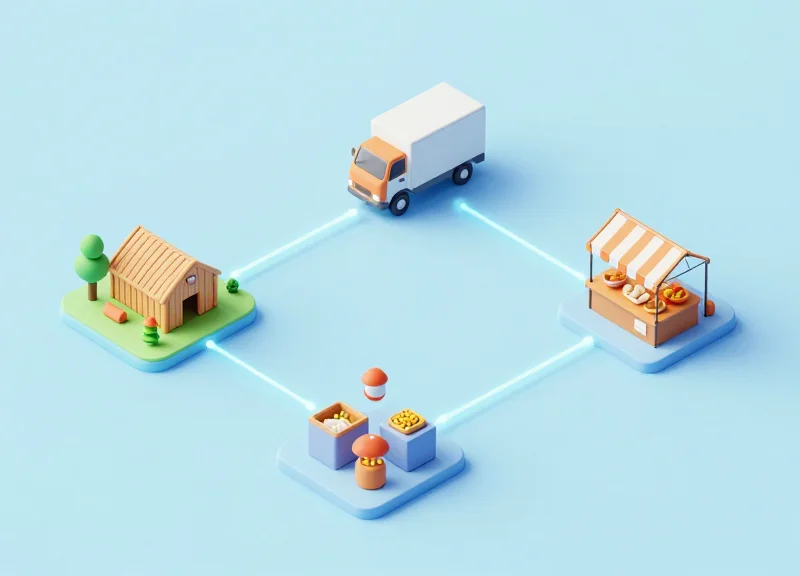
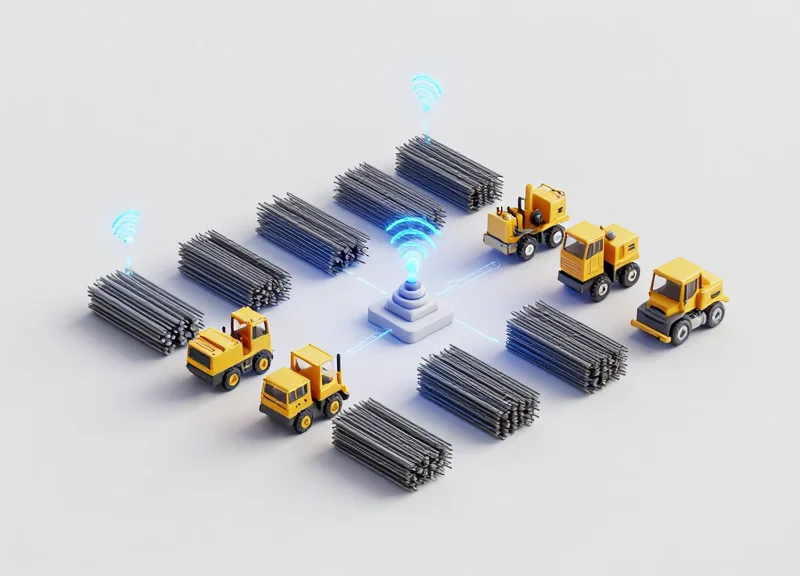
By 2026, RFID (Radio Frequency Identification) and traceability systems will become the backbone of food safety in next-gen wet markets, moving beyond simple inventory management to provide a 'digital birth certificate' for every crate of produce. Unlike traditional barcodes, RFID allows for non-line-of-sight scanning and simultaneous bulk reading, enabling market operators to verify the origin, harvest date, and transit history of fresh goods the moment they arrive at the loading dock. This real-time visibility ensures that safety protocols are data-driven, drastically reducing the time required for food recalls from days to mere seconds.
| Feature | Traditional Traceability | 2026 RFID-Enabled Standard |
|---|---|---|
| Data Capture | Manual entry/Handheld scanning | Automated, bulk gate-reading |
| Recall Precision | Batch or Pallet level | Item-level serialization |
| Speed of Verification | Minutes to Hours | Near-Instantaneous |
| Environmental Monitoring | Separate loggers required | Integrated passive sensing tags |
A critical 2026 innovation is the deployment of 'Passive Sensing RFID tags.' In the historically challenging environment of a wet market—where moisture and ice can interfere with standard electronics—these new tags are specifically designed to monitor temperature and humidity without the need for internal batteries. This provides a 'Cold Chain Integrity' score that is automatically updated as the produce moves from the farm to the vendor's stall, ensuring that consumers are purchasing products that have stayed within safe thermal limits throughout their journey.
- Farm-Level Tagging: Produce is tagged at the source with unique IDs containing genetic strain, soil data, and harvest timestamps.
- Automated Logistics Checkpoints: Wholesale hubs use RFID tunnels to automatically verify shipments without opening crates, ensuring no tampering occurs during transit.
- Smart Stall Integration: Market stalls equipped with RFID antennas automatically detect stock levels and expiration dates, alerting vendors to rotate stock.
- Consumer Verification: Consumers scan NFC-enabled labels or QR codes linked to the RFID data to view the complete 'Farm-to-Table' journey on their smartphones.
How does RFID survive the 'wet' environment of a wet market?
Modern 2026 RFID tags utilize specialized encapsulation—typically medical-grade silicone or high-density polyethylene—that protects the microchip from high humidity, ice, and frequent wash-downs.
Is RFID traceability too expensive for small vendors?
The cost per tag has dropped below $0.05, and most of the infrastructure cost is absorbed by market operators or government food safety grants, making it accessible even for individual stall owners.
Does RFID replace regulatory inspections?
No, it augments them. Inspectors use RFID readers to instantly pull up compliance certificates, reducing the time spent on paperwork and allowing them to focus on physical quality assessments.
Enhancing the Customer Experience through Smart Interfaces
Smart interfaces in next-gen wet markets represent the evolution of the stall-front from static pricing to a dynamic communication hub. By 2026, these interfaces—comprising high-contrast Electronic Shelf Labels (ESLs), interactive QR codes, and proximity-based OLED displays—serve as the primary bridge between the tactile world of fresh produce and the data-rich expectations of the modern consumer. These systems go beyond displaying the price per kilogram; they act as a layer of 'Digital Trust' that validates quality, origin, and safety in a single, frictionless interaction.
| Feature | Traditional Wet Market | 2026 Smart Market Interface |
|---|---|---|
| Pricing | Handwritten/Chalkboard (Static) | Real-time ESL (Dynamic/Automated) |
| Provenance | Verbal/Unverified | Blockchain-backed QR History |
| Nutritional Info | None available | Batch-specific Dynamic Profiles |
| Consumer Trust | Based on relationship only | Relationship + Verified Data Transparency |
A key differentiator in the 2026 landscape is 'Contextual Batch-Level Transparency.' My unique insight into this trend is the shift from 'static' to 'living' data. Unlike generic grocery labels, smart interfaces in wet markets now pull data from IoT sensors throughout the supply chain. When a customer scans a QR code on a crate of bok choy, they aren't seeing a static PDF; they are viewing a 'Live Identity' of that specific harvest. This includes the precise time it was picked, the temperature it was held at during transit, and even the specific farmer's profile, fostering a digital version of the traditional merchant-customer bond.
What information can customers access via wet market QR codes?
Beyond pricing, customers can access real-time carbon footprint metrics, 'use-by' countdowns based on actual harvest dates, and localized recipe suggestions tailored to the specific ingredients currently in stock.
How do ESLs improve the shopping speed?
ESLs eliminate the 'friction of uncertainty.' By providing high-visibility, accurate pricing that matches the checkout system perfectly, they reduce disputes and allow shoppers to make rapid, informed decisions without waiting for staff assistance.
Can these interfaces support multiple languages?
Yes, 2026 smart interfaces use browser-based localization to automatically display product information in the shopper's preferred language upon scanning, which is essential for multi-cultural urban wet market environments.
Expert Tip: To maximize ROI on these interfaces, vendors should focus on 'Actionable Transparency.' Don't just show the farm's location; show a 'Freshness Score' that updates hourly based on the produce's shelf-life data. This transforms a simple price tag into a powerful conversion tool that justifies premium pricing for higher quality stock.
Operational Efficiency: Inventory Management and Loss Prevention
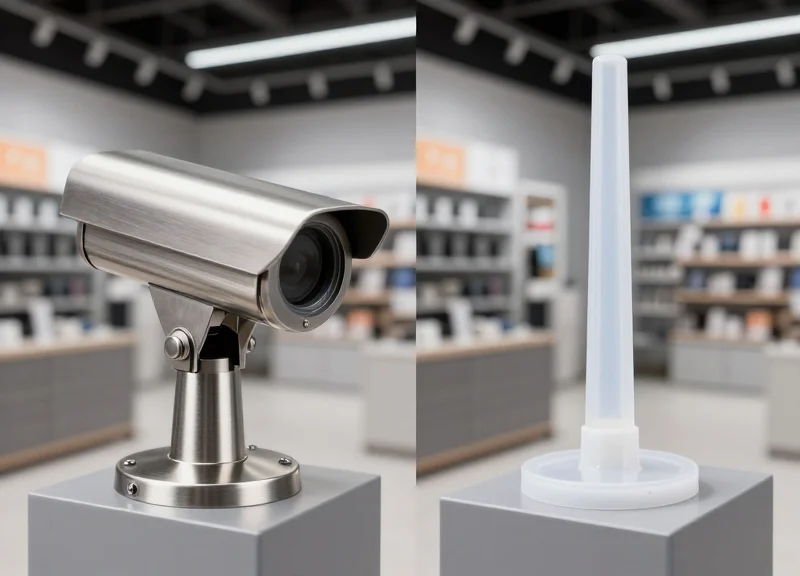
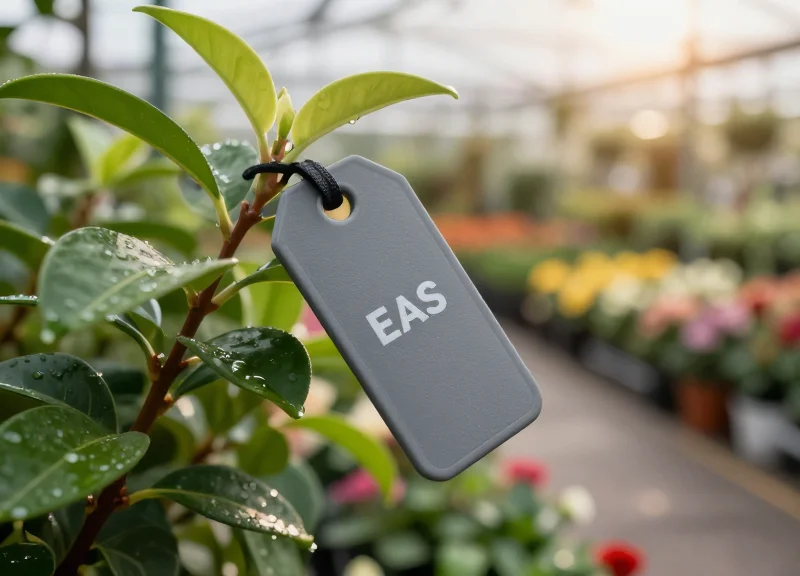
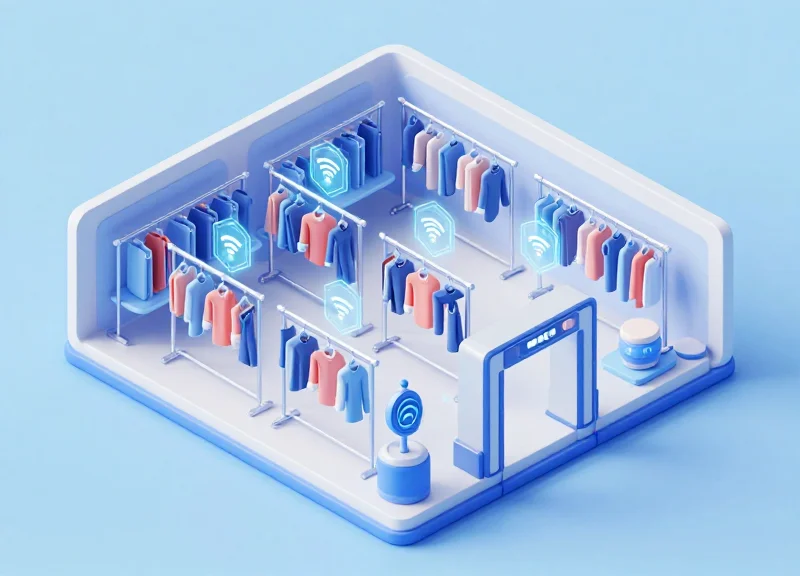
In 2026, operational efficiency in wet markets is defined by the integration of RFID (Radio Frequency Identification) for granular inventory visibility and EAS (Electronic Article Surveillance) for robust loss prevention. By synchronizing these systems, vendors can achieve a 'zero-gap' supply chain where perishable stock levels are monitored in real-time, reducing food waste by up to 30% and virtually eliminating 'shrink'—the industry term for inventory lost to theft, spoilage, or administrative error. This synergy allows stall owners to move away from manual 'eye-balling' of stock toward data-driven replenishment that mirrors actual consumer velocity.
| Feature | Traditional EAS | Standard RFID | 2026 Hybrid Systems |
|---|---|---|---|
| Primary Goal | Theft Deterrence | Inventory Tracking | Total Stock Intelligence |
| Data Granularity | None (Alarm Only) | High (Serial Level) | Predictive (Shelf-life + Location) |
| Wet Market Suitability | Moderate | Low (Signal Interference) | High (Hydro-shielded Tags) |
| Shrink Reduction | 10-15% | 20-25% | 45%+ |
Expert Tip: Predictive Shrink Modeling. The standout innovation for 2026 is the layering of environmental sensor data over RFID tracking. In the high-stakes environment of wet markets, temperature and humidity fluctuations are the primary drivers of loss. By integrating 'smart' RFID tags that log thermal exposure, the system doesn't just tell you what is in stock, but predicts when it will spoil, triggering automated price markdowns via Electronic Shelf Labels (ESL) to clear stock before it becomes a total loss.
- Automated Receiving: As crates of fresh produce enter the market, overhead RFID tunnels log thousands of items instantly, updating the central inventory database without manual scanning.
- Real-Time Stock Reconciliation: Smart shelves equipped with RFID readers detect when items are moved or sold, providing a live 'heat map' of product movement and identifying slow-moving SKUs.
- Intelligent Loss Detection: If a product bypasses the Point of Sale (POS) without being deactivated, the EAS-RFID hybrid system identifies exactly which SKU is leaving the premises, allowing for targeted security intervention.
- Dynamic Markdown Triggering: When the system detects a batch of perishables nearing its expiration or showing signs of 'dwell time' lag, it automatically pushes a discount to the ESLs to incentivize immediate purchase.
How does RFID work with high-moisture products like seafood?
Next-gen 2026 tags utilize 'Hydro-Shield' graphene-based antennas and specialized frequency hopping that prevents the signal attenuation typically caused by water and ice.
Is the cost of tagging individual produce items justifiable?
For high-value items like premium meats or organic fruits, the ROI is immediate through theft reduction. For lower-value bulk items, vendors typically use 'RFID-enabled Crate Tracking' to manage inventory at the batch level.
Does this technology replace human workers?
No; it redirects labor. Instead of spending hours performing manual inventory counts, staff are freed to focus on food quality, customer service, and artisanal presentation.
Sustainability Impact: Reducing Food Waste with Smart Pricing

Smart pricing in next-gen wet markets is a data-driven sustainability strategy where Electronic Shelf Labels (ESLs) automatically lower prices for perishables as they approach their optimal freshness limit. By integrating real-time inventory levels with shelf-life data, these systems ensure that items nearing expiration are sold rather than discarded, directly reducing organic waste by up to 40% while maintaining vendor profitability.
A unique 2026 trend is the implementation of the 'Freshness Decay Index' (FDI). Unlike traditional retail, wet markets handle 'naked' or unpackaged goods. By using ambient IoT sensors to monitor ethylene gas levels and humidity around specific stalls, the management system can predict the exact hour a batch of fruit or leafy greens will begin to wilt. This triggers a 'Flash Sustainability Discount' communicated instantly via ESLs and push notifications to local bargain-hunters, ensuring inventory clears at the peak of its edible life.
| Metric | Traditional Manual Pricing | 2026 Smart Pricing Systems |
|---|---|---|
| Waste Rate | 15-25% of total stock | Less than 5% through dynamic clearing |
| Revenue Recovery | Near zero for spoiled goods | 60-80% recovery via tiered discounting |
| Consumer Perception | Inconsistent/Subjective | Transparent 'Freshness-to-Value' ratio |
| Regulatory Compliance | Manual waste logs | Automated ESG and waste reporting |
- IoT Freshness Monitoring: Sensors track environmental factors like temperature and ethylene to estimate the remaining shelf life of unboxed produce.
- Dynamic Price Adjustment: Algorithms automatically decrease prices in small increments as the 'Freshness Decay Index' increases, incentivizing faster turnover.
- Omnichannel Notifications: Deep integration with market apps alerts nearby eco-conscious shoppers to 'Zero Waste' deals in real-time.
- Circular Economy Feedback: Data on unsold items is fed back to suppliers to optimize future order quantities, preventing overstock at the source.
Does smart pricing encourage customers to wait for discounts?
Data shows that 'prime' shoppers still pay full price for peak freshness, while the discounted tiers attract a different demographic of price-sensitive and eco-conscious consumers, expanding the total customer base.
How does this help with automated regulatory reporting?
Every price drop and subsequent sale is logged. This provides a digital audit trail of waste mitigation efforts, which is increasingly required for city-level sustainability grants and carbon credit calculations.
Can this system handle highly volatile seafood prices?
Yes, the system can sync with local wharf supply data. If a specific catch is abundant that morning, the system lowers prices immediately to move the high volume before the market closes.
Overcoming Implementation Challenges in Traditional Settings
Transitioning traditional wet markets to a 2026-standard tech stack—featuring Electronic Shelf Labels (ESLs) and automated regulatory reporting—requires overcoming three core hurdles: environmental hostility, infrastructure deficits, and cultural inertia. The most effective approach is 'Minimum Viable Modernization' (MVM), which focuses on deploying ruggedized, low-power IoT sensors and high-frequency communication protocols that can operate in high-humidity, high-noise environments without disrupting the established flow of manual trade.
| Challenge Category | Common Pain Point | Next-Gen Solution (2026) |
|---|---|---|
| Physical Environment | Water, organic acids, and extreme humidity damaging electronics. | IP67-rated modular housing and oleophobic-coated touchscreens. |
| Connectivity | Concrete structures and interference blocking Wi-Fi signals. | Sub-GHz LoRaWAN networks for long-range, low-power data penetration. |
| Digital Literacy | Vendor resistance to complex software interfaces. | Voice-to-Data AI input and gesture-based inventory management. |
| Power Access | Lack of electrical outlets at individual stalls. | Battery-optimized ESLs with 5-10 year life cycles using energy harvesting. |
- Phase 1: Environmental Audit and Infrastructure Hardening: Conduct a site-wide mapping of 'wet zones' and electrical dead spots. Install a unified backbone of industrial IoT gateways capable of handling thousands of simultaneous sensor pings.
- Phase 2: The 'Parallel Path' Pilot: Run digital price transparency tools alongside traditional chalkboards for a 30-day period to validate data accuracy and build vendor trust through transparent price-matching.
- Phase 3: Automated Regulatory Synchronization: Integrate local market data with government APIs to automate food safety and price gouging reports, removing the administrative burden from individual stall owners.
Expert Insight: The 'Organic Acid' Factor. A common mistake in Silicon Valley-led retail projects is applying standard POS hardware to wet market stalls. In these environments, the combination of salt, moisture, and organic acids from seafood and produce acts as a potent corrosive. To ensure longevity, 2026 deployments must prioritize 'encapsulated circuitry'—where entire logic boards are sealed in resin—rather than just relying on external cases. This reduces the Total Cost of Ownership (TCO) by 40% over three years compared to standard retail hardware.
How do we handle intermittent internet connectivity?
Next-gen systems utilize 'Edge-First' computing, where local gateways cache all price and regulatory data, syncing with the cloud only when a stable connection is established, ensuring zero downtime for stall operations.
Will vendors be replaced by automation?
No. The 2026 trend focuses on 'Augmented Trading,' where tech handles the boring tasks (reporting and price updates) while vendors focus on their core value: curation, customer relationships, and product knowledge.
Is the investment worth it for small-scale markets?
Yes. By automating regulatory compliance and reducing food waste through smart pricing, most stall owners see a return on investment (ROI) within 12 to 18 months through labor savings and reduced shrinkage.