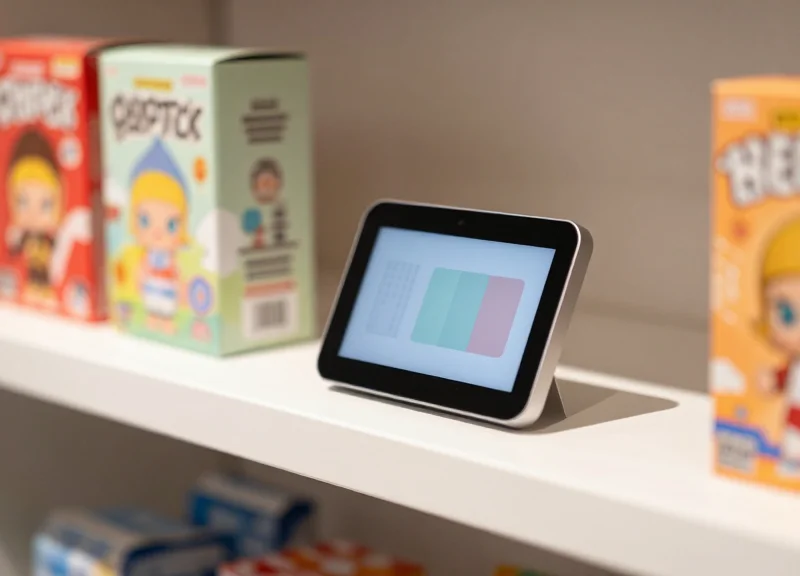
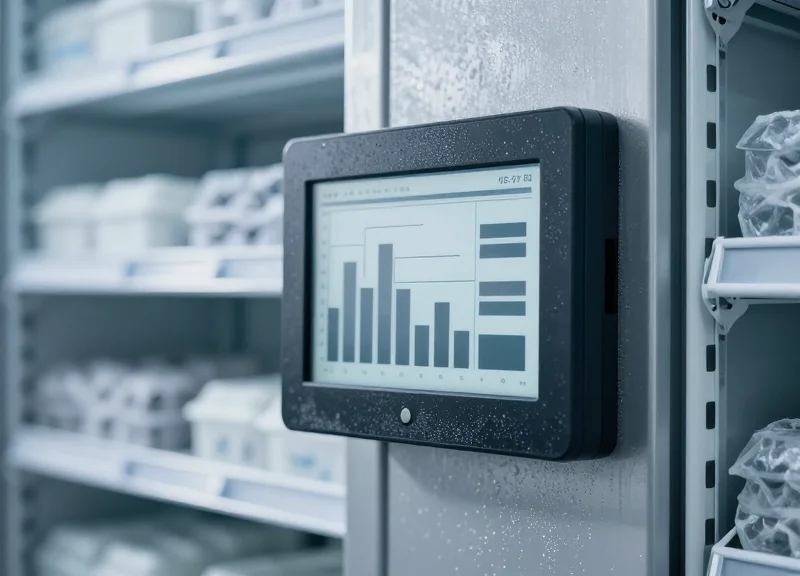
Managing inventory in sub-zero environments presents unique challenges, from hardware failure to human error due to harsh conditions. Standard Electronic Shelf Labels (ESL) often fail at temperatures below freezing, leading to screen lag or battery depletion. In this guide, we explore how specialized -25°C freezer-grade ESL technology can revolutionize cold storage management, ensuring real-time accuracy and operational efficiency even in the frostiest conditions.
The Critical Need for Specialized ESL in Cold Storage
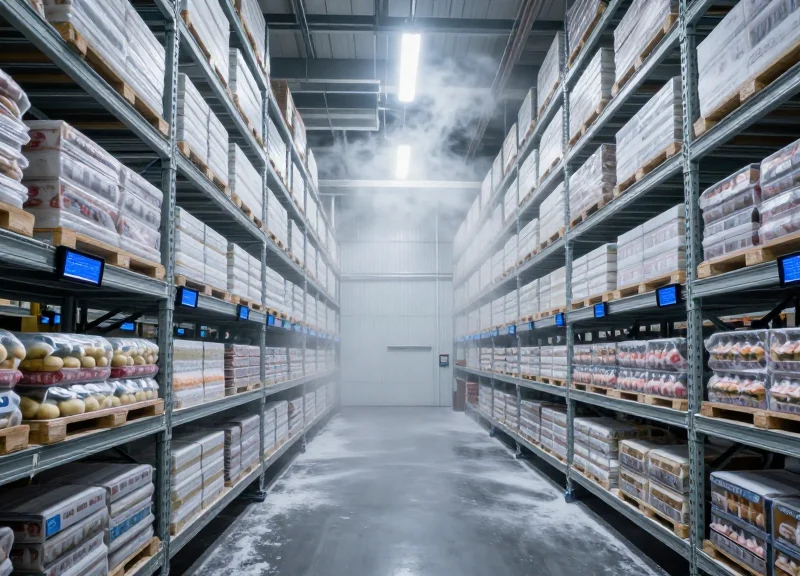
In cold storage environments operating at -25°C, standard Electronic Shelf Labels (ESL) inevitably fail because their internal components are not engineered to withstand extreme thermal contraction and chemical changes. While a retail-grade ESL may function briefly in a freezer, the drop in temperature causes liquid crystal displays to freeze, lithium batteries to lose voltage through internal crystallization, and plastic housings to become brittle. Specialized freezer-grade ESLs are purpose-built with low-temperature electrolytes, anti-fogging displays, and reinforced sealants to ensure 100% data accuracy and display readability in harsh sub-zero conditions.
| Feature | Standard ESL (Retail) | Freezer-Grade ESL (-25°C) |
|---|---|---|
| Battery Chemistry | Standard Li-MnO2 (Fails at 0°C) | Low-Temp Electrolyte Formula |
| Display Tech | Standard E-Ink (Slow/Ghosting) | High-Refresh Cold-Chain E-Paper |
| Seal Integrity | Basic Ultrasonic Welding | Multi-Layer Thermal Expansion Seal |
| Response Time | 30+ Seconds (in cold) | < 5 Seconds (at -25°C) |
What is the 'Crystallization Cliff' in cold storage?
This refers to the point where standard battery electrolytes freeze, causing a sudden, permanent drop in voltage that renders the label unresponsive, even if moved back to room temperature.
Why does condensation ruin standard labels?
When moving goods or opening freezer doors, 'sweating' occurs; standard labels lack the IP67/IP68 rating and vacuum-sealed optics to prevent internal fogging and circuit corrosion.
How does brittle failure impact operational ROI?
Standard plastics lose elasticity at -25°C. A minor bump from a pallet or forklift that would bounce off a freezer-grade label will cause a retail-grade label to shatter, leading to constant replacement costs.
Expert Insight: The Latency Factor. Many operators overlook 'Update Latency.' In a standard ESL, the molecular movement within the e-paper slows down significantly as temperatures drop. An update that takes 2 seconds in a grocery aisle might take 45 seconds in a freezer. A specialized -25°C ESL uses a specific electronic drive waveform designed to 'push' the ink particles through the viscous carrier fluid, ensuring that inventory counts and picking locations are updated in real-time without stalling warehouse workflows.
Technical Requirements for -25°C Freezer-Grade Performance
To achieve reliable performance at -25°C, a freezer-grade Electronic Shelf Label (ESL) must undergo a complete re-engineering of its internal architecture, focusing on battery chemistry, display fluid dynamics, and moisture-tight sealing. Unlike standard retail labels that fail when electrolytes freeze or liquid crystals turn sluggish, true cold-chain ESLs utilize specialized low-temperature components designed to maintain high contrast and wireless responsiveness in extreme thermal conditions without significant latency or hardware degradation.
| Component | Standard ESL (0°C to 40°C) | Freezer-Grade ESL (-25°C to 25°C) |
|---|---|---|
| Battery Chemistry | Standard Lithium Manganese Dioxide | High-Capacity Lithium Thionyl Chloride (Li-SOCl2) |
| Display Tech | Standard E-ink (Liquid Crystal based) | Wide-Temp Electronic Paper with Low-Viscosity Fluid |
| Ingress Protection | IP65 (Dust/Splash resistant) | IP67/IP68 (Vacuum-sealed against condensation) |
| Refresh Protocol | Standard Waveform | Optimized Low-Temp Waveform (Slow-pulse drive) |
- Advanced Low-Temperature Battery Management: Standard batteries experience a massive voltage drop at sub-zero temperatures. Freezer-grade ESLs require specialized Li-SOCl2 or modified Li-MnO2 batteries that provide a consistent discharge curve at -25°C to power the wireless chipset and display updates.
- Thermal-Compensated Display Waveforms: As temperature drops, the viscosity of the ink particles in an E-paper display increases. Specialized firmware must use 'temperature-compensated waveforms,' which apply longer, more precise electrical pulses to move the ink particles accurately without ghosting.
- Vacuum-Sealed Hermetic Housing: The greatest enemy in cold storage is not just the cold, but the condensation during defrost cycles or door openings. Labels must be hermetically sealed to prevent micro-droplets from forming on the internal PCB, which leads to short circuits.
Expert Insight: The 'Voltage Recovery' Factor. One often overlooked technical requirement is the 'Voltage Recovery Time.' In -25°C environments, after a power-intensive operation like a screen refresh, the battery voltage may take several seconds to stabilize. Top-tier freezer ESLs utilize supercapacitors to buffer this load, ensuring the device doesn't 'brown out' or lose its network heartbeat during a mission-critical inventory update.
Why can't I just use a standard ESL with a better battery?
Even with a high-capacity battery, standard E-ink displays will physically freeze and crack, or the refresh rate will become so slow that the image remains stuck in a half-rendered state, making barcodes unreadable.
How does humidity affect -25°C ESL performance?
High humidity combined with sub-zero temps leads to frost buildup. Freezer-grade ESLs feature specialized anti-frost coatings on the outer lens to ensure that scanners can still read the displayed QR codes or SKUs.
What is the expected battery life at -25°C?
While standard labels might last 5-10 years, a high-quality freezer-grade ESL should be rated for at least 3-5 years under daily update conditions, depending on the efficiency of the low-temp battery chemistry used.
Battery Chemistry: Powering Devices in the Deep Freeze
In cold storage environments reaching -25°C, the chemical reaction rate within a battery slows down significantly, leading to increased internal resistance and a sharp drop in available voltage. To ensure Electronic Shelf Labels (ESL) remain operational for 5 to 10 years without maintenance, hardware engineers must utilize specialized lithium chemistries, such as Lithium Thionyl Chloride (Li-SOCl2) or modified low-temperature Lithium Manganese Dioxide (Li-MnO2), which utilize non-aqueous electrolytes designed to remain fluid and conductive at sub-zero temperatures.
| Feature | Standard Li-MnO2 (CR Series) | Specialized Low-Temp Li-MnO2 | Li-SOCl2 (ER Series) |
|---|---|---|---|
| Min Operating Temp | -20°C (Unstable) | -30°C | -60°C |
| Voltage Stability | Rapid Drop-off | Moderate | Flat/High Plateau |
| Energy Density | Medium | Medium-High | Very High |
| Self-Discharge Rate | ~2% per year | ~1.5% per year | <1% per year |
| Cost Profile | Low | Medium | High |
The 'Hidden Killer' in freezer-grade ESLs isn't just the cold—it is the pulse current demand. When an ESL refreshes its E-ink display or transmits data via Bluetooth/Zigbee, it requires a momentary burst of energy. In standard batteries at -25°C, the internal resistance is so high that this pulse causes the voltage to dip below the device's operating threshold, triggering a system reset even if the battery has 80% capacity left. This is why 'Silicon Valley grade' ESL solutions often pair Li-SOCl2 batteries with a hybrid layer capacitor (HPC) to handle high-current pulses without straining the primary cell.
Why does my battery indicator fluctuate in the freezer?
This is typically caused by 'voltage lag.' In cold temperatures, the electrochemical reaction is sluggish. When the device wakes up, the voltage drops momentarily before recovering, often confusing standard battery management software into reporting a lower charge than actually exists.
Can I use standard CR2450 batteries in a -25°C freezer?
While they may work initially, their internal resistance spikes at -20°C, often leading to screen ghosting or communication failures within months. For reliability, always specify cells with a 'low-temp' electrolyte formulation.
How does 'Passivation' affect cold storage ESLs?
Passivation is a thin film of lithium chloride that forms on the anode of Li-SOCl2 batteries. While it provides a long shelf life, it can cause a temporary voltage delay. High-quality ESLs are programmed with 'battery activation' routines to periodically clear this layer and ensure instant readiness.
Expert Insight: When evaluating vendors, ask for the 'Pulse Discharge Curve' at -25°C. Many generic manufacturers provide data sheets rated only at 25°C (room temperature). A true freezer-grade ESL must demonstrate the ability to maintain a voltage above 2.5V during a 20mA pulse at its lowest rated temperature to avoid inventory sync failures.
Display Clarity and Refresh Rates at Low Temperatures
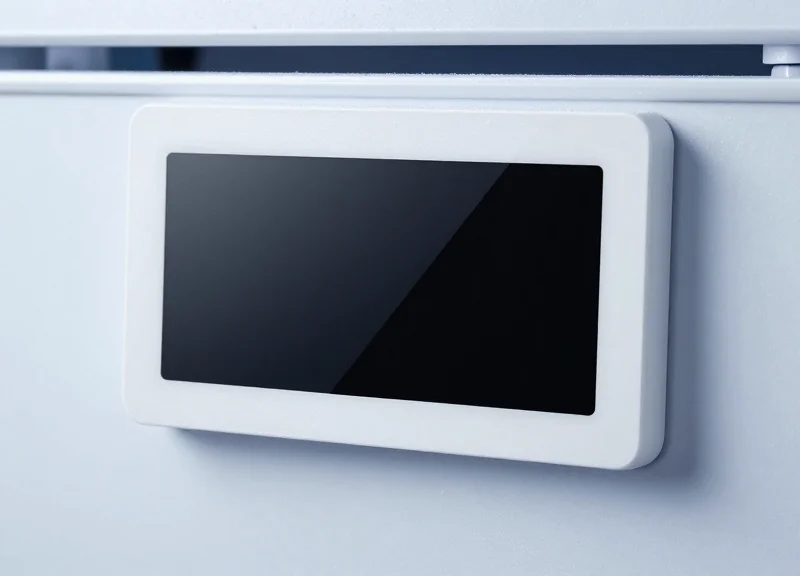
At -25°C, standard Electrophoretic Displays (EPD) experience significant viscosity increases in the fluid containing pigment particles, leading to sluggish refresh rates and 'ghosting'—where remnants of the previous image remain visible. Freezer-grade ESLs solve this by using specialized low-temperature film and optimized 'waveforms' (the electrical pulse patterns) that provide more energy to move pigments through the thickened fluid, ensuring high-contrast readability and sharp text even in extreme cold.
The primary challenge in sub-zero environments is the physics of the display medium. In a typical E-ink screen, tiny microcapsules contain charged white and black particles. In the deep freeze, these particles move like a person running through honey. To maintain operational efficiency, freezer-grade labels must utilize specific firmware logic that detects the ambient temperature and automatically switches to a high-voltage, multi-pulse refresh cycle designed for frozen conditions.
| Feature | Standard Retail ESL (0°C to 50°C) | Freezer-Grade ESL (-25°C to 10°C) |
|---|---|---|
| Refresh Speed | ~1-2 Seconds | 5-8 Seconds (Optimized for Cold) |
| Ghosting Risk | High below 5°C | Near Zero with LT-Film |
| Contrast Ratio | 10:1 to 12:1 | Maintained 8:1 minimum at -25°C |
| Waveform Type | Fixed/Static | Dynamic (Temperature-Compensated) |
- Expert Insight: The 'Cold-Start' Thermal Pulse: A unique differentiator in top-tier -25°C ESLs is the use of a 'pre-heating' waveform pulse. Unlike standard labels, these devices send a rapid sequence of high-frequency electrical pulses before the actual image update. This creates a microscopic amount of localized kinetic heat within the pigment fluid, momentarily reducing viscosity just enough to allow the particles to snap into position accurately, significantly reducing image artifacts.
Why does my ESL screen look 'grey' in the freezer?
This is often due to insufficient voltage in the waveform to fully pull the white particles to the surface through the viscous fluid. Only labels specifically rated for -25°C have the internal capacitors necessary to deliver the punch required for a clean white background.
Does cold temperature affect the viewing angle?
No, because E-ink is a reflective technology. As long as the particles reach the surface, the viewing angle remains near 180 degrees, which is critical for warehouse workers scanning labels from high-reach forklifts.
How often can you refresh a label at -25°C?
While you can refresh as needed, it is best practice to minimize updates in deep freeze to 2-3 times per day. The increased power required to move particles in the cold consumes more battery than updates at room temperature.
Integration Strategies with RFID and Warehouse Management Systems
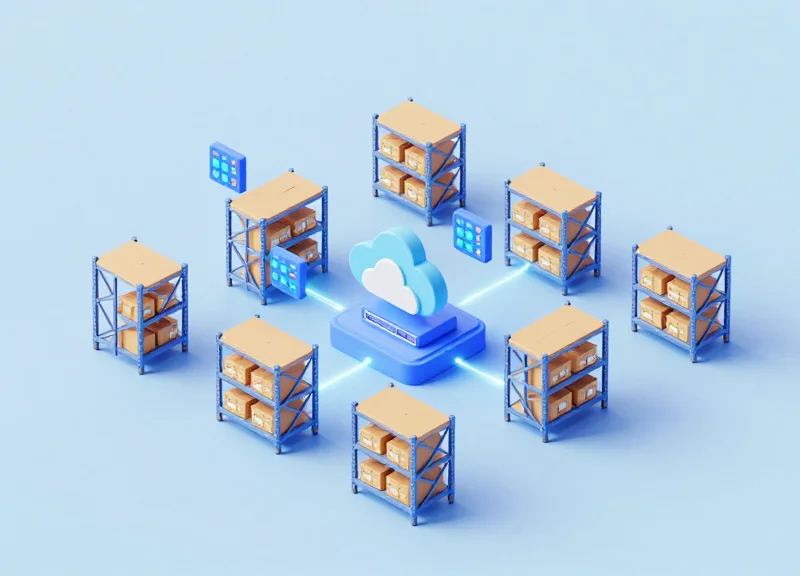
Integrating -25°C freezer-grade Electronic Shelf Labels (ESL) into a cold storage facility is not merely about hardware placement; it is about creating a bidirectional data bridge between the physical pallet and the digital Warehouse Management System (WMS). By leveraging RESTful APIs or MQTT protocols, the WMS acts as the single source of truth, pushing SKU updates, expiration dates, and pick-list priorities to the ESL gateway, while RFID sensors provide the location-aware triggers that ensure the right label is updated the moment a pallet enters a specific sub-zero zone.
| Integration Layer | Primary Technology | Role in Cold Storage | Latency Target |
|---|---|---|---|
| Data Source | WMS / ERP | Central inventory records and order logic | N/A (Source) |
| Communication | API / MQTT | Asynchronous messaging for real-time updates | < 500ms |
| Location Trigger | RFID / BLE | Auto-detects pallet movement in/out of freezer | < 1s |
| Visual Output | Sub-Zero ESL | Displays batch info and pick-status at -25°C | < 3s (Refresh) |
- Define Data Mapping Fields: Identify which attributes (e.g., Batch ID, Expiry Date, Temperature Log) must be visible on the ESL and map these from your WMS database to the ESL management software.
- Implement RFID Triggered Updates: Use RFID gates at the freezer entrance to signal the WMS when a pallet arrives, automatically triggering the ESL to switch from 'In-Transit' to 'Staged' status.
- Optimize Gateway Distribution: Install IoT gateways outside the thickest insulation points of the freezer, using high-gain antennas to penetrate cold-room walls and maintain stable connections.
- Configure Automated Alerts: Set up a feedback loop where the ESL reports its battery health and connectivity status back to the WMS dashboard for proactive maintenance.
Expert Insight: The 'Ghost Inventory' trap in cold storage often stems from signal attenuation caused by ice-coated metal racking. To counter this, we recommend an 'Edge-First' integration strategy. Instead of the ESL labels waiting for a round-trip command from a cloud-based WMS, use an on-premise edge controller to cache inventory states. This ensures that even if the facility's external internet connection flickers due to weather, the labels and RFID scanners continue to sync locally, preventing costly data desynchronization.
Can I use the same RFID handheld to update the ESL?
Yes, many modern freezer-grade ESLs support NFC or secondary RF frequencies that allow a warehouse worker's handheld device to force a manual refresh or 'page flip' on the label for immediate stock counts.
What happens if the WMS goes offline?
The ESLs will continue to display the last known good data. Robust systems include a 'Timestamp' on the display to show workers how recently the data was synchronized.
Does RFID interference affect ESL performance?
Standard RFID (860-960 MHz) and most ESL systems (2.4 GHz or Sub-GHz) operate on different frequencies, meaning they can coexist without signal degradation if the network is properly planned.
Durability and Protection: IP Ratings and Casing Design
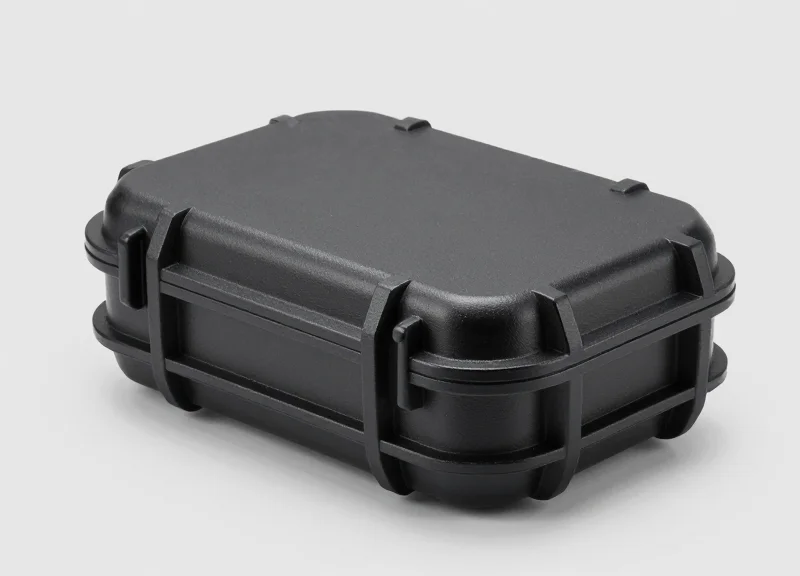
In a -25°C cold storage environment, the greatest threat to electronic components isn't the cold itself, but the moisture that follows it. Durability in these conditions is measured by the device's ability to remain hermetically sealed against water vapor and ice crystals. High Ingress Protection (IP) ratings and specialized casing designs are not optional; they are the baseline for preventing internal condensation, which can lead to short circuits, screen fogging, and permanent battery failure when the device undergoes necessary defrost cycles or is moved for maintenance.
| IP Rating | Dust Protection | Water Protection | Cold Storage Suitability |
|---|---|---|---|
| IP54 | Limited protection | Splashing water | Not Recommended: High risk of moisture ingress. |
| IP65 | Dust-tight | Water jets | Minimal: Suitable only for stable, low-humidity zones. |
| IP67 | Dust-tight | Immersion up to 1m | Standard: Excellent for most -25°C freezer applications. |
| IP68 | Dust-tight | Continuous immersion | Premium: Best for environments with high humidity/washdowns. |
The material composition of the ESL casing must also be engineered for low-temperature resilience. Standard plastics become brittle and prone to cracking at sub-zero temperatures. Industry leaders utilize specialized Polycarbonate (PC) or ABS-PC blends that maintain impact resistance even at -25°C. Beyond the material, the sealing technique is paramount. While traditional rubber gaskets are common, advanced freezer ESLs often utilize ultrasonic welding or epoxy potting to create a truly seamless enclosure that eliminates entry points for pressurized water vapor.
Why is 'Thermal Shock' more dangerous than constant cold?
Rapid temperature changes (e.g., moving a label from the freezer to a loading dock) create a 'micro-vacuum' effect. As air inside the label cools, it shrinks, potentially sucking external moisture through weak seals. Only IP67+ labels with high-grade adhesives can withstand these pressure differentials.
Can I use standard ESLs in a freezer if they are IP67 rated?
Not necessarily. An IP67 rating for room-temperature water does not account for the contraction of seal materials at -25°C. You must ensure the manufacturer has specifically tested the seals at sub-zero temperatures to ensure they don't lose elasticity.
What is the benefit of a 'Flush' casing design?
A flush, smooth casing design prevents the buildup of frost and ice in crevices. In many cold storage facilities, ice buildup can put physical pressure on the screen or mounting brackets, eventually causing mechanical failure.
Expert Tip: When evaluating casing design, look for 'Pressure Compensation Elements' or specialized breathable membranes. These microscopic vents allow air to pass through to equalize pressure during temperature shifts while blocking liquid water and vapor molecules, significantly extending the life of the internal electronics compared to a completely rigid, non-breathing seal.
Streamlining Inventory: Labor Savings and Error Reduction
Implementing freezer-grade Electronic Shelf Labels (ESLs) transforms cold storage management from a labor-intensive manual process into a high-precision automated system. By synchronizing directly with your Warehouse Management System (WMS), these devices remove the need for personnel to enter sub-zero environments for the sole purpose of relabeling, thereby reducing operational overhead, minimizing human error, and ensuring that stock data is updated across all channels in milliseconds.
| Task Parameter | Manual Paper Labeling | Automated Freezer ESL |
|---|---|---|
| Update Time (Per Label) | 2–5 Minutes (Entry/Exit/Print) | < 3 Seconds (Remote) |
| Error Rate | 3% - 5% (Human Entry/Misplacement) | < 0.01% (System Sync) |
| Labor Cost | High (Requires Thermal PPE & Breaks) | Near-Zero (Centralized Management) |
| Visibility | Static / Often Frost-Obscured | Dynamic / High-Contrast E-Ink |
A unique factor often overlooked in cold chain logistics is 'The 20-Minute Productivity Wall.' In -25°C environments, worker dexterity and cognitive speed decline significantly after 20 minutes due to thermal stress and the bulk of protective gear. Manual labeling in these conditions is not just slow; it is inherently prone to errors because workers prioritize exiting the cold over data accuracy. ESLs reclaim these 'high-cost' minutes, allowing staff to focus exclusively on picking and replenishment while the system handles pricing and SKU changes automatically.
- Identify High-Velocity SKUs: Map your cold storage to identify items with frequent price or stock fluctuations where manual updates are most frequent.
- Quantify 'Cold-Time' Labor: Calculate the hourly rate of specialized cold-room workers including the cost of mandatory warming breaks and PPE.
- Automate Batch Updates: Use the ESL management software to push batch updates during off-peak hours to ensure 100% accuracy before the morning shift begins.
- Audit via Flash Feedback: Utilize built-in LED indicators on the ESLs to help pickers find low-stock items faster, further reducing time-in-freezer.
How does automated labeling reduce 'shrinkage' in frozen food?
By ensuring real-time stock levels are visible, ESLs prevent over-ordering and allow for 'First-Expired, First-Out' (FEFO) management through dynamic pricing updates on aging stock.
Can ESLs help with regulatory compliance in cold storage?
Yes. Automated logs provide a digital audit trail of price and information changes, which is critical for meeting food safety and traceability standards without manual record-keeping.
What is the typical ROI for ESLs in a freezer environment?
Most industrial cold storage facilities see a full return on investment within 12 to 18 months, primarily driven by the reduction in labor hours and the elimination of mislabeling fines.
ROI Analysis: The Business Case for Cold Storage ESL

The Return on Investment (ROI) for -25°C freezer-grade Electronic Shelf Labels (ESL) is calculated by weighing the initial capital expenditure (CAPEX) of hardware and integration against the dramatic reduction in operational expenses (OPEX), specifically labor hours and inventory shrink. In a typical 5,000-square-foot cold storage facility, the transition from manual paper labeling to automated ESL systems frequently results in a full break-even point within 14 to 22 months, driven by a 90% reduction in label-related labor and a 15% improvement in inventory accuracy.
| Cost Factor | Manual Labeling (Annual) | Freezer-Grade ESL (Annualized over 5yr) |
|---|---|---|
| Labor (Updates/Audits) | $45,000 - $65,000 | $2,500 - $4,000 |
| Materials (Paper/Ink/Adhesives) | $3,000 - $5,500 | $0 (Initial Hardware Only) |
| Inventory Shrink (Errors/Spoilage) | $12,000 - $20,000 | $1,500 - $3,000 |
| Total Estimated Cost | $60,000 - $90,500 | $4,000 - $7,000 |
Beyond simple labor hours, the business case is bolstered by 'Thermal Fatigue' reduction. Every minute a worker spends inside a -25°C environment necessitates recovery time and increases the risk of turnover. By automating label updates, facilities reduce the total 'human-hours-in-freezer,' which directly correlates to lower employee churn and reduced HVAC load from fewer door-open events for manual audits.
- Baseline Audit: Measure the total time currently spent printing, transporting, and applying labels in the freezer, multiplied by the fully burdened labor rate.
- Inventory Accuracy Factor: Calculate the annual cost of 'lost' pallets or expired goods due to mislabeling or missed stock rotations (FIFO/FEFO).
- Hardware Life Cycle Assessment: Factor in the 5–10 year battery life of specialized low-temp cells to ensure the ROI accounts for the entire equipment lifespan.
- Energy Savings Integration: Evaluate the reduction in freezer door openings required for manual inventory checks, which can account for up to 5% of cooling costs.
Expert Insight: The 'Ghost Inventory' Dividend. In cold storage, the most expensive space is an empty slot that the system thinks is full, or a full slot the system thinks is empty. Specialized ESLs with integrated LEDs ('pick-to-light') reduce the time to find items in sub-zero fog by up to 40%, effectively increasing your warehouse throughput without adding a single square foot of space.
What is the typical upfront cost per label?
Freezer-grade ESLs are generally 20-30% more expensive than standard retail labels due to specialized battery chemistry and vacuum-sealed casings, but they prevent the 100% failure rate seen in standard labels at -25°C.
Does the ROI include software integration?
Yes, a professional ROI analysis should include the one-time API integration fee with your WMS (Warehouse Management System) to ensure seamless data flow.
How does moisture impact the long-term value?
Investing in IP67 or IP68 rated labels ensures the hardware survives washdowns and condensation cycles, protecting the ROI from premature hardware replacement costs.
Expert Tips for Successful Deployment and Maintenance
Successful deployment of Electronic Shelf Labels (ESL) in -25°C environments hinges on a 'Thermal-First' strategy that prioritizes moisture control and signal integrity. Unlike standard retail rollouts, freezer-grade ESL installations must account for the physical stress of extreme temperature gradients and the RF interference common in high-density metal racking systems. Achieving 99.9% uptime requires a combination of staged hardware acclimation, high-penetration sub-GHz networking, and a preventive maintenance schedule tailored to low-temperature battery chemistry.
- The 24-Hour Acclimation Protocol: Never move ESLs directly from a warm loading dock into a -25°C zone. This creates immediate internal micro-condensation. Stage the devices in a 'chilled' buffer zone (approx. 0°C to 4°C) for 24 hours to allow internal components to reach equilibrium before entering the deep freeze.
- RF Mapping for Metal-Dense Environments: Freezer warehouses are essentially Faraday cages. Conduct a professional site survey to place Access Points (APs) closer to the aisles than in standard warehouses, ensuring signal 'line-of-sight' to bypass heavy insulation and steel beams.
- Specialized Mounting and Expansion Gaps: Plastic rails and adhesives shrink at -25°C. Use low-temperature industrial adhesives or mechanical clips designed with 1-2mm of 'play' to allow for material contraction without cracking the label housing.
| Maintenance Task | Standard Warehouse Frequency | Cold Storage (-25°C) Frequency |
|---|---|---|
| Battery Voltage Monitoring | Quarterly | Monthly (via Cloud Software) |
| Rail/Mounting Integrity Check | Annually | Bi-Annually |
| Signal Strength (RSSI) Audit | Every 2 Years | Annually |
| Cleaning & Frost Removal | As Needed | Monthly (Dry-wipe only) |
A unique insight often overlooked by general contractors is the 'Pulse Discharge' effect in cold-grade batteries. Lithium-thionyl chloride (Li-SOCl2) batteries used in freezer ESLs can experience a temporary voltage drop when they haven't communicated for a long period. To mitigate this, configure your system to perform a 'ping' or heartbeat every 4 hours. This small burst of activity keeps the battery chemistry active and prevents 'sleep-induced' failures that are common in deep-freeze inventory cycles.
Can I use standard alcohol wipes to clean frozen ESLs?
No. Use only dry, lint-free cloths. Liquid cleaners, even alcohol-based ones, can freeze or seep into seals that have slightly contracted due to the cold, potentially causing internal short circuits.
How do I handle firmware updates in a freezer?
Perform updates during low-activity periods. Transmitting large data packets via RF increases battery drain significantly in cold environments; ensure batteries are above 40% capacity before initiating a mass update.
What should I do if frost builds up on the screen?
Frost is usually a sign of high humidity near the freezer door. Relocate labels or improve the air curtain performance. To remove frost, use a soft-bristled brush rather than scraping, which can damage the protective display film.